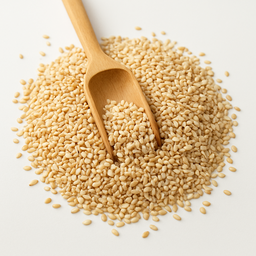
Sesame Seeds
Plant-based calcium
What is this ingredient?
Sesame seeds are one of the oldest oilseed crops in the world. The seeds contain sesamin and sesamolin, unique lignans studied in nutrition research in relation to fat metabolism and lipid profiles. Sesame seeds naturally contain a lot of calcium and fit well in plant-based cooking, especially as tahini, sesame oil or a toasted topping. Black sesame seeds have a deeper, slightly bitter taste and a dark, pigment-rich seed coat; white sesame seeds are milder and are often used in bread, cookies and Middle Eastern sauces.
How does it taste?
Warm, nutty and slightly bitter with a crunchy, toasted aroma.
Pairs well with:
Pairs well with soy saucegingerhoneygarlic and rice.
Sunnah
Sesame seeds (simsim) are mentioned in Islamic medicine as nutritious and strengthening. They were traditionally used for energy and as a base for tahini and sesame oil.
Tibb an-Nabawi #Ibn al-Qayyim, Zaad al-Ma'ad
Did you know...?
- Sesame is one of the oldest oilseed crops and has been cultivated for over 5,000 years.
- The phrase 'Open Sesame' from Ali Baba refers to the popping open of the ripe sesame pod.
Nutritional Value & Energy
Per 100g
Sesame Seeds provides energy thanks to natural nutrients , buffered by fiber.
Per 100g
Minerals
Vitamins
Omega-3 fatty acids
More nutrients
B-Vitamins
Trace Minerals
What's in a serving?
1 handful
Sesame seeds naturally contain calcium (975 mg per 100 g).
Sesame seeds naturally contain iron (14.55 mg per 100 g).
Sesame seeds naturally contain magnesium (351 mg per 100 g).
Sesame seeds naturally contain potassium (468 mg per 100 g).
Sesame seeds naturally contain zinc (7.75 mg per 100 g).
Sesame seeds naturally contain selenium (34.4 mcg per 100 g).
Sesame seeds naturally contain folate (97 mcg per 100 g).
% of daily reference intake (DRI)
EU-approved nutrition claims
This ingredient contains nutrients for which EFSA-authorized health claims exist (at nutrient level, not ingredient-specific).
Approved health claims (EU)
Magnesium EU 432/2012
Magnesium contributes to normal muscle function
Contains 351mg/100g (threshold: ≥56.25mg/100g)
Magnesium EU 432/2012
Magnesium contributes to the reduction of tiredness and fatigue
Contains 351mg/100g (threshold: ≥56.25mg/100g)
Magnesium EU 432/2012
Magnesium contributes to normal functioning of the nervous system
Contains 351mg/100g (threshold: ≥56.25mg/100g)
Zinc EU 432/2012
Zinc contributes to the normal function of the immune system
Contains 7.75mg/100g (threshold: ≥1.5mg/100g)
Zinc EU 432/2012
Zinc contributes to the maintenance of normal skin
Contains 7.75mg/100g (threshold: ≥1.5mg/100g)
Iron EU 432/2012
Iron contributes to normal energy-yielding metabolism
Contains 14.55mg/100g (threshold: ≥2.1mg/100g)
Iron EU 432/2012
Iron contributes to the reduction of tiredness and fatigue
Contains 14.55mg/100g (threshold: ≥2.1mg/100g)
Calcium EU 432/2012
Calcium is needed for the maintenance of normal bones
Contains 975mg/100g (threshold: ≥120mg/100g)
Potassium EU 432/2012
Potassium contributes to the maintenance of normal blood pressure
Contains 468mg/100g (threshold: ≥300mg/100g)
Folate EU 432/2012
Folate contributes to normal blood formation
Contains 97mcg/100g (threshold: ≥30mcg/100g)
Folate EU 432/2012
Folate contributes to normal amino acid synthesis
Contains 97mcg/100g (threshold: ≥30mcg/100g)
Folate EU 432/2012
Folate contributes to normal homocysteine metabolism
Contains 97mcg/100g (threshold: ≥30mcg/100g)
Folate EU 432/2012
Folate contributes to normal psychological function
Contains 97mcg/100g (threshold: ≥30mcg/100g)
Folate EU 432/2012
Folate contributes to the normal function of the immune system
Contains 97mcg/100g (threshold: ≥30mcg/100g)
Folate EU 432/2012
Folate has a role in the process of cell division
Contains 97mcg/100g (threshold: ≥30mcg/100g)
Folate EU 432/2012
Folate contributes to maternal tissue growth during pregnancy
Contains 97mcg/100g (threshold: ≥30mcg/100g)
Calcium EU 432/2012
Calcium is needed for the maintenance of normal teeth
Contains 975mg/100g (threshold: ≥120mg/100g)
Calcium EU 432/2012
Calcium contributes to normal blood clotting
Contains 975mg/100g (threshold: ≥120mg/100g)
Calcium EU 432/2012
Calcium contributes to normal energy-yielding metabolism
Contains 975mg/100g (threshold: ≥120mg/100g)
Calcium EU 432/2012
Calcium contributes to normal muscle function
Contains 975mg/100g (threshold: ≥120mg/100g)
Calcium EU 432/2012
Calcium contributes to normal neurotransmission
Contains 975mg/100g (threshold: ≥120mg/100g)
Calcium EU 432/2012
Calcium contributes to the normal function of digestive enzymes
Contains 975mg/100g (threshold: ≥120mg/100g)
Calcium EU 432/2012
Calcium has a role in the process of cell division and specialisation
Contains 975mg/100g (threshold: ≥120mg/100g)
Magnesium EU 432/2012
Magnesium contributes to normal energy-yielding metabolism
Contains 351mg/100g (threshold: ≥56.25mg/100g)
Magnesium EU 432/2012
Magnesium contributes to electrolyte balance
Contains 351mg/100g (threshold: ≥56.25mg/100g)
Magnesium EU 432/2012
Magnesium contributes to normal protein synthesis
Contains 351mg/100g (threshold: ≥56.25mg/100g)
Magnesium EU 432/2012
Magnesium contributes to normal psychological function
Contains 351mg/100g (threshold: ≥56.25mg/100g)
Magnesium EU 432/2012
Magnesium contributes to the maintenance of normal bones
Contains 351mg/100g (threshold: ≥56.25mg/100g)
Magnesium EU 432/2012
Magnesium contributes to the maintenance of normal teeth
Contains 351mg/100g (threshold: ≥56.25mg/100g)
Magnesium EU 432/2012
Magnesium has a role in the process of cell division
Contains 351mg/100g (threshold: ≥56.25mg/100g)
Iron EU 432/2012
Iron contributes to normal cognitive function
Contains 14.55mg/100g (threshold: ≥2.1mg/100g)
Iron EU 432/2012
Iron contributes to normal formation of red blood cells and haemoglobin
Contains 14.55mg/100g (threshold: ≥2.1mg/100g)
Iron EU 432/2012
Iron contributes to normal oxygen transport in the body
Contains 14.55mg/100g (threshold: ≥2.1mg/100g)
Iron EU 432/2012
Iron contributes to the normal function of the immune system
Contains 14.55mg/100g (threshold: ≥2.1mg/100g)
Iron EU 432/2012
Iron has a role in the process of cell division
Contains 14.55mg/100g (threshold: ≥2.1mg/100g)
Zinc EU 432/2012
Zinc contributes to normal acid-base metabolism
Contains 7.75mg/100g (threshold: ≥1.5mg/100g)
Zinc EU 432/2012
Zinc contributes to normal carbohydrate metabolism
Contains 7.75mg/100g (threshold: ≥1.5mg/100g)
Zinc EU 432/2012
Zinc contributes to normal cognitive function
Contains 7.75mg/100g (threshold: ≥1.5mg/100g)
Zinc EU 432/2012
Zinc contributes to normal DNA synthesis
Contains 7.75mg/100g (threshold: ≥1.5mg/100g)
Zinc EU 432/2012
Zinc contributes to normal fertility and reproduction
Contains 7.75mg/100g (threshold: ≥1.5mg/100g)
Zinc EU 432/2012
Zinc contributes to normal macronutrient metabolism
Contains 7.75mg/100g (threshold: ≥1.5mg/100g)
Zinc EU 432/2012
Zinc contributes to normal metabolism of fatty acids
Contains 7.75mg/100g (threshold: ≥1.5mg/100g)
Zinc EU 432/2012
Zinc contributes to normal metabolism of vitamin A
Contains 7.75mg/100g (threshold: ≥1.5mg/100g)
Zinc EU 432/2012
Zinc contributes to normal protein synthesis
Contains 7.75mg/100g (threshold: ≥1.5mg/100g)
Zinc EU 432/2012
Zinc contributes to the maintenance of normal bones
Contains 7.75mg/100g (threshold: ≥1.5mg/100g)
Zinc EU 432/2012
Zinc contributes to the maintenance of normal hair
Contains 7.75mg/100g (threshold: ≥1.5mg/100g)
Zinc EU 432/2012
Zinc contributes to the maintenance of normal nails
Contains 7.75mg/100g (threshold: ≥1.5mg/100g)
Zinc EU 432/2012
Zinc contributes to the maintenance of normal testosterone levels in the blood
Contains 7.75mg/100g (threshold: ≥1.5mg/100g)
Zinc EU 432/2012
Zinc contributes to the maintenance of normal vision
Contains 7.75mg/100g (threshold: ≥1.5mg/100g)
Zinc EU 432/2012
Zinc contributes to the protection of cells from oxidative stress
Contains 7.75mg/100g (threshold: ≥1.5mg/100g)
Zinc EU 432/2012
Zinc has a role in the process of cell division
Contains 7.75mg/100g (threshold: ≥1.5mg/100g)
Selenium EU 432/2012
Selenium contributes to the maintenance of normal hair
Contains 34.4mcg/100g (threshold: ≥8.25mcg/100g)
Selenium EU 432/2012
Selenium contributes to the maintenance of normal nails
Contains 34.4mcg/100g (threshold: ≥8.25mcg/100g)
Selenium EU 432/2012
Selenium contributes to the normal function of the immune system
Contains 34.4mcg/100g (threshold: ≥8.25mcg/100g)
Selenium EU 432/2012
Selenium contributes to normal thyroid function
Contains 34.4mcg/100g (threshold: ≥8.25mcg/100g)
Selenium EU 432/2012
Selenium contributes to normal spermatogenesis
Contains 34.4mcg/100g (threshold: ≥8.25mcg/100g)
Selenium EU 432/2012
Selenium contributes to the protection of cells from oxidative stress
Contains 34.4mcg/100g (threshold: ≥8.25mcg/100g)
Potassium EU 432/2012
Potassium contributes to normal functioning of the nervous system
Contains 468mg/100g (threshold: ≥300mg/100g)
Potassium EU 432/2012
Potassium contributes to normal muscle function
Contains 468mg/100g (threshold: ≥300mg/100g)
Comparison
vsmelk
Sesame seeds contain about 8× more calcium per 100 g than milk.
vsspinazie
Sesame seeds contain about 5× more iron per 100 g than spinach.
What's being researched?
Sesame seeds and sesamol
The lignans sesamin and sesamol in sesame seeds are studied in relation to cardiovascular markers. Studies report changes in blood-pressure and lipid markers, especially when sesame is combined with other foods within an overall dietary pattern.
Supported by: [1] Ide T (2001) , [2] Martinchik AN (2011) , [4] Wu WH (2006)
Sesame seeds and lignans
The unique lignans in sesame seeds, such as sesamin and sesamolin, are studied for their role in oxidative processes. Sesamol, which can form during processing, is mainly studied in laboratory and in-vitro models.
Supported by: [4] Wu WH (2006)
Good Combinations (Synergy)
Combine sesame seeds smartly to enhance the effect:
Sesame Seeds 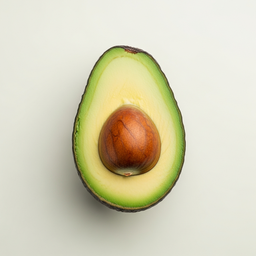 Avocado
 Healthy fats improve mineral absorption from sesame seeds
Technical: Avocado contains 15% mono-unsaturated fats and vitamin E. Sesame seeds are rich in calcium (975mg/100g), iron (14.5mg) and zinc. The fats from avocado improve absorption of these minerals and the fat-soluble lignans (sesamin, sesamolin) from sesame seeds.
What does this mean for you? Add sesame seeds to your avocado toast or poke bowl. The combination is not only delicious but also remarkably rich in minerals.
Sesame Seeds 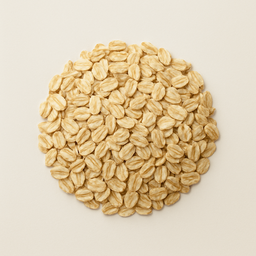 Oatmeal
 Beta-glucans + calcium for bone mineralization and lipid profile
Technical: Oatmeal contains beta-glucans that bind bile acids. Sesame seeds provide 975mg calcium per 100g — more than milk! They also contain sesamin (lignan) with antioxidant action. Together they support both lipid profile (beta-glucans) and bone mineralization (calcium).
What does this mean for you? Oatmeal with sesame seeds is a calcium-rich start to the day. The beta-glucans support your lipid profile, the sesame provides more calcium than a glass of milk.
Sesame Seeds  Honey
Honey Honey antioxidants + sesame lignans for antioxidant support
Technical: Honey's water-soluble antioxidants (phenolic acids, flavonoids) and sesame seed's fat-soluble lignans (sesamin) provide antioxidant support in different compartments. Honey's fructose provides quick energy, sesame's fats and proteins give sustained satiety.
What does this mean for you? Sesame seeds with honey (as in Japanese dishes) combines quick energy with sustained satiety and broad antioxidant support.
Sesame Seeds 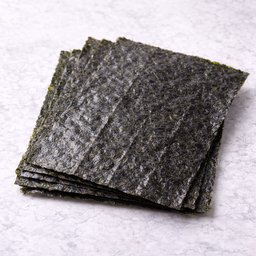 Nori
Nori Classic Asian combination: minerals + healthy fats
Technical: Nori provides iodine and minerals, sesame seeds add calcium (975mg/100g), iron and healthy fats. The combination enhances absorption of fat-soluble vitamins from nori.
What does this mean for you? Sprinkle sesame seeds on your sushi or rice dishes for a more nutritious meal.
Sesame Seeds  Olive Oil
 Olive oil fats improve absorption of sesame seed minerals and lignans
Technical: Olive oil's monounsaturated fats (oleic acid) improve absorption of fat-soluble lignans from sesame seeds. Additionally, olive oil polyphenols (oleocanthal) and sesame lignans form a broader antioxidant spectrum.
What does this mean for you? Use olive oil in dishes with sesame seeds — for example in an Asian salad or as a base for tahini dressing.
Sesame Seeds  Sesame Oil
 Sesame oil fats enhance absorption of sesame seed lignans
Technical: Sesame seeds contain lignans (sesamin, sesamolin) that are fat-soluble. Sesame oil provides the ideal fat matrix for absorption. Additionally, the oil contains different bioactive forms (sesamol) that work complementarily to lignans in whole seeds.
What does this mean for you? Top dishes with both sesame seeds and a drizzle of sesame oil — you get the fiber and minerals from the seeds plus optimal lignan absorption.
Sesame Seeds  Lemon
Lemon Vitamin C increases iron absorption from sesame seeds
Technical: Sesame seeds contain 14.6mg iron per 100g (52% RDA), but as non-heme iron this is normally poorly absorbed. Vitamin C from lemon reduces Fe³⁺ to the better absorbable Fe²⁺ and prevents phytate from sesame seeds from binding the iron. This increases iron absorption up to 4x.
What does this mean for you? Add lemon juice to hummus (tahini = ground sesame seeds) or to dishes with sesame seeds. The lemon makes the iron from sesame much more absorbable — a classic combination in Middle Eastern cuisine.
Sesame Seeds 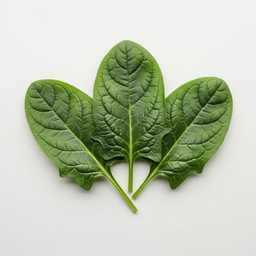 Spinach
 Iron + calcium + copper: mineral synergy
Technical: Spinach contains 2.7mg iron per 100g (15% RDI). Sesame seeds contain 975mg calcium per 100g (highest of all seeds!) plus 14.5mg iron. The combination delivers a rich mineral dose. Sesame seeds also contain copper (4.1mg/100g) — copper contributes to normal iron transport in the body (EFSA-approved).
What does this mean for you? Korean namul (sesame spinach) is not only delicious but also exceptionally mineral-rich. Copper from sesame seeds contributes to normal iron transport. Ideal for vegetarians.
Sesame Seeds 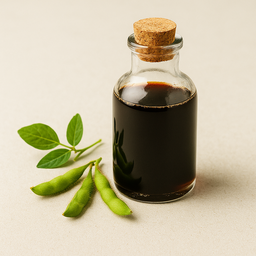 Tamari
 Umami amino acids enhance mineral absorption from sesame seeds
Technical: Tamari's free glutamic acid and amino acids from fermentation promote absorption of zinc and iron from sesame seeds. The organic acids in fermented soy lower intestinal pH, making minerals more soluble.
What does this mean for you? Sprinkle dishes with tamari and sesame seeds together — a classic Asian combination that's not only delicious but also optimizes your mineral absorption.
Sesame Seeds 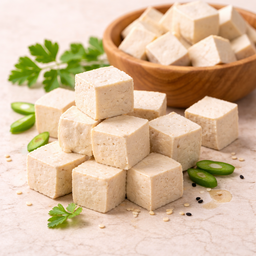 Tofu
Tofu Calcium synergy: double plant-based calcium source
Technical: Tofu (prepared with calcium sulfate) contains 350mg calcium per 100g. Sesame seeds provide 975mg calcium per 100g. Tofu's isoflavones improve calcium absorption. Good to know: calcium is needed for the maintenance of normal bones (EFSA-approved).
What does this mean for you? Serve tofu with sesame (tahini sauce or sesame seeds) for a rich plant-based calcium intake. Two of the best plant-based calcium sources in one dish.
Sesame Seeds 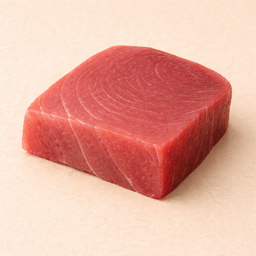 Tuna
Tuna Complementary amino acid profile + mineral synergy
Technical: Tuna provides 24g complete protein per 100g with all essential amino acids, particularly rich in lysine (2.1g) and leucine (1.8g) — the primary mTOR-activating amino acid for muscle synthesis. Sesame seeds complement with tryptophan (0.4g per 100g), zinc (7.8mg) and copper (4.1mg). Zinc is a cofactor for >300 enzymes including those involved in protein synthesis. The combination also provides complementary minerals: tuna's selenium (36.5μg) + sesame's manganese (2.5mg) for optimal antioxidant enzyme activity (glutathione peroxidase + superoxide dismutase).
What does this mean for you? Sesame-crusted tuna steak isn't just a restaurant classic but also nutritionally optimal for muscle building. The sesame crust adds minerals and amino acids that tuna lacks. Use untoasted black or white sesame seeds for maximum nutritional value.
Sesame Seeds 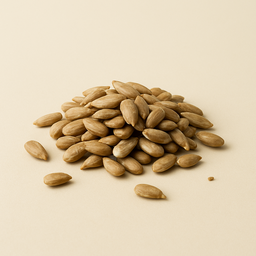 Sunflower Seeds
 Broad mineral spectrum: zinc + magnesium + selenium
Technical: Sunflower seeds provide selenium (53μg/100g, 96% RDA) and vitamin E (35mg). Pumpkin seeds add zinc (7.6mg, 51% RDA). Sesame seeds bring calcium (975mg, 97% RDA). Together these three seed types cover a broad mineral spectrum: selenium for thyroid and immune system, zinc for cell division and hormones, calcium for bones and muscle contraction.
What does this mean for you? Make a seed mix of sunflower seeds, pumpkin seeds and sesame seeds. Sprinkle over salads, yogurt or bread. Three seeds that together fill multiple mineral gaps.
Recipes with Sesame Seeds
Discover delicious recipes featuring sesame seeds:
 Asian Sesame Chicken Salad 25 min Crispy salad with grilled chicken and ginger-sesame dressing
  320 kcal
  28g protein 1 synergies
 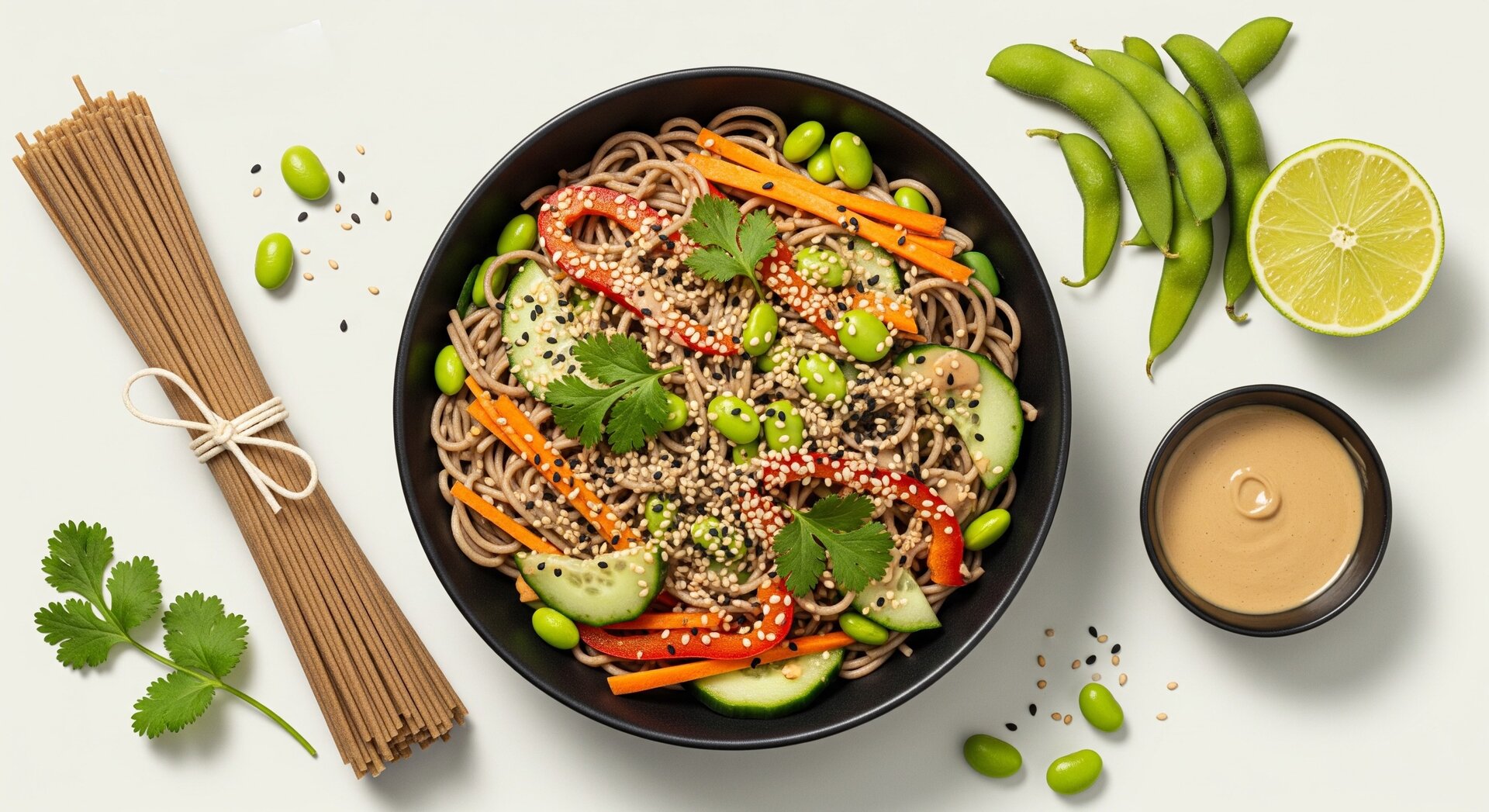 Asian Sesame-Soba Noodle Salad with Edamame 25 min Cold noodle salad with sesame dressing and edamame 751 kcal 31g protein 1 synergies
 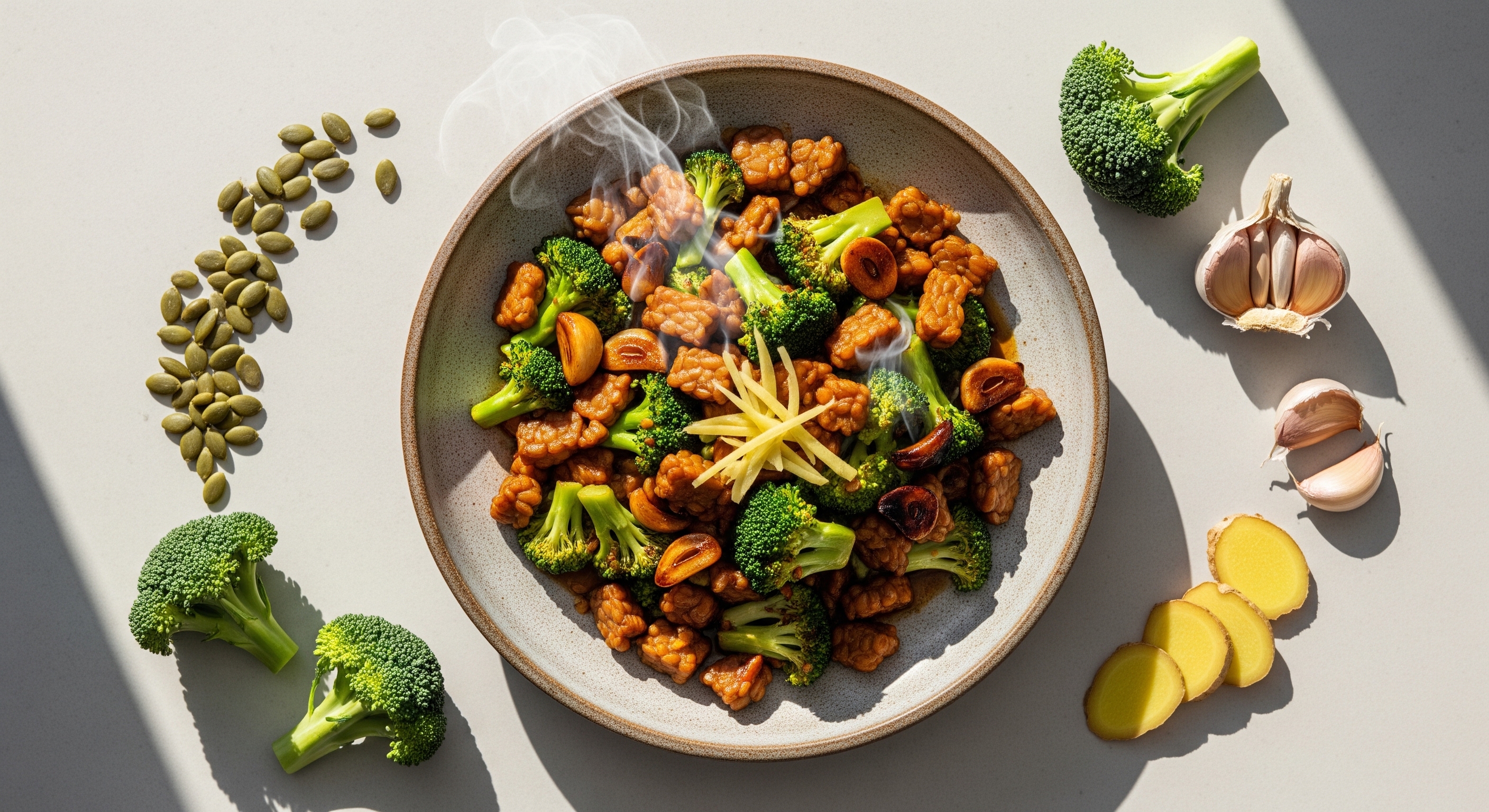 Broccoli Tempeh Stir-Fry with Sesame 30 min Savory, nutty and crisp from the wok 365 kcal 26g protein 2 synergies
 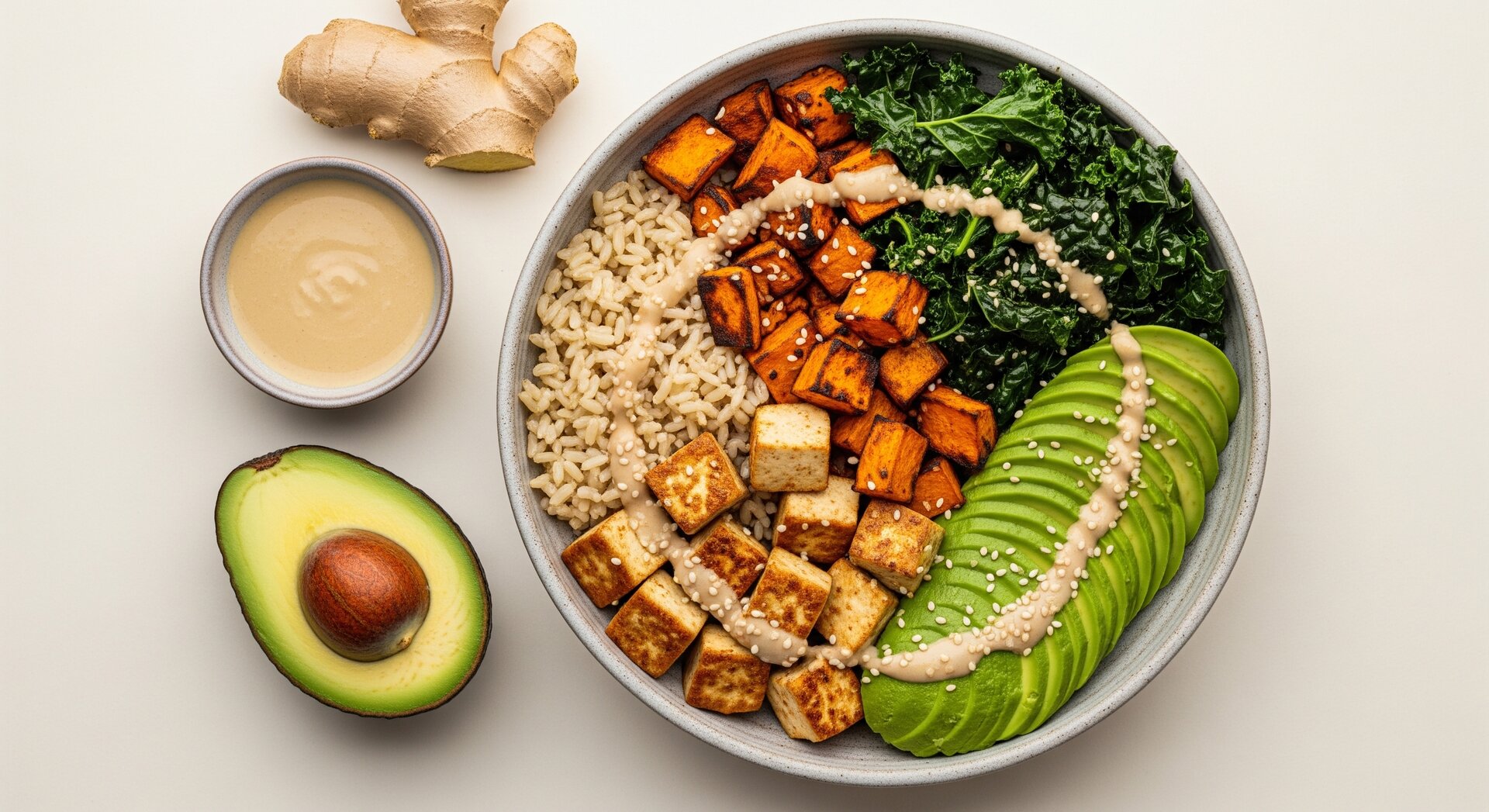 Buddha Bowl with Tofu, Sweet Potato and Kale 50 min Warm bowl with roasted vegetables 790 kcal 30g protein 3 synergies
 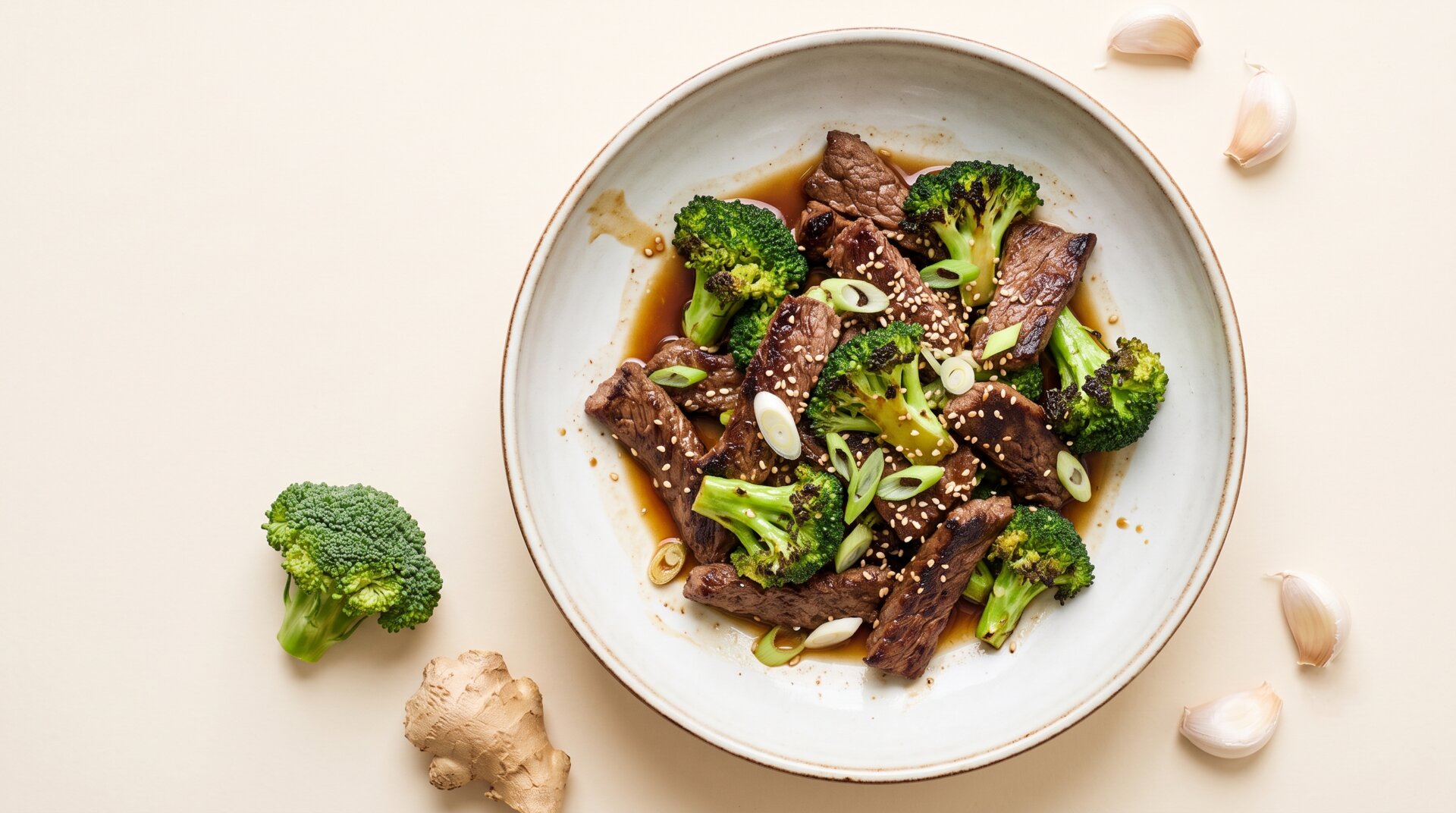 Chinese Beef & Broccoli 30 min Tender beef strips with crispy broccoli in oyster sauce 380 kcal 36g protein 1 synergies
 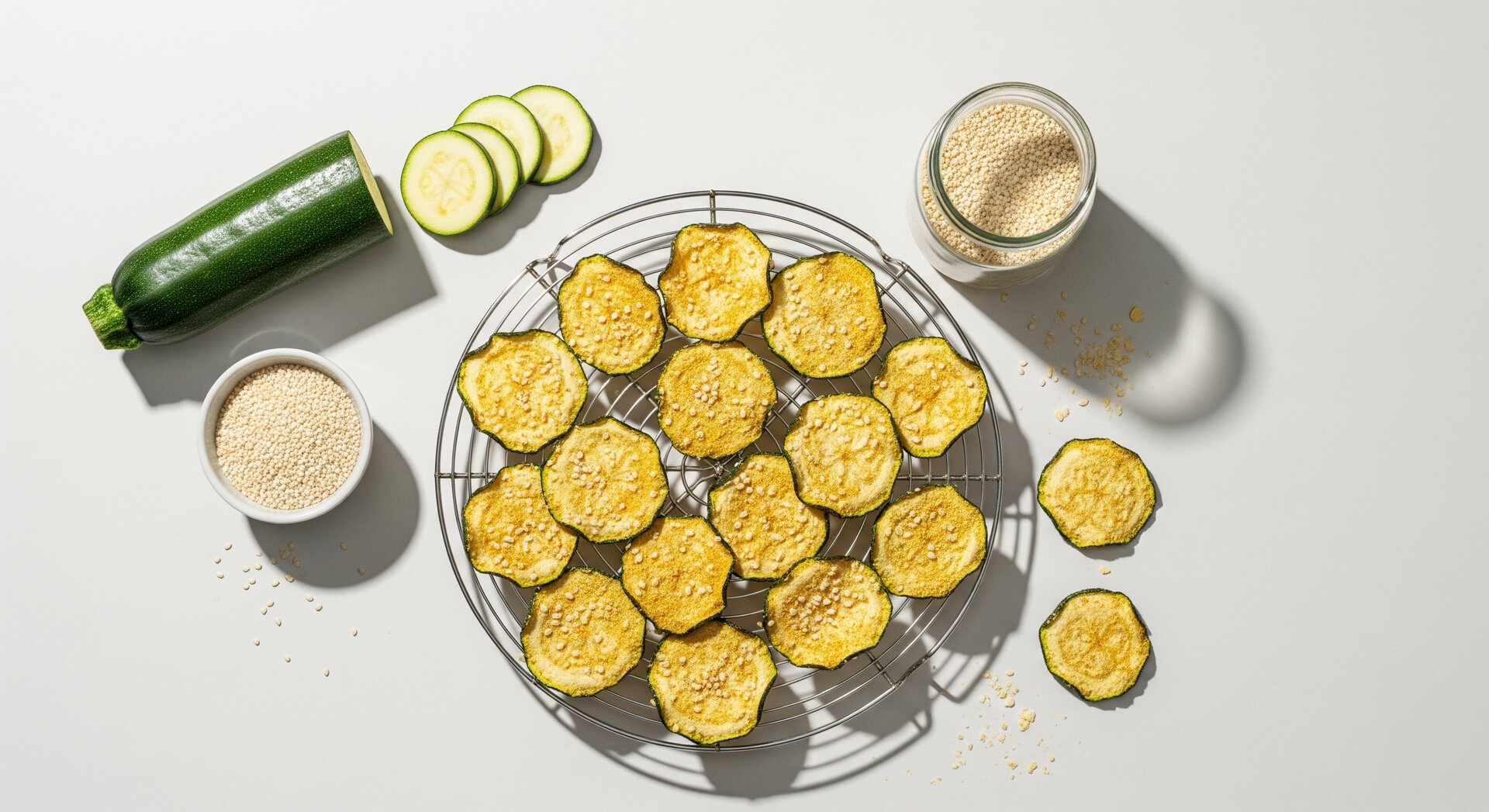 Zucchini Chips with Sesame and Garlic 170 min Wafer-thin oven chips of zucchini with sesame and garlic powder 45 kcal 2g protein 2 synergies
  In the Kitchen
Storage
Location:Refrigerator
Shelf life:3 maanden kamertemperatuur, 6 maanden koelkast, 1 jaar vriezer
Store in an airtight container in a cool, dark place. Because of the high fat content, flavour and aroma keep better when sesame seeds are stored chilled.
Preparation
Toast sesame seeds briefly in a dry pan for a nutty flavour and extra aroma. Use them as a garnish, in tahini, on bread, in Asian dishes, in halvah or through sauces and dressings.
Substitutes
Smart preparation
1Toast sesame seeds in a dry pan on low heat until golden brown.
Why?
Toasting brings out the nutty flavour.
2Shake or stir constantly while toasting sesame seeds.
Why?
Sesame seeds burn very quickly due to their small size.
3Store toasted sesame seeds in an airtight container for up to 3 months.
Caution / Warnings
Sesame Seeds is very safe, but there are scientific considerations:
Sesame allergy Severe
Sesame is one of the 14 major food allergens in the EU. In sensitive people, exposure can cause severe allergic reactions, including anaphylaxis.
Advice:
Completely avoid with sesame allergy. Also watch for tahini, sesame oil, bread, crackers and processed foods where sesame may appear as a topping or ingredient.
Diabetes medication Mild
Sesame may influence glucose values in some people, so coordination with existing diabetes medication may be important.
Advice:
If you use diabetes medication and regularly eat sesame or tahini, follow your glucose values and consult your doctor or dietitian if unsure.
Traditional use
Ayurveda
Sesame seeds in Ayurvedic culinary traditions
Sesame seed (tila) is one of the oldest oil seeds and often appears in Ayurvedic culinary traditions in warm preparations, sweet snacks, oil and pastes.
Traditional Chinese Medicine
Sesame seeds in Chinese culinary traditions
Black sesame seeds (hei zhi ma) have appeared for centuries in Chinese culinary and herbal traditions, including sweet pastes, rice dishes, drinks and warm preparations.
Islamic tradition
Sesame seeds in Islamic tradition
Sesame is one of the oldest crops in the Middle East and is fundamental in Arab cuisine as the base for tahini, halva, bread toppings and sesame oil.
Summary
Sesame seeds are a compact calcium-rich choice for plant-based cooking. With 975 mg calcium per 100 g, they fit well in tahini, hummus, bread, salads and toasted toppings. Their unique lignans, such as sesamin, are studied in nutrition research in relation to fat metabolism and lipid profiles. Choose black sesame seeds for a deeper, slightly bitter taste and white sesame seeds for a milder, classic note. Note: sesame allergy is an important food allergen.