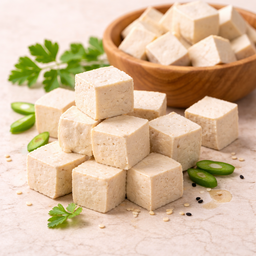
Tofu
The Versatile Plant-Based Base
What is this ingredient?
Tofu originated in China over 2000 years ago. The production process resembles cheesemaking: soybeans are soaked, ground into milk, and coagulated with nigari (magnesium chloride) or calcium sulfate. Firmness varies from soft (silken) to extra firm, depending on moisture removed. Tofu provides 8g complete protein per 100g with all essential amino acids. When made with calcium sulfate, it contains up to 350mg calcium per 100g - comparable to milk. The isoflavones in tofu (daidzein, genistein) are phytoestrogens associated in research with reduced risk of hormone-sensitive cancers and better bone health in postmenopausal women.
How does it taste?
Neutral and mild, absorbs flavors like a sponge. Texture ranges from silken to firm.
Pairs well with:
Pairs well with soy saucesesamegingerchili and miso.
Varieties
Silken Tofu
Soft and creamy, ideal for smoothies, sauces and desserts
Firm Tofu
Versatile, suitable for frying and curries
Extra Firm Tofu
Ideal for stir-frying and grilling, holds shape well
Smoked Tofu
Pre-baked with smoke flavor, ready to eat
Did you know...?
- Tofu was invented in China over 2,000 years ago, possibly by accident when curdling soy milk.
- In Japan, more than 30 different types of tofu are distinguished.
Nutritional Value & Energy
Per 100g
Tofu provides energy thanks to natural nutrients .
Per 100g
Minerals
Vitamins
More nutrients
B-Vitamins
Trace Minerals
What's in a serving?
1 serving (dry)
Tofu naturally contains calcium (350 mg per 100 g).
Tofu naturally contains iron (5.4 mg per 100 g).
Tofu naturally contains selenium (8.9 mcg per 100 g).
% of daily reference intake (DRI)
EU-approved nutrition claims
This ingredient contains nutrients for which EFSA-authorized health claims exist (at nutrient level, not ingredient-specific).
Approved health claims (EU)
Iron EU 432/2012
Iron contributes to normal energy-yielding metabolism
Contains 5.4mg/100g (threshold: ≥2.1mg/100g)
Iron EU 432/2012
Iron contributes to the reduction of tiredness and fatigue
Contains 5.4mg/100g (threshold: ≥2.1mg/100g)
Calcium EU 432/2012
Calcium is needed for the maintenance of normal bones
Contains 350mg/100g (threshold: ≥120mg/100g)
Calcium EU 432/2012
Calcium is needed for the maintenance of normal teeth
Contains 350mg/100g (threshold: ≥120mg/100g)
Calcium EU 432/2012
Calcium contributes to normal blood clotting
Contains 350mg/100g (threshold: ≥120mg/100g)
Calcium EU 432/2012
Calcium contributes to normal energy-yielding metabolism
Contains 350mg/100g (threshold: ≥120mg/100g)
Calcium EU 432/2012
Calcium contributes to normal muscle function
Contains 350mg/100g (threshold: ≥120mg/100g)
Calcium EU 432/2012
Calcium contributes to normal neurotransmission
Contains 350mg/100g (threshold: ≥120mg/100g)
Calcium EU 432/2012
Calcium contributes to the normal function of digestive enzymes
Contains 350mg/100g (threshold: ≥120mg/100g)
Calcium EU 432/2012
Calcium has a role in the process of cell division and specialisation
Contains 350mg/100g (threshold: ≥120mg/100g)
Iron EU 432/2012
Iron contributes to normal cognitive function
Contains 5.4mg/100g (threshold: ≥2.1mg/100g)
Iron EU 432/2012
Iron contributes to normal formation of red blood cells and haemoglobin
Contains 5.4mg/100g (threshold: ≥2.1mg/100g)
Iron EU 432/2012
Iron contributes to normal oxygen transport in the body
Contains 5.4mg/100g (threshold: ≥2.1mg/100g)
Iron EU 432/2012
Iron contributes to the normal function of the immune system
Contains 5.4mg/100g (threshold: ≥2.1mg/100g)
Iron EU 432/2012
Iron has a role in the process of cell division
Contains 5.4mg/100g (threshold: ≥2.1mg/100g)
Selenium EU 432/2012
Selenium contributes to the maintenance of normal hair
Contains 8.9mcg/100g (threshold: ≥8.25mcg/100g)
Selenium EU 432/2012
Selenium contributes to the maintenance of normal nails
Contains 8.9mcg/100g (threshold: ≥8.25mcg/100g)
Selenium EU 432/2012
Selenium contributes to the normal function of the immune system
Contains 8.9mcg/100g (threshold: ≥8.25mcg/100g)
Selenium EU 432/2012
Selenium contributes to normal thyroid function
Contains 8.9mcg/100g (threshold: ≥8.25mcg/100g)
Selenium EU 432/2012
Selenium contributes to normal spermatogenesis
Contains 8.9mcg/100g (threshold: ≥8.25mcg/100g)
Selenium EU 432/2012
Selenium contributes to the protection of cells from oxidative stress
Contains 8.9mcg/100g (threshold: ≥8.25mcg/100g)
Comparison
vsmelk
Tofu contains about 3× more calcium per 100g than milk.
vsspinazie
Tofu contains about 2× more iron per 100g than spinach.
What's being researched?
Tofu and cardiovascular risk
The association between regular tofu consumption and cardiovascular risk is being studied in large cohort studies. A prospective study in three large US cohorts showed inverse associations with coronary heart disease.
Supported by: [2] Anderson (1995) , [1] Potter (1998)
Tofu isoflavones and bone health
The effects of soy isoflavones in tofu on bone mineral density are being studied. Meta-analyses show modest positive associations, particularly in Asian populations with long-term soy consumption.
Supported by: [1] Potter (1998)
Good Combinations (Synergy)
Combine tofu smartly to enhance the effect:
Tofu 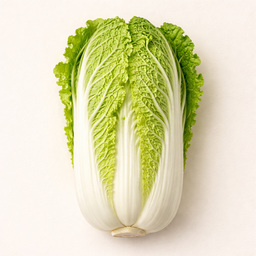 Napa Cabbage
 Calcium from both sources + plant protein
Technical: Chinese cabbage contains 105mg calcium per 100g with very low oxalate (high bioavailability of 54%). Tofu (calcium sulfate set) provides 350mg calcium per 100g plus 8g protein. The combination delivers up to 455mg calcium per serving — 45% of RDI. Chinese cabbage's vitamin K (46μg) contributes to the maintenance of normal bones (EFSA-approved).
What does this mean for you? Chinese cabbage with tofu is a vegan calcium source par excellence. Unlike spinach, Chinese cabbage has little oxalic acid, so you actually absorb the calcium. Classic in Korean and Japanese soups.
Tofu 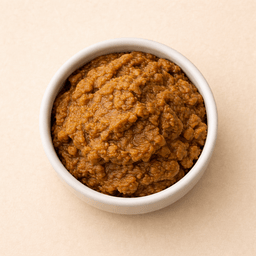 Doenjang (Korean soybean paste)
 Complementary isoflavone delivery: fermented aglycone + unfermented glycoside
Fermented soy aglycones are absorbed 2-3x faster than unfermented glycosides (PMID: 30035387)
Technical: Fermentation in doenjang converts isoflavone glycosides to aglycones (genistein, daidzein) absorbed 2-3x faster in the small intestine. Tofu still contains unhydrolyzed glycoside forms released more slowly but longer via intestinal bacterial hydrolysis. Together they create a pharmacokinetic profile with rapid peak concentration (doenjang) plus extended duration (tofu).
What does this mean for you? Doenjang jjigae with tofu (classic Korean) delivers isoflavones two ways: fast via the fermented paste and slow via the tofu. This provides longer-lasting exposure to these bioactive compounds.
Tofu 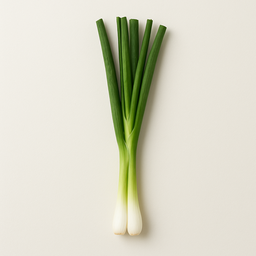 Spring Onion
 Allicin improves iron absorption from plant sources
Technical: Tofu contains 5.4mg non-heme iron per 100g, but also phytate (inositol hexaphosphate) that binds iron. Green onion's sulfur compounds (allyl sulfides) reduce phytate binding through pH lowering in the gut. Vitamin C in green onion (18.8mg/100g) reduces Fe³⁺ to Fe²⁺ for better absorption via DMT-1 transport proteins.
What does this mean for you? Always garnish tofu with green onion — the sulfur compounds free iron that would otherwise remain bound to phytate. Essential for vegetarians and vegans relying on plant-based iron.
Tofu 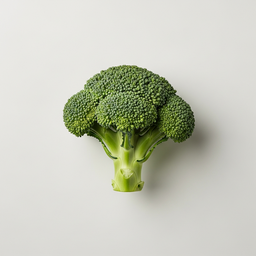 Broccoli
 Isoflavones + sulforaphane: complementary phytochemicals
Technical: Tofu contains genistein and daidzein (isoflavones) that modulate estrogen receptors. Broccoli contains sulforaphane that activates phase II enzymes in the liver. Together they deliver a broad spectrum of bioactive plant compounds via complementary pathways.
What does this mean for you? Stir-fry tofu with broccoli — an Asian classic. The combination provides diverse phytochemicals and complete protein in one dish.
Tofu 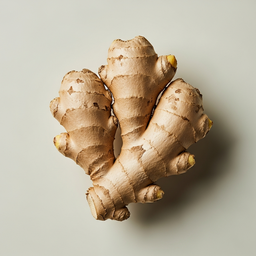 Ginger
 Isoflavones + gingerols: complementary bioactive compounds
Technical: Tofu's isoflavones and ginger's gingerols are both studied in research in connection with cellular signaling pathways. Together they provide a broad spectrum of bioactive compounds through complementary mechanisms.
What does this mean for you? Marinate tofu in ginger-soy sauce for a powerful combination of bioactive plant compounds. A classic Asian preparation combining protein and phytochemicals.
Tofu 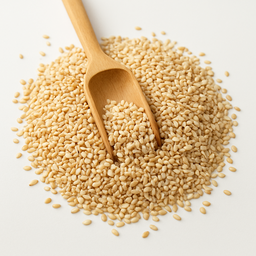 Sesame Seeds
 Calcium synergy: double plant-based calcium source
Technical: Tofu (prepared with calcium sulfate) contains 350mg calcium per 100g. Sesame seeds provide 975mg calcium per 100g. Tofu's isoflavones improve calcium absorption. Good to know: calcium is needed for the maintenance of normal bones (EFSA-approved).
What does this mean for you? Serve tofu with sesame (tahini sauce or sesame seeds) for a rich plant-based calcium intake. Two of the best plant-based calcium sources in one dish.
Tofu 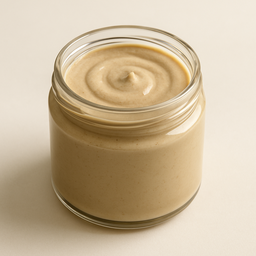 Tahini
 Calcium synergy: double plant-based calcium source
Technical: Tofu (prepared with calcium sulfate) contains 350mg calcium per 100g. Sesame seeds provide 975mg calcium per 100g. Tofu's isoflavones improve calcium absorption. Good to know: calcium is needed for the maintenance of normal bones (EFSA-approved).
What does this mean for you? Serve tofu with sesame (tahini sauce or sesame seeds) for a rich plant-based calcium intake. Two of the best plant-based calcium sources in one dish.
Tofu 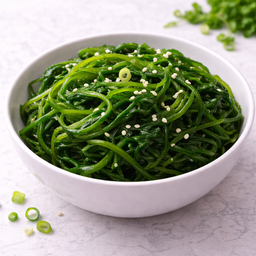 Wakame
 Classic miso soup base: calcium + magnesium + isoflavones
Technical: Wakame contains 150mg calcium per 100g and fucoidans (polysaccharides studied in research). Tofu contains isoflavones that improve calcium retention in bones. Good to know: calcium is needed for the maintenance of normal bones (EFSA-approved).
What does this mean for you? Add wakame to your miso soup with tofu. This is a traditional Japanese combination — an excellent plant-based source of calcium, with isoflavones from soy.
Recipes with Tofu
Discover delicious recipes featuring tofu:
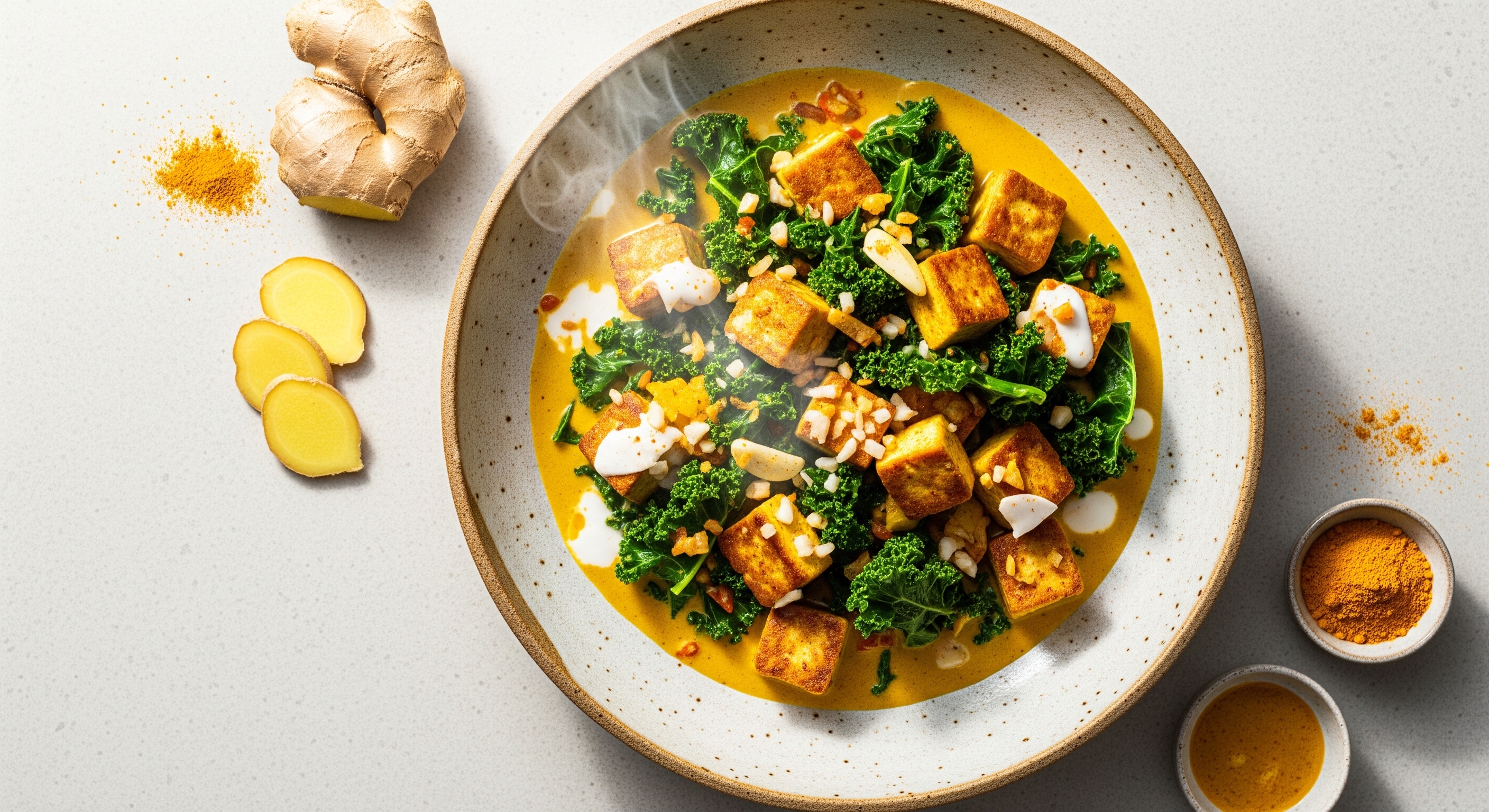 Kale Tofu Curry with Ginger 40 min Creamy curry with crisp tofu and coconut
  365 kcal
  16g protein 3 synergies
 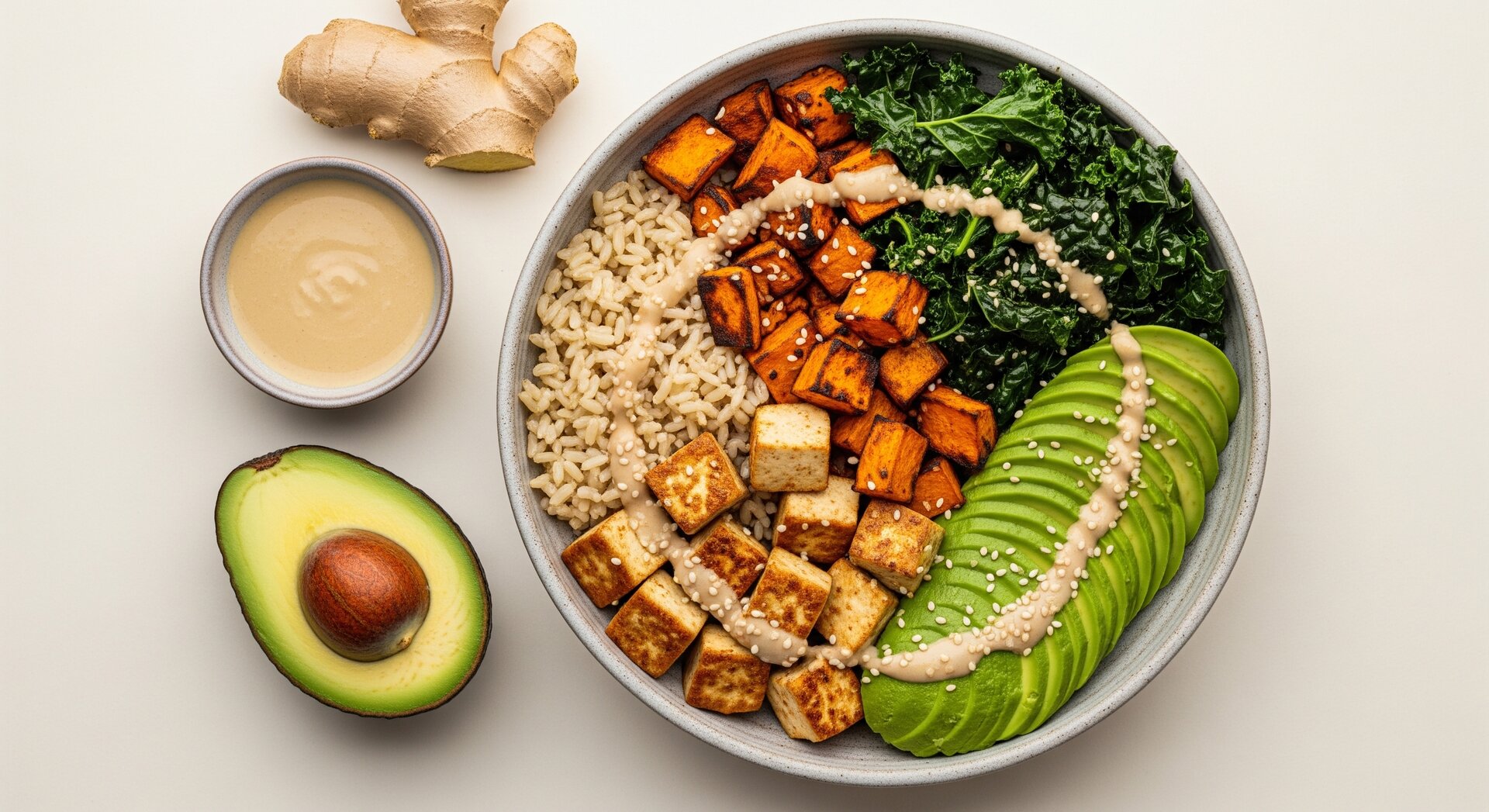 Buddha Bowl with Tofu, Sweet Potato and Kale 50 min Warm bowl with roasted vegetables 790 kcal 30g protein 3 synergies
 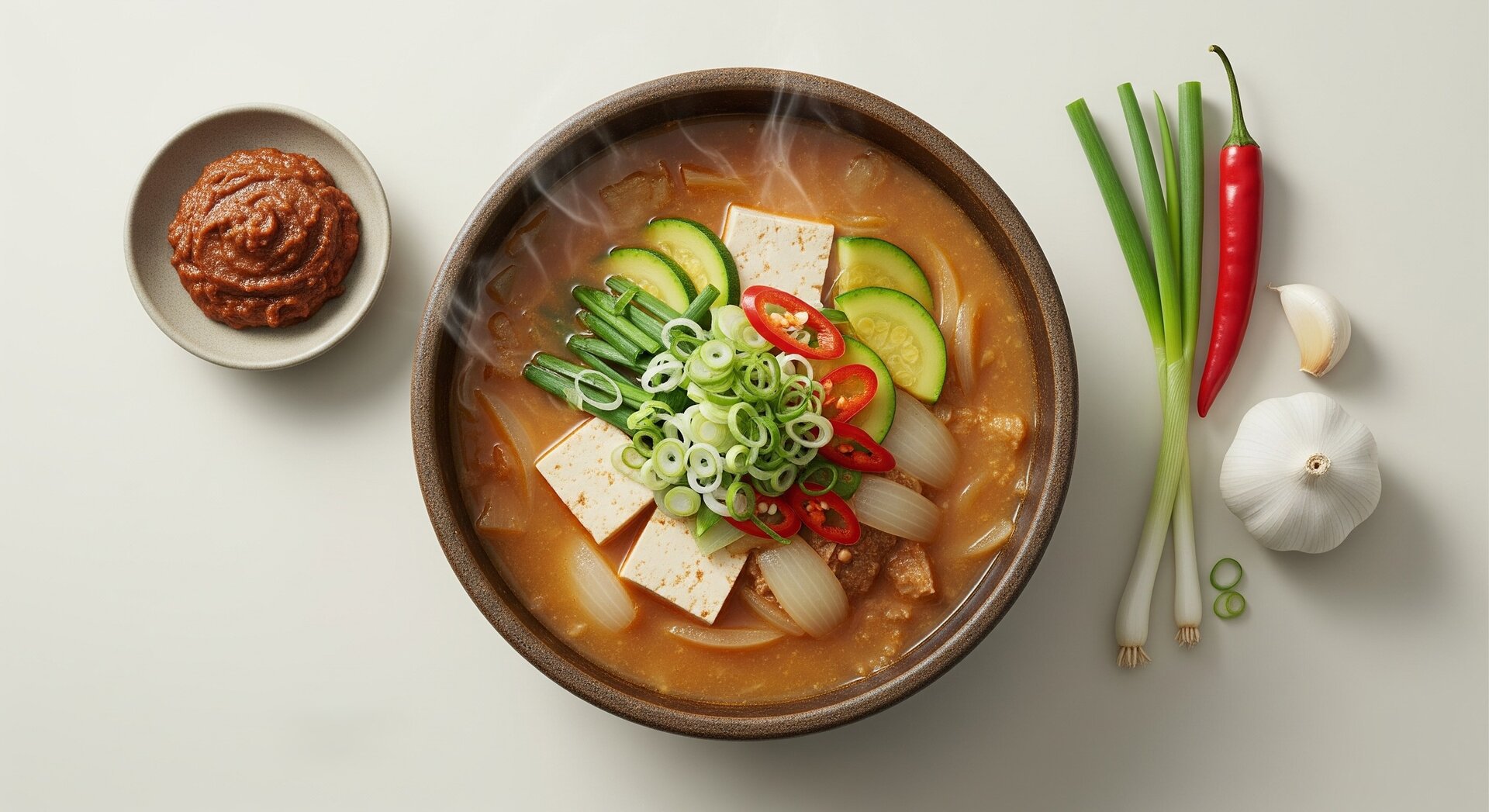 Doenjang Jjigae - Korean Soybean Paste Soup 30 min Umami-rich Korean soup with doenjang, tofu, zucchini and shiitake 175 kcal 13g protein 3 synergies
 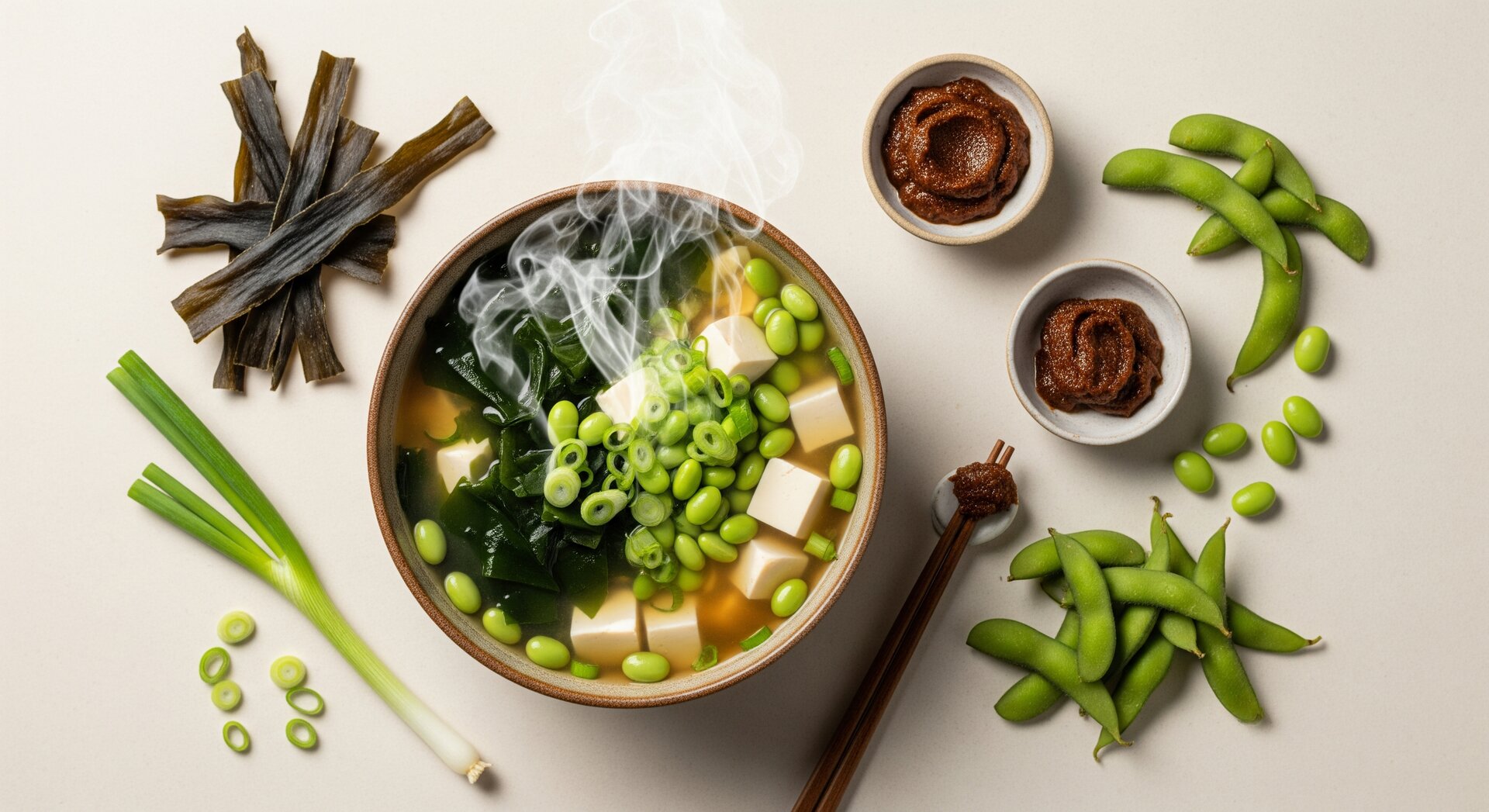 Japanese Edamame Miso Soup 20 min Light miso soup with edamame, tofu, wakame and ginger 245 kcal 18g protein 2 synergies
 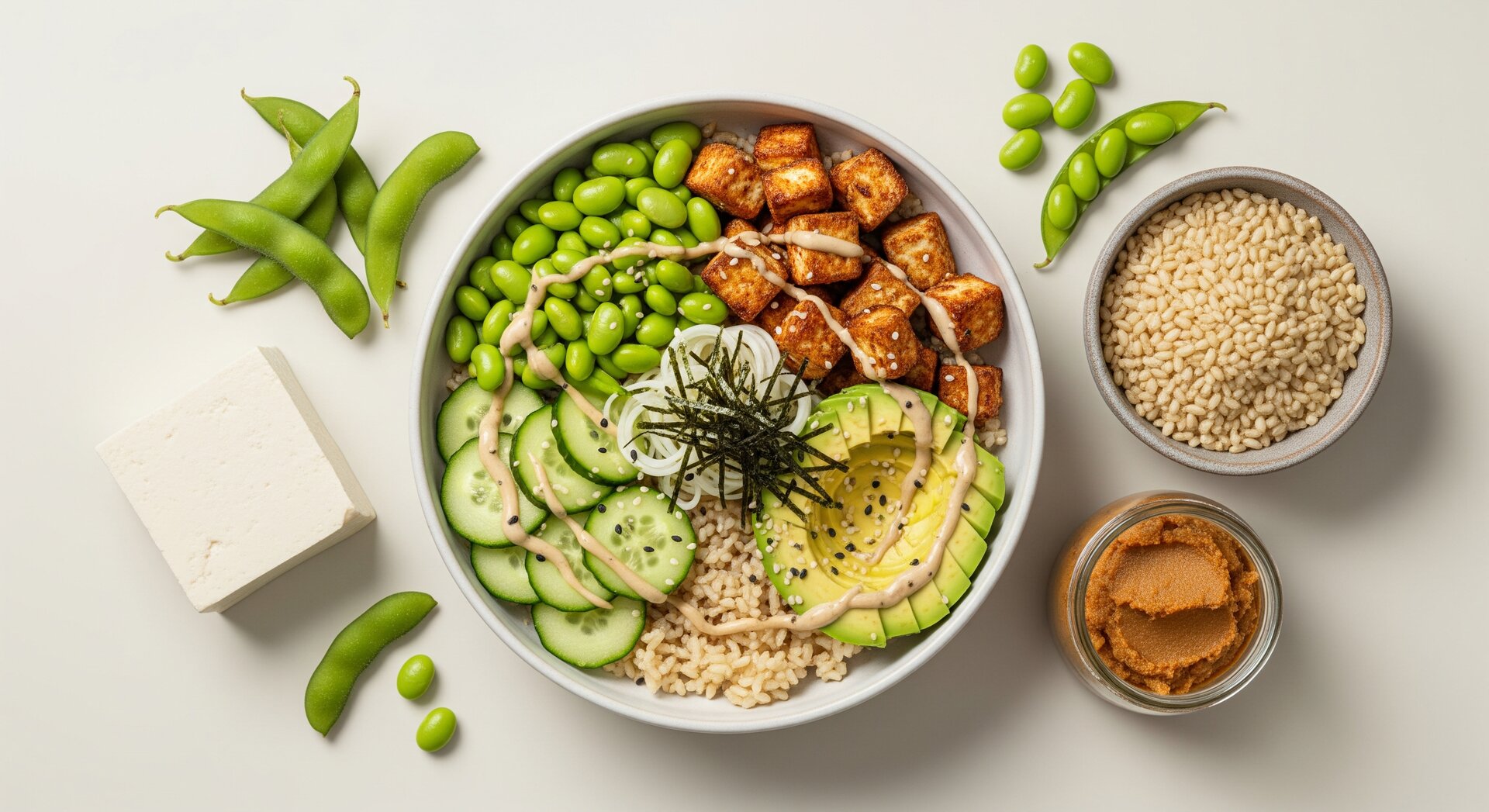 Japanese Edamame-Tofu Bowl 50 min Crispy tofu with edamame and miso-tahini dressing 620 kcal 32g protein 2 synergies
 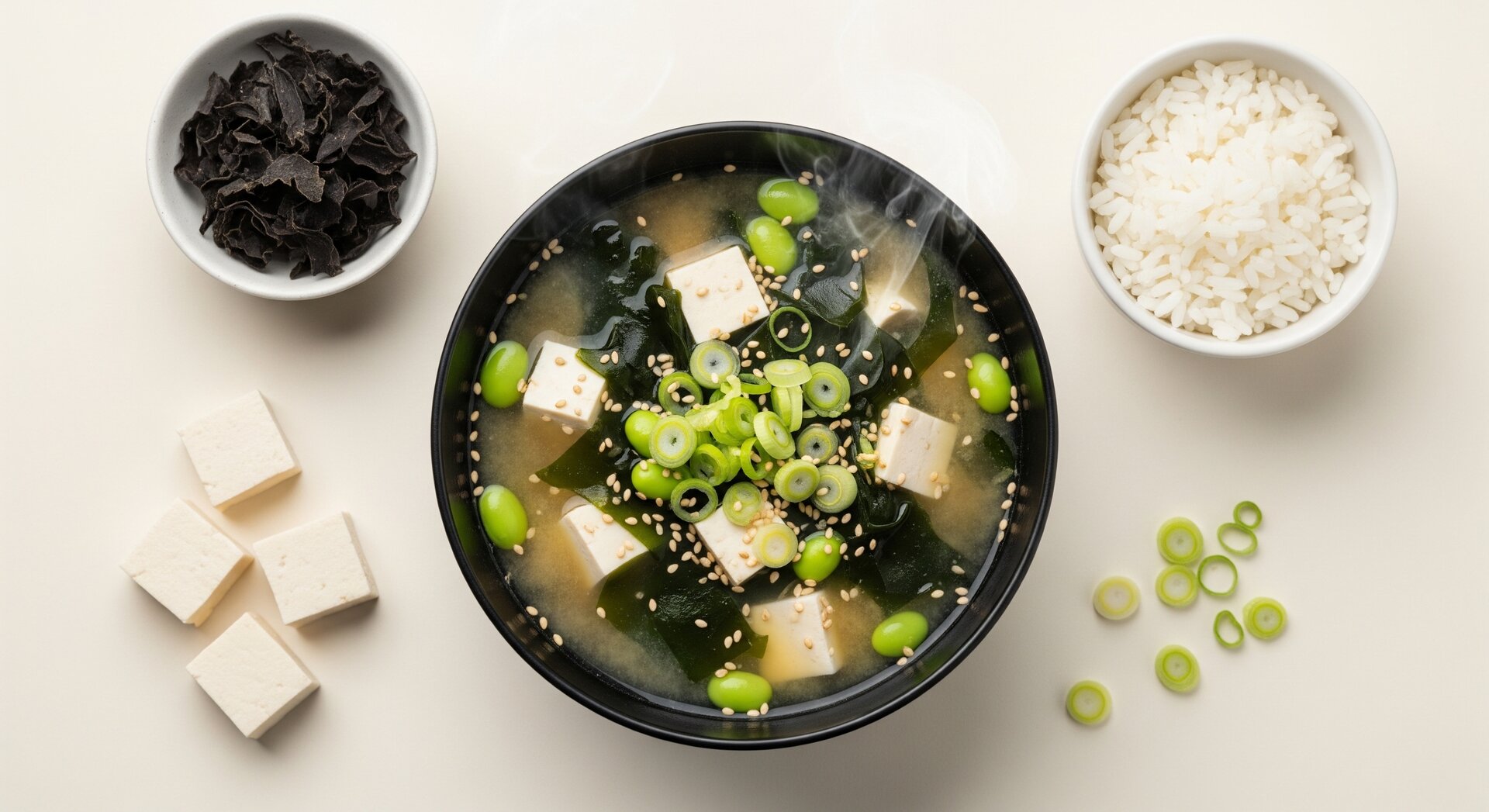 Japanese Miso Soup with Tofu and Seaweed 30 min Traditional Japanese breakfast with fermented soy and seaweed 310 kcal 19g protein 2 synergies
  In the Kitchen
Storage
Location:Refrigerator
Shelf life:5-7 dagen in koelkast na openen, bewaar in water
Store opened tofu in fresh water, change daily. Freezing changes texture (becomes spongy, ideal for marinades).
Preparation
Press out moisture for crispy results. Marinate at least 30 minutes. Fry on high heat with oil until golden. BEST SYNERGY: fat increases isoflavone absorption 2-3x.
Conversions
Substitutes
Smart preparation
1Press firm tofu for 20-30 minutes with a heavy object.
Why?
Less moisture ensures a crispier exterior when frying.
2Marinate tofu for at least 30 minutes for more flavour.
Why?
Tofu has little flavour of its own and absorbs marinades well.
3Freeze tofu first and thaw it for a firmer, meatier texture.
Why?
Ice crystals create holes that make the texture more porous.
Caution / Warnings
Tofu is very safe, but there are scientific considerations:
Soy Allergy Severe
Tofu is a soy product
Advice:
With soy allergy: avoid completely
Thyroid Conditions Mild
Isoflavones may affect thyroid function with high consumption
Advice:
With thyroid problems: limit to 1-2 servings per day and consult doctor
Traditional use
Traditional Chinese Medicine
Chinese Han dynasty food
Tofu was invented over 2000 years ago during the Han dynasty in China. It was initially made in Buddhist monasteries as a meat substitute.
Southeast Asian
Japanese Buddhist monastery food
Tofu was brought to Japan in the 8th century by Buddhist monks and became an essential part of vegetarian temple cuisine (shojin ryori).
Summary
Tofu is the most versatile plant protein source: absorbs any flavor, contains all amino acids and is rich in calcium. BEST SYNERGY: marinate with soy sauce and ginger, fry crispy in sesame oil. The oil increases isoflavone absorption. Choose extra firm tofu for stir-frying, soft for smoothies.