- Easy
- 35 min
- 2 serv.
- 15 synergies
- Now at its best: Onion
A hearty shakshuka with lamb mince, red lentils and three poached eggs in a rich, spiced tomato sauce. Three protein sources in one pan — the ultimate breakfast for anyone who needs a serious meal.
The lamb mince sizzles in the hot pan and breaks apart into brown, fragrant crumbles as the onion and garlic melt alongside it. The spices — cumin, paprika, turmeric — go in and immediately that warm, Middle Eastern aroma fills the kitchen. The passata clatters in, the lentils follow, and then the simmering begins: a thick, red sauce that slowly reduces as the lentils soften and break down into a creamy base. Three wells in the sauce, three eggs cracked in, lid on. Six, seven minutes later you lift the lid and there they are: white cushions with still-liquid yolks that tremble when you tilt the pan. Parsley over the top, black pepper, and you serve straight from the pan with a slice of whole grain bread to mop up the sauce.
- 10
- min prep
- 25
- min cook
- 35
- min total
Nutritional Synergies
This recipe combines ingredients that enhance each other:
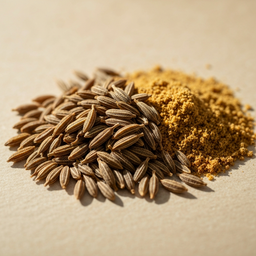 Cumin
Cumin 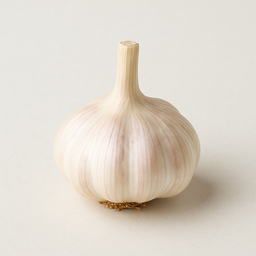 Garlic
 Double digestive support: enzymes + bioactive compounds
Technical: Cumin promotes digestive enzyme activity (amylase, lipase, protease) and increases bile flow. Garlic's allicin has broad bioactivity targeting pathogenic gut bacteria while sparing beneficial ones.
What does this mean for you? Fry garlic and cumin together as base for curries, soups and stews. Classic combination in virtually every cuisine in the world.
DigestionImmune System
Cumin 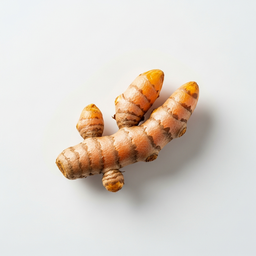 Turmeric
 Classic curry base with enhanced digestion
Technical: Cumin promotes production of digestive enzymes (amylase, lipase, protease) and increases bile flow. Turmeric's curcumin modulates NF-κB and COX-2 signal transduction and supports hepatobiliary activity via bile stimulation. Together they provide enhanced digestion + bioactive action.
What does this mean for you? Cumin + turmeric is the base of every curry. The cumin promotes your digestion, the turmeric adds bioactive action — the perfect combination for a nutritious curry.
DigestionAnti-inflammatory
Cumin 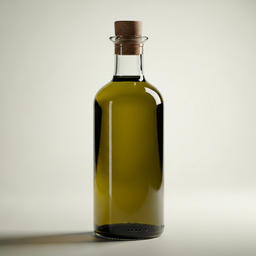 Olive Oil
 Fat activates volatile oils and increases cuminaldehyde absorption
Technical: Cumin's active compounds (cuminaldehyde, cymene, terpinene) are volatile, fat-soluble compounds. Frying in olive oil extracts and stabilizes these compounds, and the fat improves their gut absorption.
What does this mean for you? Briefly fry cumin in olive oil before adding other ingredients (tadka/tempering). This is why Indian and Middle Eastern cuisines always fry cumin in oil.
DigestionAnti-inflammatoryBlood Sugar
Cumin 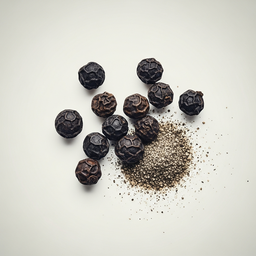 Black Pepper
 Piperine increases absorption of cumin's active compounds 2-3x
Technical: Cumin contains cuminaldehyde and thymoquinone with digestive-promoting and bioactive properties. Piperine from black pepper inhibits CYP3A4 enzymes, reducing breakdown and improving absorption 2-3x.
What does this mean for you? Always add black pepper to dishes with cumin. This is why many spice blends (garam masala, ras el hanout) contain both.
DigestionAnti-inflammatory
Turmeric Black Pepper Increases curcumin absorption by 2000%
Technical: Curcumin from turmeric has bioavailability below 1% due to rapid glucuronidation in the liver. Piperine from black pepper inhibits UGT (UDP-glucuronosyltransferase) and CYP3A4, preventing curcumin breakdown. This increases bioavailability by 2000% (20x). Use ratio ¼ teaspoon pepper to 1 teaspoon turmeric.
What does this mean for you? ALWAYS add black pepper when using turmeric. Without pepper your body absorbs virtually nothing — with pepper 20x more. This is the most important food synergy there is.
Anti-inflammatoryJointsFocus
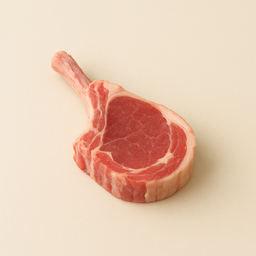 Lamb Mince Cumin
 Traditional Middle East: cumin improves fat digestion
Technical: Lamb contains 16-21% fat (depending on cut) with a higher proportion of saturated fat than chicken or fish. Cumin contains cuminaldehyde that promotes secretion of pancreatic lipase and bile salts — both essential for fat emulsification and digestion. Cumin also activates salivary glands and gastric acid secretion, improving overall digestion. Thymoquinone in cumin also has bioactive properties.
What does this mean for you? Use cumin generously with lamb dishes — in marinades, dry rubs or as ground spice. It's no coincidence that Middle Eastern, Indian and North African cuisines have combined lamb with cumin for centuries. Your stomach digests the fat significantly better.
DigestionEnergy
Lamb Mince Turmeric Turmeric modulates the inflammatory response to red meat
Technical: Red meat contains arachidonic acid that is converted via COX-2 and LOX enzymes into pro-inflammatory eicosanoids (PGE2, leukotrienes). Curcumin modulates NF-κB — the transcription factor regulating COX-2 expression — thereby modulating the inflammatory response to red meat. The fat in lamb serves as a fat-soluble carrier improving curcumin absorption.
What does this mean for you? Add turmeric to lamb dishes — as marinade, in a curry or tagine. The turmeric modulates the mild inflammatory response that red meat can cause. Always add black pepper for 2000% better curcumin absorption.
Anti-inflammatoryGeneral Wellness
Olive Oil Garlic Aglio e olio: allicin + oleocanthal via complementary biochemical pathways
Technical: Garlic contains allicin (formed when cutting/crushing) that influences HMG-CoA reductase (involved in lipid metabolism). Olive oil contains oleocanthal that modulates COX-1/2 enzymes. Together they influence lipid metabolism and prostaglandin cascade via complementary biochemical pathways. The fat also helps absorb fat-soluble garlic compounds.
What does this mean for you? Gently warm garlic in olive oil (don't burn!) as the base for many dishes. This is why 'aglio e olio' pasta is so beloved — two bioactive compounds that reinforce each other.
HeartImmune System
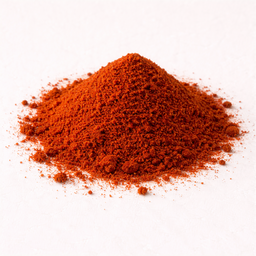 Paprika powder (sweet) Olive Oil
 3x better carotenoid absorption with fats
Technical: Paprika powder is extremely rich in carotenoids: beta-carotene, capsanthin and cryptoxanthin. These are all fat-soluble with only 5-10% absorption without fat. Olive oil or butter create micelles increasing absorption up to 3x. Additionally, vitamin E from olive oil protects carotenoids from oxidation.
What does this mean for you? Always briefly fry paprika powder in oil or butter before adding liquid. This activates the color and increases vitamin absorption up to 3x — the basis of Hungarian goulash.
Skin & HairImmune System
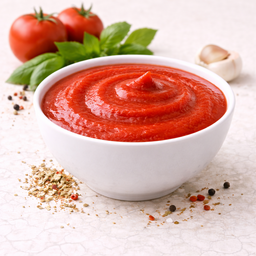 Tomato Passata Olive Oil
 Heated + fats = 5x more lycopene absorption
Technical: Tomato passata is already heated, releasing lycopene from cell walls in cis-form (better absorbable than trans-lycopene in raw tomato). Olive oil fats create micelles transporting this released lycopene through the gut wall. Basil adds eugenol (COX-2 inhibitor). Absorption increases up to 5x.
What does this mean for you? Make pasta sauce with tomato passata, olive oil and basil. You absorb up to 5x more lycopene than from raw tomato — great for your heart and skin.
HeartSkin & Hair
Tomato Passata Paprika powder (sweet) Double carotenoids: lycopene + capsanthin for antioxidant power
Technical: Tomato passata is concentrated lycopene (cooked tomatoes contain 2-3x more bioavailable lycopene). Paprika powder contains capsanthin and beta-carotene. Together they form a broad spectrum of carotenoids with synergistic antioxidant action.
What does this mean for you? Add paprika to tomato sauces - this is why Hungarian goulash and Spanish dishes are so colorful and healthy.
HeartSkin & HairImmune System
Tomato Passata 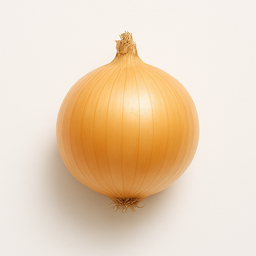 Onion
Onion Lycopene + quercetin for broad-spectrum antioxidant protection
Technical: Tomato passata contains bioavailable lycopene (12-15mg/100g) from the cooking process. Onion's quercetin (20mg/100g) is a flavonoid that works complementarily to lycopene: lycopene neutralizes singlet oxygen (lipid phase), quercetin scavenges hydroxyl radicals and superoxide (aqueous phase). Together they cover the complete antioxidant spectrum. Onion's sulfur compounds also support Phase II biotransformation enzymes that process lycopene metabolites.
What does this mean for you? Passata with sauteed onion is the base of Italian cuisine (sugo). It's a top antioxidant duo you can eat daily — simple, affordable and effective.
HeartSkin & HairAnti-inflammatory
Onion Garlic More than 20 organosulfur compounds in one soffritto
Technical: Onion contains diallyl disulfide and quercetin (20-40mg/100g). Garlic contains allicin, ajoene and S-allylcysteine. Together they provide more than 20 different organosulfur compounds that modulate NF-κB. Allium crops are intensively studied in nutrition science for their unique sulfur chemistry.
What does this mean for you? Start every dish with sautéed onion and garlic — not just for flavor, but for the unique concentration of organosulfur compounds. Cut garlic 10 minutes before heating to allow allicin formation.
DigestionImmune System
 Sea Salt Olive Oil
 Minerals + polyphenols for cellular balance
Technical: Sea salt's sodium is essential for the sodium-potassium pump (Na+/K+-ATPase) that regulates every body cell. Olive oil's oleuropein and hydroxytyrosol provide antioxidant protection for cell membranes. The combination supports cell integrity: sea salt regulates ion balance, olive oil protects the membrane. In Mediterranean cuisine, coarse sea salt + olive oil is the most basic flavor profile.
What does this mean for you? Freshly ground sea salt with extra virgin olive oil is the simplest and most nutritious finishing of any dish. The combination provides the basic needs of your cells: minerals for function, polyphenols for protection.
HeartGeneral Wellness
Black Pepper Olive Oil Fat increases piperine absorption and enhances polyphenols
Technical: Piperine is fat-soluble and absorbed 2-3x better with dietary fat. Olive oil's oleocanthal and piperine both modulate COX signal transduction through different mechanisms, providing additive bioactive effect.
What does this mean for you? Grind fresh pepper over salads with olive oil dressing. The combination enhances both pepper absorption and bioactive action.
Anti-inflammatoryHeartDigestion
Ingredients (14)
+11 more ingredients

Instructions
- 1 Heat olive oil in a large pan over high heat. Brown the lamb mince for 5 minutes until browned and crumbly all over.
- 2 Add onion and garlic and sauté for 2 minutes over medium heat.
Nutrition per serving
Indicative values per serving.
Timing & Suitability
Shelf life: 2 days in fridge
Tags & Diet
Allergens: Eggs