- Medium
- 80 min
- 2 serv.
- 15 synergies
- Now at its best: Onion
A creamy chicken tikka masala with yogurt marinade, tomato passata, garam masala, ginger and brown rice. Full of flavour, gently spiced and ideal as a filling dinner.
This tikka masala starts with the marinade: chicken cubes resting in yogurt, garam masala, turmeric and black pepper until they become tender and aromatic. In the pan they first take on colour, then onion, garlic and ginger fill the base with that deep scent that instantly feels like a curry house. The tomato passata reduces gently into a full sauce, and the final spoonful of yogurt makes everything creamy without weighing it down. Brown rice gives a firm, nutty base that works beautifully with the soft spice of the sauce. Finished with fresh coriander, this is a warm bowl of comfort: rich, rounded and familiar, yet still bright in flavour.
- 20
- min prep
- 30
- min cook
- 80
- min total
Nutritional Synergies
This recipe combines ingredients that enhance each other:
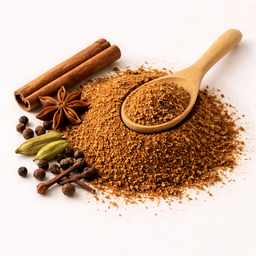 Garam masala
  Chicken breast
 Fats + probiotics improve spice absorption
Technical: Garam masala contains curcumin (turmeric), piperine (black pepper), cinnamaldehyde and cardamom — mostly fat-soluble compounds. Yogurt provides milk fats that dissolve these compounds, plus probiotics supporting gut microbiome diversity. The piperine in the mix additionally increases absorption of all other spices.
What does this mean for you? Marinate chicken in yogurt with garam masala (tikka marinade). The yogurt's fats activate the spices and the probiotics help your digestion.
DigestionAnti-inflammatory
Garam masala  Olive oil
 Fat increases bioavailability of fat-soluble spice polyphenols
Technical: Garam masala's active compounds (eugenol from cloves, cinnamaldehyde from cinnamon, piperine from pepper) are partially fat-soluble. Olive oil increases their bioavailability 2-4x through micelle formation in the digestive tract. Piperine in the pepper mix also inhibits CYP3A4 and P-glycoprotein, keeping other polyphenols in the bloodstream longer. The fat also protects heat-sensitive compounds during cooking.
What does this mean for you? Bloom your garam masala briefly in warm olive oil before adding other ingredients. This Indian technique (tadka/chaunk) dissolves active compounds in fat for maximum absorption.
Anti-inflammatoryDigestion
Garam masala  Onion
Onion Spice blend + quercetin for broad-spectrum bioactive action
Technical: Garam masala combines cinnamon (cinnamaldehyde), cardamom (1,8-cineole), cloves (eugenol) and cumin (cuminaldehyde) — each with its own bioactive signaling pathway. Onion contains quercetin (20mg/100g) that stabilizes mast cells and inhibits histamine release. Together they modulate 5+ independent signaling pathways: NF-κB cascades, COX-2, LOX, TNF-α and histamine. Studies show combined spices are stronger in combination than individual spices.
What does this mean for you? Fry onions with garam masala as the base of your curry — the traditional Indian soffritto. The onion enhances the bioactive action of every spice in the mix.
Anti-inflammatoryImmune SystemDigestion
Chicken breast 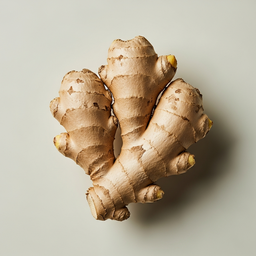 Fresh ginger
 Gingerols improve protein digestion and modulate the inflammatory response
Technical: Chicken breast contains 31g high-quality protein per 100g. Ginger contains gingerols that stimulate proteolytic enzymes (pepsin, trypsin), breaking down proteins more efficiently. Ginger also reduces formation of AGEs (Advanced Glycation End-products) when cooking meat.
What does this mean for you? Marinate chicken with fresh ginger or add ginger when cooking. This is the basis of many Asian chicken dishes (ginger chicken, congee) and improves both flavor and digestibility.
Muscle GainDigestionAnti-inflammatory
Chicken breast 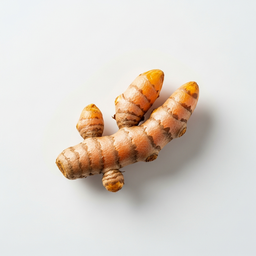 Turmeric
 Classic curry combination with complementary bioactive action
Technical: Chicken breast provides 31g protein per 100g with high leucine content (2.4g) for muscle protein synthesis (mTOR activation). After intense exercise, inflammatory processes occur, in part via NF-κB signaling. Curcumin directly modulates NF-κB, supporting muscle recovery without blocking the adaptive training response. Chicken proteins provide building material, curcumin optimizes the recovery process.
What does this mean for you? Make a chicken-turmeric curry as a post-workout meal. The chicken provides proteins for muscle building, the turmeric may support muscle recovery after training. Add black pepper and coconut milk for optimal curcumin absorption.
Muscle GainAnti-inflammatory
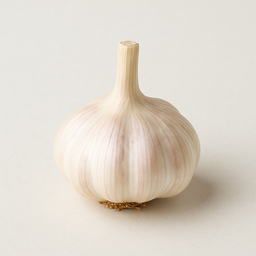 Garlic Fresh ginger
 Allicin + gingerols: complementary bioactive action
Technical: Garlic's allicin works via thiol enzyme inhibition — effective against gram-positive bacteria (Staphylococcus, Streptococcus). Ginger's gingerols and shogaols influence viral replication and stimulate interferon production. Together they cover both bacterial and viral pathways.
What does this mean for you? Garlic-ginger tea is a classic combination. Garlic works via thiol enzymes, ginger via interferon pathways. Cut both fresh for maximum active compounds — allicin only forms after 10 minutes of air exposure.
Immune System
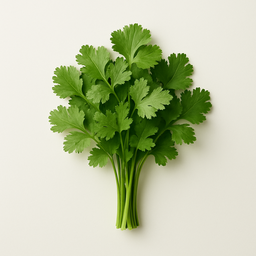 Fresh coriander Turmeric
 Linalool + curcumin for enhanced bioactive action
Technical: Coriander's linalool and coriander oil are studied in relation to lipoxygenase modulation. Turmeric's curcumin modulates NF-κB and COX-2 signal transduction. Together they cover more bioactive signaling pathways than each herb alone.
What does this mean for you? Use coriander and turmeric together in curries and Indian dishes — a traditional combination that is scientifically supported.
Anti-inflammatoryDigestionAntioxidants
Turmeric Fresh ginger Enhanced bioactive action via two pathways
Technical: Turmeric and ginger belong to the same plant family (Zingiberaceae). Curcumin (turmeric) modulates NF-kB, while gingerol (ginger) modulates COX-2 and LOX (lipoxygenase). Because they target different signaling pathways, they enhance each other's bioactive action.
What does this mean for you? Turmeric + ginger in curry, soup or tea — two related spices that work bioactively via different pathways. Broader together than alone.
Anti-inflammatoryJoints
Turmeric 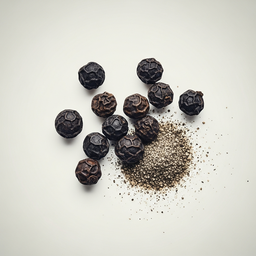 Black pepper
 Increases curcumin absorption by 2000%
Technical: Curcumin from turmeric has bioavailability below 1% due to rapid glucuronidation in the liver. Piperine from black pepper inhibits UGT (UDP-glucuronosyltransferase) and CYP3A4, preventing curcumin breakdown. This increases bioavailability by 2000% (20x). Use ratio ¼ teaspoon pepper to 1 teaspoon turmeric.
What does this mean for you? ALWAYS add black pepper when using turmeric. Without pepper your body absorbs virtually nothing — with pepper 20x more. This is the most important food synergy there is.
Anti-inflammatoryJointsFocus
Olive oil Garlic Aglio e olio: allicin + oleocanthal via complementary biochemical pathways
Technical: Garlic contains allicin (formed when cutting/crushing) that influences HMG-CoA reductase (involved in lipid metabolism). Olive oil contains oleocanthal that modulates COX-1/2 enzymes. Together they influence lipid metabolism and prostaglandin cascade via complementary biochemical pathways. The fat also helps absorb fat-soluble garlic compounds.
What does this mean for you? Gently warm garlic in olive oil (don't burn!) as the base for many dishes. This is why 'aglio e olio' pasta is so beloved — two bioactive compounds that reinforce each other.
HeartImmune System
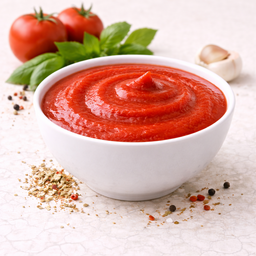 Tomato passata Olive oil
 Heated + fats = 5x more lycopene absorption
Technical: Tomato passata is already heated, releasing lycopene from cell walls in cis-form (better absorbable than trans-lycopene in raw tomato). Olive oil fats create micelles transporting this released lycopene through the gut wall. Basil adds eugenol (COX-2 inhibitor). Absorption increases up to 5x.
What does this mean for you? Make pasta sauce with tomato passata, olive oil and basil. You absorb up to 5x more lycopene than from raw tomato — great for your heart and skin.
HeartSkin & Hair
Tomato passata Onion Lycopene + quercetin for broad-spectrum antioxidant protection
Technical: Tomato passata contains bioavailable lycopene (12-15mg/100g) from the cooking process. Onion's quercetin (20mg/100g) is a flavonoid that works complementarily to lycopene: lycopene neutralizes singlet oxygen (lipid phase), quercetin scavenges hydroxyl radicals and superoxide (aqueous phase). Together they cover the complete antioxidant spectrum. Onion's sulfur compounds also support Phase II biotransformation enzymes that process lycopene metabolites.
What does this mean for you? Passata with sauteed onion is the base of Italian cuisine (sugo). It's a top antioxidant duo you can eat daily — simple, affordable and effective.
HeartSkin & HairAnti-inflammatory
Onion Garlic More than 20 organosulfur compounds in one soffritto
Technical: Onion contains diallyl disulfide and quercetin (20-40mg/100g). Garlic contains allicin, ajoene and S-allylcysteine. Together they provide more than 20 different organosulfur compounds that modulate NF-κB. Allium crops are intensively studied in nutrition science for their unique sulfur chemistry.
What does this mean for you? Start every dish with sautéed onion and garlic — not just for flavor, but for the unique concentration of organosulfur compounds. Cut garlic 10 minutes before heating to allow allicin formation.
DigestionImmune System
 Sea salt Olive oil
 Minerals + polyphenols for cellular balance
Technical: Sea salt's sodium is essential for the sodium-potassium pump (Na+/K+-ATPase) that regulates every body cell. Olive oil's oleuropein and hydroxytyrosol provide antioxidant protection for cell membranes. The combination supports cell integrity: sea salt regulates ion balance, olive oil protects the membrane. In Mediterranean cuisine, coarse sea salt + olive oil is the most basic flavor profile.
What does this mean for you? Freshly ground sea salt with extra virgin olive oil is the simplest and most nutritious finishing of any dish. The combination provides the basic needs of your cells: minerals for function, polyphenols for protection.
HeartGeneral Wellness
Black pepper Olive oil Fat increases piperine absorption and enhances polyphenols
Technical: Piperine is fat-soluble and absorbed 2-3x better with dietary fat. Olive oil's oleocanthal and piperine both modulate COX signal transduction through different mechanisms, providing additive bioactive effect.
What does this mean for you? Grind fresh pepper over salads with olive oil dressing. The combination enhances both pepper absorption and bioactive action.
Anti-inflammatoryHeartDigestion
Ingredients (13)
- Chicken breast — 300 g cut into 3 cm cubes
-
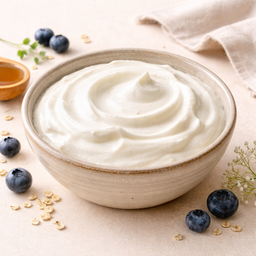 Greek yogurt — 150 g full-fat, divided
 - Tomato passata — 400 ml
Instructions
- 1 Mix the chicken with 100 g Greek yogurt, turmeric, garam masala, black pepper and sea salt. Marinate for at least 30 minutes.
- 2 Cook the brown rice according to the package, usually 25 minutes. Let it rest covered until the curry is ready.
Nutrition per serving
Indicative values per serving.
Timing & Suitability
Shelf life: 3 days in fridge
Tags & Diet
Allergens: Dairy