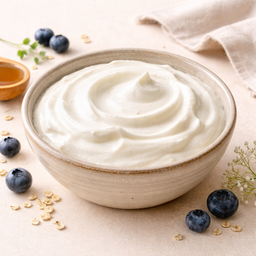
Greek Yogurt
Thick protein-rich yogurt
What is this ingredient?
Greek yogurt is traditionally made by straining yogurt through cloth for several hours, allowing whey (lactose serum) to drain and creating a thicker, creamier texture. This straining process concentrates protein (10-20 g/100 g compared with 3-6 g in regular yogurt) and naturally contains less lactose than regular yogurt. Fermentation by Streptococcus thermophilus and Lactobacillus bulgaricus produces lactic acid, which coagulates milk proteins and creates the familiar fresh, mildly tangy flavor. Products with live cultures provide bacterial cultures that are studied in relation to digestion, microbiome composition and lactose tolerance. Full-fat versions also contain milk-fat components such as CLA, while low-fat versions are useful when you want a protein-rich choice with less fat. Greek yogurt works well in breakfast bowls, sauces, marinades, smoothies and simple snacks.
How does it taste?
Thick, creamy and mildly tangy with a fresh finish.
Pairs well with:
Pairs well with honeycucumbergarlicmint and granola.
Did you know...?
- Straining Greek yogurt removes part of the whey, making it much thicker than regular yogurt.
- In Greece itself, strained yogurt is often called 'straggisto'.
Nutritional Value & Energy
Per 100g
Greek Yogurt provides energy thanks to natural nutrients .
Per 100g
Minerals
Vitamins
Omega-3 fatty acids
More nutrients
B-Vitamins
Trace Minerals
What's in a serving?
1 serving
Greek yogurt naturally contains selenium (9.7 mcg per 100 g).
Greek yogurt naturally contains vitamin B12 (0.52 mcg per 100 g).
Greek yogurt naturally contains iodine (51 mcg per 100 g).
% of daily reference intake (DRI)
EU-approved nutrition claims
This ingredient contains nutrients for which EFSA-authorized health claims exist (at nutrient level, not ingredient-specific).
Approved health claims (EU)
Vitamin_b12 EU 432/2012
Vitamin B12 contributes to the normal function of the immune system
Contains 0.52mcg/100g (threshold: ≥0.375mcg/100g)
Vitamin_b12 EU 432/2012
Vitamin B12 contributes to the reduction of tiredness and fatigue
Contains 0.52mcg/100g (threshold: ≥0.375mcg/100g)
Vitamin_b12 EU 432/2012
Vitamin B12 contributes to the normal functioning of the nervous system
Contains 0.52mcg/100g (threshold: ≥0.375mcg/100g)
Vitamin_b12 EU 432/2012
Vitamin B12 contributes to normal energy-yielding metabolism
Contains 0.52mcg/100g (threshold: ≥0.375mcg/100g)
Vitamin_b12 EU 432/2012
Vitamin B12 contributes to normal homocysteine metabolism
Contains 0.52mcg/100g (threshold: ≥0.375mcg/100g)
Vitamin_b12 EU 432/2012
Vitamin B12 contributes to normal psychological function
Contains 0.52mcg/100g (threshold: ≥0.375mcg/100g)
Vitamin_b12 EU 432/2012
Vitamin B12 contributes to normal red blood cell formation
Contains 0.52mcg/100g (threshold: ≥0.375mcg/100g)
Vitamin_b12 EU 432/2012
Vitamin B12 has a role in the process of cell division
Contains 0.52mcg/100g (threshold: ≥0.375mcg/100g)
Selenium EU 432/2012
Selenium contributes to the maintenance of normal hair
Contains 9.7mcg/100g (threshold: ≥8.25mcg/100g)
Selenium EU 432/2012
Selenium contributes to the maintenance of normal nails
Contains 9.7mcg/100g (threshold: ≥8.25mcg/100g)
Selenium EU 432/2012
Selenium contributes to the normal function of the immune system
Contains 9.7mcg/100g (threshold: ≥8.25mcg/100g)
Selenium EU 432/2012
Selenium contributes to normal thyroid function
Contains 9.7mcg/100g (threshold: ≥8.25mcg/100g)
Selenium EU 432/2012
Selenium contributes to normal spermatogenesis
Contains 9.7mcg/100g (threshold: ≥8.25mcg/100g)
Selenium EU 432/2012
Selenium contributes to the protection of cells from oxidative stress
Contains 9.7mcg/100g (threshold: ≥8.25mcg/100g)
Iodine EU 432/2012
Iodine contributes to normal cognitive function
Contains 51mcg/100g (threshold: ≥22.5mcg/100g)
Iodine EU 432/2012
Iodine contributes to normal energy-yielding metabolism
Contains 51mcg/100g (threshold: ≥22.5mcg/100g)
Iodine EU 432/2012
Iodine contributes to normal functioning of the nervous system
Contains 51mcg/100g (threshold: ≥22.5mcg/100g)
Iodine EU 432/2012
Iodine contributes to the maintenance of normal skin
Contains 51mcg/100g (threshold: ≥22.5mcg/100g)
Iodine EU 432/2012
Iodine contributes to the normal production of thyroid hormones and normal thyroid function
Contains 51mcg/100g (threshold: ≥22.5mcg/100g)
Iodine EU 432/2012
Iodine contributes to the normal growth of children
Contains 51mcg/100g (threshold: ≥22.5mcg/100g)
What's being researched?
Greek yogurt and muscle mass maintenance
The high protein content of Greek yogurt is studied in relation to satiety, sports nutrition and muscle mass maintenance. Studies with training protocols mainly examine protein intake, timing and practical use within everyday diets.
Supported by: [3] Douglas SM (2013)
Greek yogurt and live cultures
The live cultures in Greek yogurt are studied in relation to digestion, lactose breakdown and microbiome composition. The straining process lowers lactose content while typical yogurt cultures can remain present, depending on the product and processing.
Supported by: [1] Morelli L (2014) , [5] Rizzoli R (2022)
Good Combinations (Synergy)
Combine greek yogurt smartly to enhance the effect:
Greek Yogurt 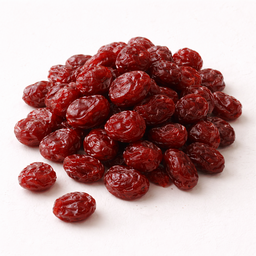 Dried cherries
 Polyphenols + probiotics for microbiome support
Technical: Dried cherries contain anthocyanins and polyphenols that act as prebiotics. Yogurt provides probiotic bacteria (Lactobacillus, Bifidobacterium). Together they strengthen gut flora: the polyphenols selectively feed the probiotic strains, the yogurt delivers these strains alive.
What does this mean for you? Add dried cherries to yogurt as breakfast or dessert. The sweetness of the cherries replaces sugar, the probiotics from yogurt are fed by the polyphenols from the cherries. A synbiotic combination that optimally supports your gut flora.
Greek Yogurt 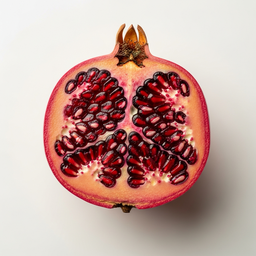 Pomegranate
 Punicalagins + probiotics for microbiome and urolithin conversion
Technical: Pomegranate contains punicalagins that are converted in the gut to urolithins by bacteria. Yogurt provides probiotics that improve this conversion. The combination strengthens both the bacterial colony and the production of bioactive urolithins — a truly synbiotic effect.
What does this mean for you? Add pomegranate seeds to yogurt. The seeds give a crunchy texture and tart flavor, while the probiotics in yogurt strengthen the conversion of pomegranate polyphenols into bioactive urolithins.
Greek Yogurt 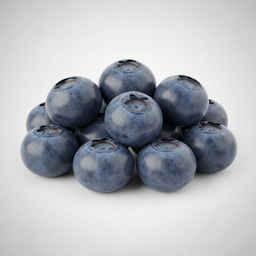 Blueberries
 Probiotics + prebiotic fibers for optimal gut flora
Technical: Greek yogurt provides 1-100 billion CFU probiotics (Lactobacillus, Bifidobacterium). Blueberries contain prebiotic fibers (2.4g/100g) and polyphenols (anthocyanins) that selectively promote growth of beneficial bacteria. This synbiotic effect increases production of short-chain fatty acids (butyrate, propionate) by 20-40%.
What does this mean for you? Greek yogurt with blueberries is an ideal synbiotic combination. The yogurt provides good bacteria, the berries feed them — together they support your gut flora.
Greek Yogurt 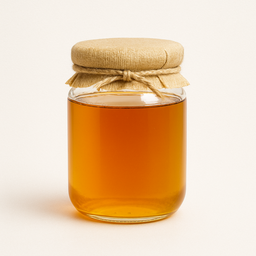 Honey
Honey Prebiotic honey feeds probiotic bacteria in yogurt (synbiotic effect)
Synbiotics improve probiotic survival (PMID: 16633129)
Technical: Greek yogurt contains live probiotics (Lactobacillus, Streptococcus). Honey contains oligosaccharides and FOS acting as prebiotics. This 'synbiotic' — pre- and probiotics together — increases survival and colonization of probiotic bacteria in the gut by 10-100x. The prebiotic fibers give bacteria nutrition to multiply.
What does this mean for you? Add raw honey to your Greek yogurt. The honey doesn't just sweeten — it literally feeds the good bacteria from the yogurt so they survive in your gut.
Greek Yogurt 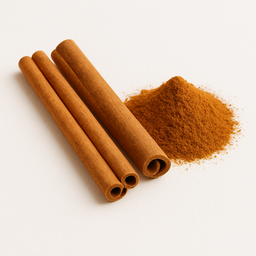 Cinnamon
 Probiotics + AMPK activation for metabolic balance
Cinnamon improves insulin sensitivity (PMID: 20854384)
Technical: Greek yogurt has a low GI (11-14) and contains probiotics that influence insulin sensitivity via the gut-pancreas axis. Cinnamon contains MHCP (methylhydroxy chalcone polymers) that activate AMPK and sensitize insulin receptors. Together they modulate postprandial glycemic response.
What does this mean for you? Add a teaspoon of cinnamon to your Greek yogurt. The cinnamon contains bioactive polyphenols that activate AMPK, the yogurt keeps your blood sugar low anyway — together they keep your energy level stable.
Greek Yogurt 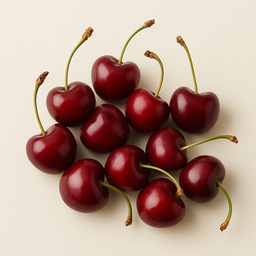 Cherries
 Anthocyanins + probiotics for bioactive collaboration
Technical: Cherries contain anthocyanins (cyanidin-3-glucosylrutinoside) that influence multiple biochemical pathways, including COX enzyme activity and eicosanoid metabolism. Yogurt's probiotics modulate the immune response via the gut-immune axis and improve the conversion of polyphenols to bioactive metabolites.
What does this mean for you? Mix fresh or dried cherries into yogurt at breakfast. The anthocyanins from cherries and probiotics from yogurt work together — the good gut bacteria convert cherry polyphenols into even more active metabolites. A delicious combination that also works synbiotically.
Greek Yogurt 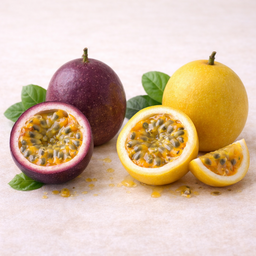 Passion Fruit (Maracuja)
 Bioactive alkaloids from passion fruit + probiotics from yogurt
Technical: Passion fruit contains harman and harmaline — beta-carboline alkaloids that activate GABA-A receptors (anxiety-reducing) and inhibit MAO-A (increases serotonin). Greek yogurt provides probiotics (Lactobacillus, Bifidobacterium) that via the gut-brain axis (vagus nerve) stimulate GABA production and lower cortisol. Together they enhance calming effects through two independent routes.
What does this mean for you? Mix passion fruit pulp into Greek yogurt as breakfast or dessert. The combination calms both your gut and nervous system. Ideal for stress, anxiety or sleep issues.
Recipes with Greek Yogurt
Discover delicious recipes featuring greek yogurt:
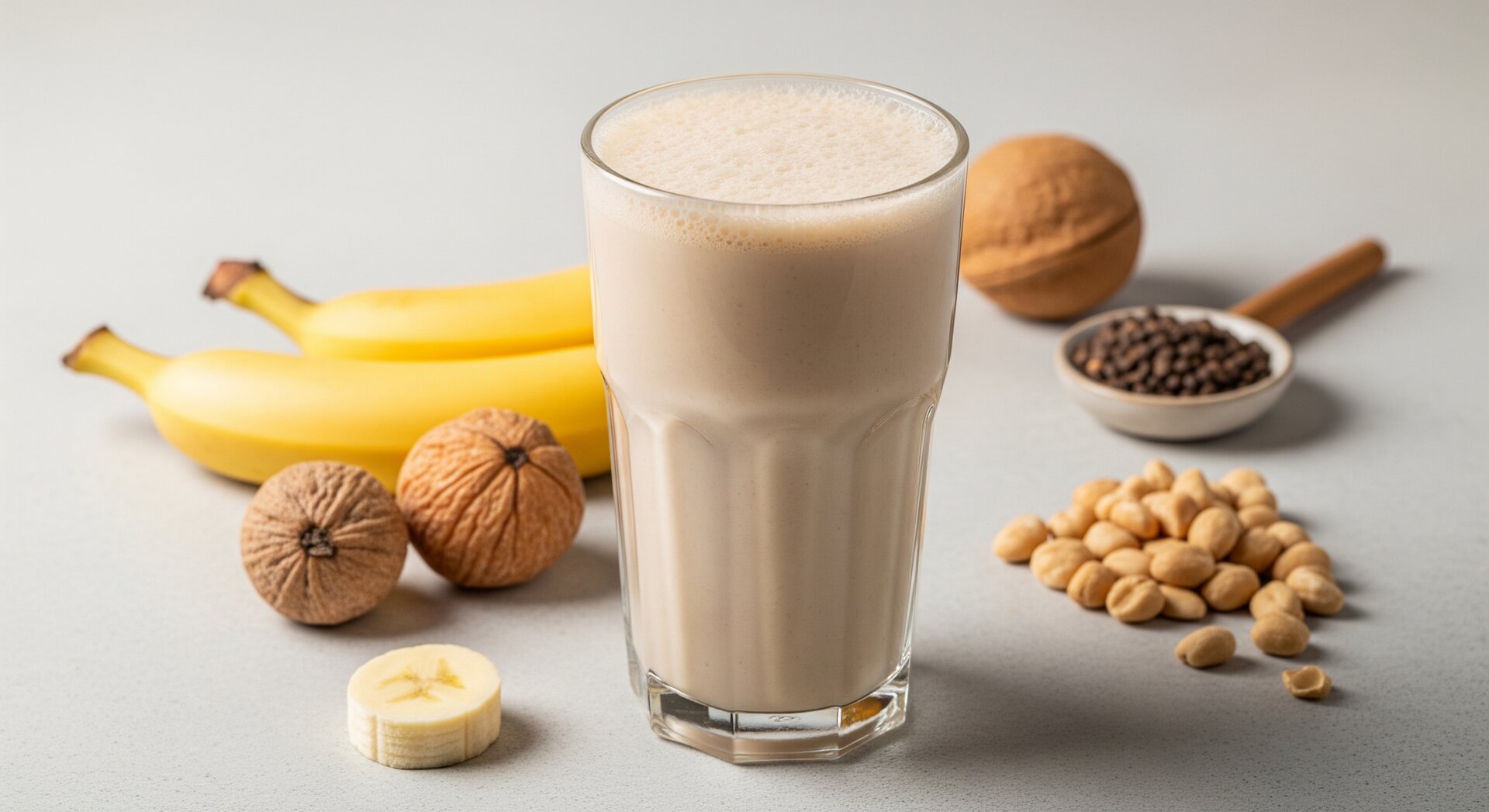 Banana-Date Shake with Walnuts 5 min Hearty shake with Medjool dates, walnuts and Greek yogurt
  1024 kcal
  35g protein 2 synergies
 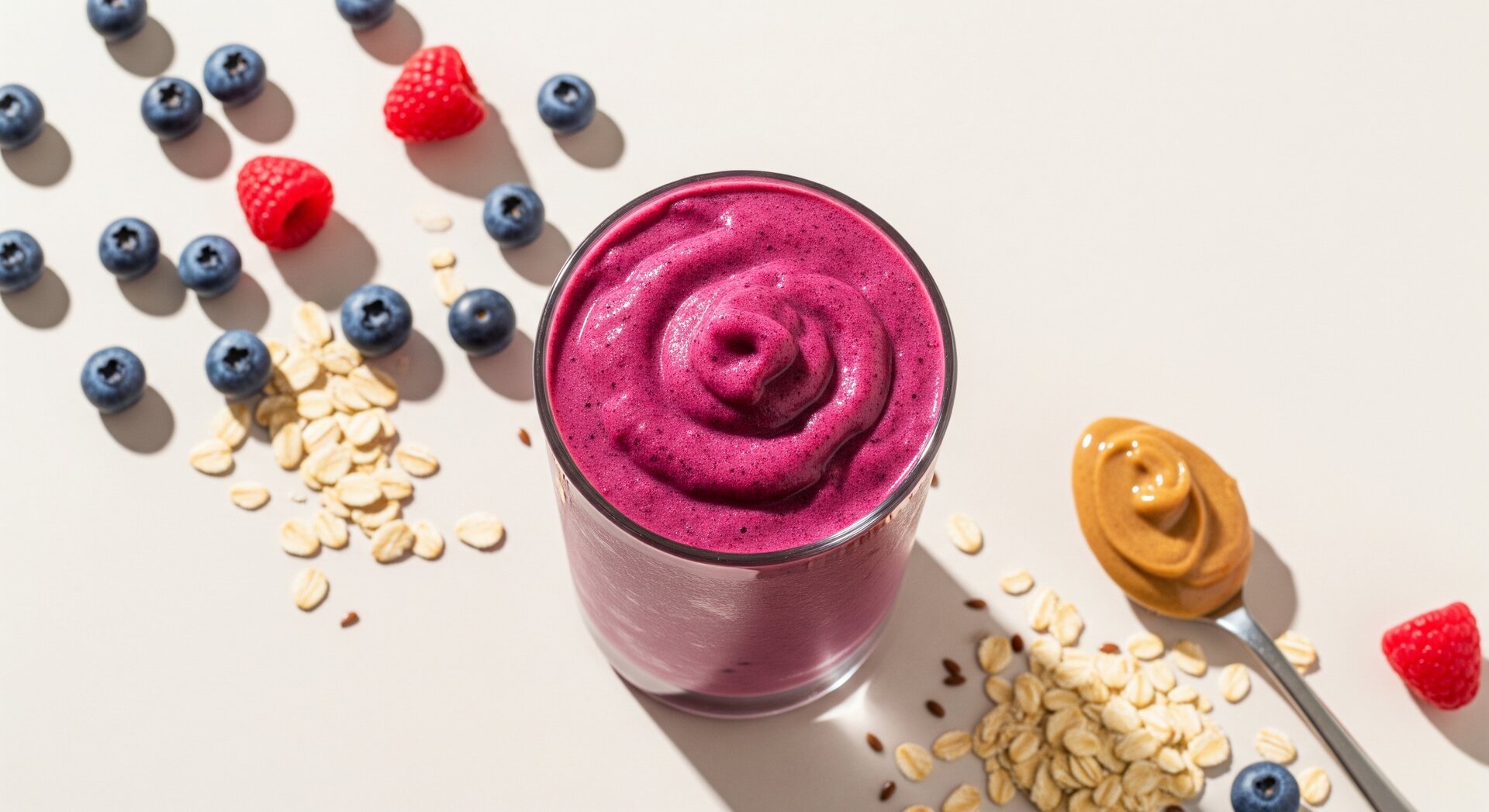 Berry-Oat Shake 5 min Hearty shake with blueberries, raspberries and flaxseed 953 kcal 45g protein 2 synergies
  Buckwheat Pancakes with Berries 30 min Gluten-free pancakes with blueberries and yogurt 420 kcal 18g protein 1 synergies
  Caesar Salad with Chicken 25 min Classic Roman salad with crispy romaine and parmesan 340 kcal 32g protein 1 synergies
 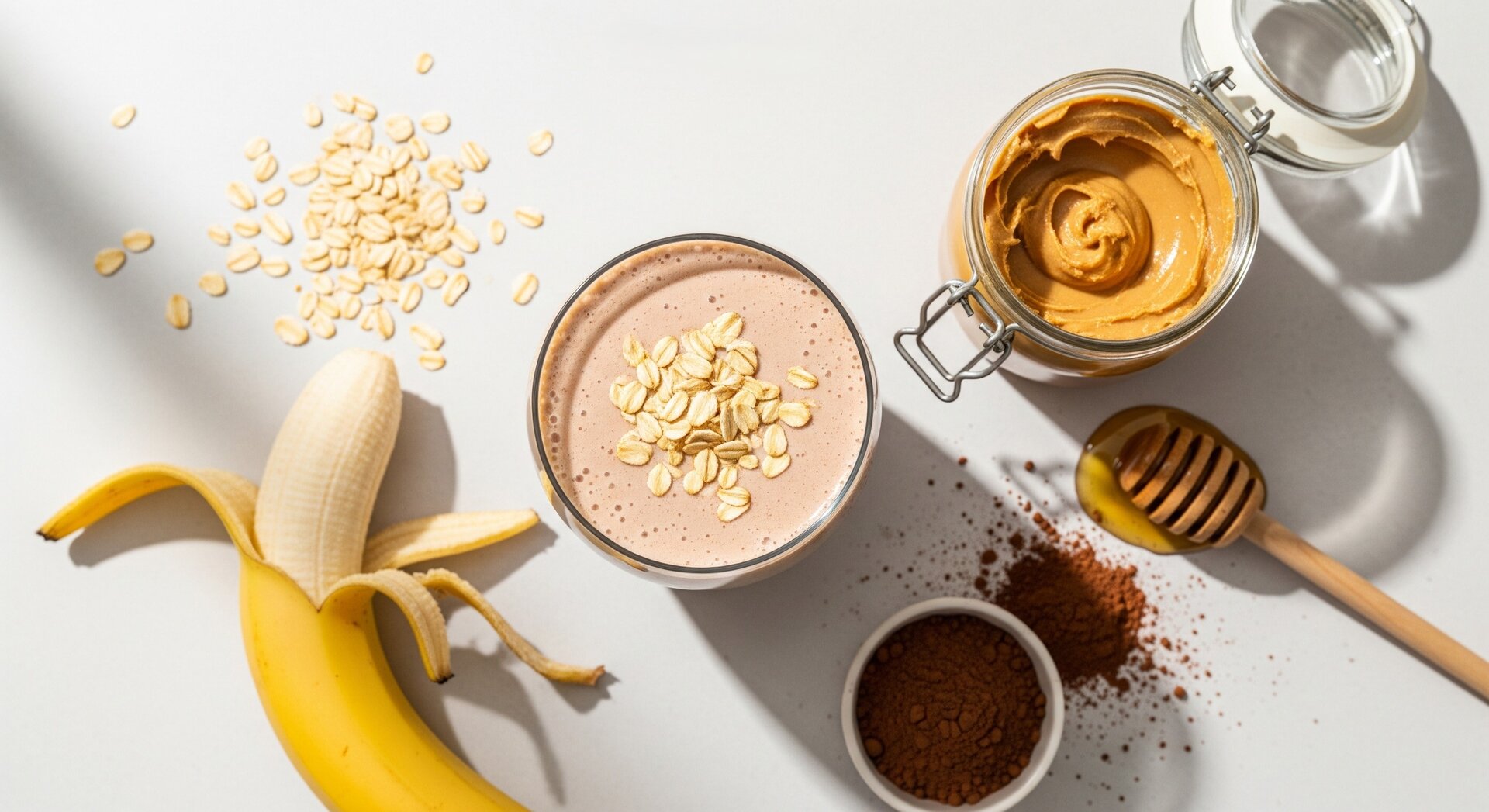 Chocolate Peanut Butter Protein Shake 5 min Hearty shake with raw cacao, peanut butter and oats 1149 kcal 53g protein 2 synergies
  Frozen Yogurt Berry Bark with Granola 190 min Refreshing frozen yogurt sheet with berries, almonds and chia seeds 260 kcal 15g protein 2 synergies
  In the Kitchen
Storage
Location:Refrigerator
Substitutes
Smart preparation
1Stir Greek yogurt smooth before mixing it into dishes.
2Add Greek yogurt over low heat while stirring.
Why?
Too much heat can make the yogurt curdle and reduce its creamy texture.
3Use Greek yogurt as a substitute for cream in cold sauces.
Caution / Warnings
Greek Yogurt is very safe, but there are scientific considerations:
Lactose intolerance (mild) Moderate
Greek yogurt usually contains less lactose than regular yogurt because of straining and fermentation (about 3.6 g versus 6 g per 100 g). Many people with mild lactose intolerance tolerate small portions better than milk, but responses remain individual.
Advice:
Start with a small portion (50-100 g) and choose a lactose-free version if symptoms are clear.
Dairy allergy (casein/whey) Severe
Greek yogurt contains milk proteins such as casein and whey proteins. Fermentation does not change the protein structure enough to make the product suitable for a true milk protein allergy.
Advice:
With a confirmed milk protein allergy: avoid completely and choose a suitable alternative such as soy, coconut or almond yogurt. Seek personal advice if you are unsure about allergy or cross-contamination.
Saturated fat Moderate
Full-fat Greek yogurt typically contains 5-10 g fat per 100 g, part of which is saturated fat. Low-fat and reduced-fat versions contain less fat while often keeping a similar amount of protein.
Advice:
Choose a low-fat or reduced-fat version when you want to limit total fat intake. Check the label, because fat content, protein content and added sugars vary widely by brand.
Traditional use
Mediterranean
Greek yogurt in the Eastern Mediterranean
Strained yogurt has a centuries-old culinary tradition in Greece, Turkey and surrounding regions. It was eaten with bread, herbs, cucumber, honey and simple dishes, especially when a thick, fresh dairy base was desired.
Summary
Greek yogurt is a thick, creamy yogurt with plenty of protein (often 10-20 g/100 g), live yogurt cultures and less lactose than regular yogurt. The straining process removes part of the whey, concentrates the protein and creates the firm texture. That makes it useful in breakfast bowls, smoothies, dips, tzatziki, sauces and marinades. It also provides calcium, phosphorus, iodine, selenium and vitamin B12. Choose a full-fat version for a richer taste and milk-fat components such as CLA, or a low-fat version when you want less fat. Combine with fruit, nuts, seeds or whole-grain granola for extra texture, fiber and flavor.