Thyme (Fresh)
The Mediterranean Depth Builder
What is this ingredient?
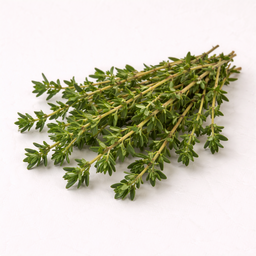
Thyme is a sturdy kitchen herb: from French stews to Middle Eastern za'atar. Its essential oil is rich in thymol, an aromatic phenolic compound that helps define its distinctly herbal scent and is also known from oral-care products. In culinary traditions, thyme is often used in warm herbal preparations, honey syrups, and slow-cooked dishes. Culinary bonus: thyme holds up well in long cooking and adds clean, savory depth to tomato, chicken, beans, and lentils.
How does it taste?
Warm, herbal, and slightly floral with earthy, resinous, and menthol-like undertones.
Pairs well with:
Pairs well with garliclemonmushroomsbraised meattomatoand beans.
Did you know...?
- The ancient Egyptians used thyme in the mummification process as an aromatic preserving herb.
- The word thyme comes from the Greek 'thymos', linked with courage, strength, and fragrant smoke.
Nutritional Value & Energy
Per 100g
Thyme (Fresh) provides energy thanks to natural nutrients , buffered by fiber.
Per 100g
Minerals
Vitamins
More nutrients
Trace Minerals
What's in a serving?
Thyme (Fresh) naturally contains vitamin c (160 mg per 100 g fresh). At typical herb use (5–10 g), the contribution is limited.
Thyme (Fresh) naturally contains iron (17.5 mg per 100 g fresh). At typical herb use (5–10 g), the contribution is limited.
Thyme (Fresh) naturally contains manganese (1.7 mg per 100 g fresh). At typical herb use (5–10 g), the contribution is limited.
Thyme (Fresh) naturally contains vitamin k (1714 mcg per 100 g fresh). At typical herb use (5–10 g), the contribution is limited.
Thyme (Fresh) naturally contains vitamin c (160 mg per 100 g fresh). At typical herb use (5–10 g), the contribution is limited.
Thyme (Fresh) naturally contains vitamin a (238 mcg per 100 g fresh). At typical herb use (5–10 g), the contribution is limited.
Thyme (Fresh) naturally contains iron (17.5 mg per 100 g fresh). At typical herb use (5–10 g), the contribution is limited.
Thyme (Fresh) naturally contains manganese (1.7 mg per 100 g fresh). At typical herb use (5–10 g), the contribution is limited.
Thyme (Fresh) naturally contains calcium (405 mg per 100 g fresh). At typical herb use (5–10 g), the contribution is limited.
Thyme (Fresh) naturally contains magnesium (160 mg per 100 g fresh). At typical herb use (5–10 g), the contribution is limited.
Thyme (Fresh) naturally contains vitamin k (1714 mcg per 100 g fresh). At typical herb use (5–10 g), the contribution is limited.
Thyme (Fresh) naturally contains potassium (609 mg per 100 g fresh). At typical herb use (5–10 g), the contribution is limited.
Thyme (Fresh) naturally contains copper (0.6 mg per 100 g fresh). At typical herb use (5–10 g), the contribution is limited.
% of daily reference intake (DRI)
EU-approved nutrition claims
This ingredient contains nutrients for which EFSA-authorized health claims exist at nutrient level, not ingredient-specific level.
Approved health claims (EU)
Vitamin_c EU 432/2012
Vitamin C contributes to the normal function of the immune system
Contains 160mg/100g (threshold: ≥12mg/100g)
Vitamin_c EU 432/2012
Vitamin C contributes to the reduction of tiredness and fatigue
Contains 160mg/100g (threshold: ≥12mg/100g)
Vitamin_c EU 432/2012
Vitamin C contributes to normal collagen formation for the normal function of skin
Contains 160mg/100g (threshold: ≥12mg/100g)
Vitamin_c EU 432/2012
Vitamin C contributes to normal collagen formation for the normal function of blood vessels
Contains 160mg/100g (threshold: ≥12mg/100g)
Vitamin_c EU 432/2012
Vitamin C contributes to normal collagen formation for the normal function of bones
Contains 160mg/100g (threshold: ≥12mg/100g)
Vitamin_c EU 432/2012
Vitamin C contributes to normal collagen formation for the normal function of cartilage
Contains 160mg/100g (threshold: ≥12mg/100g)
Vitamin_c EU 432/2012
Vitamin C contributes to normal collagen formation for the normal function of gums
Contains 160mg/100g (threshold: ≥12mg/100g)
Vitamin_c EU 432/2012
Vitamin C contributes to normal collagen formation for the normal function of teeth
Contains 160mg/100g (threshold: ≥12mg/100g)
Vitamin_c EU 432/2012
Vitamin C contributes to normal energy-yielding metabolism
Contains 160mg/100g (threshold: ≥12mg/100g)
Vitamin_c EU 432/2012
Vitamin C contributes to normal functioning of the nervous system
Contains 160mg/100g (threshold: ≥12mg/100g)
Vitamin_c EU 432/2012
Vitamin C contributes to normal psychological function
Contains 160mg/100g (threshold: ≥12mg/100g)
Vitamin_c EU 432/2012
Vitamin C contributes to the protection of cells from oxidative stress
Contains 160mg/100g (threshold: ≥12mg/100g)
Vitamin_c EU 432/2012
Vitamin C contributes to the regeneration of the reduced form of vitamin E
Contains 160mg/100g (threshold: ≥12mg/100g)
Vitamin_c EU 432/2012
Vitamin C increases iron absorption
Contains 160mg/100g (threshold: ≥12mg/100g)
Vitamin_c EU 432/2012
Vitamin C contributes to maintain the normal function of the immune system during and after intense physical exercise
Contains 160mg/100g (threshold: ≥12mg/100g)
Vitamin_k EU 432/2012
Vitamin K contributes to normal blood clotting
Contains 1714mcg/100g (threshold: ≥11.25mcg/100g)
Vitamin_k EU 432/2012
Vitamin K contributes to the maintenance of normal bones
Contains 1714mcg/100g (threshold: ≥11.25mcg/100g)
Comparison
vsspinazie
Thyme (Fresh) contains about 6× more iron per 100 g than spinach — but you use much less thyme per serving.
vssinaasappel
Thyme (Fresh) contains about 3× more vitamin C per 100 g than orange — but you use much less thyme per serving.
vsmelk
Thyme (Fresh) contains about 3× more calcium per 100 g than milk — but you use much less thyme per serving.
What's being researched?
Thymol in thyme
Thymol in thyme is widely studied as an aromatic phenolic compound. It is used in oral-care products and contributes to thyme’s distinctly herbal profile.
Supported by: [1] Wirtu SF (2024)
Thyme in warm herbal preparations
Thyme extract and thyme preparations are studied in the context of seasonal airway discomfort. Most uses align with traditional preparation in teas, syrups, and warm herbal drinks.
Supported by: [2] Marzian O (2007) , [1] Wirtu SF (2024)
Good Combinations (Synergy)
Combine thyme (fresh) smartly to enhance the effect:
Thyme (Fresh) 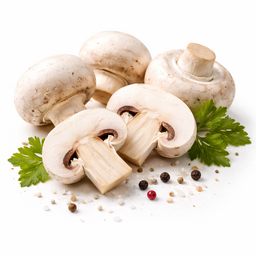 White Button Mushrooms
 French classic combination: ergothioneine + thymol
Technical: Mushrooms contain ergothioneine (a distinctive antioxidant that accumulates in mitochondria) and B vitamins. Thyme contains thymol and carvacrol, aromatic compounds with antioxidant properties. Together they bring a range of plant compounds to your plate.
What does this mean for you? Sauté mushrooms with fresh thyme — a classic French combination from Provençal cuisine. Add thyme in the last minute for optimal aroma retention.
Thyme (Fresh) 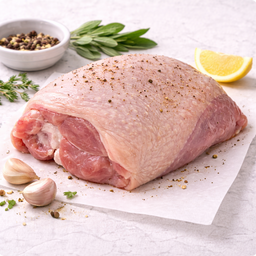 Turkey Thigh
 Antioxidants protect fats during heating
Technical: Turkey thighs contain more unsaturated fat than chicken breast. At high temperatures these fats oxidize and form heterocyclic amines (HCAs) and Advanced Glycation End-products (AGEs). Rosemary contains heat-stable carnosol and carnosic acid that can reduce HCA formation. Thyme contains thymol and carvacrol with similar antioxidant action.
What does this mean for you? Sprinkle turkey thighs with rosemary and thyme before roasting. These herbs do more than add flavor — they actively protect the meat against harmful compounds formed during heating. Marinating is even more thorough than sprinkling.
Thyme (Fresh) 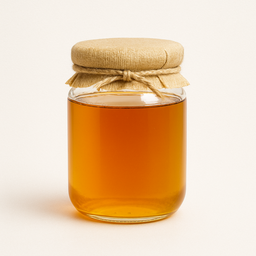 Honey
Honey Traditional thyme-honey drink with thymol
Technical: Thyme contains thymol (20-54%) — a powerful antiseptic that disrupts cell walls of microorganisms and breaks down biofilms. Honey adds hydrogen peroxide production (via glucose oxidase) and coats throat mucosa as physical protective layer. Together: broad-spectrum bioactive action + a smooth, protective layer.
What does this mean for you? Make thyme-honey syrup as a warm drink. Steep fresh thyme in honey for a natural, herbal drink — used since antiquity.
Thyme (Fresh) 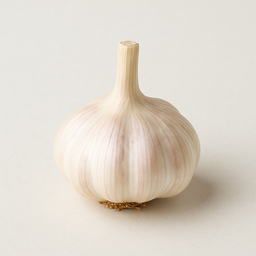 Garlic
 Double bioactive action via complementary mechanisms
Technical: Thyme's thymol disrupts cell membranes of microorganisms via lipophilic insertion. Garlic's allicin inhibits microbial enzymes (cysteine proteases). Two independent bioactive mechanisms — membrane disruption (thyme) + enzyme inhibition (garlic) — provide broader spectrum coverage than each ingredient alone.
What does this mean for you? Use thyme and garlic together in sauces, soups and marinades. Two bioactive ingredients working through different routes — the foundation of Provençal cuisine.
Thyme (Fresh) 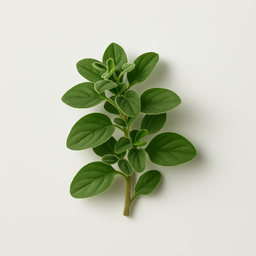 Oregano
 Thymol + carvacrol work synergistically as natural preservation
Technical: Thyme contains thymol (20-54%) and oregano contains carvacrol (60-74%). Both are phenolic compounds disrupting cell membranes of microorganisms but through different binding sites. Studies (Burt, 2004) show the combination works synergistically — bioactivity exceeds the sum of individual effects.
What does this mean for you? Use thyme and oregano together as herb mix on pizza, in sauces or as meat marinade. Two herbs with similar but complementary bioactive action — traditionally also valued for food preservation.
Recipes with Thyme (Fresh)
Discover delicious recipes featuring thyme (fresh):
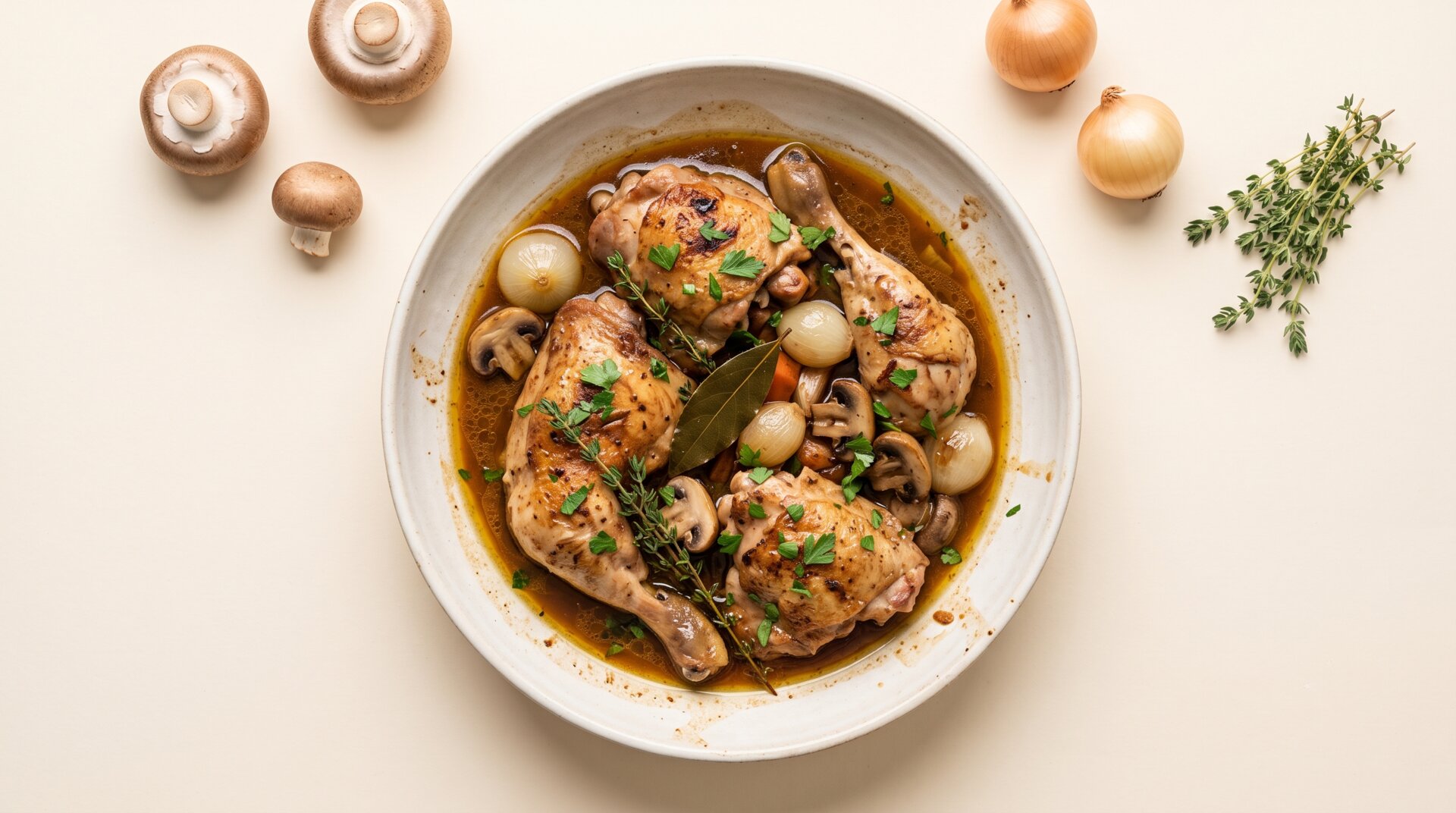 Chicken in Grape Juice 100 min Slow-braised chicken with herbs, vegetables and a rich sauce
  410 kcal
  45g protein 1 synergies
 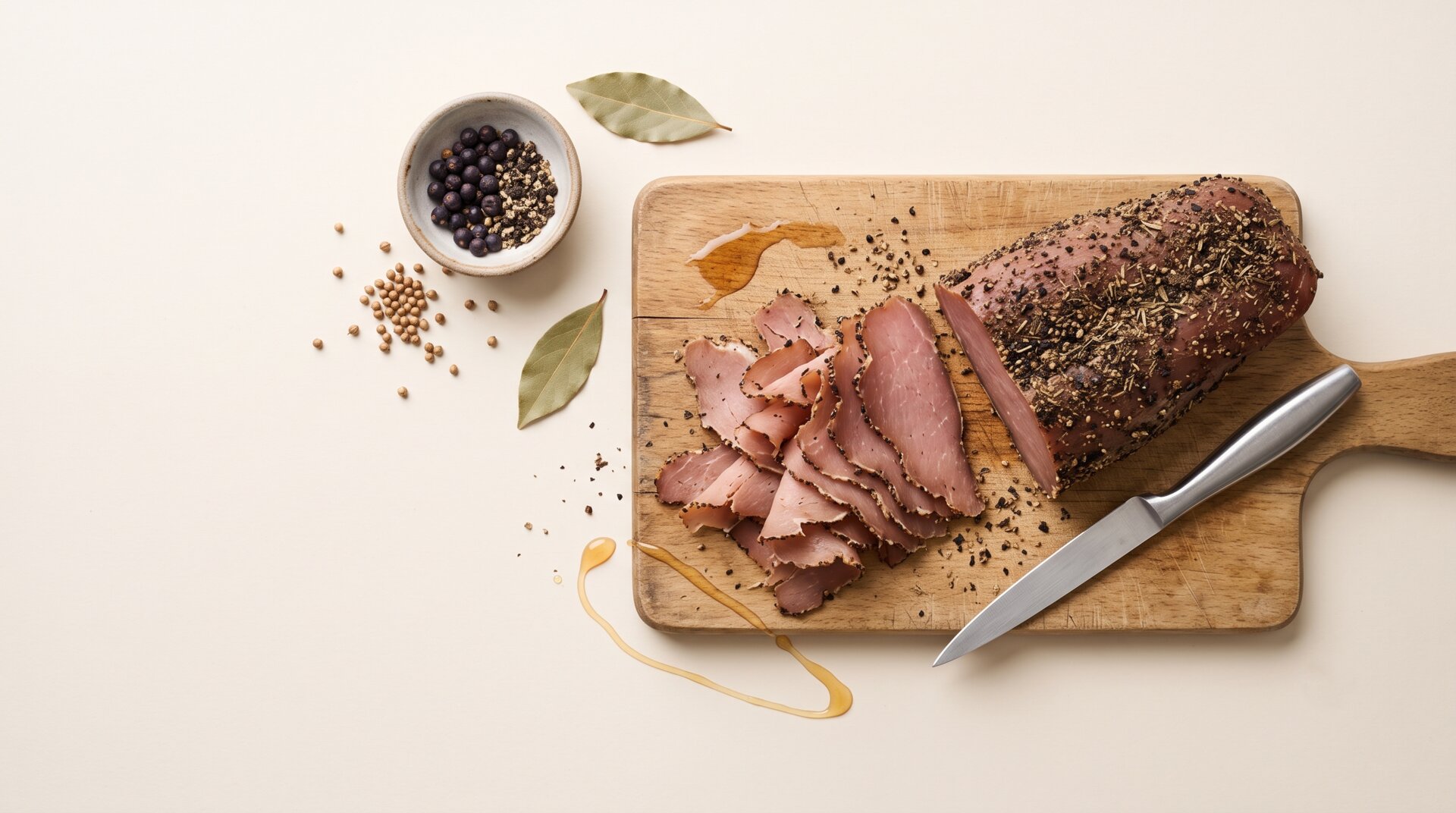 Turkey Filet d'Anvers Cold Cut 200 min Belgian delicacy as halal sandwich meat 50 kcal 10g protein 2 synergies
 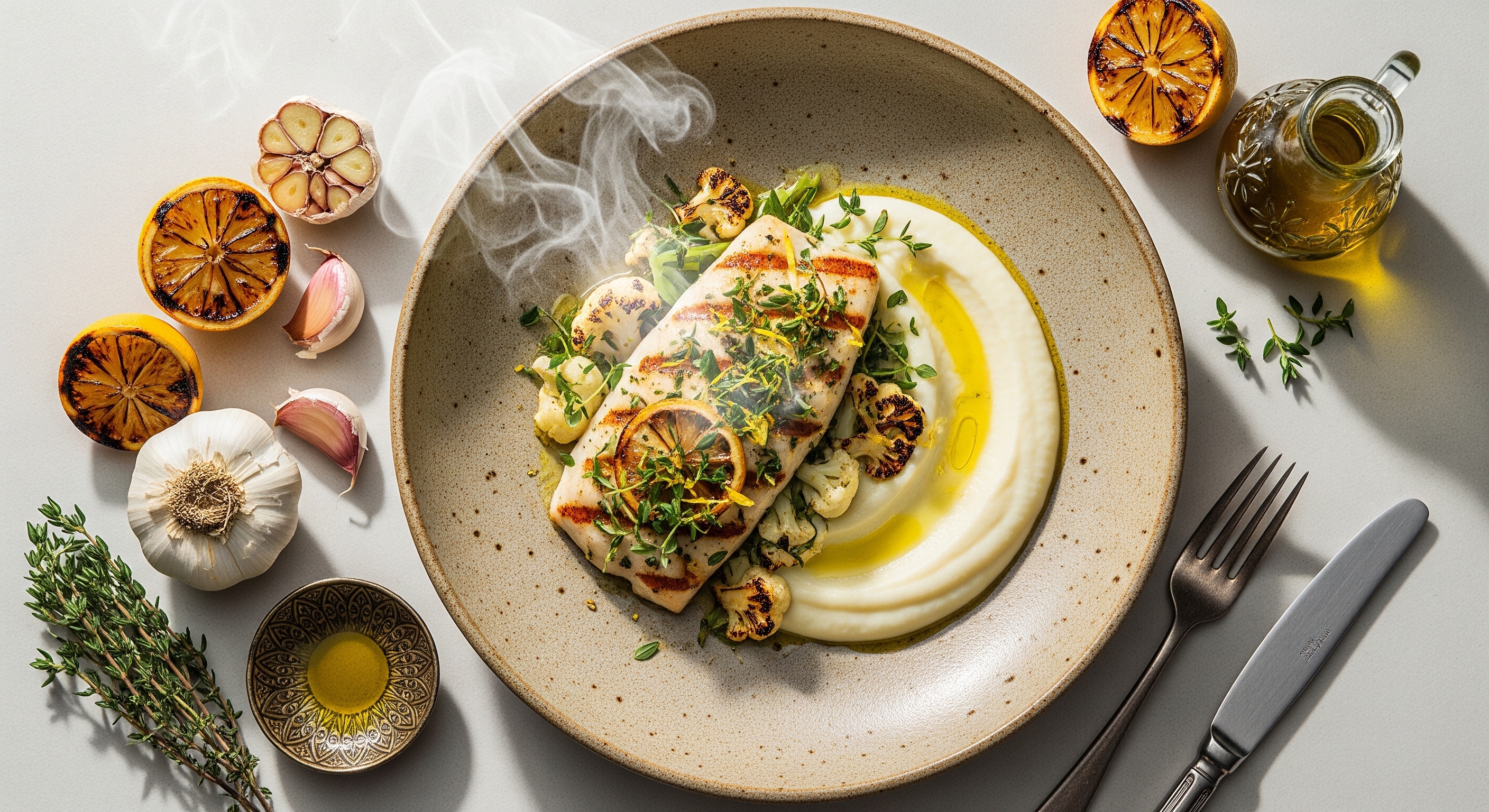 Grilled Fish with Cauliflower Purée and Herbs (Paleo) 35 min Light paleo dinner of grilled fish on creamy cauliflower purée 620 kcal 42g protein 2 synergies
 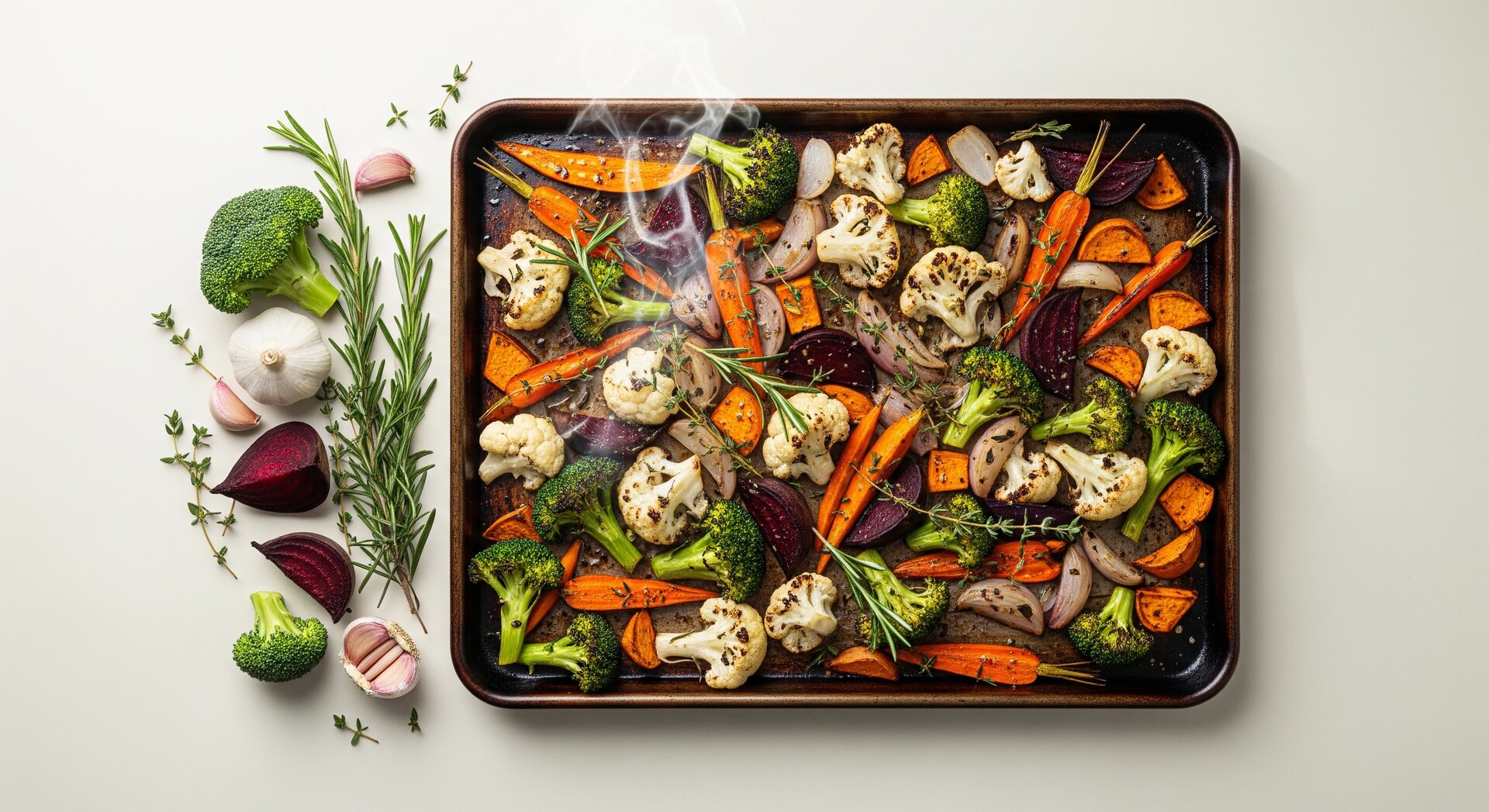 Roasted Cruciferous Vegetables with Beetroot 55 min Crispy roasted seasonal vegetables with thyme and lemon 220 kcal 8g protein 2 synergies
 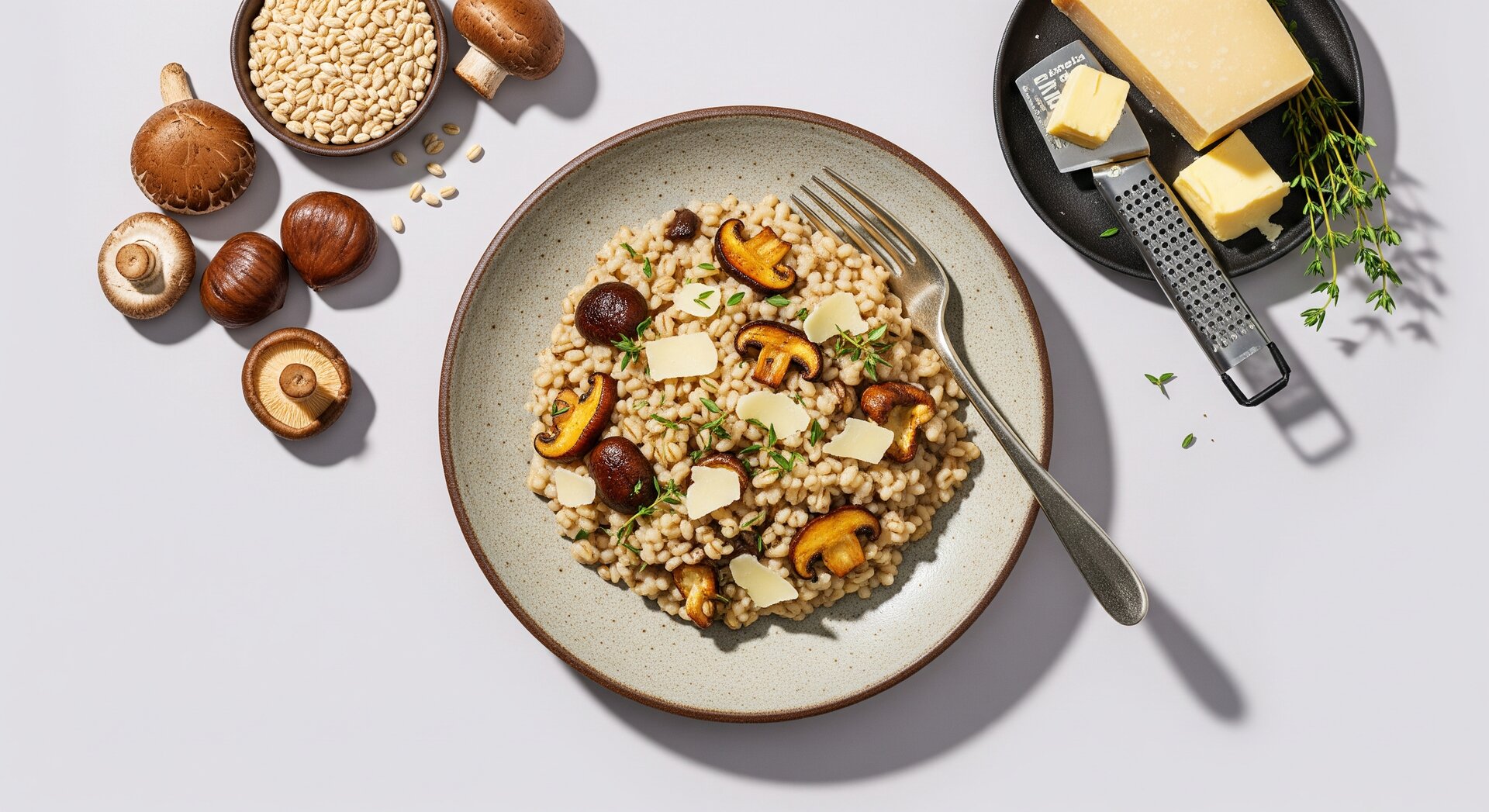 Barley Mushroom Risotto 55 min Creamy Italian classic with pearl barley and mixed mushrooms 420 kcal 14g protein 1 synergies
 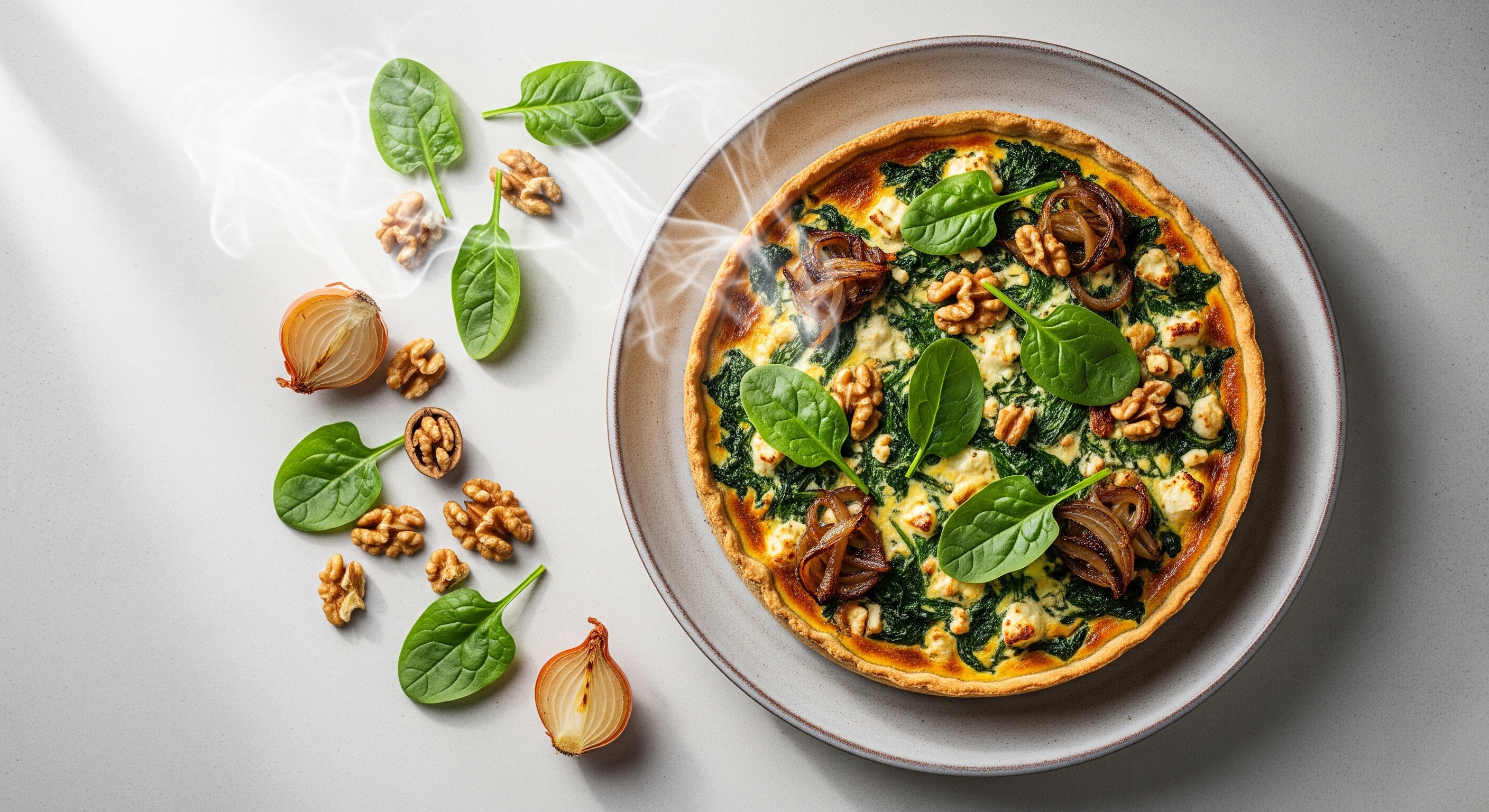 Crustless Spinach-Feta Quiche with Walnuts 50 min Low-carb quiche with spinach, three cheeses and crunchy walnuts 612 kcal 30g protein 1 synergies
  In the Kitchen
Storage
Location:Refrigerator
Shelf life:5-7 dagen
Wrap in slightly damp paper towel and store in a bag or container in the crisper. You can also stand the sprigs like a bouquet in a glass with a little water and cover loosely.
Preparation
Use whole sprigs for stews and sauces, then remove them before serving. Or strip the leaves for marinades, omelets, roasted vegetables, and tomato sauce.
Substitutes
Smart preparation
1Add whole sprigs during cooking and remove the stems before serving.
Why?
The leaves gradually release their aroma during cooking.
2Thyme can cook for a long time without quickly losing flavor.
3Strip fresh thyme leaves by pulling the stem backward between thumb and forefinger.
Caution / Warnings
Thyme (Fresh) is very safe, but there are scientific considerations:
Anticoagulants / Blood Thinners Mild
Normal culinary amounts are usually fine, but high doses of concentrated extract or essential oil may interact.
Advice:
Avoid internal use of thyme essential oil without medical advice; stick to culinary dosing.
Traditional use
Mediterranean
Herb of courage in Greek Antiquity
Thyme was associated with courage, strength, and fragrant smoke in ancient Greece. Soldiers took thyme baths as a ritual of bravery, and in Egypt the herb played a role in aromatic preservation.
Summary
Thyme instantly adds depth to stews, tomato dishes, and chicken. It is warm, aromatic, and sturdy enough for long cooking. Don’t eat the woody stems: strip the leaves or remove the sprigs before serving.