Split peas
Fibre-rich base for soups and stews
What is this ingredient?
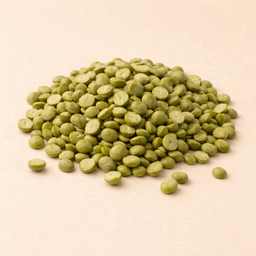
Split peas (Pisum sativum) are dried peas with the skin removed that naturally split into two halves. They come in green and yellow varieties with comparable nutritional value and a soft, earthy taste.
## Fibre and protein
Dry split peas contain plenty of fibre and protein. This makes them useful in hearty meals such as pea soup, dhal-style dishes and stews. Once cooked, they become creamy, so you often do not need cream or a separate thickener.
## Carbohydrates and meal response
Split peas contain complex carbohydrates, protein and fibre. Research on peas examines the glycaemic response after meals, especially when peas are compared with starchy side dishes such as potatoes. Such results belong to the full meal context, not to a single ingredient as a standalone health promise.
## Fibre in research
Pea fibre is studied in relation to satiety, blood lipids and digestive comfort within controlled eating patterns. The practical message is simple: split peas are a nutritious legume for meals with vegetables, herbs and whole grains.
## Bioactive compounds
Split peas naturally contain polyphenols, saponins and lignans. These compounds are mainly studied through composition analyses and laboratory markers; they make split peas interesting as part of a varied eating pattern.
## Practical: no soaking needed
Because the skin has already been removed, split peas usually do not need soaking. Rinse them and cook for 45-60 minutes until soft and creamy.
How does it taste?
Mildly earthy and slightly sweet; cook down into a thick, creamy texture.
Pairs well with:
Pairs well with thymebay leafcarrotonion and garlic.
Did you know...?
- Pea soup, or snert, is traditionally associated in the Netherlands with cold winter days and ice-skating weather.
- Split peas are dried peas split in half along their natural seam.
Nutritional Value & Energy
Per 100g
Split peas provides energy thanks to natural nutrients , buffered by fiber.
Per 100g
Minerals
Vitamins
More nutrients
B-Vitamins
Trace Minerals
What's in a serving?
1 serving (dry)
Split peas naturally contain iron (4.4 mg per 100 g).
Split peas naturally contain zinc (3.3 mg per 100 g).
Split peas naturally contain magnesium (124 mg per 100 g).
Split peas naturally contain potassium (981 mg per 100 g).
Split peas naturally contain phosphorus (366 mg per 100 g).
Split peas naturally contain folate (274 mcg per 100 g).
% of daily reference intake (DRI)
EU-approved nutrition claims
This ingredient contains nutrients for which EFSA-authorized health claims exist (at nutrient level, not ingredient-specific).
Approved health claims (EU)
Magnesium EU 432/2012
Magnesium contributes to normal muscle function
Contains 124mg/100g (threshold: ≥56.25mg/100g)
Magnesium EU 432/2012
Magnesium contributes to the reduction of tiredness and fatigue
Contains 124mg/100g (threshold: ≥56.25mg/100g)
Magnesium EU 432/2012
Magnesium contributes to normal functioning of the nervous system
Contains 124mg/100g (threshold: ≥56.25mg/100g)
Zinc EU 432/2012
Zinc contributes to the normal function of the immune system
Contains 3.3mg/100g (threshold: ≥1.5mg/100g)
Zinc EU 432/2012
Zinc contributes to the maintenance of normal skin
Contains 3.3mg/100g (threshold: ≥1.5mg/100g)
Iron EU 432/2012
Iron contributes to normal energy-yielding metabolism
Contains 4.4mg/100g (threshold: ≥2.1mg/100g)
Iron EU 432/2012
Iron contributes to the reduction of tiredness and fatigue
Contains 4.4mg/100g (threshold: ≥2.1mg/100g)
Potassium EU 432/2012
Potassium contributes to the maintenance of normal blood pressure
Contains 981mg/100g (threshold: ≥300mg/100g)
Folate EU 432/2012
Folate contributes to normal blood formation
Contains 274mcg/100g (threshold: ≥30mcg/100g)
Folate EU 432/2012
Folate contributes to normal amino acid synthesis
Contains 274mcg/100g (threshold: ≥30mcg/100g)
Folate EU 432/2012
Folate contributes to normal homocysteine metabolism
Contains 274mcg/100g (threshold: ≥30mcg/100g)
Folate EU 432/2012
Folate contributes to normal psychological function
Contains 274mcg/100g (threshold: ≥30mcg/100g)
Folate EU 432/2012
Folate contributes to the normal function of the immune system
Contains 274mcg/100g (threshold: ≥30mcg/100g)
Folate EU 432/2012
Folate has a role in the process of cell division
Contains 274mcg/100g (threshold: ≥30mcg/100g)
Folate EU 432/2012
Folate contributes to maternal tissue growth during pregnancy
Contains 274mcg/100g (threshold: ≥30mcg/100g)
Phosphorus EU 432/2012
Phosphorus contributes to normal energy-yielding metabolism
Contains 366mg/100g (threshold: ≥105mg/100g)
Phosphorus EU 432/2012
Phosphorus contributes to the normal function of cell membranes
Contains 366mg/100g (threshold: ≥105mg/100g)
Phosphorus EU 432/2012
Phosphorus contributes to the maintenance of normal bones
Contains 366mg/100g (threshold: ≥105mg/100g)
Phosphorus EU 432/2012
Phosphorus contributes to the maintenance of normal teeth
Contains 366mg/100g (threshold: ≥105mg/100g)
Magnesium EU 432/2012
Magnesium contributes to normal energy-yielding metabolism
Contains 124mg/100g (threshold: ≥56.25mg/100g)
Magnesium EU 432/2012
Magnesium contributes to electrolyte balance
Contains 124mg/100g (threshold: ≥56.25mg/100g)
Magnesium EU 432/2012
Magnesium contributes to normal protein synthesis
Contains 124mg/100g (threshold: ≥56.25mg/100g)
Magnesium EU 432/2012
Magnesium contributes to normal psychological function
Contains 124mg/100g (threshold: ≥56.25mg/100g)
Magnesium EU 432/2012
Magnesium contributes to the maintenance of normal bones
Contains 124mg/100g (threshold: ≥56.25mg/100g)
Magnesium EU 432/2012
Magnesium contributes to the maintenance of normal teeth
Contains 124mg/100g (threshold: ≥56.25mg/100g)
Magnesium EU 432/2012
Magnesium has a role in the process of cell division
Contains 124mg/100g (threshold: ≥56.25mg/100g)
Iron EU 432/2012
Iron contributes to normal cognitive function
Contains 4.4mg/100g (threshold: ≥2.1mg/100g)
Iron EU 432/2012
Iron contributes to normal formation of red blood cells and haemoglobin
Contains 4.4mg/100g (threshold: ≥2.1mg/100g)
Iron EU 432/2012
Iron contributes to normal oxygen transport in the body
Contains 4.4mg/100g (threshold: ≥2.1mg/100g)
Iron EU 432/2012
Iron contributes to the normal function of the immune system
Contains 4.4mg/100g (threshold: ≥2.1mg/100g)
Iron EU 432/2012
Iron has a role in the process of cell division
Contains 4.4mg/100g (threshold: ≥2.1mg/100g)
Zinc EU 432/2012
Zinc contributes to normal acid-base metabolism
Contains 3.3mg/100g (threshold: ≥1.5mg/100g)
Zinc EU 432/2012
Zinc contributes to normal carbohydrate metabolism
Contains 3.3mg/100g (threshold: ≥1.5mg/100g)
Zinc EU 432/2012
Zinc contributes to normal cognitive function
Contains 3.3mg/100g (threshold: ≥1.5mg/100g)
Zinc EU 432/2012
Zinc contributes to normal DNA synthesis
Contains 3.3mg/100g (threshold: ≥1.5mg/100g)
Zinc EU 432/2012
Zinc contributes to normal fertility and reproduction
Contains 3.3mg/100g (threshold: ≥1.5mg/100g)
Zinc EU 432/2012
Zinc contributes to normal macronutrient metabolism
Contains 3.3mg/100g (threshold: ≥1.5mg/100g)
Zinc EU 432/2012
Zinc contributes to normal metabolism of fatty acids
Contains 3.3mg/100g (threshold: ≥1.5mg/100g)
Zinc EU 432/2012
Zinc contributes to normal metabolism of vitamin A
Contains 3.3mg/100g (threshold: ≥1.5mg/100g)
Zinc EU 432/2012
Zinc contributes to normal protein synthesis
Contains 3.3mg/100g (threshold: ≥1.5mg/100g)
Zinc EU 432/2012
Zinc contributes to the maintenance of normal bones
Contains 3.3mg/100g (threshold: ≥1.5mg/100g)
Zinc EU 432/2012
Zinc contributes to the maintenance of normal hair
Contains 3.3mg/100g (threshold: ≥1.5mg/100g)
Zinc EU 432/2012
Zinc contributes to the maintenance of normal nails
Contains 3.3mg/100g (threshold: ≥1.5mg/100g)
Zinc EU 432/2012
Zinc contributes to the maintenance of normal testosterone levels in the blood
Contains 3.3mg/100g (threshold: ≥1.5mg/100g)
Zinc EU 432/2012
Zinc contributes to the maintenance of normal vision
Contains 3.3mg/100g (threshold: ≥1.5mg/100g)
Zinc EU 432/2012
Zinc contributes to the protection of cells from oxidative stress
Contains 3.3mg/100g (threshold: ≥1.5mg/100g)
Zinc EU 432/2012
Zinc has a role in the process of cell division
Contains 3.3mg/100g (threshold: ≥1.5mg/100g)
Potassium EU 432/2012
Potassium contributes to normal functioning of the nervous system
Contains 981mg/100g (threshold: ≥300mg/100g)
Potassium EU 432/2012
Potassium contributes to normal muscle function
Contains 981mg/100g (threshold: ≥300mg/100g)
Comparison
vsbanaan
Split peas contain about 3× more potassium per 100 g than banana.
vsspinazie
Split peas contain about 2× more iron per 100 g than spinach.
What's being researched?
Split peas and protein quality
The amino acid profile and digestibility of pea protein are studied as a plant-based option within meals. The results mainly describe protein composition, digestibility and combinations with grains.
Supported by: [1] Dahl WJ (2012) , [2] Marinangeli CPF (2003)
Good Combinations (Synergy)
Combine split peas smartly to enhance the effect:
Split peas 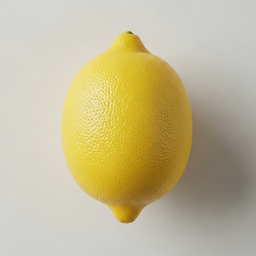 Lemon
Lemon Vitamin C increases non-heme iron absorption from split peas 2-6x
Ascorbic acid significantly increases non-heme iron absorption as chelator (PMID: 15743017)
Technical: Split peas contain 1.5mg non-heme iron per 100g, of which only 2-5% is absorbed without vitamin C. Ascorbic acid from lemon (53mg/100g) reduces Fe³⁺ to Fe²⁺ and forms a soluble iron-ascorbate complex that bypasses phytate binding. This increases iron absorption via DMT-1 transporters up to 4x.
What does this mean for you? Squeeze lemon over pea soup or use lemon in split pea salad dressing. This simple gesture quadruples your iron absorption — particularly valuable for vegetarians.
Split peas 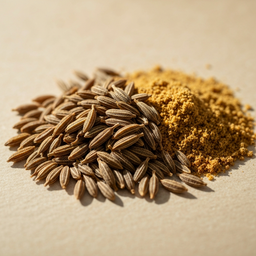 Cumin
Cumin Cumin enzymes improve digestion of legumes
Technical: Split peas contain 25.5g fiber and complex oligosaccharides (raffinose, stachyose) per 100g that can cause gas formation. Cumin contains thymol and cuminaldehyde that promote the production of pancreatic enzymes (amylase, protease, lipase). This accelerates breakdown of oligosaccharides before they reach the colon, where bacteria would otherwise ferment them into gas.
What does this mean for you? Add cumin to your pea soup or dhal — it's no coincidence that Indian and Middle Eastern cuisines always combine cumin with legumes. The cumin promotes digestion and reduces bloating.
Split peas 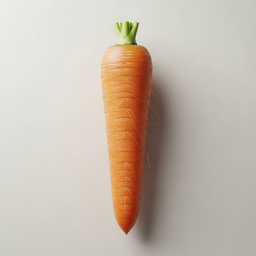 Carrot
 Folate + beta-carotene for blood cell formation
Technical: Split peas contain 274μg folate per 100g (dry, 69% RDA), essential for DNA synthesis and red blood cell formation. Carrot provides 8285μg beta-carotene per 100g, converted to vitamin A — important for immune cell maturation and mucosal integrity. Folate and vitamin A work synergistically in hematopoiesis (blood cell formation): folate for DNA replication, vitamin A for differentiation.
What does this mean for you? Classic pea soup with carrots isn't just comfort food — the combination of folate from peas and vitamin A from carrots supports your blood cell formation. Ideal in winter.
Recipes with Split peas
Discover delicious recipes featuring split peas:
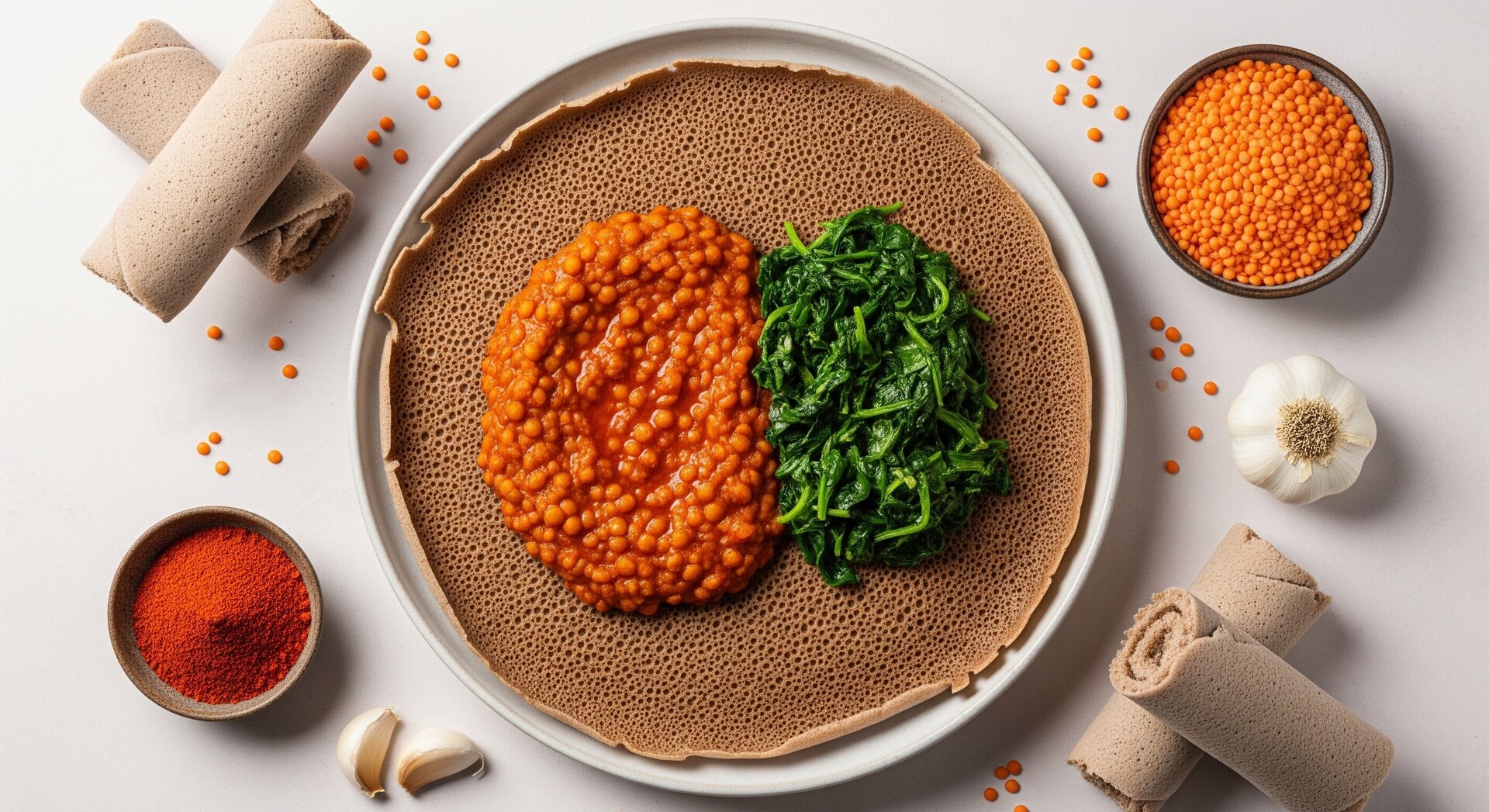 Ethiopian Injera Bowl with Lentils 40 min Teff pancake with spicy red lentils and vegetables
  614 kcal
  30g protein 1 synergies
 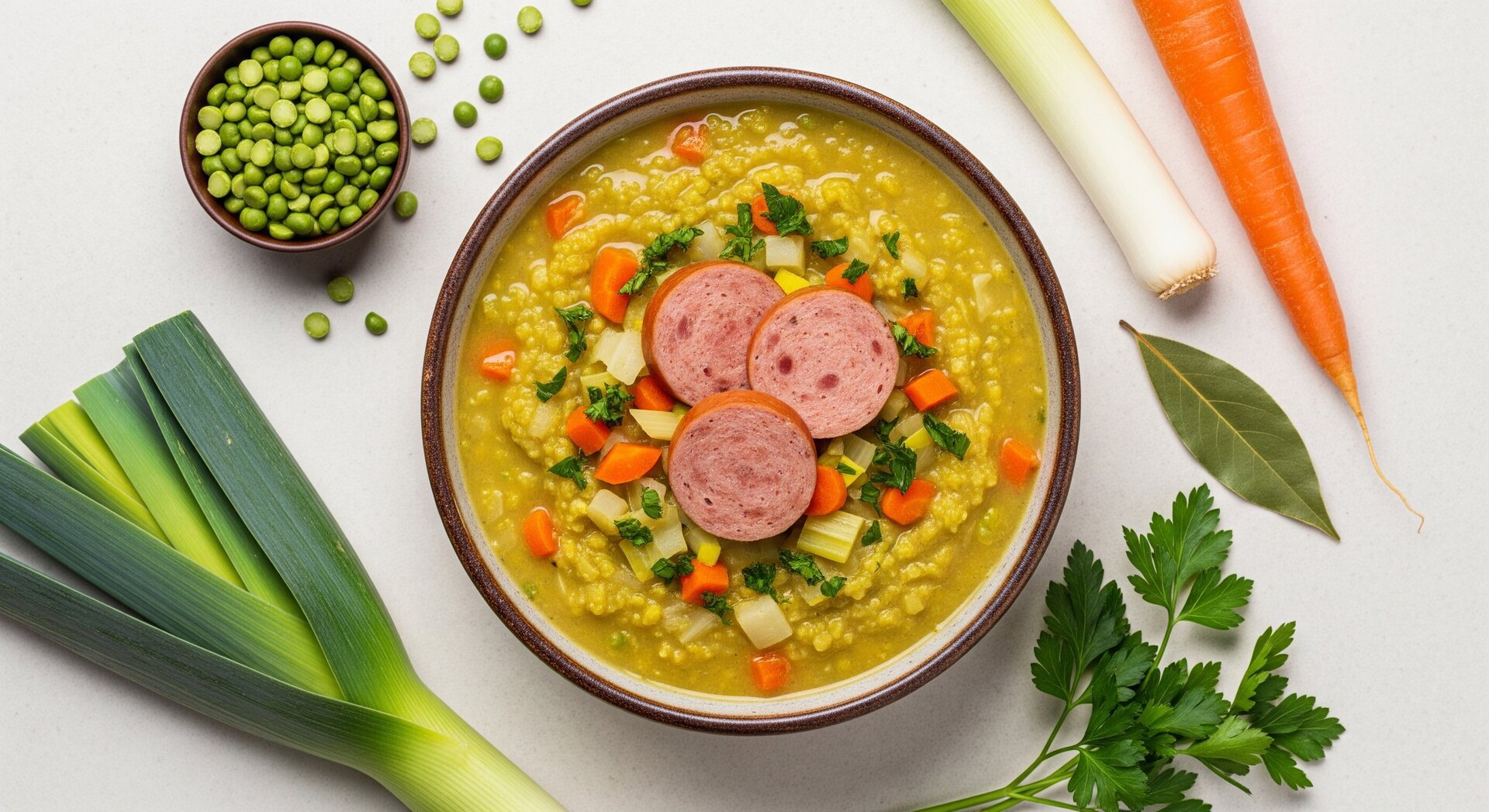 Dutch Split Pea Soup with Turkey Sausage 135 min Thick pea soup with split peas, vegetables and lean smoked sausage 774 kcal 49g protein 1 synergies
 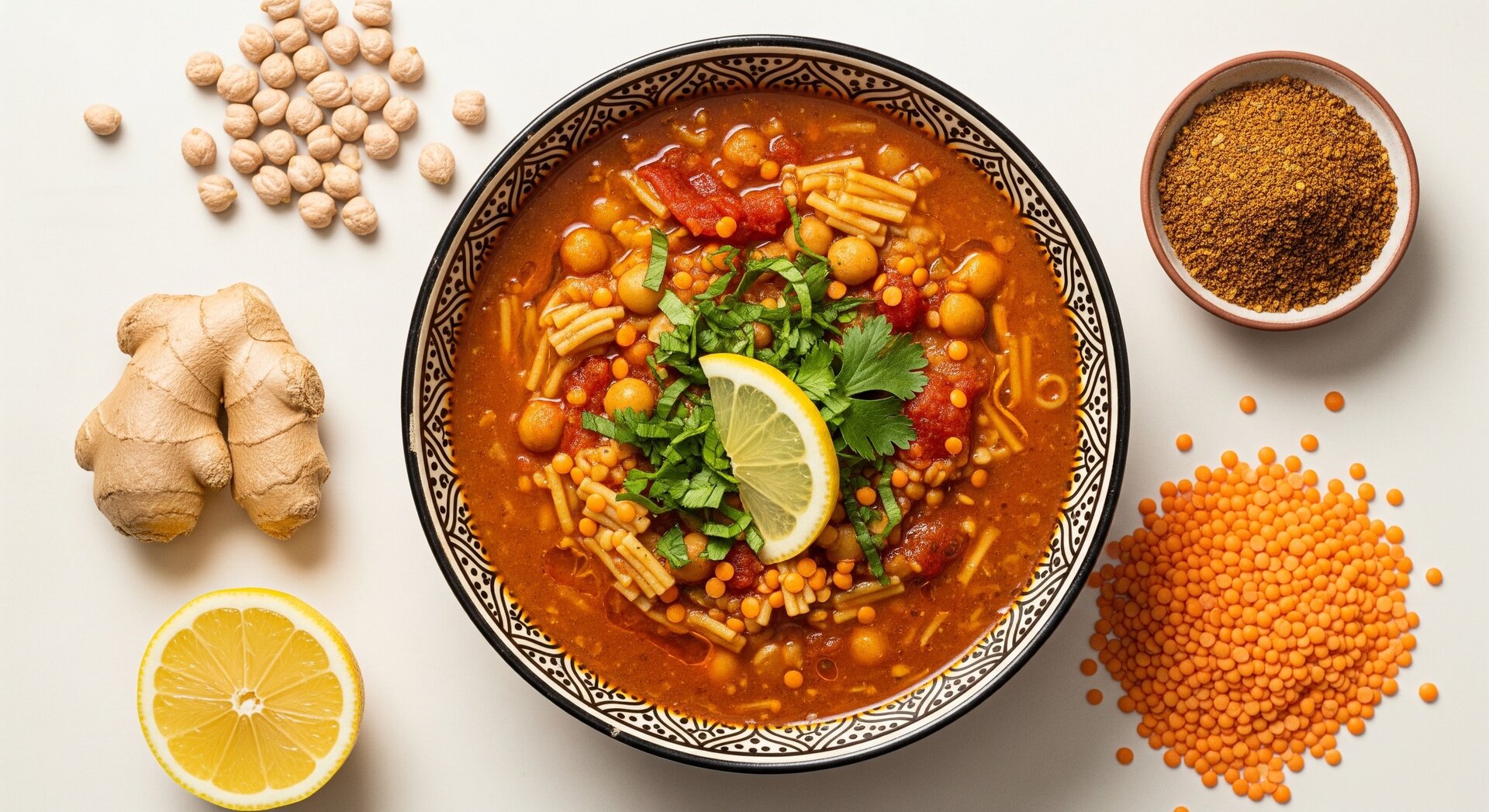 Moroccan Harira with Lentils and Chickpeas 55 min Traditional Moroccan soup with ras el hanout and fresh cilantro 784 kcal 33g protein 1 synergies
  In the Kitchen
Storage
Location:Pantry
Shelf life:2-3 jaar droog, 3-4 dagen gekookt in koelkast
Store dry split peas airtight, dark and cool. Let cooked peas cool quickly and keep them for up to 3-4 days in the fridge or up to 6 months in portions in the freezer.
Preparation
No soaking needed. Rinse under cold water and cook for 45-60 minutes in about 3× as much water until creamy. Stir regularly and skim any foam during the first minutes.
Conversions
Substitutes
Smart preparation
1Soak split peas for 2-4 hours for a shorter cooking time, although soaking is not required.
2Cook split peas for 45-60 minutes until soft and falling apart.
3Stir regularly, because split peas stick easily to the bottom.
Why?
The starch thickens quickly at the bottom, which can make the dish burn.
Caution / Warnings
Split peas is very safe, but there are scientific considerations:
Gas formation and flatulence Mild
Split peas contain oligosaccharides that are fermented by gut bacteria. In sensitive people this may cause gas or bloating.
Advice:
Start with small portions and build up gradually. Cooking until fully tender, eating slowly and drinking enough water often helps. Cooking with cumin, fennel or asafoetida can make the meal feel lighter.
IBS and FODMAP sensitivity Moderate
Split peas are rich in fermentable carbohydrates. In people with IBS or FODMAP sensitivity they may trigger abdominal pain, cramps or diarrhoea.
Advice:
Test small portions, for example 2-3 tablespoons cooked, during a reintroduction phase. If symptoms are clear, work with a dietitian for personal portions and alternatives.
Kidney stones and purines Mild
Split peas contain moderate amounts of purines. For people with gout or uric acid stones, personal guidance may be useful.
Advice:
With gout or uric acid stones, discuss portion size and frequency with your doctor or dietitian. Drink enough water and avoid combining them with many other purine-rich foods on the same day.
Traditional use
Other
Northern European winter food
Pea soup, or snert, has been a winter dish in the Netherlands, Scandinavia and Northern Europe for centuries. Dried peas were practical: shelf-stable, nourishing and easy to cook in large pots.
Summary
Split peas are fibre-rich, protein-rich legumes that cook creamy in 45-60 minutes without soaking. They work well in pea soup, stews and dhal-style dishes, especially with vegetables, herbs and whole grains.