- Medium
- 32 min
- 2 serv.
- 11 synergies
- Now at its best: Garlic
Hanoi's street food classic with grilled turkey meatballs seasoned with ginger and garlic, served with rice noodles, fresh mint and cilantro in a sweet-sour dipping sauce of rice vinegar and honey.
In Hanoi, bun cha stalls line every street corner, and the smell of chargrilled meat draws you in before you see the seats. This is the home version: ground turkey mixed with grated ginger, garlic and a splash of soy sauce, then rolled with wet hands into walnut-sized balls. In a hot grill pan they get a crispy dark crust while the inside stays juicy. On the table appears a bowl of rice noodles — smooth and cool — next to a plate of fresh mint, cilantro, cucumber slices and grated carrot. The heart is the nước chấm: rice vinegar, honey and a dash of soy sauce, so simple you won't believe how much flavor it gives. You grab a meatball, place it on the noodles, spoon herbs over, dunk everything in the sauce. Every bite is different: warm meat, cool noodles, fresh greens, sweet-sour.
- 20
- min prep
- 12
- min cook
- 32
- min total
Nutritional Synergies
This recipe combines ingredients that enhance each other:
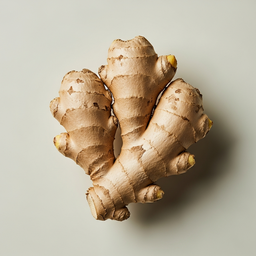 Ginger
 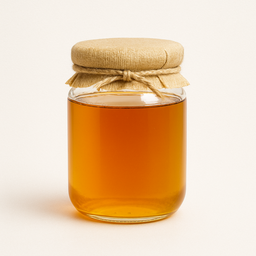 Honey
Honey Classic combination: warming herbal drink with honey
Technical: Ginger's gingerol modulates COX-2 and has antiemetic action (suppresses nausea via 5-HT3 receptor blockade). Honey's glucose oxidase produces hydrogen peroxide with bioactive action, while honey physically coats and soothes the throat. Together: bioactive modulation + throat protection.
What does this mean for you? Ginger tea with honey is a classic, warming combination. The ginger provides gingerol, the honey a smooth, sweet layer.
Immune System
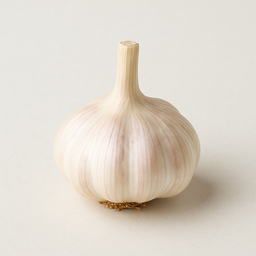 Garlic Ginger
 Allicin + gingerols: complementary bioactive action
Technical: Garlic's allicin works via thiol enzyme inhibition — effective against gram-positive bacteria (Staphylococcus, Streptococcus). Ginger's gingerols and shogaols influence viral replication and stimulate interferon production. Together they cover both bacterial and viral pathways.
What does this mean for you? Garlic-ginger tea is a classic combination. Garlic works via thiol enzymes, ginger via interferon pathways. Cut both fresh for maximum active compounds — allicin only forms after 10 minutes of air exposure.
Immune System
Garlic Honey Fermented: allicin + bee defensin in traditional condiment
Technical: Raw garlic contains alliin converted by alliinase to allicin — an organosulfur compound with bioactive properties — when cut. Raw honey contains hydrogen peroxide, bee defensin-1 and methylglyoxal. Fermenting garlic in honey increases bioavailability of S-allylcysteine (SAC), a more stable bioactive metabolite.
What does this mean for you? Submerge raw garlic cloves in raw honey and ferment for 2-4 weeks. You get a traditional condiment with concentrated bioactive compounds — an ancient fermentation technique that increases bioavailability.
Immune System
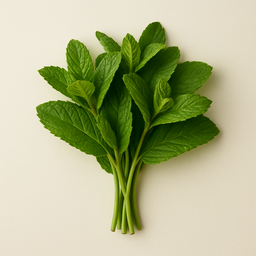 Mint
Mint 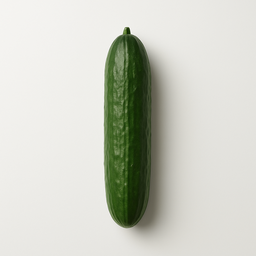 Cucumber
 Ultimate cooling: menthol + water-rich food
Technical: Mint contains menthol (40-50% of essential oil) that activates TRPM8 cooling receptors - you feel cooling without temperature drop. Cucumber is 96% water and provides electrolytes. Together they offer both physiological and sensory cooling.
What does this mean for you? Add fresh mint to cucumber water or raita. Ideal in hot weather, after exercise, or for hot flashes. The combination works better than either ingredient alone.
DigestionStress ReliefEnergy
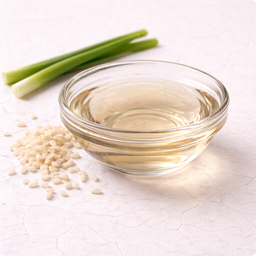 Rice Vinegar Ginger
 Acetic acid + gingerols for glycemic support and bioactive action
Technical: Rice vinegar contains 4-5% acetic acid that inhibits alpha-amylase (slows carbohydrate digestion) and dampens the postprandial glycemic response. Ginger's gingerols support insulin sensitivity via AMPK activation. Together they slow carbohydrate breakdown (vinegar) and support glucose uptake in cells (ginger). Rice vinegar also has a low pH (2.4-3.4) that preserves sushi rice.
What does this mean for you? Ginger-rice vinegar dressing (sunomono style) with rice dishes dampens the blood sugar spike. This is why sushi rice with gari (pickled ginger in rice vinegar) is so cleverly composed.
Blood SugarDigestion
Rice Vinegar  Sesame Oil
 Acetic acid emulsion with sesame oil for mineral absorption
Technical: Rice vinegar's acetic acid (4-5%) chelates minerals (calcium, magnesium, iron) into soluble acetates that are more absorbable. Sesame oil contains sesamin (lignan) that improves intestinal calcium absorption via vitamin D receptor activation. The emulsion of vinegar + oil (vinaigrette principle) distributes fat-soluble compounds from sesame oil into small droplets offering larger absorption surface.
What does this mean for you? Rice vinegar + sesame oil is the base of Asian dressings and dipping sauces. Use this combination over salad, blanched vegetables or cold noodles for better mineral absorption.
General WellnessHeart
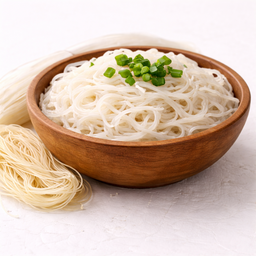 Rice noodles Ginger
 Mild carbohydrates + gingerols for digestion and warmth
Technical: Rice noodles are gluten-free and easily digestible with moderate starch (24g/100g cooked). Ginger contains gingerols and shogaols that promote gastric motility via 5-HT3 antagonism and prokinetic action. Gingerols increase production of digestive enzymes.
What does this mean for you? Rice noodles with ginger is a classic Asian combination that's easily digestible. The ginger keeps your digestion active while the noodles provide gentle energy.
DigestionImmune System
Rice noodles Sesame Oil Sesame + soy = complete amino acids + fats
Technical: Rice noodles (rice flour) are low in lysine — the limiting amino acid in rice protein. Soy sauce (fermented soybeans) is rich in lysine and provides free glutamate for umami. Sesame oil contains methionine (complementary amino acid) plus sesamin and sesamol — unique lignans with antioxidant action. Together they form an amino acid-complete profile.
What does this mean for you? Stir-fry rice noodles with sesame oil and soy sauce — this is the foundation of countless Asian dishes. The three together provide complete proteins, healthy fats AND intense umami flavor. Add vegetables for a complete meal.
Muscle GainGeneral Wellness
Rice noodles 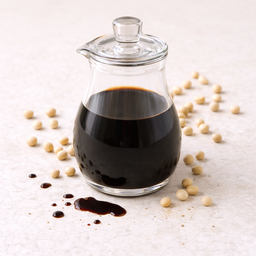 Soy Sauce
 Sesame + soy = complete amino acids + fats
Technical: Rice noodles (rice flour) are low in lysine — the limiting amino acid in rice protein. Soy sauce (fermented soybeans) is rich in lysine and provides free glutamate for umami. Sesame oil contains methionine (complementary amino acid) plus sesamin and sesamol — unique lignans with antioxidant action. Together they form an amino acid-complete profile.
What does this mean for you? Stir-fry rice noodles with sesame oil and soy sauce — this is the foundation of countless Asian dishes. The three together provide complete proteins, healthy fats AND intense umami flavor. Add vegetables for a complete meal.
Muscle GainGeneral Wellness
Sesame Oil Ginger Asian cooking base: lignans + gingerols via complementary pathways
Technical: Sesame oil contains sesamin and sesamolin (lignans) with antioxidant action. Ginger contains gingerols that modulate COX-2. Both compounds influence NF-κB via complementary mechanisms. The fat in sesame oil also improves absorption of fat-soluble gingerols.
What does this mean for you? Start Asian dishes with sesame oil + ginger as flavor base. This is the fundamental start of wok dishes and combines two bioactive compounds via complementary pathways.
Anti-inflammatoryDigestion
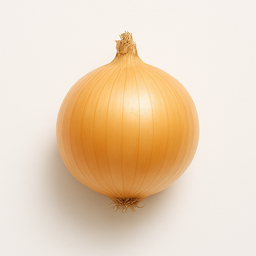 Onion Garlic
 More than 20 organosulfur compounds in one soffritto
Technical: Onion contains diallyl disulfide and quercetin (20-40mg/100g). Garlic contains allicin, ajoene and S-allylcysteine. Together they provide more than 20 different organosulfur compounds that modulate NF-κB. Allium crops are intensively studied in nutrition science for their unique sulfur chemistry.
What does this mean for you? Start every dish with sautéed onion and garlic — not just for flavor, but for the unique concentration of organosulfur compounds. Cut garlic 10 minutes before heating to allow allicin formation.
DigestionImmune System
Ingredients (13)
+10 more ingredients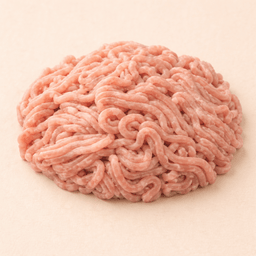
Instructions
- 1 Mix the ground turkey with the grated ginger, minced garlic, onion and half the soy sauce. Wet your hands and shape the mixture into walnut-sized balls (about 12-14 pieces).
Nutrition per serving
Indicative values per serving.
Timing & Suitability
Shelf life: 2 days in fridge
Tags & Diet
Allergens: Soy, Gluten