- Easy
- 25 min
- 2 serv.
- 9 synergies
- Now at its best: Bell Pepper
Golden slices of halloumi, creamy avocado, thick hummus and roasted bell pepper in a warm whole wheat tortilla. With arugula, sun-dried tomato, pumpkin seeds and a sprinkle of za'atar.
Halloumi might be the most underrated cheese in the world. Where mozzarella melts and cheddar crumbles, halloumi holds its own in the hot pan and develops a golden-brown crust that cracks when you bite into it. Those slices go on a warm tortilla that you've first spread with a thick layer of hummus. Then: smashed avocado, still warm from the knife. Roasted bell pepper that's sweet and smoky at once. A handful of arugula for the pepper, sun-dried tomato for the umami, pumpkin seeds for the crunch. A squeeze of lemon, some za'atar on top, roll up and eat immediately. This is the wrap you always wanted but never ordered.
- 10
- min prep
- 15
- min cook
- 25
- min total
Nutritional Synergies
This recipe combines ingredients that enhance each other:
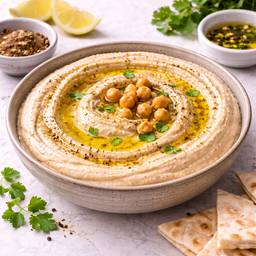 Hummus
 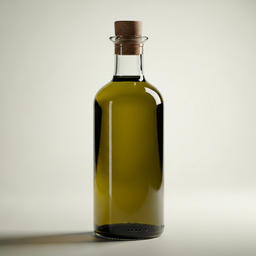 Olive Oil
 Legume protein + polyphenols for lipid profile support
Technical: Hummus (chickpeas + tahini) provides plant protein (8g/100g), fiber (4g), iron (1.6mg) and saponins that bind bile acids. Olive oil adds oleocanthal (bioactive phenol, COX modulation) and hydroxytyrosol (LDL oxidation inhibitor). Together they support the lipid profile via two mechanisms: saponins bind bile acids in the gut, olive oil polyphenols protect LDL from oxidation.
What does this mean for you? Always pour a generous drizzle of extra virgin olive oil over your hummus. This isn't just for taste — the olive oil combines with chickpea saponins for optimal lipid profile support.
HeartAnti-inflammatory
Hummus 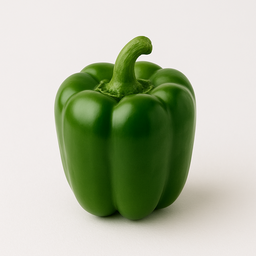 Bell Pepper
 Fats in hummus increase beta-carotene absorption 4x
Technical: Hummus contains tahini (sesame fat) and olive oil — two fat sources that increase carotenoid absorption. Carrot contains 8285μg beta-carotene, bell pepper 2094μg — both fat-soluble with only 5-10% absorption without fat. The fat in hummus increases beta-carotene absorption up to 4x, making more provitamin A available.
What does this mean for you? Dip carrots and bell peppers in hummus as a snack. The fats from tahini and olive oil in the hummus ensure you get 4x more vitamins from the vegetables.
Skin & HairImmune System
Bell Pepper Olive Oil Fat improves carotenoid absorption from bell pepper
Technical: Red bell pepper contains 3131μg beta-carotene and 51μg lutein per 100g, plus 127mg vitamin C (211% RDI). Carotenoids are fat-soluble — without fat only 3-5% is absorbed. Olive oil increases bioavailability to 15-20% through micelle formation in the small intestine.
What does this mean for you? Roast bell pepper with olive oil or make a salad with olive oil dressing. Red pepper contains 10x more carotenoids than green — choose red for maximum effect.
Immune SystemSkin & Hair
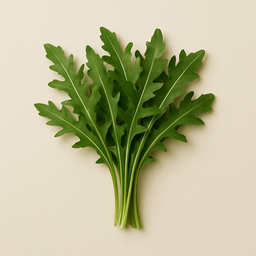 Arugula Olive Oil
 Fat increases absorption of arugula's beta-carotene and vitamin K
Technical: Arugula contains 3747μg beta-carotene and 109μg vitamin K per 100g — both fat-soluble. Olive oil forms mixed micelles increasing absorption 3-5x. Arugula also contains glucosinolates (glucoerucin) converted to sulforaphane — a hydrophobic molecule also better absorbed with fat.
What does this mean for you? Arugula with olive oil dressing isn't just tasty for its peppery character — the oil is necessary to properly absorb fat-soluble vitamins and glucosinolates.
Skin & HairImmune System
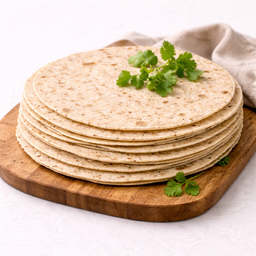 Whole Wheat Tortilla
 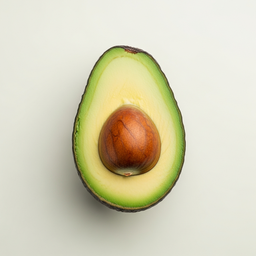 Avocado
 Whole grain wrap + healthy fats for slow energy release
Technical: Whole grain tortilla provides complex carbohydrates (43g/100g) with fiber (5g) and B-vitamins from wheat bran. Avocado adds monounsaturated fats (15g/100g) that lower glycemic response. The combination of fiber + healthy fats extends the feeling of satiety.
What does this mean for you? A whole grain wrap with avocado is a quick and balanced meal. The slow carbs from the tortilla + the fats from the avocado together provide lasting energy.
Weight LossBlood SugarEnergy
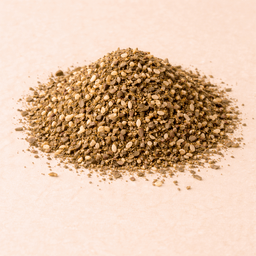 Za'atar Olive Oil
 Thymol and carvacrol from zaatar are fat-soluble, olive oil increases absorption
Thymol and carvacrol are lipophilic monoterpenes with antimicrobial properties (PMID: 31009261)
Technical: Thymol and carvacrol are the main active compounds in zaatar (thyme, oregano) and are fat-soluble. Olive oil forms mixed micelles improving absorption up to 3x. Traditional Levantine combination where bread is dipped in zaatar+olive oil mixture.
What does this mean for you? The traditional way of using zaatar (with olive oil) is scientifically perfect. The fat-soluble bioactive compounds are optimally absorbed this way.
Immune SystemDigestion
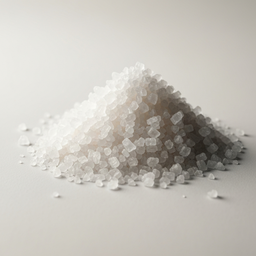 Sea Salt Avocado
 Minerals improve flavor perception and electrolyte balance
Technical: Sea salt contains trace minerals (magnesium, potassium, calcium) besides sodium. Tomato is rich in potassium (237mg/100g) and lycopene. Avocado adds magnesium (29mg) and potassium (485mg). Together they form a broad electrolyte profile: sodium (salt) + potassium (tomato/avocado) + magnesium (avocado) — essential for fluid balance and nerve function.
What does this mean for you? Sprinkle tomato and avocado with a pinch of sea salt. This is more than flavor — the minerals complement each other for a complete electrolyte balance.
HeartEnergy
Sea Salt Olive Oil Minerals + polyphenols for cellular balance
Technical: Sea salt's sodium is essential for the sodium-potassium pump (Na+/K+-ATPase) that regulates every body cell. Olive oil's oleuropein and hydroxytyrosol provide antioxidant protection for cell membranes. The combination supports cell integrity: sea salt regulates ion balance, olive oil protects the membrane. In Mediterranean cuisine, coarse sea salt + olive oil is the most basic flavor profile.
What does this mean for you? Freshly ground sea salt with extra virgin olive oil is the simplest and most nutritious finishing of any dish. The combination provides the basic needs of your cells: minerals for function, polyphenols for protection.
HeartGeneral Wellness
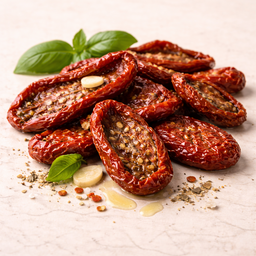 Sun-Dried Tomato Olive Oil
 Concentrated lycopene + fat = maximum absorption
Technical: Sun-dried tomatoes contain up to 45mg lycopene per 100g — 10x more than fresh tomatoes (4.5mg/100g) due to water removal. The drying process also isomerizes trans-lycopene to cis-lycopene (2-3x more bioavailable). Storage in olive oil maximizes absorption since lycopene is fat-soluble.
What does this mean for you? Sun-dried tomatoes in olive oil are the ultimate lycopene source. Drying concentrates lycopene 10x and oil maximizes absorption. Use them on pasta, in salads or on bread.
HeartSkin & Hair
Ingredients (13)
+10 more ingredients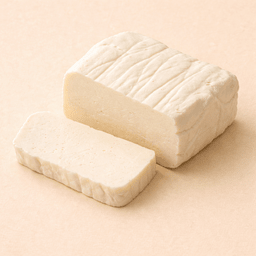
Instructions
- 1 Heat the olive oil in a frying pan over medium-high heat. Fry the halloumi slices 2-3 minutes per side until golden and crispy. Place on kitchen paper.
- 2 Halve the avocado, remove the pit and mash the flesh with a fork. Drizzle with half the lemon juice and a pinch of salt.
Nutrition per serving
Indicative values per serving.
Timing & Suitability
Shelf life: 3 days in fridge
Tags & Diet
Allergens: Gluten, Dairy, Sesame