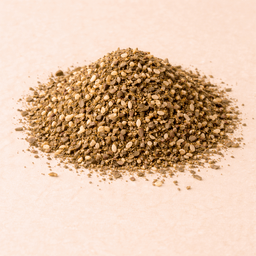
Za'atar
Aromatic Levantine herb blend
What is this ingredient?
## Levantine culinary tradition
Za'atar is more than a spice blend: it is a culinary symbol of the Levant with deep roots in Palestine, Lebanon, Syria and Jordan. The name refers both to wild thyme, often Origanum syriacum, and to the blend that combines this herb with sumac, toasted sesame seeds and salt. At breakfast, za'atar is often eaten with flatbread and olive oil; in many families that combination belongs to the everyday table.
## Aromatic herbal chemistry
The aroma and flavor come mainly from the volatile oil of wild thyme. Many aromatic compounds have been described in Origanum syriacum, including thymol, carvacrol, γ-terpinene and α-pinene. Thymol and carvacrol are phenolic monoterpenes that give the blend its warm, herbal character. Sumac brings citrusy tartness, sesame seeds add nutty roundness and salt keeps the blend bright and savory.
## Research context
Za'atar and Origanum syriacum are mainly examined in peer-reviewed research for their composition, volatile oil, nutritional characteristics and laboratory findings around oxidative processes and food applications. For public food text, it is important to present this as research context, not as a promise of treatment or prevention. In Tayb, the blend is therefore presented primarily as a rich cultural and culinary ingredient.
## Culinary use and flavor profile
Za'atar has a complex, layered flavor: resinous and herbal from thyme, tart and fresh from sumac, nutty from sesame and lightly mineral from salt. Use it as a dry rub for vegetables, fish or chicken, mix it with olive oil as a dip or spread for manakish, sprinkle it over hummus and labneh, or add it just before serving to salads and eggs. Brief warming can open the aroma, while prolonged heat makes the blend flatter.
How does it taste?
Herbal-citrusy with nutty sesame, oregano-like depth and tart sumac.
Pairs well with:
Pairs well with olive oilflatbreadlabnehtomato and egg.
Did you know...?
- Za'atar is both the name of an herb (wild thyme) and of the spice blend.
- In parts of the Middle East, za'atar is part of study routines and breakfasts before exams.
Nutritional Value & Energy
Per 100g
Za'atar provides energy thanks to natural nutrients , buffered by fiber.
Per 100g
Minerals
Vitamins
More nutrients
Trace Minerals
What's in a serving?
1 tablespoon
Za'atar naturally contains iron (7.5 mg per 100 g dried powder). At typical spice usage (3–9 g), the contribution is limited.
Za'atar naturally contains calcium (405 mg per 100 g dried powder). At typical spice usage (3–9 g), the contribution is limited.
Za'atar naturally contains potassium (630 mg per 100 g dried powder). At typical spice usage (3–9 g), the contribution is limited.
% of daily reference intake (DRI)
EU-approved nutrition claims
There are currently no EFSA-authorized health claims specific to za'atar. Various applications for herbs and spices have been submitted but not yet assessed (botanical 'on hold' list).
Comparison
vsspinazie
Za'atar contains about 3× more iron per 100 g than spinach — but you use much less za'atar per serving.
vsmelk
Za'atar contains about 3× more calcium per 100 g than milk — but you use much less za'atar per serving.
vsbanaan
Za'atar contains about 2× more potassium per 100 g than banana — but you use much less za'atar per serving.
What's being researched?
Za'atar and aromatic plant compounds
The combination of thyme, sumac and sesame in za'atar is studied for composition, flavor compounds and interactions between plant compounds. Research is mainly in laboratory and review contexts.
Supported by: [4] Nurten (2003) , [1] Abu Alwafa (2021) , [3] Mahdi (2021) , [2] Al-Kalaldeh (2022)
Good Combinations (Synergy)
Combine za'atar smartly to enhance the effect:
Za'atar  Honey
Honey Broad-spectrum bioactive action through complementary mechanisms
Thymol/carvacrol inhibit bacterial growth via membrane disruption (PMID: 31009261)
Technical: Thymol from zaatar perforates bacterial cell membranes via lipid disruption. Honey works osmotically bioactive (high sugar concentration) and produces hydrogen peroxide via glucose oxidase. Together they provide broad-spectrum bioactive protection, traditionally valued in food preservation.
What does this mean for you? Zaatar with honey (e.g., on yogurt) combines two powerful natural bioactive ingredients. Ideal for immune support and throat complaints.
Za'atar  Olive Oil
 Thymol and carvacrol from zaatar are fat-soluble, olive oil increases absorption
Thymol and carvacrol are lipophilic monoterpenes with antimicrobial properties (PMID: 31009261)
Technical: Thymol and carvacrol are the main active compounds in zaatar (thyme, oregano) and are fat-soluble. Olive oil forms mixed micelles improving absorption up to 3x. Traditional Levantine combination where bread is dipped in zaatar+olive oil mixture.
What does this mean for you? The traditional way of using zaatar (with olive oil) is scientifically perfect. The fat-soluble bioactive compounds are optimally absorbed this way.
Za'atar  Yogurt
 Selectively bioactive: thymol eliminates pathogens, probiotics are spared
Thymol has selective antimicrobial activity: pathogens more sensitive than Lactobacillus (PMID: 31009261)
Technical: Thymol and carvacrol from zaatar selectively disrupt bacterial cell membranes — pathogenic bacteria (E. coli, Salmonella) are more sensitive than Lactobacillus strains due to differences in membrane composition. Yogurt probiotics survive thymol concentrations that already kill pathogens. This creates a selectively bioactive environment in the gut.
What does this mean for you? Stirring zaatar through yogurt (traditional Lebanese breakfast) fights harmful bacteria while preserving your beneficial gut bacteria. Double benefit for your gut microbiome.
Recipes with Za'atar
Discover delicious recipes featuring za'atar:
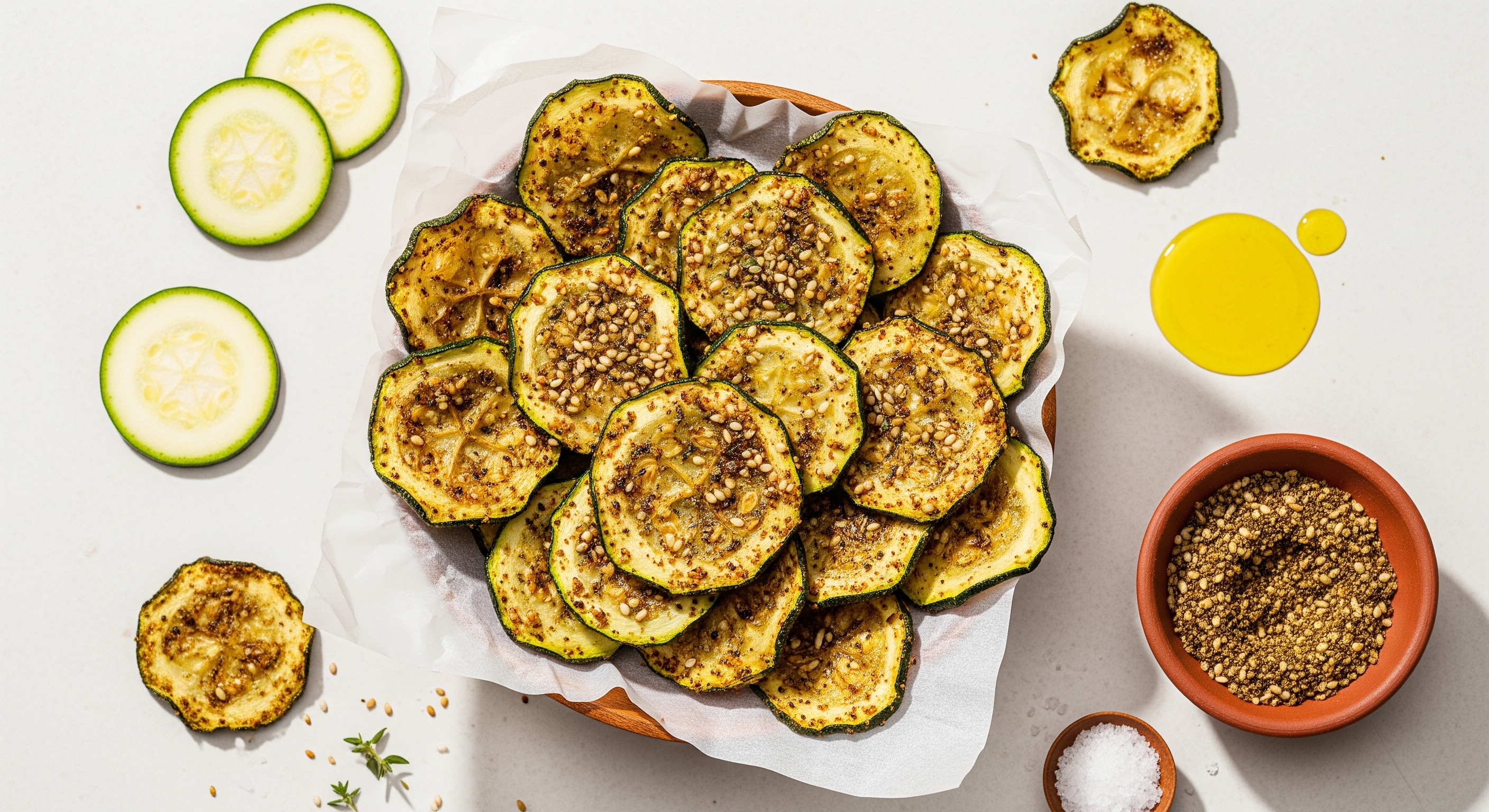 Zucchini Chips with Za'atar and Olive Oil 35 min Crispy oven snack with Middle Eastern spices
  82 kcal
  2g protein 1 synergies
 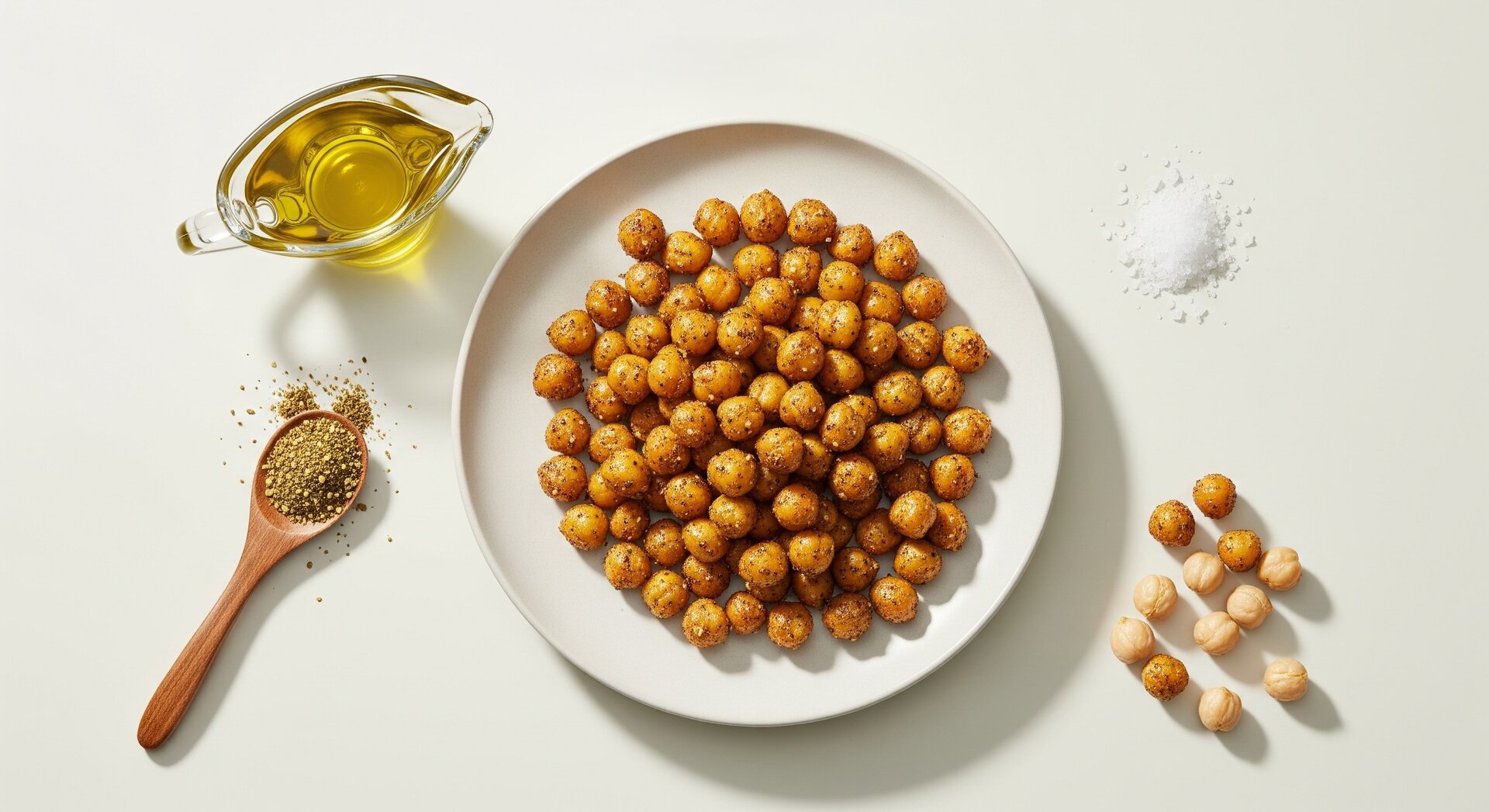 Roasted Chickpeas with Za'atar 35 min Crispy plant-based snack with herbs 255 kcal 11g protein 1 synergies
 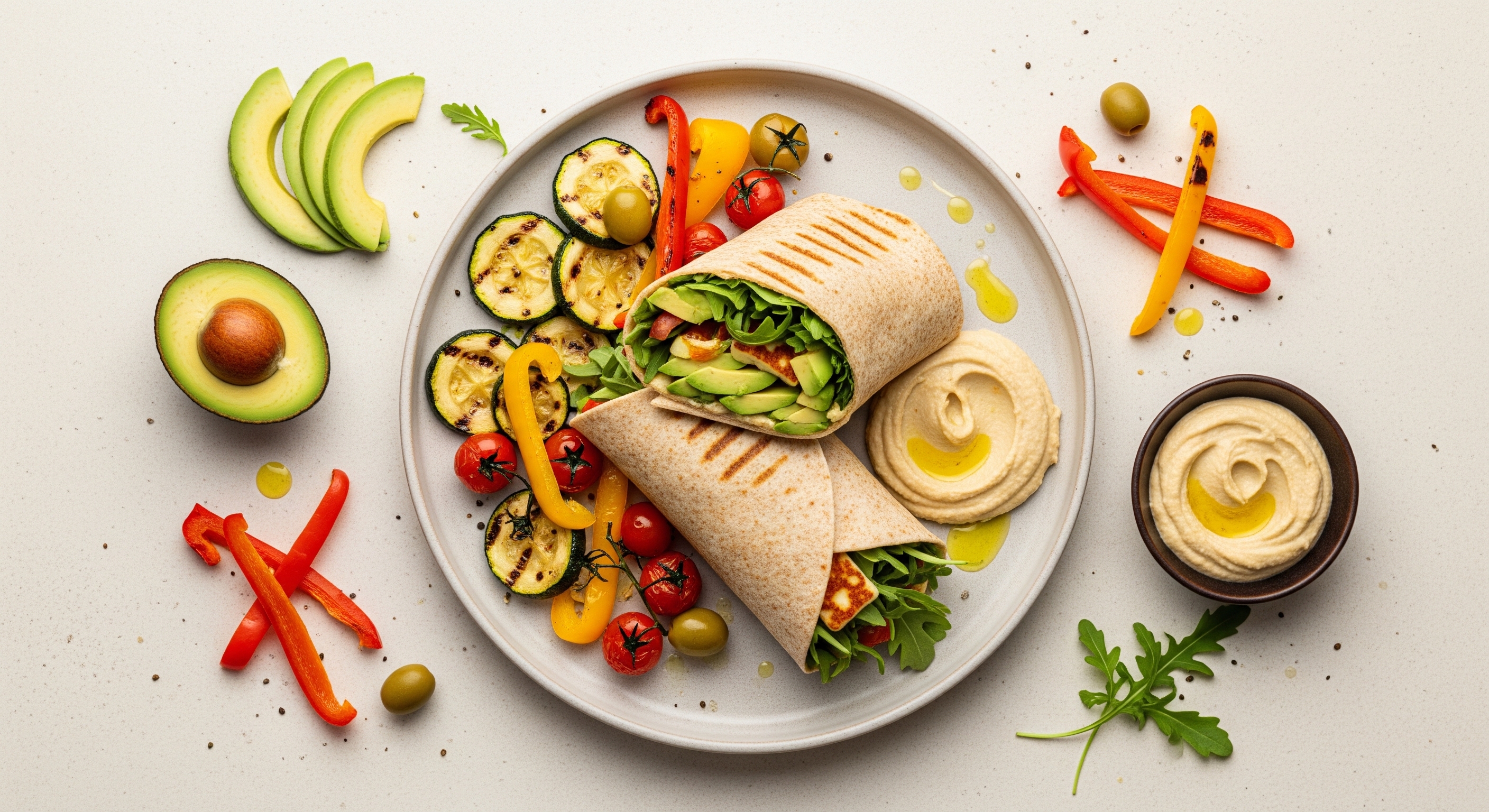 Halloumi & Avocado Wrap with Hummus & Roasted Vegetables 25 min Grilled halloumi and creamy avocado in a whole wheat wrap 712 kcal 28g protein 1 synergies
 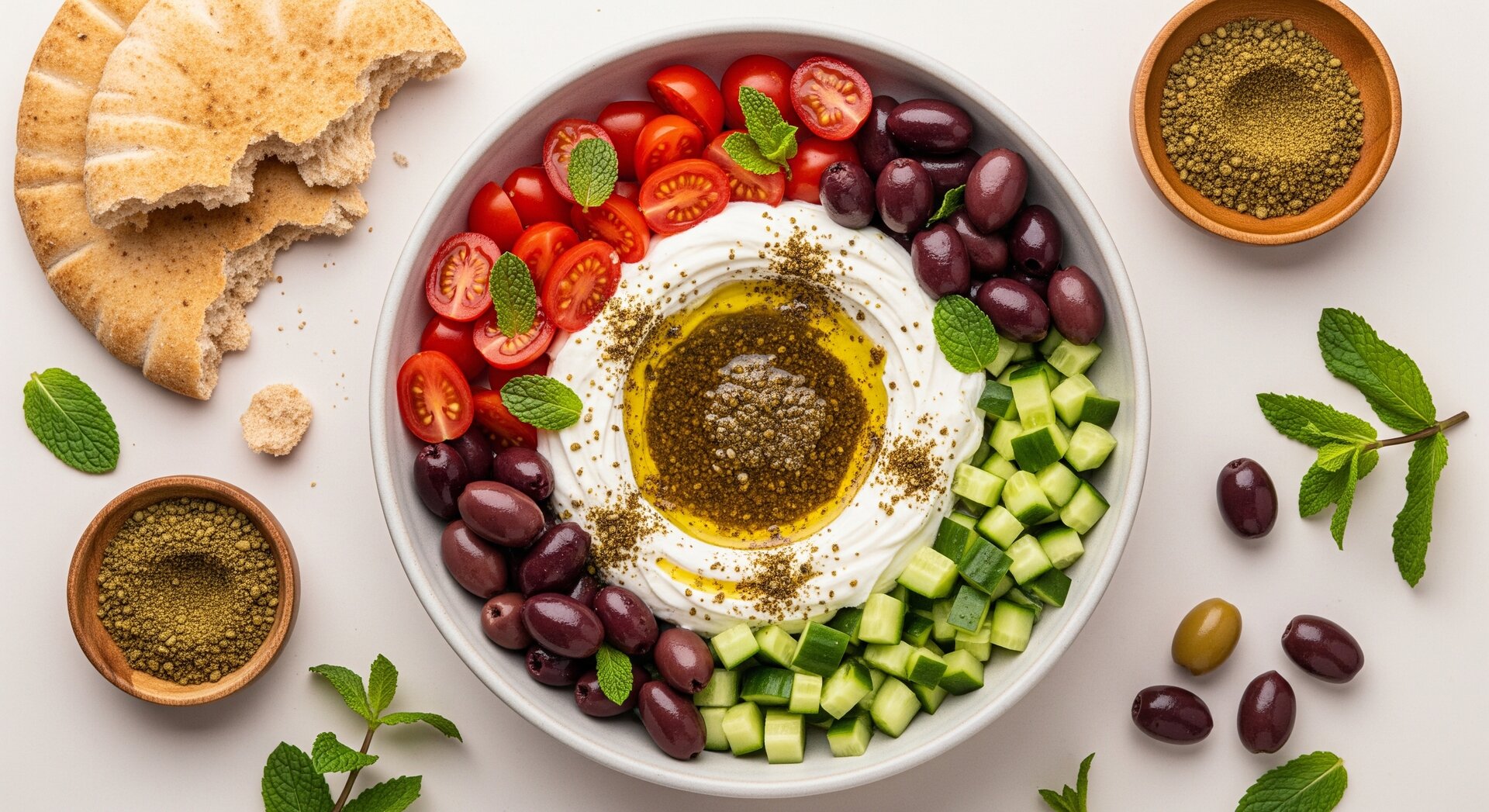 Labneh Bowl with Za'atar, Olives and Vegetables 5 min Creamy Levantine yogurt cheese with Middle Eastern herbs 374 kcal 15g protein 1 synergies
 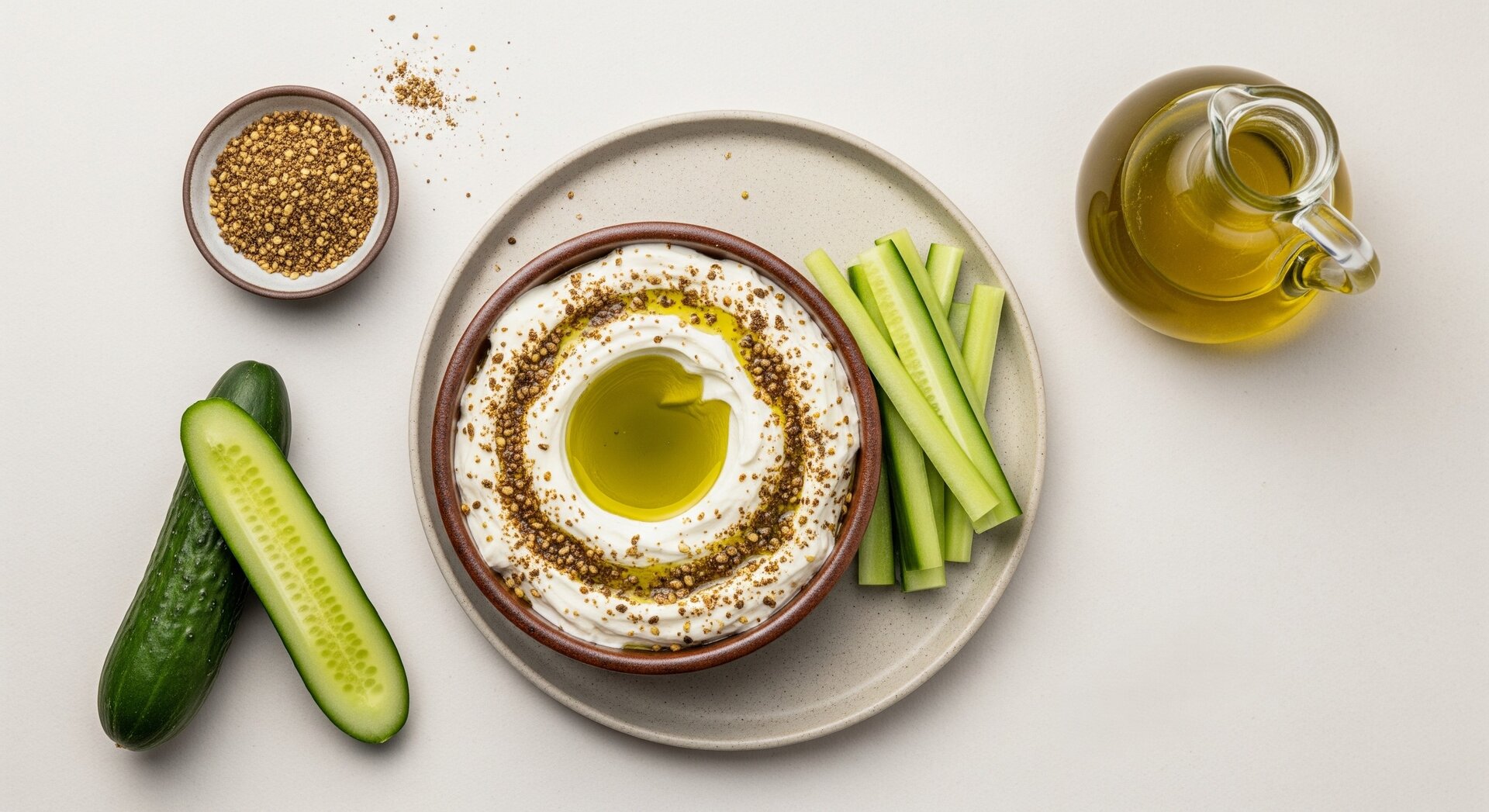 Labneh with Za'atar and Olive Oil 5 min Creamy yogurt cheese with Middle Eastern herbs 255 kcal 9g protein 1 synergies
 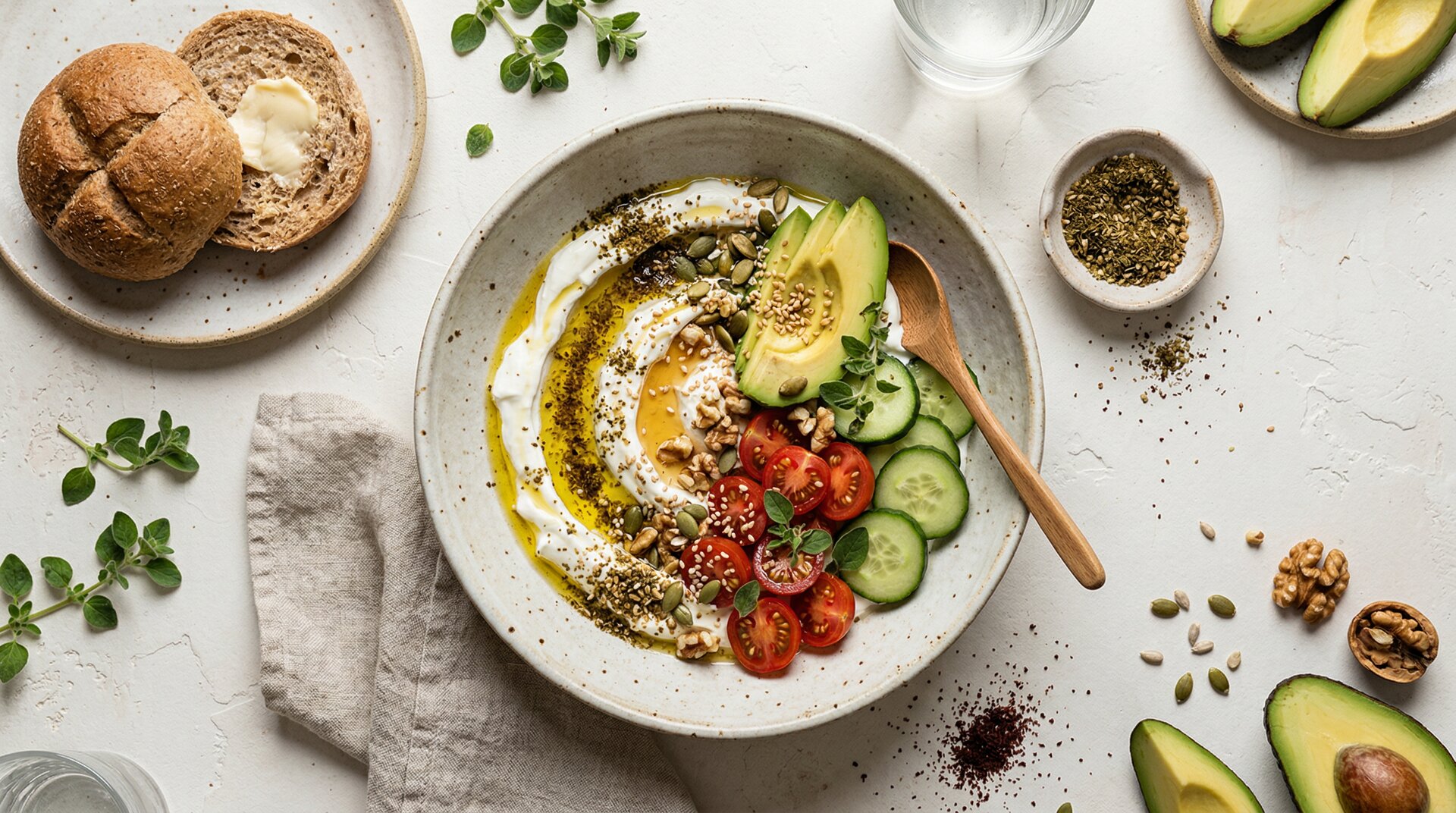 Labneh Breakfast Bowl with Za'atar, Olive Oil & Seeds 10 min Savory breakfast with ingredients that may contribute to digestive and nutritional properties widely studied 718 kcal 18g protein 2 synergies
  In the Kitchen
Storage
Location:Pantry
Store in a cool, dry, dark place. Sesame seeds can turn rancid with prolonged exposure to light and heat.
Preparation
Can be used raw or briefly warmed. Toast briefly in a dry pan for a more intense aroma. Mix with olive oil for manakish spread or dip.
Substitutes
Smart preparation
1Mix za'atar with olive oil for a dip or bread topping.
2Sprinkle za'atar as a finishing touch; prolonged cooking diminishes the aroma.
Why?
The volatile oils of thyme and oregano evaporate with prolonged heat.
3Use za'atar on flatbreads, in salads, or over hummus.
Caution / Warnings
Za'atar is very safe, but there are scientific considerations:
High sodium content with hypertension Moderate
Commercial za'atar blends often contain salt. With frequent and generous use, total sodium intake can add up, especially for people who need to limit salt.
Advice:
Use low-sodium za'atar or make your own blend without salt. Keep portions modest if you are watching salt intake.
Blood-thinning medication Mild
Green herbs in za'atar can provide vitamin K. With daily use, consistent intake is especially important if you use vitamin K antagonists.
Advice:
Keep your intake of vitamin K-rich herbs consistent and consult your doctor before major diet changes.
Lamiaceae family allergy Mild
People who react to herbs such as oregano, basil, rosemary or mint may also be sensitive to the thyme or oregano in za'atar.
Advice:
Start with a small amount the first time. Stop if itching, rash or breathing discomfort occurs.
Traditional use
Islamic tradition
Levantine spice blend
Za'atar is an ancient spice blend from the Levant traditionally eaten on bread with olive oil. In Arab food cultures, it also belongs to breakfasts, school days and family tables.
Mediterranean
Historical references to wild thyme
The wild thyme variety za'atar (Origanum syriacum) is often linked with the plant referred to as hyssop in ancient texts. The plant has been present in the eastern Mediterranean for millennia.
Summary
Za'atar combines wild thyme, sumac, sesame seeds and salt into a herbal, tangy and nutty blend. Mix with olive oil for manakish, sprinkle over hummus or use as a finishing touch on eggs, tomato and grilled vegetables.