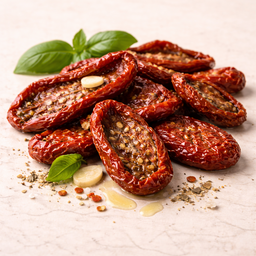
Sun-Dried Tomato
Concentrated Lycopene Boost
What is this ingredient?
Sun-dried tomatoes are 'tomato in turbo mode' — the drying process concentrates nutrients.
## Concentrated Lycopene
Toor & Savage (2006) in Food Chemistry showed that sun-dried tomatoes contain up to 12x more lycopene per gram than fresh tomatoes. This makes them one of the most researched sources of this antioxidant, a carotenoid being studied in cardiovascular research.
## Umami Flavor Enhancer
The drying process also increases free glutamate content, explaining the deep umami flavor that transforms dishes.
Note: many varieties are in oil and/or salted. Rinse or choose low-salt on a sodium-restricted diet.
How does it taste?
Intensely concentrated tomatoey, sweet and mildly caramelized with deep umami.
Pairs well with:
Pairs well with olive oilbasilpine nutscapers and parmesan.
Did you know...?
- Sun-dried tomatoes are an Italian tradition from before refrigeration, to preserve the summer harvest.
- Drying tomatoes in the sun takes 4 to 10 days and concentrates the flavor up to 10x.
Nutritional Value & Energy
Per 100g
Sun-Dried Tomato provides energy thanks to natural nutrients , buffered by fiber.
Per 100g
Minerals
Vitamins
Omega-3 fatty acids
More nutrients
B-Vitamins
Trace Minerals
What's in a serving?
1 serving
Sun-Dried Tomato naturally contains iron (9.1 mg per 100 g).
Sun-Dried Tomato naturally contains potassium (3427 mg per 100 g).
Sun-Dried Tomato naturally contains magnesium (194 mg per 100 g).
Sun-Dried Tomato naturally contains vitamin c (39 mg per 100 g).
Sun-Dried Tomato naturally contains vitamin k (43 mcg per 100 g).
Sun-Dried Tomato naturally contains folate (68 mcg per 100 g).
% of daily reference intake (DRI)
EU-approved nutrition claims
This ingredient contains nutrients for which EFSA-authorized health claims exist (at nutrient level, not ingredient-specific).
Approved health claims (EU)
Vitamin_c EU 432/2012
Vitamin C contributes to the normal function of the immune system
Contains 39mg/100g (threshold: ≥12mg/100g)
Vitamin_c EU 432/2012
Vitamin C contributes to the reduction of tiredness and fatigue
Contains 39mg/100g (threshold: ≥12mg/100g)
Vitamin_c EU 432/2012
Vitamin C contributes to normal collagen formation for the normal function of skin
Contains 39mg/100g (threshold: ≥12mg/100g)
Magnesium EU 432/2012
Magnesium contributes to normal muscle function
Contains 194mg/100g (threshold: ≥56.25mg/100g)
Magnesium EU 432/2012
Magnesium contributes to the reduction of tiredness and fatigue
Contains 194mg/100g (threshold: ≥56.25mg/100g)
Magnesium EU 432/2012
Magnesium contributes to normal functioning of the nervous system
Contains 194mg/100g (threshold: ≥56.25mg/100g)
Iron EU 432/2012
Iron contributes to normal energy-yielding metabolism
Contains 9.1mg/100g (threshold: ≥2.1mg/100g)
Iron EU 432/2012
Iron contributes to the reduction of tiredness and fatigue
Contains 9.1mg/100g (threshold: ≥2.1mg/100g)
Potassium EU 432/2012
Potassium contributes to the maintenance of normal blood pressure
Contains 3427mg/100g (threshold: ≥300mg/100g)
Folate EU 432/2012
Folate contributes to normal blood formation
Contains 68mcg/100g (threshold: ≥30mcg/100g)
Folate EU 432/2012
Folate contributes to normal amino acid synthesis
Contains 68mcg/100g (threshold: ≥30mcg/100g)
Folate EU 432/2012
Folate contributes to normal homocysteine metabolism
Contains 68mcg/100g (threshold: ≥30mcg/100g)
Folate EU 432/2012
Folate contributes to normal psychological function
Contains 68mcg/100g (threshold: ≥30mcg/100g)
Folate EU 432/2012
Folate contributes to the normal function of the immune system
Contains 68mcg/100g (threshold: ≥30mcg/100g)
Folate EU 432/2012
Folate has a role in the process of cell division
Contains 68mcg/100g (threshold: ≥30mcg/100g)
Folate EU 432/2012
Folate contributes to maternal tissue growth during pregnancy
Contains 68mcg/100g (threshold: ≥30mcg/100g)
Vitamin_c EU 432/2012
Vitamin C contributes to normal collagen formation for the normal function of blood vessels
Contains 39mg/100g (threshold: ≥12mg/100g)
Vitamin_c EU 432/2012
Vitamin C contributes to normal collagen formation for the normal function of bones
Contains 39mg/100g (threshold: ≥12mg/100g)
Vitamin_c EU 432/2012
Vitamin C contributes to normal collagen formation for the normal function of cartilage
Contains 39mg/100g (threshold: ≥12mg/100g)
Vitamin_c EU 432/2012
Vitamin C contributes to normal collagen formation for the normal function of gums
Contains 39mg/100g (threshold: ≥12mg/100g)
Vitamin_c EU 432/2012
Vitamin C contributes to normal collagen formation for the normal function of teeth
Contains 39mg/100g (threshold: ≥12mg/100g)
Vitamin_c EU 432/2012
Vitamin C contributes to normal energy-yielding metabolism
Contains 39mg/100g (threshold: ≥12mg/100g)
Vitamin_c EU 432/2012
Vitamin C contributes to normal functioning of the nervous system
Contains 39mg/100g (threshold: ≥12mg/100g)
Vitamin_c EU 432/2012
Vitamin C contributes to normal psychological function
Contains 39mg/100g (threshold: ≥12mg/100g)
Vitamin_c EU 432/2012
Vitamin C contributes to the protection of cells from oxidative stress
Contains 39mg/100g (threshold: ≥12mg/100g)
Vitamin_c EU 432/2012
Vitamin C contributes to the regeneration of the reduced form of vitamin E
Contains 39mg/100g (threshold: ≥12mg/100g)
Vitamin_c EU 432/2012
Vitamin C increases iron absorption
Contains 39mg/100g (threshold: ≥12mg/100g)
Vitamin_c EU 432/2012
Vitamin C contributes to maintain the normal function of the immune system during and after intense physical exercise
Contains 39mg/100g (threshold: ≥12mg/100g)
Vitamin_k EU 432/2012
Vitamin K contributes to normal blood clotting
Contains 43mcg/100g (threshold: ≥11.25mcg/100g)
Vitamin_k EU 432/2012
Vitamin K contributes to the maintenance of normal bones
Contains 43mcg/100g (threshold: ≥11.25mcg/100g)
Magnesium EU 432/2012
Magnesium contributes to normal energy-yielding metabolism
Contains 194mg/100g (threshold: ≥56.25mg/100g)
Magnesium EU 432/2012
Magnesium contributes to electrolyte balance
Contains 194mg/100g (threshold: ≥56.25mg/100g)
Magnesium EU 432/2012
Magnesium contributes to normal protein synthesis
Contains 194mg/100g (threshold: ≥56.25mg/100g)
Magnesium EU 432/2012
Magnesium contributes to normal psychological function
Contains 194mg/100g (threshold: ≥56.25mg/100g)
Magnesium EU 432/2012
Magnesium contributes to the maintenance of normal bones
Contains 194mg/100g (threshold: ≥56.25mg/100g)
Magnesium EU 432/2012
Magnesium contributes to the maintenance of normal teeth
Contains 194mg/100g (threshold: ≥56.25mg/100g)
Magnesium EU 432/2012
Magnesium has a role in the process of cell division
Contains 194mg/100g (threshold: ≥56.25mg/100g)
Iron EU 432/2012
Iron contributes to normal cognitive function
Contains 9.1mg/100g (threshold: ≥2.1mg/100g)
Iron EU 432/2012
Iron contributes to normal formation of red blood cells and haemoglobin
Contains 9.1mg/100g (threshold: ≥2.1mg/100g)
Iron EU 432/2012
Iron contributes to normal oxygen transport in the body
Contains 9.1mg/100g (threshold: ≥2.1mg/100g)
Iron EU 432/2012
Iron contributes to the normal function of the immune system
Contains 9.1mg/100g (threshold: ≥2.1mg/100g)
Iron EU 432/2012
Iron has a role in the process of cell division
Contains 9.1mg/100g (threshold: ≥2.1mg/100g)
Potassium EU 432/2012
Potassium contributes to normal functioning of the nervous system
Contains 3427mg/100g (threshold: ≥300mg/100g)
Potassium EU 432/2012
Potassium contributes to normal muscle function
Contains 3427mg/100g (threshold: ≥300mg/100g)
Comparison
vsbanaan
Sun-Dried Tomato contains about 10x more potassium per 100g than banana.
vsspinazie
Sun-Dried Tomato contains about 3x more iron per 100g than spinach.
What's being researched?
Concentrated lycopene through drying
Sun-dried tomatoes contain concentrated amounts of lycopene. Research focuses on the stability of lycopene during the drying process and increased density per serving.
Supported by: [1] Chandra HM (2012) , [3] Agarwal S (2000) , [2] Przybylska S (2022)
Potassium and mineral concentration
The concentrated mineral profile of sun-dried tomatoes, particularly potassium, is being studied in relation to cardiovascular parameters. Observational evidence supports potassium-rich diets.
Supported by: [3] Agarwal S (2000)
Good Combinations (Synergy)
Combine sun-dried tomato smartly to enhance the effect:
Sun-Dried Tomato 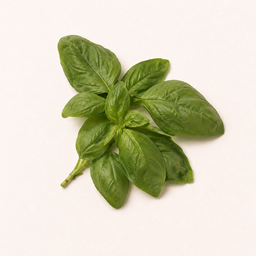 Basil
Basil Concentrated lycopene + eugenol: complementary bioactive compounds
Technical: Sun-dried tomatoes contain up to 45mg lycopene per 100g — 10x more concentrated than fresh. Basil provides eugenol (0.5mg/100g) and rosmarinic acid. Lycopene quenches singlet oxygen, eugenol neutralizes hydroxyl radicals — complementary mechanisms. Cis-isomer of lycopene (dominant in dried tomato) is 2-3x more bioavailable.
What does this mean for you? Sun-dried tomato with basil (on bruschetta, in pasta) delivers the most concentrated lycopene dose with complementary bioactive compounds from basil. An Italian classic with scientific depth.
Sun-Dried Tomato 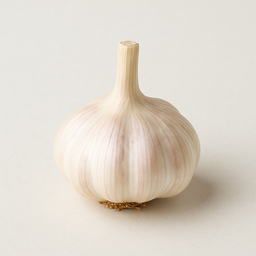 Garlic
 Concentrated lycopene + allicin: complementary lipid pathways
Technical: Sun-dried tomatoes provide 45mg lycopene per 100g modulating LDL oxidation. Garlic's allicin influences LDL metabolism and modulates platelet aggregation signaling via thromboxane A2. Together they work through two complementary lipid pathways: lycopene modulates LDL oxidation, allicin influences LDL metabolism.
What does this mean for you? Sun-dried tomato with garlic (in pesto rosso, tapenade or pasta) isn't just a flavor combo — it's a combination of two bioactive compounds each influencing lipid metabolism through their own pathway.
Sun-Dried Tomato 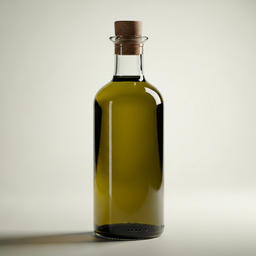 Olive Oil
 Concentrated lycopene + fat = maximum absorption
Technical: Sun-dried tomatoes contain up to 45mg lycopene per 100g — 10x more than fresh tomatoes (4.5mg/100g) due to water removal. The drying process also isomerizes trans-lycopene to cis-lycopene (2-3x more bioavailable). Storage in olive oil maximizes absorption since lycopene is fat-soluble.
What does this mean for you? Sun-dried tomatoes in olive oil are the ultimate lycopene source. Drying concentrates lycopene 10x and oil maximizes absorption. Use them on pasta, in salads or on bread.
Recipes with Sun-Dried Tomato
Discover delicious recipes featuring sun-dried tomato:
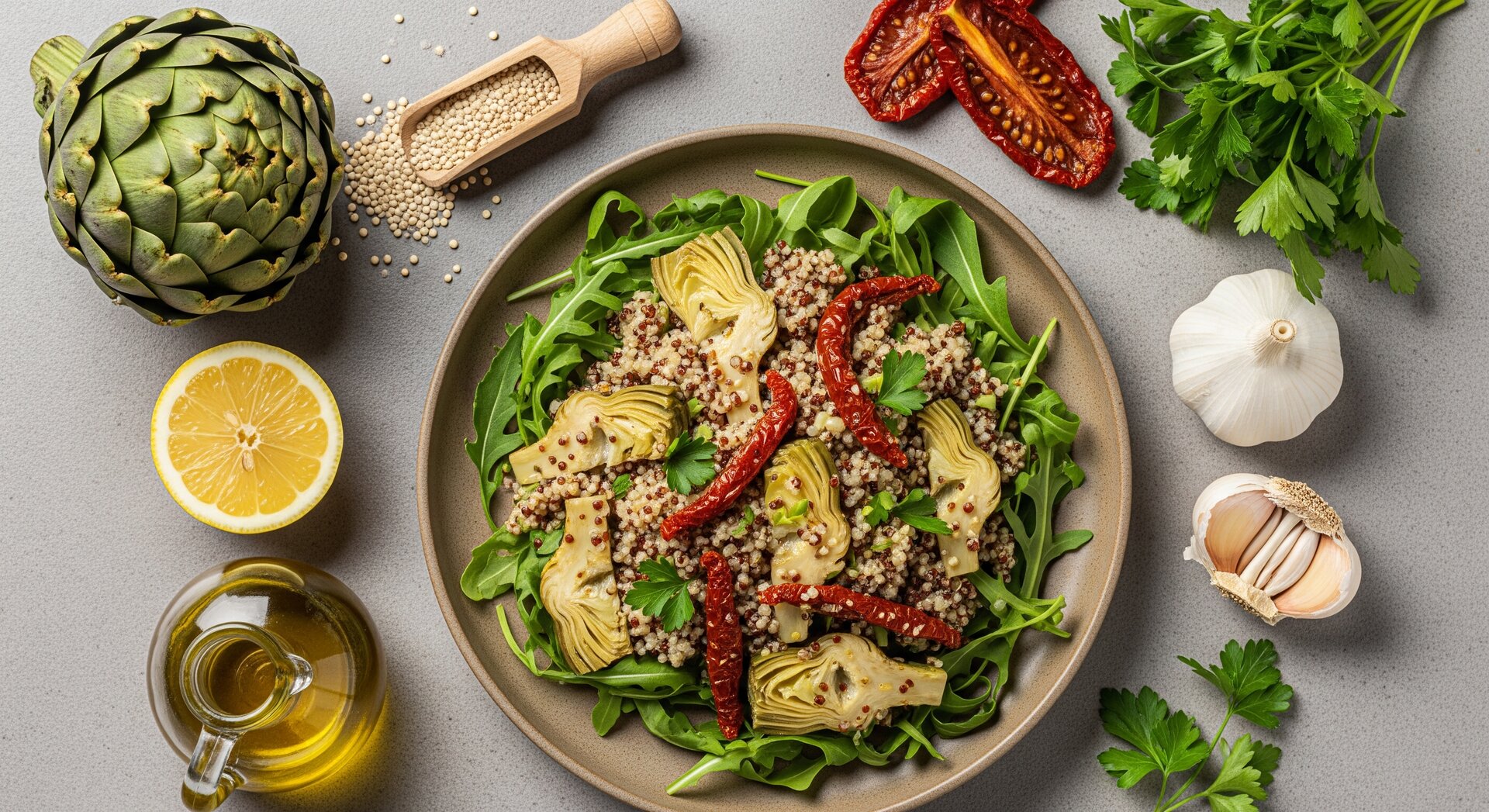 Artichoke Quinoa Lunch 25 min Mediterranean quinoa salad with artichoke
  340 kcal
  10g protein 2 synergies
 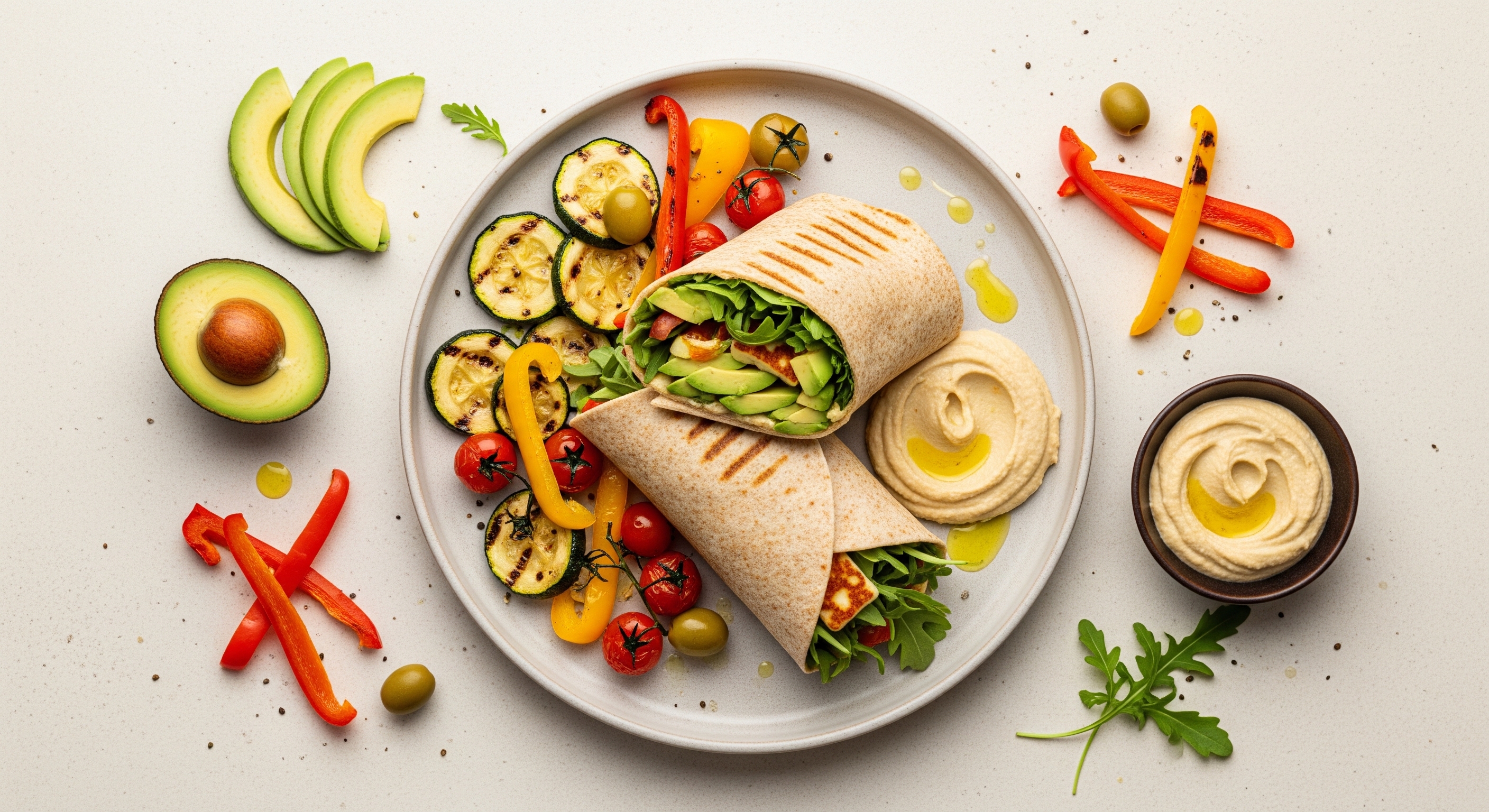 Halloumi & Avocado Wrap with Hummus & Roasted Vegetables 25 min Grilled halloumi and creamy avocado in a whole wheat wrap 712 kcal 28g protein 1 synergies
 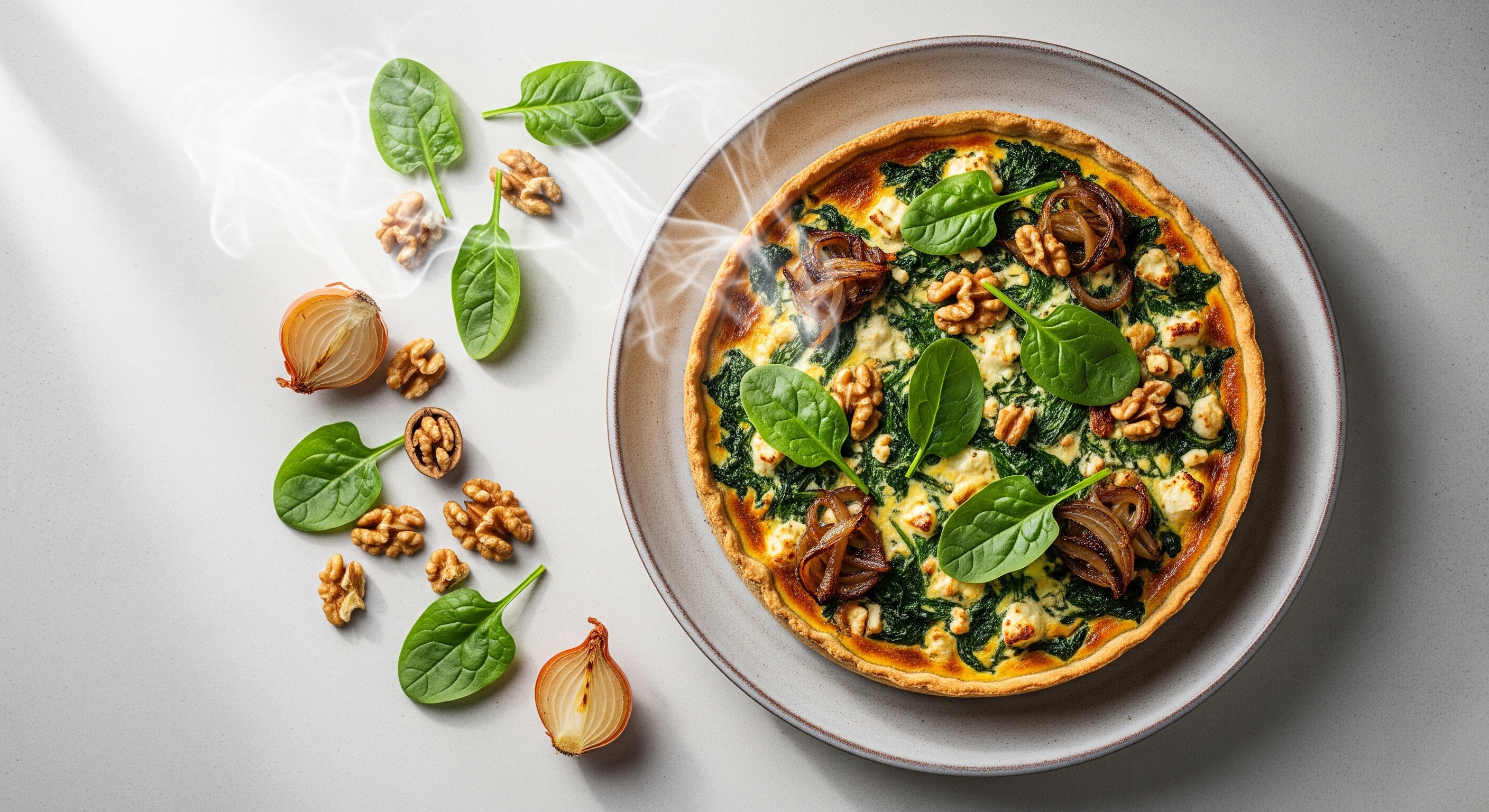 Crustless Spinach-Feta Quiche with Walnuts 50 min Low-carb quiche with spinach, three cheeses and crunchy walnuts 612 kcal 30g protein 1 synergies
 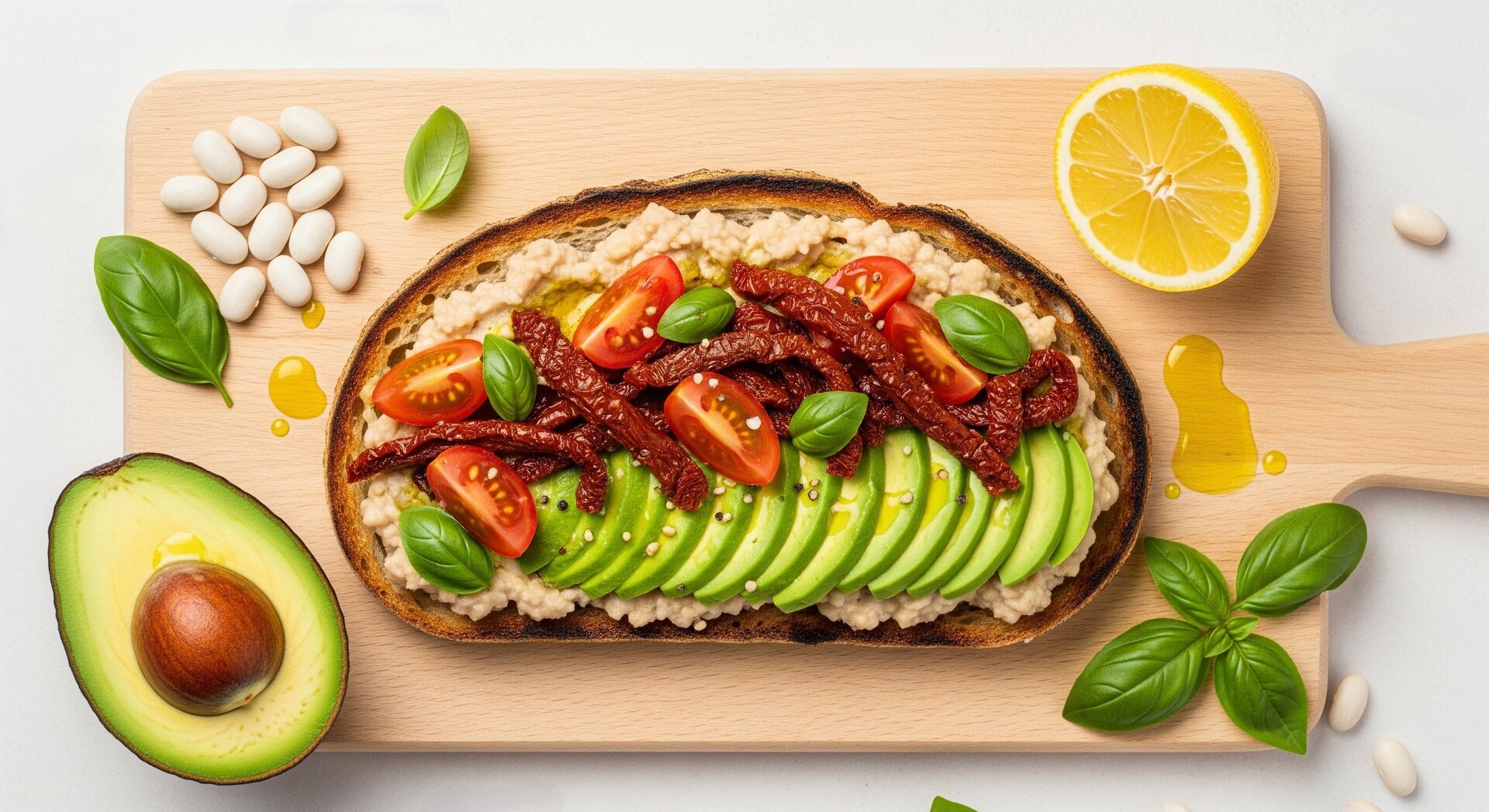 Mediterranean Avocado Toast with White Beans 13 min Mashed white beans with avocado on sourdough 485 kcal 18g protein 1 synergies
 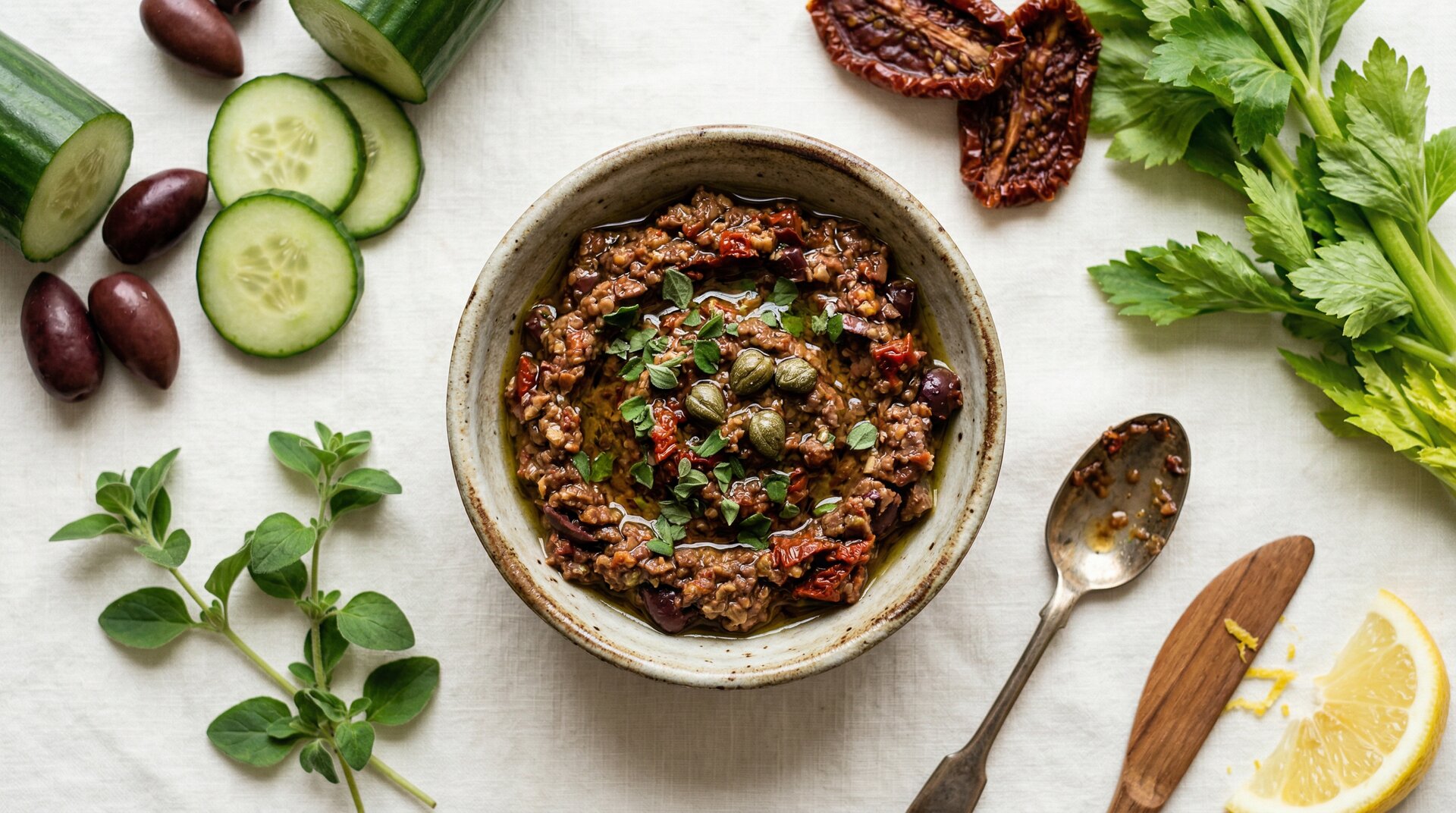 Olive Sun-Dried Tomato Tapenade with Vegetables 10 min Mediterranean tapenade with raw vegetables for dipping 95 kcal 1g protein 1 synergies
  In the Kitchen
Storage
Location:Pantry
Shelf life:6-12 maanden
In oil: refrigerate after opening. Dry: airtight.
Preparation
Soak 5 min (dry) or chop into dressings.
Conversions
Substitutes
Smart preparation
1Soak dried sun-dried tomatoes for 30 minutes in warm water.
2Save the soaking water; it's a flavorful base for sauces.
3Pat sun-dried tomatoes from oil dry before using in salads.
Why?
Excess oil can make the dish too greasy and dilute the dressing.
Caution / Warnings
Sun-Dried Tomato is very safe, but there are scientific considerations:
Sodium-Restricted Diet Moderate
May be high in sodium; choose low-salt variety or rinse before use
Summary
Sun-dried tomato contains up to 12x more lycopene than fresh — a powerful antioxidant being studied in cardiovascular research. Perfect as umami boost for salads and pasta. Watch salt and oil content.