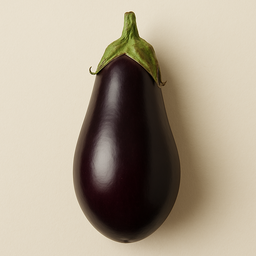
Eggplant
Purple vegetable rich in nasunin, a unique anthocyanin from the nightshade family
What is this ingredient?
Eggplant (Solanum melongena) belongs to the nightshade family, the same family as tomato, pepper, and potato. The vegetable originally comes from India and has been cultivated for over 4000 years.
What makes eggplant special is its deep purple skin. This color comes from nasunin, an anthocyanin that is among the most widely recognized antioxidants. Nasunin is unique because it can 'chelate' iron - bind and remove it - which acts as an antioxidant, especially in the brain.
Expert Tip: Eat the skin! That's where 90% of the nasunin is. Cut the eggplant and sprinkle with salt to remove bitter juices before cooking.
How does it taste?
Mild and slightly bitter raw, creamy and meaty with umami when grilled or roasted.
Pairs well with:
Pairs well with tomatogarlictahinimiso and feta.
Did you know...?
- The name 'eggplant' comes from early European varieties that were white and egg-shaped.
- The aubergine is botanically a berry, not a vegetable.
Nutritional Value & Energy
Per 100g
Eggplant is low in calories thanks to natural nutrients , buffered by fiber.
Per 100g
Minerals
Vitamins
Omega-3 fatty acids
More nutrients
B-Vitamins
Trace Minerals
Low GI means blood sugar doesn't spike quickly.
Low GL means minimal impact on your blood sugar per serving.
What's in a serving?
1 serving
% of daily reference intake (DRI)
EU-approved nutrition claims
There are currently no EFSA-authorized health claims specific for Eggplant.
What's being researched?
Nasunin and cholesterol research
Nasunin, an anthocyanin in eggplant skin, is being researched for potential effects on cholesterol levels. Animal studies show promising results, but human studies are limited.
Supported by: [1] Noda (2000) , [2] Noda Y (1998)
Chlorogenic acid and oxidative stress
Chlorogenic acid in eggplant is being studied for protective effects against oxidative cell damage. Laboratory studies are promising, but more clinical research is needed.
Supported by: [1] Noda (2000) , [3] Noda (1998)
Good Combinations (Synergy)
Combine eggplant smartly to enhance the effect:
Eggplant 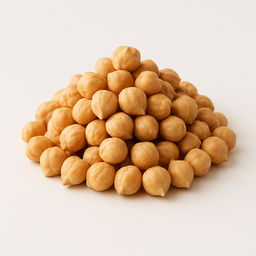 Chickpeas
 Complete vegetarian meal: protein + fiber + nasunin
Technical: Eggplant contains only 1g protein per 100g but is rich in nasunin (antioxidant) and fiber (3g/100g). Chickpeas provide 19g protein per 100g with all essential amino acids. Combined fiber (10g+) feeds Bifidobacterium in the gut.
What does this mean for you? Eggplant curry with chickpeas perfectly complements the missing protein and provides a substantial fiber boost. Chickpeas bring the protein, eggplant the fiber and nasunin. An ideal complete vegetarian meal.
Eggplant 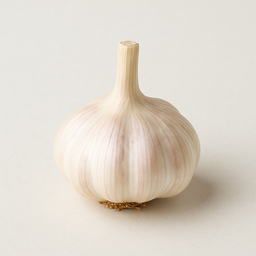 Garlic
 Chlorogenic acid + allicin: complementary NF-κB modulation
Technical: Eggplant contains chlorogenic acid (NF-κB modulation) and nasunin (iron chelator influencing lipid peroxidation). Garlic's allicin (formed when cut) has bioactive action via thiol enzyme inhibition. Together they modulate NF-κB signaling through complementary pathways.
What does this mean for you? Baba ganoush or imam bayıldı — classic combinations that have existed for centuries. Cut garlic 10 minutes before heating for maximum allicin formation.
Eggplant 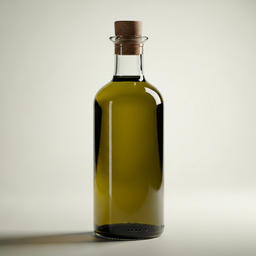 Olive Oil
 Fat makes nasunin (purple antioxidant) absorbable
Technical: Nasunin in the purple eggplant skin is a fat-soluble anthocyanin that crosses the blood-brain barrier. Olive oil's unsaturated fats (73% oleic acid) form micelles that increase nasunin absorption up to 3x.
What does this mean for you? Eggplant absorbs oil like a sponge — that's actually an advantage! The oil makes nasunin absorbable. Fry in olive oil for maximum effect.
Eggplant 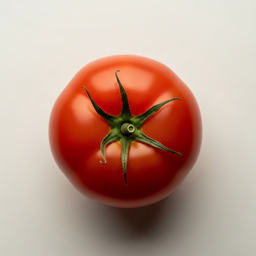 Tomato
 Nasunin + lycopene: complementary carotenoid-polyphenol pathways
Technical: Nasunin (eggplant) and lycopene (tomato) work through different mechanisms. Nasunin chelates iron, influencing lipid peroxidation, while lycopene quenches singlet oxygen. Studies show combined polyphenols and carotenoids work synergistically — the combination works through complementary mechanisms. With olive oil, both are optimally absorbed.
What does this mean for you? Parmigiana, ratatouille, zaalouk — Mediterranean and North African dishes always combine eggplant, tomato and olive oil. Culinary tradition backed by science.
Recipes with Eggplant
Discover delicious recipes featuring eggplant:
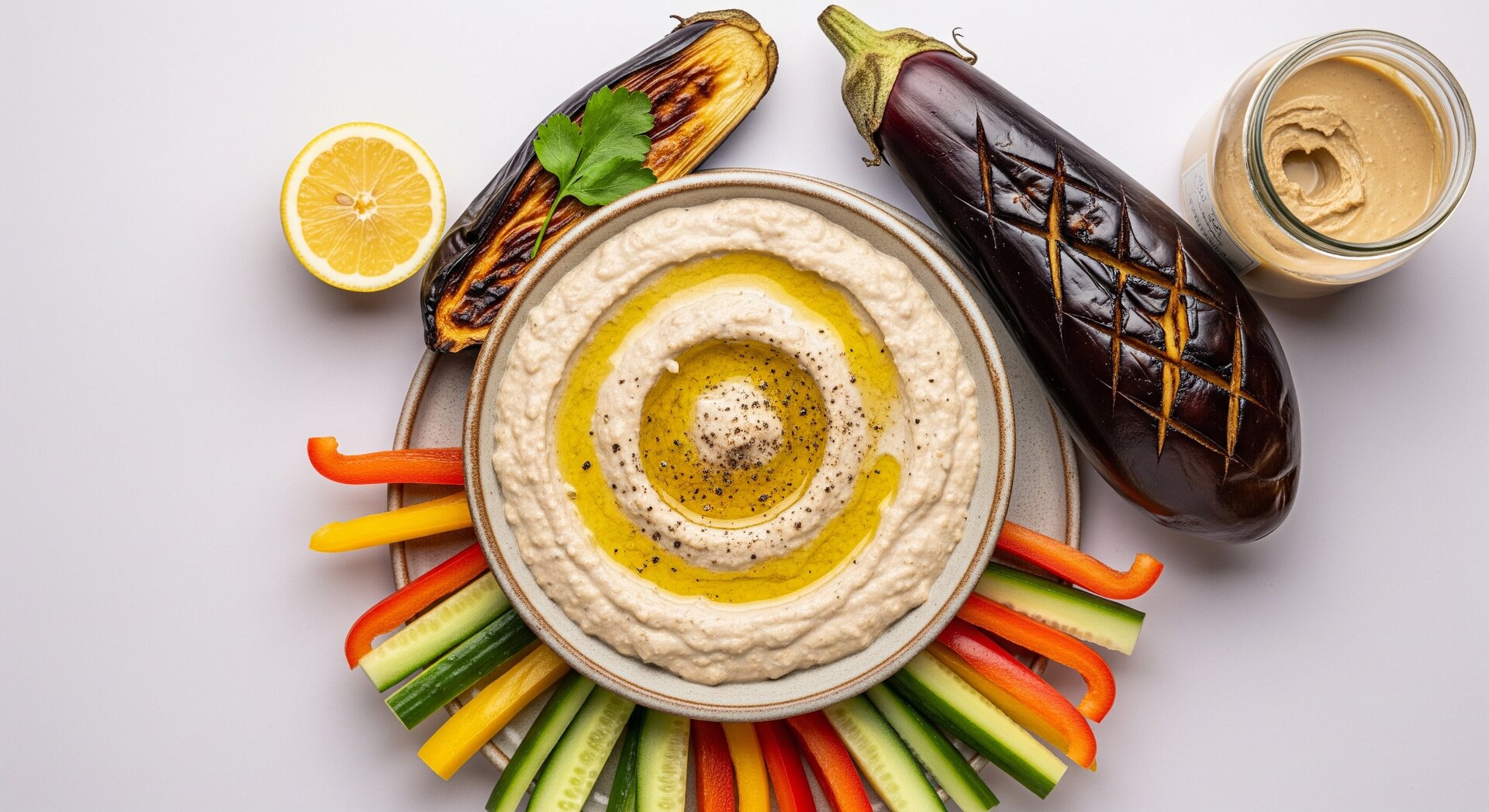 Baba Ganoush with Vegetable Sticks 40 min Roasted eggplant dip with fresh vegetables
  216 kcal
  5g protein 1 synergies
 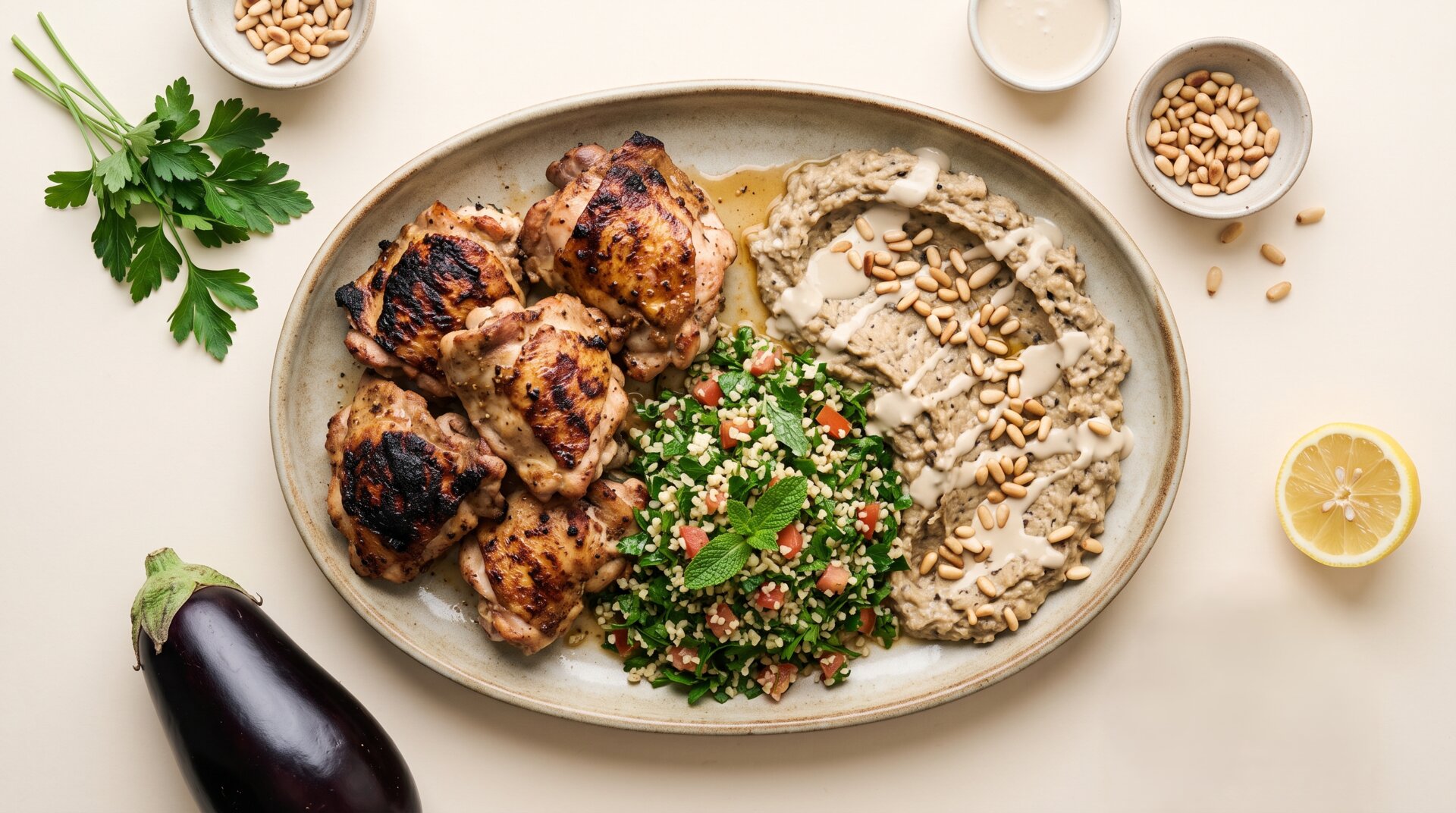 Grilled Chicken Thighs with Baba Ganoush and Tabbouleh 65 min Lebanese-inspired meal with smoky eggplant and fresh herbs 930 kcal 52g protein 3 synergies
 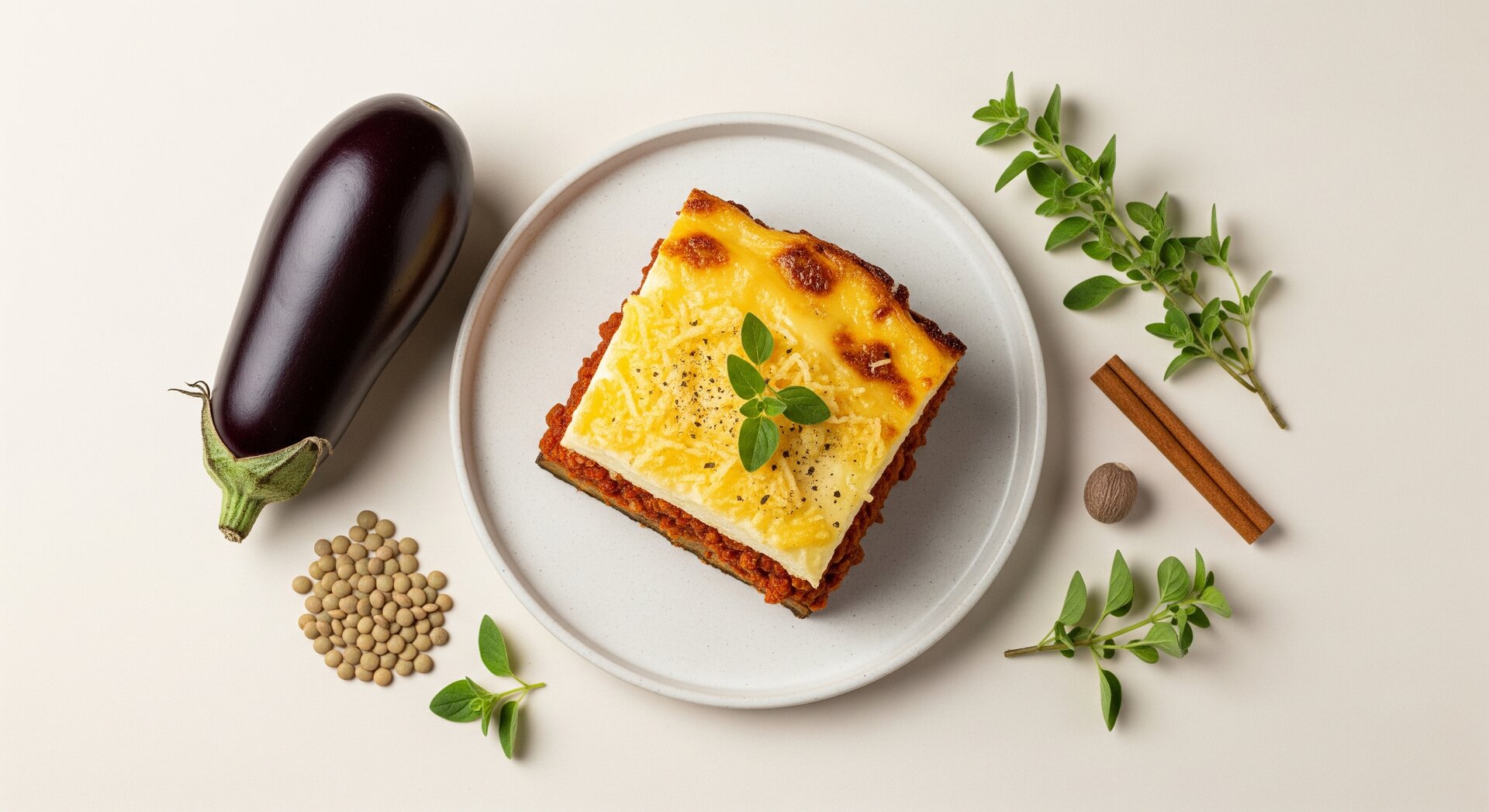 Greek-Cypriot Moussaka with Lentils 110 min Vegetarian moussaka with beluga lentils and cinnamon-tomato sauce 380 kcal 18g protein 2 synergies
 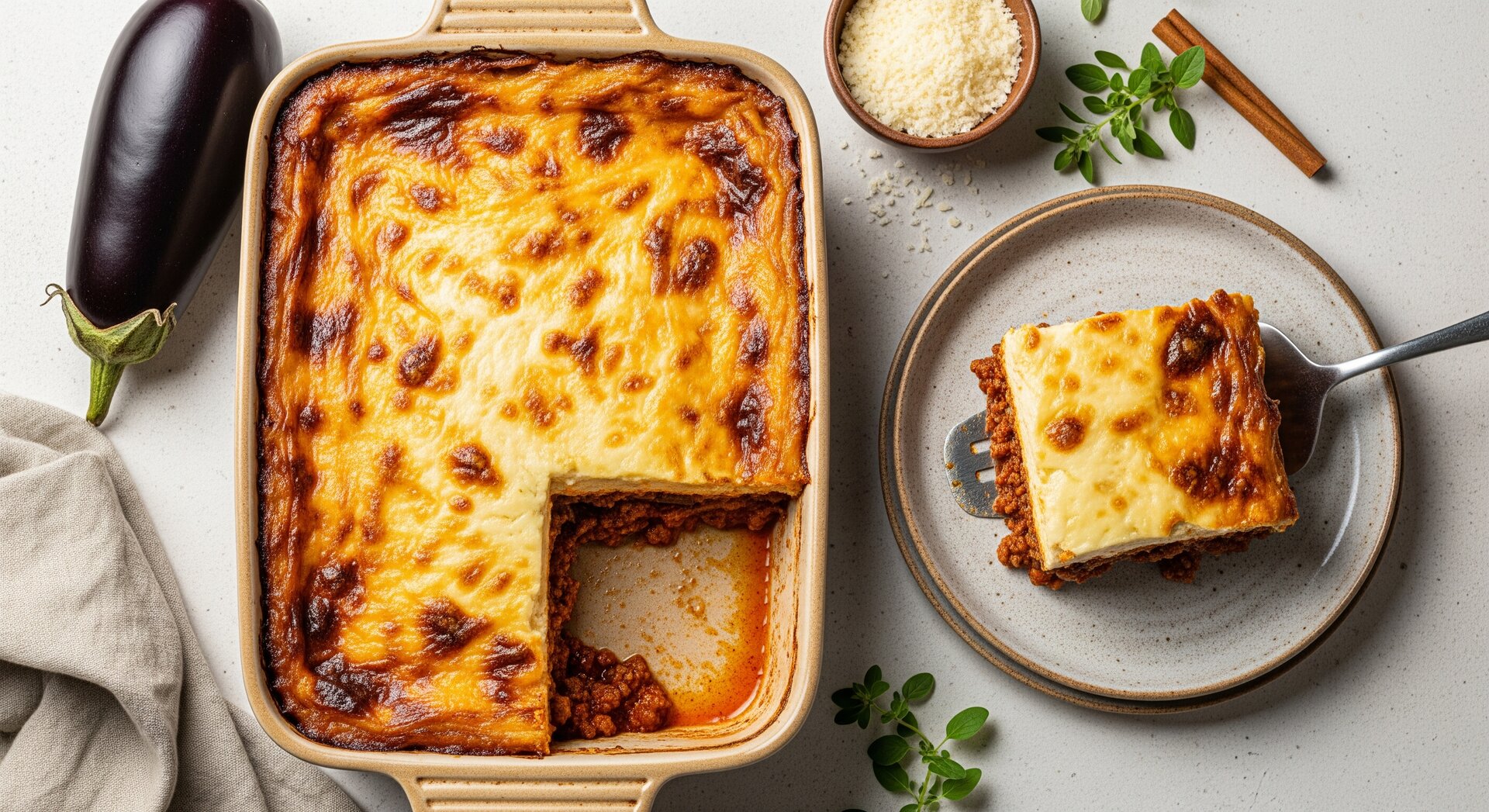 Greek Moussaka with Beef 90 min Baked eggplant with spiced meat and creamy béchamel 420 kcal 28g protein 1 synergies
 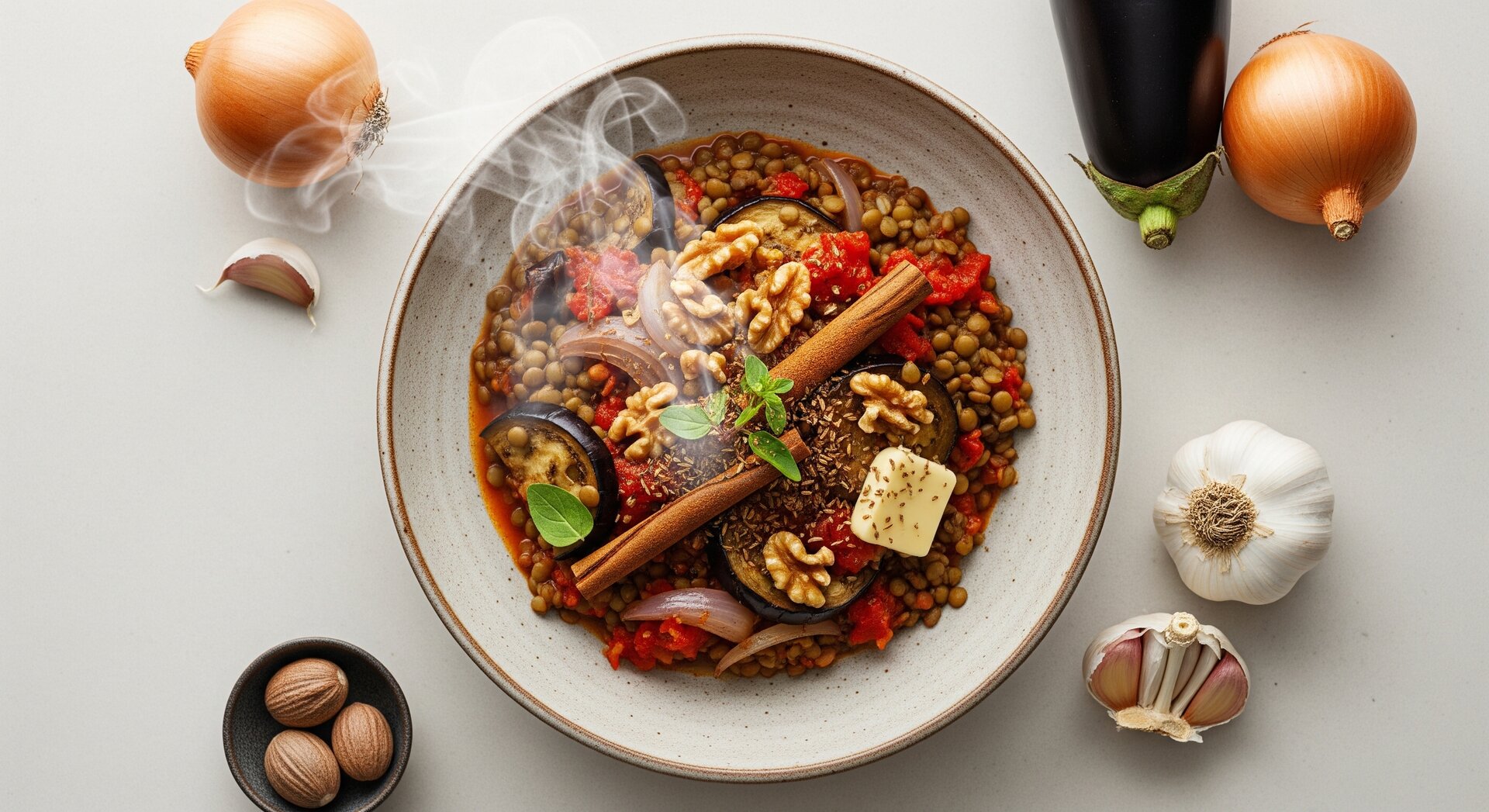 Greek Moussaka-Style Bowl with Lentils & Walnuts 50 min Eggplant, lentils and béchamel sauce in a warming bowl 658 kcal 28g protein 1 synergies
 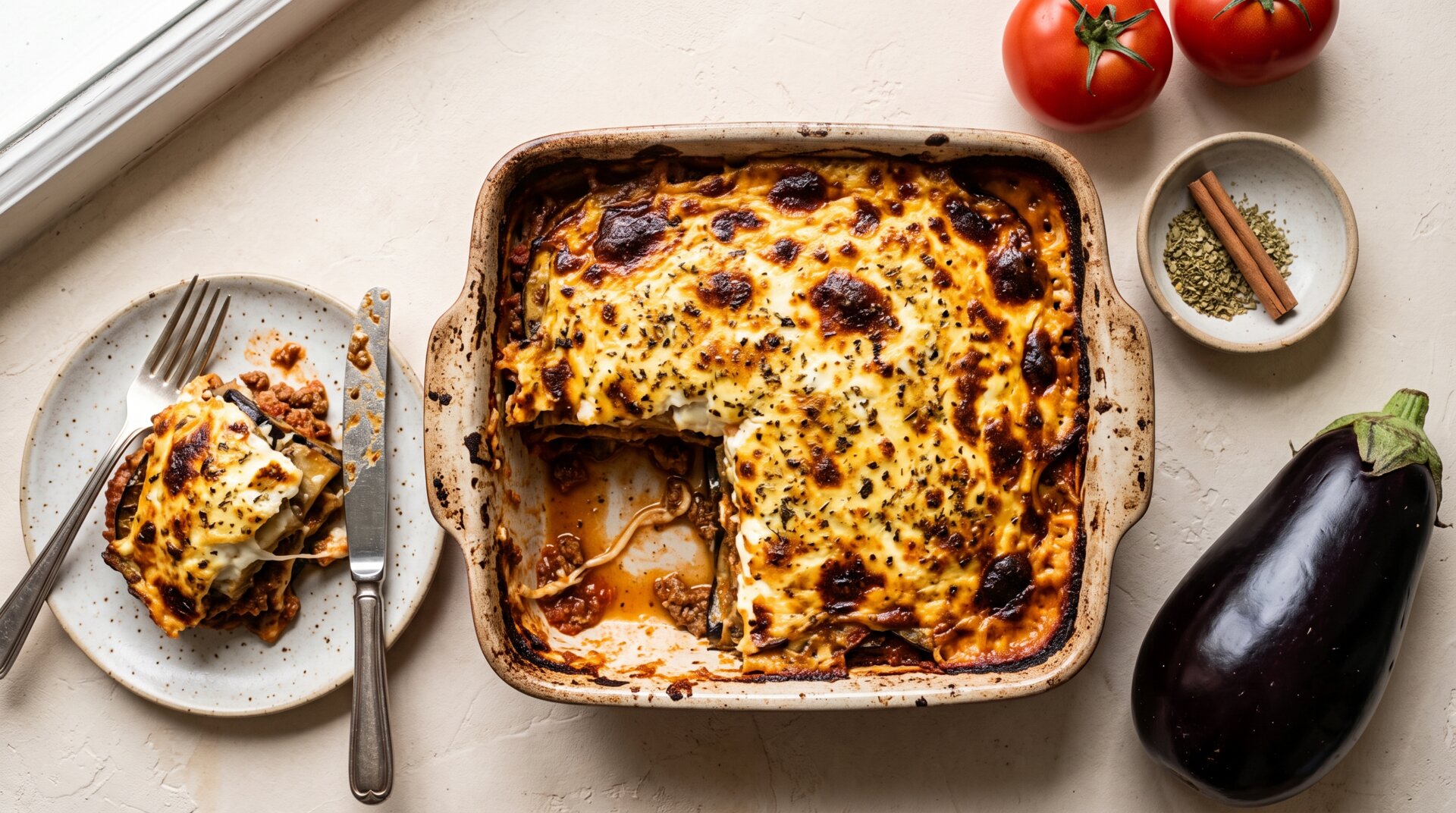 Light Eggplant and Halloumi Moussaka 55 min Greek bake with golden yogurt crust 395 kcal 25g protein 3 synergies
  In the Kitchen
Storage
Location:Refrigerator
Shelf life:5-7 dagen
Store in the crisper drawer, not in plastic. Eggplant is sensitive to cold - don't store below 10°C. Cut just before use.
Preparation
Fry in olive oil — this helps fat-soluble nutrients like nasunin come into their own. Sprinkle with salt and let rest 30 min to remove bitter juices. Grill or bake until soft.
Conversions
Substitutes
Smart preparation
1Sprinkle slices with salt and drain for 30 minutes before frying.
Why?
This draws out moisture and bitterness and reduces oil absorption.
2Pierce a whole eggplant before grilling to prevent steam explosions.
3Fry eggplant on high heat; low heat causes it to absorb too much oil.
Caution / Warnings
Eggplant is very safe, but there are scientific considerations:
Nightshade sensitivity Mild
People with a known sensitivity to nightshade plants (solanaceae) may experience discomfort when consuming eggplant.
Kidney stones (oxalates) Moderate
Eggplant contains oxalates, which in susceptible individuals may contribute to the formation of kidney stones. Consult a doctor if you have a history of kidney stones.
Traditional use
Ayurveda
Ayurvedic use in India
In Ayurveda, aubergine was valued for helping to balance Kapha. It has been cultivated in India for over 1500 years.
Traditional Chinese Medicine
Traditional Chinese cuisine
In traditional Chinese medicine, aubergine was considered a cooling food that dispels heat from the body and promotes blood circulation.
Summary
Eggplant is an underrated vegetable with a secret weapon: nasunin. This powerful antioxidant in the purple skin protects your brain cells and binds excess iron.
To benefit maximally: always eat the skin, fry in olive oil (the antioxidants are fat-soluble), and combine with garlic and tomato for a classic Moroccan zaalouk. Eggplant is also perfect for weight loss: extremely few calories for lots of volume.