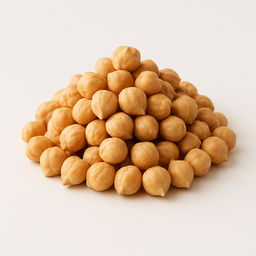
Chickpeas
Versatile Plant Protein Source
What is this ingredient?
Chickpeas have been part of human food traditions for more than 7,500 years. They have a mild, nutty flavour and a firm texture, making them useful in stews, salads, hummus, and falafel. They contain all essential amino acids, although methionine is limited, so they pair especially well with grains such as rice, bulgur, or wholegrain bread.
Kitchen tip: the iron in chickpeas is non-heme iron. Combine chickpeas with vitamin C-rich ingredients such as bell pepper, tomato, or lemon juice for a meal where minerals and bright acidity work well together. Canned chickpeas are convenient for quick dishes; rinse them well for a milder taste and less added salt.
How does it taste?
Nutty and slightly buttery with a firm, grainy texture.
Pairs well with:
Pairs well with tahinilemoncumingarlic and bell pepper.
Did you know...?
- Chickpeas have been cultivated for 7,500 years and are among the first legumes farmed by humans.
- The Latin word ‘cicer’ (chickpea) gave the Roman Cicero his famous name.
Nutritional Value & Energy
Per 100g
Chickpeas provides energy thanks to natural nutrients , buffered by fiber.
Per 100g
Minerals
Vitamins
Omega-3 fatty acids
More nutrients
B-Vitamins
Trace Minerals
Low GI means blood sugar doesn't spike quickly.
What's in a serving?
1 serving (dry)
Chickpeas naturally contain folate (172 mcg per 100 g).
Chickpeas naturally contain iron (2.9 mg per 100 g).
Chickpeas naturally contain zinc (1.5 mg per 100 g).
% of daily reference intake (DRI)
EU-approved nutrition claims
This ingredient contains nutrients for which EFSA-authorized health claims exist (at nutrient level, not ingredient-specific).
Approved health claims (EU)
Zinc EU 432/2012
Zinc contributes to the normal function of the immune system
Contains 1.5mg/100g (threshold: ≥1.5mg/100g)
Zinc EU 432/2012
Zinc contributes to the maintenance of normal skin
Contains 1.5mg/100g (threshold: ≥1.5mg/100g)
Iron EU 432/2012
Iron contributes to normal energy-yielding metabolism
Contains 2.9mg/100g (threshold: ≥2.1mg/100g)
Iron EU 432/2012
Iron contributes to the reduction of tiredness and fatigue
Contains 2.9mg/100g (threshold: ≥2.1mg/100g)
Folate EU 432/2012
Folate contributes to normal blood formation
Contains 172mcg/100g (threshold: ≥30mcg/100g)
Folate EU 432/2012
Folate contributes to normal amino acid synthesis
Contains 172mcg/100g (threshold: ≥30mcg/100g)
Folate EU 432/2012
Folate contributes to normal homocysteine metabolism
Contains 172mcg/100g (threshold: ≥30mcg/100g)
Folate EU 432/2012
Folate contributes to normal psychological function
Contains 172mcg/100g (threshold: ≥30mcg/100g)
Folate EU 432/2012
Folate contributes to the normal function of the immune system
Contains 172mcg/100g (threshold: ≥30mcg/100g)
Folate EU 432/2012
Folate has a role in the process of cell division
Contains 172mcg/100g (threshold: ≥30mcg/100g)
Folate EU 432/2012
Folate contributes to maternal tissue growth during pregnancy
Contains 172mcg/100g (threshold: ≥30mcg/100g)
Iron EU 432/2012
Iron contributes to normal cognitive function
Contains 2.9mg/100g (threshold: ≥2.1mg/100g)
Iron EU 432/2012
Iron contributes to normal formation of red blood cells and haemoglobin
Contains 2.9mg/100g (threshold: ≥2.1mg/100g)
Iron EU 432/2012
Iron contributes to normal oxygen transport in the body
Contains 2.9mg/100g (threshold: ≥2.1mg/100g)
Iron EU 432/2012
Iron contributes to the normal function of the immune system
Contains 2.9mg/100g (threshold: ≥2.1mg/100g)
Iron EU 432/2012
Iron has a role in the process of cell division
Contains 2.9mg/100g (threshold: ≥2.1mg/100g)
Zinc EU 432/2012
Zinc contributes to normal acid-base metabolism
Contains 1.5mg/100g (threshold: ≥1.5mg/100g)
Zinc EU 432/2012
Zinc contributes to normal carbohydrate metabolism
Contains 1.5mg/100g (threshold: ≥1.5mg/100g)
Zinc EU 432/2012
Zinc contributes to normal cognitive function
Contains 1.5mg/100g (threshold: ≥1.5mg/100g)
Zinc EU 432/2012
Zinc contributes to normal DNA synthesis
Contains 1.5mg/100g (threshold: ≥1.5mg/100g)
Zinc EU 432/2012
Zinc contributes to normal fertility and reproduction
Contains 1.5mg/100g (threshold: ≥1.5mg/100g)
Zinc EU 432/2012
Zinc contributes to normal macronutrient metabolism
Contains 1.5mg/100g (threshold: ≥1.5mg/100g)
Zinc EU 432/2012
Zinc contributes to normal metabolism of fatty acids
Contains 1.5mg/100g (threshold: ≥1.5mg/100g)
Zinc EU 432/2012
Zinc contributes to normal metabolism of vitamin A
Contains 1.5mg/100g (threshold: ≥1.5mg/100g)
Zinc EU 432/2012
Zinc contributes to normal protein synthesis
Contains 1.5mg/100g (threshold: ≥1.5mg/100g)
Zinc EU 432/2012
Zinc contributes to the maintenance of normal bones
Contains 1.5mg/100g (threshold: ≥1.5mg/100g)
Zinc EU 432/2012
Zinc contributes to the maintenance of normal hair
Contains 1.5mg/100g (threshold: ≥1.5mg/100g)
Zinc EU 432/2012
Zinc contributes to the maintenance of normal nails
Contains 1.5mg/100g (threshold: ≥1.5mg/100g)
Zinc EU 432/2012
Zinc contributes to the maintenance of normal testosterone levels in the blood
Contains 1.5mg/100g (threshold: ≥1.5mg/100g)
Zinc EU 432/2012
Zinc contributes to the maintenance of normal vision
Contains 1.5mg/100g (threshold: ≥1.5mg/100g)
Zinc EU 432/2012
Zinc contributes to the protection of cells from oxidative stress
Contains 1.5mg/100g (threshold: ≥1.5mg/100g)
Zinc EU 432/2012
Zinc has a role in the process of cell division
Contains 1.5mg/100g (threshold: ≥1.5mg/100g)
What's being researched?
Chickpeas and satiety
The effects of chickpeas on post-meal satiety are being studied. Research looks at how fibre, protein, and legume texture relate to appetite and energy intake at later meals.
Supported by: [3] Hurrell (2010)
Chickpeas and gut microbiome
The prebiotic properties of raffinose and stachyose in chickpeas are being studied. Research looks at changes in gut microbiota with regular legume consumption.
Supported by: [1] Wallace (2016) , [2] Kumar S (2020)
Good Combinations (Synergy)
Combine chickpeas smartly to enhance the effect:
Chickpeas 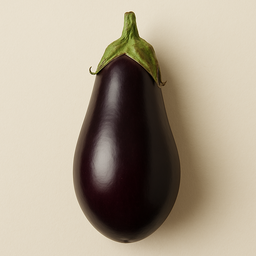 Eggplant
 Complete vegetarian meal: protein + fiber + nasunin
Technical: Eggplant contains only 1g protein per 100g but is rich in nasunin (antioxidant) and fiber (3g/100g). Chickpeas provide 19g protein per 100g with all essential amino acids. Combined fiber (10g+) feeds Bifidobacterium in the gut.
What does this mean for you? Eggplant curry with chickpeas perfectly complements the missing protein and provides a substantial fiber boost. Chickpeas bring the protein, eggplant the fiber and nasunin. An ideal complete vegetarian meal.
Chickpeas 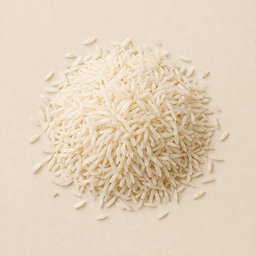 Basmati Rice
 Complete protein combination — grain + legume (khichdi)
Technical: Basmati rice contains 7g protein per 100g but lacks lysine. Chickpeas provide 19g protein per 100g with high lysine content (1.3g) but relatively low methionine. Together they reach a PDCAAS (protein quality score) close to 1.0 — comparable to animal protein. This is the biochemical basis of khichdi, the Indian comfort food prepared for millennia. The fiber from chickpeas (17g/100g) also slows starch digestion from rice.
What does this mean for you? Serve basmati rice with chickpea curry for complete proteins without meat. This is the principle behind thousands of years of Indian cuisine — you don't need meat for all the amino acids your body needs.
Chickpeas 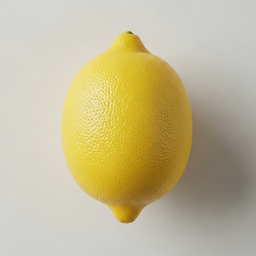 Lemon
Lemon Lemon juice increases iron absorption from chickpeas
Technical: Chickpeas contain 2.9mg non-heme iron per 100g (cooked) and 12.2g protein. Phytic acid in chickpeas (240mg per 100g) strongly inhibits iron absorption. Lemon juice (53mg vitamin C per 100g) reduces Fe³⁺ to Fe²⁺ and forms soluble chelates that bypass the phytate blockade. Studies show up to 600% higher iron absorption.
What does this mean for you? Squeeze lemon juice over your hummus or chickpea salad — not just for flavor but also for iron absorption. It's no coincidence that authentic hummus always contains lemon juice — it's nutritional science disguised as tradition.
Chickpeas 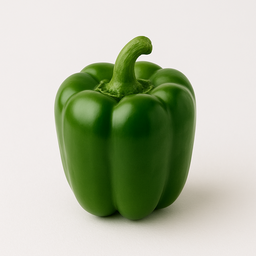 Bell Pepper
 Vitamin C increases iron absorption from chickpeas
Technical: Chickpeas (base of hummus) contain 2.9mg non-heme iron per 100g with high phytate concentration. Red bell pepper provides 128mg vitamin C per 100g — the highest of all vegetables. This reduces Fe³⁺ to Fe²⁺ and completely overcomes phytate inhibition. The combination increases iron absorption by factor 4-6.
What does this mean for you? Dip red bell pepper strips in hummus — this isn't just a popular snack but also nutritionally optimal. The pepper provides the vitamin C needed to absorb iron from the chickpeas. Yellow pepper also works well (183mg vitamin C).
Chickpeas 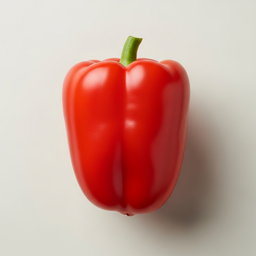 Red Bell Pepper
 Vitamin C increases iron absorption from chickpeas
Technical: Chickpeas (base of hummus) contain 2.9mg non-heme iron per 100g with high phytate concentration. Red bell pepper provides 128mg vitamin C per 100g — the highest of all vegetables. This reduces Fe³⁺ to Fe²⁺ and completely overcomes phytate inhibition. The combination increases iron absorption by factor 4-6.
What does this mean for you? Dip red bell pepper strips in hummus — this isn't just a popular snack but also nutritionally optimal. The pepper provides the vitamin C needed to absorb iron from the chickpeas. Yellow pepper also works well (183mg vitamin C).
Chickpeas 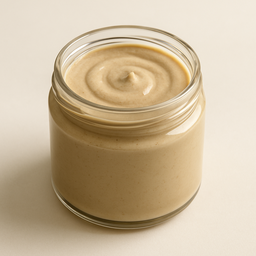 Tahini
 Hummus synergy: complete protein + improved mineral absorption
Technical: Chickpeas are low in methionine, sesame seeds (tahini) are rich in methionine. Together they form complete protein. The fat in tahini (50g/100g) increases absorption of fat-soluble vitamins from chickpeas. Lemon in hummus adds vitamin C for iron absorption.
What does this mean for you? Hummus isn't just a dip — it's a nutritionally optimized combination. Serve with vegetables for an even richer nutrient profile.
Chickpeas 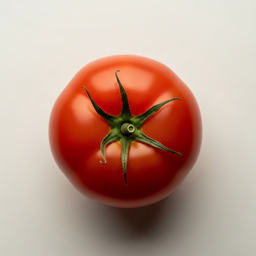 Tomato
 Tomato increases iron absorption from chickpeas
Technical: Chickpeas contain 2.9mg non-heme iron per 100g. Tomatoes provide 14mg vitamin C per 100g plus citric acid and malic acid — organic acids that also contribute to iron absorption. When heated, lycopene content in tomatoes increases (up to 4x), while vitamin C is partially lost. The organic acids remain intact and support iron absorption.
What does this mean for you? Cook chickpeas in tomato sauce — this is the basis of chana masala (India), leblebi (Tunisia) and Spanish garbanzos. The tomato sauce not only enriches the flavor but also increases iron absorption. Add lemon juice for extra boost.
Chickpeas 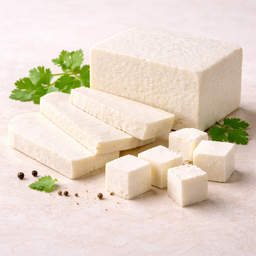 Paneer
 Chana paneer: complete proteins + digestive support
Technical: Paneer provides 18g complete protein per 100g (all EAAs). Chickpeas offer 19g protein per 100g but are low in methionine — paneer complements this perfectly. Cumin contains cuminaldehyde, which is studied in research in connection with digestive enzyme activity (amylase, protease, lipase). Together: complementary protein sources + a lower glycemic response through fiber.
What does this mean for you? Paneer tikka with chickpea dhal and cumin is an Indian protein feast. The paneer fills the missing amino acid in chickpeas — together they provide a complete amino acid profile.
Chickpeas 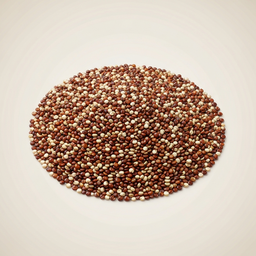 Quinoa
 Enhanced protein profile: methionine + lysine complete
Technical: Quinoa already contains all essential amino acids but is relatively low in methionine. Chickpeas are rich in lysine but low in methionine. Together they form an optimal complete protein profile with PDCAAS close to 1.0. This combination is traditional in North African and Middle Eastern cuisines.
What does this mean for you? Serve quinoa with roasted chickpeas or hummus. This gives you a complete plant-based protein source comparable to meat or fish.
Chickpeas 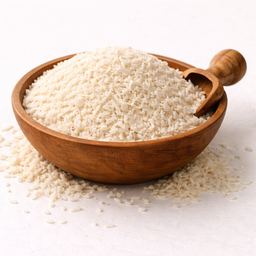 Rice
Rice Complete proteins through amino acid complementation
Technical: Rice is low in lysine but rich in methionine and cysteine. Chickpeas are exactly the opposite. Together they form a complete protein profile with all 9 essential amino acids, comparable to meat. This is the basis of Indian 'rajma chawal' and Middle Eastern rice dishes.
What does this mean for you? Serve rice with chickpea curry or hummus. You don't need to eat them in the same meal — within 24 hours is sufficient for complementation.
Chickpeas 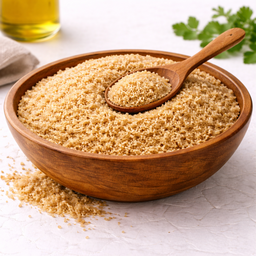 Whole Wheat Couscous
 Complete proteins through grain-legume combination
Technical: Whole wheat couscous contains methionine and cysteine but is low in lysine — the limiting amino acid in grains. Chickpeas are rich in lysine (1.3g per 100g) but low in methionine. Together they form a complete protein profile with a PDCAAS (Protein Digestibility Corrected Amino Acid Score) close to 1.0, comparable to animal protein. This is the biochemical basis behind centuries-old North African couscous.
What does this mean for you? Couscous with chickpeas isn't just a tradition — it's nutritional science that has been applied for centuries. Serve whole wheat couscous with chickpea stew for a complete protein meal without meat. Add vegetables and herbs for extra micronutrients.
Chickpeas 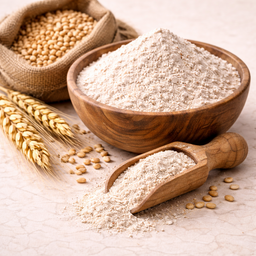 Whole Wheat Flour
 Wheat + legumes together form a complete protein profile
Technical: Whole wheat is low in lysine but rich in methionine and cysteine. Chickpeas are rich in lysine but low in sulfur-containing amino acids. Together they provide all essential amino acids — a principle that forms the basis of traditional Middle Eastern combinations like bread with hummus.
What does this mean for you? Flatbread with hummus is an age-old combination that is scientifically sound — together they form a complete protein without meat.
Recipes with Chickpeas
Discover delicious recipes featuring chickpeas:
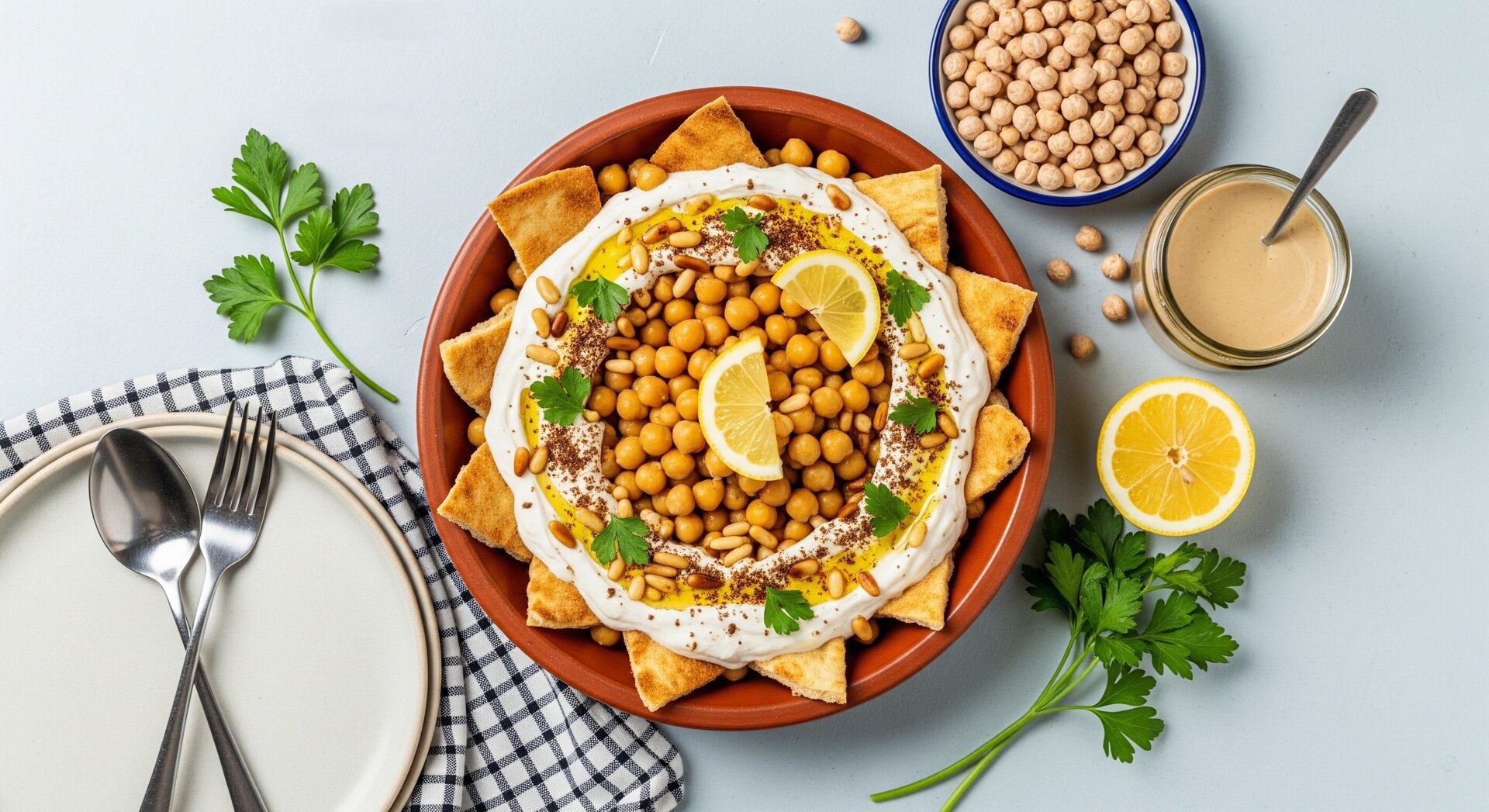 Arabic Fatteh with Chickpeas and Yogurt 25 min Layered Levantine breakfast with crispy bread and tahini
  605 kcal
  24g protein 2 synergies
 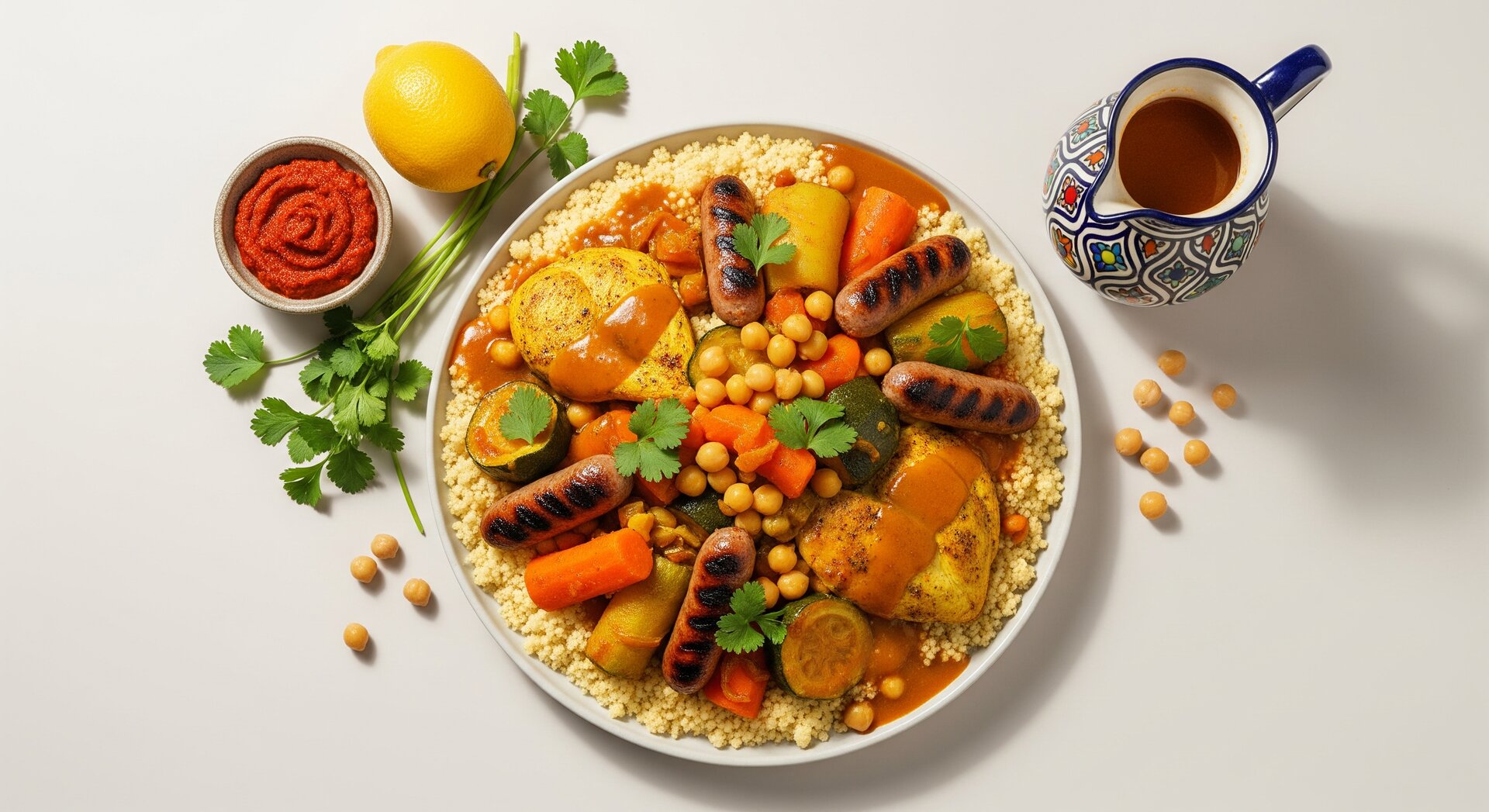 Royal Couscous with Chicken and Merguez 70 min Festive North African classic 580 kcal 38g protein 3 synergies
 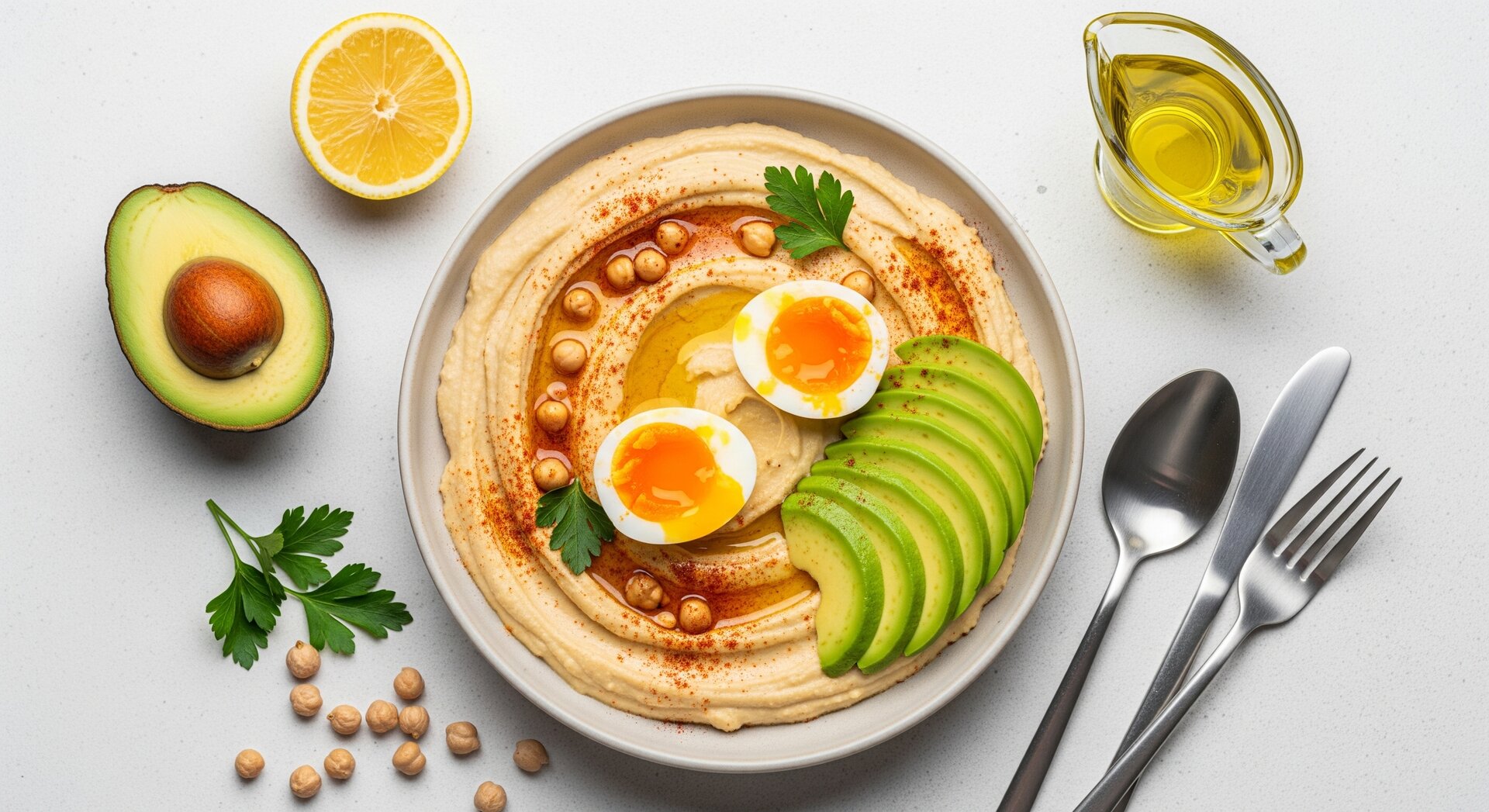 Protein-Rich Hummus Bowl with Egg and Avocado 20 min Creamy hummus bowl with hard-boiled egg and fresh avocado 473 kcal 20g protein 1 synergies
 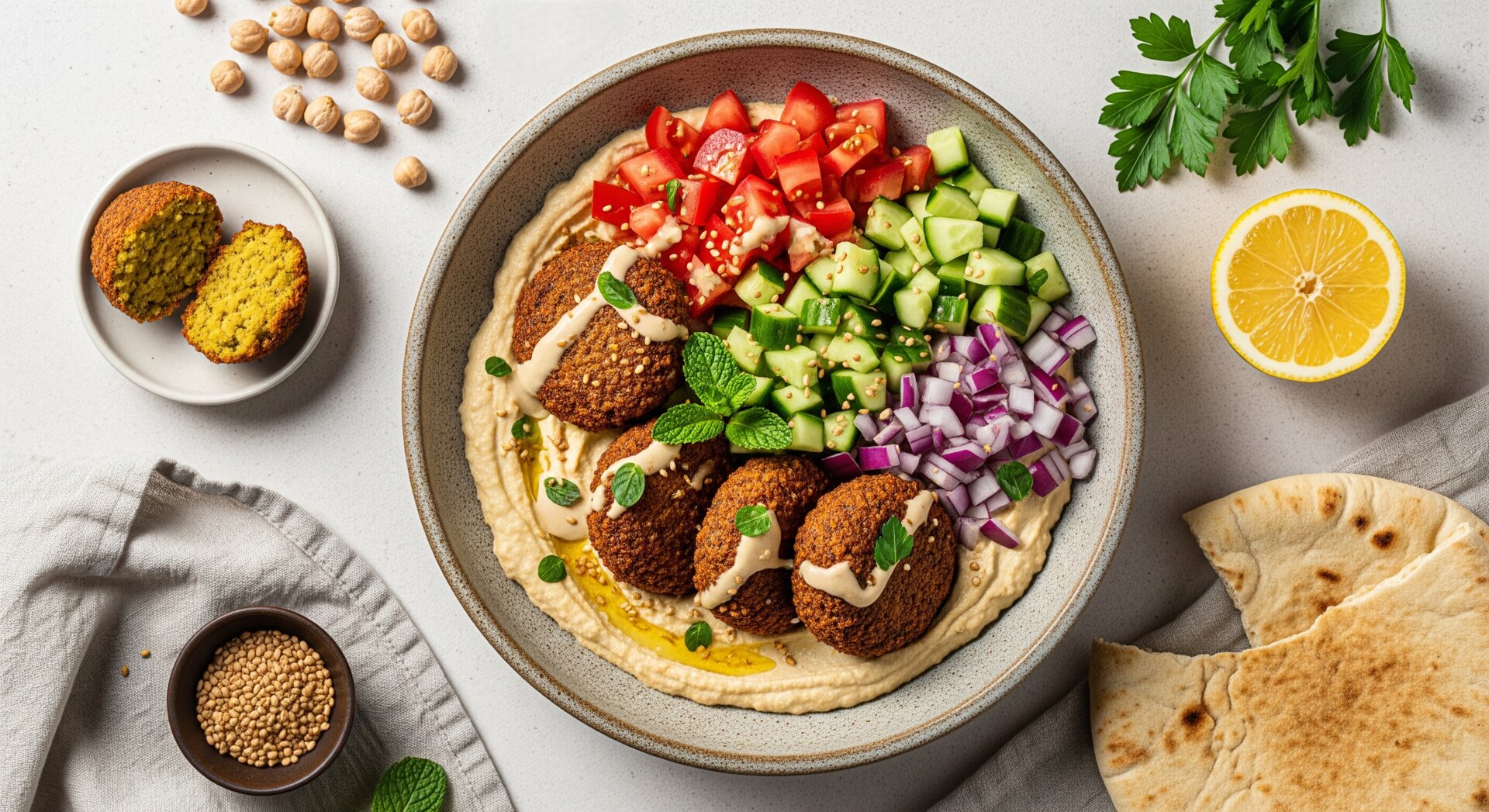 Falafel Bowl with Hummus and Crunchy Vegetables 35 min Middle Eastern bowl with warm spices 520 kcal 18g protein 2 synergies
 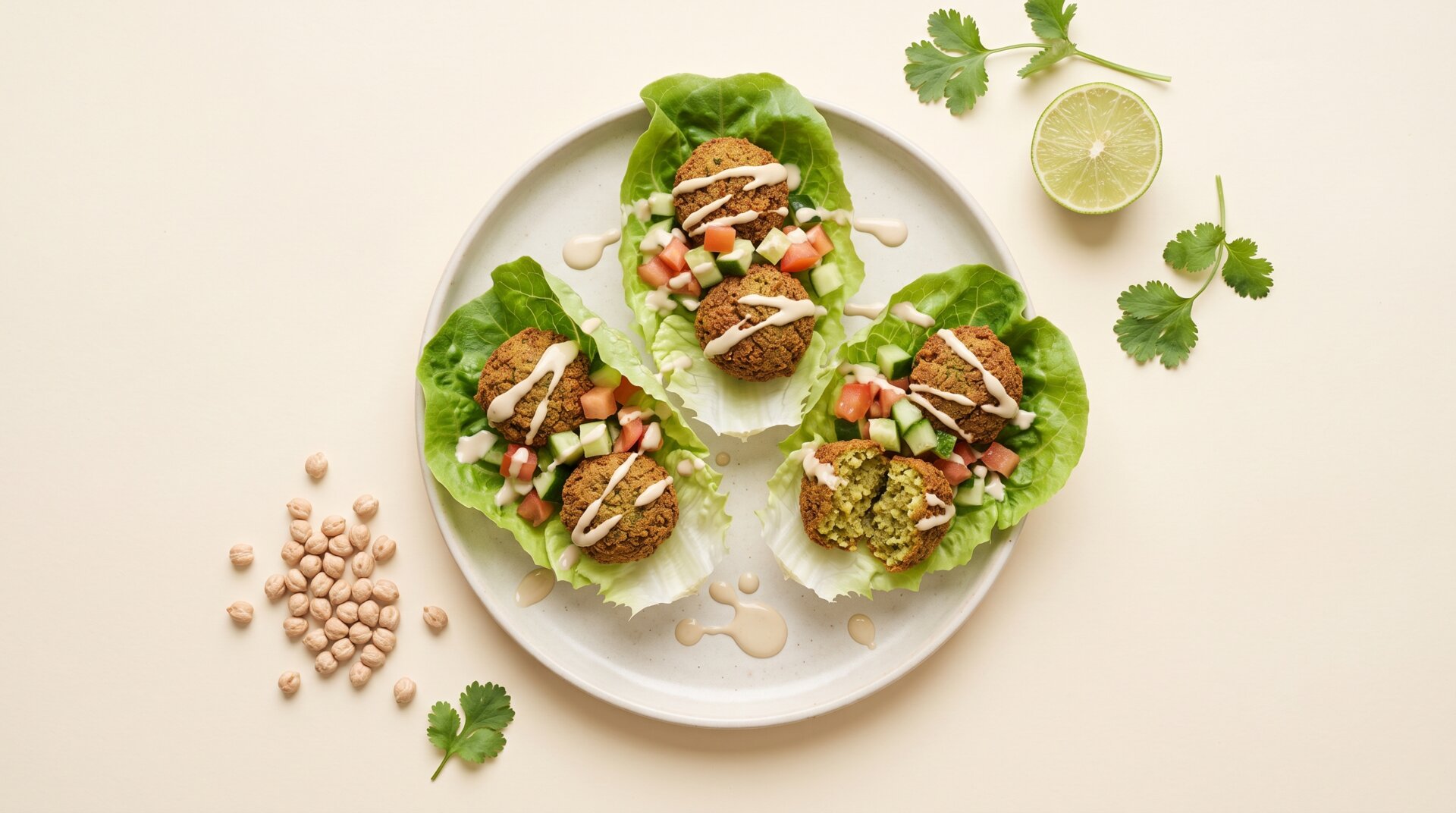 Falafel Lettuce Wrap with Tahini 28 min Crispy chickpea balls in crunchy lettuce leaves with creamy tahini sauce 580 kcal 18g protein 1 synergies
 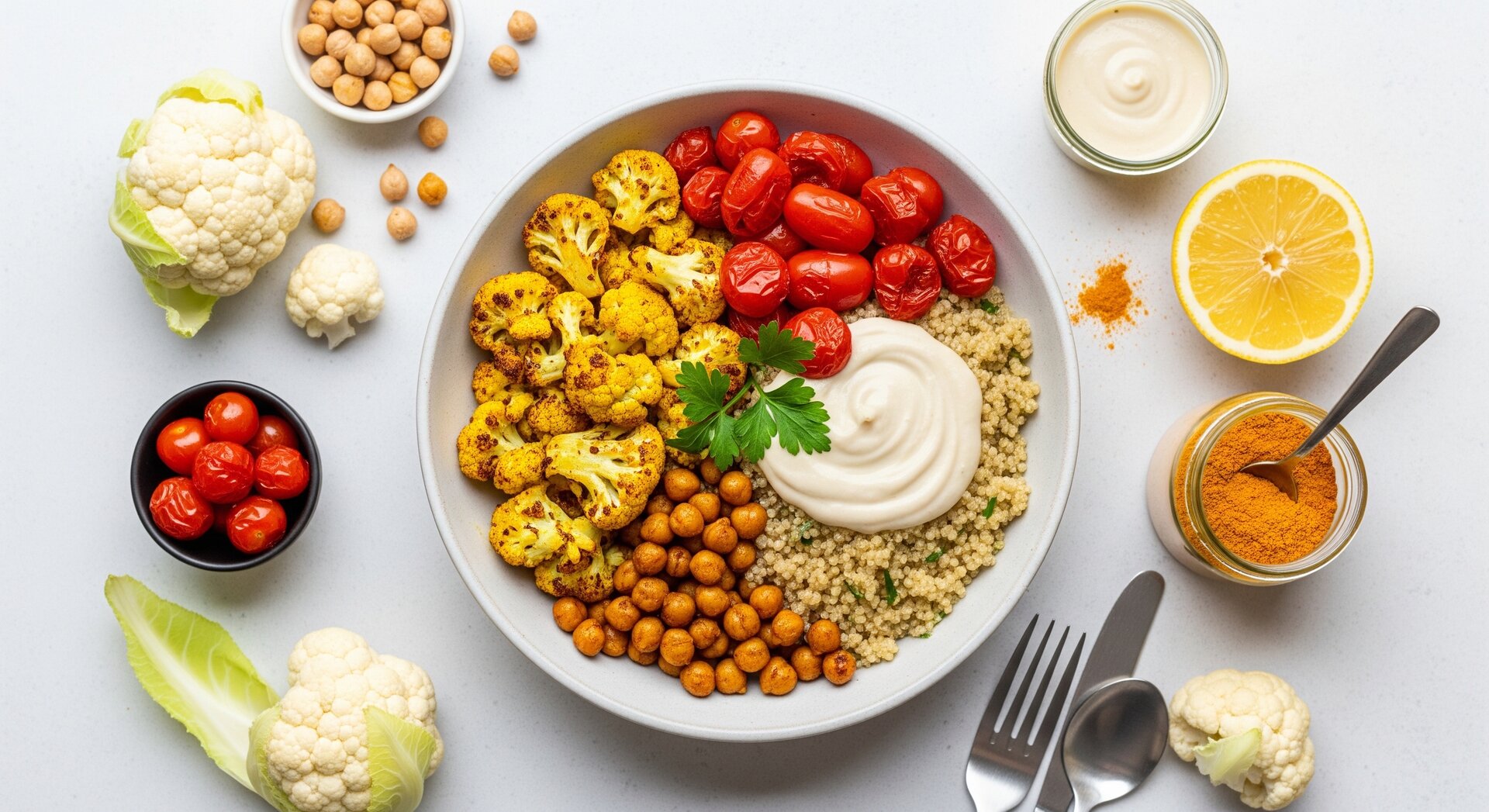 Roasted Cauliflower Bowl with Chickpeas and Tahini 45 min Crispy oven vegetables with spiced chickpeas 839 kcal 31g protein 2 synergies
  In the Kitchen
Storage
Location:Pantry
Shelf life:Gedroogd: 2-3 jaar, Ingeblikt: 2-5 jaar, Gekookt: 3-4 dagen (koelkast)
Store dried chickpeas cool, dry, and airtight. Cooked chickpeas can be frozen for up to 6 months.
Preparation
Dried: soak for 8-12 hours and cook for 1-1.5 hours until tender. Pressure cooker: 15-20 minutes without soaking. Canned: ready to use after rinsing well.
Conversions
Substitutes
Smart preparation
1Soak dried chickpeas for 12-24 hours in cold water.
Why?
Longer soaking gives a creamier result, especially for hummus.
2Add a pinch of baking soda to the soaking water.
Why?
Baking soda softens the skin and shortens cooking time.
3Save the cooking water (aquafaba) — it foams like egg white.
Caution / Warnings
Chickpeas is very safe, but there are scientific considerations:
FODMAP Sensitivity Moderate
Chickpeas contain GOS (galacto-oligosaccharides), a type of FODMAP.
Advice:
For IBS or FODMAP sensitivity: start with small amounts or choose well-rinsed canned chickpeas.
Traditional use
Mediterranean
Ancient Eastern and Mediterranean staple
Chickpeas have been cultivated in the Middle East for more than 7,500 years and are among the oldest legumes in the world. Hummus and falafel are classic chickpea-based preparations.
Ayurveda
Ayurvedic chana
In Ayurveda, chickpeas (chana) are considered nourishing and filling. Roasted chickpeas are traditionally eaten as a sattvic snack.
Summary
Chickpeas are a versatile legume for hummus, falafel, curries, and salads. They provide protein, fibre, and minerals in one convenient ingredient. Pair them with vitamin C-rich ingredients such as bell pepper, tomato, or lemon for fresh flavour and a useful nutrient combination. Canned chickpeas are practical; rinse them well to remove excess salt and canning liquid.