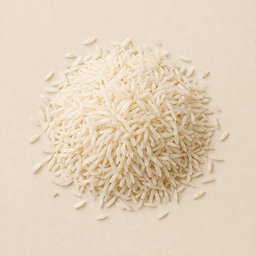
Basmati Rice
Aromatic long-grain rice from India and Pakistan
What is this ingredient?
Basmati rice (Oryza sativa var. indica) is a long-grain rice from the Himalayan region of India and Pakistan. The name ‘basmati’ is often understood as ‘fragrant’ or ‘full of aroma’, referring to the characteristic scent that makes this rice recognizable in biryani, pilaf, curries and simple rice dishes.
## Aroma and aging
The typical fragrance comes mainly from 2-acetyl-1-pyrroline, a volatile aroma compound also associated with a popcorn-like and slightly nutty scent. Aroma level depends on variety, aging, storage and processing. Traditional basmati is often aged for some time, which makes the grain drier and helps it stay separate during cooking.
## Grain structure and glycemic index
Basmati contains relatively high amylose compared with many softer rice varieties. This helps the grains stay long, fluffy and separate after cooking. Research also discusses basmati rice in relation to its glycemic index, which can vary by brand, processing and cooking method. Studies report values around the low to medium GI category, especially for certain thermally treated or carefully prepared varieties.
## Cooling and resistant starch
When cooked rice cools, part of the starch can reorganize into resistant starch. This slightly changes texture and is studied in relation to carbohydrate digestion and the glycemic response of rice products. For everyday use, portion size still matters because dry basmati rice is mainly made up of starchy carbohydrates.
## Culinary properties
For long, separate grains, rinse the rice several times, soak it briefly and cook it gently. A practical ratio is about 1 part rice to 1.5 to 1.75 parts water, depending on the pan, rice variety and preferred texture. Let the rice rest with the lid on after cooking so the steam distributes evenly.
How does it taste?
Floral and aromatic with a subtle nutty undertone. The cooked grain is light, fluffy and not overly sticky.
Pairs well with:
Pairs well with saffroncardamomcinnamontoasted nutslentilscurries and stewed vegetables.
Did you know...?
- The word ‘basmati’ comes from Hindi and is often translated as ‘fragrant’ or ‘full of aroma’.
- Basmati rice is traditionally grown at the foothills of the Himalayas, where climate, soil and water contribute to its typical character.
- During cooking, basmati grains mainly lengthen, which helps them look slender and separate on the plate.
Nutritional Value & Energy
Per 100g
Basmati Rice provides energy thanks to natural nutrients .
Per 100g
Minerals
Vitamins
Omega-3 fatty acids
More nutrients
B-Vitamins
Trace Minerals
What's in a serving?
1 serving (dry)
Basmati rice naturally contains phosphorus (115 mg per 100 g).
Basmati rice naturally contains selenium (15.1 mcg per 100 g).
% of daily reference intake (DRI)
EU-approved nutrition claims
This ingredient contains nutrients for which EFSA-authorized health claims exist (at nutrient level, not ingredient-specific).
Approved health claims (EU)
Phosphorus EU 432/2012
Phosphorus contributes to normal energy-yielding metabolism
Contains 115mg/100g (threshold: ≥105mg/100g)
Phosphorus EU 432/2012
Phosphorus contributes to the normal function of cell membranes
Contains 115mg/100g (threshold: ≥105mg/100g)
Phosphorus EU 432/2012
Phosphorus contributes to the maintenance of normal bones
Contains 115mg/100g (threshold: ≥105mg/100g)
Phosphorus EU 432/2012
Phosphorus contributes to the maintenance of normal teeth
Contains 115mg/100g (threshold: ≥105mg/100g)
Selenium EU 432/2012
Selenium contributes to the maintenance of normal hair
Contains 15.1mcg/100g (threshold: ≥8.25mcg/100g)
Selenium EU 432/2012
Selenium contributes to the maintenance of normal nails
Contains 15.1mcg/100g (threshold: ≥8.25mcg/100g)
Selenium EU 432/2012
Selenium contributes to the normal function of the immune system
Contains 15.1mcg/100g (threshold: ≥8.25mcg/100g)
Selenium EU 432/2012
Selenium contributes to normal thyroid function
Contains 15.1mcg/100g (threshold: ≥8.25mcg/100g)
Selenium EU 432/2012
Selenium contributes to normal spermatogenesis
Contains 15.1mcg/100g (threshold: ≥8.25mcg/100g)
Selenium EU 432/2012
Selenium contributes to the protection of cells from oxidative stress
Contains 15.1mcg/100g (threshold: ≥8.25mcg/100g)
What's being researched?
Basmati rice and glycemic index
The glycemic index of basmati rice is studied in comparison with other rice types and preparation methods. Results vary by variety, processing, cooking technique, portion size and whether the rice is eaten freshly cooked or cooled.
Supported by: [2] Hettiaratchi (2015) , [1] Kaur (2014) , [4] Multiple authors (2024)
Good Combinations (Synergy)
Combine basmati rice smartly to enhance the effect:
Basmati Rice  Lemon
Lemon Citric acid lowers glycemic response of rice via starch chelation
Organic acids lower glycemic index of starch-rich foods via amylase inhibition (PMID: 16278426)
Technical: Citric acid from lemon chelates calcium ions that promote amylase activity, slowing starch breakdown and reducing the glycemic index of rice. Upon cooling of acidified rice, extra resistant starch type 3 (retrogradation) forms — up to 2.5x more than without acid. This resistant starch passes undigested to the colon where it serves as a prebiotic.
What does this mean for you? Add lemon juice to (cooled) rice, as in Persian rice dishes. This lowers the blood sugar spike and creates prebiotic fibers — a simple trick with big impact.
Basmati Rice  Chickpeas
 Complete protein combination — grain + legume (khichdi)
Technical: Basmati rice contains 7g protein per 100g but lacks lysine. Chickpeas provide 19g protein per 100g with high lysine content (1.3g) but relatively low methionine. Together they reach a PDCAAS (protein quality score) close to 1.0 — comparable to animal protein. This is the biochemical basis of khichdi, the Indian comfort food prepared for millennia. The fiber from chickpeas (17g/100g) also slows starch digestion from rice.
What does this mean for you? Serve basmati rice with chickpea curry for complete proteins without meat. This is the principle behind thousands of years of Indian cuisine — you don't need meat for all the amino acids your body needs.
Basmati Rice 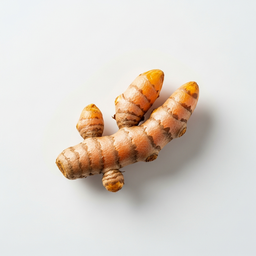 Turmeric
 High amylose + curcumin for glycemic balance
Technical: Basmati rice has a high amylose content (22-25%) resulting in slower starch digestion and a GI of 50-58 (vs. 68-80 for jasmine rice). Curcumin from turmeric activates AMPK (AMP-activated protein kinase), an enzyme that stimulates glucose uptake in muscles independently of insulin. This dual mechanism — slow release + improved uptake — minimizes blood sugar fluctuations.
What does this mean for you? Yellow rice (basmati with turmeric) isn't just beautiful on your plate — it's biochemically superior to plain white rice. The turmeric helps your body process glucose from rice more efficiently.
Recipes with Basmati Rice
Discover delicious recipes featuring basmati rice:
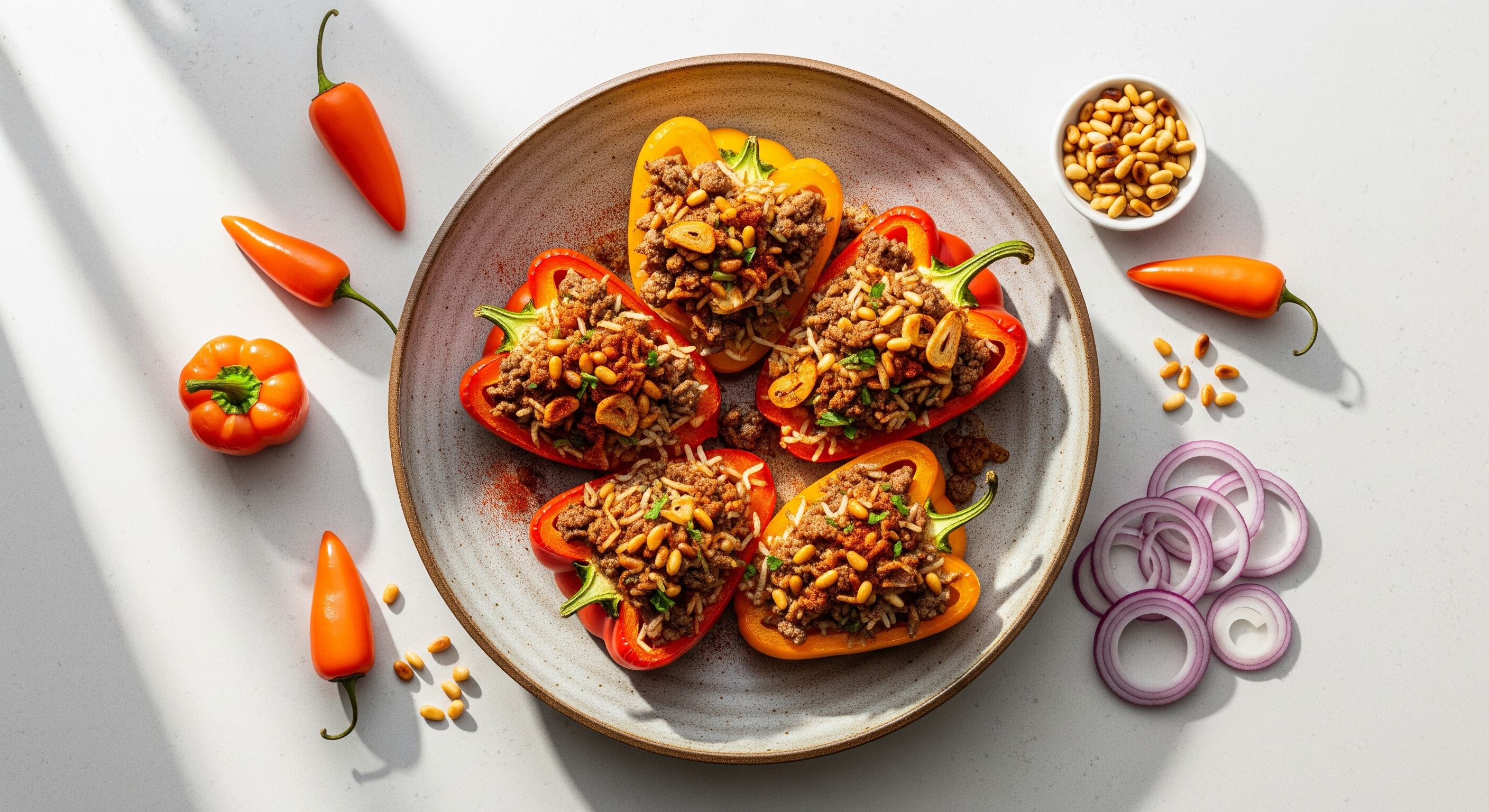 Stuffed Bell Peppers with Lamb, Rice & Pine Nuts 60 min Levantine stuffed peppers with spiced lamb filling
  738 kcal
  33g protein 2 synergies
 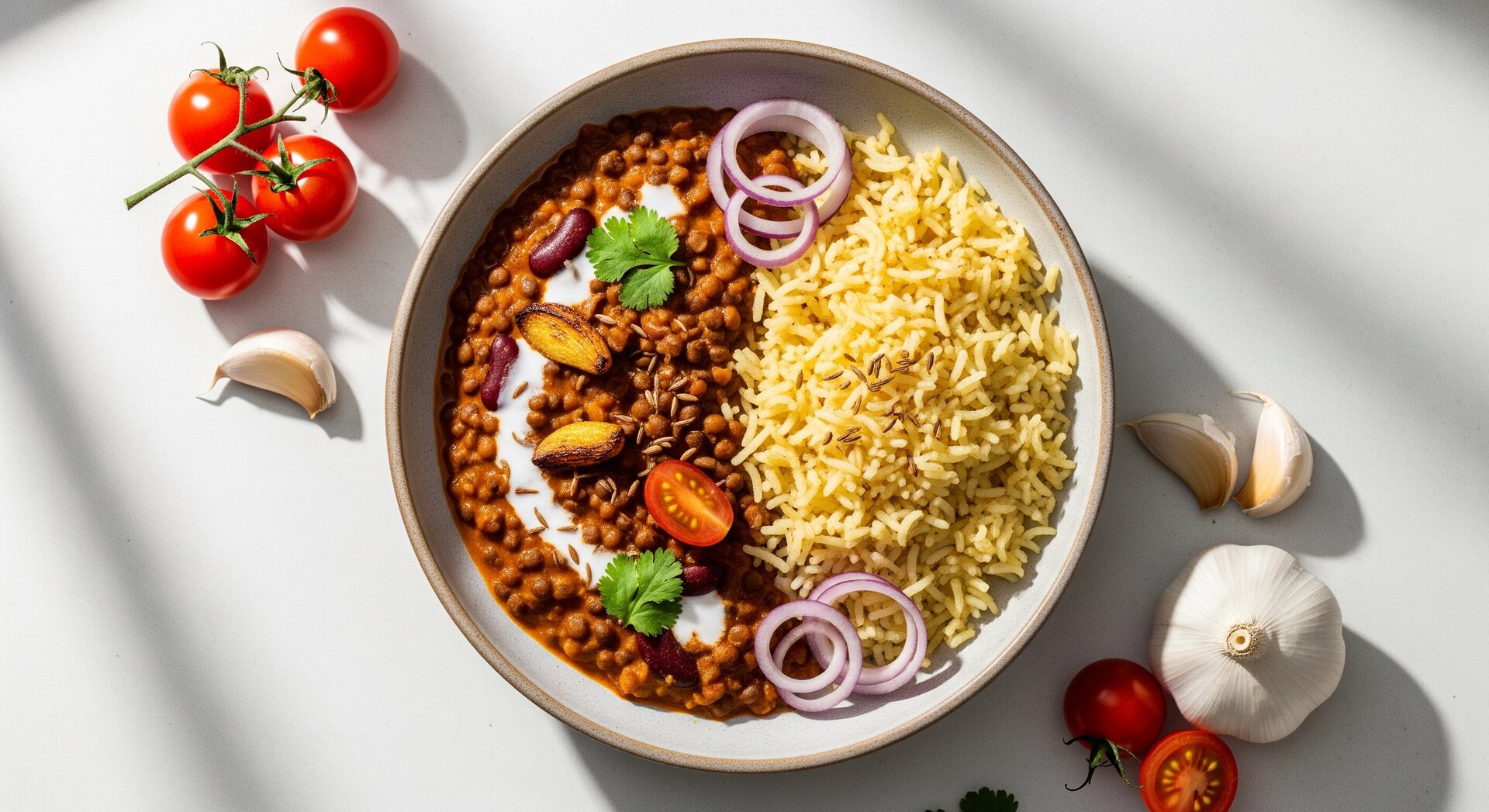 Indian Dal Makhani with Ghee Rice 75 min Creamy black lentil stew with kidney beans and ghee rice 756 kcal 28g protein 2 synergies
  In the Kitchen
Storage
Location:Pantry
Shelf life:12-24 maanden (droog)
Store dry basmati rice in an airtight container in a cool, dry and dark place. Let cooked rice cool quickly and keep it for up to 3-4 days in the fridge or longer in the freezer.
Preparation
Rinse the rice until the water is almost clear. Soak for 20-30 minutes for longer, more separate grains. Cook gently with about 1 part rice to 1.5 to 1.75 parts water, then let it rest covered for 10 minutes.
Conversions
Substitutes
Smart preparation
1Rinse basmati rice 3-4 times until the water is almost clear.
Why?
This removes loose surface starch and helps the grains stay more separate after cooking.
2Soak the rice for 20-30 minutes before cooking.
Why?
Soaking helps the grains cook more evenly and often gives a longer, fluffier texture.
3Use a ratio of about 1:1.5 to 1:1.75 rice to water.
4Let the rice rest for 10 minutes with the lid on the pan.
Why?
The steam distributes evenly, making the texture softer and fluffier.
Caution / Warnings
Basmati Rice is very safe, but there are scientific considerations:
Arsenic in rice Mild
Rice can absorb inorganic arsenic from soil and water. Basmati rice from the Himalayan region generally has lower measured levels than rice from some other areas.
Advice:
Rinse rice thoroughly before cooking and, if desired, cook it in plenty of water that you drain. Also rotate rice with other grains and pseudograins such as quinoa, buckwheat or millet.
High carbohydrate intake in diabetes Mild
Despite its relatively lower GI, dry basmati rice still contains many starchy carbohydrates.
Advice:
Watch portion size and combine rice with vegetables, protein sources and fat-containing ingredients for a balanced plate. Seek personal advice when using diabetes medication or following strict carbohydrate targets.
Traditional use
Ayurveda
Basmati in South Asian culinary traditions
In India and Pakistan, basmati rice has been used for generations in festive rice dishes such as biryani, pulao and fragrant spiced rice. Its long grain, aroma and separate texture make it especially suitable for dishes where the rice should remain visible and fluffy.
Summary
Basmati rice is a fragrant long-grain rice that cooks up light and separate. It works well with curries, pilaf and biryani and is valued for its floral, slightly nutty aroma. Rinsing, brief soaking and resting after cooking give the best texture.