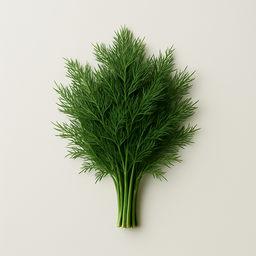
Dill
Fresh herb for fish, cucumber and yoghurt
What is this ingredient?
Dill (Anethum graveolens) is a fine-leaved herb from the Apiaceae family, with a fresh flavor reminiscent of anise, citrus and young grass. It is well known in Scandinavian, Eastern European and Mediterranean cooking and appears in dishes such as cucumber salad, potato salad, pickled vegetables, gravlax and yoghurt sauces.
The name is often linked to the Old Norse word ‘dilla’, meaning ‘to soothe’ or ‘to soften’. In the kitchen, that idea fits its gentle, fresh character: dill rounds out salty, sour and creamy flavors without becoming heavy.
Dill leaves and dill seeds each have their own role. The leaves are delicate and are best added at the end so their fresh aroma stays intact. The seeds are stronger, warmer and can be cooked in broths, marinades and pickling brines. The recognizable aroma comes mainly from aromatic compounds such as carvone and limonene, which also occur in other fragrant plants.
How does it taste?
Fresh, mildly anise-like with grassy and citrusy notes.
Pairs well with:
Pairs well with salmoncucumberyoghurtpotato and lemon.
Did you know...?
- The word ‘dill’ comes from the Old Norse ‘dilla’, meaning ‘to soothe’ or ‘to soften’.
- Dill is one of the herbs mentioned in archaeological finds from ancient Egypt.
Nutritional Value & Energy
Per 100g
Dill is low in calories thanks to natural nutrients , buffered by fiber.
Per 100g
Minerals
Vitamins
Omega-3 fatty acids
More nutrients
B-Vitamins
Trace Minerals
What's in a serving?
Dill naturally contains vitamin C (140 mg per 100 g fresh). At typical herb use (5–10 g), the contribution is limited.
Dill naturally contains iron (6.59 mg per 100 g fresh). At typical herb use (5–10 g), the contribution is limited.
Dill naturally contains potassium (738 mg per 100 g fresh). At typical herb use (5–10 g), the contribution is limited.
Dill naturally contains vitamin C (140 mg per 100 g fresh). At typical herb use (5–10 g), the contribution is limited.
% of daily reference intake (DRI)
EU-approved nutrition claims
This ingredient contains nutrients for which EFSA-authorized health claims exist (at nutrient level, not ingredient-specific).
Approved health claims (EU)
Vitamin_c EU 432/2012
Vitamin C contributes to the normal function of the immune system
Contains 140mg/100g (threshold: ≥12mg/100g)
Vitamin_c EU 432/2012
Vitamin C contributes to the reduction of tiredness and fatigue
Contains 140mg/100g (threshold: ≥12mg/100g)
Vitamin_c EU 432/2012
Vitamin C contributes to normal collagen formation for the normal function of skin
Contains 140mg/100g (threshold: ≥12mg/100g)
Vitamin_c EU 432/2012
Vitamin C contributes to normal collagen formation for the normal function of blood vessels
Contains 140mg/100g (threshold: ≥12mg/100g)
Vitamin_c EU 432/2012
Vitamin C contributes to normal collagen formation for the normal function of bones
Contains 140mg/100g (threshold: ≥12mg/100g)
Vitamin_c EU 432/2012
Vitamin C contributes to normal collagen formation for the normal function of cartilage
Contains 140mg/100g (threshold: ≥12mg/100g)
Vitamin_c EU 432/2012
Vitamin C contributes to normal collagen formation for the normal function of gums
Contains 140mg/100g (threshold: ≥12mg/100g)
Vitamin_c EU 432/2012
Vitamin C contributes to normal collagen formation for the normal function of teeth
Contains 140mg/100g (threshold: ≥12mg/100g)
Vitamin_c EU 432/2012
Vitamin C contributes to normal energy-yielding metabolism
Contains 140mg/100g (threshold: ≥12mg/100g)
Vitamin_c EU 432/2012
Vitamin C contributes to normal functioning of the nervous system
Contains 140mg/100g (threshold: ≥12mg/100g)
Vitamin_c EU 432/2012
Vitamin C contributes to normal psychological function
Contains 140mg/100g (threshold: ≥12mg/100g)
Vitamin_c EU 432/2012
Vitamin C contributes to the protection of cells from oxidative stress
Contains 140mg/100g (threshold: ≥12mg/100g)
Vitamin_c EU 432/2012
Vitamin C contributes to the regeneration of the reduced form of vitamin E
Contains 140mg/100g (threshold: ≥12mg/100g)
Vitamin_c EU 432/2012
Vitamin C increases iron absorption
Contains 140mg/100g (threshold: ≥12mg/100g)
Vitamin_c EU 432/2012
Vitamin C contributes to maintain the normal function of the immune system during and after intense physical exercise
Contains 140mg/100g (threshold: ≥12mg/100g)
Comparison
vssinaasappel
Dill contains about 3× more vitamin C per 100 g than orange — but you use much less dill per serving.
vsspinazie
Dill contains about 2× more iron per 100 g than spinach — but you use much less dill per serving.
vsbanaan
Dill contains about 2× more potassium per 100 g than banana — but you use much less dill per serving.
What's being researched?
Dill and aromatic plant compounds
Research on dill mainly describes the profile of aromatic compounds such as carvone and limonene in the leaves, seeds and essential oil. These compounds explain much of its recognizable aroma and its use in fresh, sour and creamy dishes.
Supported by: [1] Milenković L (2024)
Good Combinations (Synergy)
Combine dill smartly to enhance the effect:
Dill 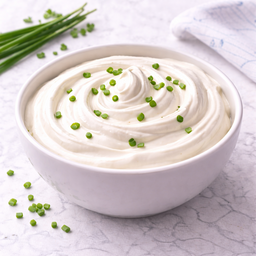 Crème Fraîche
 Scandinavian trio: saturated fat protects omega-3 + terpenes for digestion
Technical: Crème fraîche contains 30-40% fat (of which 60% saturated) that stabilizes omega-3 from salmon (EPA 0.7g + DHA 1.2g per 100g) against oxidation during heating. Saturated fat protects unsaturated fatty acids as it doesn't oxidize itself. Dill contains limonene and carvone (terpenes) that increase lipase activity by 25% → better fat digestion. Studies show saturated + unsaturated fat together are better absorbed than unsaturated fat alone.
What does this mean for you? Salmon with crème fraîche-dill sauce is more than comfort food — the saturated fat protects the valuable omega-3 and the dill supports digestion. A functional Scandinavian feast.
Dill 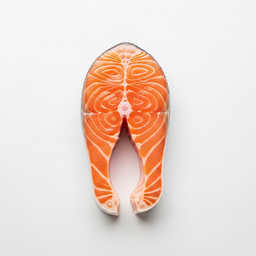 Salmon
 Scandinavian classic with antioxidant boost
Technical: Dill contains flavonoids (kaempferol, vicenin) and monoterpenes (limonene, carvone) with antioxidant action. Salmon provides EPA and DHA omega-3 fatty acids with bioactive action via prostaglandin modulation. Dill's antioxidants protect vulnerable omega-3 fatty acids from oxidation.
What does this mean for you? Dill + salmon is the classic Scandinavian combination — not just for flavor, but also because the antioxidants in dill protect the omega-3 fatty acids from oxidation.
Dill 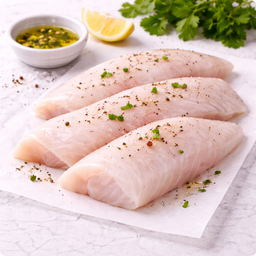 White Fish
 Lean protein + carveol for digestion and antioxidant protection
Technical: White fish provides 18-20g lean protein per 100g with all essential amino acids. Dill contains carveol and limonene (monoterpenes) with carminative and antioxidant action. Dill's essential oils also activate CCK (cholecystokinin) release, improving fat emulsification with fried fish. Dill also contains 43mg vitamin C per 100g.
What does this mean for you? Fish with dill is a Northern European classic (gravlax, potato soup with fish). Dill aids digestion and contains antioxidants. Especially good with light white fish.
Recipes with Dill
Discover delicious recipes featuring dill:
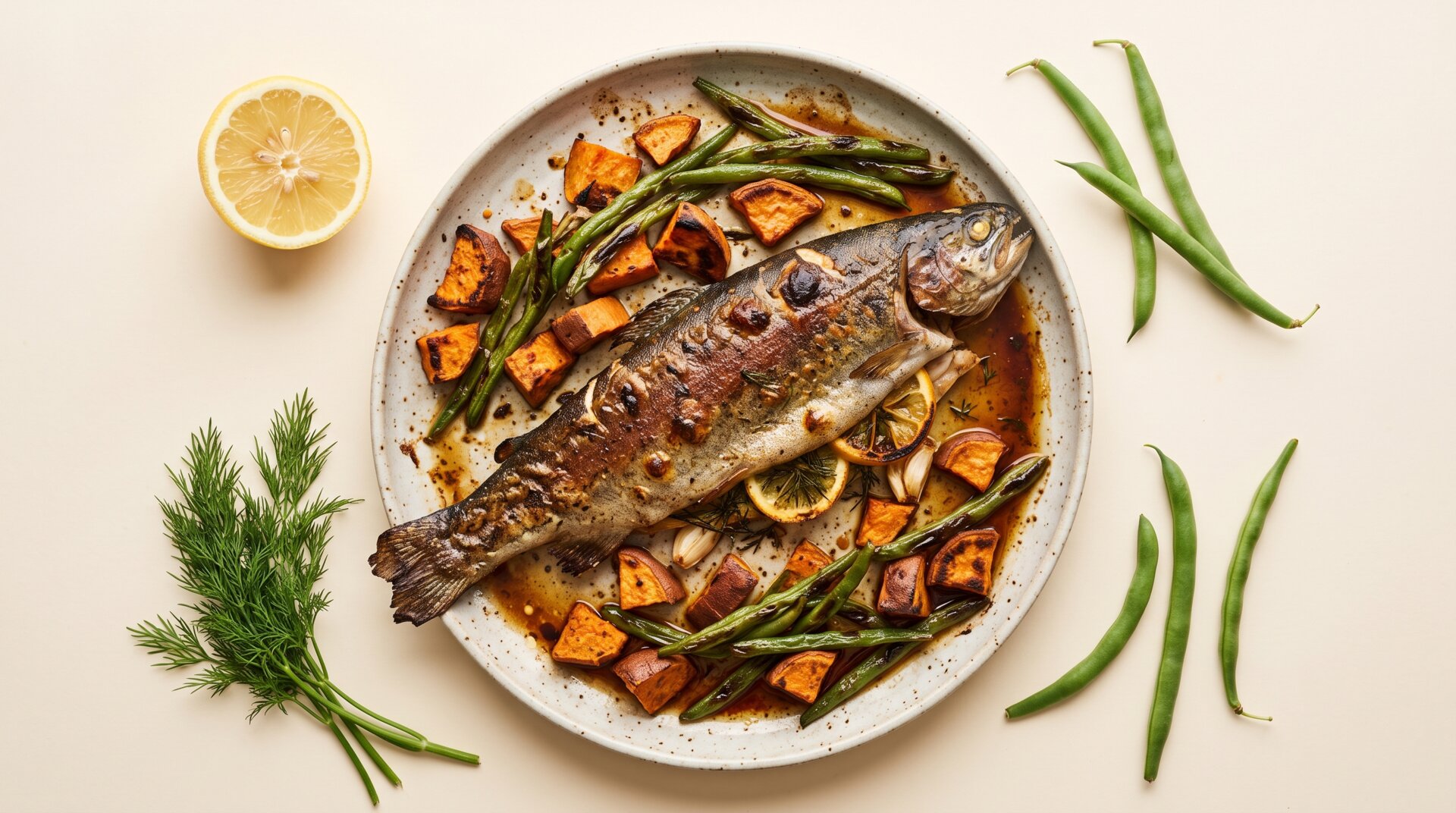 Oven-Baked Trout with Lemon, Herbs and Vegetables 35 min Whole trout with dill and sweet potato from a single roasting pan
  600 kcal
  40g protein 2 synergies
 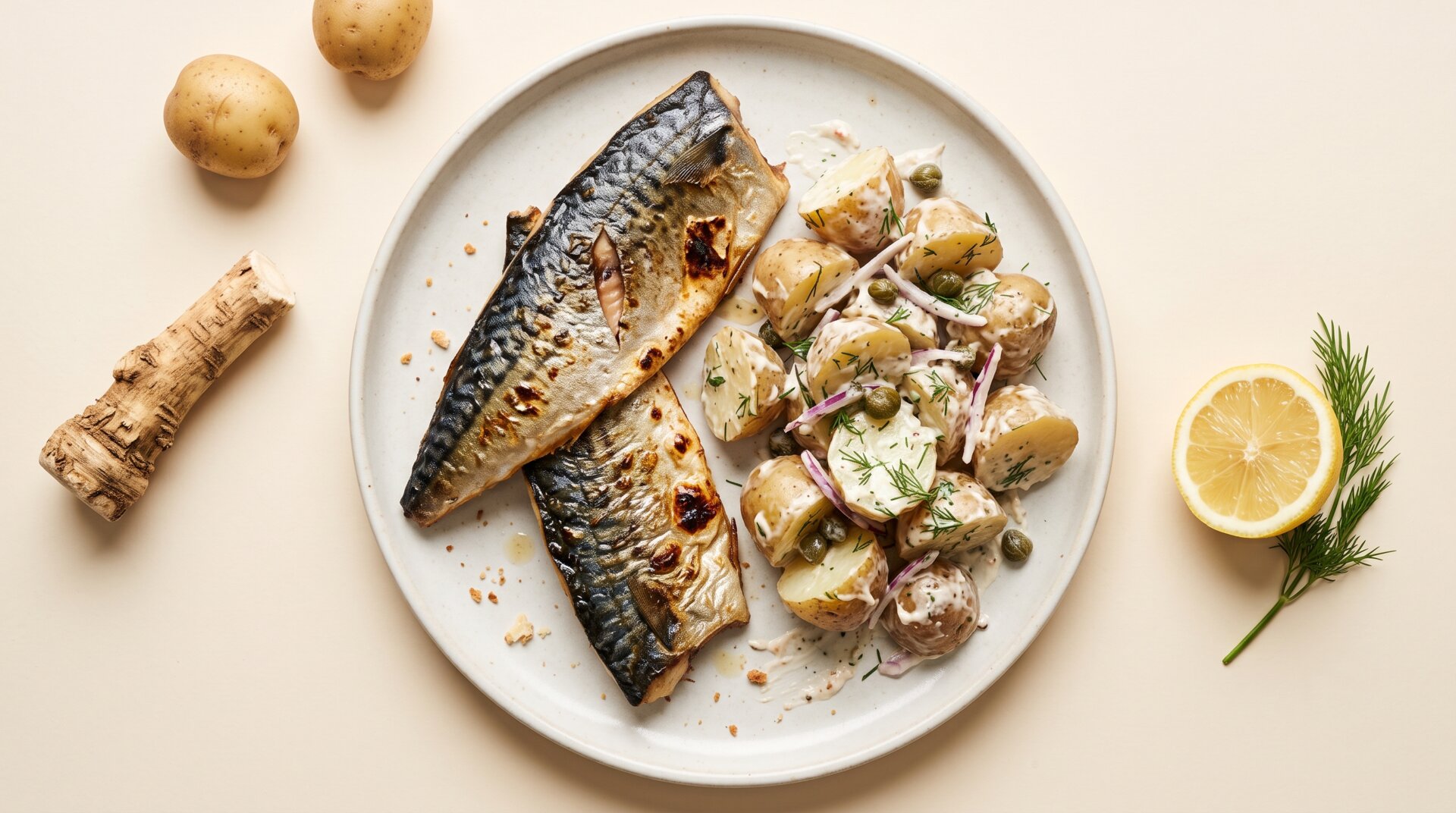 Pan-Fried Mackerel with Potato Salad and Horseradish 40 min Omega-3 rich mackerel with spicy horseradish 667 kcal 36g protein 2 synergies
 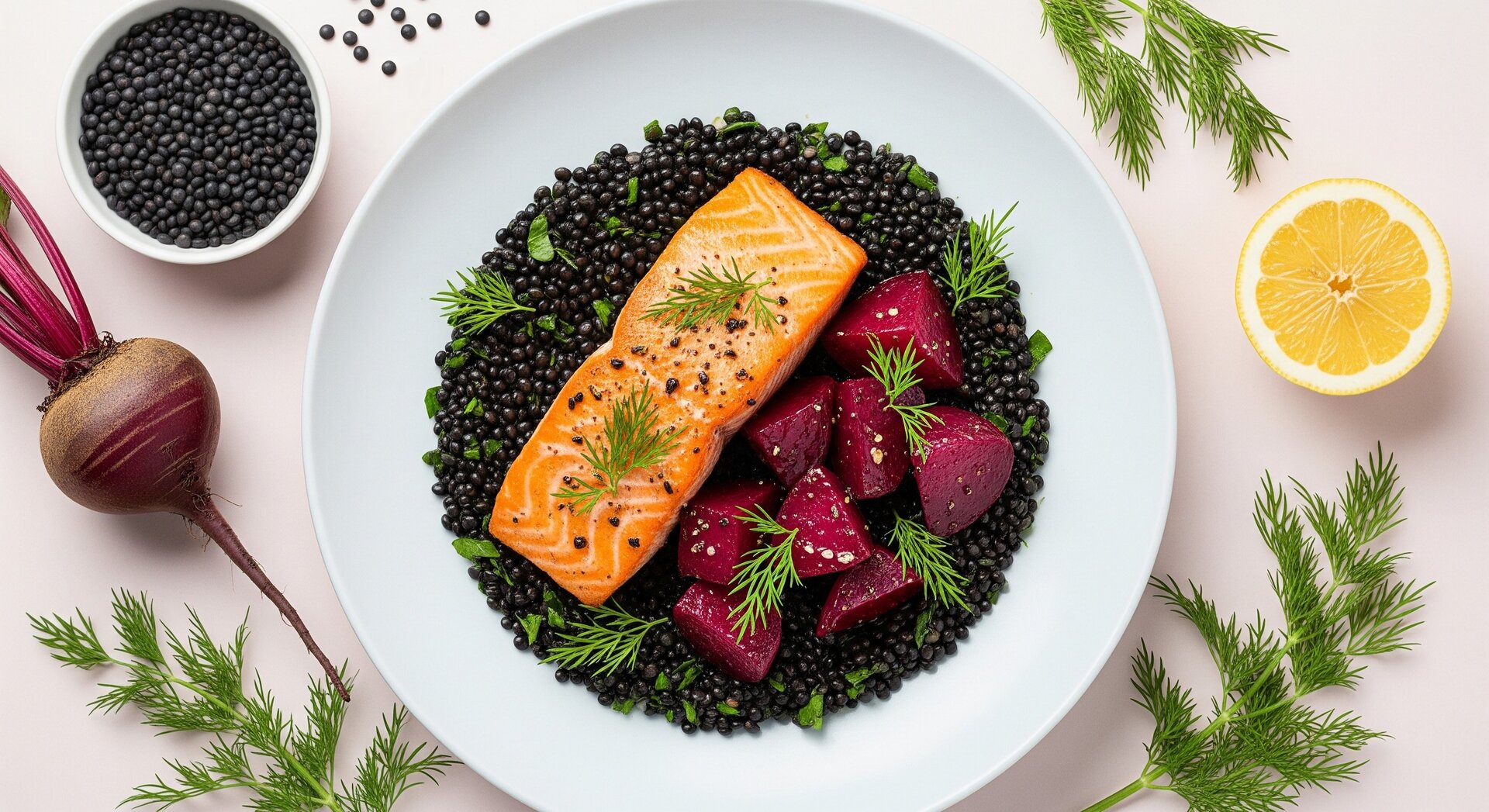 Pan-Fried Salmon with Beluga Lentils and Beets 45 min Pan-fried salmon on earthy lentils with roasted beets and dill 577 kcal 39g protein 1 synergies
 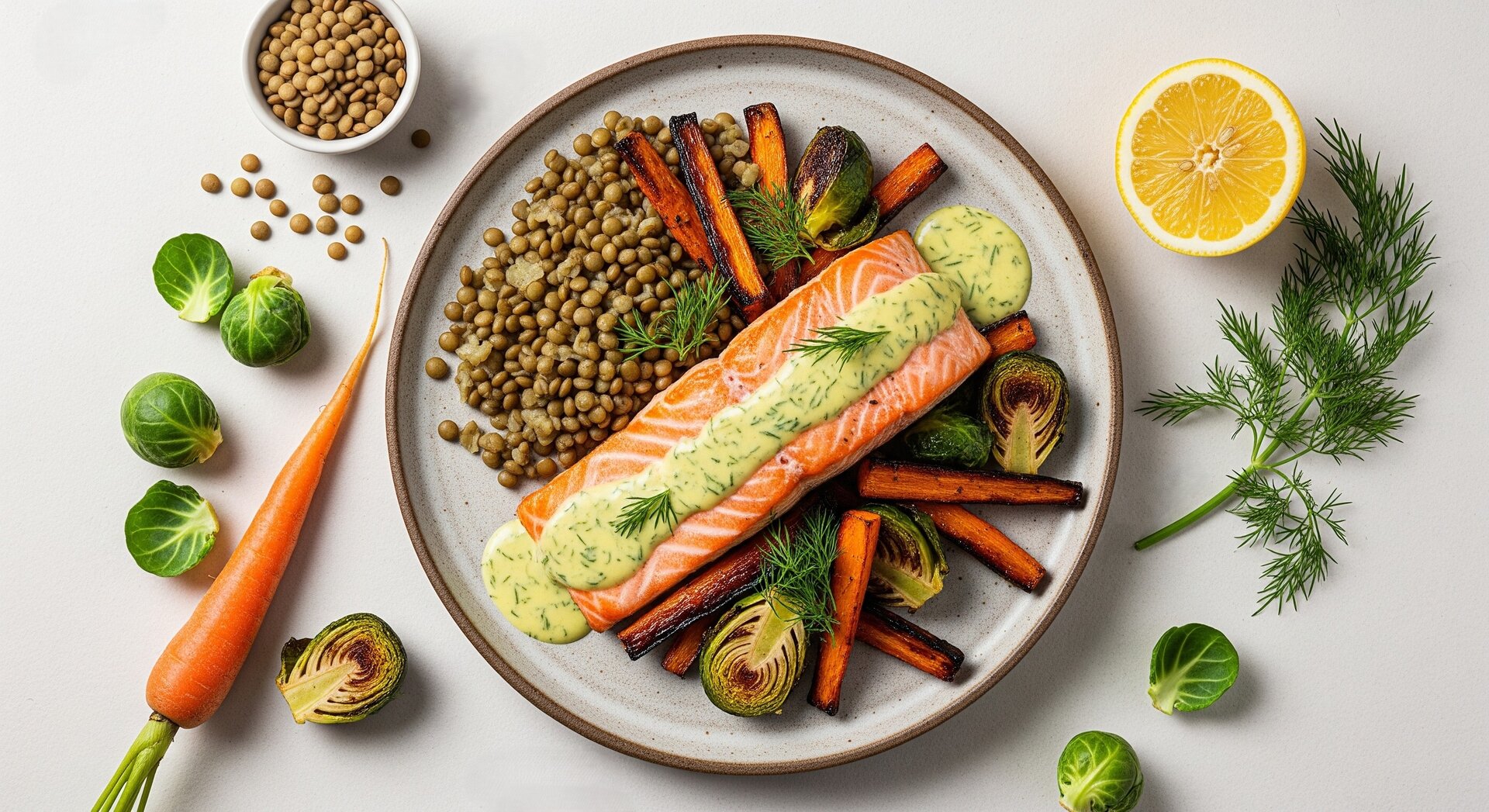 Baked Salmon with Lentils and Roasted Vegetables 45 min Omega-3 rich salmon with green lentils and roasted seasonal vegetables 659 kcal 45g protein 2 synergies
 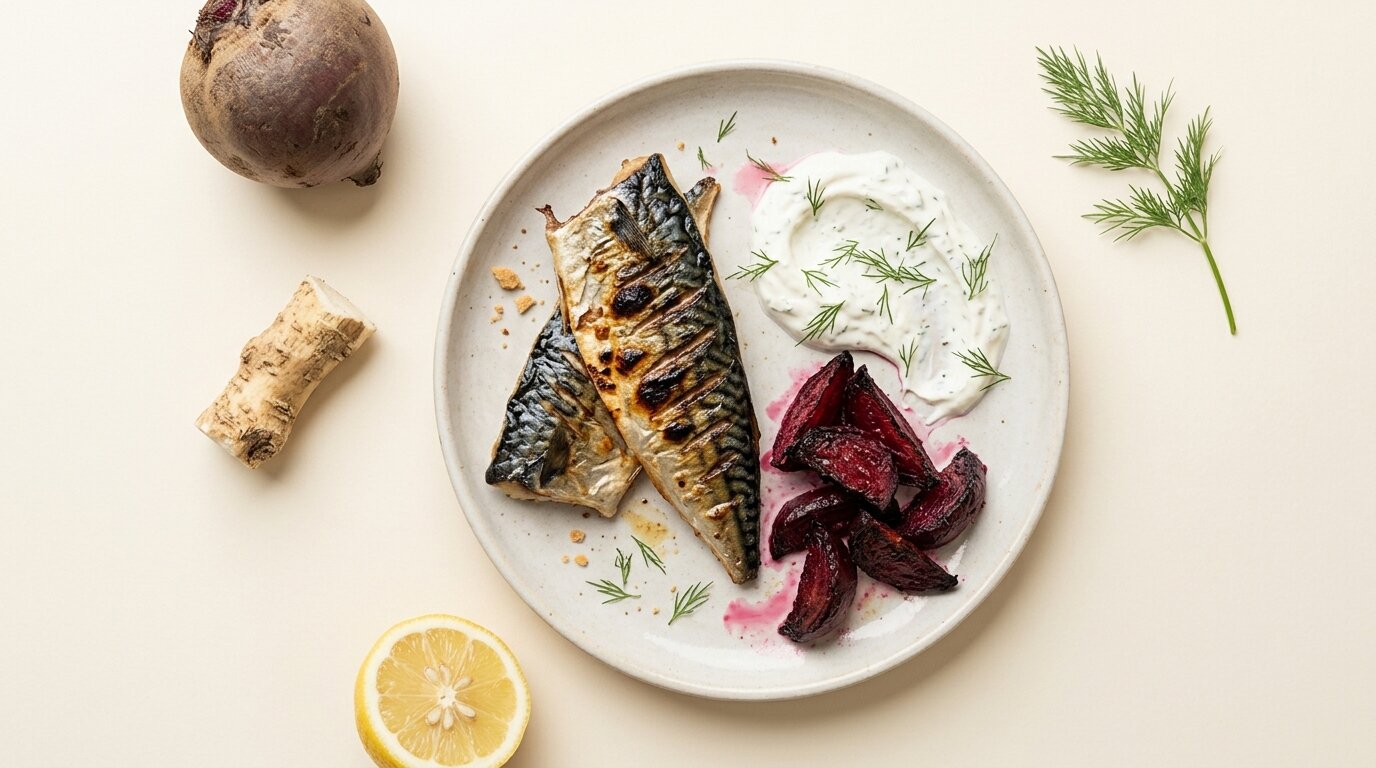 Grilled Mackerel with Beetroot and Horseradish 25 min Oily fish with earthy beetroot, fresh lemon and sharp horseradish yogurt 520 kcal 32g protein 2 synergies
 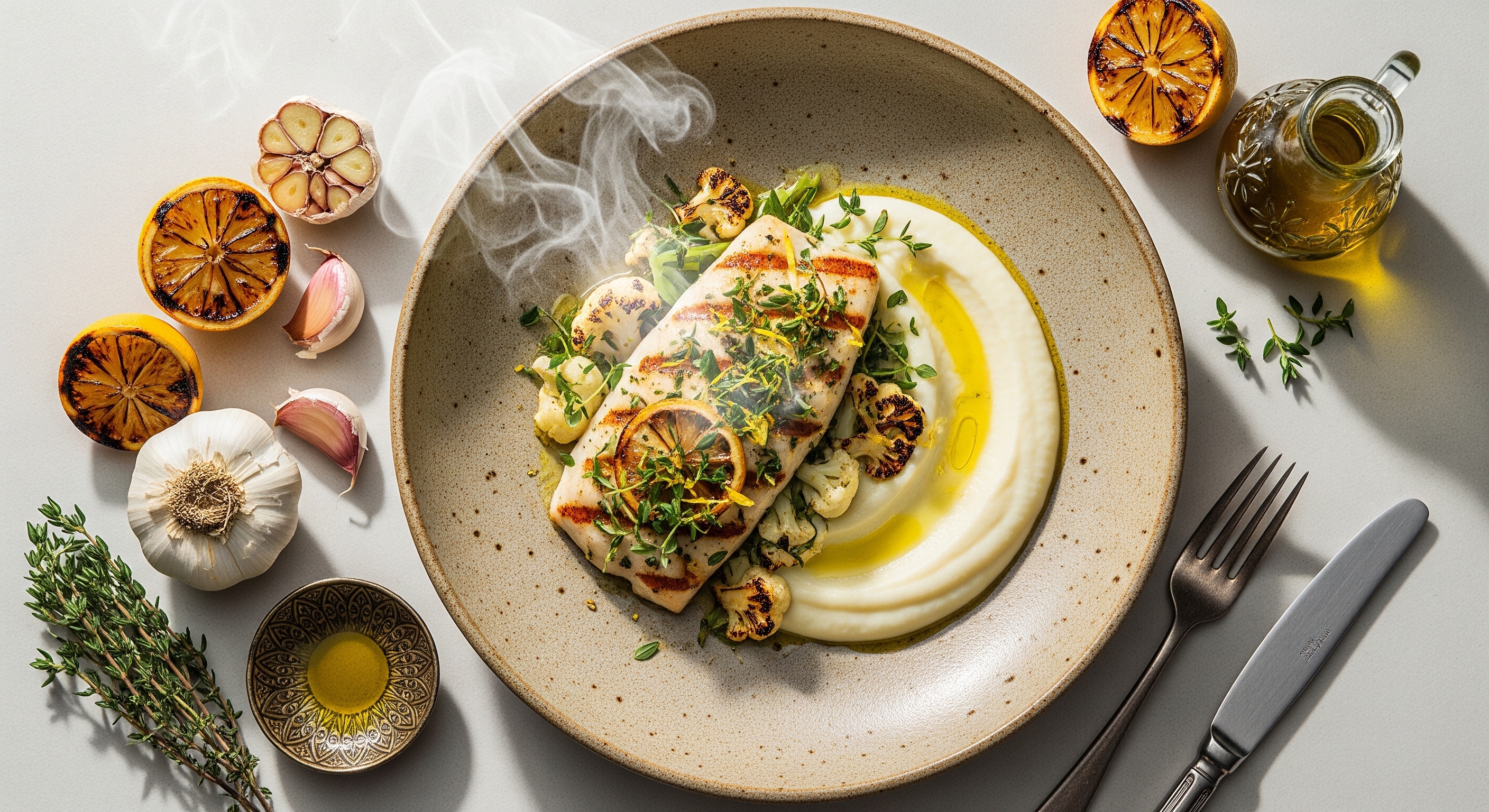 Grilled Fish with Cauliflower Purée and Herbs (Paleo) 35 min Light paleo dinner of grilled fish on creamy cauliflower purée 620 kcal 42g protein 2 synergies
  In the Kitchen
Storage
Location:Refrigerator
Shelf life:5-7 dagen vers, maanden ingevroren
Store fresh dill loosely wrapped in a damp cloth in the refrigerator. Freezing often preserves its fresh flavor better than drying. Dill seeds keep best in a tightly closed jar in a dry, dark place.
Preparation
Add fresh dill only at the end of cooking, because prolonged heat quickly fades its fresh aroma. Dill seeds are sturdier and can be cooked in broths, marinades and pickling brines. Classic with fish, cucumber salad, potatoes, gravlax and yoghurt sauces.
Substitutes
Smart preparation
1Add fresh dill only at the very last moment.
Why?
Dill quickly loses its fresh aroma with prolonged heating.
2Use the stems in marinades and broths for extra flavor.
3Dill pairs excellently with sour cream, lemon and fish.
Caution / Warnings
Dill is very safe, but there are scientific considerations:
Allergy to the Apiaceae family Moderate
People with a known reaction to carrot, celery, fennel or similar plants may also be sensitive to dill, because these plants belong to the same family.
Advice:
Avoid dill with a known Apiaceae allergy, or start carefully with a very small culinary amount.
Pregnancy (concentrated amounts) Mild
Normal culinary amounts of dill generally fit within ordinary cooking. Be careful with concentrated preparations or supplements.
Advice:
Use dill as a kitchen herb in normal amounts; discuss supplements or concentrated extracts with a healthcare professional.
Traditional use
Mediterranean
Ancient Egyptian and Greek food culture
Dill was described in ancient Egypt and Greek antiquity as a fragrant plant and kitchen herb. Later it became a recognizable herb in Northern and Eastern European dishes, especially with fish, cucumber, potato and pickled vegetables.
Summary
Dill instantly gives salmon, cucumber, potato and yoghurt sauces a fresh, lightly anise-like note. The leaves are delicate and are best added at the end; the seeds are warmer and can be cooked in broths, marinades and pickling brines. Dill naturally contains nutrients such as vitamin C, iron and potassium, but at normal herb amounts the contribution remains modest.