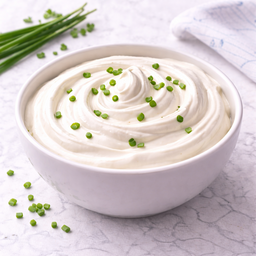
Crème Fraîche
French cultured cream for hot and cold dishes
What is this ingredient?
Crème fraîche is a traditional French dairy product made by fermenting cream with lactic acid bacteria. Compared with sour cream, crème fraîche usually has a higher fat percentage (30-45%) and milder acidity, so it stays more stable in warm preparations and is less likely to curdle.
## Fermentation Process
During fermentation, Lactococcus and Leuconostoc bacteria convert part of the lactose into lactic acid. This creates the soft, fresh tang. The process also forms diacetyl, an aromatic compound that contributes to the buttery flavor. Research on fermented dairy also describes exopolysaccharides and small protein fragments that can influence texture, mouthfeel and the food matrix.
## Culinary Stability
The higher fat content and the protein structure formed during fermentation make crème fraîche useful in warm sauces, soups and baked dishes. Casein micelles remain relatively stable in this fat-rich, mildly acidic environment, helping sauces stay creamy. Add crème fraîche preferably near the end and warm dishes gently.
## Live Cultures and Variation
Pasteurized supermarket versions generally contain fewer live cultures than fresh or artisanal versions. The exact composition depends on starter cultures, fat percentage, pasteurization and storage time. Sensory differences appear in thickness, acidity, aroma and aftertaste.
How does it taste?
Gently tangy and creamy with a refined, full flavor.
Pairs well with:
Pairs well with chivessalmonlemonpotato and caviar.
Did you know...?
- Crème fraîche literally means 'fresh cream' in French, even though fermentation makes the product thicker and fuller in flavor.
- Unlike sour cream, crème fraîche usually stays better blended under gentle heat thanks to its higher fat content.
Nutritional Value & Energy
Per 100g
Crème Fraîche provides energy thanks to natural nutrients .
Per 100g
Minerals
Vitamins
More nutrients
B-Vitamins
Trace Minerals
What's in a serving?
1 serving
Crème fraîche naturally contains vitamin A (280 mcg per 100 g).
% of daily reference intake (DRI)
EU-approved nutrition claims
This ingredient contains nutrients for which EFSA-authorized health claims exist (at nutrient level, not ingredient-specific).
Approved health claims (EU)
Vitamin_a EU 432/2012
Vitamin A contributes to the normal function of the immune system
Contains 280mcg/100g (threshold: ≥120mcg/100g)
Vitamin_a EU 432/2012
Vitamin A contributes to the maintenance of normal skin
Contains 280mcg/100g (threshold: ≥120mcg/100g)
Vitamin_a EU 432/2012
Vitamin A contributes to the maintenance of normal mucous membranes
Contains 280mcg/100g (threshold: ≥120mcg/100g)
Vitamin_a EU 432/2012
Vitamin A contributes to the maintenance of normal vision
Contains 280mcg/100g (threshold: ≥120mcg/100g)
Vitamin_a EU 432/2012
Vitamin A contributes to normal iron metabolism
Contains 280mcg/100g (threshold: ≥120mcg/100g)
Vitamin_a EU 432/2012
Vitamin A has a role in the process of cell specialisation
Contains 280mcg/100g (threshold: ≥120mcg/100g)
What's being researched?
Fermented dairy and metabolic markers
Fermented dairy products such as crème fraîche are examined within broader research on dietary fat, fermentation and metabolic markers. Fermentation can influence texture, fat digestibility and the food matrix, but research specific to crème fraîche remains limited.
Supported by: [4] Forouhi NG (2018)
Good Combinations (Synergy)
Combine crème fraîche smartly to enhance the effect:
Crème Fraîche  Lemon
Lemon Stable sour cream that doesn't curdle when heated
Technical: Crème fraîche has a fat percentage of 30-40%, higher than sour cream (10-20%). This higher fat content stabilizes protein micelles, preventing curdling when heated. Lemon juice (citric acid) lowers pH and adds freshness without destabilizing the protein. Dill contains limonene and carvone, aromatic compounds that give dishes freshness and aroma.
What does this mean for you? Use crème fraîche (not sour cream) in warm sauces with lemon and dill — perfect with fish and potato dishes. The higher fat content prevents curdling when cooking.
Crème Fraîche  Salmon
 Scandinavian trio: saturated fat protects omega-3 + terpenes for digestion
Technical: Crème fraîche contains 30-40% fat (of which 60% saturated) that stabilizes omega-3 from salmon (EPA 0.7g + DHA 1.2g per 100g) against oxidation during heating. Saturated fat protects unsaturated fatty acids as it doesn't oxidize itself. Dill contains limonene and carvone (terpenes) that increase lipase activity by 25% → better fat digestion. Studies show saturated + unsaturated fat together are better absorbed than unsaturated fat alone.
What does this mean for you? Salmon with crème fraîche-dill sauce is more than comfort food — the saturated fat protects the valuable omega-3 and the dill supports digestion. A functional Scandinavian feast.
Crème Fraîche  Dill
Dill Scandinavian trio: saturated fat protects omega-3 + terpenes for digestion
Technical: Crème fraîche contains 30-40% fat (of which 60% saturated) that stabilizes omega-3 from salmon (EPA 0.7g + DHA 1.2g per 100g) against oxidation during heating. Saturated fat protects unsaturated fatty acids as it doesn't oxidize itself. Dill contains limonene and carvone (terpenes) that increase lipase activity by 25% → better fat digestion. Studies show saturated + unsaturated fat together are better absorbed than unsaturated fat alone.
What does this mean for you? Salmon with crème fraîche-dill sauce is more than comfort food — the saturated fat protects the valuable omega-3 and the dill supports digestion. A functional Scandinavian feast.
Crème Fraîche 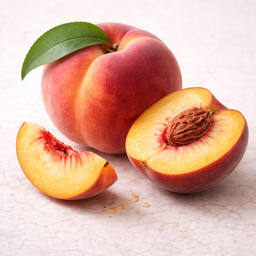 Peach
Peach Fats increase beta-carotene absorption from peach
Technical: Peaches contain beta-carotene (162 ug per 100g) and lutein/zeaxanthin (91 ug) — fat-soluble carotenoids that contribute to the maintenance of normal vision (EFSA-recognized for vitamin A). Fats from creme fraîche or almonds (25mg vitamin E per 100g) form micelles increasing absorption of these carotenoids by 3-5x. Vitamin E also protects carotenoids from oxidation.
What does this mean for you? Serve peaches with a dollop of creme fraîche or roasted almonds. Peach Melba, peach crumble with almonds — all these desserts are nutritionally smarter than they seem. The fat ensures you actually absorb the vitamin A precursors from the peach.
Recipes with Crème Fraîche
Discover delicious recipes featuring crème fraîche:
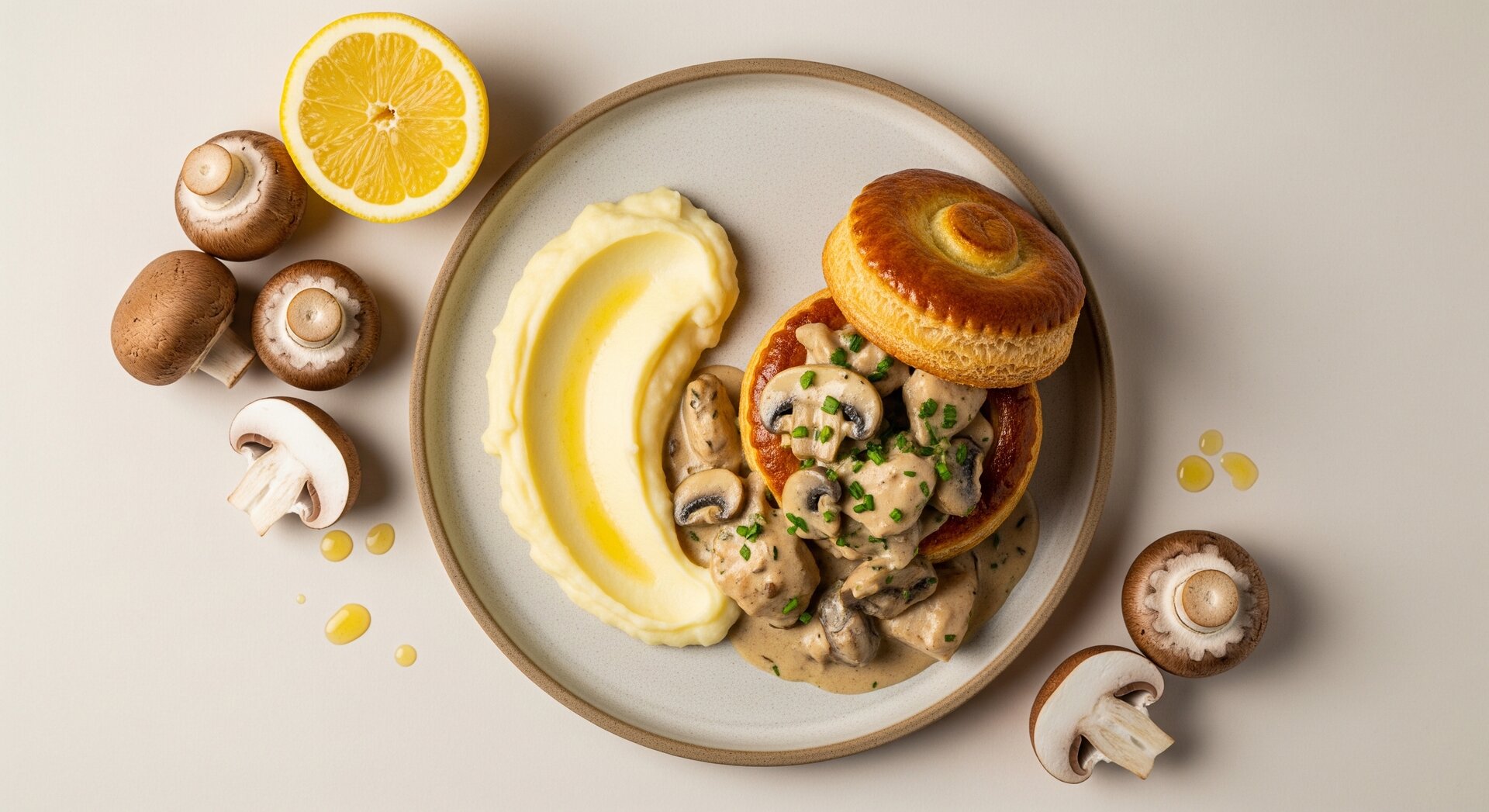 Belgian Vol-au-Vent with Mashed Potatoes 70 min Creamy chicken ragout with mushrooms, leek and soft mash
  735 kcal
  43g protein 2 synergies
 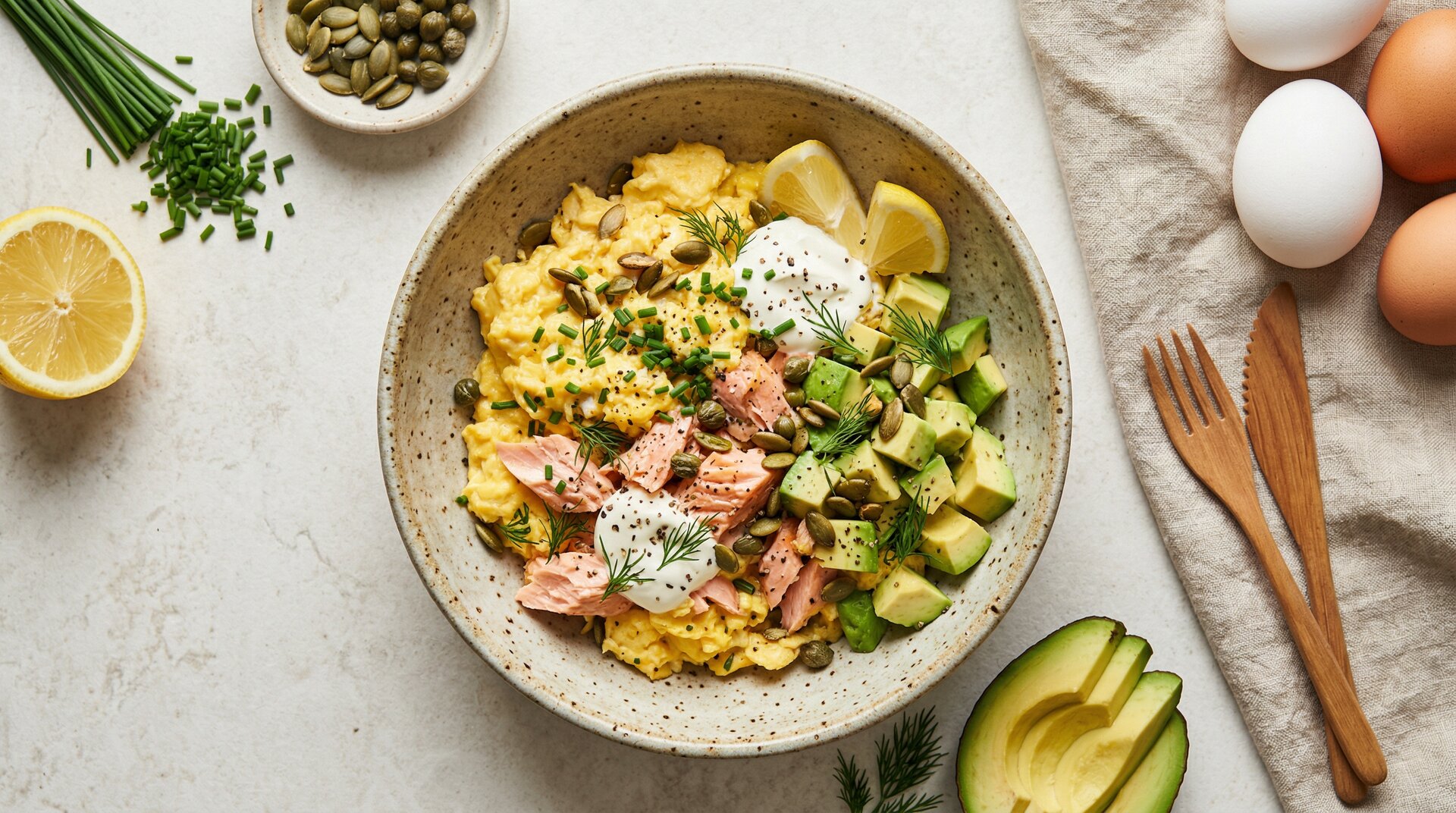 Keto Egg Scramble with Avocado, Salmon & Ghee 15 min Keto breakfast with ingredients that may contribute to muscle building and focus 724 kcal 38g protein 2 synergies
 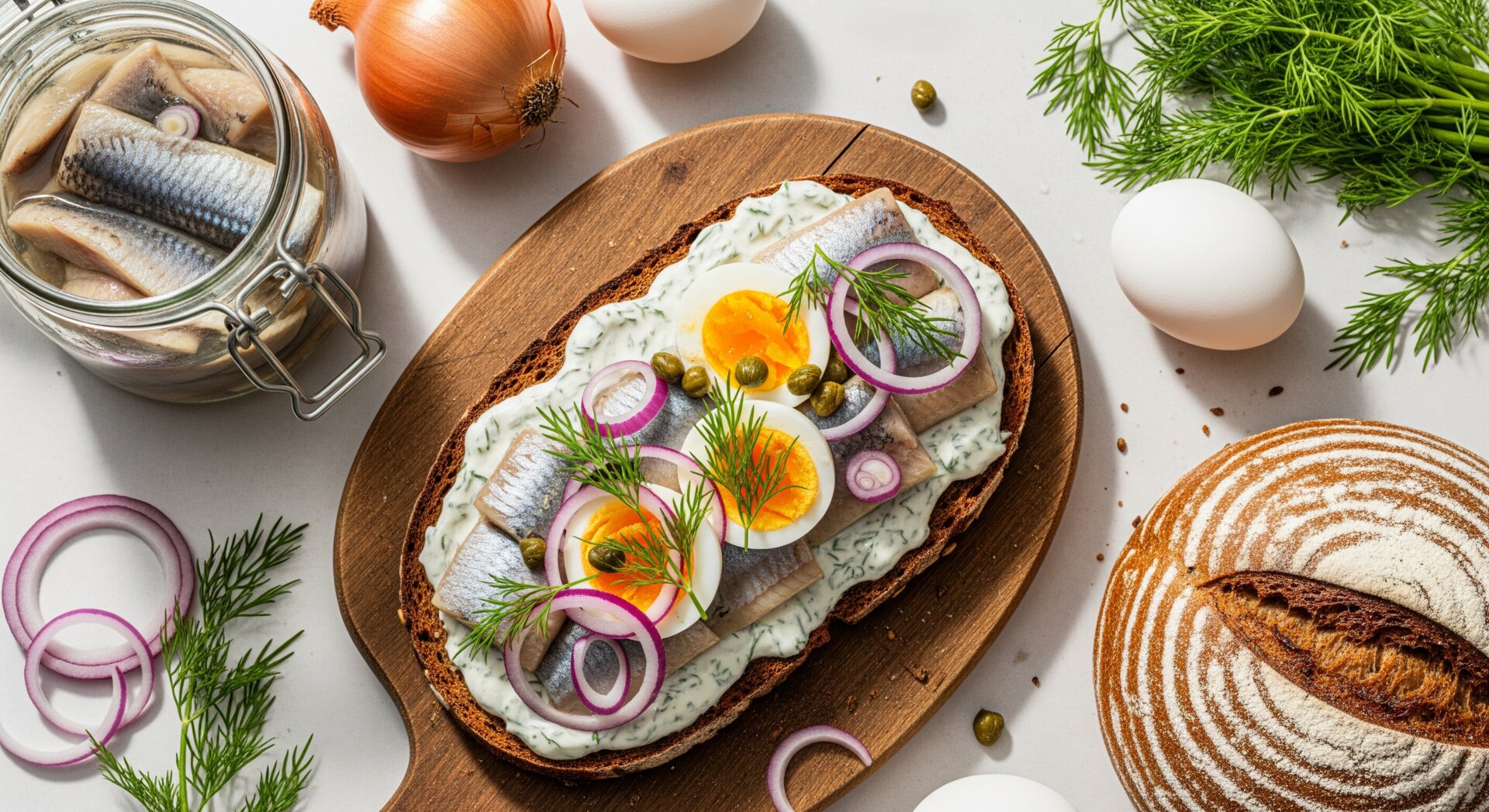 Scandinavian Herring with Rye Bread 25 min Open rye sandwich with herring, egg, dill and mustard cream 610 kcal 36g protein 2 synergies
 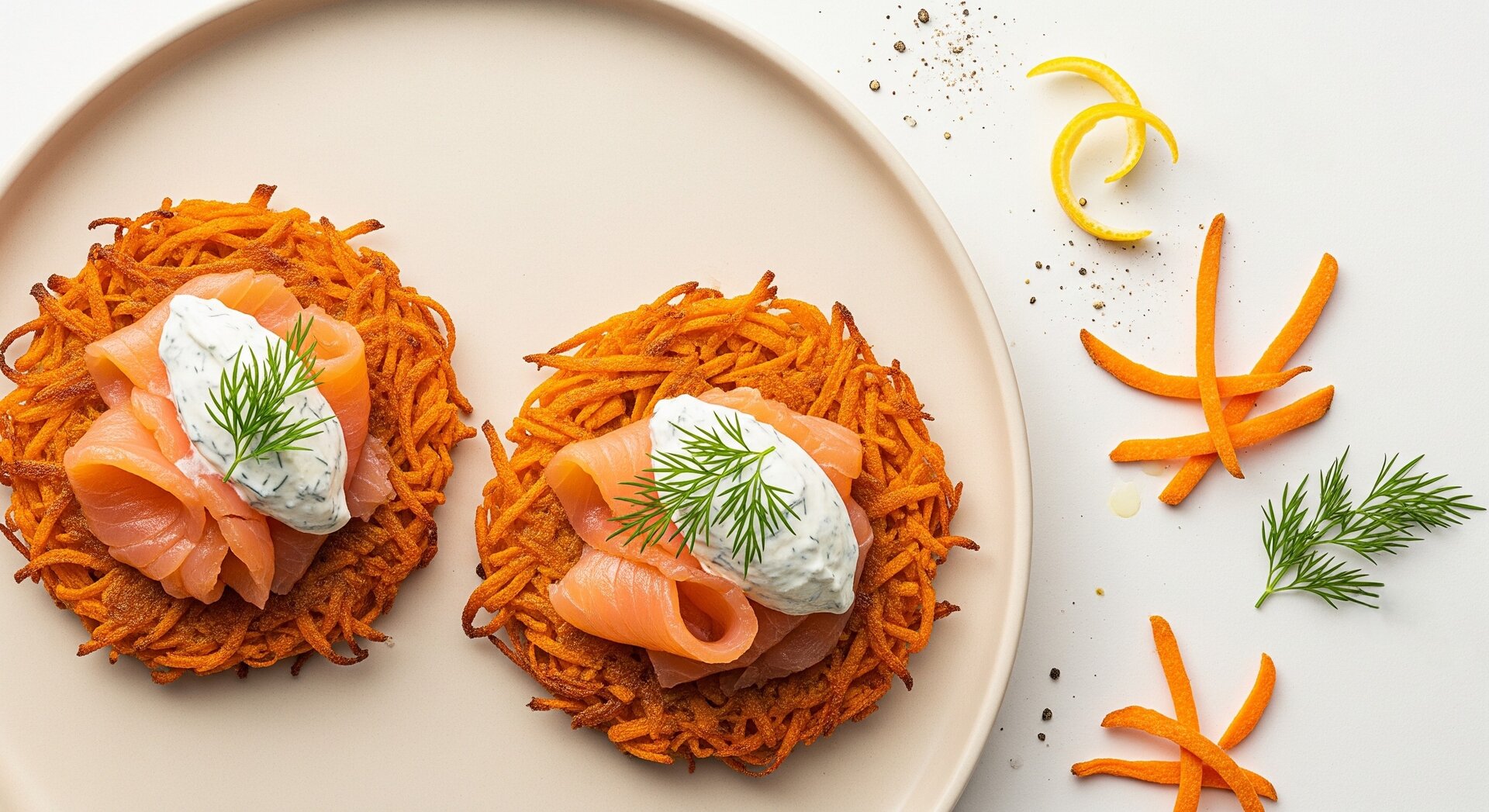 Sweet Potato Rösti with Smoked Salmon 35 min Crispy rösti with salmon, lemon and dill 575 kcal 31g protein 2 synergies
  In the Kitchen
Storage
Location:Refrigerator
Shelf life:2-3 weken
Preparation
Add to sauces, soups, baked dishes and desserts. Warm gently and preferably add near the end; the high fat content makes crème fraîche more stable than sour cream.
Conversions
Substitutes
Smart preparation
1Add crème fraîche at the end and warm gently.
Why?
This keeps the sauce creamy and preserves the fresh, full flavor.
2Bring crème fraîche to room temperature before adding it to a warm sauce.
Why?
A smaller temperature difference helps keep the texture even.
3Use crème fraîche as a more stable alternative to cream in sauces.
Why?
The higher fat content and mild acidity give sauces body without making them thin quickly.
Caution / Warnings
Crème Fraîche is very safe, but there are scientific considerations:
Lactose intolerance Moderate
Contains lactose, although the level is lower than in milk due to fermentation (about 2.8% versus 4.8%).
Milk allergy Severe
Contains casein and whey proteins that can cause reactions in people with a milk allergy.
Summary
Crème fraîche is fermented cream that works well in warm sauces, soups and baked dishes thanks to its high fat content. It has mild fresh acidity and a creamy texture. Fermentation forms lactic acid, diacetyl and small components that contribute to flavor, mouthfeel and the food matrix.