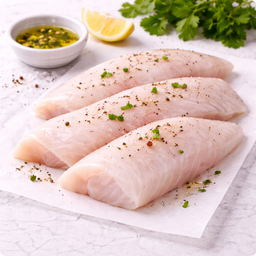
White Fish
The Lean Protein from the Sea
What is this ingredient?
White fish distinguishes itself from fatty fish (like salmon and mackerel) by its low fat content. The fat that is present is mainly stored in the liver (think cod liver oil). This makes white fish ideal for those who want lots of protein with minimal calories. The mild taste makes it accessible for children and people who don't appreciate the strong taste of fatty fish. White fish is an excellent source of iodine, essential for thyroid function, and selenium, a powerful antioxidant.
How does it taste?
Mild, clean and neutral with a light, delicate texture.
Pairs well with:
Pairs well with lemonbutterdillcapers and potato.
Did you know...?
- The term 'white fish' refers to dozens of species with white flesh such as cod, haddock and pollock.
- Cod was so economically important for centuries that it was called the 'silver of the sea'.
Nutritional Value & Energy
Per 100g
White Fish provides energy thanks to natural nutrients .
Per 100g
Minerals
Vitamins
Omega-3 fatty acids
More nutrients
B-Vitamins
Trace Minerals
What's in a serving?
1 serving
White Fish naturally contains selenium (32.1 mcg per 100 g).
White Fish naturally contains vitamin b12 (1 mcg per 100 g).
White Fish naturally contains phosphorus (200 mg per 100 g).
White Fish naturally contains potassium (328 mg per 100 g).
White Fish naturally contains iodine (116 mcg per 100 g).
White Fish naturally contains vitamin d (1 mcg per 100 g).
White Fish naturally contains vitamin b6 (0.3 mg per 100 g).
% of daily reference intake (DRI)
EU-approved nutrition claims
This ingredient contains nutrients for which EFSA-authorized health claims exist (at nutrient level, not ingredient-specific).
Approved health claims (EU)
Vitamin_b12 EU 432/2012
Vitamin B12 contributes to the normal function of the immune system
Contains 1mcg/100g (threshold: ≥0.375mcg/100g)
Vitamin_b12 EU 432/2012
Vitamin B12 contributes to the reduction of tiredness and fatigue
Contains 1mcg/100g (threshold: ≥0.375mcg/100g)
Vitamin_b12 EU 432/2012
Vitamin B12 contributes to the normal functioning of the nervous system
Contains 1mcg/100g (threshold: ≥0.375mcg/100g)
Vitamin_d EU 432/2012
Vitamin D contributes to the maintenance of normal bones
Contains 1mcg/100g (threshold: ≥0.75mcg/100g)
Vitamin_d EU 432/2012
Vitamin D contributes to the normal function of the immune system
Contains 1mcg/100g (threshold: ≥0.75mcg/100g)
Potassium EU 432/2012
Potassium contributes to the maintenance of normal blood pressure
Contains 328mg/100g (threshold: ≥300mg/100g)
Vitamin_b6 EU 432/2012
Vitamin B6 contributes to normal cysteine synthesis
Contains 0.3mg/100g (threshold: ≥0.21mg/100g)
Vitamin_b6 EU 432/2012
Vitamin B6 contributes to normal energy-yielding metabolism
Contains 0.3mg/100g (threshold: ≥0.21mg/100g)
Vitamin_b6 EU 432/2012
Vitamin B6 contributes to normal functioning of the nervous system
Contains 0.3mg/100g (threshold: ≥0.21mg/100g)
Vitamin_b6 EU 432/2012
Vitamin B6 contributes to normal homocysteine metabolism
Contains 0.3mg/100g (threshold: ≥0.21mg/100g)
Vitamin_b6 EU 432/2012
Vitamin B6 contributes to normal protein and glycogen metabolism
Contains 0.3mg/100g (threshold: ≥0.21mg/100g)
Vitamin_b6 EU 432/2012
Vitamin B6 contributes to normal psychological function
Contains 0.3mg/100g (threshold: ≥0.21mg/100g)
Vitamin_b6 EU 432/2012
Vitamin B6 contributes to normal red blood cell formation
Contains 0.3mg/100g (threshold: ≥0.21mg/100g)
Vitamin_b6 EU 432/2012
Vitamin B6 contributes to the normal function of the immune system
Contains 0.3mg/100g (threshold: ≥0.21mg/100g)
Vitamin_b6 EU 432/2012
Vitamin B6 contributes to the regulation of hormonal activity
Contains 0.3mg/100g (threshold: ≥0.21mg/100g)
Vitamin_b6 EU 432/2012
Vitamin B6 contributes to the reduction of tiredness and fatigue
Contains 0.3mg/100g (threshold: ≥0.21mg/100g)
Vitamin_b12 EU 432/2012
Vitamin B12 contributes to normal energy-yielding metabolism
Contains 1mcg/100g (threshold: ≥0.375mcg/100g)
Vitamin_b12 EU 432/2012
Vitamin B12 contributes to normal homocysteine metabolism
Contains 1mcg/100g (threshold: ≥0.375mcg/100g)
Vitamin_b12 EU 432/2012
Vitamin B12 contributes to normal psychological function
Contains 1mcg/100g (threshold: ≥0.375mcg/100g)
Vitamin_b12 EU 432/2012
Vitamin B12 contributes to normal red blood cell formation
Contains 1mcg/100g (threshold: ≥0.375mcg/100g)
Vitamin_b12 EU 432/2012
Vitamin B12 has a role in the process of cell division
Contains 1mcg/100g (threshold: ≥0.375mcg/100g)
Vitamin_d EU 432/2012
Vitamin D contributes to normal absorption/utilisation of calcium and phosphorus
Contains 1mcg/100g (threshold: ≥0.75mcg/100g)
Vitamin_d EU 432/2012
Vitamin D contributes to normal blood calcium levels
Contains 1mcg/100g (threshold: ≥0.75mcg/100g)
Vitamin_d EU 432/2012
Vitamin D contributes to the maintenance of normal muscle function
Contains 1mcg/100g (threshold: ≥0.75mcg/100g)
Vitamin_d EU 432/2012
Vitamin D contributes to the maintenance of normal teeth
Contains 1mcg/100g (threshold: ≥0.75mcg/100g)
Vitamin_d EU 432/2012
Vitamin D has a role in the process of cell division
Contains 1mcg/100g (threshold: ≥0.75mcg/100g)
Phosphorus EU 432/2012
Phosphorus contributes to normal energy-yielding metabolism
Contains 200mg/100g (threshold: ≥105mg/100g)
Phosphorus EU 432/2012
Phosphorus contributes to the normal function of cell membranes
Contains 200mg/100g (threshold: ≥105mg/100g)
Phosphorus EU 432/2012
Phosphorus contributes to the maintenance of normal bones
Contains 200mg/100g (threshold: ≥105mg/100g)
Phosphorus EU 432/2012
Phosphorus contributes to the maintenance of normal teeth
Contains 200mg/100g (threshold: ≥105mg/100g)
Selenium EU 432/2012
Selenium contributes to the maintenance of normal hair
Contains 32.1mcg/100g (threshold: ≥8.25mcg/100g)
Selenium EU 432/2012
Selenium contributes to the maintenance of normal nails
Contains 32.1mcg/100g (threshold: ≥8.25mcg/100g)
Selenium EU 432/2012
Selenium contributes to the normal function of the immune system
Contains 32.1mcg/100g (threshold: ≥8.25mcg/100g)
Selenium EU 432/2012
Selenium contributes to normal thyroid function
Contains 32.1mcg/100g (threshold: ≥8.25mcg/100g)
Selenium EU 432/2012
Selenium contributes to normal spermatogenesis
Contains 32.1mcg/100g (threshold: ≥8.25mcg/100g)
Selenium EU 432/2012
Selenium contributes to the protection of cells from oxidative stress
Contains 32.1mcg/100g (threshold: ≥8.25mcg/100g)
Iodine EU 432/2012
Iodine contributes to normal cognitive function
Contains 116mcg/100g (threshold: ≥22.5mcg/100g)
Iodine EU 432/2012
Iodine contributes to normal energy-yielding metabolism
Contains 116mcg/100g (threshold: ≥22.5mcg/100g)
Iodine EU 432/2012
Iodine contributes to normal functioning of the nervous system
Contains 116mcg/100g (threshold: ≥22.5mcg/100g)
Iodine EU 432/2012
Iodine contributes to the maintenance of normal skin
Contains 116mcg/100g (threshold: ≥22.5mcg/100g)
Iodine EU 432/2012
Iodine contributes to the normal production of thyroid hormones and normal thyroid function
Contains 116mcg/100g (threshold: ≥22.5mcg/100g)
Iodine EU 432/2012
Iodine contributes to the normal growth of children
Contains 116mcg/100g (threshold: ≥22.5mcg/100g)
Potassium EU 432/2012
Potassium contributes to normal functioning of the nervous system
Contains 328mg/100g (threshold: ≥300mg/100g)
Potassium EU 432/2012
Potassium contributes to normal muscle function
Contains 328mg/100g (threshold: ≥300mg/100g)
What's being researched?
White fish as lean protein source
White fish as a lean protein source with low caloric density is studied in weight management research. The high protein-to-fat ratio makes it a commonly used reference product in dietary interventions.
Supported by: [1] He (2004)
Good Combinations (Synergy)
Combine white fish smartly to enhance the effect:
White Fish 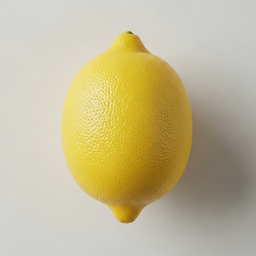 Lemon
Lemon Vitamin C improves mineral absorption from white fish
Technical: White fish (cod, tilapia, plaice) contains 0.3mg iron, 32μg selenium and 18-20g protein per 100g. Vitamin C from lemon reduces Fe³⁺ to Fe²⁺ forming soluble chelates. The acidic environment also improves protein denaturation making peptides more accessible to pepsin and trypsin.
What does this mean for you? Fish with lemon is a universal combination for good reason. Lemon juice improves mineral absorption and makes protein more digestible. Fish and chips with lemon? Scientifically justified!
White Fish 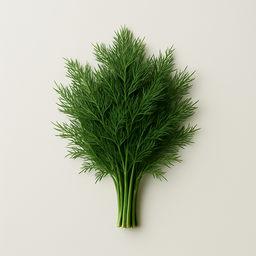 Dill
Dill Lean protein + carveol for digestion and antioxidant protection
Technical: White fish provides 18-20g lean protein per 100g with all essential amino acids. Dill contains carveol and limonene (monoterpenes) with carminative and antioxidant action. Dill's essential oils also activate CCK (cholecystokinin) release, improving fat emulsification with fried fish. Dill also contains 43mg vitamin C per 100g.
What does this mean for you? Fish with dill is a Northern European classic (gravlax, potato soup with fish). Dill aids digestion and contains antioxidants. Especially good with light white fish.
White Fish 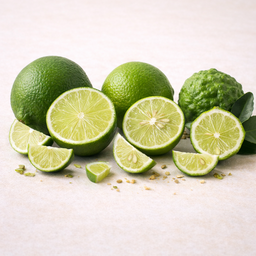 Lime
Lime Increased iron absorption from lean fish
Technical: White fish (cod, haddock, tilapia) contains 0.3-1mg non-heme iron per 100g — lower than fatty fish but with 18-20g high-quality protein. Vitamin C from lemon (53mg per 100g) increases absorption of this non-heme iron through Fe³⁺ → Fe²⁺ reduction. The citric acid also activates pepsin and improves protein digestion in the stomach.
What does this mean for you? Sprinkle your white fish with lemon juice before serving. Think fish & chips with lemon, ceviche with lime, or fried plaice with lemon wedges. It makes the fish easier to digest and you absorb more iron.
Recipes with White Fish
Discover delicious recipes featuring white fish:
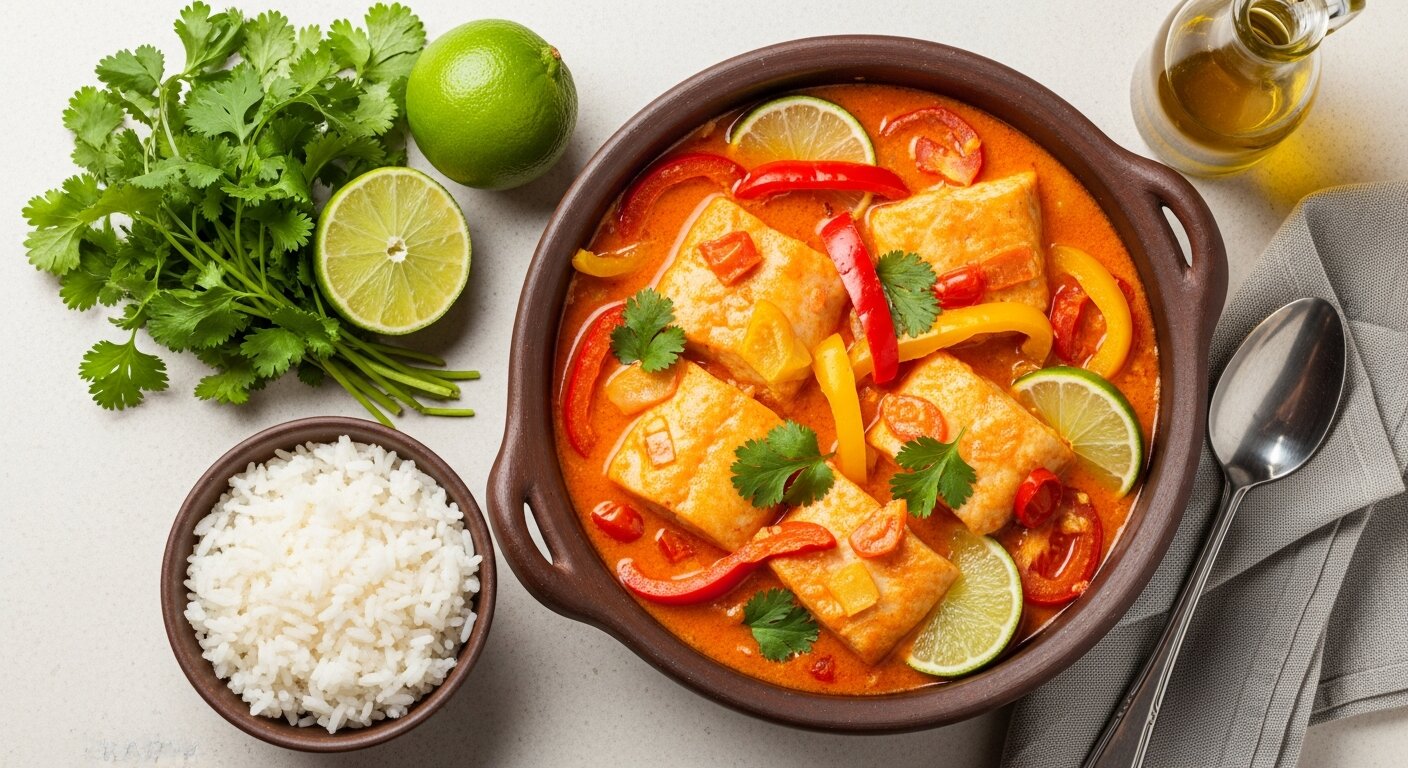 Brazilian Moqueca with White Fish 45 min Creamy coconut fish stew with bell peppers, tomato and lime
  420 kcal
  32g protein 2 synergies
 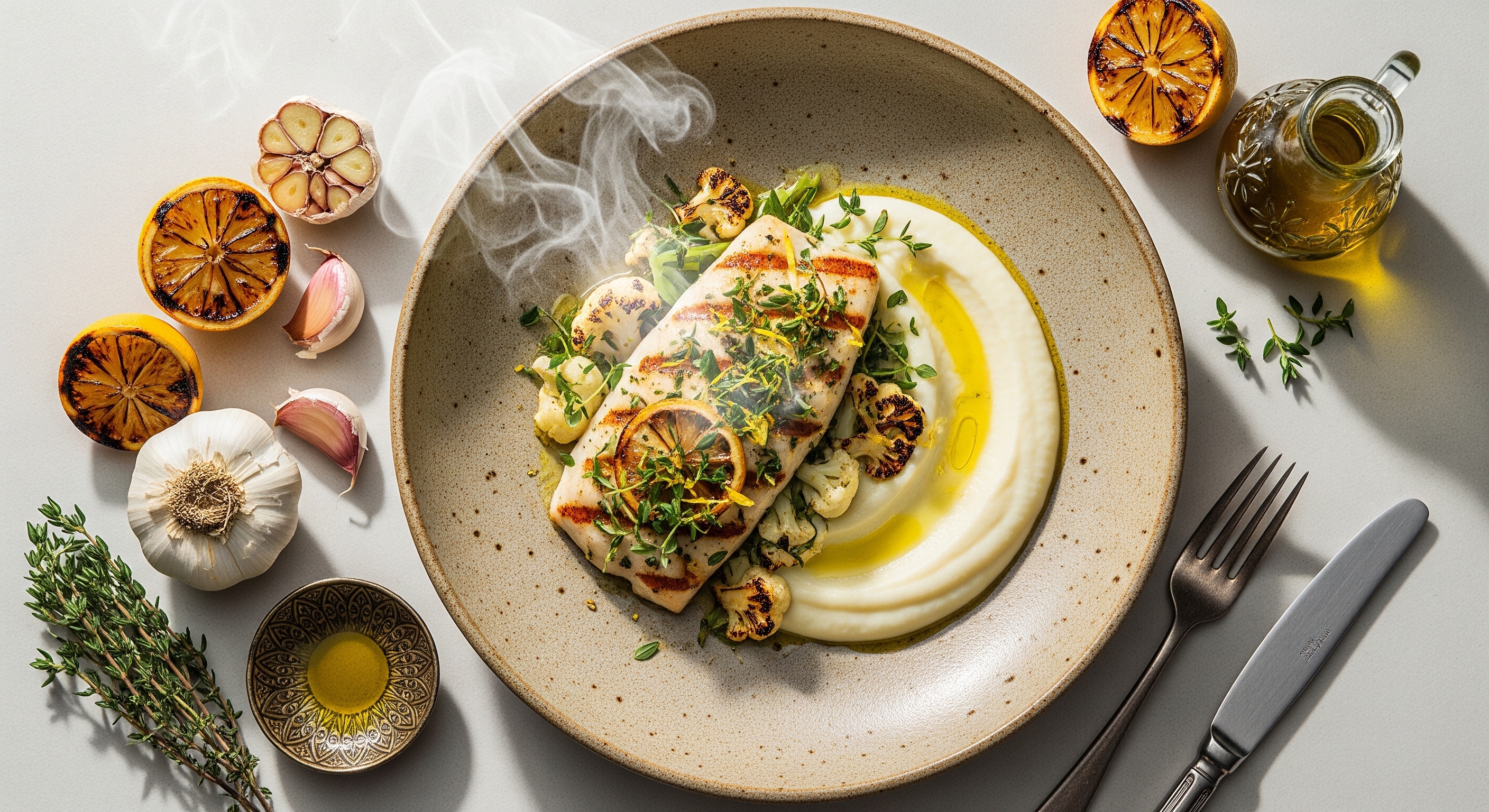 Grilled Fish with Cauliflower Purée and Herbs (Paleo) 35 min Light paleo dinner of grilled fish on creamy cauliflower purée 620 kcal 42g protein 2 synergies
 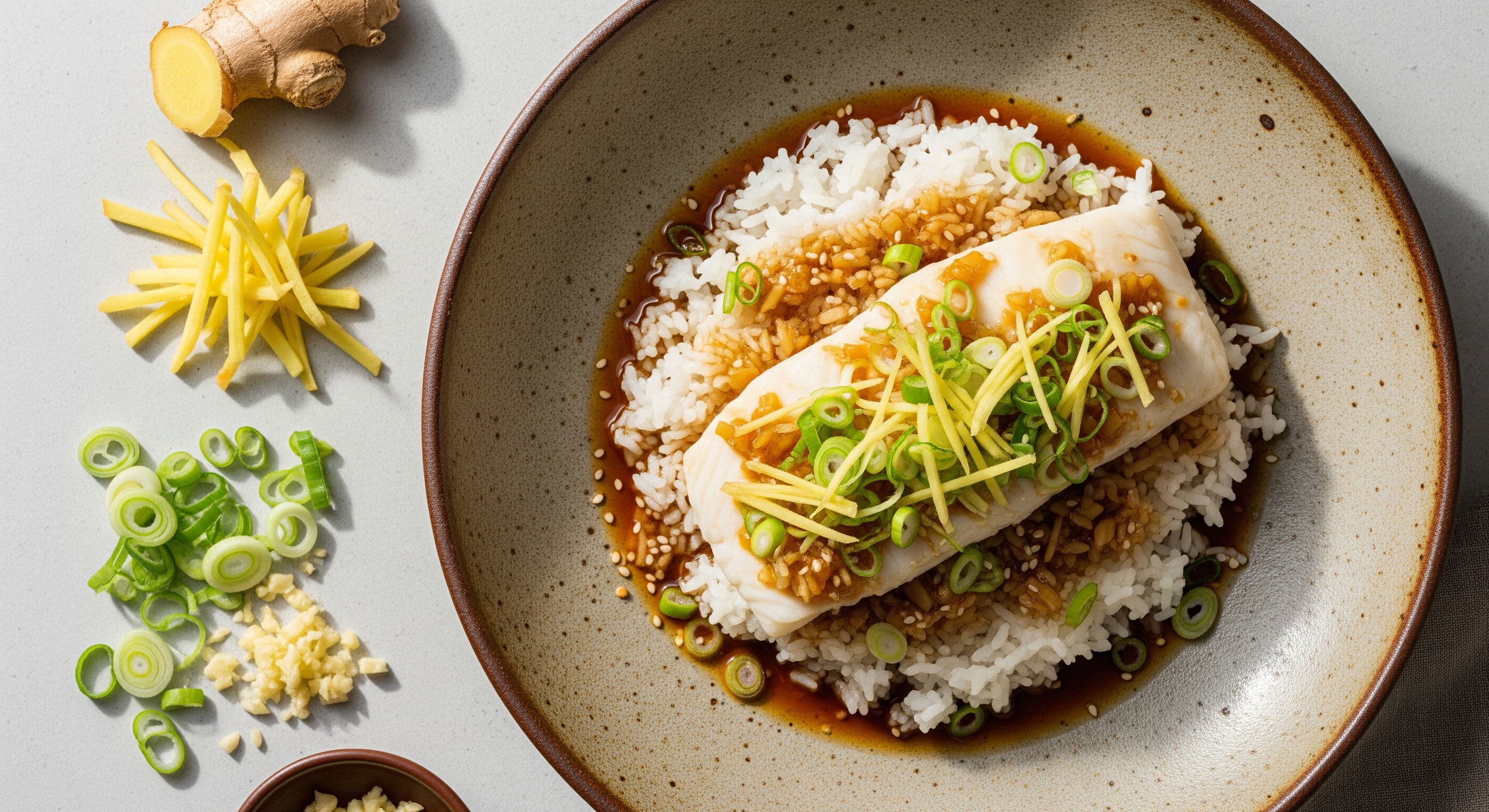 Steamed Fish with Ginger and Soy Sauce on Rice 25 min Light Cantonese classic with fresh ginger, soy sauce and sesame oil 580 kcal 36g protein 2 synergies
 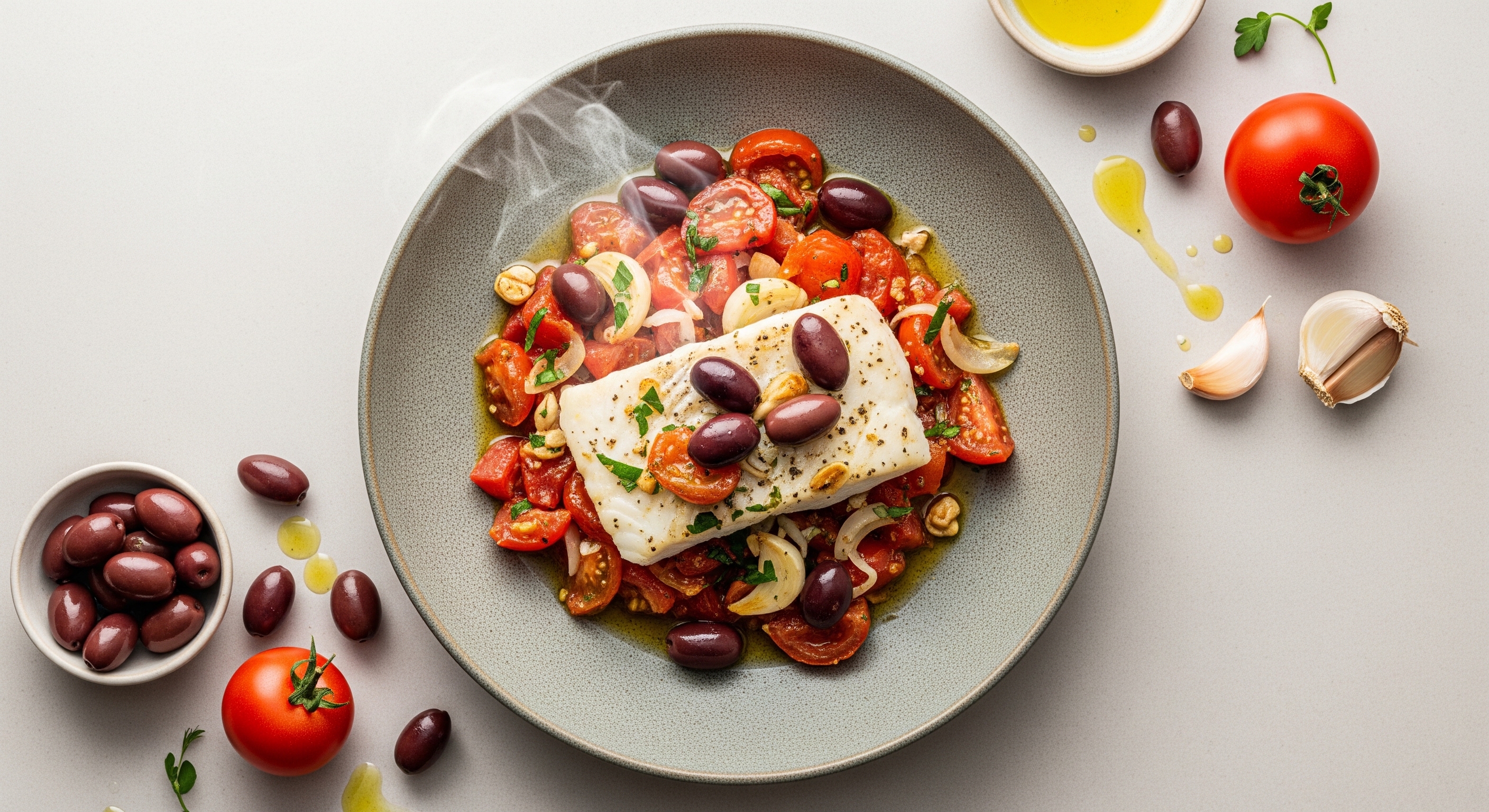 Greek Fish Plaki with Tomato and Olives 60 min Greek oven-baked fish in spiced tomato sauce with potato and olives 620 kcal 38g protein 2 synergies
 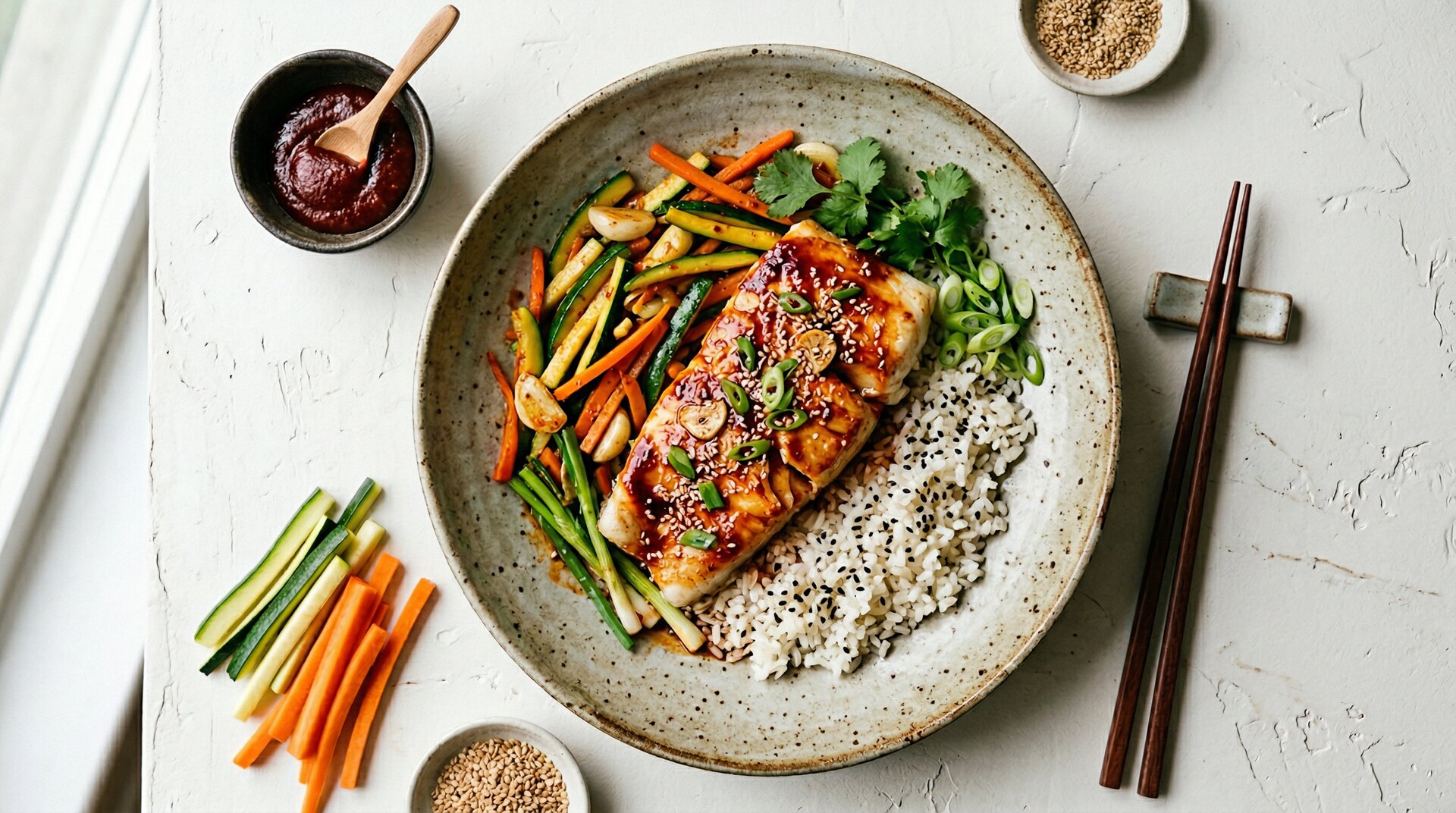 Korean White Fish with Gochujang, Vegetables and Rice 35 min Spicy-savory fish with fresh vegetables and sesame 560 kcal 39g protein 2 synergies
 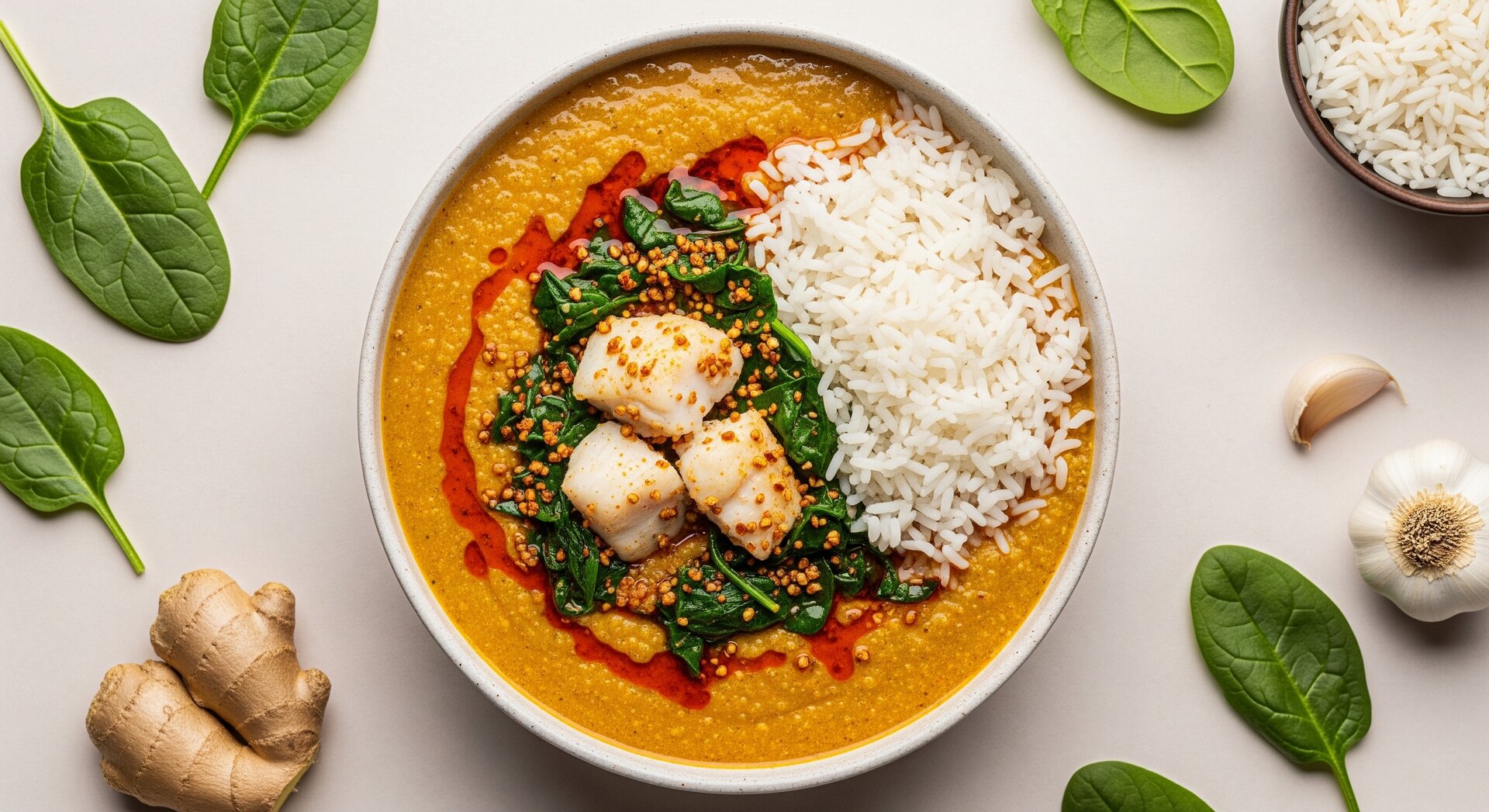 Nigerian Egusi Soup with White Fish 40 min West African stew with spinach, fish and ginger 455 kcal 28g protein 1 synergies
  In the Kitchen
Storage
Location:Refrigerator
Shelf life:1-2 dagen vers, 3 maanden vriezer
Store on ice in the refrigerator. Freeze within 24 hours of purchase for optimal quality.
Preparation
Steam, poach or briefly pan-fry. Overcooking makes white fish dry and tough. Core temperature 63°C.
Conversions
Substitutes
Smart preparation
1Fry white fish skin-side down and flip only late.
Why?
The skin protects the flesh and becomes crispy this way.
2Dust white fish with flour for a crispier exterior.
3White fish is done when the flesh is opaque and flakes apart.
Caution / Warnings
White Fish is very safe, but there are scientific considerations:
Fish Allergy Severe
Fish allergy can cause severe allergic reactions
Advice:
Avoid completely with known fish allergy
Freshness & Storage Moderate
Fish spoils quickly and can form histamine
Advice:
Consume within 1-2 days or freeze. Does it smell like ammonia? Don't eat it.
Summary
White fish is the perfect choice for those who want lots of protein with few calories. Ideal for weight loss or muscle building. The mild taste makes it suitable for the whole family. Watch freshness: fish should smell fresh like the sea, not fishy.