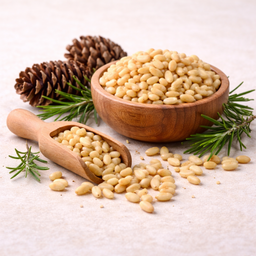
Pine Nuts
Mediterranean pine seeds
What is this ingredient?
Pine nuts are the edible seeds of various pine species (Pinus spp.), mainly the Italian stone pine (Pinus pinea), Korean pine (P. koraiensis), and Siberian cedar (P. sibirica). Unique bioactive compound: Contains pinolenic acid (18:3 Δ5,9,12), a rare omega-6 fatty acid that occurs NOWHERE else in nature and has powerful appetite-suppressing effects by stimulating CCK (cholecystokinin) release by 60% → reduces hunger for 3-4 hours. Labor-intensive: Harvesting is extremely time-consuming (explains high price): pine cones must ripen for 18+ months, are then heated to open, seeds are manually removed, hard shell is cracked → results in only 1-2% of the pine cone's weight. Nutritional Profile: Rich in vitamin E (9.3mg, 62% RDA), vitamin K (53.9μg, 45% RDA, important for blood clotting and bone health), magnesium (251mg, 63% RDA), and zinc (6.5mg, 43% RDA). Contains all essential amino acids, particularly arginine (2.4g) and tryptophan (95mg). Pine Mouth Syndrome: 1-3% of people develop a bitter, metallic taste 12-48 hours after consumption (lasts 2-4 weeks), especially with Chinese pine nuts (P. armandii). Mechanism unknown, harmless but annoying.
How does it taste?
Soft, buttery and delicately nutty with a slight resinous note.
Pairs well with:
Pairs well with basilparmesanraisinsspinach and garlic.
Did you know...?
- Harvesting pine nuts is extremely labor-intensive, which explains their high price.
- Pine nuts have been eaten by humans for over 6,000 years and were popular with the Romans.
Nutritional Value & Energy
Per 100g
Pine Nuts provides energy thanks to natural nutrients , buffered by fiber.
Per 100g
Minerals
Vitamins
Omega-3 fatty acids
More nutrients
B-Vitamins
Trace Minerals
What's in a serving?
1 handful
Pine Nuts naturally contains folate (34 mcg per 100 g).
Pine Nuts naturally contains iron (5.5 mg per 100 g).
Pine Nuts naturally contains magnesium (251 mg per 100 g).
Pine Nuts naturally contains potassium (597 mg per 100 g).
Pine Nuts naturally contains vitamin e (9.3 mg per 100 g).
Pine Nuts naturally contains vitamin k (53.9 mcg per 100 g).
Pine Nuts naturally contains zinc (6.5 mg per 100 g).
% of daily reference intake (DRI)
EU-approved nutrition claims
This ingredient contains nutrients for which EFSA-authorized health claims exist (at nutrient level, not ingredient-specific).
Approved health claims (EU)
Magnesium EU 432/2012
Magnesium contributes to normal muscle function
Contains 251mg/100g (threshold: ≥56.25mg/100g)
Magnesium EU 432/2012
Magnesium contributes to the reduction of tiredness and fatigue
Contains 251mg/100g (threshold: ≥56.25mg/100g)
Magnesium EU 432/2012
Magnesium contributes to normal functioning of the nervous system
Contains 251mg/100g (threshold: ≥56.25mg/100g)
Zinc EU 432/2012
Zinc contributes to the normal function of the immune system
Contains 6.5mg/100g (threshold: ≥1.5mg/100g)
Zinc EU 432/2012
Zinc contributes to the maintenance of normal skin
Contains 6.5mg/100g (threshold: ≥1.5mg/100g)
Iron EU 432/2012
Iron contributes to normal energy-yielding metabolism
Contains 5.5mg/100g (threshold: ≥2.1mg/100g)
Iron EU 432/2012
Iron contributes to the reduction of tiredness and fatigue
Contains 5.5mg/100g (threshold: ≥2.1mg/100g)
Potassium EU 432/2012
Potassium contributes to the maintenance of normal blood pressure
Contains 597mg/100g (threshold: ≥300mg/100g)
Folate EU 432/2012
Folate contributes to normal blood formation
Contains 34mcg/100g (threshold: ≥30mcg/100g)
Folate EU 432/2012
Folate contributes to normal amino acid synthesis
Contains 34mcg/100g (threshold: ≥30mcg/100g)
Folate EU 432/2012
Folate contributes to normal homocysteine metabolism
Contains 34mcg/100g (threshold: ≥30mcg/100g)
Folate EU 432/2012
Folate contributes to normal psychological function
Contains 34mcg/100g (threshold: ≥30mcg/100g)
Folate EU 432/2012
Folate contributes to the normal function of the immune system
Contains 34mcg/100g (threshold: ≥30mcg/100g)
Folate EU 432/2012
Folate has a role in the process of cell division
Contains 34mcg/100g (threshold: ≥30mcg/100g)
Folate EU 432/2012
Folate contributes to maternal tissue growth during pregnancy
Contains 34mcg/100g (threshold: ≥30mcg/100g)
Vitamin_e EU 432/2012
Vitamin E contributes to the protection of cells from oxidative stress
Contains 9.3mg/100g (threshold: ≥1.8mg/100g)
Vitamin_k EU 432/2012
Vitamin K contributes to normal blood clotting
Contains 53.9mcg/100g (threshold: ≥11.25mcg/100g)
Vitamin_k EU 432/2012
Vitamin K contributes to the maintenance of normal bones
Contains 53.9mcg/100g (threshold: ≥11.25mcg/100g)
Magnesium EU 432/2012
Magnesium contributes to normal energy-yielding metabolism
Contains 251mg/100g (threshold: ≥56.25mg/100g)
Magnesium EU 432/2012
Magnesium contributes to electrolyte balance
Contains 251mg/100g (threshold: ≥56.25mg/100g)
Magnesium EU 432/2012
Magnesium contributes to normal protein synthesis
Contains 251mg/100g (threshold: ≥56.25mg/100g)
Magnesium EU 432/2012
Magnesium contributes to normal psychological function
Contains 251mg/100g (threshold: ≥56.25mg/100g)
Magnesium EU 432/2012
Magnesium contributes to the maintenance of normal bones
Contains 251mg/100g (threshold: ≥56.25mg/100g)
Magnesium EU 432/2012
Magnesium contributes to the maintenance of normal teeth
Contains 251mg/100g (threshold: ≥56.25mg/100g)
Magnesium EU 432/2012
Magnesium has a role in the process of cell division
Contains 251mg/100g (threshold: ≥56.25mg/100g)
Iron EU 432/2012
Iron contributes to normal cognitive function
Contains 5.5mg/100g (threshold: ≥2.1mg/100g)
Iron EU 432/2012
Iron contributes to normal formation of red blood cells and haemoglobin
Contains 5.5mg/100g (threshold: ≥2.1mg/100g)
Iron EU 432/2012
Iron contributes to normal oxygen transport in the body
Contains 5.5mg/100g (threshold: ≥2.1mg/100g)
Iron EU 432/2012
Iron contributes to the normal function of the immune system
Contains 5.5mg/100g (threshold: ≥2.1mg/100g)
Iron EU 432/2012
Iron has a role in the process of cell division
Contains 5.5mg/100g (threshold: ≥2.1mg/100g)
Zinc EU 432/2012
Zinc contributes to normal acid-base metabolism
Contains 6.5mg/100g (threshold: ≥1.5mg/100g)
Zinc EU 432/2012
Zinc contributes to normal carbohydrate metabolism
Contains 6.5mg/100g (threshold: ≥1.5mg/100g)
Zinc EU 432/2012
Zinc contributes to normal cognitive function
Contains 6.5mg/100g (threshold: ≥1.5mg/100g)
Zinc EU 432/2012
Zinc contributes to normal DNA synthesis
Contains 6.5mg/100g (threshold: ≥1.5mg/100g)
Zinc EU 432/2012
Zinc contributes to normal fertility and reproduction
Contains 6.5mg/100g (threshold: ≥1.5mg/100g)
Zinc EU 432/2012
Zinc contributes to normal macronutrient metabolism
Contains 6.5mg/100g (threshold: ≥1.5mg/100g)
Zinc EU 432/2012
Zinc contributes to normal metabolism of fatty acids
Contains 6.5mg/100g (threshold: ≥1.5mg/100g)
Zinc EU 432/2012
Zinc contributes to normal metabolism of vitamin A
Contains 6.5mg/100g (threshold: ≥1.5mg/100g)
Zinc EU 432/2012
Zinc contributes to normal protein synthesis
Contains 6.5mg/100g (threshold: ≥1.5mg/100g)
Zinc EU 432/2012
Zinc contributes to the maintenance of normal bones
Contains 6.5mg/100g (threshold: ≥1.5mg/100g)
Zinc EU 432/2012
Zinc contributes to the maintenance of normal hair
Contains 6.5mg/100g (threshold: ≥1.5mg/100g)
Zinc EU 432/2012
Zinc contributes to the maintenance of normal nails
Contains 6.5mg/100g (threshold: ≥1.5mg/100g)
Zinc EU 432/2012
Zinc contributes to the maintenance of normal testosterone levels in the blood
Contains 6.5mg/100g (threshold: ≥1.5mg/100g)
Zinc EU 432/2012
Zinc contributes to the maintenance of normal vision
Contains 6.5mg/100g (threshold: ≥1.5mg/100g)
Zinc EU 432/2012
Zinc contributes to the protection of cells from oxidative stress
Contains 6.5mg/100g (threshold: ≥1.5mg/100g)
Zinc EU 432/2012
Zinc has a role in the process of cell division
Contains 6.5mg/100g (threshold: ≥1.5mg/100g)
Potassium EU 432/2012
Potassium contributes to normal functioning of the nervous system
Contains 597mg/100g (threshold: ≥300mg/100g)
Potassium EU 432/2012
Potassium contributes to normal muscle function
Contains 597mg/100g (threshold: ≥300mg/100g)
Comparison
vsspinazie
Pine Nuts contains about 2× more iron per 100g than spinach.
vsbanaan
Pine Nuts contains about 2× more potassium per 100g than banana.
What's being researched?
Pine nuts and satiety
Pinolenic acid from pine nuts is being studied for effects on appetite regulation via cholecystokinin (CCK) and glucagon-like peptide 1 (GLP-1). A few small studies show increased satiety hormones, but replication is needed.
Supported by: [2] Chung MY (2018) , [1] Baker EJ (2021)
Good Combinations (Synergy)
Combine pine nuts smartly to enhance the effect:
Pine Nuts 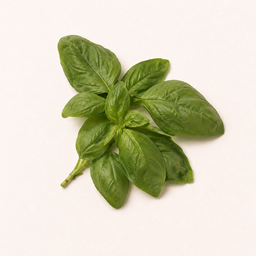 Basil
Basil Pesto synergy: Mn-SOD activation + COX-2 influence via complementary pathways
Technical: Pine nuts provide vitamin E (9.3mg) and manganese (8.8mg) — manganese is cofactor for the enzyme Mn-SOD, a cellular antioxidant in mitochondria. Basil contains eugenol and linalool that influence COX-2 plus vitamin K. Together they neutralize reactive oxygen species (ROS) and modulate multiple biochemical pathways simultaneously.
What does this mean for you? Make fresh pesto with pine nuts and basil. The pine nuts activate Mn-SOD, basil influences COX-2 — two complementary biochemical pathways in one sauce.
Pine Nuts 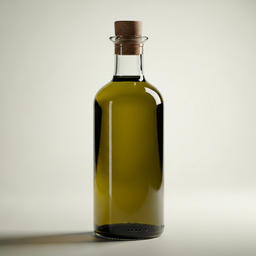 Olive Oil
 Pinolenic acid + oleic acid for extreme appetite suppression
Technical: Pine nuts contain 14-19% pinolenic acid that increases CCK (cholecystokinin, satiety hormone) release by 60%. Olive oil's oleic acid stimulates OEA (oleoylethanolamide) production triggering a satiety signal via PPARα. Two independent satiety pathways that together strongly suppress appetite.
What does this mean for you? Eat pesto (pine nuts + olive oil) with your meal. The two ingredients each activate a different satiety hormone, making you feel full faster and longer.
Pine Nuts 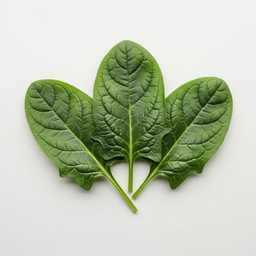 Spinach
 Pinolenic acid + fat increase iron and carotenoid absorption from spinach
Technical: Pine nuts contain pinolenic acid (14-19% of fatty acids) — a unique omega-6 that stimulates CCK (cholecystokinin) release by 60% → strong satiety. Total fat content (68g/100g) dissolves fat-soluble carotenoids from spinach (lutein 12,198μg, beta-carotene 5,626μg). Pine nuts also provide 5.5mg iron per 100g (non-heme) that together with spinach's iron (2.7mg) increases total intake. Adding vitamin C increases absorption of both iron sources.
What does this mean for you? Pine nuts over spinach salad (pesto-style) is double iron plus much better lutein absorption. The pinolenic acid also gives a strong feeling of fullness.
Recipes with Pine Nuts
Discover delicious recipes featuring pine nuts:
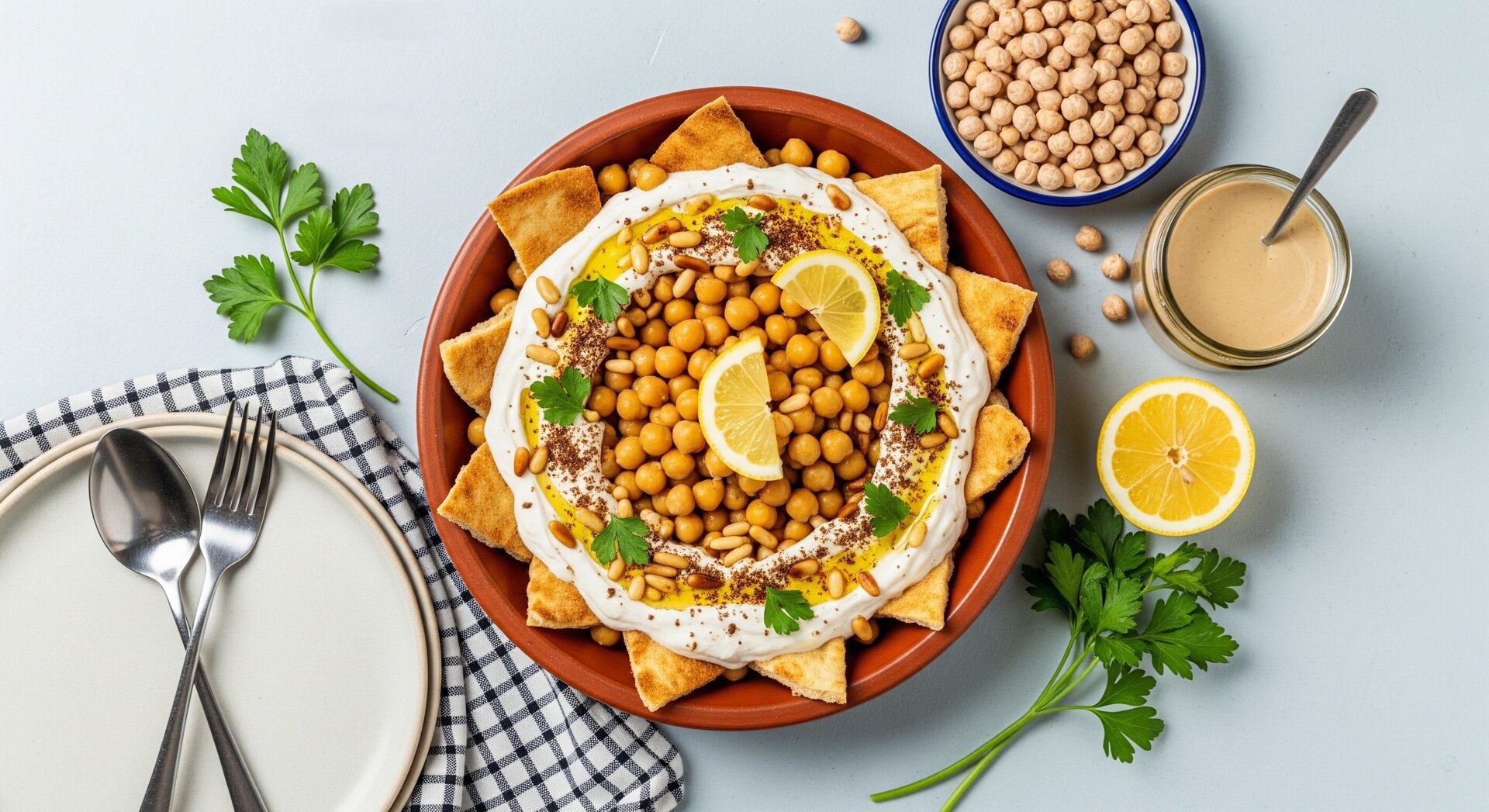 Arabic Fatteh with Chickpeas and Yogurt 25 min Layered Levantine breakfast with crispy bread and tahini
  605 kcal
  24g protein 2 synergies
 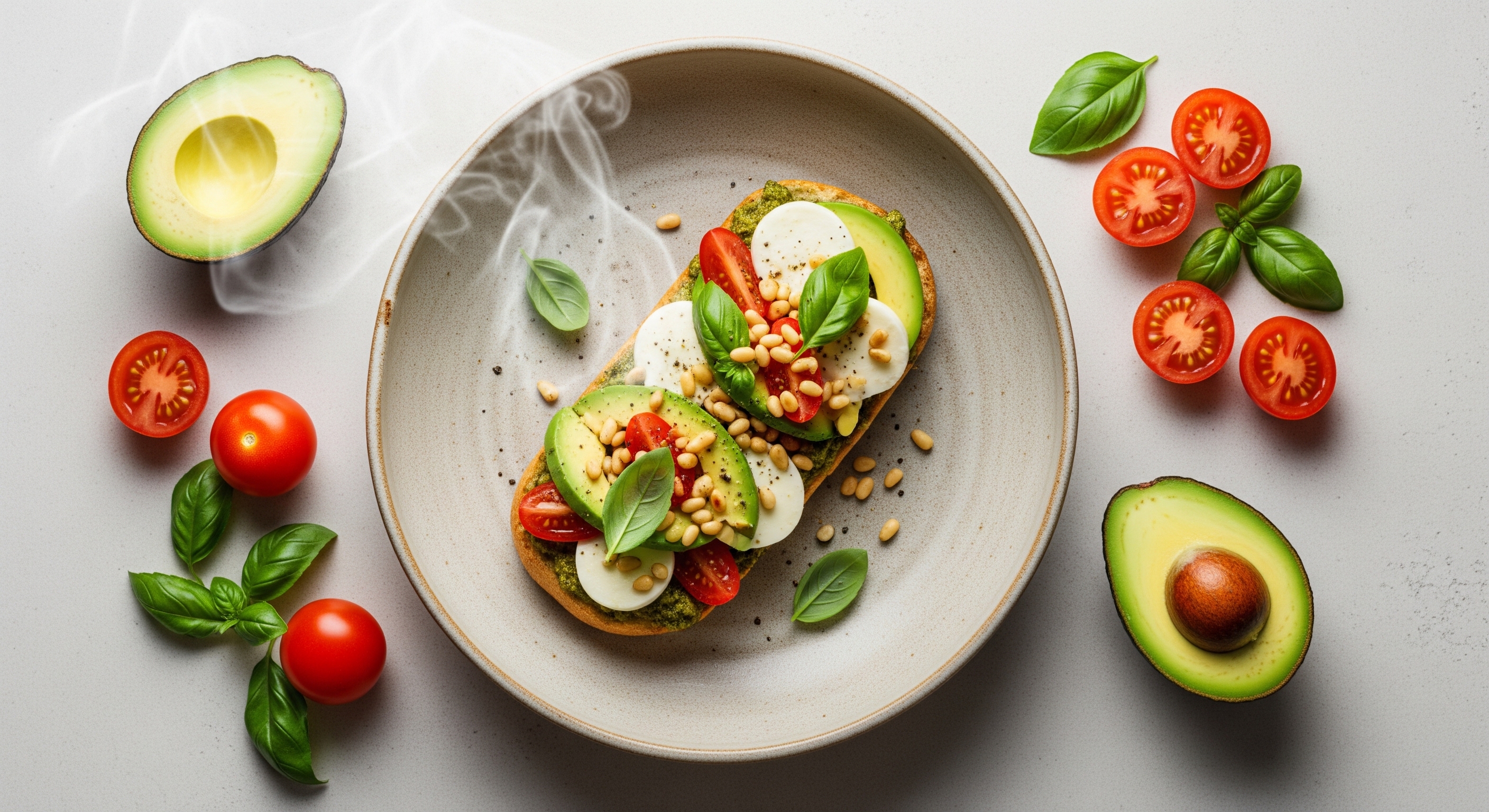 Caprese Pesto Panini with Avocado & Pine Nuts 18 min Warm panini with mozzarella, pesto and avocado 688 kcal 24g protein 2 synergies
 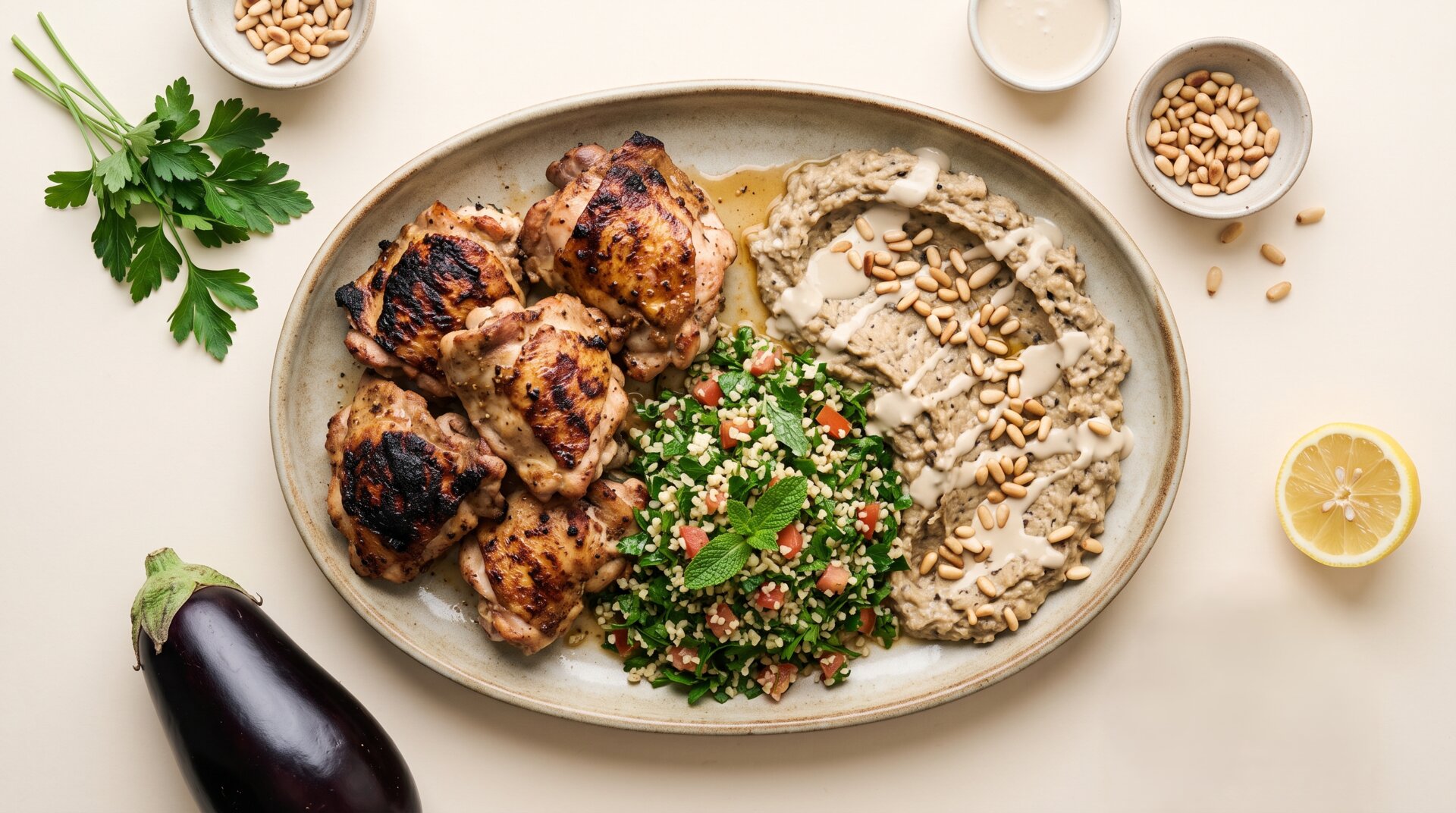 Grilled Chicken Thighs with Baba Ganoush and Tabbouleh 65 min Lebanese-inspired meal with smoky eggplant and fresh herbs 930 kcal 52g protein 3 synergies
  Roasted Broccoli with Garlic and Pine Nuts 30 min Crispy from the oven with lemon and chilli flakes 285 kcal 10g protein 2 synergies
 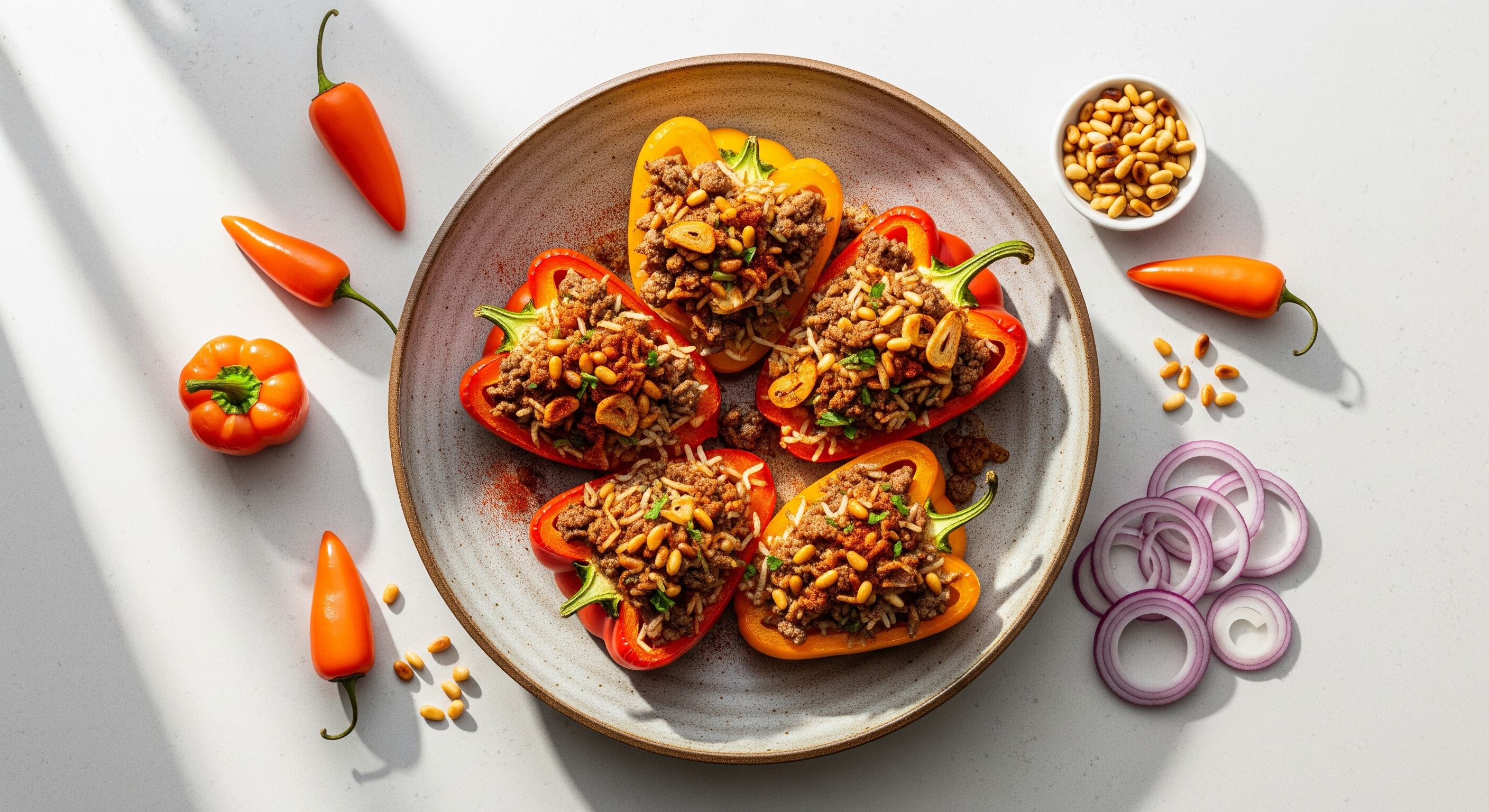 Stuffed Bell Peppers with Lamb, Rice & Pine Nuts 60 min Levantine stuffed peppers with spiced lamb filling 738 kcal 33g protein 2 synergies
 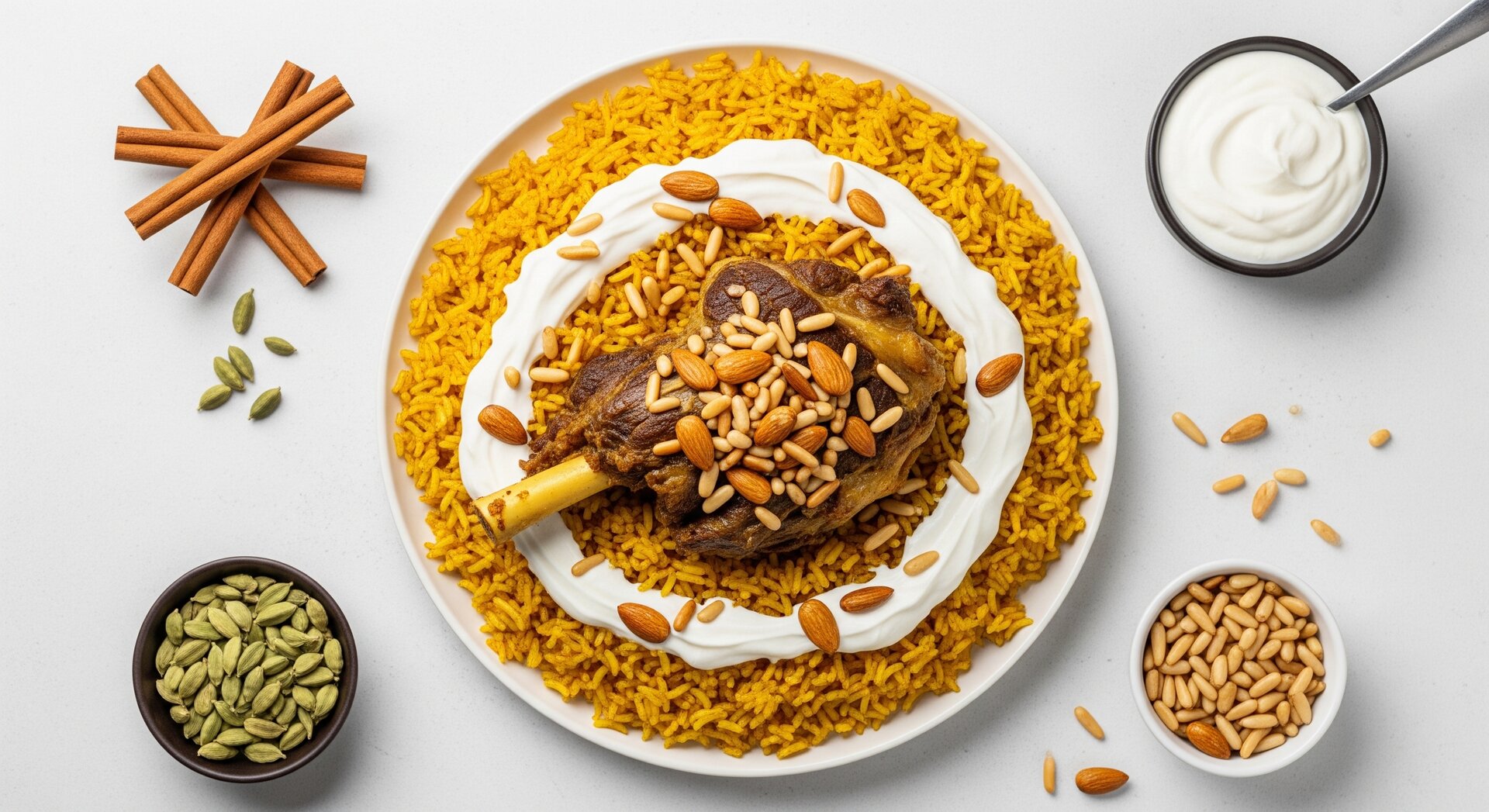 Jordanian Mansaf with Lamb and Yogurt 85 min Festive rice dish with gentle yogurt sauce and toasted nuts 876 kcal 56g protein 2 synergies
  In the Kitchen
Storage
Location:Pantry
Substitutes
Smart preparation
1Toast pine nuts in a dry pan on low heat, stirring constantly.
Why?
Pine nuts burn in seconds due to their high fat content.
2Add toasted pine nuts only after cooking.
Why?
They become limp when cooked in sauces or soups.
3Store pine nuts in the freezer to prevent rancidity.
Caution / Warnings
Pine Nuts is very safe, but there are scientific considerations:
Pine Mouth Syndrome (metallic taste) Mild
Manganese toxicity (with excessive consumption) Moderate
Tree nut allergy (rarer than with other nuts) Severe
Traditional use
Mediterranean
Pine Nuts in Mediterranean Tradition
Pine nuts were already used by the Romans in their cuisine and as an ingredient in the famous pesto recipe from Genoa.
Indigenous
Pine Nuts Among North American Peoples
The pinon nut was a crucial food source for Indigenous peoples in western North America, especially the Shoshone and Paiute.
Summary
Pine Nuts = Unique Appetite Suppressant! Contains pinolenic acid (exists NOWHERE else) that was associated with 36% less hunger in studies. 9.3mg vitamin E + 53.9μg vitamin K + 8.8mg manganese (383% RDA!). Perfect for weight loss and bones. ⚠️ Watch out: Pine Mouth Syndrome (1-3%) and high manganese (max 30g/day).