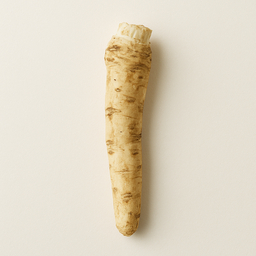
Horseradish
Pungent Cruciferous
What is this ingredient?
Horseradish is a cruciferous (Brassicaceae) with a unique, sharp taste from glucosinolates, especially sinigrin. When grated, volatile isothiocyanates are released that stimulate mucous membranes - hence the 'nose-clearing' effect. Allyl isothiocyanate (AITC) is one of the most researched bioactive compounds from crucifers. In Eastern Europe, horseradish has been traditionally used for respiratory complaints.
How does it taste?
Intensely pungent and biting with a volatile heat that hits the sinuses.
Pairs well with:
Pairs well with beefbeetrootcreamapple and smoked fish.
Did you know...?
- Horseradish only becomes pungent when the root is grated; intact, it barely smells.
- Horseradish heat comes from volatile oils that evaporate, unlike the lasting heat of chili.
Nutritional Value & Energy
Per 100g
Horseradish is low in calories thanks to natural nutrients , buffered by fiber.
Per 100g
Minerals
Vitamins
Omega-3 fatty acids
More nutrients
Trace Minerals
What's in a serving?
1 serving
Horseradish naturally contains folate (57 mcg per 100 g).
Horseradish naturally contains vitamin c (41 mg per 100 g).
% of daily reference intake (DRI)
EU-approved nutrition claims
This ingredient contains nutrients for which EFSA-authorized health claims exist (at nutrient level, not ingredient-specific).
Approved health claims (EU)
Vitamin_c EU 432/2012
Vitamin C contributes to the normal function of the immune system
Contains 41mg/100g (threshold: ≥12mg/100g)
Vitamin_c EU 432/2012
Vitamin C contributes to the reduction of tiredness and fatigue
Contains 41mg/100g (threshold: ≥12mg/100g)
Vitamin_c EU 432/2012
Vitamin C contributes to normal collagen formation for the normal function of skin
Contains 41mg/100g (threshold: ≥12mg/100g)
Folate EU 432/2012
Folate contributes to normal blood formation
Contains 57mcg/100g (threshold: ≥30mcg/100g)
Folate EU 432/2012
Folate contributes to normal amino acid synthesis
Contains 57mcg/100g (threshold: ≥30mcg/100g)
Folate EU 432/2012
Folate contributes to normal homocysteine metabolism
Contains 57mcg/100g (threshold: ≥30mcg/100g)
Folate EU 432/2012
Folate contributes to normal psychological function
Contains 57mcg/100g (threshold: ≥30mcg/100g)
Folate EU 432/2012
Folate contributes to the normal function of the immune system
Contains 57mcg/100g (threshold: ≥30mcg/100g)
Folate EU 432/2012
Folate has a role in the process of cell division
Contains 57mcg/100g (threshold: ≥30mcg/100g)
Folate EU 432/2012
Folate contributes to maternal tissue growth during pregnancy
Contains 57mcg/100g (threshold: ≥30mcg/100g)
Vitamin_c EU 432/2012
Vitamin C contributes to normal collagen formation for the normal function of blood vessels
Contains 41mg/100g (threshold: ≥12mg/100g)
Vitamin_c EU 432/2012
Vitamin C contributes to normal collagen formation for the normal function of bones
Contains 41mg/100g (threshold: ≥12mg/100g)
Vitamin_c EU 432/2012
Vitamin C contributes to normal collagen formation for the normal function of cartilage
Contains 41mg/100g (threshold: ≥12mg/100g)
Vitamin_c EU 432/2012
Vitamin C contributes to normal collagen formation for the normal function of gums
Contains 41mg/100g (threshold: ≥12mg/100g)
Vitamin_c EU 432/2012
Vitamin C contributes to normal collagen formation for the normal function of teeth
Contains 41mg/100g (threshold: ≥12mg/100g)
Vitamin_c EU 432/2012
Vitamin C contributes to normal energy-yielding metabolism
Contains 41mg/100g (threshold: ≥12mg/100g)
Vitamin_c EU 432/2012
Vitamin C contributes to normal functioning of the nervous system
Contains 41mg/100g (threshold: ≥12mg/100g)
Vitamin_c EU 432/2012
Vitamin C contributes to normal psychological function
Contains 41mg/100g (threshold: ≥12mg/100g)
Vitamin_c EU 432/2012
Vitamin C contributes to the protection of cells from oxidative stress
Contains 41mg/100g (threshold: ≥12mg/100g)
Vitamin_c EU 432/2012
Vitamin C contributes to the regeneration of the reduced form of vitamin E
Contains 41mg/100g (threshold: ≥12mg/100g)
Vitamin_c EU 432/2012
Vitamin C increases iron absorption
Contains 41mg/100g (threshold: ≥12mg/100g)
Vitamin_c EU 432/2012
Vitamin C contributes to maintain the normal function of the immune system during and after intense physical exercise
Contains 41mg/100g (threshold: ≥12mg/100g)
What's being researched?
Isothiocyanates and bioactivity
Isothiocyanates in horseradish are being studied in laboratory research. Studies show interactions with bacteria and fungi, with growing interest in food preservation.
Supported by: [1] Ko MO (2016) , [2] Lu Z (2016)
Sinigrin and bioactivity
Sinigrin in horseradish is being studied in preclinical models. Laboratory studies show activity, but dosage studies in humans are still lacking.
Supported by: [1] Ko MO (2016) , [3] Conaway CC (2002)
Good Combinations (Synergy)
Combine horseradish smartly to enhance the effect:
Horseradish  Lemon
Lemon Isothiocyanates + vitamin C: complementary bioactive pathways
Technical: Horseradish contains sinigrin and gluconasturtiin converted to allyl and phenethyl isothiocyanates (AITC, PEITC) — bioactive sulfur compounds. Vitamin C from lemon (53mg/100g) contributes to the normal function of the immune system (EFSA-approved) and enhances neutrophil function. Together they provide bioactive sulfur and vitamin pathways.
What does this mean for you? Horseradish with lemon juice is a traditional Eastern European combination. The sharp isothiocyanates give a pungent, fresh kick while vitamin C contributes to normal immune system function.
Horseradish  Beetroot
 Chrain: enzymes + nitrates for digestion and nitrate-nitrite-NO pathway
Technical: Horseradish activates gastric juice release via gastrin via AITC and activates phase-II enzymes. Beetroot provides 250-300mg nitrate per 100g. Via the nitrate-nitrite-NO pathway this is converted to nitric oxide (NO). Horseradish's antioxidants also protect nitrates from unwanted oxidation. This is the basis of chrain — a classic Jewish condiment.
What does this mean for you? Grated horseradish with beetroot (chrain) has been a meat accompaniment in Eastern European cuisine for centuries. It activates gastric juice release via gastrin with protein-rich meals and provides nitrate for NO production.
Horseradish  Beef
Beef Glucosinolates activate gastric acid release production and phase-II enzymes
Technical: Horseradish contains sinigrin converted by myrosinase to allyl isothiocyanate (AITC) — responsible for its sharp taste. AITC activates gastric juice release via gastrin (HCl) via gastrin release and activates phase-II enzymes (glutathione S-transferase, UDP-glucuronosyltransferase) in the liver.
What does this mean for you? Horseradish with beef or salmon is a European tradition for good reason. The sharp taste activates gastric juice release via gastrin and aids digestion of heavy protein. A little goes a long way.
Horseradish 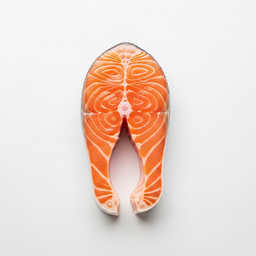 Salmon
 Glucosinolates activate gastric acid release production and phase-II enzymes
Technical: Horseradish contains sinigrin converted by myrosinase to allyl isothiocyanate (AITC) — responsible for its sharp taste. AITC activates gastric juice release via gastrin (HCl) via gastrin release and activates phase-II enzymes (glutathione S-transferase, UDP-glucuronosyltransferase) in the liver.
What does this mean for you? Horseradish with beef or salmon is a European tradition for good reason. The sharp taste activates gastric juice release via gastrin and aids digestion of heavy protein. A little goes a long way.
Recipes with Horseradish
Discover delicious recipes featuring horseradish:
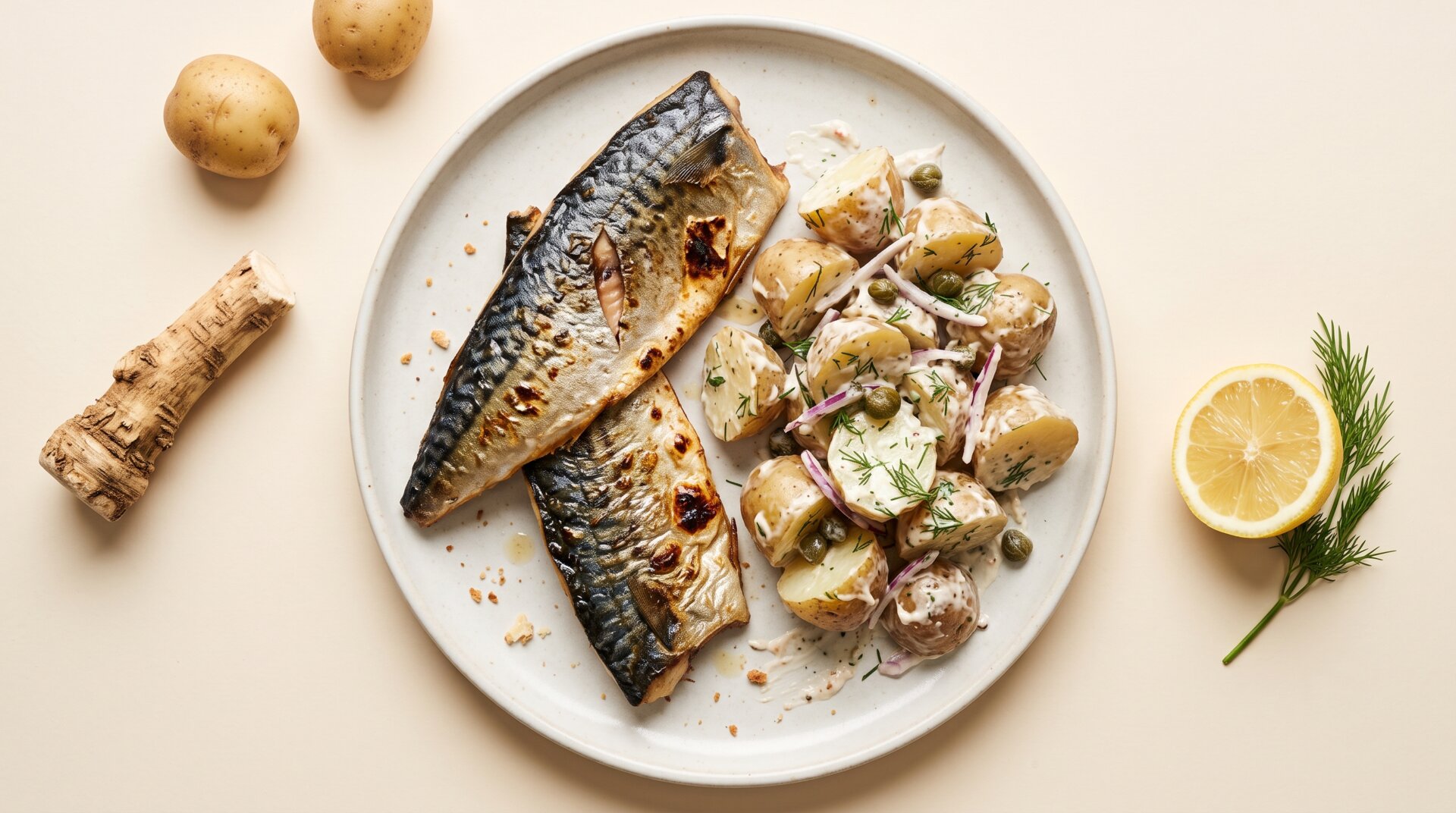 Pan-Fried Mackerel with Potato Salad and Horseradish 40 min Omega-3 rich mackerel with spicy horseradish
  667 kcal
  36g protein 2 synergies
 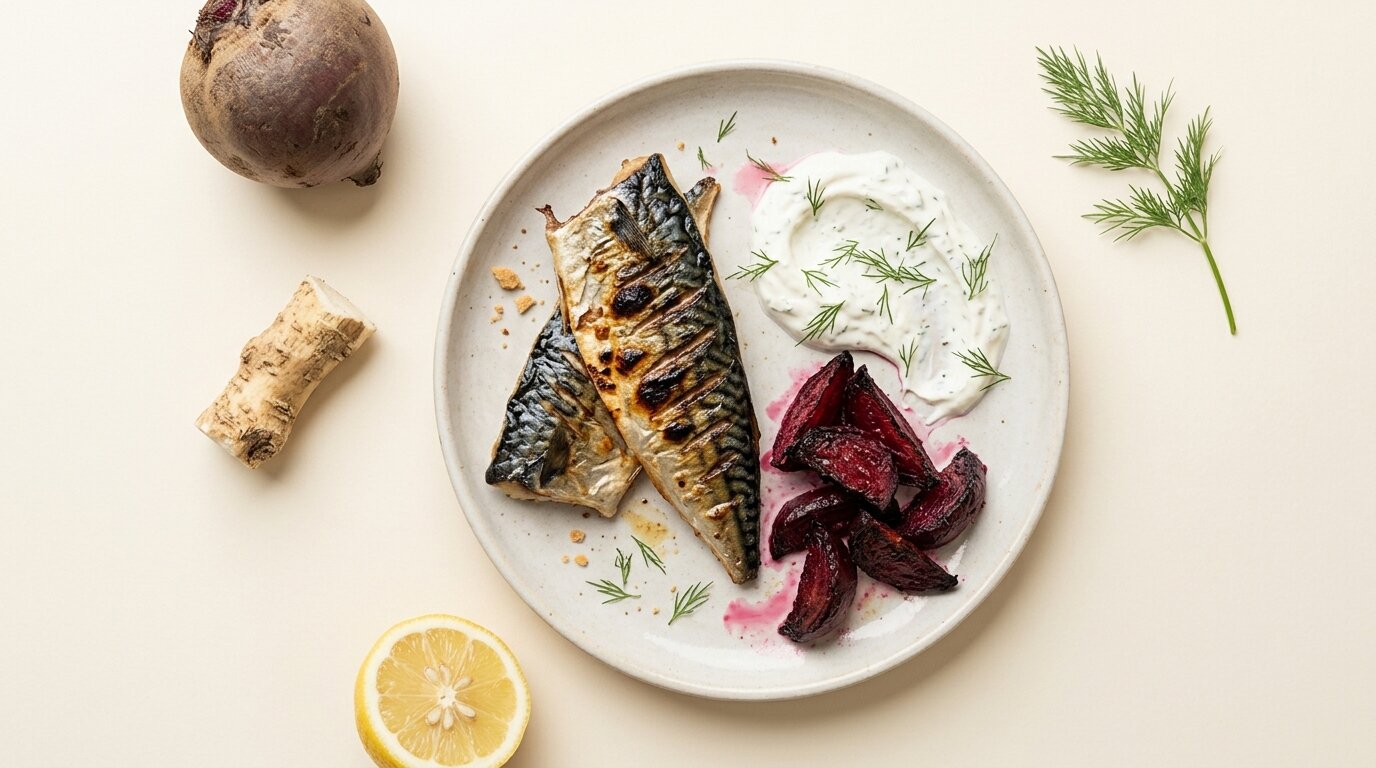 Grilled Mackerel with Beetroot and Horseradish 25 min Oily fish with earthy beetroot, fresh lemon and sharp horseradish yogurt 520 kcal 32g protein 2 synergies
  In the Kitchen
Storage
Location:Refrigerator
Shelf life:2-3 weken (hele wortel), 1 week (geraspt)
Store whole root in a plastic bag in crisper. Use grated horseradish quickly - it loses pungency within days.
Preparation
Grate just before use for maximum pungency. Add only at the end to dishes - heating destroys the pungent compounds. Mix with crème fraîche or cream for horseradish cream sauce.
Conversions
Substitutes
Smart preparation
1Grate horseradish just before use; the pungency evaporates quickly.
2Add a splash of vinegar to grated horseradish to fix the pungency.
Why?
Vinegar stops the enzymatic reaction that breaks down the pungency.
3Grate horseradish in a well-ventilated area; the fumes are pungent.
Caution / Warnings
Horseradish is very safe, but there are scientific considerations:
Stomach Ulcers or Gastritis Severe
The pungent compounds irritate the stomach lining and can worsen ulcers
Advice:
Avoid with stomach problems. Always eat with food, never on empty stomach.
Thyroid Issues Moderate
Contains goitrogens that can affect thyroid at high consumption
Advice:
Normal culinary amounts are safe. Consult doctor with severe thyroid issues.
Children under 4 Moderate
Too sharp and irritating for young children
Advice:
Do not give to children under 4 years
Traditional use
Mediterranean
Greek and European culinary heritage
Ancient Greeks valued horseradish for its pungent flavour. In European culinary tradition, it was used for centuries as a spice accent with meat and fish dishes.
Summary
Horseradish contains powerful isothiocyanates (AITC) that are intensively studied. A pungent flavour enhancer traditionally used in Eastern European cooking. Use freshly grated for maximum effect; jarred horseradish quickly loses potency. Traditionally combined with roast beef or smoked fish. Avoid with stomach problems!