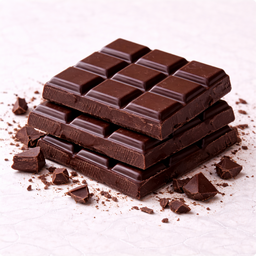
Dark Chocolate (>70%)
Intense Cocoa Indulgence
What is this ingredient?
True dark chocolate is a fermented cocoa product made from cocoa beans, the seeds of the Theobroma cacao fruit. The higher the cocoa percentage (preferably >70%), the more intense the cocoa flavor, the more pronounced the bitterness, and usually the lower the share of added sugar.
Cocoa mass naturally contains flavanols and theobromine, a methylxanthine related to caffeine but generally milder in character. The final composition depends strongly on origin, fermentation, roasting, and whether the cocoa has been alkalized.
In everyday cooking, dark chocolate is mainly a powerful flavor accent: grate it over oatmeal, melt it in a bain-marie, or enjoy a small square with fruit or nuts. Because it is concentrated in fat and energy, a small portion is usually enough. Theobromine is toxic to dogs, so always keep chocolate out of their reach.
How does it taste?
Intensely bittersweet with deep cocoa tones, mild fruitiness, roasted accents, and a velvety texture.
Pairs well with:
Pairs well with sea saltchiliraspberrycoffeeorangecardamomand hazelnut.
Did you know...?
- Dark chocolate was first made as an edible bar in 1847 by J.S. Fry & Sons.
- Cacao was so valuable to the Maya that it was also used as part of ceremonial exchanges.
Nutritional Value & Energy
Per 100g
Dark Chocolate (>70%) provides energy thanks to natural nutrients , buffered by fiber.
Per 100g
Minerals
Vitamins
Omega-3 fatty acids
More nutrients
B-Vitamins
Trace Minerals
What's in a serving?
1 serving
Dark Chocolate (>70%) naturally contains iron (11.9 mg per 100 g).
Dark Chocolate (>70%) naturally contains magnesium (228 mg per 100 g).
Dark Chocolate (>70%) naturally contains copper (1.8 mg per 100 g).
Dark Chocolate (>70%) naturally contains manganese (1.9 mg per 100 g).
Dark Chocolate (>70%) naturally contains phosphorus (308 mg per 100 g).
Dark Chocolate (>70%) naturally contains potassium (715 mg per 100 g).
Dark Chocolate (>70%) naturally contains zinc (3.3 mg per 100 g).
% of daily reference intake (DRI)
EU-approved nutrition claims
This ingredient contains nutrients for which EFSA-authorized health claims exist (at nutrient level, not ingredient-specific).
Approved health claims (EU)
Magnesium EU 432/2012
Magnesium contributes to normal muscle function
Contains 228mg/100g (threshold: ≥56.25mg/100g)
Magnesium EU 432/2012
Magnesium contributes to the reduction of tiredness and fatigue
Contains 228mg/100g (threshold: ≥56.25mg/100g)
Magnesium EU 432/2012
Magnesium contributes to normal functioning of the nervous system
Contains 228mg/100g (threshold: ≥56.25mg/100g)
Zinc EU 432/2012
Zinc contributes to the normal function of the immune system
Contains 3.3mg/100g (threshold: ≥1.5mg/100g)
Zinc EU 432/2012
Zinc contributes to the maintenance of normal skin
Contains 3.3mg/100g (threshold: ≥1.5mg/100g)
Iron EU 432/2012
Iron contributes to normal energy-yielding metabolism
Contains 11.9mg/100g (threshold: ≥2.1mg/100g)
Iron EU 432/2012
Iron contributes to the reduction of tiredness and fatigue
Contains 11.9mg/100g (threshold: ≥2.1mg/100g)
Potassium EU 432/2012
Potassium contributes to the maintenance of normal blood pressure
Contains 715mg/100g (threshold: ≥300mg/100g)
Phosphorus EU 432/2012
Phosphorus contributes to normal energy-yielding metabolism
Contains 308mg/100g (threshold: ≥105mg/100g)
Phosphorus EU 432/2012
Phosphorus contributes to the normal function of cell membranes
Contains 308mg/100g (threshold: ≥105mg/100g)
Phosphorus EU 432/2012
Phosphorus contributes to the maintenance of normal bones
Contains 308mg/100g (threshold: ≥105mg/100g)
Phosphorus EU 432/2012
Phosphorus contributes to the maintenance of normal teeth
Contains 308mg/100g (threshold: ≥105mg/100g)
Magnesium EU 432/2012
Magnesium contributes to normal energy-yielding metabolism
Contains 228mg/100g (threshold: ≥56.25mg/100g)
Magnesium EU 432/2012
Magnesium contributes to electrolyte balance
Contains 228mg/100g (threshold: ≥56.25mg/100g)
Magnesium EU 432/2012
Magnesium contributes to normal protein synthesis
Contains 228mg/100g (threshold: ≥56.25mg/100g)
Magnesium EU 432/2012
Magnesium contributes to normal psychological function
Contains 228mg/100g (threshold: ≥56.25mg/100g)
Magnesium EU 432/2012
Magnesium contributes to the maintenance of normal bones
Contains 228mg/100g (threshold: ≥56.25mg/100g)
Magnesium EU 432/2012
Magnesium contributes to the maintenance of normal teeth
Contains 228mg/100g (threshold: ≥56.25mg/100g)
Magnesium EU 432/2012
Magnesium has a role in the process of cell division
Contains 228mg/100g (threshold: ≥56.25mg/100g)
Iron EU 432/2012
Iron contributes to normal cognitive function
Contains 11.9mg/100g (threshold: ≥2.1mg/100g)
Iron EU 432/2012
Iron contributes to normal formation of red blood cells and haemoglobin
Contains 11.9mg/100g (threshold: ≥2.1mg/100g)
Iron EU 432/2012
Iron contributes to normal oxygen transport in the body
Contains 11.9mg/100g (threshold: ≥2.1mg/100g)
Iron EU 432/2012
Iron contributes to the normal function of the immune system
Contains 11.9mg/100g (threshold: ≥2.1mg/100g)
Iron EU 432/2012
Iron has a role in the process of cell division
Contains 11.9mg/100g (threshold: ≥2.1mg/100g)
Zinc EU 432/2012
Zinc contributes to normal acid-base metabolism
Contains 3.3mg/100g (threshold: ≥1.5mg/100g)
Zinc EU 432/2012
Zinc contributes to normal carbohydrate metabolism
Contains 3.3mg/100g (threshold: ≥1.5mg/100g)
Zinc EU 432/2012
Zinc contributes to normal cognitive function
Contains 3.3mg/100g (threshold: ≥1.5mg/100g)
Zinc EU 432/2012
Zinc contributes to normal DNA synthesis
Contains 3.3mg/100g (threshold: ≥1.5mg/100g)
Zinc EU 432/2012
Zinc contributes to normal fertility and reproduction
Contains 3.3mg/100g (threshold: ≥1.5mg/100g)
Zinc EU 432/2012
Zinc contributes to normal macronutrient metabolism
Contains 3.3mg/100g (threshold: ≥1.5mg/100g)
Zinc EU 432/2012
Zinc contributes to normal metabolism of fatty acids
Contains 3.3mg/100g (threshold: ≥1.5mg/100g)
Zinc EU 432/2012
Zinc contributes to normal metabolism of vitamin A
Contains 3.3mg/100g (threshold: ≥1.5mg/100g)
Zinc EU 432/2012
Zinc contributes to normal protein synthesis
Contains 3.3mg/100g (threshold: ≥1.5mg/100g)
Zinc EU 432/2012
Zinc contributes to the maintenance of normal bones
Contains 3.3mg/100g (threshold: ≥1.5mg/100g)
Zinc EU 432/2012
Zinc contributes to the maintenance of normal hair
Contains 3.3mg/100g (threshold: ≥1.5mg/100g)
Zinc EU 432/2012
Zinc contributes to the maintenance of normal nails
Contains 3.3mg/100g (threshold: ≥1.5mg/100g)
Zinc EU 432/2012
Zinc contributes to the maintenance of normal testosterone levels in the blood
Contains 3.3mg/100g (threshold: ≥1.5mg/100g)
Zinc EU 432/2012
Zinc contributes to the maintenance of normal vision
Contains 3.3mg/100g (threshold: ≥1.5mg/100g)
Zinc EU 432/2012
Zinc contributes to the protection of cells from oxidative stress
Contains 3.3mg/100g (threshold: ≥1.5mg/100g)
Zinc EU 432/2012
Zinc has a role in the process of cell division
Contains 3.3mg/100g (threshold: ≥1.5mg/100g)
Copper EU 432/2012
Copper contributes to the maintenance of normal connective tissues
Contains 1.8mg/100g (threshold: ≥0.15mg/100g)
Copper EU 432/2012
Copper contributes to normal energy-yielding metabolism
Contains 1.8mg/100g (threshold: ≥0.15mg/100g)
Copper EU 432/2012
Copper contributes to normal functioning of the nervous system
Contains 1.8mg/100g (threshold: ≥0.15mg/100g)
Copper EU 432/2012
Copper contributes to normal hair pigmentation
Contains 1.8mg/100g (threshold: ≥0.15mg/100g)
Copper EU 432/2012
Copper contributes to normal iron transport in the body
Contains 1.8mg/100g (threshold: ≥0.15mg/100g)
Copper EU 432/2012
Copper contributes to normal skin pigmentation
Contains 1.8mg/100g (threshold: ≥0.15mg/100g)
Copper EU 432/2012
Copper contributes to the normal function of the immune system
Contains 1.8mg/100g (threshold: ≥0.15mg/100g)
Copper EU 432/2012
Copper contributes to the protection of cells from oxidative stress
Contains 1.8mg/100g (threshold: ≥0.15mg/100g)
Manganese EU 432/2012
Manganese contributes to normal energy-yielding metabolism
Contains 1.9mg/100g (threshold: ≥0.3mg/100g)
Manganese EU 432/2012
Manganese contributes to the maintenance of normal bones
Contains 1.9mg/100g (threshold: ≥0.3mg/100g)
Manganese EU 432/2012
Manganese contributes to the normal formation of connective tissue
Contains 1.9mg/100g (threshold: ≥0.3mg/100g)
Manganese EU 432/2012
Manganese contributes to the protection of cells from oxidative stress
Contains 1.9mg/100g (threshold: ≥0.3mg/100g)
Potassium EU 432/2012
Potassium contributes to normal functioning of the nervous system
Contains 715mg/100g (threshold: ≥300mg/100g)
Potassium EU 432/2012
Potassium contributes to normal muscle function
Contains 715mg/100g (threshold: ≥300mg/100g)
Comparison
vsspinazie
Dark Chocolate (>70%) contains about 4× more iron per 100 g than spinach.
vsbanaan
Dark Chocolate (>70%) contains about 2× more potassium per 100 g than banana.
What's being researched?
Cocoa flavanols in dark chocolate
Flavanols in dark chocolate are studied in relation to vascular function and cardiometabolic markers. Outcomes depend strongly on cocoa content, portion size, processing, and the composition of the overall diet.
Supported by: [1] Heiss (2010)
Cocoa, aroma, and sensory experience
Theobromine, flavanols, and aromatic compounds in dark chocolate are studied in relation to cognitive tasks, mood, and sensory experience. The mechanisms are not yet fully understood and may vary strongly by product.
Supported by: [2] Scholey (2013)
Good Combinations (Synergy)
Combine dark chocolate (>70%) smartly to enhance the effect:
Dark Chocolate (>70%) 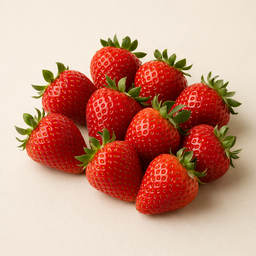 Strawberries
 Enhanced antioxidant action through combination
Technical: Dark chocolate contains flavonoids (epicatechin, procyanidins) and berries contain anthocyanins — two different polyphenol classes working via complementary mechanisms. Flavonoids protect LDL from oxidation, anthocyanins support endothelial function. Together they provide a broader antioxidant spectrum than either alone.
What does this mean for you? Dip raspberries, strawberries or blueberries in melted dark chocolate. Two types of antioxidants in one bite — delicious and nutritious at the same time.
Dark Chocolate (>70%) 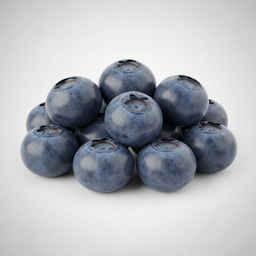 Blueberries
 Enhanced antioxidant action through combination
Technical: Dark chocolate contains flavonoids (epicatechin, procyanidins) and berries contain anthocyanins — two different polyphenol classes working via complementary mechanisms. Flavonoids protect LDL from oxidation, anthocyanins support endothelial function. Together they provide a broader antioxidant spectrum than either alone.
What does this mean for you? Dip raspberries, strawberries or blueberries in melted dark chocolate. Two types of antioxidants in one bite — delicious and nutritious at the same time.
Dark Chocolate (>70%)  Raspberries
 Enhanced antioxidant action through combination
Technical: Dark chocolate contains flavonoids (epicatechin, procyanidins) and berries contain anthocyanins — two different polyphenol classes working via complementary mechanisms. Flavonoids protect LDL from oxidation, anthocyanins support endothelial function. Together they provide a broader antioxidant spectrum than either alone.
What does this mean for you? Dip raspberries, strawberries or blueberries in melted dark chocolate. Two types of antioxidants in one bite — delicious and nutritious at the same time.
Dark Chocolate (>70%) 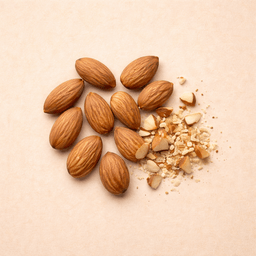 Almonds
 Flavonoids + vitamin E for antioxidant support
Technical: Dark chocolate provides flavonoids (epicatechin) that stimulate NO production and support endothelial function. Almonds contain 26mg vitamin E per 100g that blocks LDL oxidation. Together they provide antioxidant support via two routes: endothelial support (chocolate) + LDL protection (almonds).
What does this mean for you? Dark chocolate with almonds is a snack with dual antioxidant action. The flavonoids from chocolate + the vitamin E from almonds — two complementary routes.
Dark Chocolate (>70%) 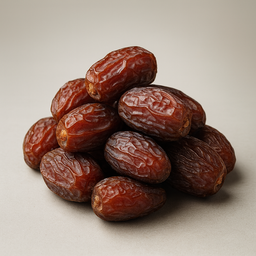 Dates
Dates Magnesium + iron + natural sugars for energy
Technical: Dark chocolate contains magnesium (230mg/100g) and iron (12mg/100g). Dates contain potassium (696mg/100g) and natural sugars providing quick energy. Magnesium from chocolate supports muscle relaxation while dates replenish glycogen.
What does this mean for you? Fill dates with a piece of dark chocolate for an energy snack. Or make chocolate-date truffles - a healthy alternative to candy.
Dark Chocolate (>70%) 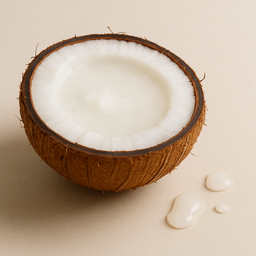 Coconut Oil
 MCTs increase flavanol absorption from dark chocolate
Technical: Dark chocolate contains flavanols (epicatechin, catechin) and theobromine. Coconut oil's MCTs are quickly absorbed and improve absorption of these fat-soluble polyphenols. The combination also gives a smooth texture.
What does this mean for you? Melt dark chocolate with coconut oil for chocolate coating, truffles or energy bites. The bioactive compounds of the chocolate are optimally utilized.
Dark Chocolate (>70%) 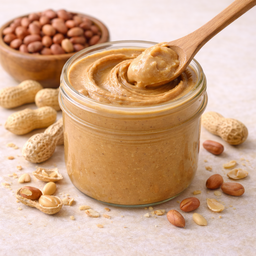 Peanut Butter
 Magnesium + protein + theobromine for muscles and energy
Technical: Dark chocolate provides 230mg magnesium/100g and theobromine. Peanut butter contains 25g protein and 168mg magnesium per 100g. Together they provide ~400mg magnesium (100% RDI) plus complete amino acids. The fat from peanut butter also improves flavanol absorption.
What does this mean for you? Peanut butter chocolate cups are not only delicious but nutritionally smart. Perfect as post-workout snack for muscle recovery.
Dark Chocolate (>70%) 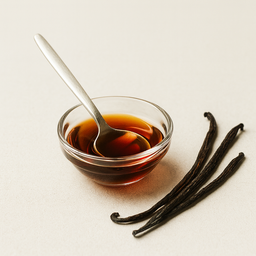 Vanilla Extract
 Vanillin enhances chocolate flavor perception
Technical: Vanillin (the main aroma molecule in vanilla) binds to the same olfactory receptors as chocolate aromatics (pyrazines, Maillard compounds). This enhances perceived chocolate flavor without extra sugar or cocoa. Research shows vanillin increases sweetness perception by 10-15%, requiring less sugar.
What does this mean for you? Add vanilla extract to chocolate baking or hot chocolate. You need less sugar because vanilla enhances the chocolate flavor and sweetness.
Recipes with Dark Chocolate (>70%)
Discover delicious recipes featuring dark chocolate (>70%):
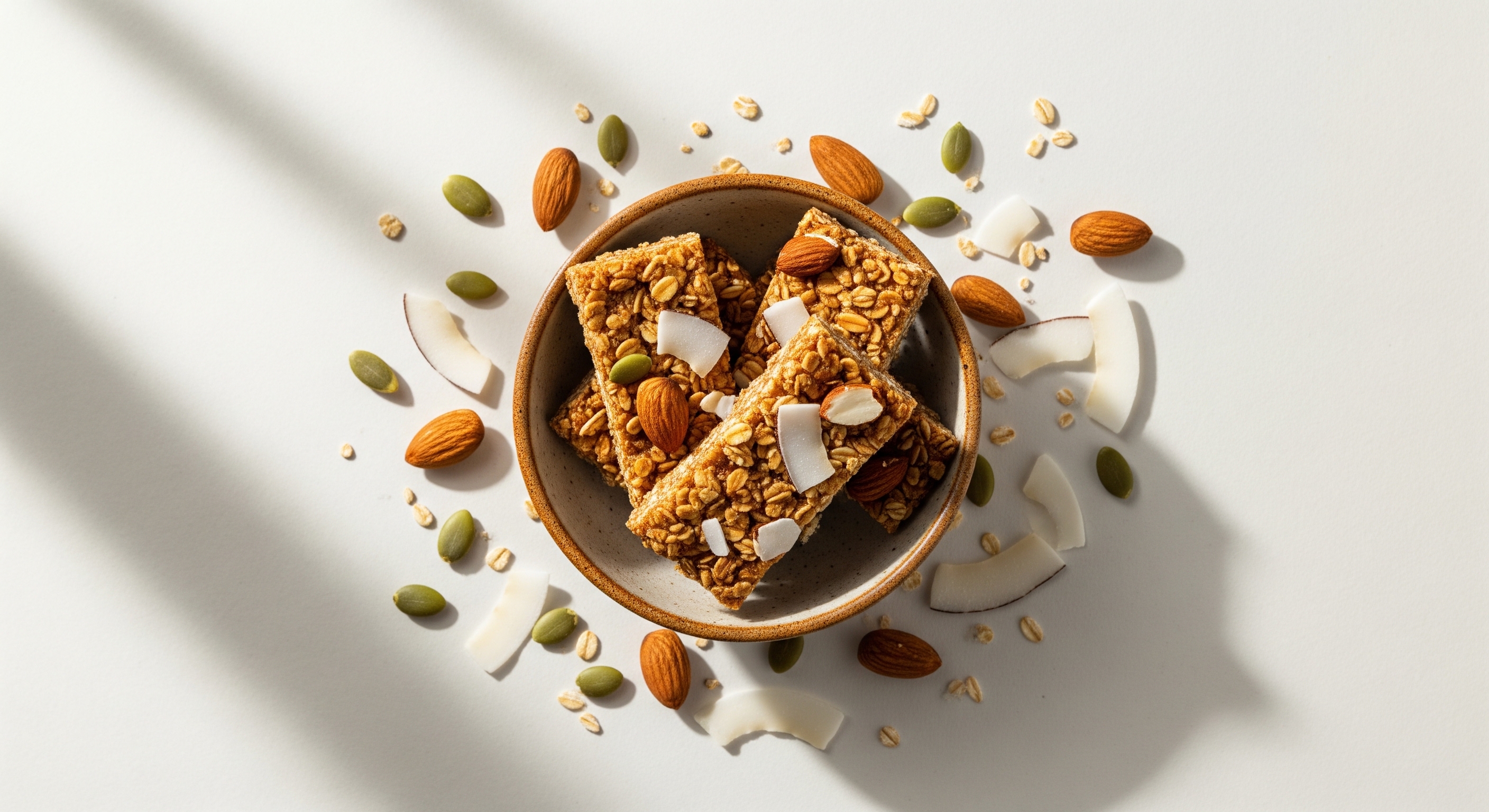 Almond-Coconut Granola Bars 40 min Crunchy, nutty and sweet from honey and apricots
  412 kcal
  10g protein 2 synergies
 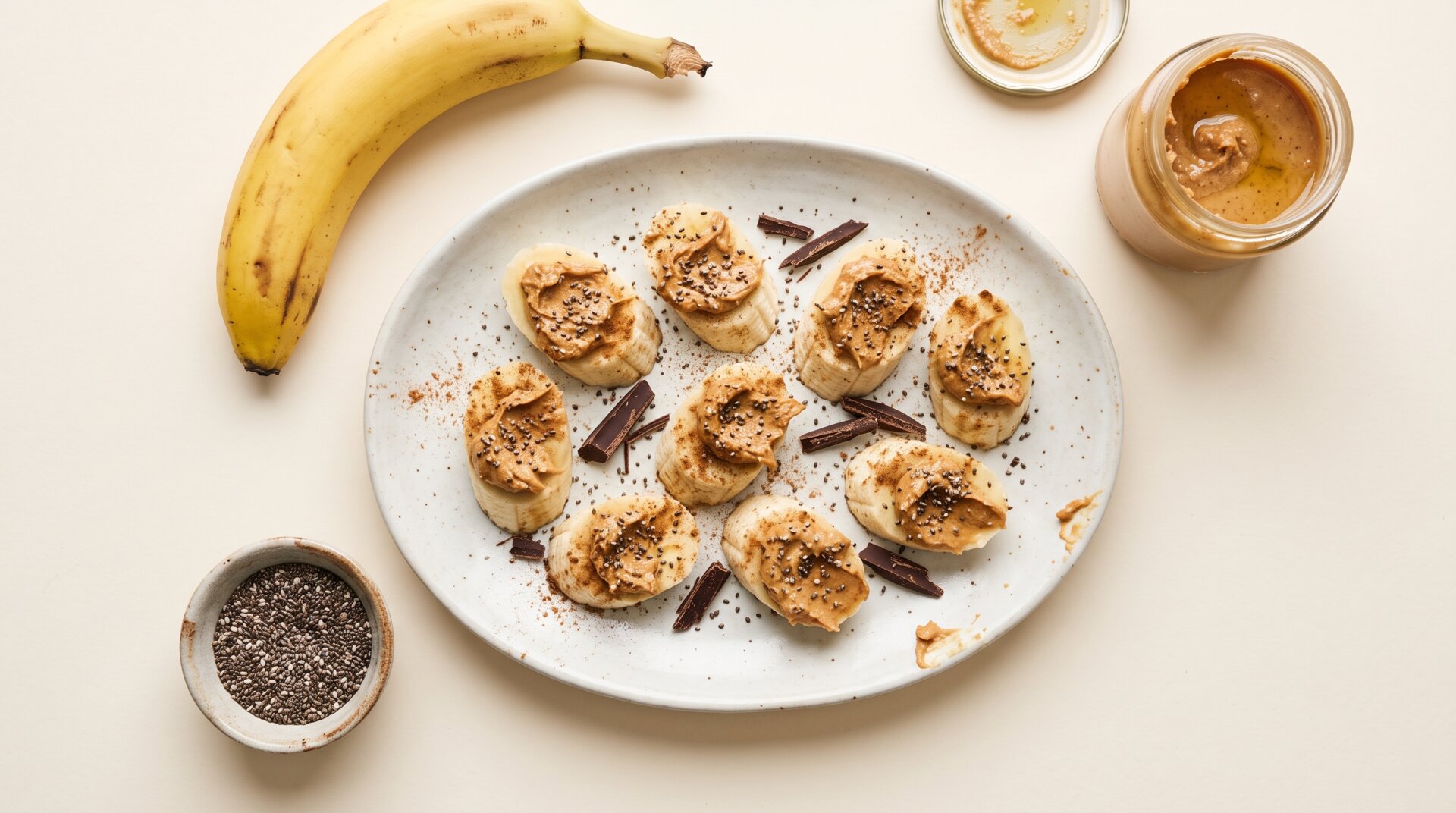 Banana with Peanut Butter and Chia Seeds 3 min Creamy, sweet and ready in three minutes 280 kcal 9g protein 1 synergies
 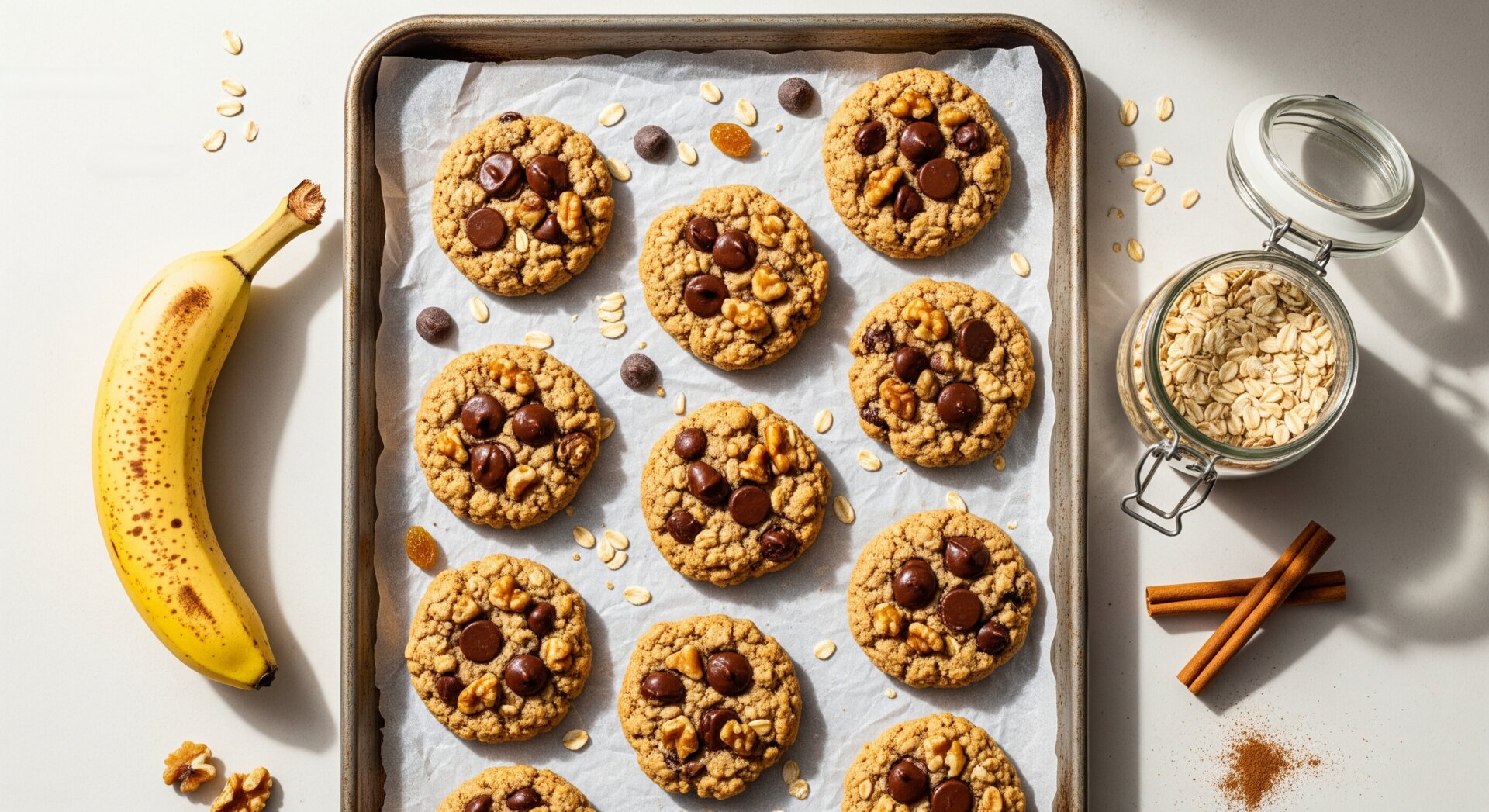 Banana Oatmeal Cookies 28 min Cookies based on two ingredients: ripe banana and oats 110 kcal 3g protein 1 synergies
 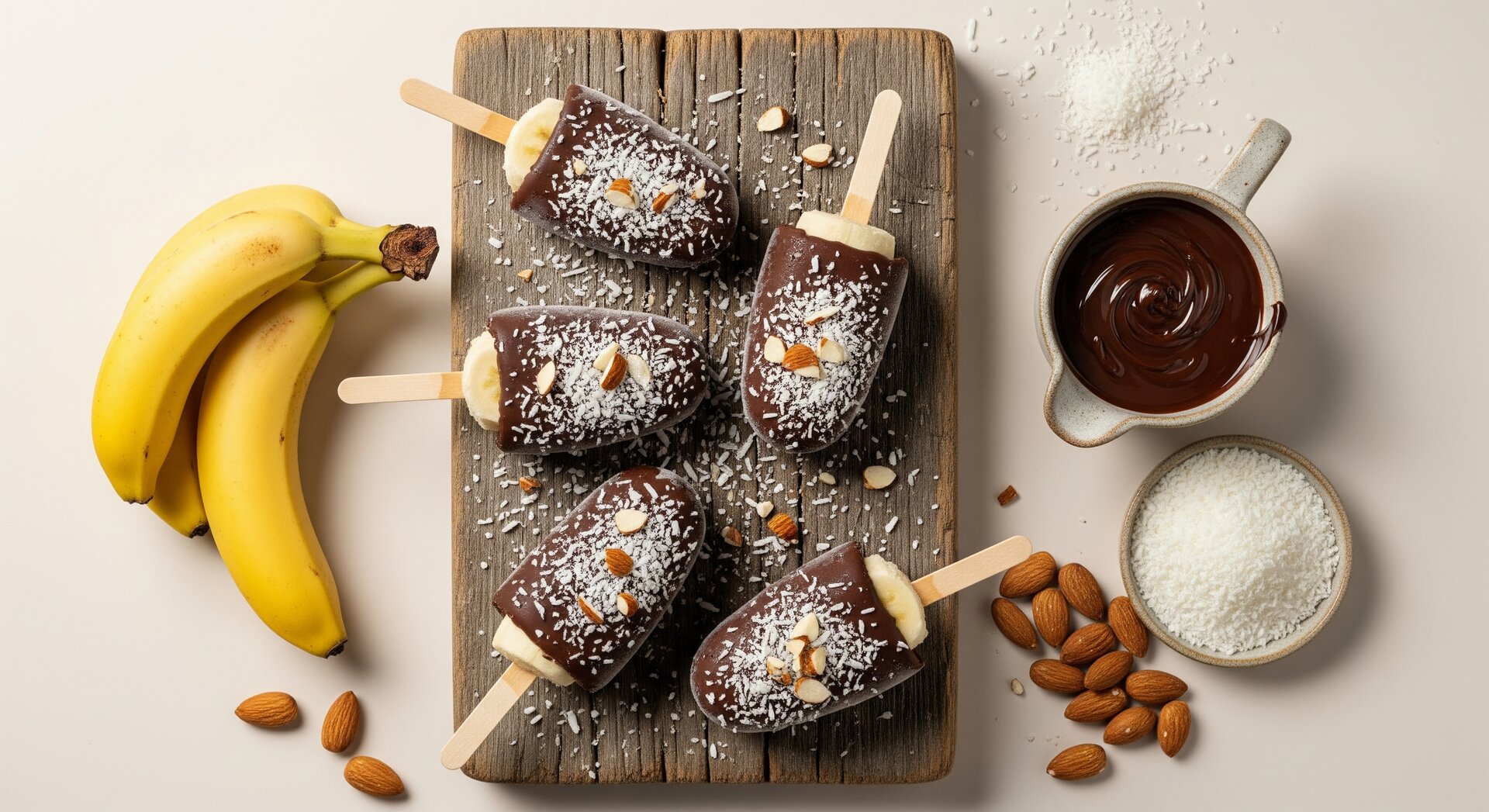 Frozen Banana with Chocolate Dip 135 min Frozen banana halves on a stick, dipped in dark chocolate with a spoonful of coconut oil and finished with coconut flakes and almonds — without refined sugar 155 kcal 2g protein 2 synergies
  Chocolate Strawberries with Dark Chocolate 50 min Fresh strawberries dipped in melted dark chocolate with sea salt 220 kcal 3g protein 1 synergies
 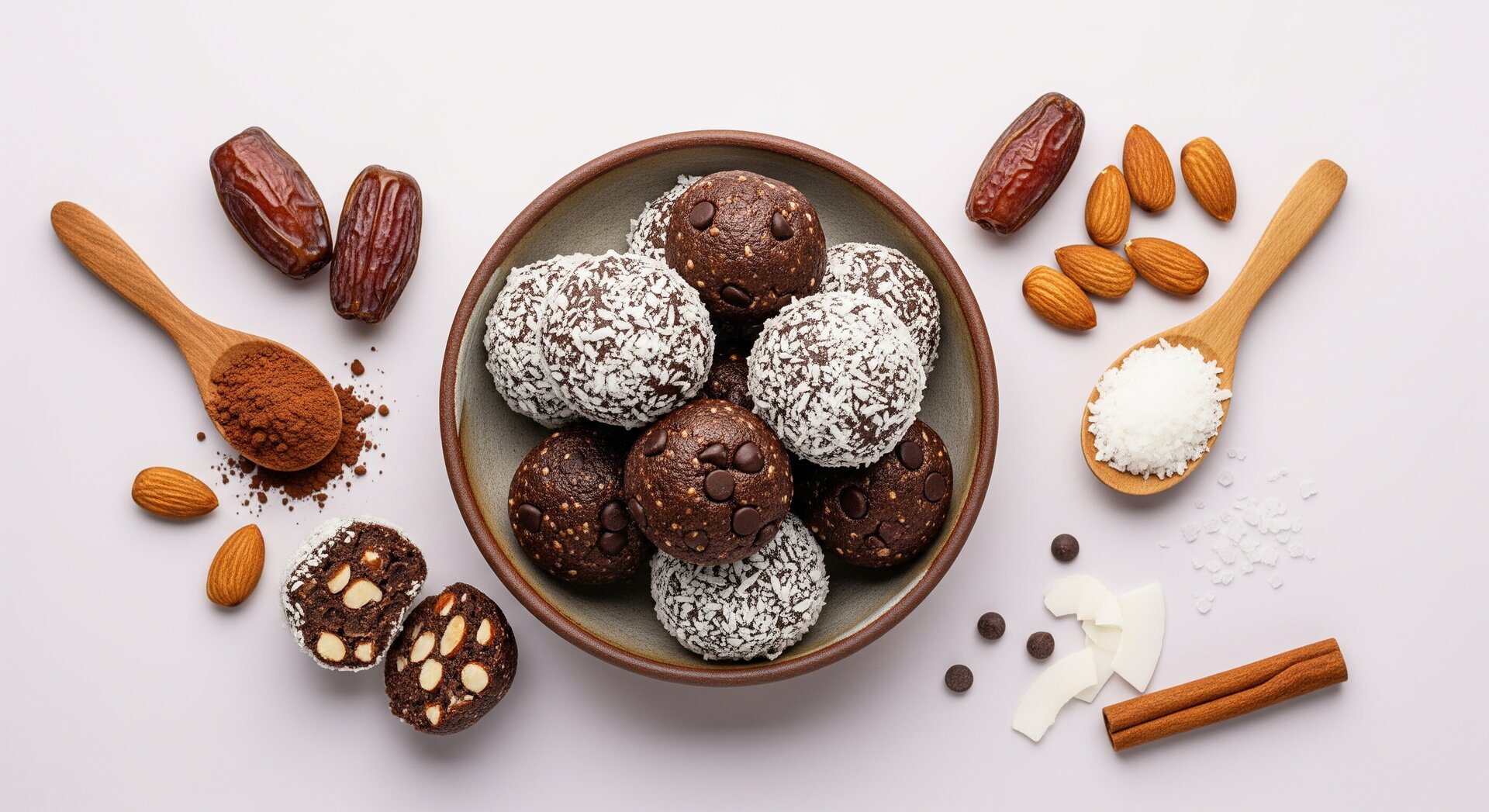 Date-Cocoa Bites with Almonds 15 min No-bake bites with Medjool dates, almonds and pure cocoa 90 kcal 2g protein 2 synergies
  In the Kitchen
Storage
Location:Pantry
Shelf life:1-2 jaar
Store cool (15–18°C), dry, and dark. Avoid refrigeration, because moisture and odors can affect texture and flavor.
Preparation
Melt using a bain-marie to prevent burning. Grate or chop finely for desserts, oatmeal, yogurt, sauces, or a thin chocolate coating.
Substitutes
Smart preparation
1Melt chocolate in a bain-marie, not directly on the heat.
Why?
Direct heat can burn or seize chocolate.
2Do not let water get into melted chocolate; even one drop can make the texture grainy.
3Chop chocolate finely and evenly before melting.
Why?
Equal pieces melt evenly and help prevent overheating.
Caution / Warnings
Dark Chocolate (>70%) is very safe, but there are scientific considerations:
Reflux / Heartburn Moderate
Dark chocolate may trigger reflux symptoms in some people or make existing symptoms more noticeable.
Traditional use
Indigenous
Chocolate in Mesoamerican Traditions
Pure cacao was highly valued by the Maya and Aztecs and often prepared as a bitter drink with spices. The preparation, foam, and origin of the beans carried important cultural meaning.
Summary
Choose dark chocolate with at least 70% cocoa, or 85% if you enjoy a more intense and less sweet taste. A portion of 1–2 squares works well as a small flavor moment with coffee, fruit, yogurt, or nuts. Check the ingredient list: cocoa, cocoa butter, and a limited amount of sugar are usually enough.