- Easy
- 22 min
- 2 serv.
- 8 synergies
- Now at its best: Garlic
A hearty stir-fry with tender chicken pieces, soft scrambled eggs, crispy zucchini and sautéed mushrooms. Low in carbohydrates, high in protein, and ready in fifteen minutes. Ghee and olive oil give everything a round, nutty base.
The ghee sizzles in the pan, and as soon as the chicken pieces go in they colour golden brown along the edges. Set them aside briefly. Then the zucchini — half-moons that pick up those lovely charred edges in just a couple of minutes without going limp. Mushrooms next, first releasing all their moisture and only then developing that deep umami flavour. Garlic, just thirty seconds, right until it smells fragrant. The chicken back in, eggs poured over, and then stir until they sit in soft flakes throughout. Oregano at the end, that dry herb pattern that blooms the moment it hits the heat. It's a plate that looks like you made an effort, while it's ready faster than making a sandwich.
- 10
- min prep
- 12
- min cook
- 22
- min total
Nutritional Synergies
This recipe combines ingredients that enhance each other:
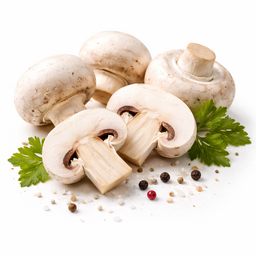 White Button Mushrooms
 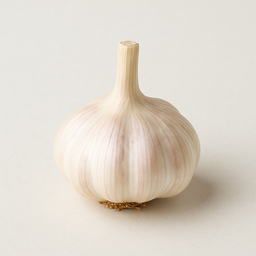 Garlic
 Beta-glucans + allicin activate complementary immune pathways
Technical: Mushrooms contain beta-glucans (polysaccharides) that activate macrophages and NK cells via Dectin-1 receptors — the innate immune system. Garlic's allicin stimulates T-cell proliferation and activates the Th1 response — the adaptive immune system. Together they activate two complementary branches of the immune system.
What does this mean for you? Sauté mushrooms with garlic — a combination that engages two different branches of the immune system. Cut garlic and wait 10 minutes before heating so allicin fully forms.
Immune System
White Button Mushrooms 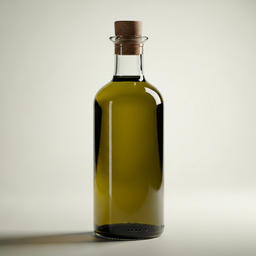 Olive Oil
 Increased absorption of ergothioneine and vitamin D
Technical: Mushrooms contain ergothioneine (0.4mg/100g, unique amino acid antioxidant) and vitamin D2 (7 IU/100g, up to 1110 IU after UV exposure). Ergothioneine is absorbed via the specific OCTN1 transporter. Vitamin D is fat-soluble — olive oil increases absorption up to 3x through micelle formation.
What does this mean for you? Sauté mushrooms in olive oil for optimal vitamin D absorption. Tip: place mushrooms in sunlight for 30 minutes first to increase vitamin D content up to 150x.
Immune SystemJoints
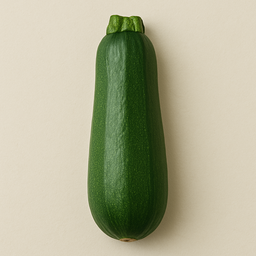 Zucchini Garlic
 Potassium + allicin: complementary mineral-sulfur pathway
Technical: Zucchini contains 261mg potassium per 100g — potassium contributes to the maintenance of normal blood pressure (EFSA-approved). Garlic's allicin influences angiotensin-converting enzyme (ACE) and stimulates NO production via the nitrate-nitrite-NO pathway. Together they influence vascular physiology via two complementary mechanisms: electrolyte balance and NO signaling.
What does this mean for you? Sautéed zucchini with garlic is a simple side dish with two pathways influencing vascular physiology. Potassium from zucchini and allicin from garlic work complementarily. Add olive oil for extra polyphenols.
HeartAnti-inflammatory
Zucchini Olive Oil Better absorption of lutein and zeaxanthin
Technical: Zucchini contains 2125μg lutein + zeaxanthin per 100g — carotenoids that accumulate in the macula lutea (the center of the retina). These are fat-soluble and absorbed up to 6x better with olive oil. Zucchini's mild flavor makes it an ideal carrier for olive oil in various dishes.
What does this mean for you? Sauté zucchini in olive oil or grill with a drizzle of oil. Without fat you barely absorb lutein — the eye pigment that concentrates in your macula. Lutein and zeaxanthin contribute to the maintenance of normal vision.
General Wellness
Olive Oil Garlic Aglio e olio: allicin + oleocanthal via complementary biochemical pathways
Technical: Garlic contains allicin (formed when cutting/crushing) that influences HMG-CoA reductase (involved in lipid metabolism). Olive oil contains oleocanthal that modulates COX-1/2 enzymes. Together they influence lipid metabolism and prostaglandin cascade via complementary biochemical pathways. The fat also helps absorb fat-soluble garlic compounds.
What does this mean for you? Gently warm garlic in olive oil (don't burn!) as the base for many dishes. This is why 'aglio e olio' pasta is so beloved — two bioactive compounds that reinforce each other.
HeartImmune System
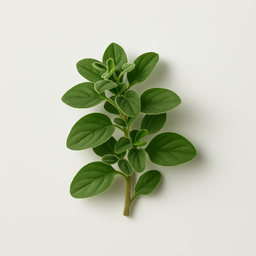 Oregano Olive Oil
 Fat makes carvacol and thymol absorbable
Lambert JD et al. (2004) in Molecular Nutrition & Food Research showed that dietary fats enhance absorption of phenolic compounds from herbs.
Technical: Oregano contains carvacrol (60-74%) and thymol (1-5%) — potent phenolic compounds with broad bioactivity, traditionally valued in food preservation. These compounds are fat-soluble and poorly absorbed without fat. Olive oil dissolves them and significantly increases their bioavailability. This explains why oregano oil always comes in a carrier oil.
What does this mean for you? Cook oregano in olive oil or make oregano-olive oil dressing. The bioactive compounds in oregano are fat-soluble — without oil you barely absorb them.
Immune SystemDigestion
 Sea Salt Olive Oil
 Minerals + polyphenols for cellular balance
Technical: Sea salt's sodium is essential for the sodium-potassium pump (Na+/K+-ATPase) that regulates every body cell. Olive oil's oleuropein and hydroxytyrosol provide antioxidant protection for cell membranes. The combination supports cell integrity: sea salt regulates ion balance, olive oil protects the membrane. In Mediterranean cuisine, coarse sea salt + olive oil is the most basic flavor profile.
What does this mean for you? Freshly ground sea salt with extra virgin olive oil is the simplest and most nutritious finishing of any dish. The combination provides the basic needs of your cells: minerals for function, polyphenols for protection.
HeartGeneral Wellness
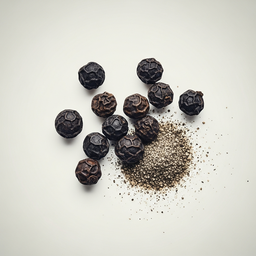 Black Pepper Olive Oil
 Fat increases piperine absorption and enhances polyphenols
Technical: Piperine is fat-soluble and absorbed 2-3x better with dietary fat. Olive oil's oleocanthal and piperine both modulate COX signal transduction through different mechanisms, providing additive bioactive effect.
What does this mean for you? Grind fresh pepper over salads with olive oil dressing. The combination enhances both pepper absorption and bioactive action.
Anti-inflammatoryHeartDigestion
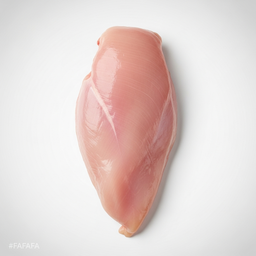
Instructions
- 1 Cut the chicken breast into roughly 2 cm cubes. Slice the zucchini into half-rounds and the mushrooms into slices. Press or finely chop the garlic.
Nutrition per serving
Indicative values per serving.
Timing & Suitability
Shelf life: 2 days in fridge
Tags & Diet
Allergens: Eggs