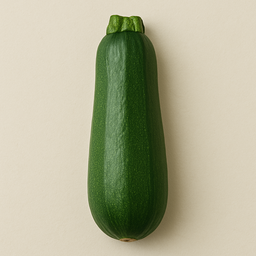
Zucchini
The Light Fiber-Rich
What is this ingredient?
Zucchini (Cucurbita pepo) belongs to the gourd family and is one of the lowest-calorie vegetables (17 kcal/100g) while still being satisfying due to high water content (95%). This makes it ideal for weight management. The mild taste and soft texture ensure it's well tolerated with a sensitive stomach. Zucchini is rich in potassium for fluid balance and contains decent vitamin C. The skin contains most nutrients - so eat unpeeled. Spiralize into 'zoodles' as pasta alternative.
How does it taste?
Subtle, mild and slightly sweet with a soft, watery texture.
Pairs well with:
Pairs well with tomatogarlicparmesanbasil and feta.
Sunnah
The Prophet ﷺ liked qar' (gourd/squash) and would seek it out in the dish. Zucchini belongs to the same family.
Bukhari & Muslim #Sahih al-Bukhari 5379, Sahih Muslim 2041
Varieties
Green Zucchini
Most common variety, mild taste
Yellow Zucchini
Slightly sweeter and nuttier than green, more lutein
Round Zucchini
Perfect for stuffing with minced meat or grains
Did you know...?
- The courgette is botanically an unripe squash and therefore technically a fruit.
- Italian immigrants brought the courgette to the US in the 19th century, where it is called 'zucchini'.
Nutritional Value & Energy
Per 100g
Zucchini is low in calories thanks to natural nutrients .
Per 100g
Minerals
Vitamins
Omega-3 fatty acids
More nutrients
B-Vitamins
Trace Minerals
What's in a serving?
1 serving
Zucchini naturally contains vitamin c (29 mg per 100 g).
% of daily reference intake (DRI)
EU-approved nutrition claims
This ingredient contains nutrients for which EFSA-authorized health claims exist (at nutrient level, not ingredient-specific).
Approved health claims (EU)
Vitamin_c EU 432/2012
Vitamin C contributes to the normal function of the immune system
Contains 29mg/100g (threshold: ≥12mg/100g)
Vitamin_c EU 432/2012
Vitamin C contributes to the reduction of tiredness and fatigue
Contains 29mg/100g (threshold: ≥12mg/100g)
Vitamin_c EU 432/2012
Vitamin C contributes to normal collagen formation for the normal function of skin
Contains 29mg/100g (threshold: ≥12mg/100g)
Vitamin_c EU 432/2012
Vitamin C contributes to normal collagen formation for the normal function of blood vessels
Contains 29mg/100g (threshold: ≥12mg/100g)
Vitamin_c EU 432/2012
Vitamin C contributes to normal collagen formation for the normal function of bones
Contains 29mg/100g (threshold: ≥12mg/100g)
Vitamin_c EU 432/2012
Vitamin C contributes to normal collagen formation for the normal function of cartilage
Contains 29mg/100g (threshold: ≥12mg/100g)
Vitamin_c EU 432/2012
Vitamin C contributes to normal collagen formation for the normal function of gums
Contains 29mg/100g (threshold: ≥12mg/100g)
Vitamin_c EU 432/2012
Vitamin C contributes to normal collagen formation for the normal function of teeth
Contains 29mg/100g (threshold: ≥12mg/100g)
Vitamin_c EU 432/2012
Vitamin C contributes to normal energy-yielding metabolism
Contains 29mg/100g (threshold: ≥12mg/100g)
Vitamin_c EU 432/2012
Vitamin C contributes to normal functioning of the nervous system
Contains 29mg/100g (threshold: ≥12mg/100g)
Vitamin_c EU 432/2012
Vitamin C contributes to normal psychological function
Contains 29mg/100g (threshold: ≥12mg/100g)
Vitamin_c EU 432/2012
Vitamin C contributes to the protection of cells from oxidative stress
Contains 29mg/100g (threshold: ≥12mg/100g)
Vitamin_c EU 432/2012
Vitamin C contributes to the regeneration of the reduced form of vitamin E
Contains 29mg/100g (threshold: ≥12mg/100g)
Vitamin_c EU 432/2012
Vitamin C increases iron absorption
Contains 29mg/100g (threshold: ≥12mg/100g)
Vitamin_c EU 432/2012
Vitamin C contributes to maintain the normal function of the immune system during and after intense physical exercise
Contains 29mg/100g (threshold: ≥12mg/100g)
What's being researched?
Low-calorie nutrition and weight management
Zucchini as a low-calorie food is being studied in the context of weight management and satiety. Observational evidence suggests benefits of vegetable-rich dietary patterns.
Supported by: [2] Davis RB (2001)
Carotenoids in zucchini skin
Carotenoids in zucchini skin are being studied for their antioxidant activity. Concentration varies by variety and ripeness, and further studies are needed.
Supported by: [1] Hussain (2019) , [2] Davis RB (2001)
Good Combinations (Synergy)
Combine zucchini smartly to enhance the effect:
Zucchini 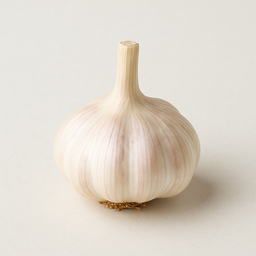 Garlic
 Potassium + allicin: complementary mineral-sulfur pathway
Technical: Zucchini contains 261mg potassium per 100g — potassium contributes to the maintenance of normal blood pressure (EFSA-approved). Garlic's allicin influences angiotensin-converting enzyme (ACE) and stimulates NO production via the nitrate-nitrite-NO pathway. Together they influence vascular physiology via two complementary mechanisms: electrolyte balance and NO signaling.
What does this mean for you? Sautéed zucchini with garlic is a simple side dish with two pathways influencing vascular physiology. Potassium from zucchini and allicin from garlic work complementarily. Add olive oil for extra polyphenols.
Zucchini 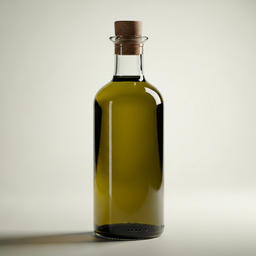 Olive Oil
 Better absorption of lutein and zeaxanthin
Technical: Zucchini contains 2125μg lutein + zeaxanthin per 100g — carotenoids that accumulate in the macula lutea (the center of the retina). These are fat-soluble and absorbed up to 6x better with olive oil. Zucchini's mild flavor makes it an ideal carrier for olive oil in various dishes.
What does this mean for you? Sauté zucchini in olive oil or grill with a drizzle of oil. Without fat you barely absorb lutein — the eye pigment that concentrates in your macula. Lutein and zeaxanthin contribute to the maintenance of normal vision.
Zucchini 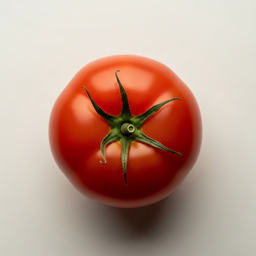 Tomato
 Lutein + lycopene: complementary carotenoids
Technical: Zucchini contains 2125μg lutein+zeaxanthin per 100g. Lutein and zeaxanthin are xanthophyll carotenoids filtering blue light in the eye's macula. Tomato contains 2573μg lycopene per 100g — a carotenoid neutralizing singlet oxygen. Together they provide two categories of carotenoids active in different tissues.
What does this mean for you? Ratatouille (zucchini + tomato + olive oil) combines two carotenoid families. Lutein from zucchini is active in the macula, lycopene from tomato in the cardiovascular system. Add olive oil — carotenoids are fat-soluble.
Recipes with Zucchini
Discover delicious recipes featuring zucchini:
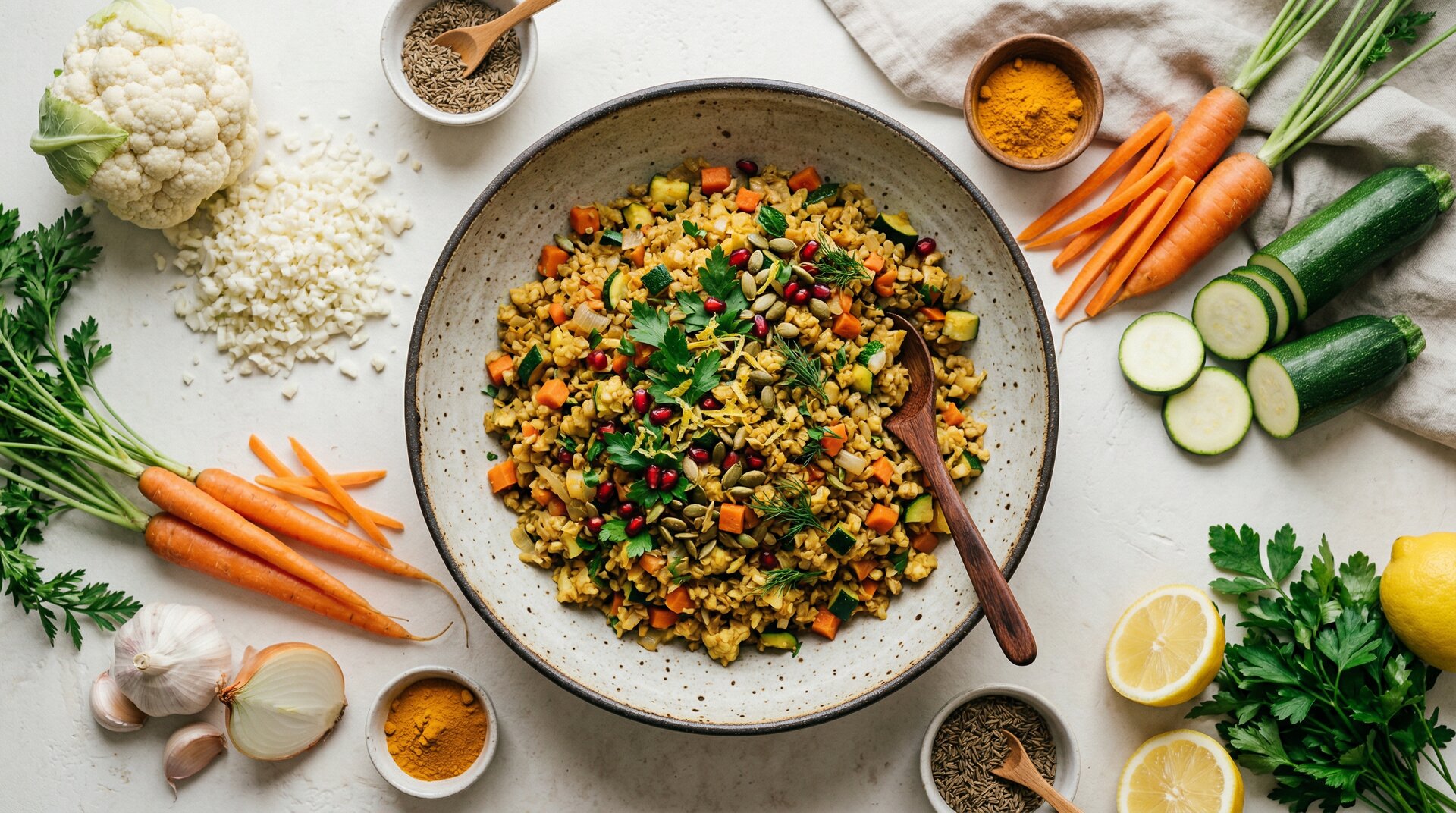 Cauliflower Rice Pilaf with Turmeric and Lemon 25 min Fragrant, golden and bright
  165 kcal
  6g protein 3 synergies
 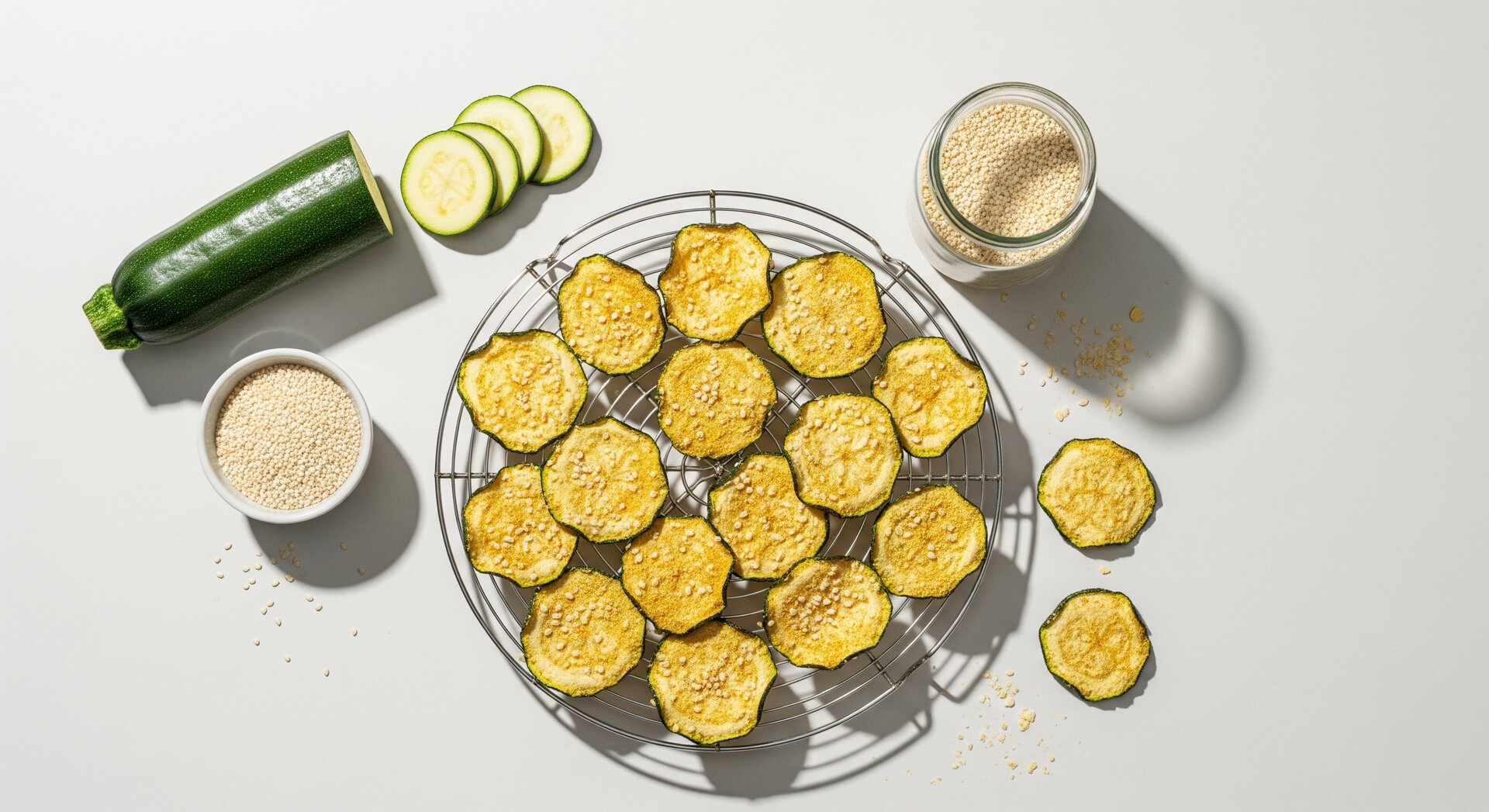 Zucchini Chips with Sesame and Garlic 170 min Wafer-thin oven chips of zucchini with sesame and garlic powder 45 kcal 2g protein 2 synergies
 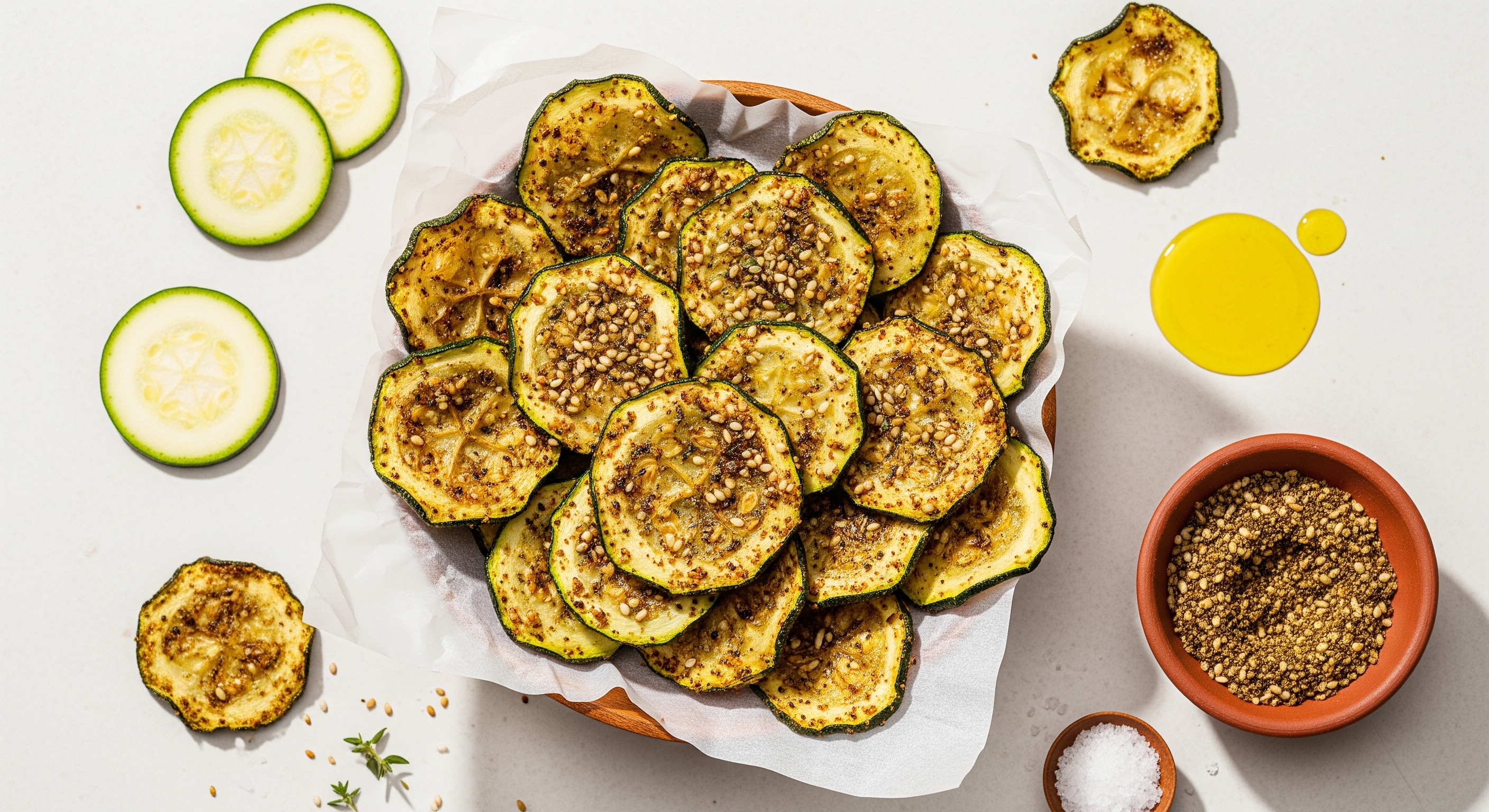 Zucchini Chips with Za'atar and Olive Oil 35 min Crispy oven snack with Middle Eastern spices 82 kcal 2g protein 1 synergies
 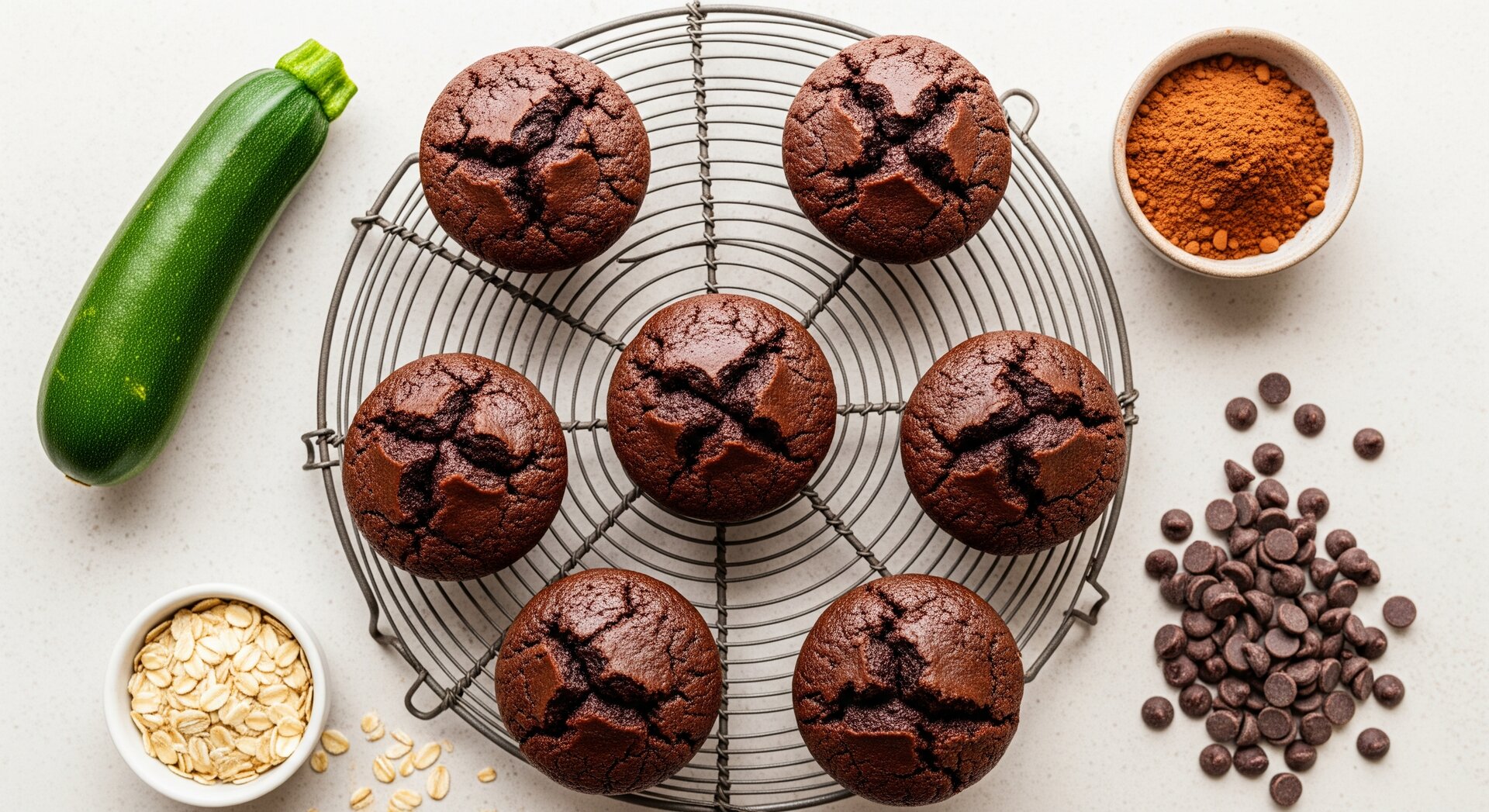 Zucchini Chocolate Muffins 45 min Ultra-moist muffins with hidden vegetable 135 kcal 4g protein 2 synergies
 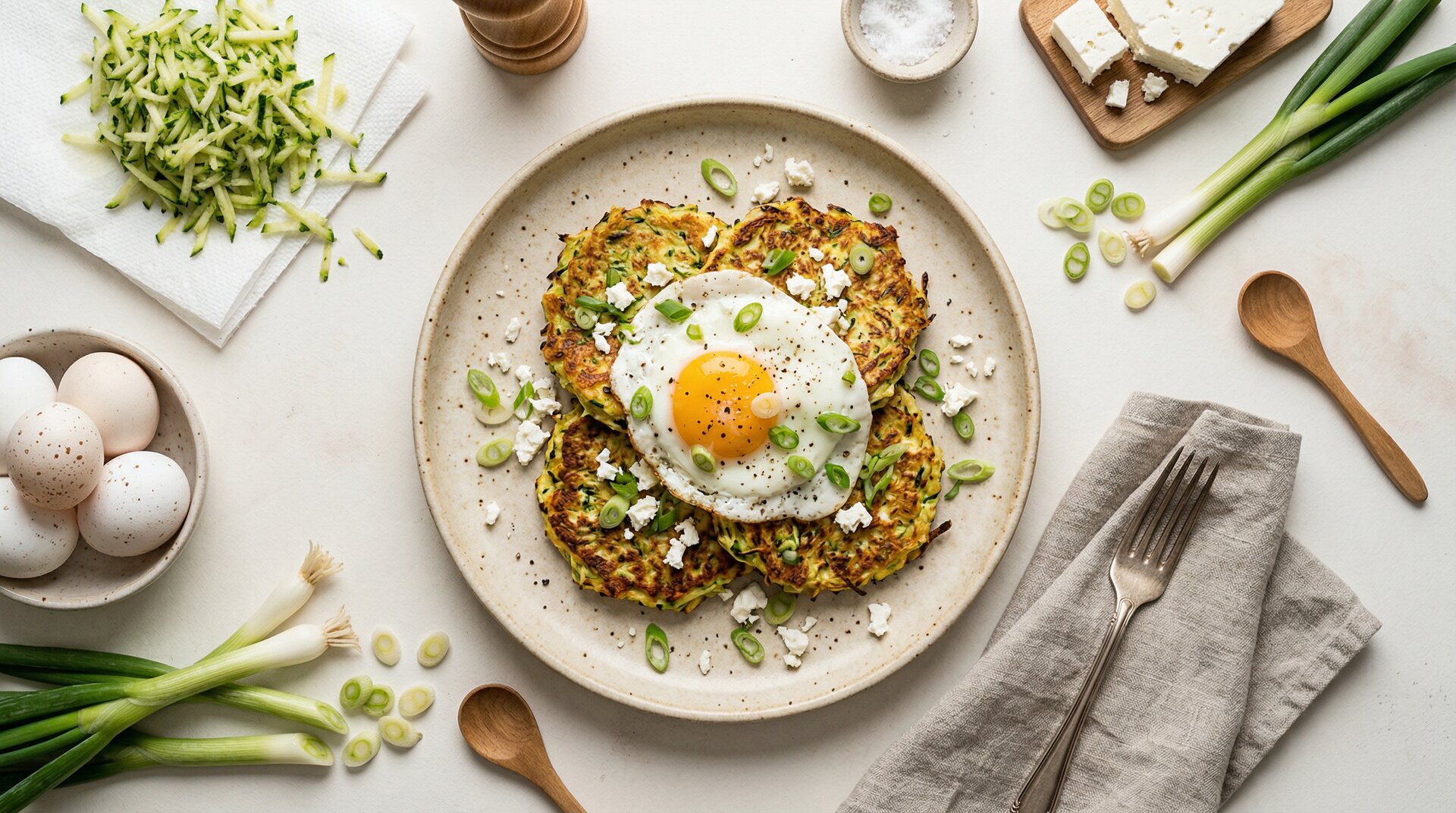 Zucchini Pancakes with Feta and Spring Onion 20 min Golden-fried with crumbly feta and fresh spring onion 225 kcal 15g protein 2 synergies
 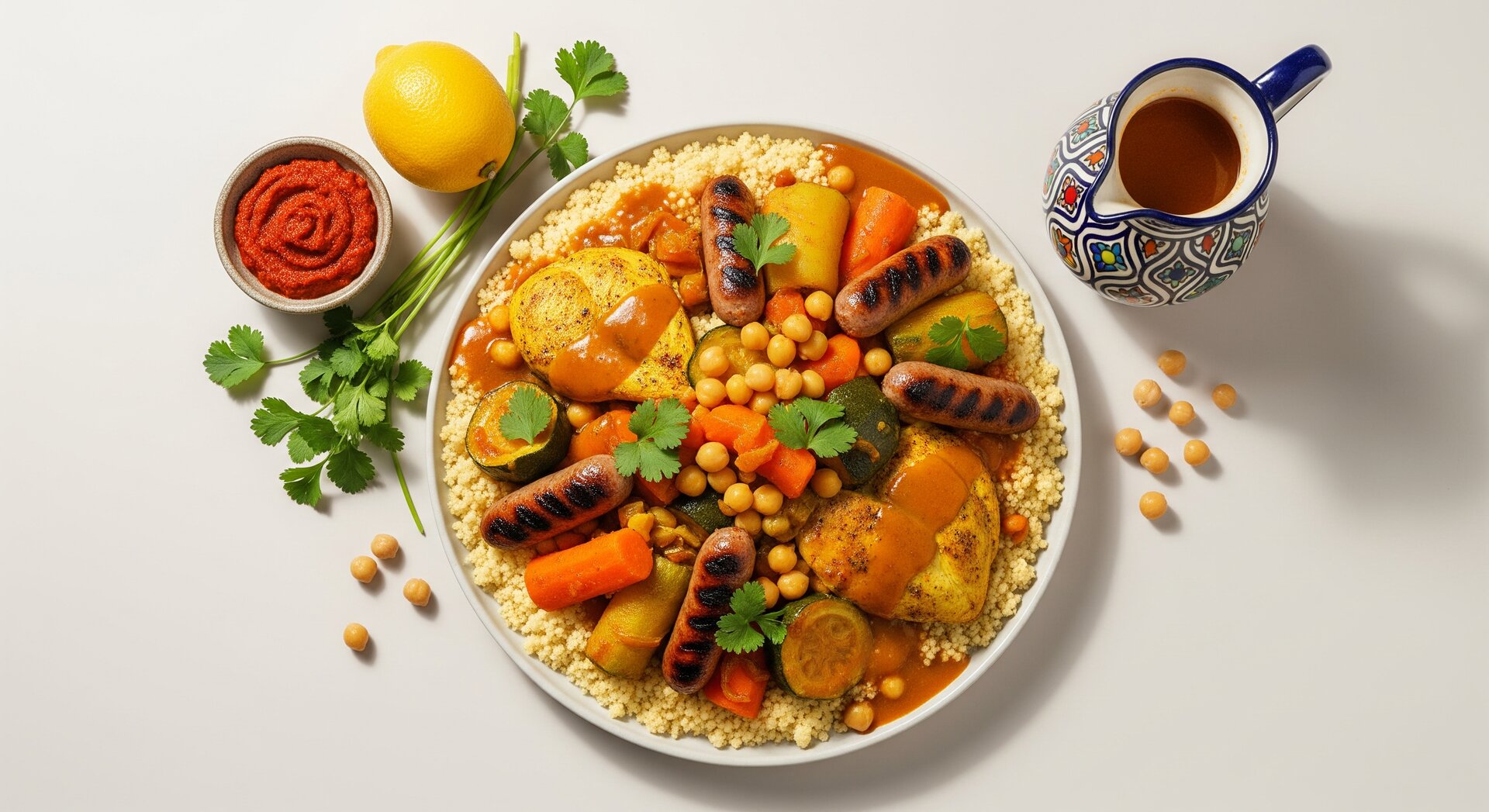 Royal Couscous with Chicken and Merguez 70 min Festive North African classic 580 kcal 38g protein 3 synergies
  In the Kitchen
Storage
Location:Refrigerator
Shelf life:1-2 weken in koelkast
Store unwashed in vegetable drawer. Wash just before use. Don't freeze (becomes watery).
Preparation
Grill, sauté, roast or spiralize raw. BEST SYNERGY: with lentils (vitamin C aids iron absorption). Don't overcook - becomes mushy.
Conversions
Substitutes
Smart preparation
1Sprinkle courgette strips with salt and drain for 15 minutes.
Why?
This removes excess moisture for a better frying result.
2Cut courgette lengthwise for the grill; crosswise slices fall through the grate.
3Use a spiralizer for courgette noodles as a pasta substitute.
Caution / Warnings
Zucchini is very safe, but there are scientific considerations:
Cucurbitacin Poisoning (Bitter) Moderate
Very rare: bitter zucchinis may contain toxic cucurbitacins
Advice:
Always taste a piece raw. If it tastes bitter: DO NOT eat and discard. Normal zucchini has mild taste
Traditional use
Indigenous
Mesoamerican origin crop
Zucchini descends from squash species cultivated in Central America for over 7000 years as part of the 'Three Sisters' (corn, beans, squash).
Summary
Zucchini is one of the best vegetables for weight management: only 17 kcal per 100g yet satisfying. Eat with skin for maximum nutrients. Tip: spiralize into 'zoodles' as low-carb pasta alternative!