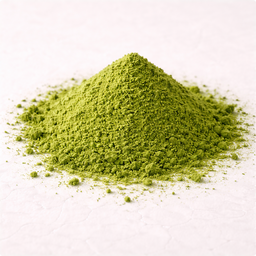
Matcha
The Green Gold
What is this ingredient?
Matcha is unique because you consume the entire tea leaf rather than just an infusion. The tea plants are often shade-grown for 3–4 weeks before harvest; this gives the powder its deep green color and characteristic amino acid profile with L-theanine. Because the whole leaf is consumed, a serving usually contains more catechins, including EGCG, than a cup of regular green tea, depending on dose and quality. The combination of caffeine and L-theanine gives matcha a rounded, concentrated tea experience with umami, mild bitterness and a softly sweet finish.
How does it taste?
Grassy and slightly bitter, with intense umami, a softly sweet aftertaste and a creamy body.
Pairs well with:
Pairs well with white chocolatecoconutvanillahoney and almond milk.
Did you know...?
- Matcha plants are covered 20–30 days before harvest to form more chlorophyll and develop a deeper green color.
- Zen monks were already drinking matcha in the 12th century as part of their tea rituals and meditation practice.
Nutritional Value & Energy
Per 100g
Matcha provides energy thanks to natural nutrients , buffered by fiber.
Per 100g
Minerals
Vitamins
More nutrients
B-Vitamins
Trace Minerals
What's in a serving?
1 serving
Matcha naturally contains vitamin c (30 mg per 100 g).
Matcha naturally contains vitamin a (300 mcg per 100 g).
Matcha naturally contains iron (17 mg per 100 g).
Matcha naturally contains calcium (420 mg per 100 g).
Matcha naturally contains magnesium (230 mg per 100 g).
Matcha naturally contains zinc (6.3 mg per 100 g).
Matcha naturally contains phosphorus (350 mg per 100 g).
Matcha naturally contains manganese (4.6 mg per 100 g).
Matcha naturally contains copper (0.6 mg per 100 g).
Matcha naturally contains vitamin e (28.1 mg per 100 g).
% of daily reference intake (DRI)
EU-approved nutrition claims
This ingredient contains nutrients for which EFSA-authorized health claims exist (at nutrient level, not ingredient-specific).
Approved health claims (EU)
Vitamin_c EU 432/2012
Vitamin C contributes to the normal function of the immune system
Contains 30mg/100g (threshold: ≥12mg/100g)
Vitamin_c EU 432/2012
Vitamin C contributes to the reduction of tiredness and fatigue
Contains 30mg/100g (threshold: ≥12mg/100g)
Vitamin_c EU 432/2012
Vitamin C contributes to normal collagen formation for the normal function of skin
Contains 30mg/100g (threshold: ≥12mg/100g)
Magnesium EU 432/2012
Magnesium contributes to normal muscle function
Contains 230mg/100g (threshold: ≥56.25mg/100g)
Magnesium EU 432/2012
Magnesium contributes to the reduction of tiredness and fatigue
Contains 230mg/100g (threshold: ≥56.25mg/100g)
Magnesium EU 432/2012
Magnesium contributes to normal functioning of the nervous system
Contains 230mg/100g (threshold: ≥56.25mg/100g)
Zinc EU 432/2012
Zinc contributes to the normal function of the immune system
Contains 6.3mg/100g (threshold: ≥1.5mg/100g)
Zinc EU 432/2012
Zinc contributes to the maintenance of normal skin
Contains 6.3mg/100g (threshold: ≥1.5mg/100g)
Iron EU 432/2012
Iron contributes to normal energy-yielding metabolism
Contains 17mg/100g (threshold: ≥2.1mg/100g)
Iron EU 432/2012
Iron contributes to the reduction of tiredness and fatigue
Contains 17mg/100g (threshold: ≥2.1mg/100g)
Calcium EU 432/2012
Calcium is needed for the maintenance of normal bones
Contains 420mg/100g (threshold: ≥120mg/100g)
Vitamin_a EU 432/2012
Vitamin A contributes to the normal function of the immune system
Contains 300mcg/100g (threshold: ≥120mcg/100g)
Vitamin_a EU 432/2012
Vitamin A contributes to the maintenance of normal skin
Contains 300mcg/100g (threshold: ≥120mcg/100g)
Vitamin_a EU 432/2012
Vitamin A contributes to the maintenance of normal mucous membranes
Contains 300mcg/100g (threshold: ≥120mcg/100g)
Vitamin_a EU 432/2012
Vitamin A contributes to the maintenance of normal vision
Contains 300mcg/100g (threshold: ≥120mcg/100g)
Vitamin_a EU 432/2012
Vitamin A contributes to normal iron metabolism
Contains 300mcg/100g (threshold: ≥120mcg/100g)
Vitamin_a EU 432/2012
Vitamin A has a role in the process of cell specialisation
Contains 300mcg/100g (threshold: ≥120mcg/100g)
Vitamin_c EU 432/2012
Vitamin C contributes to normal collagen formation for the normal function of blood vessels
Contains 30mg/100g (threshold: ≥12mg/100g)
Vitamin_c EU 432/2012
Vitamin C contributes to normal collagen formation for the normal function of bones
Contains 30mg/100g (threshold: ≥12mg/100g)
Vitamin_c EU 432/2012
Vitamin C contributes to normal collagen formation for the normal function of cartilage
Contains 30mg/100g (threshold: ≥12mg/100g)
Vitamin_c EU 432/2012
Vitamin C contributes to normal collagen formation for the normal function of gums
Contains 30mg/100g (threshold: ≥12mg/100g)
Vitamin_c EU 432/2012
Vitamin C contributes to normal collagen formation for the normal function of teeth
Contains 30mg/100g (threshold: ≥12mg/100g)
Vitamin_c EU 432/2012
Vitamin C contributes to normal energy-yielding metabolism
Contains 30mg/100g (threshold: ≥12mg/100g)
Vitamin_c EU 432/2012
Vitamin C contributes to normal functioning of the nervous system
Contains 30mg/100g (threshold: ≥12mg/100g)
Vitamin_c EU 432/2012
Vitamin C contributes to normal psychological function
Contains 30mg/100g (threshold: ≥12mg/100g)
Vitamin_c EU 432/2012
Vitamin C contributes to the protection of cells from oxidative stress
Contains 30mg/100g (threshold: ≥12mg/100g)
Vitamin_c EU 432/2012
Vitamin C contributes to the regeneration of the reduced form of vitamin E
Contains 30mg/100g (threshold: ≥12mg/100g)
Vitamin_c EU 432/2012
Vitamin C increases iron absorption
Contains 30mg/100g (threshold: ≥12mg/100g)
Vitamin_c EU 432/2012
Vitamin C contributes to maintain the normal function of the immune system during and after intense physical exercise
Contains 30mg/100g (threshold: ≥12mg/100g)
Vitamin_e EU 432/2012
Vitamin E contributes to the protection of cells from oxidative stress
Contains 28.1mg/100g (threshold: ≥1.8mg/100g)
Calcium EU 432/2012
Calcium is needed for the maintenance of normal teeth
Contains 420mg/100g (threshold: ≥120mg/100g)
Calcium EU 432/2012
Calcium contributes to normal blood clotting
Contains 420mg/100g (threshold: ≥120mg/100g)
Calcium EU 432/2012
Calcium contributes to normal energy-yielding metabolism
Contains 420mg/100g (threshold: ≥120mg/100g)
Calcium EU 432/2012
Calcium contributes to normal muscle function
Contains 420mg/100g (threshold: ≥120mg/100g)
Calcium EU 432/2012
Calcium contributes to normal neurotransmission
Contains 420mg/100g (threshold: ≥120mg/100g)
Calcium EU 432/2012
Calcium contributes to the normal function of digestive enzymes
Contains 420mg/100g (threshold: ≥120mg/100g)
Calcium EU 432/2012
Calcium has a role in the process of cell division and specialisation
Contains 420mg/100g (threshold: ≥120mg/100g)
Phosphorus EU 432/2012
Phosphorus contributes to normal energy-yielding metabolism
Contains 350mg/100g (threshold: ≥105mg/100g)
Phosphorus EU 432/2012
Phosphorus contributes to the normal function of cell membranes
Contains 350mg/100g (threshold: ≥105mg/100g)
Phosphorus EU 432/2012
Phosphorus contributes to the maintenance of normal bones
Contains 350mg/100g (threshold: ≥105mg/100g)
Phosphorus EU 432/2012
Phosphorus contributes to the maintenance of normal teeth
Contains 350mg/100g (threshold: ≥105mg/100g)
Magnesium EU 432/2012
Magnesium contributes to normal energy-yielding metabolism
Contains 230mg/100g (threshold: ≥56.25mg/100g)
Magnesium EU 432/2012
Magnesium contributes to electrolyte balance
Contains 230mg/100g (threshold: ≥56.25mg/100g)
Magnesium EU 432/2012
Magnesium contributes to normal protein synthesis
Contains 230mg/100g (threshold: ≥56.25mg/100g)
Magnesium EU 432/2012
Magnesium contributes to normal psychological function
Contains 230mg/100g (threshold: ≥56.25mg/100g)
Magnesium EU 432/2012
Magnesium contributes to the maintenance of normal bones
Contains 230mg/100g (threshold: ≥56.25mg/100g)
Magnesium EU 432/2012
Magnesium contributes to the maintenance of normal teeth
Contains 230mg/100g (threshold: ≥56.25mg/100g)
Magnesium EU 432/2012
Magnesium has a role in the process of cell division
Contains 230mg/100g (threshold: ≥56.25mg/100g)
Iron EU 432/2012
Iron contributes to normal cognitive function
Contains 17mg/100g (threshold: ≥2.1mg/100g)
Iron EU 432/2012
Iron contributes to normal formation of red blood cells and haemoglobin
Contains 17mg/100g (threshold: ≥2.1mg/100g)
Iron EU 432/2012
Iron contributes to normal oxygen transport in the body
Contains 17mg/100g (threshold: ≥2.1mg/100g)
Iron EU 432/2012
Iron contributes to the normal function of the immune system
Contains 17mg/100g (threshold: ≥2.1mg/100g)
Iron EU 432/2012
Iron has a role in the process of cell division
Contains 17mg/100g (threshold: ≥2.1mg/100g)
Zinc EU 432/2012
Zinc contributes to normal acid-base metabolism
Contains 6.3mg/100g (threshold: ≥1.5mg/100g)
Zinc EU 432/2012
Zinc contributes to normal carbohydrate metabolism
Contains 6.3mg/100g (threshold: ≥1.5mg/100g)
Zinc EU 432/2012
Zinc contributes to normal cognitive function
Contains 6.3mg/100g (threshold: ≥1.5mg/100g)
Zinc EU 432/2012
Zinc contributes to normal DNA synthesis
Contains 6.3mg/100g (threshold: ≥1.5mg/100g)
Zinc EU 432/2012
Zinc contributes to normal fertility and reproduction
Contains 6.3mg/100g (threshold: ≥1.5mg/100g)
Zinc EU 432/2012
Zinc contributes to normal macronutrient metabolism
Contains 6.3mg/100g (threshold: ≥1.5mg/100g)
Zinc EU 432/2012
Zinc contributes to normal metabolism of fatty acids
Contains 6.3mg/100g (threshold: ≥1.5mg/100g)
Zinc EU 432/2012
Zinc contributes to normal metabolism of vitamin A
Contains 6.3mg/100g (threshold: ≥1.5mg/100g)
Zinc EU 432/2012
Zinc contributes to normal protein synthesis
Contains 6.3mg/100g (threshold: ≥1.5mg/100g)
Zinc EU 432/2012
Zinc contributes to the maintenance of normal bones
Contains 6.3mg/100g (threshold: ≥1.5mg/100g)
Zinc EU 432/2012
Zinc contributes to the maintenance of normal hair
Contains 6.3mg/100g (threshold: ≥1.5mg/100g)
Zinc EU 432/2012
Zinc contributes to the maintenance of normal nails
Contains 6.3mg/100g (threshold: ≥1.5mg/100g)
Zinc EU 432/2012
Zinc contributes to the maintenance of normal testosterone levels in the blood
Contains 6.3mg/100g (threshold: ≥1.5mg/100g)
Zinc EU 432/2012
Zinc contributes to the maintenance of normal vision
Contains 6.3mg/100g (threshold: ≥1.5mg/100g)
Zinc EU 432/2012
Zinc contributes to the protection of cells from oxidative stress
Contains 6.3mg/100g (threshold: ≥1.5mg/100g)
Zinc EU 432/2012
Zinc has a role in the process of cell division
Contains 6.3mg/100g (threshold: ≥1.5mg/100g)
Copper EU 432/2012
Copper contributes to the maintenance of normal connective tissues
Contains 0.6mg/100g (threshold: ≥0.15mg/100g)
Copper EU 432/2012
Copper contributes to normal energy-yielding metabolism
Contains 0.6mg/100g (threshold: ≥0.15mg/100g)
Copper EU 432/2012
Copper contributes to normal functioning of the nervous system
Contains 0.6mg/100g (threshold: ≥0.15mg/100g)
Copper EU 432/2012
Copper contributes to normal hair pigmentation
Contains 0.6mg/100g (threshold: ≥0.15mg/100g)
Copper EU 432/2012
Copper contributes to normal iron transport in the body
Contains 0.6mg/100g (threshold: ≥0.15mg/100g)
Copper EU 432/2012
Copper contributes to normal skin pigmentation
Contains 0.6mg/100g (threshold: ≥0.15mg/100g)
Copper EU 432/2012
Copper contributes to the normal function of the immune system
Contains 0.6mg/100g (threshold: ≥0.15mg/100g)
Copper EU 432/2012
Copper contributes to the protection of cells from oxidative stress
Contains 0.6mg/100g (threshold: ≥0.15mg/100g)
Manganese EU 432/2012
Manganese contributes to normal energy-yielding metabolism
Contains 4.6mg/100g (threshold: ≥0.3mg/100g)
Manganese EU 432/2012
Manganese contributes to the maintenance of normal bones
Contains 4.6mg/100g (threshold: ≥0.3mg/100g)
Manganese EU 432/2012
Manganese contributes to the normal formation of connective tissue
Contains 4.6mg/100g (threshold: ≥0.3mg/100g)
Manganese EU 432/2012
Manganese contributes to the protection of cells from oxidative stress
Contains 4.6mg/100g (threshold: ≥0.3mg/100g)
Comparison
vsspinazie
Matcha contains about 6× more iron per 100 g than spinach, although the usual matcha serving is much smaller.
vsmelk
Matcha contains about 3× more calcium per 100 g than milk, but it is usually used in amounts of only a few grams.
What's being researched?
Catechins in matcha
In nutrition research, matcha is described as a concentrated source of catechins, including EGCG, because the whole tea leaf is ground and consumed. The exact amount depends on cultivar, harvest, processing and serving size.
Supported by: [1] Weiss (2003) , [2] Owen (2008)
Matcha, caffeine and L-theanine
The combination of caffeine and L-theanine in green tea is examined in studies on attention and mental performance. For matcha, the practical experience still depends on preparation, powder amount and individual caffeine sensitivity.
Supported by: [2] Owen (2008) , [1] Weiss (2003)
Good Combinations (Synergy)
Combine matcha smartly to enhance the effect:
Matcha 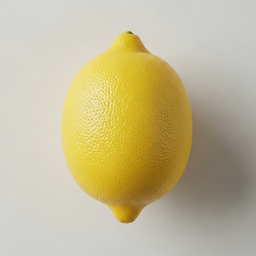 Lemon
Lemon Up to 5x more EGCG absorption through citric acid
Technical: Matcha contains the full tea leaf (not just an extract), so higher EGCG concentrations than green tea. Like green tea, EGCG degrades rapidly at alkaline gut pH. Citric acid from lemon stabilizes catechins, allowing up to 5x more to reach the absorption site in the small intestine intact.
What does this mean for you? Add a squeeze of lemon juice to your matcha. You drink matcha for the antioxidants — lemon ensures you absorb 5x more of them.
Matcha 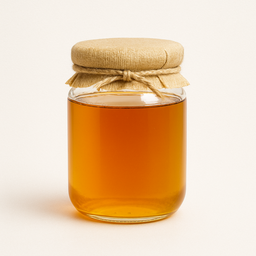 Honey
Honey Balanced energy without sugar crash
Technical: Matcha contains L-theanine (25-60mg per serving) that stimulates alpha brain waves — calm alertness without jitteriness. Honey provides quickly available glucose that directly fuels the brain. L-theanine tempers the caffeine effect (matcha contains ~70mg caffeine), while glucose ensures the brain functions optimally.
What does this mean for you? Drink matcha with a spoon of honey as morning ritual. The matcha gives calm focus, the honey provides direct brain energy — without the coffee crash.
Matcha  Coconut Milk
 Coconut fat dramatically increases EGCG absorption from matcha
Technical: Matcha's EGCG catechins are partially fat-soluble with low bioavailability (~5%). Coconut milk's MCTs form mixed micelles that significantly improve intestinal absorption of EGCG. Studies show up to 3x higher uptake with fats.
What does this mean for you? A matcha latte with coconut milk is more than a hipster drink — the coconut fat ensures you absorb up to 3x more of matcha's powerful antioxidants.
Recipes with Matcha
Discover delicious recipes featuring matcha:
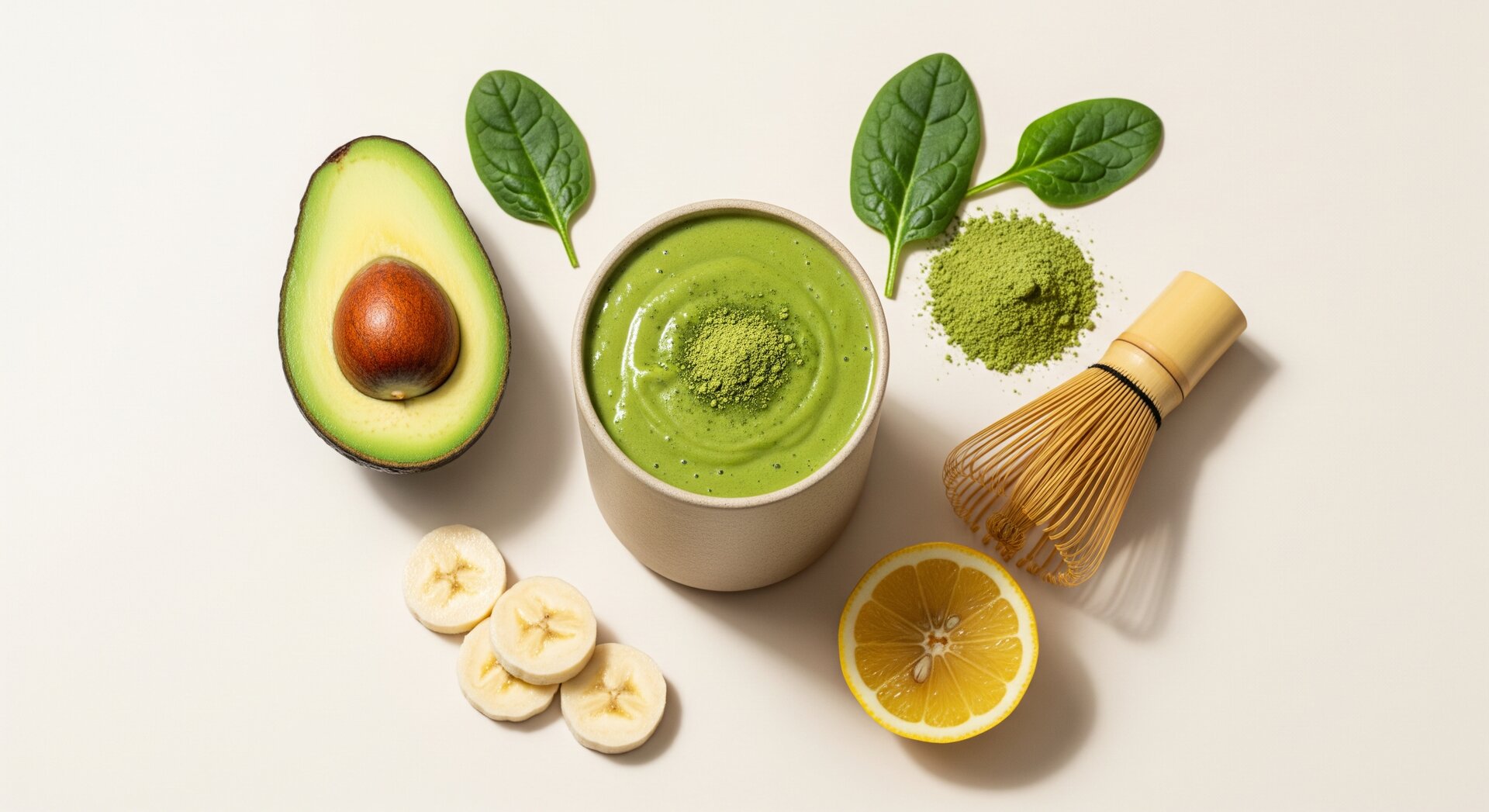 Avocado Matcha Smoothie 5 min Creamy green smoothie with matcha, avocado and spinach
  340 kcal
  6g protein 2 synergies
 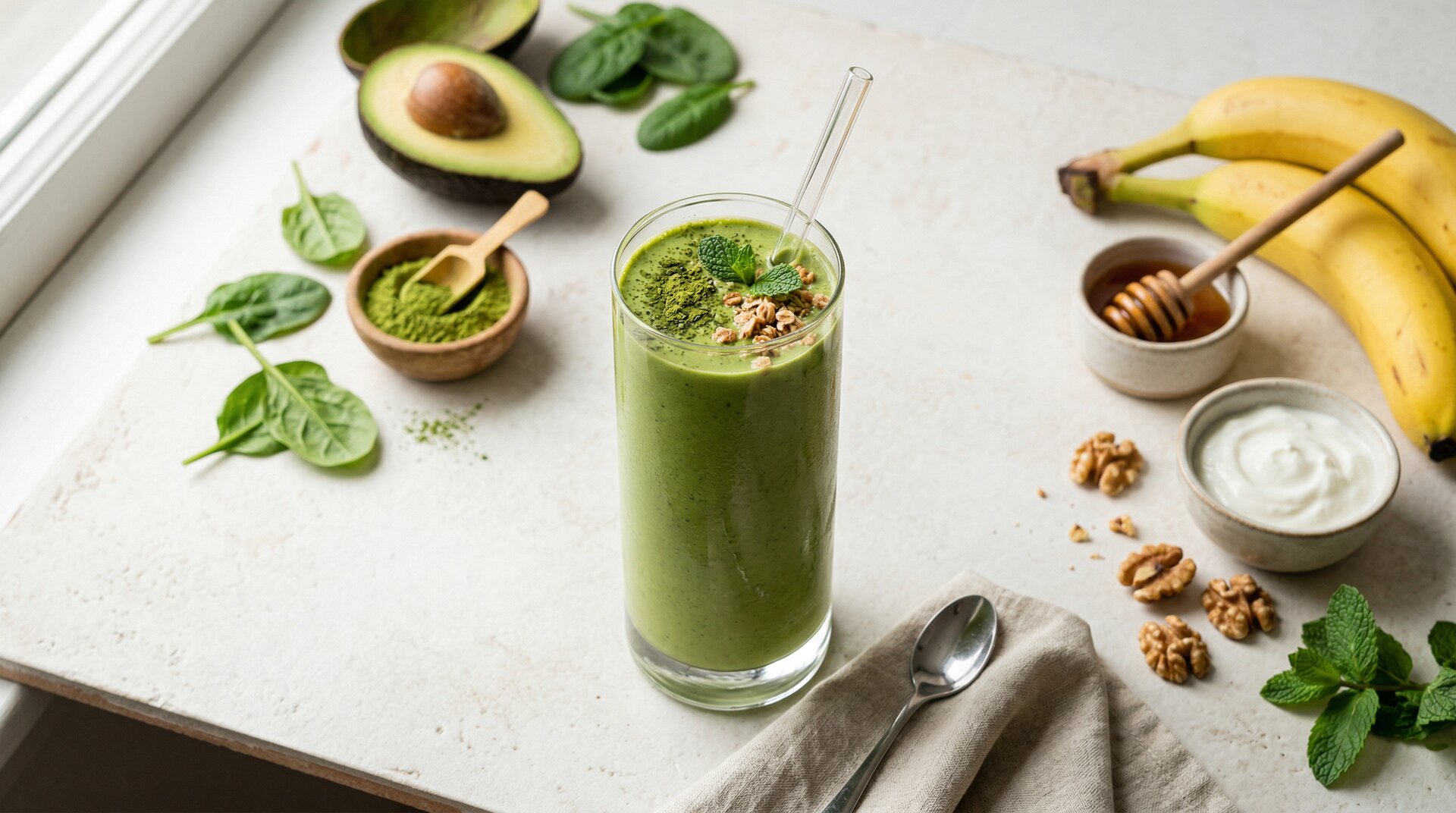 Velvety Matcha Avocado Smoothie 5 min Creamy green with soft matcha 305 kcal 9g protein 2 synergies
 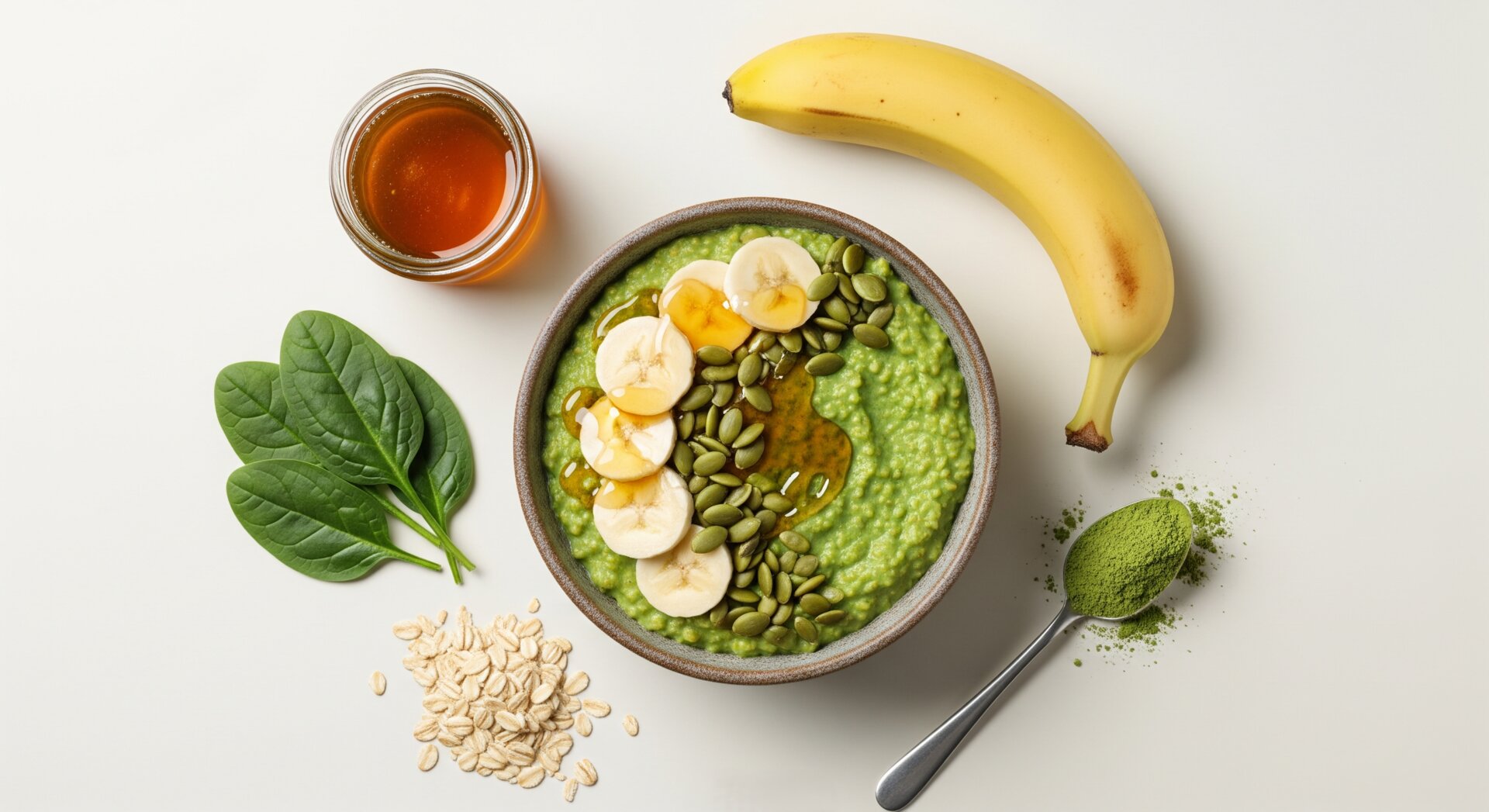 Green Oatmeal with Matcha and Spirulina 13 min Warm oatmeal porridge with spinach, matcha and a touch of honey 320 kcal 10g protein 1 synergies
 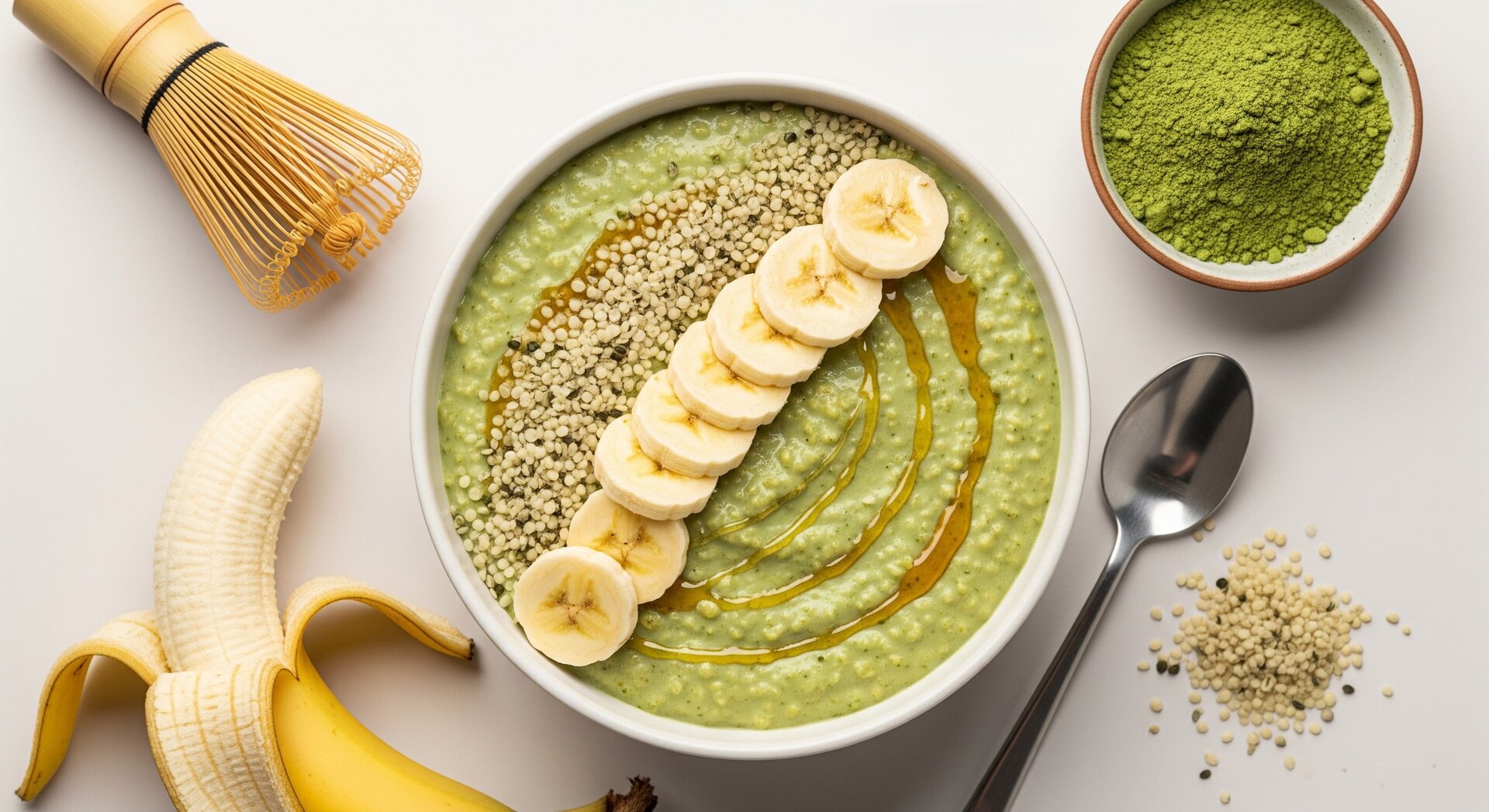 Oatmeal-Matcha Latte Bowl with Hemp Seeds 13 min Green oatmeal bowl with matcha and banana 487 kcal 16g protein 1 synergies
  Hemp Seed Matcha Latte 5 min Creamy matcha latte with homemade hemp seed milk 120 kcal 5g protein 1 synergies
 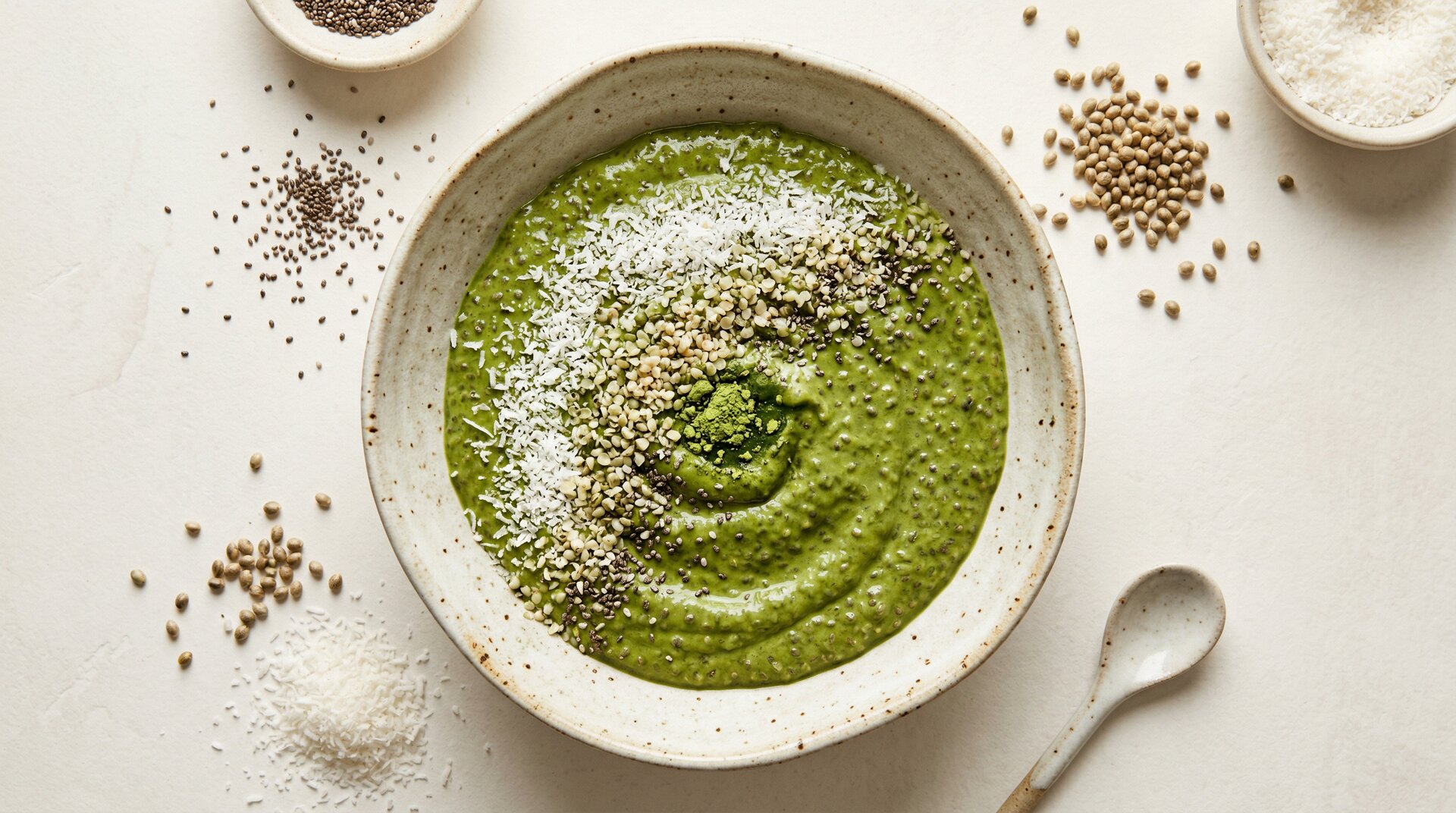 Coconut Matcha Breakfast Bowl 10 min Warm matcha coconut bowl with chia, hemp seeds and coconut flakes 695 kcal 11g protein 2 synergies
  In the Kitchen
Storage
Location:Refrigerator
Shelf life:1-2 maanden (na openen)
Store airtight, dark and refrigerated. Matcha quickly loses aroma and color when exposed to light, heat and oxygen.
Preparation
Use water at a maximum of 80°C. Sift the powder first, then whisk it quickly in a 'W' motion until a fine foam forms.
Substitutes
Smart preparation
1Sift matcha powder through a fine sieve before whisking.
Why?
Matcha clumps easily; sifting helps create a smooth, frothy tea.
2Use water at 70–80 °C; boiling water quickly makes matcha bitter.
3Whisk matcha in a W motion with a chasen or milk frother.
Caution / Warnings
Matcha is very safe, but there are scientific considerations:
Caffeine sensitivity Moderate
Matcha contains relatively high caffeine per gram, although the usual serving is small.
Advice:
Start with 0.5–1 g and avoid late-day use if you are sensitive to caffeine.
Traditional use
Other
Matcha in the Japanese tea ceremony
Matcha was brought to Japan in the 12th century by the Zen monk Eisai and became the heart of the Japanese tea ceremony, chanoyu.
Traditional Chinese Medicine
Powdered tea in the Chinese Tang dynasty
Grinding and whisking tea leaves originated in the Chinese Tang dynasty (618–907), where it was part of refined tea rituals.
Summary
The espresso of teas: intense, concentrated and bright green. Because you consume the whole leaf, quality matters; choose a fresh, finely milled and unsweetened grade when possible. Sift the powder and whisk it with hot but not boiling water for a creamy foam.