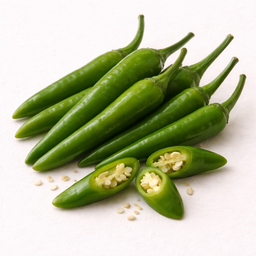
Green Chili Pepper
The Fresh Sharpness
What is this ingredient?
Although botanically the same fruit as red peppers, green peppers are harvested earlier. This gives them a completely different profile: less sugars, more chlorophyll, and a sharp, 'green' flavor essential in, for example, Green Curry. Nutritionally, they contain slightly less Vitamin C and A than the red (ripe) variant, but still substantial amounts. They contain capsaicin, which stimulates metabolism.
How does it taste?
Fresh, grassy and slightly bitter with a mild sharpness.
Pairs well with:
Pairs well with tomatooniongarliccumin and cilantro.
Did you know...?
- Green, yellow, and red bell peppers are the same plant at different stages of ripeness.
- Green peppers are the least sweet variety because they are harvested earliest.
Nutritional Value & Energy
Per 100g
Green Chili Pepper is low in calories thanks to natural nutrients .
Per 100g
Minerals
Vitamins
Omega-3 fatty acids
More nutrients
B-Vitamins
Trace Minerals
What's in a serving?
1 serving
Green Chili Pepper naturally contains vitamin c (242 mg per 100 g).
Green Chili Pepper naturally contains potassium (340 mg per 100 g).
Green Chili Pepper naturally contains vitamin b6 (0.5 mg per 100 g).
Green Chili Pepper naturally contains vitamin k (14 mcg per 100 g).
% of daily reference intake (DRI)
EU-approved nutrition claims
This ingredient contains nutrients for which EFSA-authorized health claims exist (at nutrient level, not ingredient-specific).
Approved health claims (EU)
Vitamin_c EU 432/2012
Vitamin C contributes to the normal function of the immune system
Contains 242mg/100g (threshold: ≥12mg/100g)
Vitamin_c EU 432/2012
Vitamin C contributes to the reduction of tiredness and fatigue
Contains 242mg/100g (threshold: ≥12mg/100g)
Vitamin_c EU 432/2012
Vitamin C contributes to normal collagen formation for the normal function of skin
Contains 242mg/100g (threshold: ≥12mg/100g)
Potassium EU 432/2012
Potassium contributes to the maintenance of normal blood pressure
Contains 340mg/100g (threshold: ≥300mg/100g)
Vitamin_b6 EU 432/2012
Vitamin B6 contributes to normal cysteine synthesis
Contains 0.5mg/100g (threshold: ≥0.21mg/100g)
Vitamin_b6 EU 432/2012
Vitamin B6 contributes to normal energy-yielding metabolism
Contains 0.5mg/100g (threshold: ≥0.21mg/100g)
Vitamin_b6 EU 432/2012
Vitamin B6 contributes to normal functioning of the nervous system
Contains 0.5mg/100g (threshold: ≥0.21mg/100g)
Vitamin_b6 EU 432/2012
Vitamin B6 contributes to normal homocysteine metabolism
Contains 0.5mg/100g (threshold: ≥0.21mg/100g)
Vitamin_b6 EU 432/2012
Vitamin B6 contributes to normal protein and glycogen metabolism
Contains 0.5mg/100g (threshold: ≥0.21mg/100g)
Vitamin_b6 EU 432/2012
Vitamin B6 contributes to normal psychological function
Contains 0.5mg/100g (threshold: ≥0.21mg/100g)
Vitamin_b6 EU 432/2012
Vitamin B6 contributes to normal red blood cell formation
Contains 0.5mg/100g (threshold: ≥0.21mg/100g)
Vitamin_b6 EU 432/2012
Vitamin B6 contributes to the normal function of the immune system
Contains 0.5mg/100g (threshold: ≥0.21mg/100g)
Vitamin_b6 EU 432/2012
Vitamin B6 contributes to the regulation of hormonal activity
Contains 0.5mg/100g (threshold: ≥0.21mg/100g)
Vitamin_b6 EU 432/2012
Vitamin B6 contributes to the reduction of tiredness and fatigue
Contains 0.5mg/100g (threshold: ≥0.21mg/100g)
Vitamin_c EU 432/2012
Vitamin C contributes to normal collagen formation for the normal function of blood vessels
Contains 242mg/100g (threshold: ≥12mg/100g)
Vitamin_c EU 432/2012
Vitamin C contributes to normal collagen formation for the normal function of bones
Contains 242mg/100g (threshold: ≥12mg/100g)
Vitamin_c EU 432/2012
Vitamin C contributes to normal collagen formation for the normal function of cartilage
Contains 242mg/100g (threshold: ≥12mg/100g)
Vitamin_c EU 432/2012
Vitamin C contributes to normal collagen formation for the normal function of gums
Contains 242mg/100g (threshold: ≥12mg/100g)
Vitamin_c EU 432/2012
Vitamin C contributes to normal collagen formation for the normal function of teeth
Contains 242mg/100g (threshold: ≥12mg/100g)
Vitamin_c EU 432/2012
Vitamin C contributes to normal energy-yielding metabolism
Contains 242mg/100g (threshold: ≥12mg/100g)
Vitamin_c EU 432/2012
Vitamin C contributes to normal functioning of the nervous system
Contains 242mg/100g (threshold: ≥12mg/100g)
Vitamin_c EU 432/2012
Vitamin C contributes to normal psychological function
Contains 242mg/100g (threshold: ≥12mg/100g)
Vitamin_c EU 432/2012
Vitamin C contributes to the protection of cells from oxidative stress
Contains 242mg/100g (threshold: ≥12mg/100g)
Vitamin_c EU 432/2012
Vitamin C contributes to the regeneration of the reduced form of vitamin E
Contains 242mg/100g (threshold: ≥12mg/100g)
Vitamin_c EU 432/2012
Vitamin C increases iron absorption
Contains 242mg/100g (threshold: ≥12mg/100g)
Vitamin_c EU 432/2012
Vitamin C contributes to maintain the normal function of the immune system during and after intense physical exercise
Contains 242mg/100g (threshold: ≥12mg/100g)
Vitamin_k EU 432/2012
Vitamin K contributes to normal blood clotting
Contains 14mcg/100g (threshold: ≥11.25mcg/100g)
Vitamin_k EU 432/2012
Vitamin K contributes to the maintenance of normal bones
Contains 14mcg/100g (threshold: ≥11.25mcg/100g)
Potassium EU 432/2012
Potassium contributes to normal functioning of the nervous system
Contains 340mg/100g (threshold: ≥300mg/100g)
Potassium EU 432/2012
Potassium contributes to normal muscle function
Contains 340mg/100g (threshold: ≥300mg/100g)
Comparison
vssinaasappel
Green Chili Pepper contains about 5× more vitamin C per 100g than orange.
What's being researched?
Vitamin C and antioxidant activity
The vitamin C content of green pepper is being studied in relation to antioxidant protection. Green peppers contain significant amounts, though less than riper variants.
Supported by: [1] Yang HJ (2018) , [2] Hursel (2010)
Good Combinations (Synergy)
Combine green chili pepper smartly to enhance the effect:
Green Chili Pepper 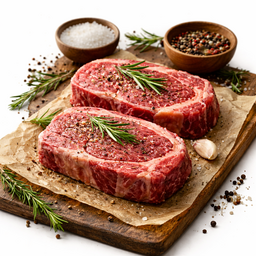 Beef Steak
 6x better iron absorption through vitamin C
Technical: Steak contains 2.6mg heme iron per 100g — the most absorbable form of iron (15-35% absorption vs. 5-12% for non-heme). Yet vitamin C from bell pepper (128mg per 100g red pepper) can further increase total iron absorption by also activating non-heme iron in meat and stimulating ferroportin expression. Studies show 3-6x higher total iron uptake.
What does this mean for you? Add bell pepper to your steak — as salad, roasted side dish or in a stir-fry. Red pepper has the most vitamin C, but yellow and green work too. Perfect for athletes and iron deficiency.
Green Chili Pepper 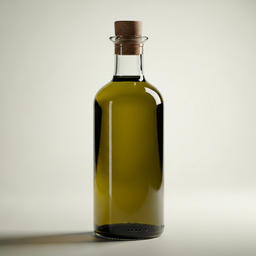 Olive Oil
 Fat improves absorption of green pepper's carotenoids and vitamin K
Technical: Green pepper contains 208μg beta-carotene, 341μg lutein+zeaxanthin and 7.4μg vitamin K per 100g — all fat-soluble. Additionally, green pepper contains 80mg vitamin C (133% RDI) which as water-soluble antioxidant protects fat-soluble carotenoids from oxidation during absorption.
What does this mean for you? Sauté green pepper in olive oil or roast them. The oil makes fat-soluble vitamins absorbable. Though green pepper has fewer carotenoids than red, it still provides plenty of vitamin C.
Green Chili Pepper 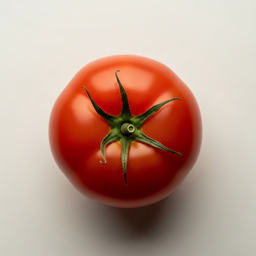 Tomato
 Vitamin C regenerates lycopene and provides complementary bioactive coverage
Technical: Green pepper provides 80mg vitamin C per 100g — a water-soluble compound that regenerates oxidized lycopene via electron transfer. Tomato provides 2573μg lycopene as fat-soluble compound. Vitamin C restores oxidized lycopene to its active form. Together they provide bioactive coverage in both water and fat phases.
What does this mean for you? Green pepper with tomato (classic in Hungarian and Mexican cuisine) combines a water-soluble and fat-soluble compound. Vitamin C from pepper keeps tomato's lycopene in its active form.
Recipes with Green Chili Pepper
Discover delicious recipes featuring green chili pepper:
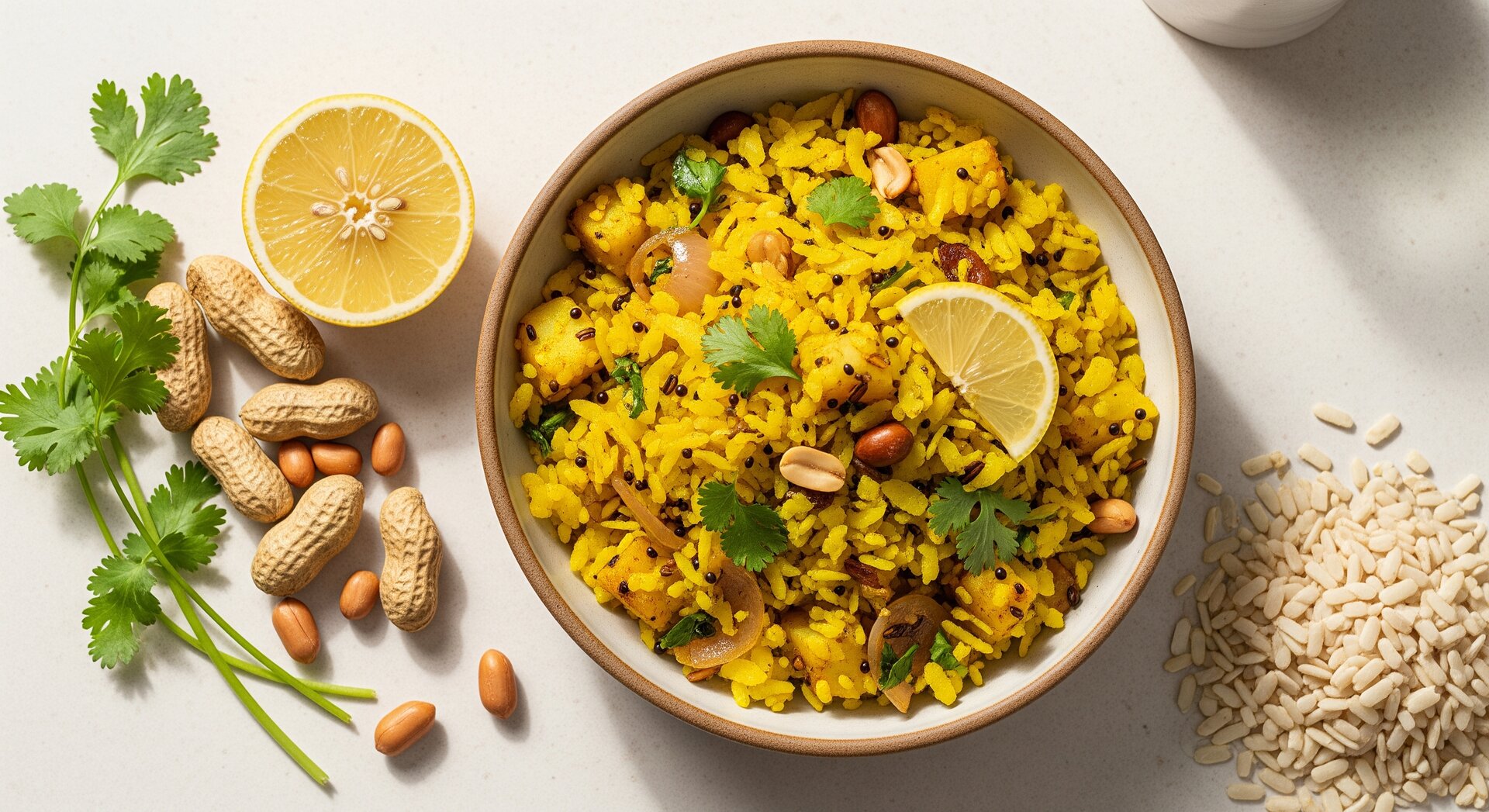 Indian Poha 25 min Light and spicy breakfast of flattened rice
  340 kcal
  8g protein 1 synergies
 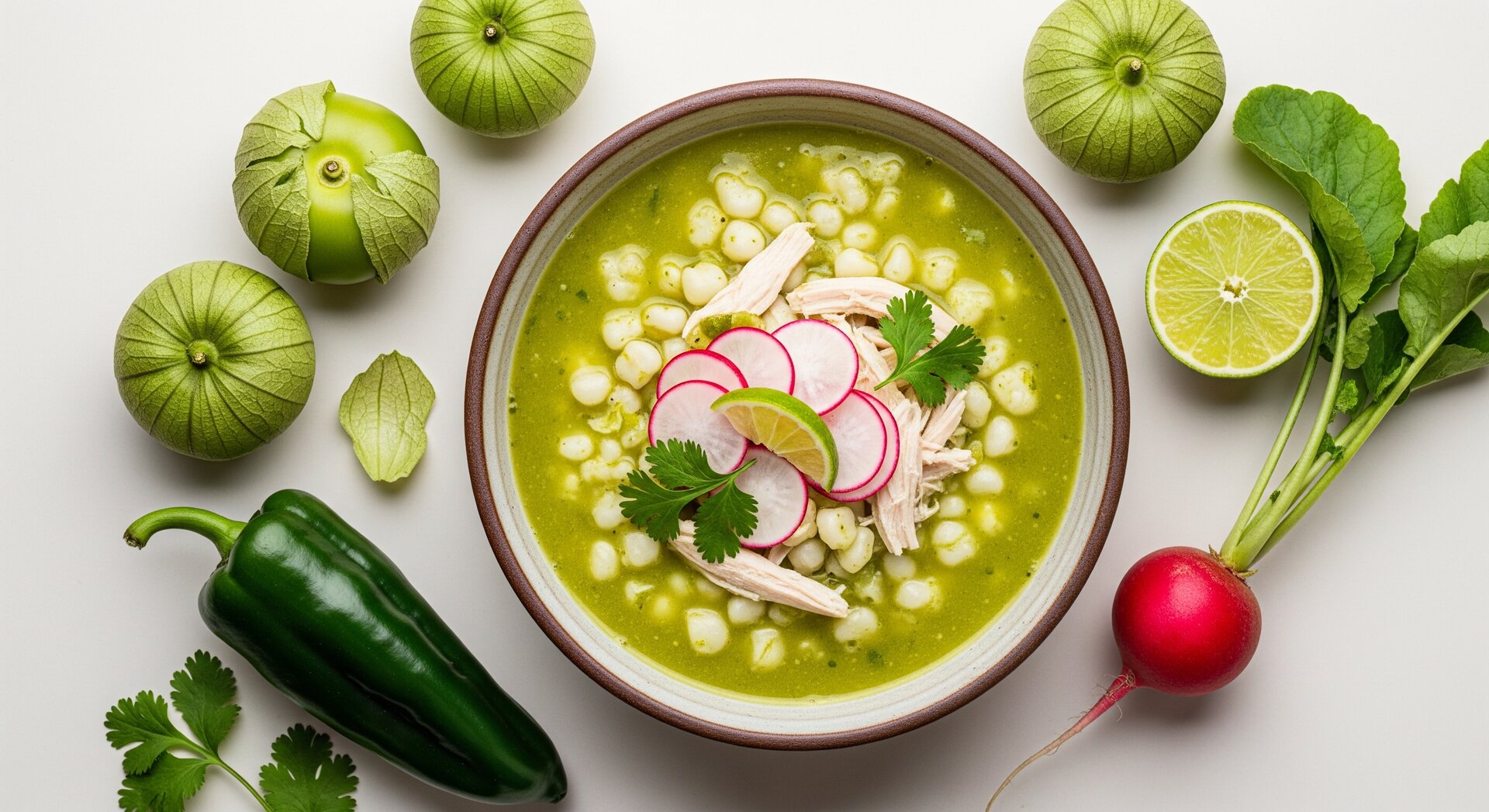 Pozole Verde with Chicken and Radish 60 min Mexican green hominy soup with chicken, tomatillo and fresh herbs 349 kcal 36g protein 2 synergies
 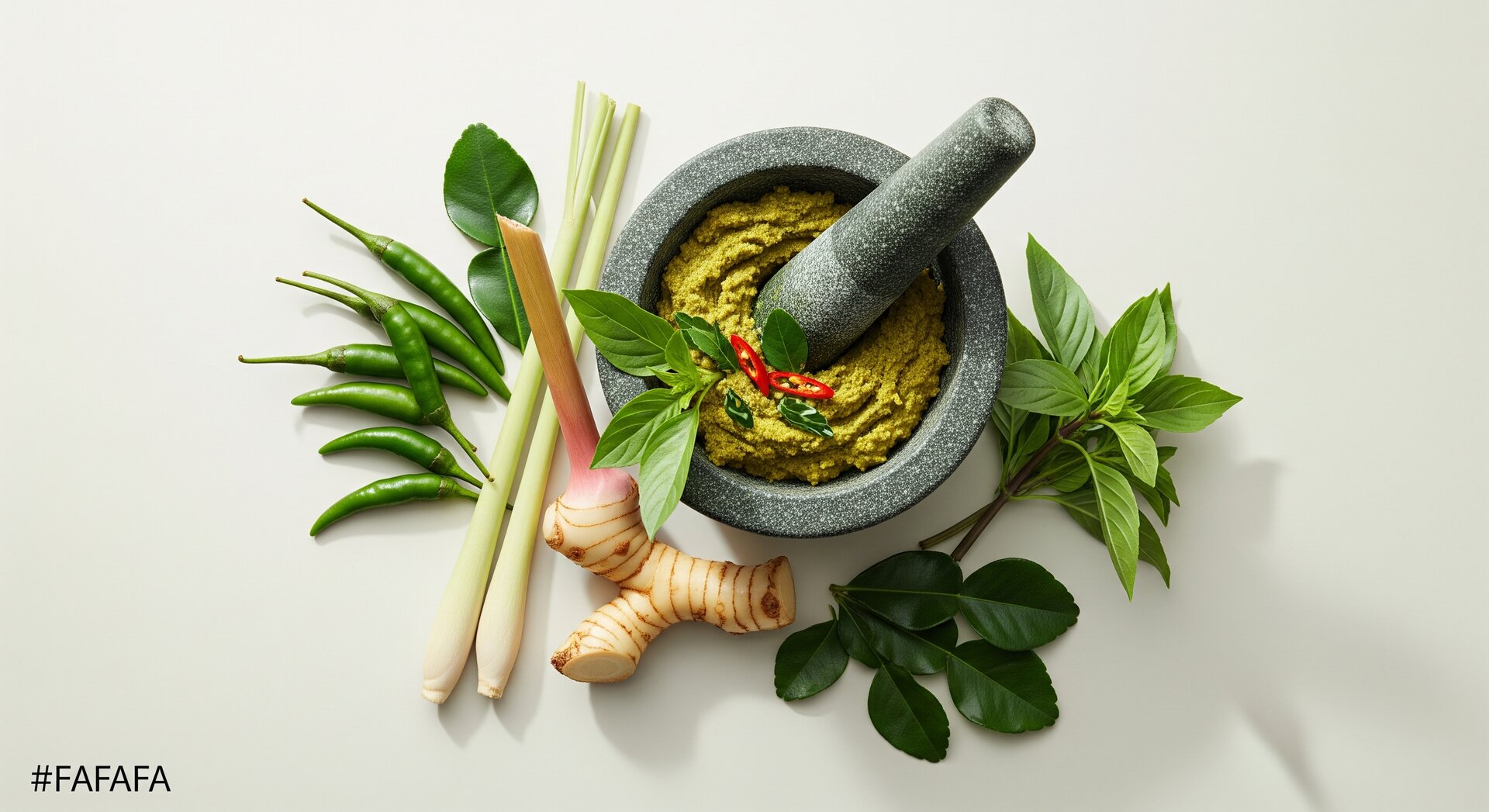 Homemade Green Curry Paste 30 min Fresh Thai herb paste full of aroma 12 kcal 1g protein 2 synergies
  In the Kitchen
Storage
Location:Refrigerator
Shelf life:1-2 weken
In the crisper drawer. Stay firm longer than red peppers.
Preparation
Slice into rings for stir-fries. Remove seeds and ribs for less heat. Can also be fried whole.
Substitutes
Smart preparation
1Remove the seed membrane for a milder flavor.
2Roast green pepper over open flame for a smoky flavor.
3Cut off the top and use the pepper as a stuffable container.
Caution / Warnings
Green Chili Pepper is very safe, but there are scientific considerations:
Reflux / Heartburn Moderate
Spicy food can relax the esophageal sphincter
Advice:
Avoid during active symptoms
Traditional use
Indigenous
Pre-Columbian pepper use
All pepper varieties were cultivated by pre-Columbian civilizations in the Americas. The green variant is the unripe fruit that has been used culinarily for thousands of years.
Summary
The unripe, fresh counterpart to the red pepper. Adds a 'grassy' heat to dishes instead of a sweet heat. Perfect for Thai Green Curry.