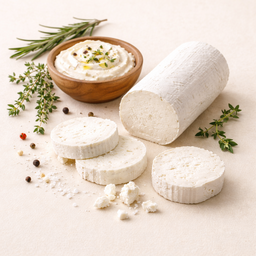
Goat Cheese (Chèvre)
Creamy cheese with distinctive flavor
What is this ingredient?
Goat cheese, often called chèvre, is made from goat's milk and can be a soft fresh cheese, semi-aged log, firm aged cheese, or crumbled salad cheese. Its flavor ranges from fresh and mildly tangy to distinctly earthy and nutty, depending on aging, salt level and the milk used.
## Milk structure and cheesemaking
Goat's milk generally has smaller fat globules than cow's milk and a different casein profile, with relatively more α-S2 casein and less α-S1 casein. During cheesemaking, the milk sets into curd, after which draining, salting and optional aging shape the final texture. Fresh chèvre stays soft and spreadable; aged varieties become firmer and develop a more intense rind and cheese flavor.
## Fatty-acid profile and nutrition
Goat cheese naturally contains protein, calcium, vitamin A, vitamin B12 and iodine. Its fat also contains medium-chain fatty acids such as caprylic, capric and lauric acid. These fatty acids contribute to goat cheese's characteristic aroma and partly explain its recognizable fresh goat flavor. The exact profile varies by breed, feed, season and aging.
## Culinary uses
Fresh goat cheese is popular in salads with beetroot, figs, honey, walnuts and thyme. It melts quickly in warm dishes, but excessive heat can make it grainy or cause fat separation. Serve soft goat cheese slightly chilled or briefly at room temperature for a creamy texture. With lactose intolerance or milk allergy, personal tolerance varies; see the contraindications for practical points to consider.
How does it taste?
Tangy, slightly tart and earthy with a creamy, soft center.
Pairs well with:
Pairs well with beethoneywalnutsthyme and figs.
Varieties
Fresh chèvre
Soft, spreadable goat cheese with fresh tanginess and short aging. Ideal on toast, in salads and as a creamy topping.
Bûche / log
Semi-soft goat cheese in log form, often with a thin rind and creamy center. Popular for brief gratins or warm salad servings.
Aged goat cheese
Firmer cheese with concentrated flavor, more saltiness and a drier texture. Suitable for shaving, grating or serving on a cheese board.
Did you know...?
- Goat cheese was probably one of the first cheeses humans made, about 8,000 years ago.
- Goat milk is naturally finely dispersed: its fat globules are generally smaller than those in cow's milk.
Nutritional Value & Energy
Per 100g
Goat Cheese (Chèvre) provides energy thanks to natural nutrients .
Per 100g
Minerals
Vitamins
Omega-3 fatty acids
More nutrients
B-Vitamins
Trace Minerals
What's in a serving?
1 serving
Goat Cheese (Chèvre) naturally contains calcium (298 mg per 100 g).
Goat Cheese (Chèvre) naturally contains vitamin A (1676 mcg per 100 g).
Goat Cheese (Chèvre) naturally contains vitamin B12 (0.41 mcg per 100 g).
Goat Cheese (Chèvre) naturally contains iodine (50 mcg per 100 g).
% of daily reference intake (DRI)
EU-approved nutrition claims
This ingredient contains nutrients for which EFSA-authorized health claims exist (at nutrient level, not ingredient-specific).
Approved health claims (EU)
Vitamin_b12 EU 432/2012
Vitamin B12 contributes to the normal function of the immune system
Contains 0.41mcg/100g (threshold: ≥0.375mcg/100g)
Vitamin_b12 EU 432/2012
Vitamin B12 contributes to the reduction of tiredness and fatigue
Contains 0.41mcg/100g (threshold: ≥0.375mcg/100g)
Vitamin_b12 EU 432/2012
Vitamin B12 contributes to the normal functioning of the nervous system
Contains 0.41mcg/100g (threshold: ≥0.375mcg/100g)
Calcium EU 432/2012
Calcium is needed for the maintenance of normal bones
Contains 298mg/100g (threshold: ≥120mg/100g)
Vitamin_a EU 432/2012
Vitamin A contributes to the normal function of the immune system
Contains 1676mcg/100g (threshold: ≥120mcg/100g)
Vitamin_a EU 432/2012
Vitamin A contributes to the maintenance of normal skin
Contains 1676mcg/100g (threshold: ≥120mcg/100g)
Vitamin_a EU 432/2012
Vitamin A contributes to the maintenance of normal mucous membranes
Contains 1676mcg/100g (threshold: ≥120mcg/100g)
Vitamin_a EU 432/2012
Vitamin A contributes to the maintenance of normal vision
Contains 1676mcg/100g (threshold: ≥120mcg/100g)
Vitamin_a EU 432/2012
Vitamin A contributes to normal iron metabolism
Contains 1676mcg/100g (threshold: ≥120mcg/100g)
Vitamin_a EU 432/2012
Vitamin A has a role in the process of cell specialisation
Contains 1676mcg/100g (threshold: ≥120mcg/100g)
Vitamin_b12 EU 432/2012
Vitamin B12 contributes to normal energy-yielding metabolism
Contains 0.41mcg/100g (threshold: ≥0.375mcg/100g)
Vitamin_b12 EU 432/2012
Vitamin B12 contributes to normal homocysteine metabolism
Contains 0.41mcg/100g (threshold: ≥0.375mcg/100g)
Vitamin_b12 EU 432/2012
Vitamin B12 contributes to normal psychological function
Contains 0.41mcg/100g (threshold: ≥0.375mcg/100g)
Vitamin_b12 EU 432/2012
Vitamin B12 contributes to normal red blood cell formation
Contains 0.41mcg/100g (threshold: ≥0.375mcg/100g)
Vitamin_b12 EU 432/2012
Vitamin B12 has a role in the process of cell division
Contains 0.41mcg/100g (threshold: ≥0.375mcg/100g)
Calcium EU 432/2012
Calcium is needed for the maintenance of normal teeth
Contains 298mg/100g (threshold: ≥120mg/100g)
Calcium EU 432/2012
Calcium contributes to normal blood clotting
Contains 298mg/100g (threshold: ≥120mg/100g)
Calcium EU 432/2012
Calcium contributes to normal energy-yielding metabolism
Contains 298mg/100g (threshold: ≥120mg/100g)
Calcium EU 432/2012
Calcium contributes to normal muscle function
Contains 298mg/100g (threshold: ≥120mg/100g)
Calcium EU 432/2012
Calcium contributes to normal neurotransmission
Contains 298mg/100g (threshold: ≥120mg/100g)
Calcium EU 432/2012
Calcium contributes to the normal function of digestive enzymes
Contains 298mg/100g (threshold: ≥120mg/100g)
Calcium EU 432/2012
Calcium has a role in the process of cell division and specialisation
Contains 298mg/100g (threshold: ≥120mg/100g)
Iodine EU 432/2012
Iodine contributes to normal cognitive function
Contains 50mcg/100g (threshold: ≥22.5mcg/100g)
Iodine EU 432/2012
Iodine contributes to normal energy-yielding metabolism
Contains 50mcg/100g (threshold: ≥22.5mcg/100g)
Iodine EU 432/2012
Iodine contributes to normal functioning of the nervous system
Contains 50mcg/100g (threshold: ≥22.5mcg/100g)
Iodine EU 432/2012
Iodine contributes to the maintenance of normal skin
Contains 50mcg/100g (threshold: ≥22.5mcg/100g)
Iodine EU 432/2012
Iodine contributes to the normal production of thyroid hormones and normal thyroid function
Contains 50mcg/100g (threshold: ≥22.5mcg/100g)
Iodine EU 432/2012
Iodine contributes to the normal growth of children
Contains 50mcg/100g (threshold: ≥22.5mcg/100g)
Comparison
vsmelk
Goat Cheese (Chèvre) contains about 2× more calcium per 100 g than milk.
What's being researched?
Goat cheese and digestibility
The digestion of goat milk fat compared with cow milk fat is studied in nutrition science. Goat milk fat contains smaller fat globules and more medium-chain fatty acids, making it an interesting topic for research on dairy structure and the food matrix.
Supported by: [2] He T (2022)
Good Combinations (Synergy)
Combine goat cheese (chèvre) smartly to enhance the effect:
Goat Cheese (Chèvre) 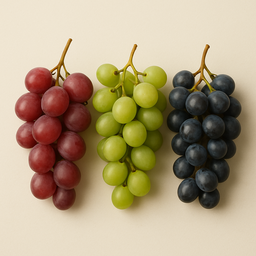 Grapes
 Classic cheese board combination: fat improves resveratrol absorption
Technical: Red grapes contain resveratrol which is fat-soluble. Cheese provides fats that increase bioavailability of resveratrol through micelle formation in the gut.
What does this mean for you? The classic cheese board with grapes is not only delicious but also nutritionally smart - the cheese helps you better absorb resveratrol from grapes.
Goat Cheese (Chèvre) 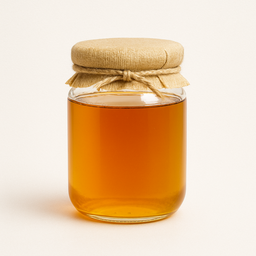 Honey
Honey MCFAs from goat cheese + prebiotics from honey for quick energy and gut flora
Technical: Goat cheese contains 30-35% medium-chain fatty acids (MCFAs) that go directly to the liver and are quickly converted to energy, without being stored in fat tissue. Honey contains oligosaccharides and fructo-oligosaccharides (FOS) acting as prebiotics feeding beneficial gut bacteria. Together: quick energy within 30 minutes plus nourishment for your gut flora.
What does this mean for you? Spread goat cheese with honey on toast as breakfast or pre-workout snack. The cheese gives quick energy, the honey feeds your good gut bacteria.
Goat Cheese (Chèvre) 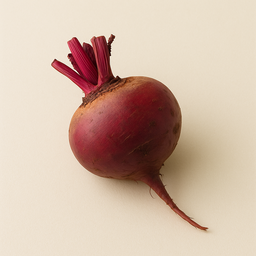 Beetroot
 Protein + minerals complement betalains
Technical: Goat cheese provides 22g protein and 500mg calcium per 100g. The fats (21g) in cheese increase absorption of fat-soluble betalains from beetroot. The salty taste also balances the earthy sweetness of the beet.
What does this mean for you? Combine roasted beetroot with crumbled goat cheese or feta, walnuts and some balsamic. A classic salad that's also nutritionally well-composed — cheese fat makes betalains more absorbable.
Recipes with Goat Cheese (Chèvre)
Discover delicious recipes featuring goat cheese (chèvre):
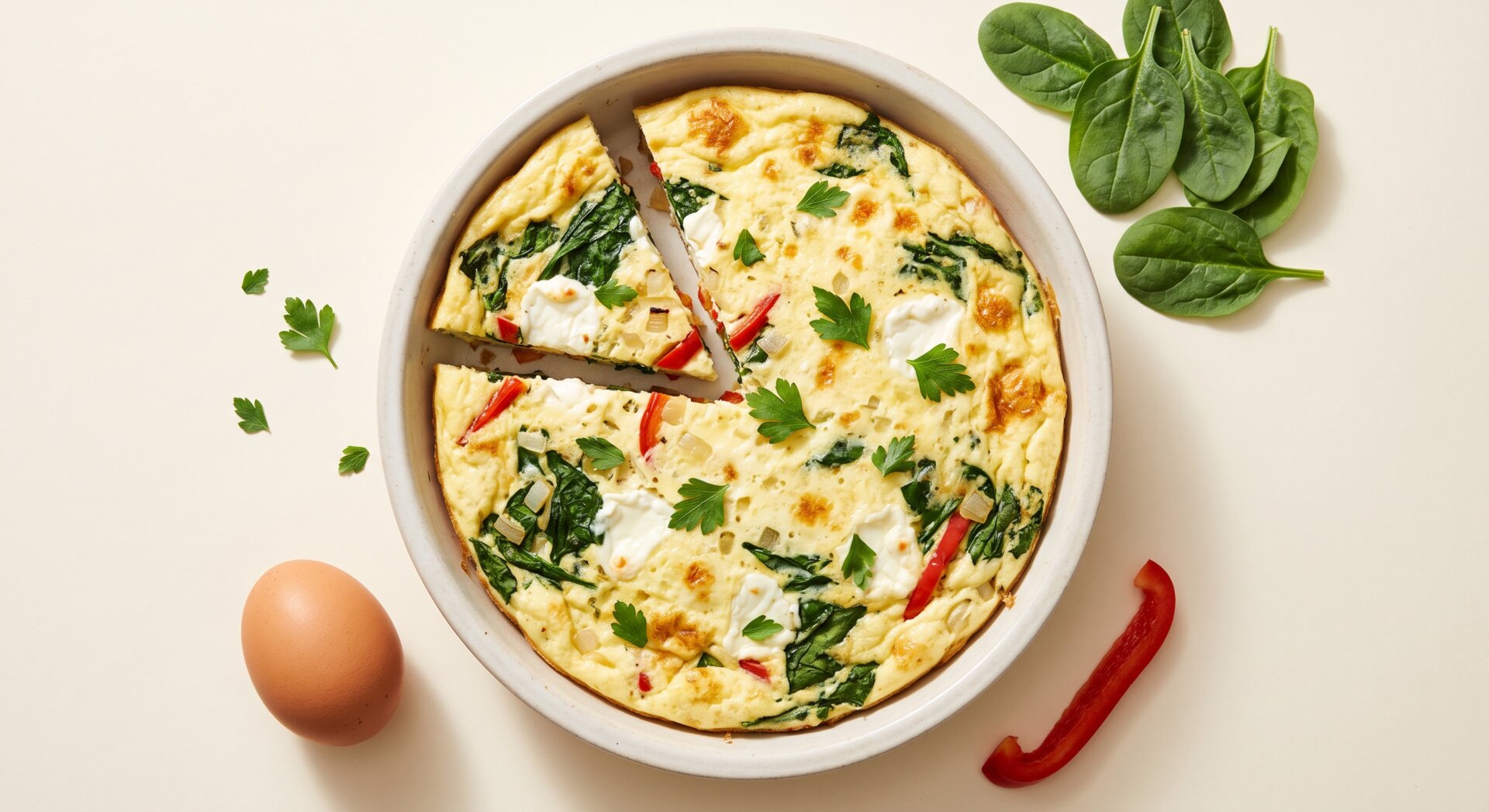 Egg White Frittata with Vegetables 30 min Fluffy frittata with spinach, bell pepper and soft goat cheese
  280 kcal
  32g protein 1 synergies
 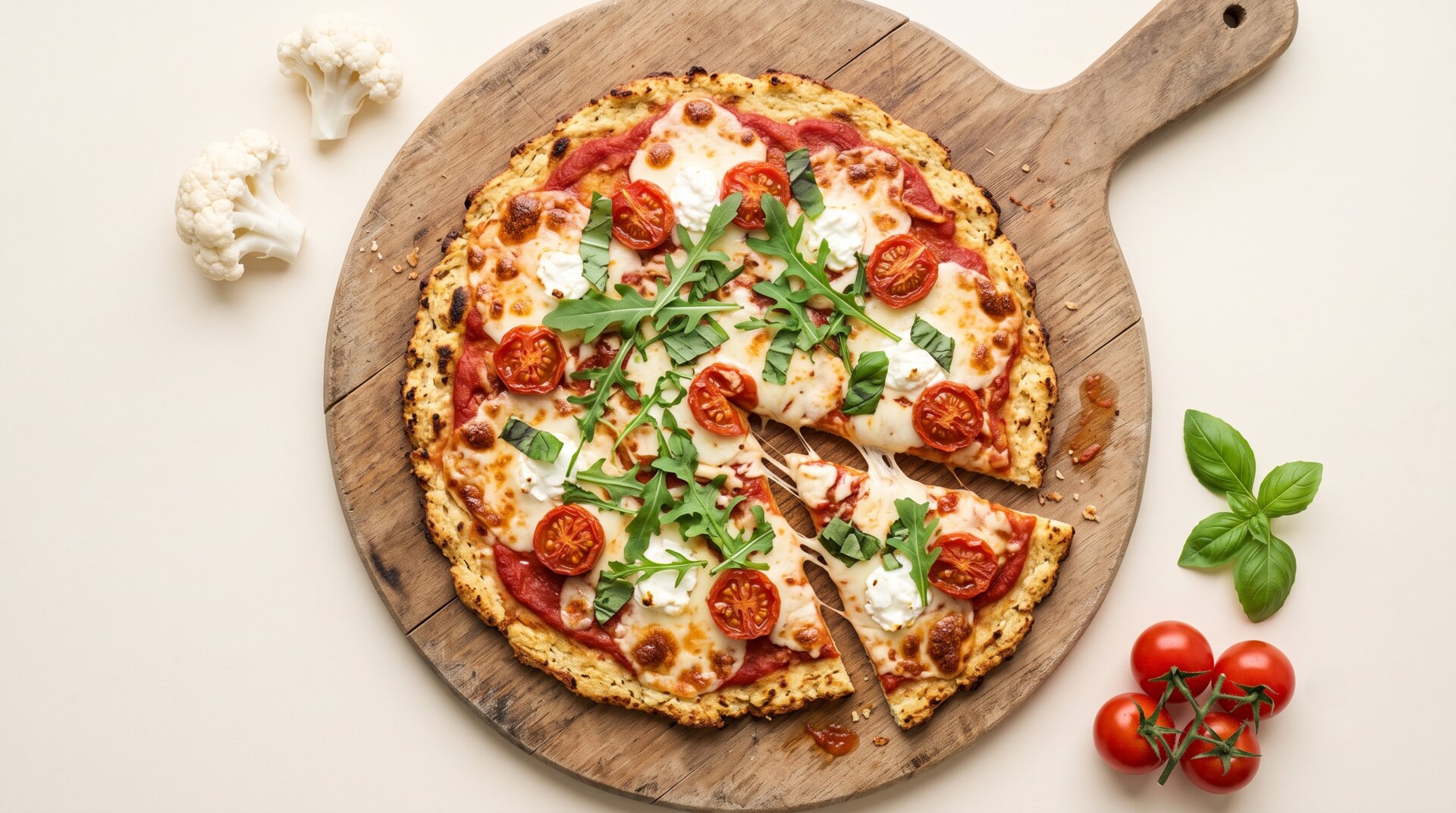 Crispy Cauliflower Pizza 65 min Gluten-free pizza crust with cauliflower and mozzarella 555 kcal 33g protein 2 synergies
 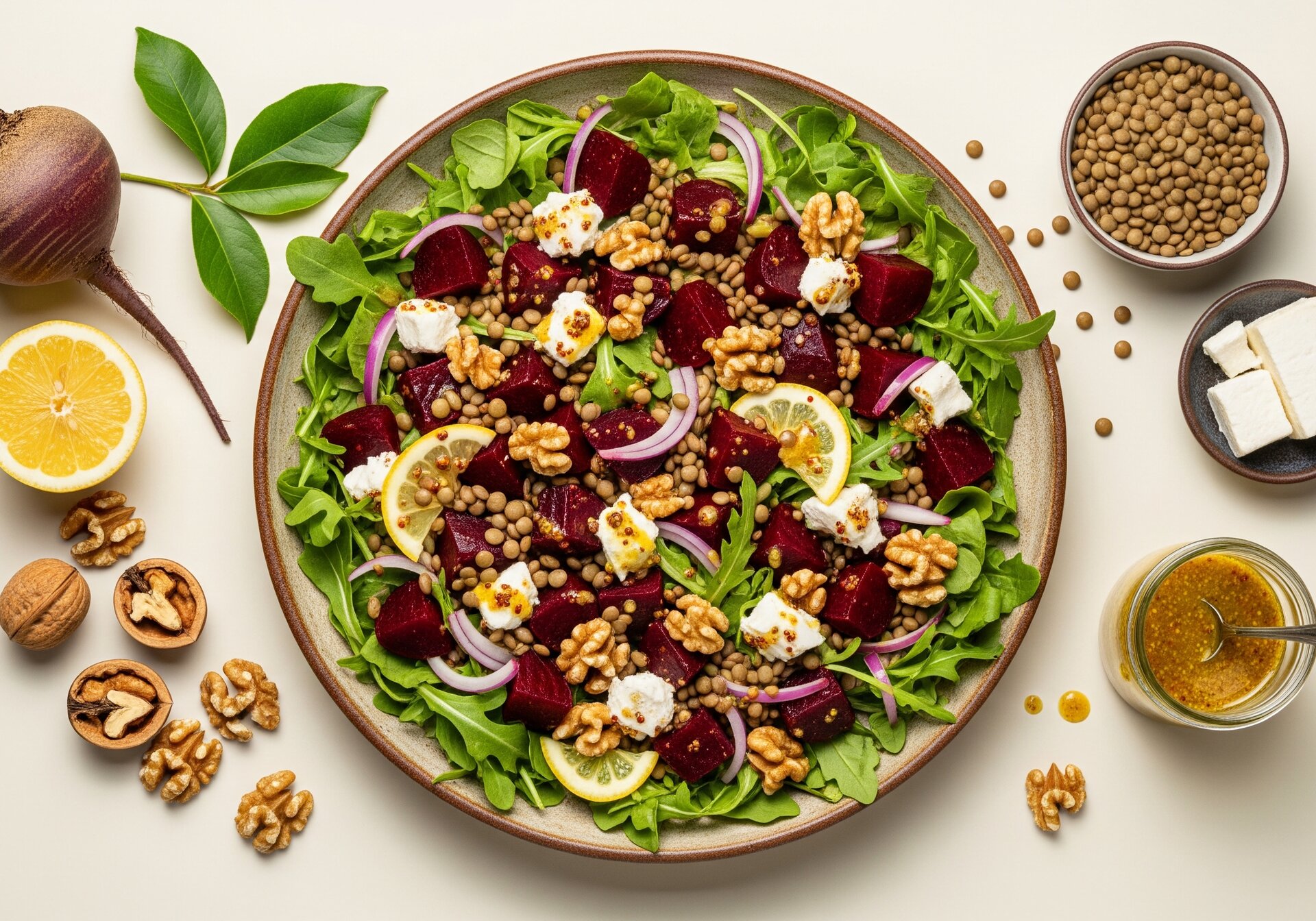 Lentil Beet Salad 60 min Hearty salad with lentils, roasted beets and goat cheese 380 kcal 18g protein 1 synergies
 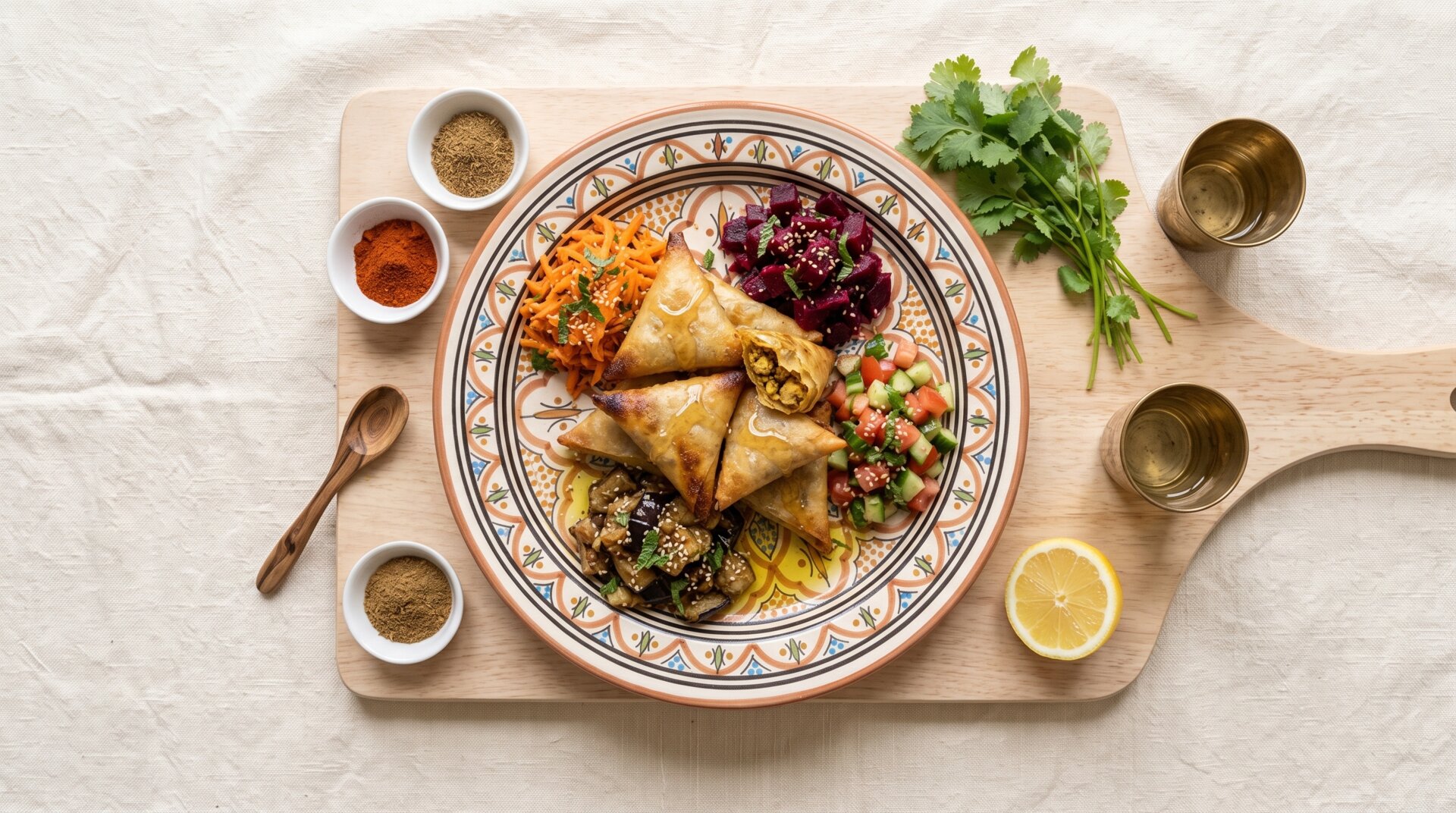 Moroccan Mezze Platter with Briwat 75 min Colourful selection of salads and crispy briwat 420 kcal 18g protein 4 synergies
 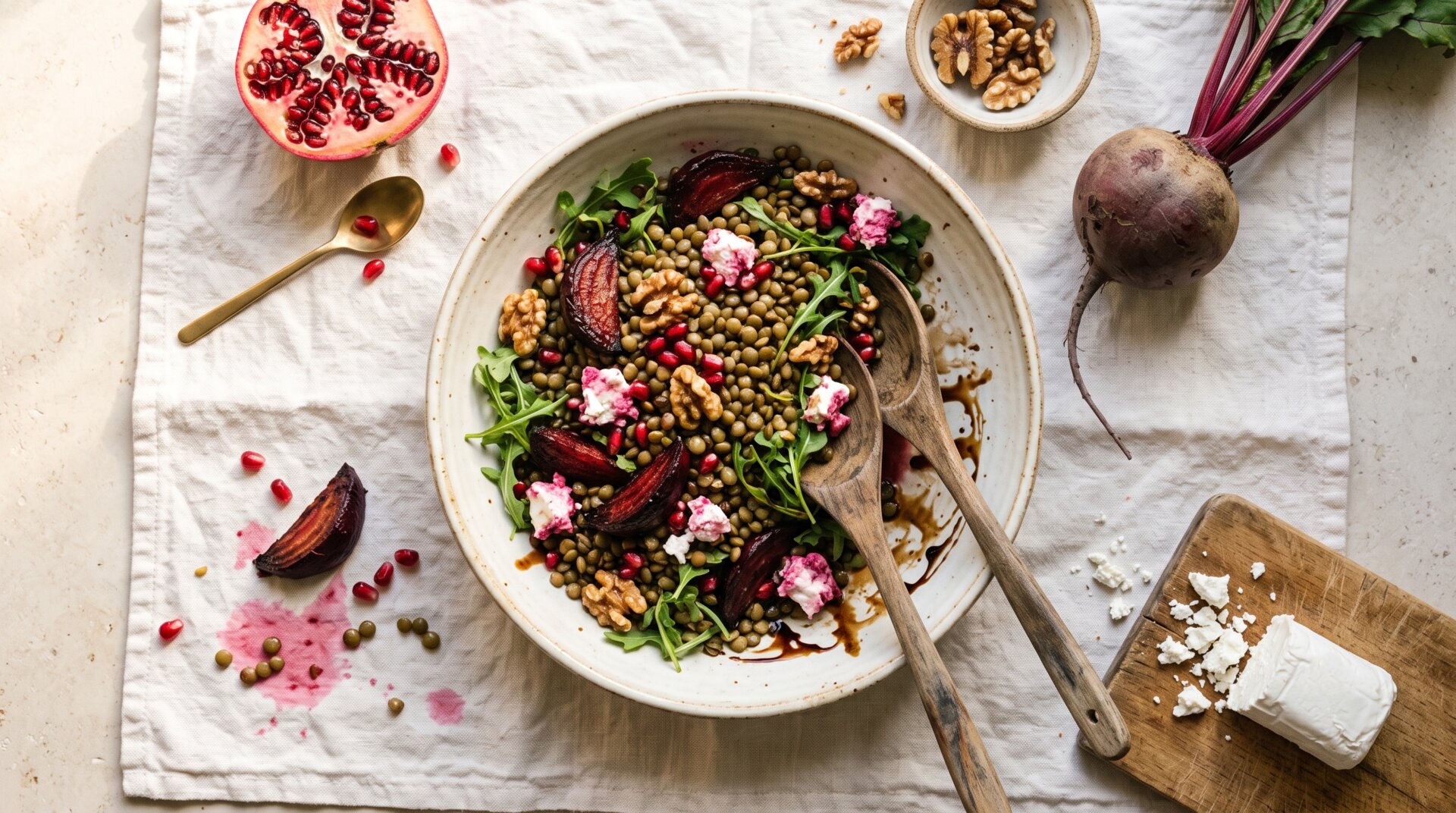 Mediterranean Lentil Salad with Goat Cheese 40 min Hearty salad with beetroot and walnuts 793 kcal 31g protein 1 synergies
 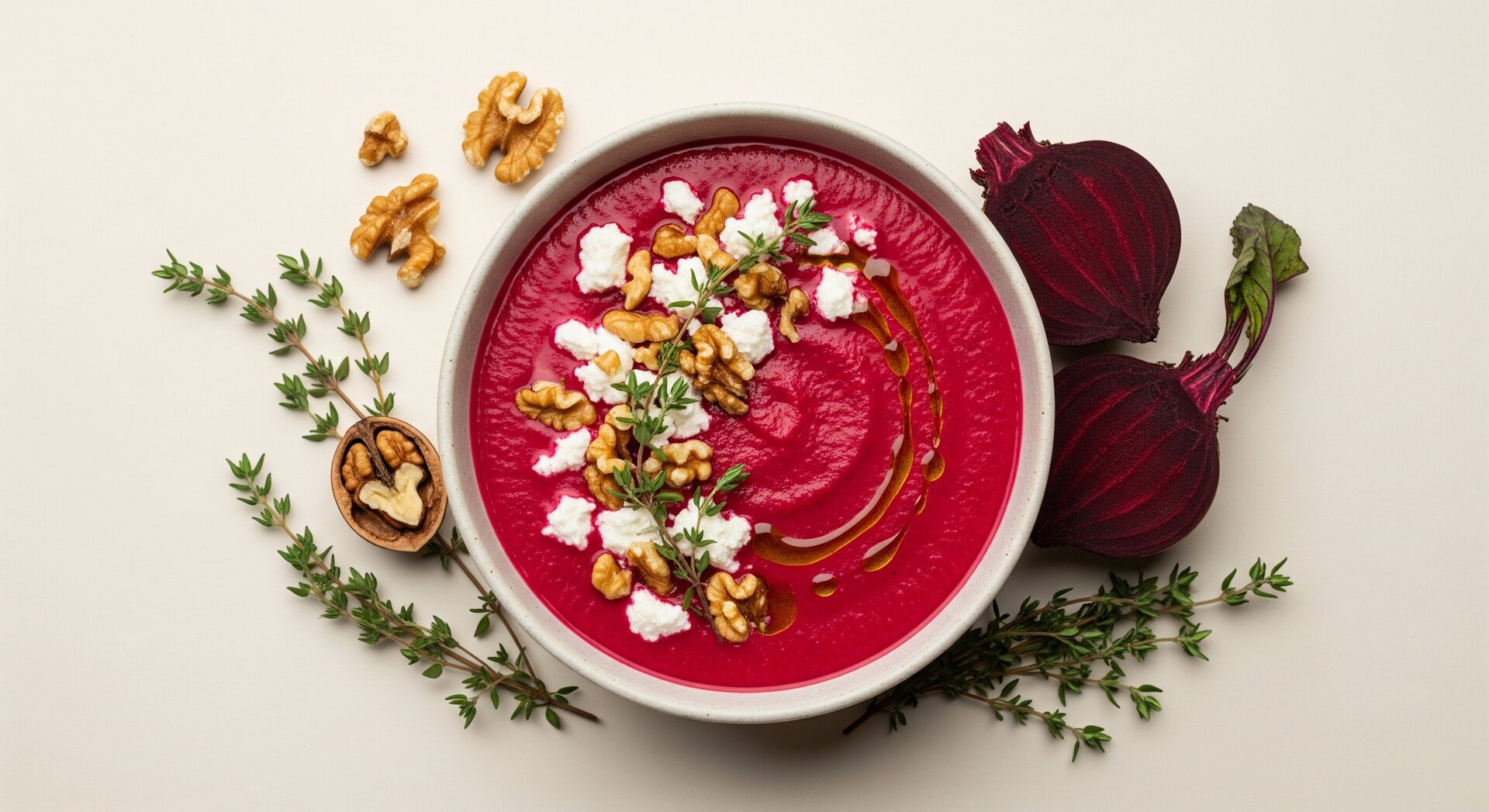 Beetroot Soup with Goat Cheese and Walnut 70 min Velvety soup with roasted beetroot, thyme and balsamic vinegar 397 kcal 13g protein 3 synergies
  In the Kitchen
Storage
Location:Refrigerator
Substitutes
Smart preparation
1Cut soft goat cheese with a wire or dental floss.
Why?
A knife sticks more easily and can deform the soft cheese.
2Briefly heat goat cheese to make it creamy in sauces.
3Let goat cheese reach room temperature for 15 minutes before serving.
Why?
The flavor and texture come out better.
Caution / Warnings
Goat Cheese (Chèvre) is very safe, but there are scientific considerations:
Goat's milk allergy Severe
Goat cheese contains goat's milk proteins. With a confirmed goat's milk allergy or a clear reaction to goat's milk, avoidance is important; overlap with cow's milk protein sensitivity can occur.
Advice:
With a confirmed allergy: avoid goat cheese and seek personal advice from a doctor or dietitian. With lactose sensitivity, tolerance varies by person; start with a small amount only if that is appropriate for you.
High saturated fat and salt content Moderate
Goat cheese is calorie-dense and contains substantial fat, saturated fat and sodium per 100 g. Values vary strongly between fresh, soft and aged varieties.
Advice:
Use goat cheese mainly as a flavor accent, for example 30-50 g in a salad or warm dish. Choose a smaller portion with an energy-restricted, salt-restricted or medically advised diet.
Traditional use
Mediterranean
Goat cheese in the Mediterranean
Goat cheese is among the oldest cheeses in the world and was already produced in ancient Mesopotamia and Egypt. In Mediterranean cuisines, it pairs with bread, olives, herbs, honey, nuts and seasonal vegetables.
Summary
Goat cheese is a versatile cheese with a fresh, creamy and sometimes earthy flavor. Fresh chèvre is soft and spreadable, while aged varieties are firmer and more intense. Goat cheese naturally contains protein, calcium, vitamin A, vitamin B12 and iodine; its fat contains medium-chain fatty acids that contribute to its recognizable aroma. Use 30-50 g as a flavor accent in salads, on toast, with roasted vegetables or on a cheese board. Pair with honey, walnuts, figs, beetroot or thyme. With milk allergy, lactose sensitivity or a medical diet, personal tolerance matters.