Edamame
The Young Soybean
What is this ingredient?
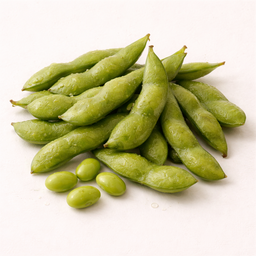
Edamame are young soybeans that are briefly boiled or steamed. They provide relatively high amounts of protein and fiber and are a well-known plant source with a complete amino acid profile: they contain all essential amino acids.
They also contain isoflavones, such as genistein and daidzein. These are plant polyphenols often discussed in nutrition research because of their mild interaction with estrogen receptors. For most people, edamame fit well into a varied diet. For hormone-sensitive conditions, or when in doubt, moderate intake and personal advice are sensible.
Culinarily, edamame are simple: boil or steam them briefly, finish with sea salt, sesame, or chili flakes, and press the beans out of the pod. The pod itself is usually not eaten.
How does it taste?
Fresh, mildly sweet and grassy with a firm, juicy bite.
Pairs well with:
Pairs well with sea saltsesamesoy saucechili and ginger.
Did you know...?
- The word 'edamame' is Japanese and literally means 'stem beans'.
- Edamame have been eaten in Japan as a beer snack since the Kamakura period (1185-1333).
Nutritional Value & Energy
Per 100g
Edamame provides energy thanks to natural nutrients , buffered by fiber.
Per 100g
Minerals
Vitamins
More nutrients
B-Vitamins
Trace Minerals
What's in a serving?
1 serving (dry)
Edamame naturally contains vitamin K (26.7 mcg per 100 g).
Edamame naturally contains folate (311 mcg per 100 g).
Edamame naturally contains manganese (1 mg per 100 g).
Edamame naturally contains phosphorus (169 mg per 100 g).
Edamame naturally contains iron (2.3 mg per 100 g).
Edamame naturally contains magnesium (64 mg per 100 g).
Edamame naturally contains potassium (436 mg per 100 g).
Edamame naturally contains copper (0.4 mg per 100 g).
% of daily reference intake (DRI)
EU-approved nutrition claims
This ingredient contains nutrients for which EFSA-authorized health claims exist (at nutrient level, not ingredient-specific).
Approved health claims (EU)
Magnesium EU 432/2012
Magnesium contributes to normal muscle function
Contains 64mg/100g (threshold: ≥56.25mg/100g)
Magnesium EU 432/2012
Magnesium contributes to the reduction of tiredness and fatigue
Contains 64mg/100g (threshold: ≥56.25mg/100g)
Magnesium EU 432/2012
Magnesium contributes to normal functioning of the nervous system
Contains 64mg/100g (threshold: ≥56.25mg/100g)
Iron EU 432/2012
Iron contributes to normal energy-yielding metabolism
Contains 2.3mg/100g (threshold: ≥2.1mg/100g)
Iron EU 432/2012
Iron contributes to the reduction of tiredness and fatigue
Contains 2.3mg/100g (threshold: ≥2.1mg/100g)
Potassium EU 432/2012
Potassium contributes to the maintenance of normal blood pressure
Contains 436mg/100g (threshold: ≥300mg/100g)
Folate EU 432/2012
Folate contributes to normal blood formation
Contains 311mcg/100g (threshold: ≥30mcg/100g)
Folate EU 432/2012
Folate contributes to normal amino acid synthesis
Contains 311mcg/100g (threshold: ≥30mcg/100g)
Folate EU 432/2012
Folate contributes to normal homocysteine metabolism
Contains 311mcg/100g (threshold: ≥30mcg/100g)
Folate EU 432/2012
Folate contributes to normal psychological function
Contains 311mcg/100g (threshold: ≥30mcg/100g)
Folate EU 432/2012
Folate contributes to the normal function of the immune system
Contains 311mcg/100g (threshold: ≥30mcg/100g)
Folate EU 432/2012
Folate has a role in the process of cell division
Contains 311mcg/100g (threshold: ≥30mcg/100g)
Folate EU 432/2012
Folate contributes to maternal tissue growth during pregnancy
Contains 311mcg/100g (threshold: ≥30mcg/100g)
Vitamin_k EU 432/2012
Vitamin K contributes to normal blood clotting
Contains 26.7mcg/100g (threshold: ≥11.25mcg/100g)
Vitamin_k EU 432/2012
Vitamin K contributes to the maintenance of normal bones
Contains 26.7mcg/100g (threshold: ≥11.25mcg/100g)
Phosphorus EU 432/2012
Phosphorus contributes to normal energy-yielding metabolism
Contains 169mg/100g (threshold: ≥105mg/100g)
Phosphorus EU 432/2012
Phosphorus contributes to the normal function of cell membranes
Contains 169mg/100g (threshold: ≥105mg/100g)
Phosphorus EU 432/2012
Phosphorus contributes to the maintenance of normal bones
Contains 169mg/100g (threshold: ≥105mg/100g)
Phosphorus EU 432/2012
Phosphorus contributes to the maintenance of normal teeth
Contains 169mg/100g (threshold: ≥105mg/100g)
Magnesium EU 432/2012
Magnesium contributes to normal energy-yielding metabolism
Contains 64mg/100g (threshold: ≥56.25mg/100g)
Magnesium EU 432/2012
Magnesium contributes to electrolyte balance
Contains 64mg/100g (threshold: ≥56.25mg/100g)
Magnesium EU 432/2012
Magnesium contributes to normal protein synthesis
Contains 64mg/100g (threshold: ≥56.25mg/100g)
Magnesium EU 432/2012
Magnesium contributes to normal psychological function
Contains 64mg/100g (threshold: ≥56.25mg/100g)
Magnesium EU 432/2012
Magnesium contributes to the maintenance of normal bones
Contains 64mg/100g (threshold: ≥56.25mg/100g)
Magnesium EU 432/2012
Magnesium contributes to the maintenance of normal teeth
Contains 64mg/100g (threshold: ≥56.25mg/100g)
Magnesium EU 432/2012
Magnesium has a role in the process of cell division
Contains 64mg/100g (threshold: ≥56.25mg/100g)
Iron EU 432/2012
Iron contributes to normal cognitive function
Contains 2.3mg/100g (threshold: ≥2.1mg/100g)
Iron EU 432/2012
Iron contributes to normal formation of red blood cells and haemoglobin
Contains 2.3mg/100g (threshold: ≥2.1mg/100g)
Iron EU 432/2012
Iron contributes to normal oxygen transport in the body
Contains 2.3mg/100g (threshold: ≥2.1mg/100g)
Iron EU 432/2012
Iron contributes to the normal function of the immune system
Contains 2.3mg/100g (threshold: ≥2.1mg/100g)
Iron EU 432/2012
Iron has a role in the process of cell division
Contains 2.3mg/100g (threshold: ≥2.1mg/100g)
Copper EU 432/2012
Copper contributes to the maintenance of normal connective tissues
Contains 0.4mg/100g (threshold: ≥0.15mg/100g)
Copper EU 432/2012
Copper contributes to normal energy-yielding metabolism
Contains 0.4mg/100g (threshold: ≥0.15mg/100g)
Copper EU 432/2012
Copper contributes to normal functioning of the nervous system
Contains 0.4mg/100g (threshold: ≥0.15mg/100g)
Copper EU 432/2012
Copper contributes to normal hair pigmentation
Contains 0.4mg/100g (threshold: ≥0.15mg/100g)
Copper EU 432/2012
Copper contributes to normal iron transport in the body
Contains 0.4mg/100g (threshold: ≥0.15mg/100g)
Copper EU 432/2012
Copper contributes to normal skin pigmentation
Contains 0.4mg/100g (threshold: ≥0.15mg/100g)
Copper EU 432/2012
Copper contributes to the normal function of the immune system
Contains 0.4mg/100g (threshold: ≥0.15mg/100g)
Copper EU 432/2012
Copper contributes to the protection of cells from oxidative stress
Contains 0.4mg/100g (threshold: ≥0.15mg/100g)
Manganese EU 432/2012
Manganese contributes to normal energy-yielding metabolism
Contains 1mg/100g (threshold: ≥0.3mg/100g)
Manganese EU 432/2012
Manganese contributes to the maintenance of normal bones
Contains 1mg/100g (threshold: ≥0.3mg/100g)
Manganese EU 432/2012
Manganese contributes to the normal formation of connective tissue
Contains 1mg/100g (threshold: ≥0.3mg/100g)
Manganese EU 432/2012
Manganese contributes to the protection of cells from oxidative stress
Contains 1mg/100g (threshold: ≥0.3mg/100g)
Potassium EU 432/2012
Potassium contributes to normal functioning of the nervous system
Contains 436mg/100g (threshold: ≥300mg/100g)
Potassium EU 432/2012
Potassium contributes to normal muscle function
Contains 436mg/100g (threshold: ≥300mg/100g)
Comparison
vsspinazie
Edamame contains about 2× more folate per 100 g than spinach.
What's being researched?
Soy isoflavones and cardiovascular research
The isoflavones in edamame, such as genistein and daidzein, are studied in relation to cardiovascular markers. Meta-analyses describe associations with lipid profiles, especially in postmenopausal women, but outcomes remain nutrient- and context-dependent.
Supported by: [1] Sánchez A (1988)
Edamame isoflavones and bone density
The possible relationship between soy isoflavones and bone density is being studied, especially in postmenopausal women. Results are mixed: some studies show modest positive associations, while others find little effect.
Supported by: [2] Simonne (2000) , [1] Sánchez A (1988)
Good Combinations (Synergy)
Combine edamame smartly to enhance the effect:
Edamame 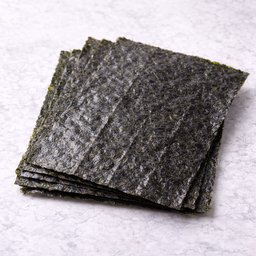 Nori
Nori Japanese combination: isoflavones + iodine
Technical: Soy isoflavones can affect thyroid function at high doses through TPO inhibition. Seaweed provides iodine (16-2000μg per serving) that compensates this effect. Good to know: iodine contributes to the normal production of thyroid hormones and normal thyroid function (EFSA-approved). In Japan where lots of soy AND seaweed are eaten, this combination is standard.
What does this mean for you? If you regularly eat edamame or tofu, combine with seaweed (miso soup with wakame, sushi with nori). This is the traditional Japanese approach followed for centuries.
Edamame 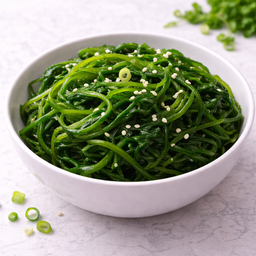 Wakame
 Japanese combination: isoflavones + iodine
Technical: Soy isoflavones can affect thyroid function at high doses through TPO inhibition. Seaweed provides iodine (16-2000μg per serving) that compensates this effect. Good to know: iodine contributes to the normal production of thyroid hormones and normal thyroid function (EFSA-approved). In Japan where lots of soy AND seaweed are eaten, this combination is standard.
What does this mean for you? If you regularly eat edamame or tofu, combine with seaweed (miso soup with wakame, sushi with nori). This is the traditional Japanese approach followed for centuries.
Edamame 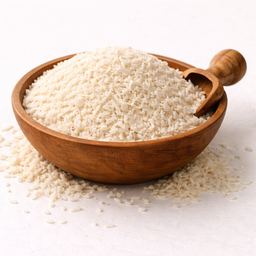 Rice
Rice Complete protein combination (legume + grain)
Technical: Edamame (immature soybeans) contains 11g protein per 100g with high lysine content (0.9g) but relatively low methionine. Rice provides methionine and cysteine but lacks lysine. Together they reach a PDCAAS (protein quality score) close to 1.0 — comparable to animal protein. This is the biochemical basis of the Japanese bento.
What does this mean for you? Serve edamame alongside sushi rice or regular rice — this is why it's served as a side dish in every Japanese restaurant. You get complete proteins without meat.
Edamame 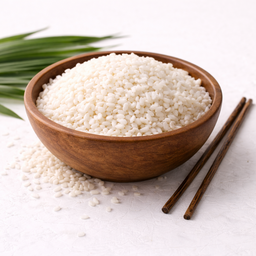 Sushi Rice (Short Grain)
 Complete protein combination (legume + grain)
Technical: Edamame (immature soybeans) contains 11g protein per 100g with high lysine content (0.9g) but relatively low methionine. Rice provides methionine and cysteine but lacks lysine. Together they reach a PDCAAS (protein quality score) close to 1.0 — comparable to animal protein. This is the biochemical basis of the Japanese bento.
What does this mean for you? Serve edamame alongside sushi rice or regular rice — this is why it's served as a side dish in every Japanese restaurant. You get complete proteins without meat.
Edamame 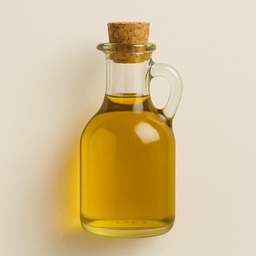 Sesame Oil
 Increased absorption of isoflavones
Technical: Edamame contains isoflavones (genistein and daidzein) — phytoestrogens that are lipophilic (fat-loving) and are significantly better absorbed in the presence of fats. Sesame oil contains sesamin, a lignan with its own antioxidant action. The fat in sesame oil increases isoflavone bioavailability by 2-3x.
What does this mean for you? Drizzle sesame oil over your edamame or briefly stir-fry them in sesame oil with sea salt. The nutty aroma of sesame pairs perfectly with edamame and your body absorbs the isoflavones much better.
Recipes with Edamame
Discover delicious recipes featuring edamame:
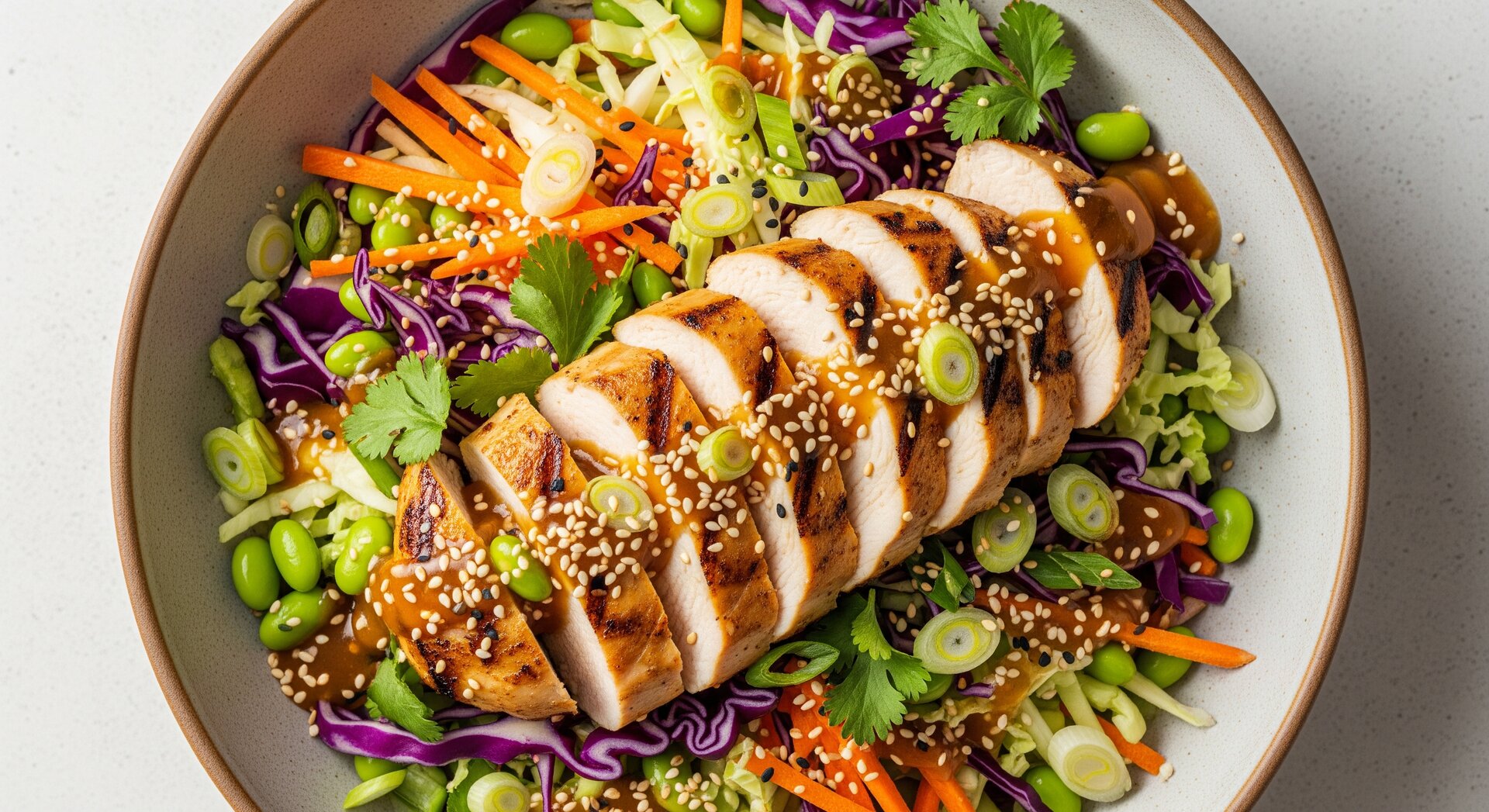 Asian Sesame Chicken Salad 25 min Crispy salad with grilled chicken and ginger-sesame dressing
  320 kcal
  28g protein 1 synergies
 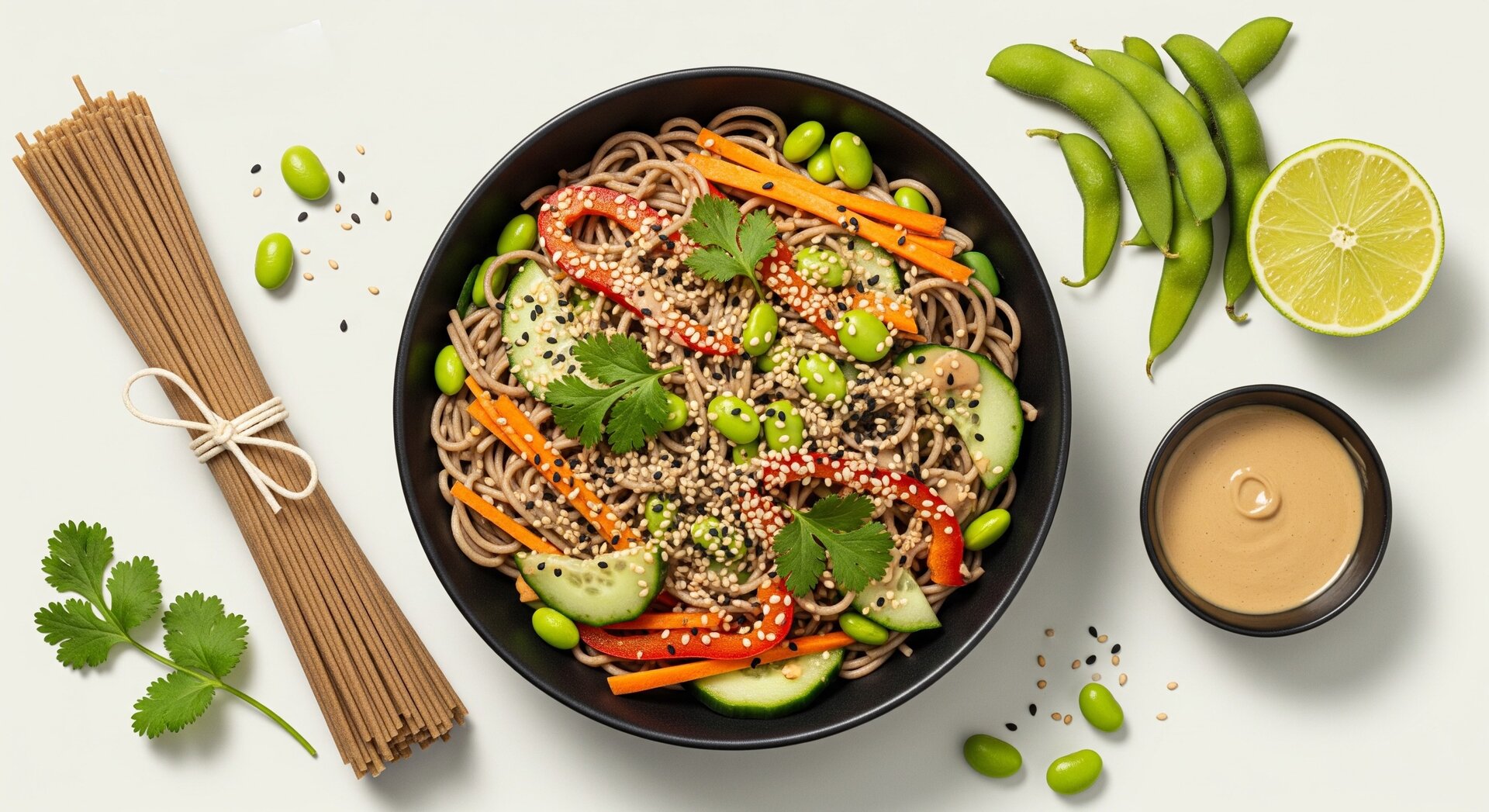 Asian Sesame-Soba Noodle Salad with Edamame 25 min Cold noodle salad with sesame dressing and edamame 751 kcal 31g protein 1 synergies
 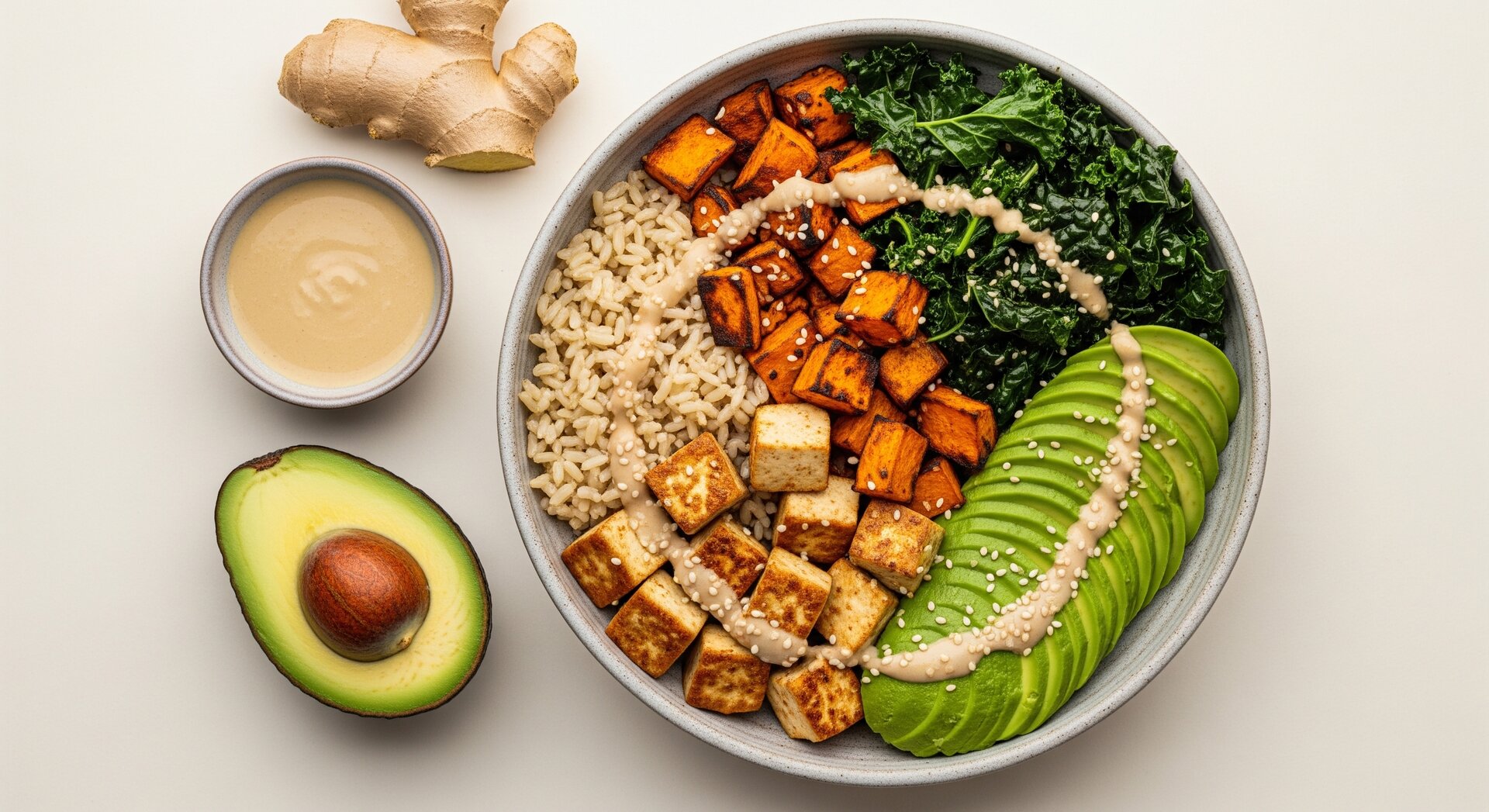 Buddha Bowl with Tofu, Sweet Potato and Kale 50 min Warm bowl with roasted vegetables 790 kcal 30g protein 3 synergies
 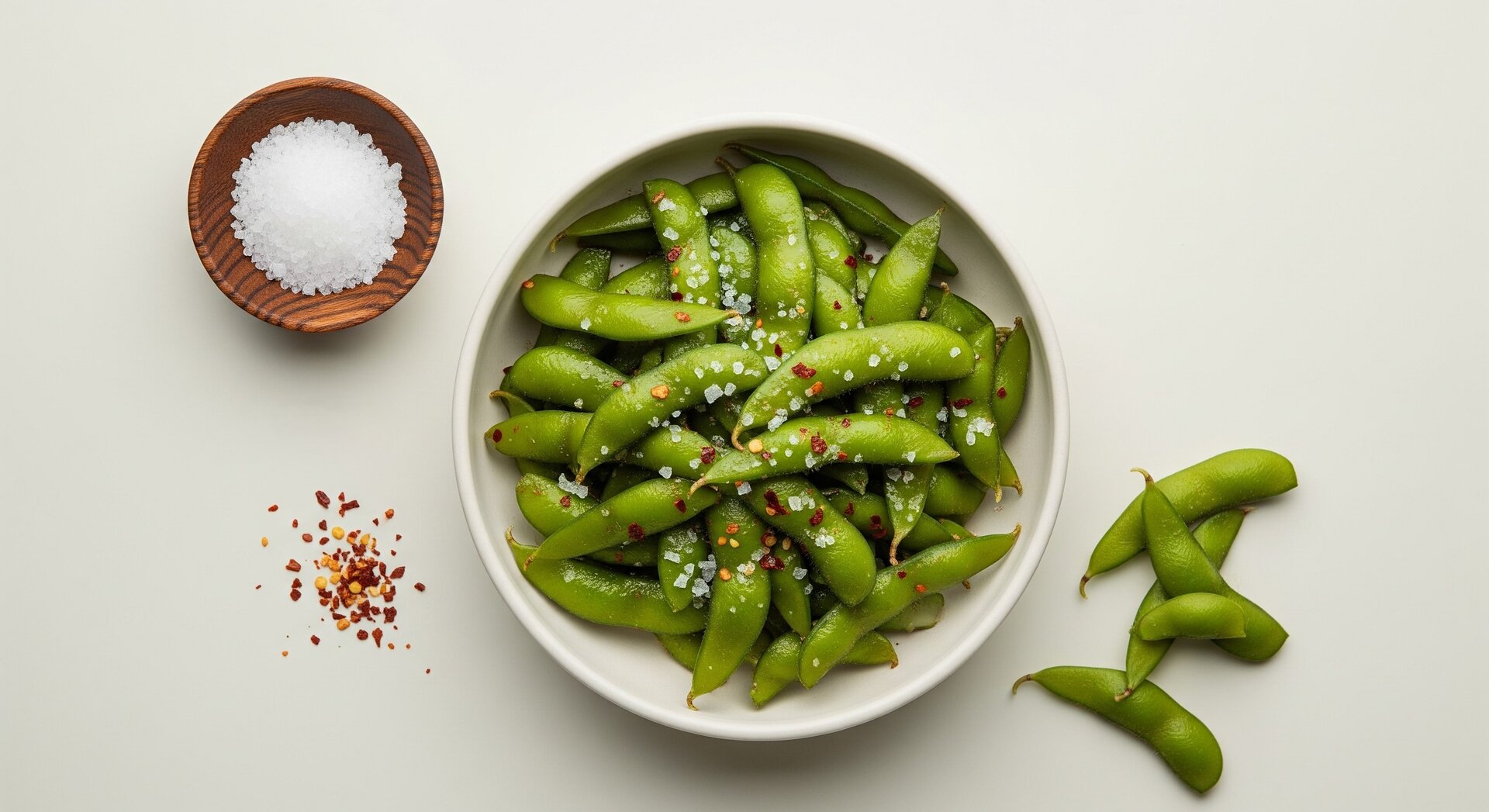 Edamame Bowl with Sea Salt and Chili 15 min Plant-based snack with sea salt, chili and a splash of olive oil 205 kcal 17g protein 1 synergies
 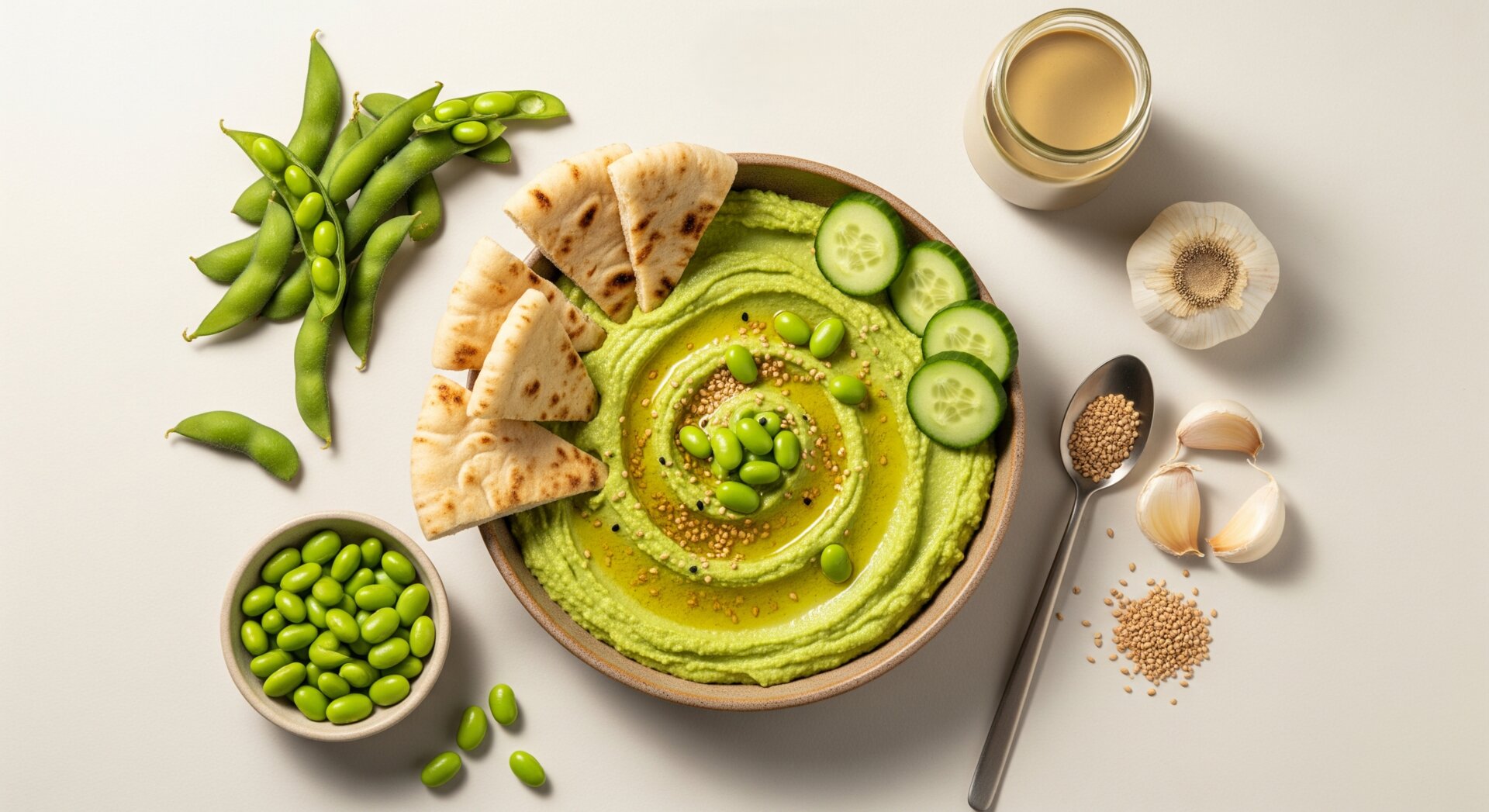 Edamame Hummus Dip 14 min Green hummus variant with tahini, lemon and cumin 180 kcal 9g protein 2 synergies
 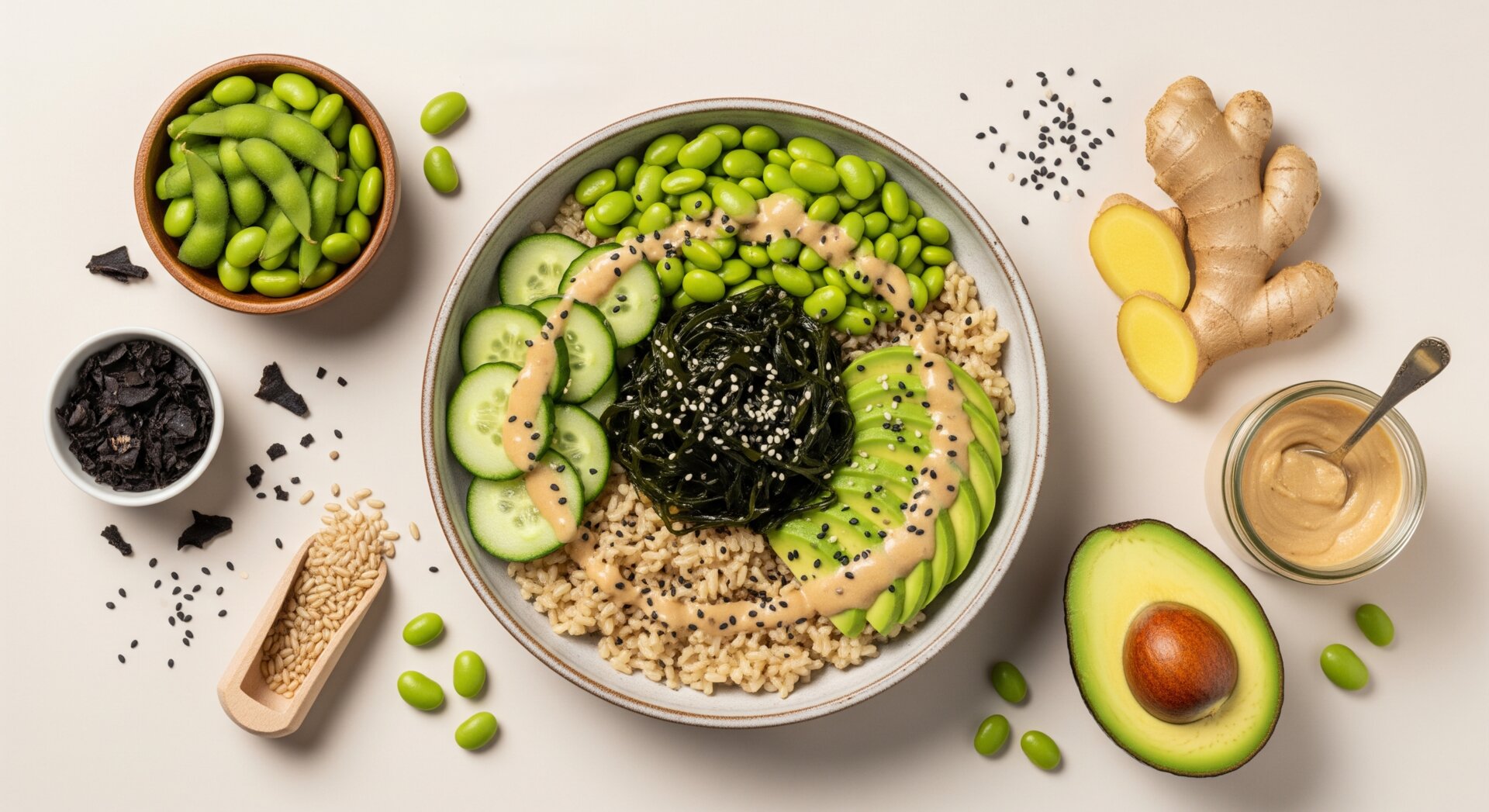 Edamame Seaweed Bowl with Ginger Tahini 15 min Fresh Japanese-style bowl with creamy dressing 445 kcal 16g protein 2 synergies
  In the Kitchen
Storage
Location:Freezer
Shelf life:1 jaar
Usually bought frozen. Thawed edamame keeps up to 2 days in the fridge.
Preparation
Boil for 3–5 minutes in salted water or steam briefly. Finish with salt, chili flakes, or a little sesame.
Conversions
Substitutes
Smart preparation
1Cook edamame in their pods for 4-5 minutes in salted water.
2Shock cooked edamame in ice water for a bright colour.
3Thawed edamame only needs to be cooked for 2-3 minutes.
Caution / Warnings
Edamame is very safe, but there are scientific considerations:
Soy Allergy Severe
Soy is a common allergen and can sometimes trigger severe reactions.
Advice:
Strictly avoid. Replace with peas, chickpeas, or broad beans.
Thyroid Medication Mild
Soy foods can interfere with levothyroxine absorption if taken at the same time.
Advice:
Separate medication and large soy meals by 3–4 hours; follow clinician or pharmacist advice.
Traditional use
Southeast Asian
Japanese and Chinese traditional snack
Edamame, young soybeans, have been eaten in China and Japan for over 2000 years. In Japan, they have been a popular side dish with beer and sake since the Edo period.
Summary
An easy plant-based protein snack with a firm bite. Delicious with a pinch of sea salt, sesame, or chili flakes. Don’t eat the pod: press the beans out with your teeth or fingers.