Brussels Sprouts
Mini Cabbages Full of Glucosinolates
What is this ingredient?
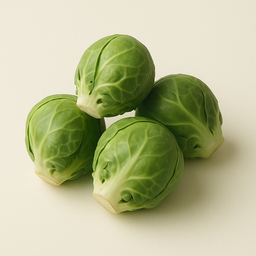
Brussels sprouts (Brassica oleracea var. gemmifera) are mini cabbages that grow along a stalk. They were cultivated in the 13th century around Brussels, hence the name. What makes Brussels sprouts unique is their extremely high glucosinolate content - higher than broccoli or cauliflower. These sulfur compounds are converted to sulforaphane and indole-3-carbinol, powerful activators of the body's own cleansing system. The bitter taste some experience comes from genetic variation in taste receptors. Modern Brussels sprout varieties are less bitter, and roasting caramelizes sugars for a nutty sweetness. After the first frost, Brussels sprouts become sweeter.
How does it taste?
Nutty and slightly bitter with a cabbage-like depth. Roasting brings caramelized sweetness.
Pairs well with:
Pairs well with baconchestnutbalsamicparmesan and mustard.
Did you know...?
- Brussels sprouts are named after Brussels, where they became popular in the 13th century.
- The dislike of Brussels sprouts is partly genetic: some people taste bitter compounds more strongly.
Nutritional Value & Energy
Per 100g
Brussels Sprouts is low in calories thanks to natural nutrients , buffered by fiber.
Per 100g
Minerals
Vitamins
Omega-3 fatty acids
More nutrients
B-Vitamins
Trace Minerals
What's in a serving?
1 serving
Brussels Sprouts naturally contains folate (61 mcg per 100 g).
Brussels Sprouts naturally contains iron (8 mg per 100 g).
Brussels Sprouts naturally contains vitamin c (142 mg per 100 g).
Brussels Sprouts naturally contains vitamin k (177 mcg per 100 g).
% of daily reference intake (DRI)
EU-approved nutrition claims
This ingredient contains nutrients for which EFSA-authorized health claims exist (at nutrient level, not ingredient-specific).
Approved health claims (EU)
Vitamin_c EU 432/2012
Vitamin C contributes to the normal function of the immune system
Contains 85mg/100g (threshold: ≥12mg/100g)
Vitamin_c EU 432/2012
Vitamin C contributes to the reduction of tiredness and fatigue
Contains 85mg/100g (threshold: ≥12mg/100g)
Vitamin_c EU 432/2012
Vitamin C contributes to normal collagen formation for the normal function of skin
Contains 85mg/100g (threshold: ≥12mg/100g)
Potassium EU 432/2012
Potassium contributes to the maintenance of normal blood pressure
Contains 389mg/100g (threshold: ≥300mg/100g)
Folate EU 432/2012
Folate contributes to normal blood formation
Contains 61mcg/100g (threshold: ≥30mcg/100g)
Folate EU 432/2012
Folate contributes to normal amino acid synthesis
Contains 61mcg/100g (threshold: ≥30mcg/100g)
Folate EU 432/2012
Folate contributes to normal homocysteine metabolism
Contains 61mcg/100g (threshold: ≥30mcg/100g)
Folate EU 432/2012
Folate contributes to normal psychological function
Contains 61mcg/100g (threshold: ≥30mcg/100g)
Folate EU 432/2012
Folate contributes to the normal function of the immune system
Contains 61mcg/100g (threshold: ≥30mcg/100g)
Folate EU 432/2012
Folate has a role in the process of cell division
Contains 61mcg/100g (threshold: ≥30mcg/100g)
Folate EU 432/2012
Folate contributes to maternal tissue growth during pregnancy
Contains 61mcg/100g (threshold: ≥30mcg/100g)
Vitamin_c EU 432/2012
Vitamin C contributes to normal collagen formation for the normal function of blood vessels
Contains 85mg/100g (threshold: ≥12mg/100g)
Vitamin_c EU 432/2012
Vitamin C contributes to normal collagen formation for the normal function of bones
Contains 85mg/100g (threshold: ≥12mg/100g)
Vitamin_c EU 432/2012
Vitamin C contributes to normal collagen formation for the normal function of cartilage
Contains 85mg/100g (threshold: ≥12mg/100g)
Vitamin_c EU 432/2012
Vitamin C contributes to normal collagen formation for the normal function of gums
Contains 85mg/100g (threshold: ≥12mg/100g)
Vitamin_c EU 432/2012
Vitamin C contributes to normal collagen formation for the normal function of teeth
Contains 85mg/100g (threshold: ≥12mg/100g)
Vitamin_c EU 432/2012
Vitamin C contributes to normal energy-yielding metabolism
Contains 85mg/100g (threshold: ≥12mg/100g)
Vitamin_c EU 432/2012
Vitamin C contributes to normal functioning of the nervous system
Contains 85mg/100g (threshold: ≥12mg/100g)
Vitamin_c EU 432/2012
Vitamin C contributes to normal psychological function
Contains 85mg/100g (threshold: ≥12mg/100g)
Vitamin_c EU 432/2012
Vitamin C contributes to the protection of cells from oxidative stress
Contains 85mg/100g (threshold: ≥12mg/100g)
Vitamin_c EU 432/2012
Vitamin C contributes to the regeneration of the reduced form of vitamin E
Contains 85mg/100g (threshold: ≥12mg/100g)
Vitamin_c EU 432/2012
Vitamin C increases iron absorption
Contains 85mg/100g (threshold: ≥12mg/100g)
Vitamin_c EU 432/2012
Vitamin C contributes to maintain the normal function of the immune system during and after intense physical exercise
Contains 85mg/100g (threshold: ≥12mg/100g)
Vitamin_k EU 432/2012
Vitamin K contributes to normal blood clotting
Contains 177mcg/100g (threshold: ≥11.25mcg/100g)
Vitamin_k EU 432/2012
Vitamin K contributes to the maintenance of normal bones
Contains 177mcg/100g (threshold: ≥11.25mcg/100g)
Potassium EU 432/2012
Potassium contributes to normal functioning of the nervous system
Contains 389mg/100g (threshold: ≥300mg/100g)
Potassium EU 432/2012
Potassium contributes to normal muscle function
Contains 389mg/100g (threshold: ≥300mg/100g)
Comparison
vsspinazie
Brussels Sprouts contains about 3× more iron per 100g than spinach.
vssinaasappel
Brussels Sprouts contains about 3× more vitamin C per 100g than orange.
What's being researched?
Sulforaphane and DNA protection research
Brussels sprouts contain high concentrations of glucosinolates being studied for potential DNA-protective effects. Human interventions show increased biotransformation enzyme activity after brussels sprout consumption.
Supported by: [2] Shapiro TA (1998) , [3] Wu (2013)
Kaempferol and inflammation modulation
Kaempferol in brussels sprouts is being studied for potential modulation of inflammatory processes. Preclinical models show activity, but clinical confirmation is still limited.
Supported by: [1] Verkerk (2009) , [2] Shapiro TA (1998)
Good Combinations (Synergy)
Combine brussels sprouts smartly to enhance the effect:
Brussels Sprouts 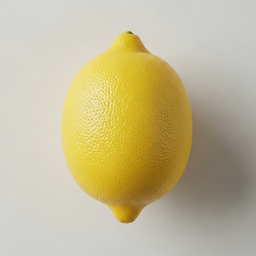 Lemon
Lemon Vitamin C stabilizes sulforaphane and increases iron absorption
Technical: Brussels sprouts contain 85mg own vitamin C per 100g (142% RDI) plus glucosinolates forming sulforaphane. Extra vitamin C from lemon protects sulforaphane from GI tract degradation. Vitamin C also contributes to the increase of iron absorption (EFSA-approved) for the 1.4mg non-heme iron per 100g in sprouts.
What does this mean for you? Sprinkle roasted Brussels sprouts with lemon juice — extra vitamin C keeps sulforaphane intact and improves iron absorption. Fresh taste also balances the earthy sprouts.
Brussels Sprouts 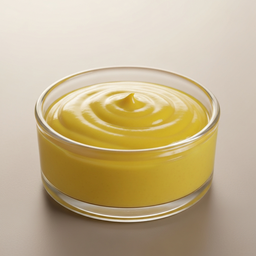 Mustard
 Restores sulforaphane formation after cooking
Technical: Brussels sprouts are rich in glucosinolates (sulfur compounds). Heating inactivates the enzyme myrosinase, preventing sulforaphane formation. Mustard provides external myrosinase.
What does this mean for you? Brussels sprouts are remarkably rich in glucosinolates, but cooking destroys an important enzyme. Simple solution: mix your sprouts with some mustard or sprinkle mustard seeds on top. The mustard restores the enzymatic conversion lost during cooking. Perfect for Christmas sprouts!
Brussels Sprouts 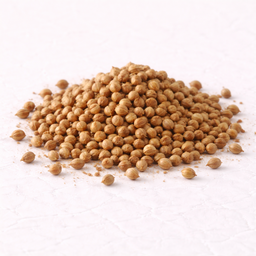 Mustard Seeds
 Restores sulforaphane formation after cooking
Technical: Brussels sprouts are rich in glucosinolates (sulfur compounds). Heating inactivates the enzyme myrosinase, preventing sulforaphane formation. Mustard provides external myrosinase.
What does this mean for you? Brussels sprouts are remarkably rich in glucosinolates, but cooking destroys an important enzyme. Simple solution: mix your sprouts with some mustard or sprinkle mustard seeds on top. The mustard restores the enzymatic conversion lost during cooking. Perfect for Christmas sprouts!
Brussels Sprouts 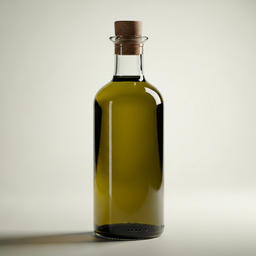 Olive Oil
 Fat increases absorption of Brussels sprouts' vitamin K and carotenoids
Technical: Brussels sprouts contain 177μg vitamin K per 100g (148% RDI), 450μg beta-carotene and 1590μg lutein+zeaxanthin — all fat-soluble. Roasted in olive oil, bioavailability increases 3-5x through micelle formation. Roasting also caramelizes natural sugars reducing bitter taste.
What does this mean for you? Roast Brussels sprouts in olive oil — not only the tastiest preparation but also the most nutritious. Without fat your body barely absorbs the vitamin K, beta-carotene and lutein.
Recipes with Brussels Sprouts
Discover delicious recipes featuring brussels sprouts:
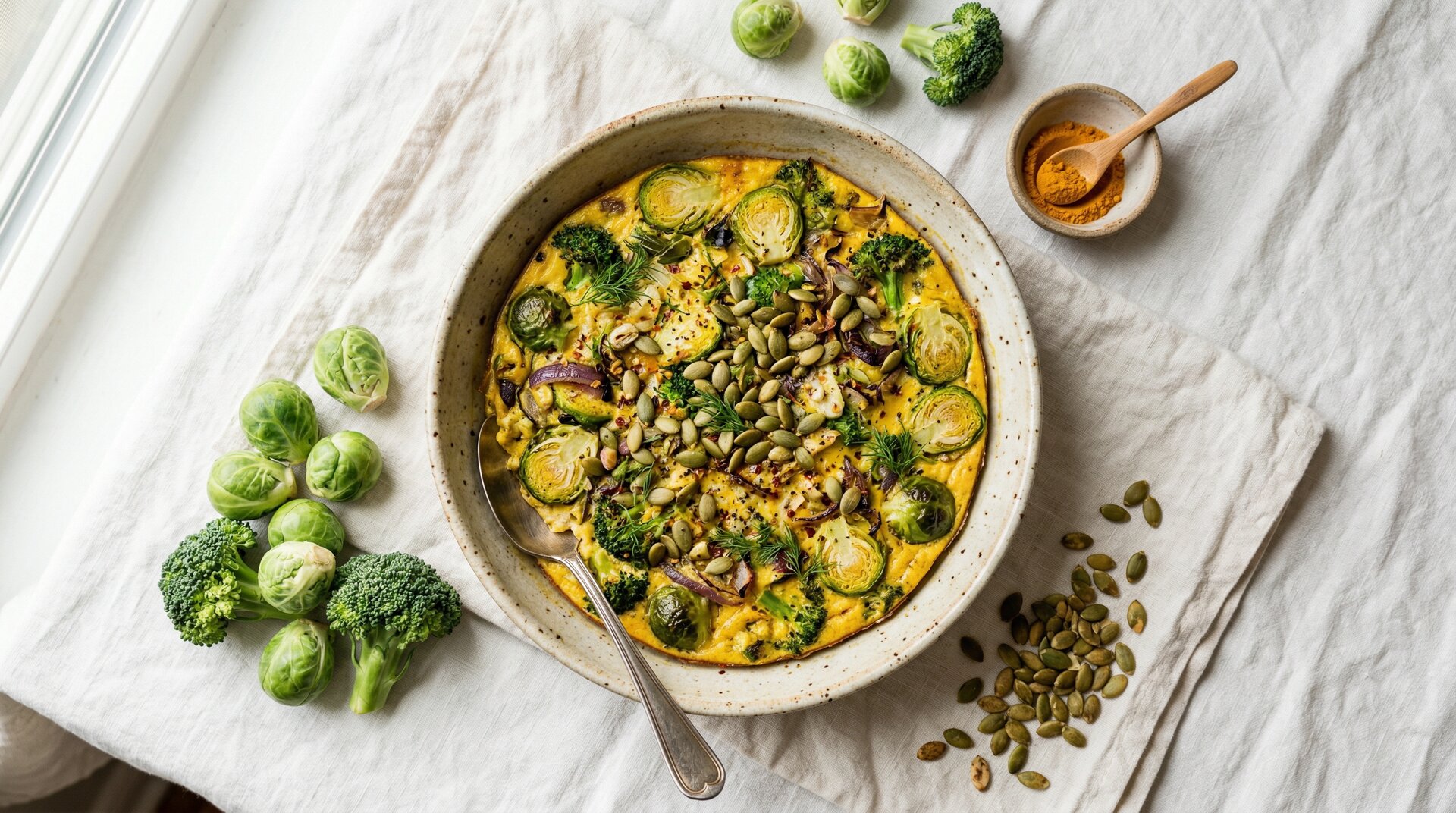 Frittata with Brussels Sprouts, Broccoli and Pumpkin Seeds 30 min Golden from the oven with roasted sprouts and crunchy seeds
  235 kcal
  15g protein 2 synergies
 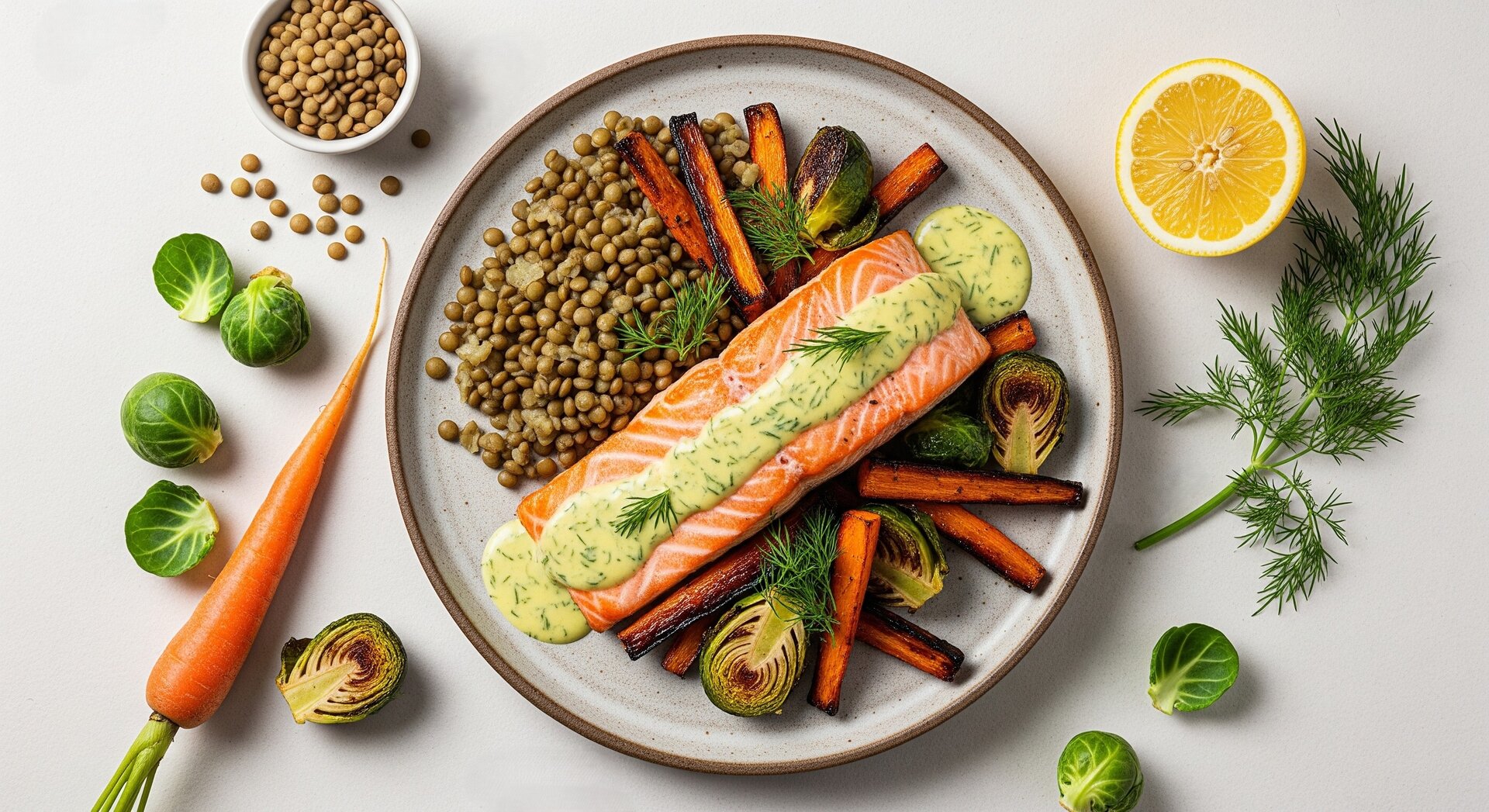 Baked Salmon with Lentils and Roasted Vegetables 45 min Omega-3 rich salmon with green lentils and roasted seasonal vegetables 659 kcal 45g protein 2 synergies
 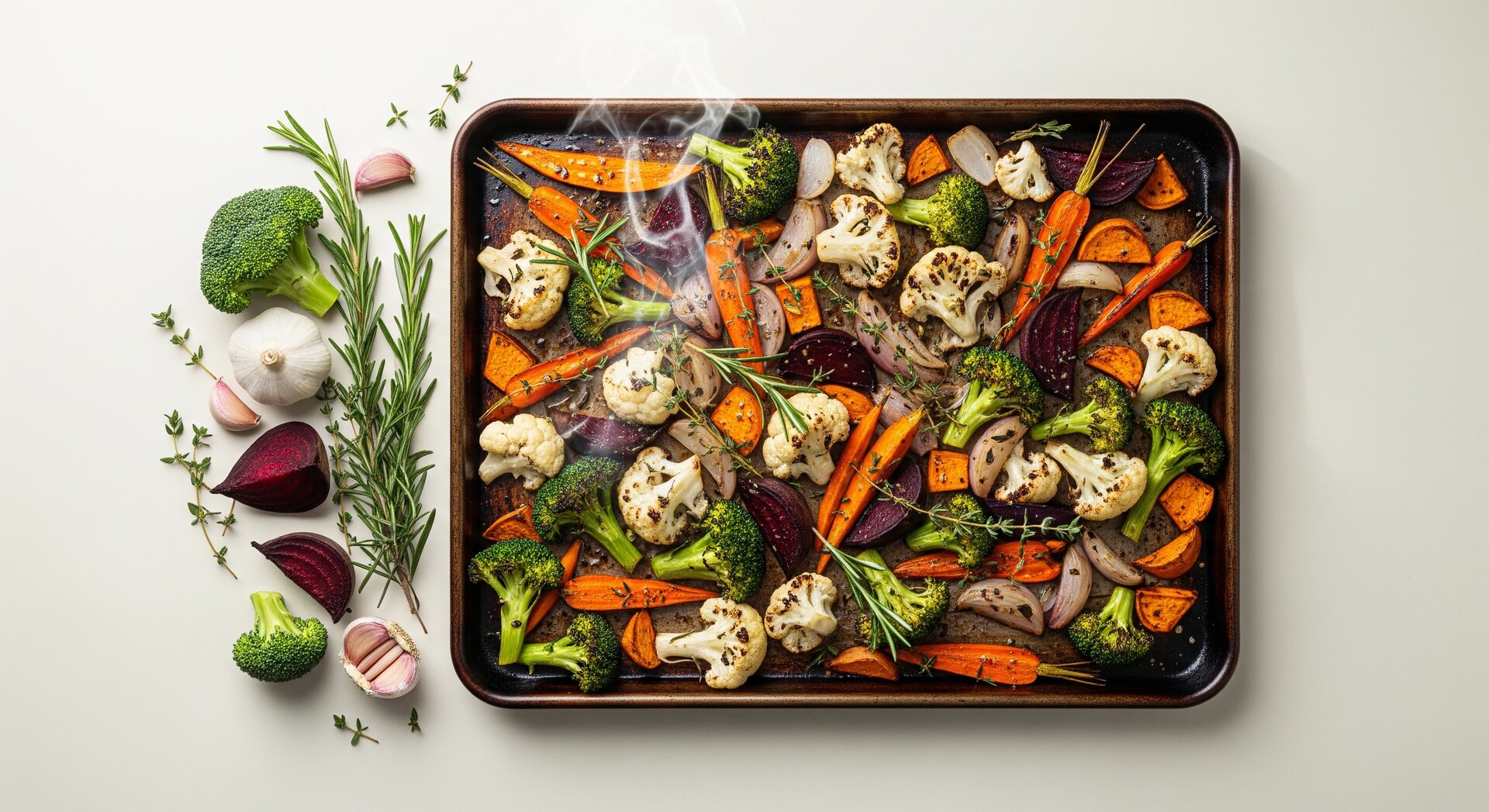 Roasted Cruciferous Vegetables with Beetroot 55 min Crispy roasted seasonal vegetables with thyme and lemon 220 kcal 8g protein 2 synergies
 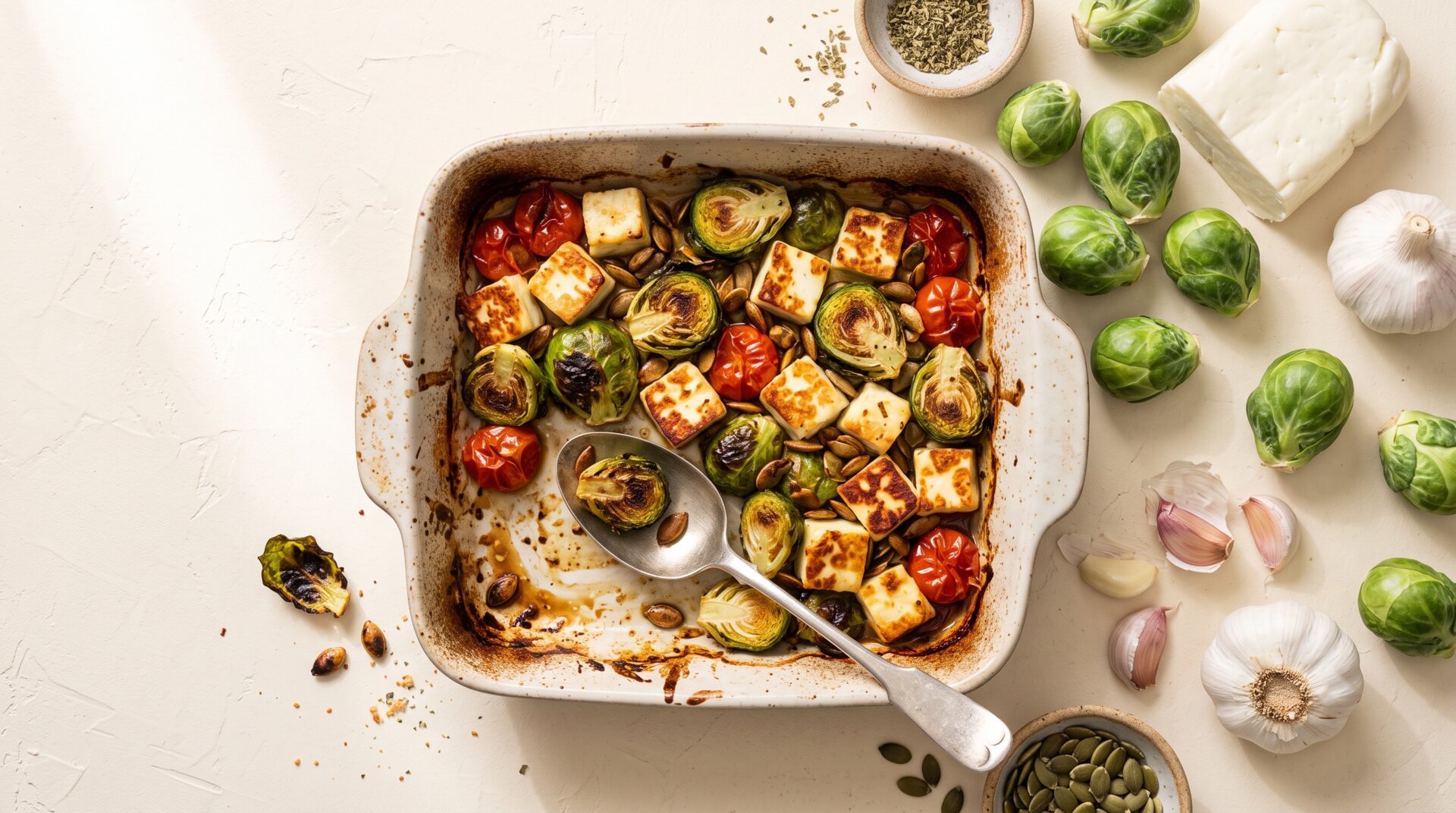 Baked Halloumi and Brussels Sprouts Casserole 35 min Golden, savory and crisp from the oven 445 kcal 28g protein 2 synergies
 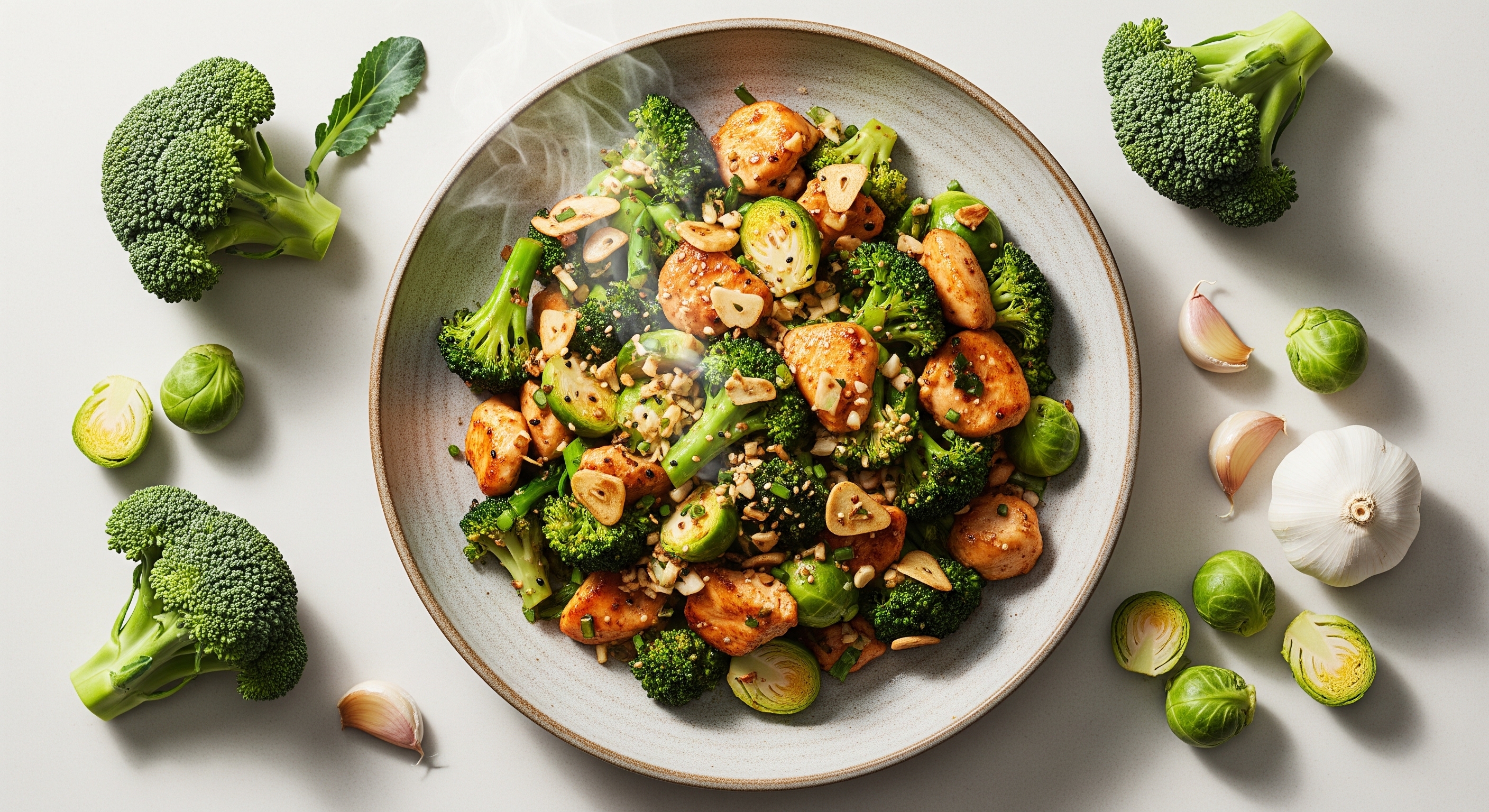 Chicken Stir-Fry with Broccoli and Brussels Sprouts 30 min Crisp, bright and savory from the wok 340 kcal 38g protein 2 synergies
 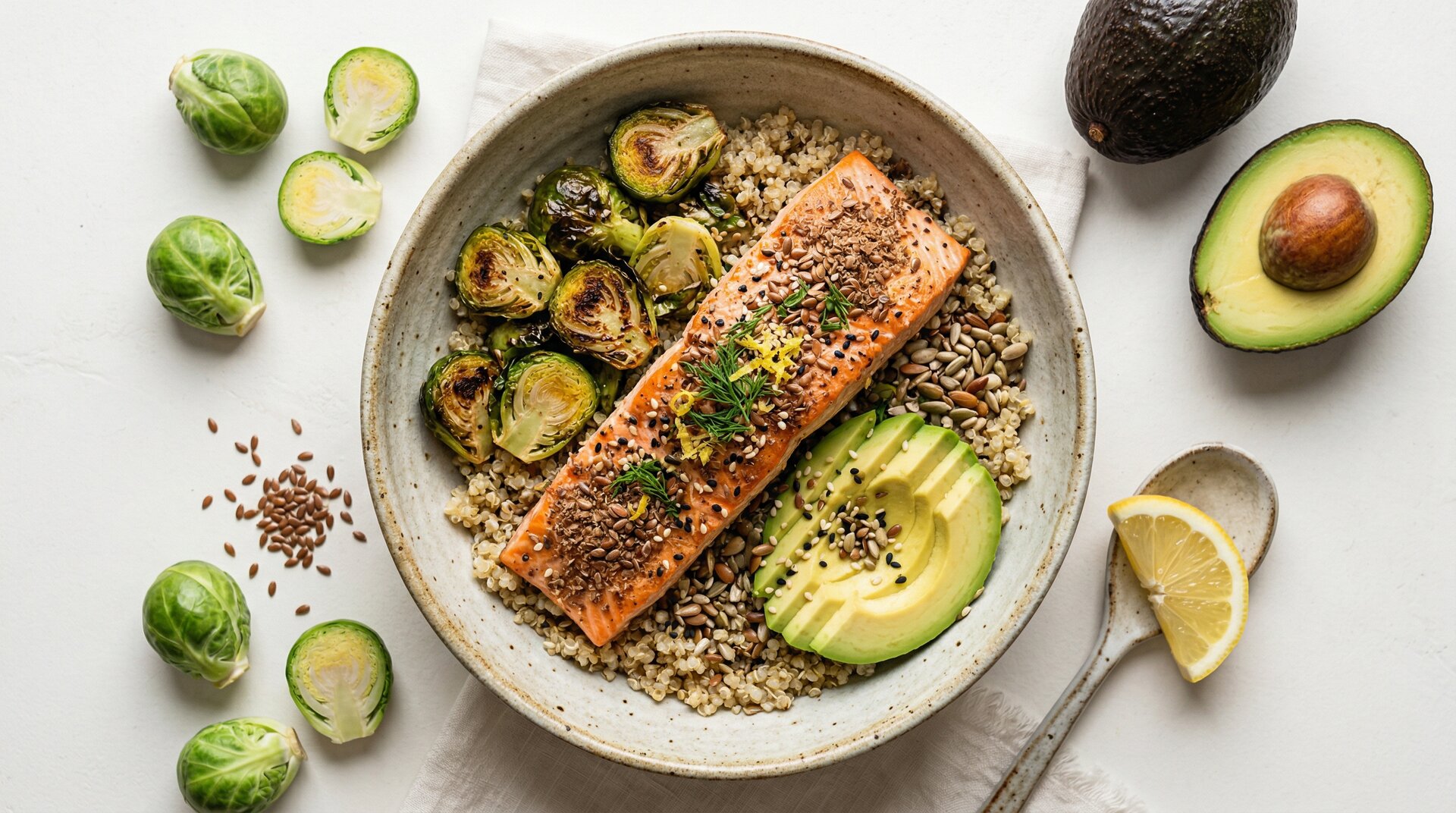 Salmon Flaxseed Bowl with Roasted Brussels Sprouts 30 min Warm salmon, roasted sprouts, creamy avocado 560 kcal 34g protein 2 synergies
  In the Kitchen
Storage
Location:Refrigerator
Shelf life:3-5 dagen los, 10 dagen aan stengel
Store loose in plastic bag. Sprouts on stalk stay fresh longer. Remove yellow leaves.
Preparation
BEST METHOD: halve and roast at 400°F with olive oil until golden - this caramelizes sugars and reduces bitterness. Steaming preserves more nutrients. BEST SYNERGY: ginger contains gingerols, bioactive compounds being studied alongside glucosinolates in preclinical research.
Conversions
Substitutes
Smart preparation
1Halve Brussels sprouts for faster cooking and more caramelization.
2Roast Brussels sprouts at high temperature instead of boiling.
Why?
Roasting caramelizes the outside and reduces bitterness.
3Score a cross in the bottom for more even cooking.
Caution / Warnings
Brussels Sprouts is very safe, but there are scientific considerations:
Thyroid Problems Moderate
Cruciferous vegetables contain goitrogens that may interfere with iodine uptake
Advice:
Cooking reduces goitrogens by 90%. With thyroid issues: eat cooked
Blood Thinners Moderate
High vitamin K can affect warfarin effectiveness
Advice:
Eat consistent amounts and consult doctor with warfarin use
Summary
Brussels sprouts are the glucosinolate champions among cruciferous vegetables - perfect cell cleansing! The key to delicious sprouts: halve them and roast with olive oil until golden. Caramelization transforms bitterness into nutty sweetness. Combine with ginger for extra inflammatory modulation.