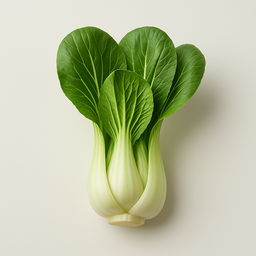
Bok Choy
Asian Super Cabbage
What is this ingredient?
Bok choy belongs to the cruciferous family (Brassicaceae) and is related to broccoli, cauliflower and kale. It contains glucosinolates - powerful sulfur compounds that convert to isothiocyanates with protective properties when chewed. The combination of high calcium AND vitamin K makes it unique among leafy greens for bone health. Unlike spinach, bok choy contains little oxalic acid, making its calcium more bioavailable.
How does it taste?
Mild and fresh with juicy stems and a subtle mustard-like undertone.
Pairs well with:
Pairs well with soy saucegingergarlicsesame oil and oyster sauce.
Did you know...?
- Bok choy has been cultivated in China for over 5,000 years.
- The name 'bok choy' literally means 'white vegetable' in Cantonese.
Nutritional Value & Energy
Per 100g
Bok Choy is low in calories thanks to natural nutrients .
Per 100g
Minerals
Vitamins
Omega-3 fatty acids
More nutrients
B-Vitamins
Trace Minerals
What's in a serving?
1 serving
Bok Choy naturally contains vitamin c (75 mg per 100 g).
Bok Choy naturally contains vitamin k (57 mcg per 100 g).
Bok Choy naturally contains folate (66 mcg per 100 g).
% of daily reference intake (DRI)
EU-approved nutrition claims
This ingredient contains nutrients for which EFSA-authorized health claims exist (at nutrient level, not ingredient-specific).
Approved health claims (EU)
Vitamin_c EU 432/2012
Vitamin C contributes to the normal function of the immune system
Contains 75mg/100g (threshold: ≥12mg/100g)
Vitamin_c EU 432/2012
Vitamin C contributes to the reduction of tiredness and fatigue
Contains 75mg/100g (threshold: ≥12mg/100g)
Vitamin_c EU 432/2012
Vitamin C contributes to normal collagen formation for the normal function of skin
Contains 75mg/100g (threshold: ≥12mg/100g)
Folate EU 432/2012
Folate contributes to normal blood formation
Contains 66mcg/100g (threshold: ≥30mcg/100g)
Folate EU 432/2012
Folate contributes to normal amino acid synthesis
Contains 66mcg/100g (threshold: ≥30mcg/100g)
Folate EU 432/2012
Folate contributes to normal homocysteine metabolism
Contains 66mcg/100g (threshold: ≥30mcg/100g)
Folate EU 432/2012
Folate contributes to normal psychological function
Contains 66mcg/100g (threshold: ≥30mcg/100g)
Folate EU 432/2012
Folate contributes to the normal function of the immune system
Contains 66mcg/100g (threshold: ≥30mcg/100g)
Folate EU 432/2012
Folate has a role in the process of cell division
Contains 66mcg/100g (threshold: ≥30mcg/100g)
Folate EU 432/2012
Folate contributes to maternal tissue growth during pregnancy
Contains 66mcg/100g (threshold: ≥30mcg/100g)
Vitamin_c EU 432/2012
Vitamin C contributes to normal collagen formation for the normal function of blood vessels
Contains 75mg/100g (threshold: ≥12mg/100g)
Vitamin_c EU 432/2012
Vitamin C contributes to normal collagen formation for the normal function of bones
Contains 75mg/100g (threshold: ≥12mg/100g)
Vitamin_c EU 432/2012
Vitamin C contributes to normal collagen formation for the normal function of cartilage
Contains 75mg/100g (threshold: ≥12mg/100g)
Vitamin_c EU 432/2012
Vitamin C contributes to normal collagen formation for the normal function of gums
Contains 75mg/100g (threshold: ≥12mg/100g)
Vitamin_c EU 432/2012
Vitamin C contributes to normal collagen formation for the normal function of teeth
Contains 75mg/100g (threshold: ≥12mg/100g)
Vitamin_c EU 432/2012
Vitamin C contributes to normal energy-yielding metabolism
Contains 75mg/100g (threshold: ≥12mg/100g)
Vitamin_c EU 432/2012
Vitamin C contributes to normal functioning of the nervous system
Contains 75mg/100g (threshold: ≥12mg/100g)
Vitamin_c EU 432/2012
Vitamin C contributes to normal psychological function
Contains 75mg/100g (threshold: ≥12mg/100g)
Vitamin_c EU 432/2012
Vitamin C contributes to the protection of cells from oxidative stress
Contains 75mg/100g (threshold: ≥12mg/100g)
Vitamin_c EU 432/2012
Vitamin C contributes to the regeneration of the reduced form of vitamin E
Contains 75mg/100g (threshold: ≥12mg/100g)
Vitamin_c EU 432/2012
Vitamin C increases iron absorption
Contains 75mg/100g (threshold: ≥12mg/100g)
Vitamin_c EU 432/2012
Vitamin C contributes to maintain the normal function of the immune system during and after intense physical exercise
Contains 75mg/100g (threshold: ≥12mg/100g)
Vitamin_k EU 432/2012
Vitamin K contributes to normal blood clotting
Contains 57mcg/100g (threshold: ≥11.25mcg/100g)
Vitamin_k EU 432/2012
Vitamin K contributes to the maintenance of normal bones
Contains 57mcg/100g (threshold: ≥11.25mcg/100g)
What's being researched?
Calcium and bone health
The high bioavailability of calcium in bok choy is being studied in relation to bone health. Studies suggest good absorption compared to dairy products, but long-term research is limited.
Supported by: [3] Wang MY (2022) , [2] Vermeer (2012)
Glucosinolates and cell research
Glucosinolates in bok choy are being studied for potential protective effects at the cellular level. Epidemiological studies show associations, but causal evidence requires more research.
Supported by: [1] Higdon (2007)
Good Combinations (Synergy)
Combine bok choy smartly to enhance the effect:
Bok Choy 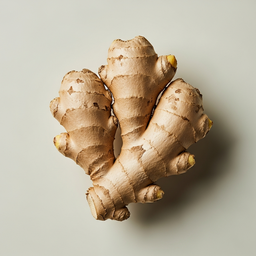 Ginger
 Glucosinolates + gingerols: complementary NF-κB modulation
Technical: Bok choy contains glucosinolates (glucobrassicin) converted to indole-3-carbinol (I3C) — a compound that modulates estrogen metabolism and influences NF-κB. Ginger's 6-gingerol and 6-shogaol modulate COX-2 and iNOS via complementary routes. Together they cover a broad spectrum of bioactive pathways.
What does this mean for you? Stir-frying bok choy with ginger is an Asian base combining two groups of bioactive compounds — each with their own mechanism on NF-κB signaling. A quick, versatile wok combination.
Bok Choy 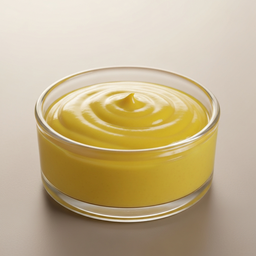 Mustard
 Double boost: sulforaphane + fat-soluble vitamins
Technical: Bok choy contains both glucosinolates and fat-soluble vitamins (A, K). Mustard restores sulforaphane formation, oil improves vitamin absorption.
What does this mean for you? When stir-frying bok choy, you already add oil — great! Add a teaspoon of mustard to the sauce at the end, and you have a complete nutritious meal. Asian cuisine meets nutrition science!
Bok Choy 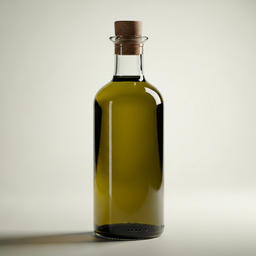 Olive Oil
 Double boost: sulforaphane + fat-soluble vitamins
Technical: Bok choy contains both glucosinolates and fat-soluble vitamins (A, K). Mustard restores sulforaphane formation, oil improves vitamin absorption.
What does this mean for you? When stir-frying bok choy, you already add oil — great! Add a teaspoon of mustard to the sauce at the end, and you have a complete nutritious meal. Asian cuisine meets nutrition science!
Bok Choy 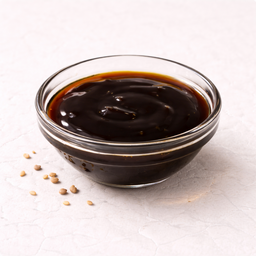 Oyster Sauce
 Double umami source for intense flavor
Technical: Oyster sauce contains glutamate from oysters (umami source 1). Shiitake contains guanylate (GMP) — a nucleotide that via the synergistic umami effect amplifies flavor perception up to 8x when combined with glutamate. Bok choy adds sulforaphane (biotransformation enzyme activator). This is the ultimate Chinese umami trio.
What does this mean for you? Oyster sauce + shiitake + bok choy in the wok — this is the ultimate Chinese umami combination. Three ingredients that exponentially amplify each other's flavor.
Recipes with Bok Choy
Discover delicious recipes featuring bok choy:
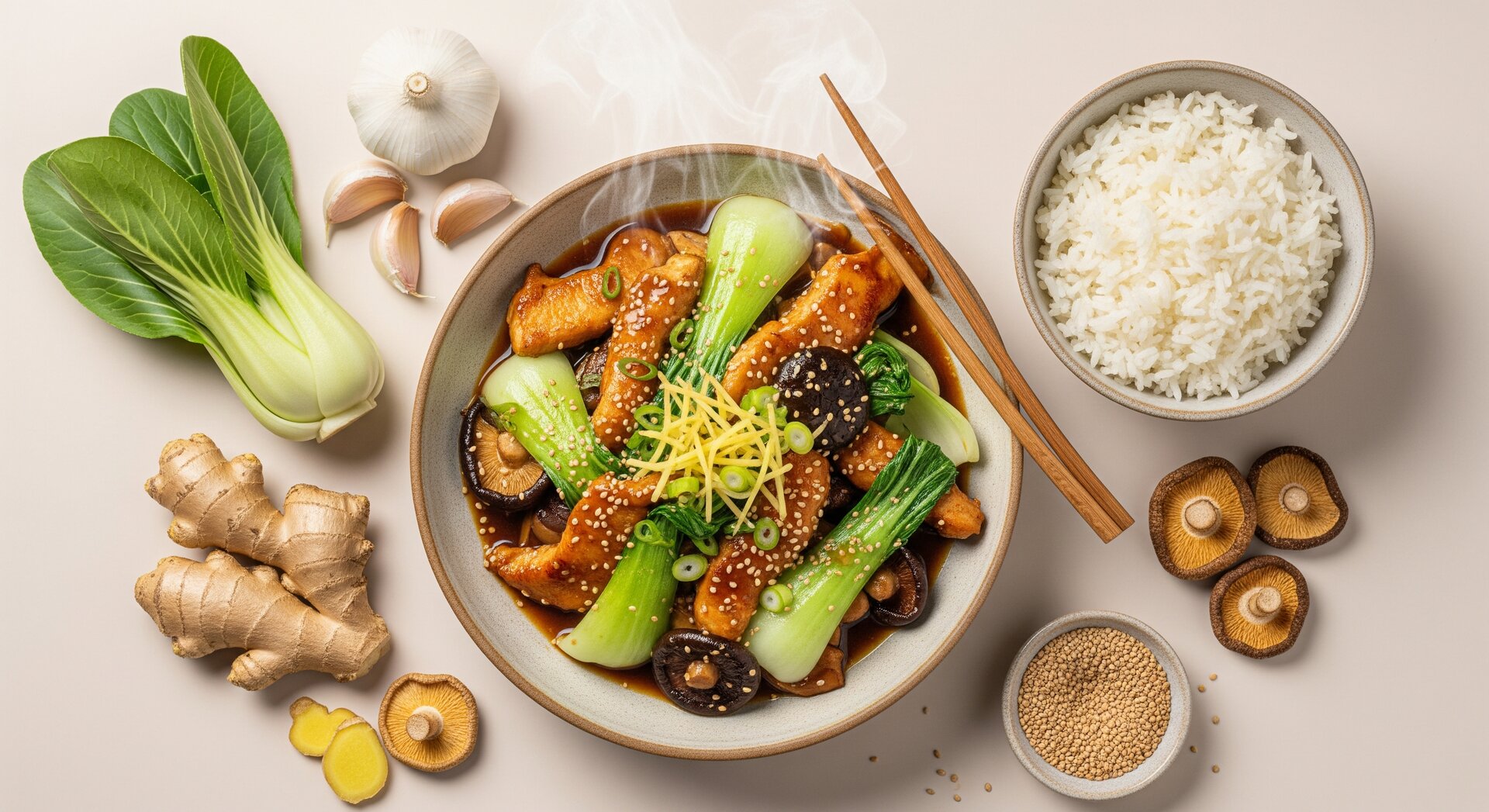 Ginger Chicken with Shiitake and Bok Choy 30 min Asian stir-fry with ginger, mushrooms and sesame
  380 kcal
  42g protein 2 synergies
 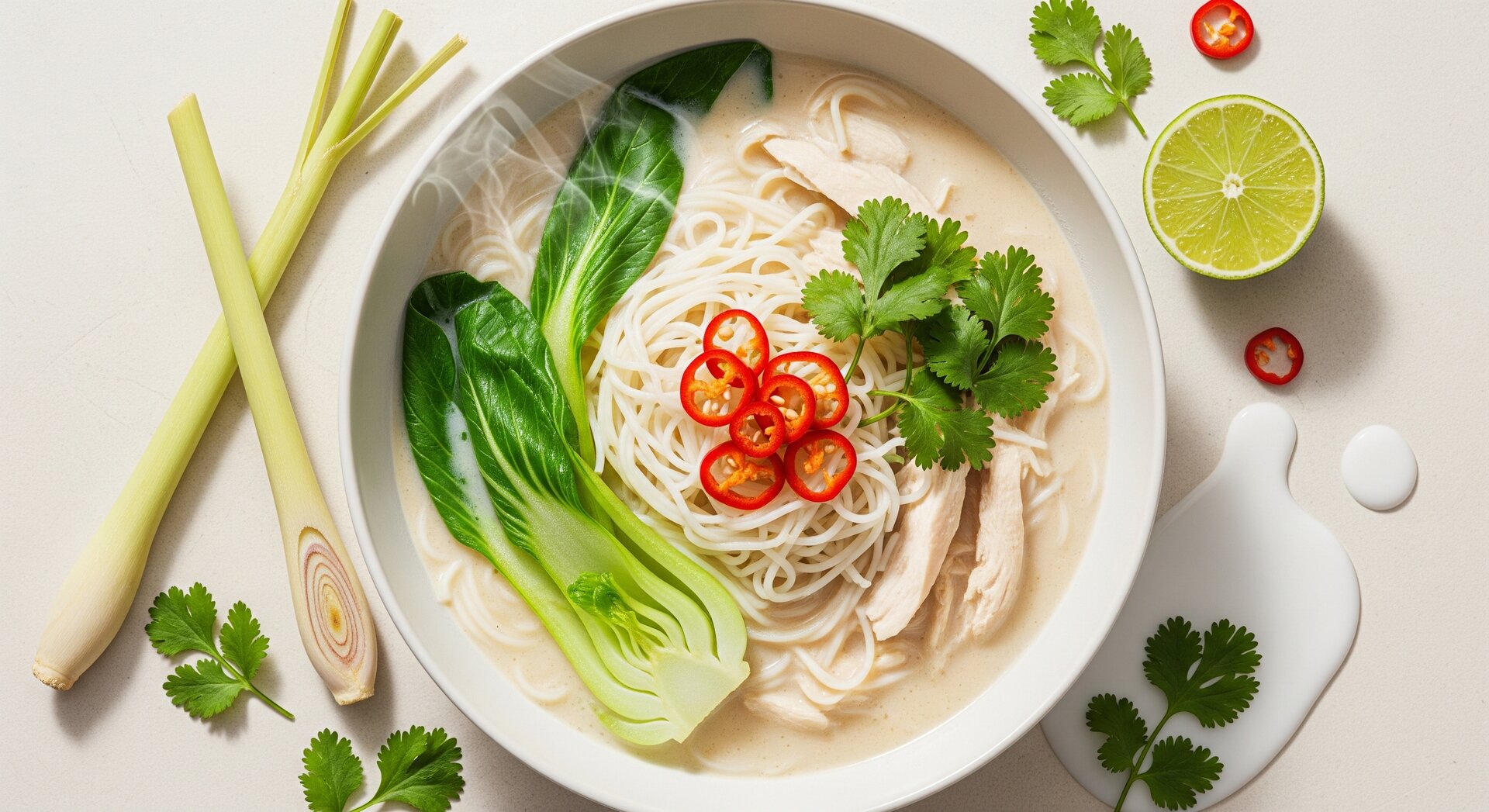 Thai Coconut Chicken Soup with Noodles 40 min Creamy Thai soup with chicken, rice noodles, ginger and lemongrass 824 kcal 50g protein 2 synergies
 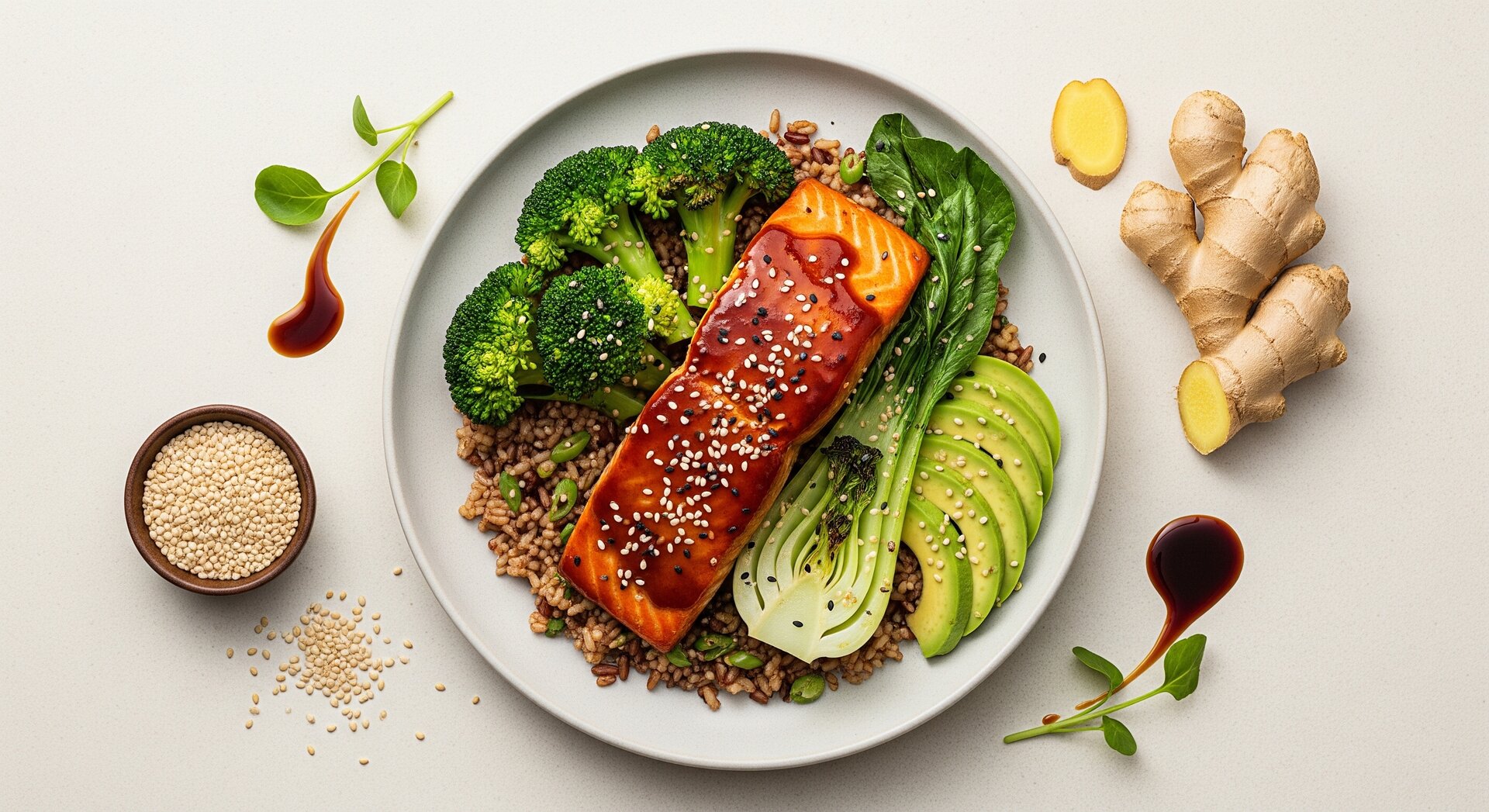 Teriyaki Salmon with Ginger-Sesame Vegetables 40 min Glazed salmon with caramel soy sauce and crunchy sesame vegetables 809 kcal 47g protein 2 synergies
  In the Kitchen
Storage
Location:Refrigerator
Shelf life:5-7 dagen
Store unwashed in a plastic bag in the crisper. Wash just before use to prevent sliminess.
Preparation
Separate stems and leaves - stems need longer cooking. Stir-fry stems first 2-3 min, then add leaves for another 1-2 min. Can also be steamed or added to soup.
Conversions
Substitutes
Smart preparation
1Cut the thick white stems separately from the green leaves.
Why?
The stems need a longer cooking time than the leaves.
2Wash bok choy thoroughly between stems; sand often hides there.
3Stir-fry on high heat for a crispy texture.
Caution / Warnings
Bok Choy is very safe, but there are scientific considerations:
Blood Thinners (Warfarin) Moderate
High vitamin K content can affect blood thinner effectiveness
Advice:
Maintain consistent intake and consult your doctor if using blood thinners
Thyroid Issues Mild
Cruciferous vegetables contain goitrogens that can affect thyroid at very high consumption
Advice:
Normal use is safe; cooking reduces goitrogens. Consult doctor with severe thyroid issues
Traditional use
Traditional Chinese Medicine
Chinese cooling vegetable tonic
Bok choy has been cultivated in China for over 5000 years and is regarded in traditional Chinese medicine as a cooling food that reduces heat and inflammation.
Summary
Bok choy is an excellent choice for bone health thanks to the rare combination of high calcium AND vitamin K, with little oxalate that hinders absorption. As a member of the cruciferous family, it also offers the protective glucosinolates of broccoli. Perfect in stir-fries - the stems stay crunchy while the leaves soften.