- Medium
- 95 min
- 6 serv.
- 4 synergies
- Now at its best: Honey
The simit is the bread you smell on every street corner in Istanbul — crispy outside from the thick layer of sesame seeds, soft and chewy inside. The honey glaze makes the sesame stick and caramelize in the oven.
In Istanbul, the day starts with simit. Vendors push carts full of golden rings through the streets, the scent of toasted sesame hanging in the air before the sun is up. You buy one, break it open, and eat it just like that — or with a piece of white cheese and a glass of çay.
That's exactly the feeling you recreate at home here. Two ropes of dough twisted around each other, dipped in a sticky honey glaze, rolled through a mountain of sesame seeds. Twenty minutes later from the oven: the outside is deep gold and snaps when you bite in, the inside is soft and slightly springy. Eat them the same day — simit is at its best when it's still warm.
- 75
- min prep
- 20
- min cook
- 95
- min total
Nutritional Synergies
This recipe combines ingredients that enhance each other:
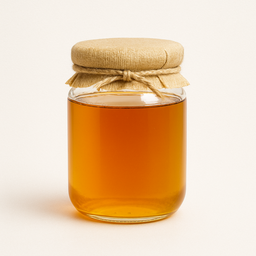 Honey
Honey 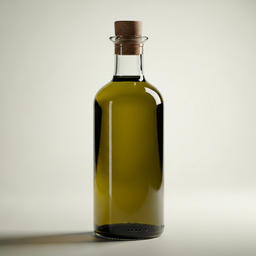 Olive oil
 Dual bioactive action via chrysin + oleocanthal
Technical: Honey contains chrysin and olive oil oleocanthal — bioactive phenolic compounds studied in research in connection with NF-κB and COX signaling. Together they provide plant compounds through two independent routes.
What does this mean for you? A dressing of honey and olive oil is not just tasty — the chrysin and oleocanthal work through two different routes in your body.
Anti-inflammatoryHeartJoints
Honey 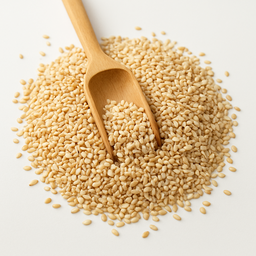 Sesame seeds
 Honey antioxidants + sesame lignans for antioxidant support
Technical: Honey's water-soluble antioxidants (phenolic acids, flavonoids) and sesame seed's fat-soluble lignans (sesamin) provide antioxidant support in different compartments. Honey's fructose provides quick energy, sesame's fats and proteins give sustained satiety.
What does this mean for you? Sesame seeds with honey (as in Japanese dishes) combines quick energy with sustained satiety and broad antioxidant support.
EnergyAnti-inflammatorySkin & Hair
Olive oil Sesame seeds Olive oil fats improve absorption of sesame seed minerals and lignans
Technical: Olive oil's monounsaturated fats (oleic acid) improve absorption of fat-soluble lignans from sesame seeds. Additionally, olive oil polyphenols (oleocanthal) and sesame lignans form a broader antioxidant spectrum.
What does this mean for you? Use olive oil in dishes with sesame seeds — for example in an Asian salad or as a base for tahini dressing.
HeartAnti-inflammatorySkin & Hair
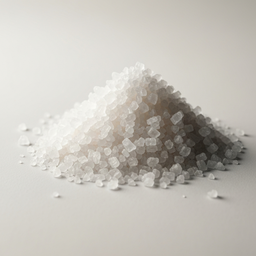 Sea salt Olive oil
 Minerals + polyphenols for cellular balance
Technical: Sea salt's sodium is essential for the sodium-potassium pump (Na+/K+-ATPase) that regulates every body cell. Olive oil's oleuropein and hydroxytyrosol provide antioxidant protection for cell membranes. The combination supports cell integrity: sea salt regulates ion balance, olive oil protects the membrane. In Mediterranean cuisine, coarse sea salt + olive oil is the most basic flavor profile.
What does this mean for you? Freshly ground sea salt with extra virgin olive oil is the simplest and most nutritious finishing of any dish. The combination provides the basic needs of your cells: minerals for function, polyphenols for protection.
HeartGeneral Wellness

Instructions
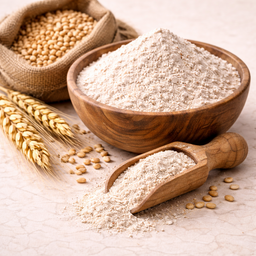
- 1 Mix the flour, sea salt and olive oil in a large bowl. Gradually add the lukewarm water and knead 10 minutes to a smooth, elastic dough.
- 2 Cover the bowl with a damp tea towel and let rise 1 hour in a warm spot until the dough has doubled.
Nutrition per serving
Indicative values per serving.
Timing & Suitability
Shelf life: 3 days in fridge
Tags & Diet
Allergens: Gluten, Sesame