- Easy
- 30 min
- 4 serv.
- 5 synergies
- Now at its best: Tomato
Bulgur briefly fried with onion and fresh tomato, then braised in water until all liquid is absorbed. Finished with chopped parsley and mint.
Bulgur pilaf is Turkish home cooking at its finest. No restaurant, no chef, just a mother gently frying onion in olive oil, tossing in tomato until it sizzles and releases its juices, then adding bulgur and water, lid on, low heat. Twenty minutes later you lift the lid and every grain stands apart, light and nutty, soaked through with tomato flavour. The parsley and mint go in fresh — don't cook them, just fold through. It's the kind of dish that never appears on a menu but Turkish families eat at least three times a week, alongside everything and nothing, as a side or on its own with a spoonful of yoghurt.
- 10
- min prep
- 20
- min cook
- 30
- min total
Nutritional Synergies
This recipe combines ingredients that enhance each other:
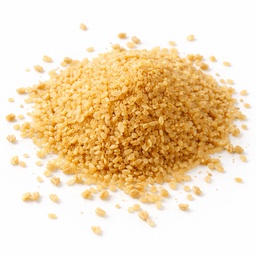 bulgur
 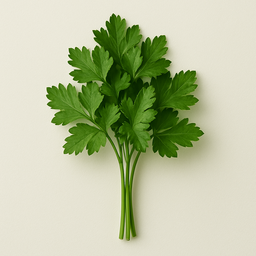 fresh parsley
 Tabbouleh: vitamin C increases iron absorption from bulgur
Technical: Bulgur contains 2.5mg iron per 100g (non-heme). Parsley contains 133mg vitamin C per 100g — more than lemons! In traditional tabbouleh, parsley is the main ingredient (not bulgur), ensuring optimal iron absorption. Parsley also contains vitamin K and folate.
What does this mean for you? Make tabbouleh with LOTS of parsley — traditionally it's 3-4 bunches per cup of bulgur. This is not only authentic but also nutritionally optimal.
EnergyImmune System
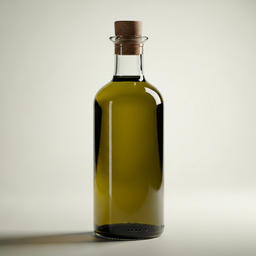 olive oil
 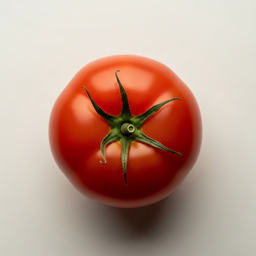 tomatoes
 Mediterranean golden rule: fat increases lycopene absorption 4x
Fat significantly increases lycopene bioavailability (PMID: 15927929)
Technical: Tomatoes contain lycopene (3-7mg per 100g), a carotenoid with strong antioxidant action. Lycopene is fat-soluble with only 10-15% absorption without fat. Olive oil increases this to 40-60% (2.5-4x improvement). Cooking further increases lycopene bioavailability.
What does this mean for you? Always add olive oil to tomato dishes — sauces, salads, bruschetta. This is why Mediterranean cuisine is so healthy. Cooked tomatoes with olive oil = maximum lycopene.
HeartSkin & Hair
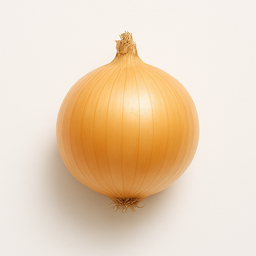 onion tomatoes
 Quercetin + lycopene: synergistic polyphenol-carotenoid combination
Technical: Quercetin from onion (20-40mg/100g) and lycopene from tomato (2573μg/100g) work through different mechanisms. Quercetin chelates metal ions and modulates lipid peroxidation, lycopene quenches singlet oxygen. Combined polyphenols and carotenoids work synergistically — the combination works through complementary mechanisms.
What does this mean for you? Tomato sauce with onion is the base of nearly every Mediterranean cuisine — and rightly so. Quercetin and lycopene enhance each other's action through complementary biochemical pathways. Cooking in olive oil makes carotenoids more absorbable.
HeartAnti-inflammatory
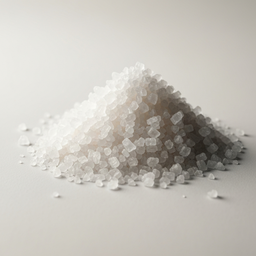 sea salt tomatoes
 Minerals improve flavor perception and electrolyte balance
Technical: Sea salt contains trace minerals (magnesium, potassium, calcium) besides sodium. Tomato is rich in potassium (237mg/100g) and lycopene. Avocado adds magnesium (29mg) and potassium (485mg). Together they form a broad electrolyte profile: sodium (salt) + potassium (tomato/avocado) + magnesium (avocado) — essential for fluid balance and nerve function.
What does this mean for you? Sprinkle tomato and avocado with a pinch of sea salt. This is more than flavor — the minerals complement each other for a complete electrolyte balance.
HeartEnergy
sea salt olive oil Minerals + polyphenols for cellular balance
Technical: Sea salt's sodium is essential for the sodium-potassium pump (Na+/K+-ATPase) that regulates every body cell. Olive oil's oleuropein and hydroxytyrosol provide antioxidant protection for cell membranes. The combination supports cell integrity: sea salt regulates ion balance, olive oil protects the membrane. In Mediterranean cuisine, coarse sea salt + olive oil is the most basic flavor profile.
What does this mean for you? Freshly ground sea salt with extra virgin olive oil is the simplest and most nutritious finishing of any dish. The combination provides the basic needs of your cells: minerals for function, polyphenols for protection.
HeartGeneral Wellness
Instructions
- 1 Heat olive oil in a pan, fry onion 5 minutes until soft and translucent.
Nutrition per serving
Indicative values per serving.
Timing & Suitability
Shelf life: 2 days in fridge
Tags & Diet
Allergens: Gluten