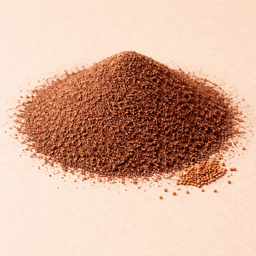
Teff Flour
Ethiopian gluten-free ancient grain
What is this ingredient?
## The smallest grain in the kitchen
Teff (Eragrostis tef) is known as the smallest grain in the world: one grain is about 1 mm wide, and thousands of grains together weigh only a few grams. Despite its tiny size, teff has been an everyday staple in Ethiopia and Eritrea for thousands of years. The name is often linked to the Amharic word 'teffa', meaning 'lost', because the grains are so small that they can easily disappear from the hand or bowl.
## Ethiopian culture and injera
Teff flour is best known as the base ingredient of injera, the lightly sour, spongy flatbread that serves as bread, plate and utensil in Ethiopian and Eritrean meals. For injera, teff flour is mixed with water and fermented for several days before being cooked on a hot griddle. This fermentation gives the characteristic fresh tang, open structure and soft, elastic bite. White, red and dark brown teff varieties exist: white teff is usually milder, while brown teff has a more pronounced nutty flavor.
## Minerals in a tiny grain
Per 100 g, teff flour contains 7.6 mg iron, 180 mg calcium, 184 mg magnesium, 3.6 mg zinc and 427 mg potassium. It also contains a small amount of vitamin C (0.7 mg per 100 g), which is unusual for a grain product. Vitamin C increases iron absorption; iron contributes to normal energy-yielding metabolism and magnesium contributes to normal muscle function. Teff therefore combines a rich grain flavor with a broad mineral profile.
## Resistant starch, fiber and fermentation
Teff contains fiber and resistant starch, compounds studied in nutrition research for how they behave during digestion and fermentation. In traditional injera preparation, fermentation changes the batter’s texture, flavor and acidity. Researchers examine, among other topics, how teff variety, milling level and fermentation time influence starch structure, mineral availability and baking quality.
## Gluten-free flour with character
Teff is naturally gluten-free, making teff flour useful for gluten-free pancakes, waffles, muffins, bread and flatbreads. The flour absorbs a lot of moisture and gives baked goods a dense, soft crumb with a mildly sweet, malty and nutty flavor. In modern gluten-free baking, teff flour often works well as 25-50% of a flour blend; for traditional injera it can also be used as the full base.
## Sustainable and versatile crop
Teff grows well at altitudes where many other grains are less straightforward and can handle changing dry and wet conditions. The tiny grains store well, the plant has a relatively short growing cycle and the crop is culturally important in the Horn of Africa. Outside Ethiopia, teff flour is increasingly used in gluten-free and whole-grain baked goods, breakfast porridge and pancakes.
How does it taste?
Mildly nutty and malty with a subtly sweet, earthy flavor.
Pairs well with:
Pairs well with berberehoneycinnamoncardamom and dark chocolate.
Did you know...?
- Teff is the smallest grain in the world: about 150 grains together weigh just 1 gram.
- The name 'teff' may come from the Amharic word 'teffa', meaning 'lost', due to its tiny grain size.
Nutritional Value & Energy
Per 100g
Teff Flour provides energy thanks to natural nutrients , buffered by fiber.
Per 100g
Minerals
Vitamins
More nutrients
Trace Minerals
What's in a serving?
1 serving (dry)
Teff Flour naturally contains iron (7.6 mg per 100 g).
Teff Flour naturally contains calcium (180 mg per 100 g).
Teff Flour naturally contains zinc (3.6 mg per 100 g).
Teff Flour naturally contains magnesium (184 mg per 100 g).
Teff Flour naturally contains potassium (427 mg per 100 g).
% of daily reference intake (DRI)
EU-approved nutrition claims
This ingredient contains nutrients for which EFSA-authorized health claims exist (at nutrient level, not ingredient-specific).
Approved health claims (EU)
Magnesium EU 432/2012
Magnesium contributes to normal muscle function
Contains 184mg/100g (threshold: ≥56.25mg/100g)
Magnesium EU 432/2012
Magnesium contributes to the reduction of tiredness and fatigue
Contains 184mg/100g (threshold: ≥56.25mg/100g)
Magnesium EU 432/2012
Magnesium contributes to normal functioning of the nervous system
Contains 184mg/100g (threshold: ≥56.25mg/100g)
Zinc EU 432/2012
Zinc contributes to the normal function of the immune system
Contains 3.6mg/100g (threshold: ≥1.5mg/100g)
Zinc EU 432/2012
Zinc contributes to the maintenance of normal skin
Contains 3.6mg/100g (threshold: ≥1.5mg/100g)
Iron EU 432/2012
Iron contributes to normal energy-yielding metabolism
Contains 7.6mg/100g (threshold: ≥2.1mg/100g)
Iron EU 432/2012
Iron contributes to the reduction of tiredness and fatigue
Contains 7.6mg/100g (threshold: ≥2.1mg/100g)
Calcium EU 432/2012
Calcium is needed for the maintenance of normal bones
Contains 180mg/100g (threshold: ≥120mg/100g)
Potassium EU 432/2012
Potassium contributes to the maintenance of normal blood pressure
Contains 427mg/100g (threshold: ≥300mg/100g)
Calcium EU 432/2012
Calcium is needed for the maintenance of normal teeth
Contains 180mg/100g (threshold: ≥120mg/100g)
Calcium EU 432/2012
Calcium contributes to normal blood clotting
Contains 180mg/100g (threshold: ≥120mg/100g)
Calcium EU 432/2012
Calcium contributes to normal energy-yielding metabolism
Contains 180mg/100g (threshold: ≥120mg/100g)
Calcium EU 432/2012
Calcium contributes to normal muscle function
Contains 180mg/100g (threshold: ≥120mg/100g)
Calcium EU 432/2012
Calcium contributes to normal neurotransmission
Contains 180mg/100g (threshold: ≥120mg/100g)
Calcium EU 432/2012
Calcium contributes to the normal function of digestive enzymes
Contains 180mg/100g (threshold: ≥120mg/100g)
Calcium EU 432/2012
Calcium has a role in the process of cell division and specialisation
Contains 180mg/100g (threshold: ≥120mg/100g)
Magnesium EU 432/2012
Magnesium contributes to normal energy-yielding metabolism
Contains 184mg/100g (threshold: ≥56.25mg/100g)
Magnesium EU 432/2012
Magnesium contributes to electrolyte balance
Contains 184mg/100g (threshold: ≥56.25mg/100g)
Magnesium EU 432/2012
Magnesium contributes to normal protein synthesis
Contains 184mg/100g (threshold: ≥56.25mg/100g)
Magnesium EU 432/2012
Magnesium contributes to normal psychological function
Contains 184mg/100g (threshold: ≥56.25mg/100g)
Magnesium EU 432/2012
Magnesium contributes to the maintenance of normal bones
Contains 184mg/100g (threshold: ≥56.25mg/100g)
Magnesium EU 432/2012
Magnesium contributes to the maintenance of normal teeth
Contains 184mg/100g (threshold: ≥56.25mg/100g)
Magnesium EU 432/2012
Magnesium has a role in the process of cell division
Contains 184mg/100g (threshold: ≥56.25mg/100g)
Iron EU 432/2012
Iron contributes to normal cognitive function
Contains 7.6mg/100g (threshold: ≥2.1mg/100g)
Iron EU 432/2012
Iron contributes to normal formation of red blood cells and haemoglobin
Contains 7.6mg/100g (threshold: ≥2.1mg/100g)
Iron EU 432/2012
Iron contributes to normal oxygen transport in the body
Contains 7.6mg/100g (threshold: ≥2.1mg/100g)
Iron EU 432/2012
Iron contributes to the normal function of the immune system
Contains 7.6mg/100g (threshold: ≥2.1mg/100g)
Iron EU 432/2012
Iron has a role in the process of cell division
Contains 7.6mg/100g (threshold: ≥2.1mg/100g)
Zinc EU 432/2012
Zinc contributes to normal acid-base metabolism
Contains 3.6mg/100g (threshold: ≥1.5mg/100g)
Zinc EU 432/2012
Zinc contributes to normal carbohydrate metabolism
Contains 3.6mg/100g (threshold: ≥1.5mg/100g)
Zinc EU 432/2012
Zinc contributes to normal cognitive function
Contains 3.6mg/100g (threshold: ≥1.5mg/100g)
Zinc EU 432/2012
Zinc contributes to normal DNA synthesis
Contains 3.6mg/100g (threshold: ≥1.5mg/100g)
Zinc EU 432/2012
Zinc contributes to normal fertility and reproduction
Contains 3.6mg/100g (threshold: ≥1.5mg/100g)
Zinc EU 432/2012
Zinc contributes to normal macronutrient metabolism
Contains 3.6mg/100g (threshold: ≥1.5mg/100g)
Zinc EU 432/2012
Zinc contributes to normal metabolism of fatty acids
Contains 3.6mg/100g (threshold: ≥1.5mg/100g)
Zinc EU 432/2012
Zinc contributes to normal metabolism of vitamin A
Contains 3.6mg/100g (threshold: ≥1.5mg/100g)
Zinc EU 432/2012
Zinc contributes to normal protein synthesis
Contains 3.6mg/100g (threshold: ≥1.5mg/100g)
Zinc EU 432/2012
Zinc contributes to the maintenance of normal bones
Contains 3.6mg/100g (threshold: ≥1.5mg/100g)
Zinc EU 432/2012
Zinc contributes to the maintenance of normal hair
Contains 3.6mg/100g (threshold: ≥1.5mg/100g)
Zinc EU 432/2012
Zinc contributes to the maintenance of normal nails
Contains 3.6mg/100g (threshold: ≥1.5mg/100g)
Zinc EU 432/2012
Zinc contributes to the maintenance of normal testosterone levels in the blood
Contains 3.6mg/100g (threshold: ≥1.5mg/100g)
Zinc EU 432/2012
Zinc contributes to the maintenance of normal vision
Contains 3.6mg/100g (threshold: ≥1.5mg/100g)
Zinc EU 432/2012
Zinc contributes to the protection of cells from oxidative stress
Contains 3.6mg/100g (threshold: ≥1.5mg/100g)
Zinc EU 432/2012
Zinc has a role in the process of cell division
Contains 3.6mg/100g (threshold: ≥1.5mg/100g)
Potassium EU 432/2012
Potassium contributes to normal functioning of the nervous system
Contains 427mg/100g (threshold: ≥300mg/100g)
Potassium EU 432/2012
Potassium contributes to normal muscle function
Contains 427mg/100g (threshold: ≥300mg/100g)
Comparison
vsspinazie
Teff flour contains about 3× more iron per 100 g than spinach.
What's being researched?
Teff and absorption of iron and minerals
The iron and calcium content of teff is being studied for bioavailability, regional variation and the influence of fermentation. Studies in Ethiopian populations show interesting associations, but differences in soil, preparation and dietary patterns call for careful conclusions.
Supported by: [4] Habte ML (2022)
Good Combinations (Synergy)
Combine teff flour smartly to enhance the effect:
Teff Flour  Lemon
Lemon Vitamin C increases iron absorption from iron-rich teff 2-6x
Ascorbic acid significantly increases non-heme iron absorption as chelator (PMID: 15743017)
Technical: Teff contains 7.6mg non-heme iron per 100g, one of the highest values for grains. Vitamin C from lemon (53mg/100g) reduces Fe³⁺ to Fe²⁺, increasing iron absorption via DMT-1 transporters from 2-5% to 10-15%. Crucial for preventing iron deficiency.
What does this mean for you? Squeeze lemon over teff injera or porridge. This multiplies iron absorption, particularly valuable for vegetarians and pregnant women.
Teff Flour  Flaxseed
 Complementary bioactive action via resistant starch and omega-3
Butyrate from resistant starch reduces gut inflammation, omega-3 ALA reduces systemic inflammation
Technical: Teff contains resistant starch fermented to butyrate, a short-chain fatty acid in the gut. Flaxseed provides omega-3 ALA (22.8g/100g) that systemically influences eicosanoid metabolism. Together they work bioactively at different levels: local (gut via butyrate) and systemic (omega-3 fatty acids).
What does this mean for you? Teff pancakes with ground flaxseed — the combination provides both prebiotic fiber and omega-3. Both ingredients are nutritional powerhouses in their category.
Teff Flour  Spinach
 Complementary iron sources with folate for blood cell formation
Teff has high iron bioavailability due to low phytate:iron ratio, folate is essential for erythropoiesis (PMID: 15743017)
Technical: Teff contains 7.6mg non-heme iron per 100g (one of the highest grains) with uniquely high bioavailability due to low phytate concentration. Spinach provides 2.7mg iron plus 194μg folate per 100g. Folate (vitamin B9) is essential for erythropoiesis — without folate, iron cannot be effectively incorporated into hemoglobin. Iron contributes to the normal formation of red blood cells and haemoglobin, and folate contributes to normal blood formation (EFSA-approved).
What does this mean for you? Teff injera with spinach is an iron-rich combination. Teff provides the iron, spinach the folate needed to build that iron into red blood cells — crucial for vegetarians.
Recipes with Teff Flour
Discover delicious recipes featuring teff flour:
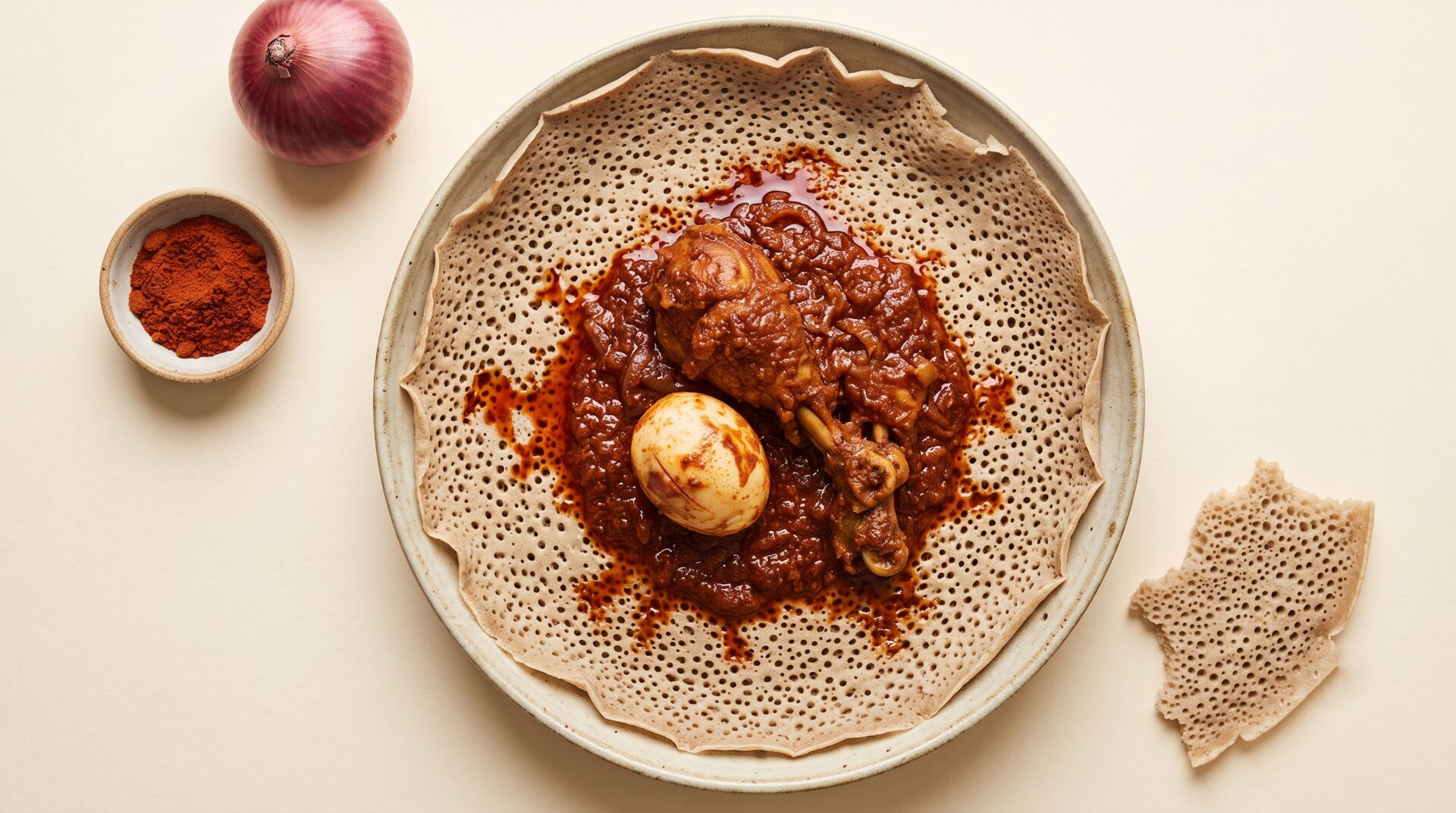 Ethiopian Doro Wat with Injera-Style Flatbread 80 min Festive chicken stew with berbere and homemade buckwheat flatbread
  712 kcal
  44g protein 2 synergies
 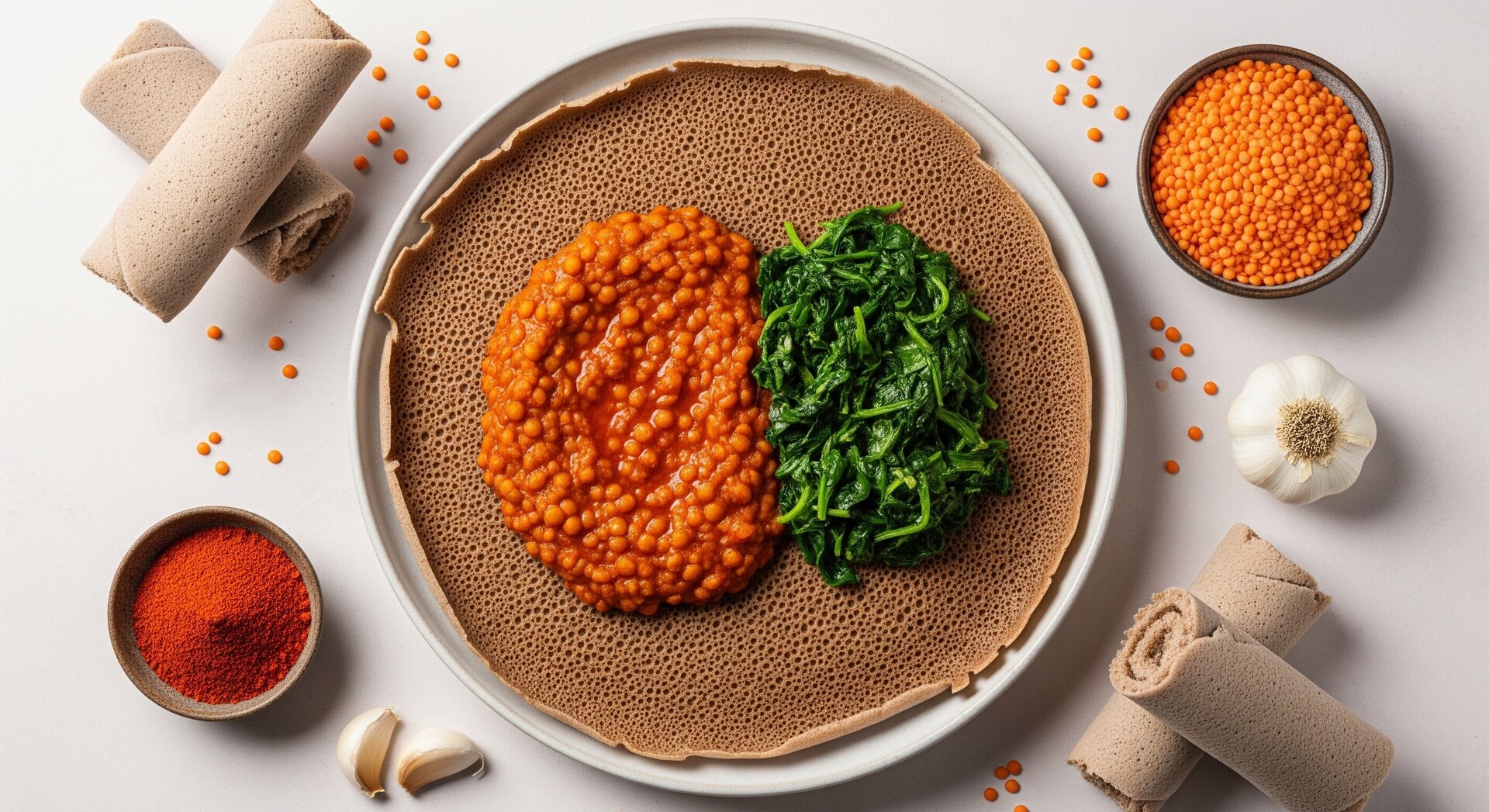 Ethiopian Injera Bowl with Lentils 40 min Teff pancake with spicy red lentils and vegetables 614 kcal 30g protein 1 synergies
 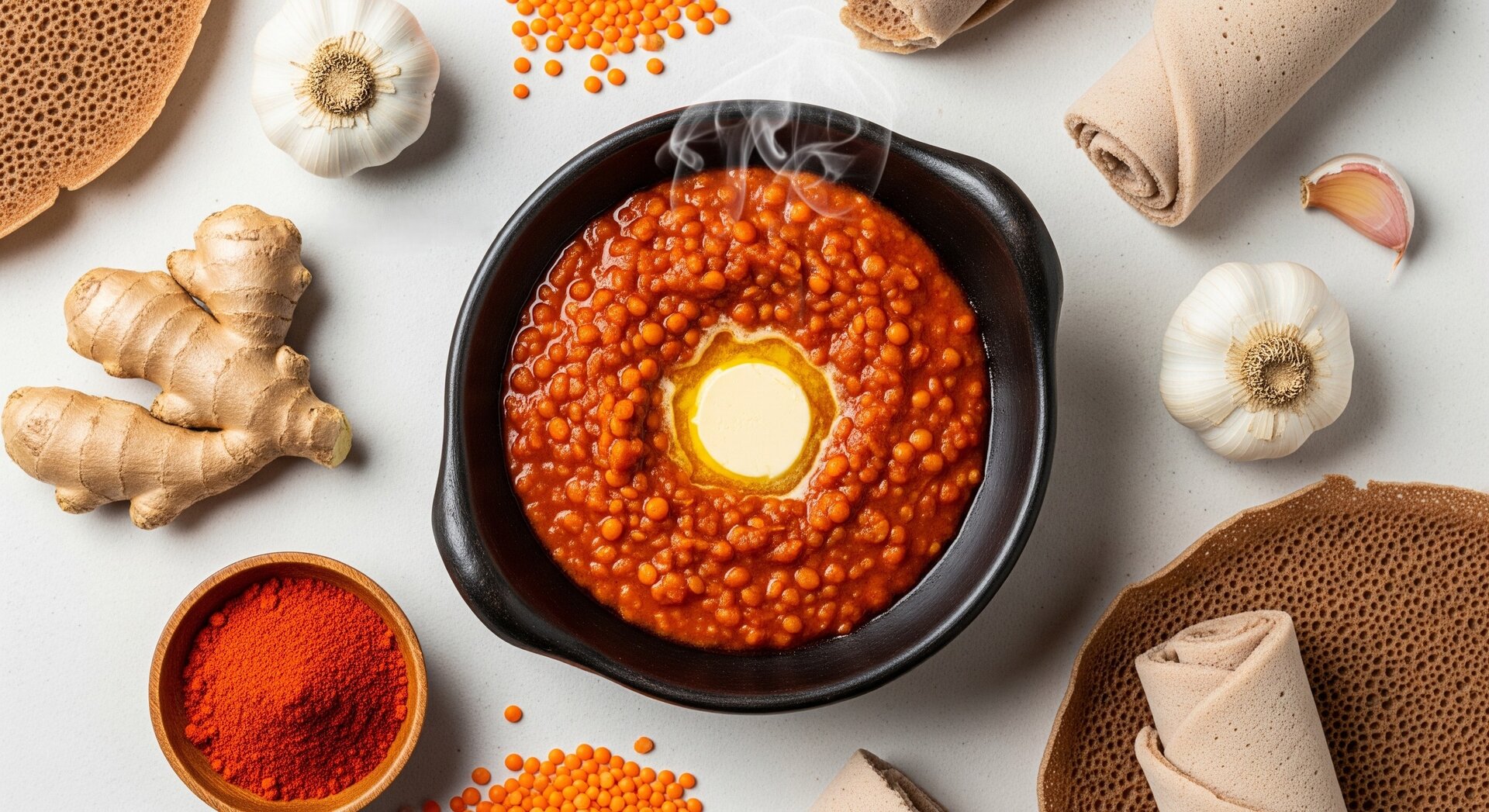 Ethiopian Misir Wot with Teff Pancakes 60 min Spicy red lentil stew with berbere on teff pancakes 1025 kcal 48g protein 2 synergies
 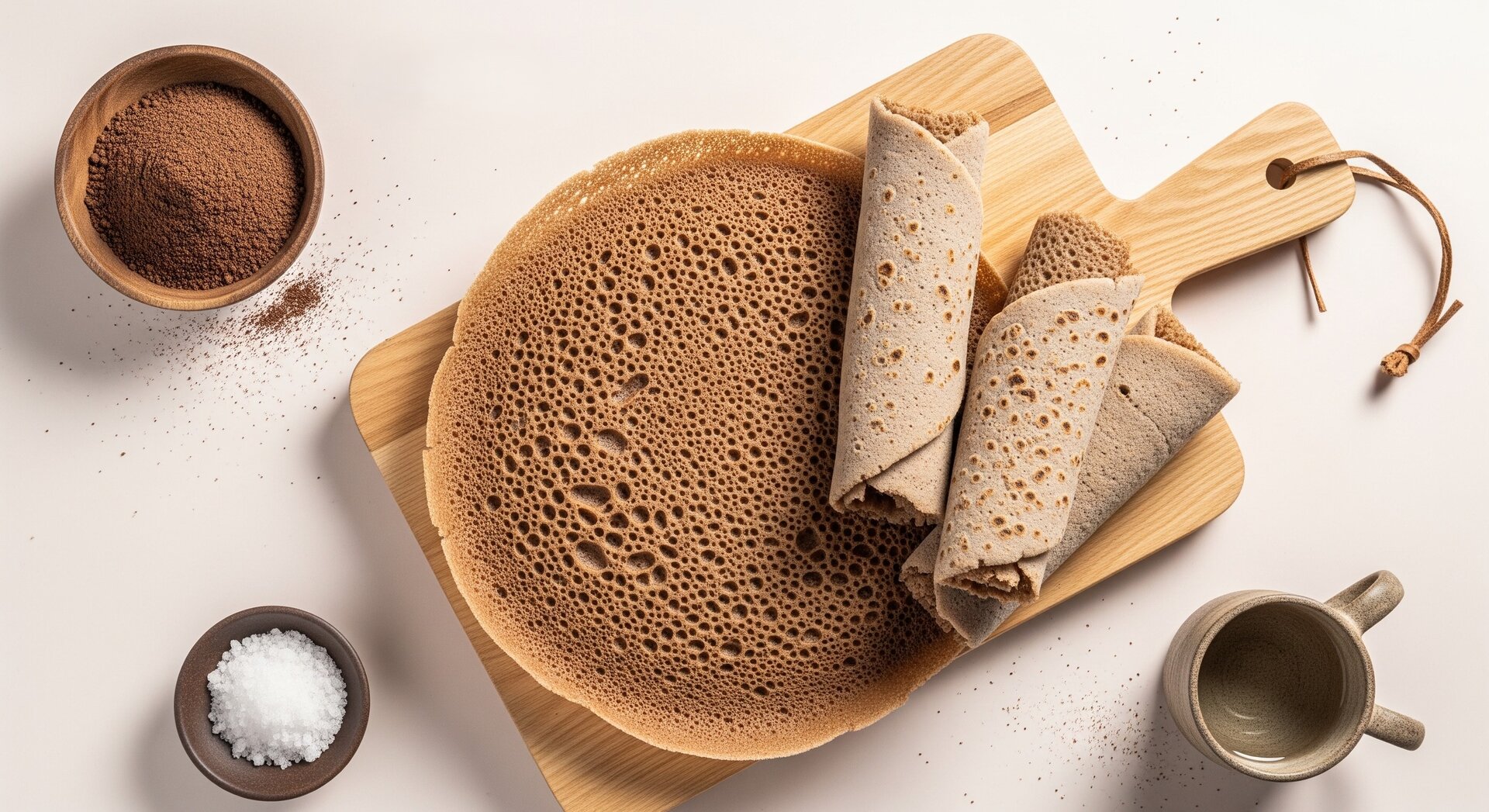 Ethiopian Teff Injera 2910 min Spongy, airy and slightly sour — cooked without oil 138 kcal 5g protein 1 synergies
  In the Kitchen
Storage
Location:Pantry
Shelf life:12 maanden (meel, ongeopend); 18 maanden (hele korrels)
Preparation
For injera: mix teff flour with water (1:3), let it ferment 2-5 days at room temperature and cook thinly on a hot griddle. For porridge: cook whole teff grains in 3× water for 15-20 minutes. For baking: replace 25-50% of a gluten-free flour blend with teff flour for a malty, nutty flavor.
Substitutes
Smart preparation
1Mix teff flour with other flour for better structure in baked goods.
Why?
Teff flour alone gives a crumbly, brittle result.
2Store teff flour in the fridge in an airtight container.
3Use teff flour for injera by fermenting the batter for 1-3 days.
Caution / Warnings
Teff Flour is very safe, but there are scientific considerations:
Thyroid disorders (goitrogenic, rare) Mild
Like many plant foods, teff may contain traces of goitrogenic compounds. With normal portions this is usually not relevant, but with long-term extremely high intake, extra attention to iodine intake may be appropriate.
Advice:
With existing hypothyroidism, normal portions (50-100 g dry per day) usually fit within a varied diet. Ensure enough iodine from iodized salt, fish or seaweed and discuss major diet changes with your doctor or dietitian.
High iron intake with hemochromatosis Moderate
Because of its high iron content (7.6 mg per 100 g), teff flour deserves extra attention with hereditary hemochromatosis or other situations where iron intake is strictly limited.
Advice:
With known hemochromatosis or elevated ferritin values, align teff flour portions with your doctor or dietitian. Tea or coffee with the meal can reduce non-heme iron absorption, but personal advice remains important.
Traditional use
African
Ethiopian ancient grain
Teff is the smallest grain in the world and has been cultivated in Ethiopia for over 3000 years. It is the base of injera, the fermented flatbread central to Ethiopian cuisine.
Summary
Teff flour is a fine Ethiopian flour from the world’s smallest grain, with iron, calcium, magnesium and zinc. It is the base of injera and works well in gluten-free baking.