Sweet Potato
The Complex Orange Tuber
What is this ingredient?
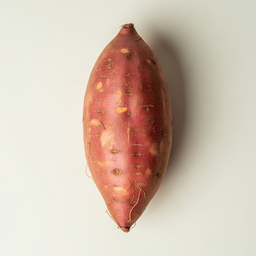
The sweet potato (Ipomoea batatas), despite its name, is not related to the regular potato (nightshade family), but belongs to the morning glory family. It is a tuberous root. Although sweet, the sweet potato (boiled) has a lower Glycemic Index than regular potatoes. The fiber provides more stable energy release.
How does it taste?
Pronouncedly sweet and creamy with a rich, caramelized flavor when roasted.
Pairs well with:
Pairs well with cinnamonmarshmallowpecanlime and chipotle.
Did you know...?
- The sweet potato is not related to the regular potato; they belong to different plant families.
- Sweet potatoes were independently domesticated in both the Americas and Polynesia.
- George Washington grew sweet potatoes on his Mount Vernon estate.
Nutritional Value & Energy
Per 100g
Sweet Potato provides energy thanks to natural nutrients , buffered by fiber.
Per 100g
Minerals
Vitamins
Omega-3 fatty acids
More nutrients
B-Vitamins
Trace Minerals
What's in a serving?
1 serving
Sweet Potato naturally contains potassium (337 mg per 100 g).
Sweet Potato naturally contains vitamin a (709 mcg per 100 g).
% of daily reference intake (DRI)
EU-approved nutrition claims
This ingredient contains nutrients for which EFSA-authorized health claims exist (at nutrient level, not ingredient-specific).
Approved health claims (EU)
Potassium EU 432/2012
Potassium contributes to the maintenance of normal blood pressure
Contains 337mg/100g (threshold: ≥300mg/100g)
Vitamin_a EU 432/2012
Vitamin A contributes to the normal function of the immune system
Contains 709mcg/100g (threshold: ≥120mcg/100g)
Vitamin_a EU 432/2012
Vitamin A contributes to the maintenance of normal skin
Contains 709mcg/100g (threshold: ≥120mcg/100g)
Vitamin_a EU 432/2012
Vitamin A contributes to the maintenance of normal mucous membranes
Contains 709mcg/100g (threshold: ≥120mcg/100g)
Vitamin_a EU 432/2012
Vitamin A contributes to the maintenance of normal vision
Contains 709mcg/100g (threshold: ≥120mcg/100g)
Vitamin_a EU 432/2012
Vitamin A contributes to normal iron metabolism
Contains 709mcg/100g (threshold: ≥120mcg/100g)
Vitamin_a EU 432/2012
Vitamin A has a role in the process of cell specialisation
Contains 709mcg/100g (threshold: ≥120mcg/100g)
Potassium EU 432/2012
Potassium contributes to normal functioning of the nervous system
Contains 337mg/100g (threshold: ≥300mg/100g)
Potassium EU 432/2012
Potassium contributes to normal muscle function
Contains 337mg/100g (threshold: ≥300mg/100g)
What's being researched?
Beta-carotene and anthocyanins
Orange and purple varieties of sweet potato contain beta-carotene and anthocyanins respectively, being studied for antioxidant activity. Studies show high bioavailability after preparation.
Supported by: [1] Ghasemzadeh A (2016)
Glycemic response and fiber effects
The glycemic response of sweet potato is being studied, with lower values than regular potato in certain preparation methods. Fiber content contributes to a dampened blood sugar effect.
Supported by: [1] Ghasemzadeh A (2016)
Vitamin A provision and immune function
Sweet potato as a source of beta-carotene for vitamin A conversion is being studied in relation to immune function. In regions with vitamin A deficiency, promising results are seen.
Supported by: [1] Ghasemzadeh A (2016)
Good Combinations (Synergy)
Combine sweet potato smartly to enhance the effect:
Sweet Potato 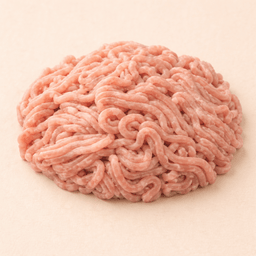 Turkey Mince
 Lean protein + complex carbs for muscle building
Technical: Turkey mince provides 20g high-quality protein per 100g with all essential amino acids for muscle protein synthesis (MPS). Sweet potato contains 20g complex carbohydrates per 100g (GI 50-60) that stimulate insulin — insulin is anabolic and promotes amino acid transport to muscles. The beta-carotene in sweet potato (8509μg/100g) is also better absorbed by the small amount of fat in turkey mince (10g).
What does this mean for you? Turkey mince with sweet potato is an ideal post-workout meal: the protein repairs muscles, the carbs replenish glycogen stores, and the insulin spike drives amino acids to your muscles.
Sweet Potato 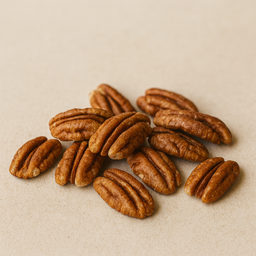 Pecans
 Pecan fat increases beta-carotene absorption from sweet potato by 5x
Technical: Pecans contain 72g fat per 100g (highest of all nuts, 41g MUFA) plus unique ellagitannins and proanthocyanidins. Sweet potato contains 8,509μg beta-carotene per 100g — converted to vitamin A via BCO1 enzyme in enterocytes. Without fat only 5-10% is absorbed; with pecan fat this rises to 40-60%. Vitamin A contributes to the maintenance of normal vision and the normal function of the immune system (EFSA). Ellagitannins from pecans also activate the Nrf2 pathway.
What does this mean for you? Sprinkle roasted sweet potato with chopped pecans. The pecan fat ensures you absorb 5x more beta-carotene — beta-carotene is a precursor of vitamin A. Classic combination (think: sweet potato casserole with pecans).
Sweet Potato 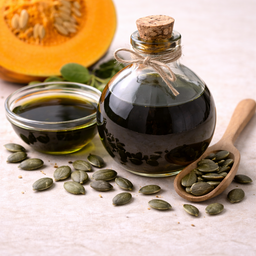 Pumpkin Seed Oil
 Zinc + beta-carotene: cofactor for vitamin A transport
Technical: Pumpkin seed oil provides 7.8mg zinc per 100ml (71% RDI). Zinc is cofactor for retinol-binding protein (RBP) that transports vitamin A — without sufficient zinc, vitamin A cannot be effectively transported. Sweet potato contains 8,509μg beta-carotene per 100g, converted to vitamin A (retinol) activating RARα/RXR receptors. The oil's fat dissolves beta-carotene for absorption. Zinc contributes to the maintenance of normal vision (EFSA).
What does this mean for you? Roast sweet potato and drizzle pumpkin seed oil over it. The zinc from the oil ensures your body can transport vitamin A from sweet potato. Two complementary pathways in one dish.
Sweet Potato 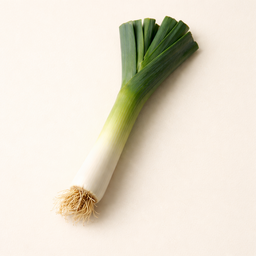 Leek
Leek Prebiotic combination: inulin + resistant starch
Technical: Leek contains 2-5g inulin per 100g — a fructo-oligosaccharide that selectively feeds Bifidobacterium. Cooled sweet potato forms resistant starch type 3 (retrograde amylose) that feeds Faecalibacterium prausnitzii. Together they stimulate two different probiotic strains for diverse gut flora.
What does this mean for you? Make a leek soup with sweet potato and let it cool before eating. Cooling creates resistant starch — an extra prebiotic bonus on top of the inulin from leeks.
Sweet Potato 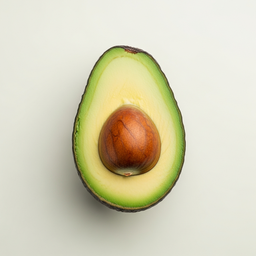 Avocado
 Avocado fat for maximum beta-carotene absorption
Technical: Sweet potato contains 11509μg beta-carotene per 100g (961% RDI for vitamin A). Avocado's fats (15g/100g, 10g monounsaturated) increase beta-carotene absorption 4-6x through micelle formation. Avocado also contains vitamin E (2.1mg) that protects beta-carotene from oxidation.
What does this mean for you? Combine sweet potato with avocado in bowls, salads or as a side dish. Avocado fats are essential — without fat you lose most of the vitamin A from sweet potato.
Sweet Potato 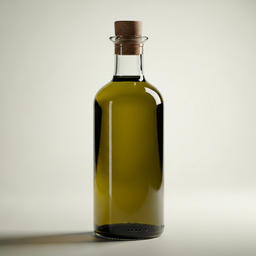 Olive Oil
 Essential for beta-carotene absorption
Technical: Sweet potato is the richest beta-carotene source at 11509μg/100g. Beta-carotene is converted to retinol (vitamin A) by β-carotene-15,15'-dioxygenase, but must first be absorbed via fat micelles. Olive oil increases absorption 3-5x. Without fat, conversion efficiency is only 3:1 (μg carotene:μg retinol); with fat 12:1.
What does this mean for you? Always serve sweet potato with oil or butter. Eating it 'dry' is a missed opportunity — you lose most of the vitamin A. A little fat makes a huge difference.
Recipes with Sweet Potato
Discover delicious recipes featuring sweet potato:
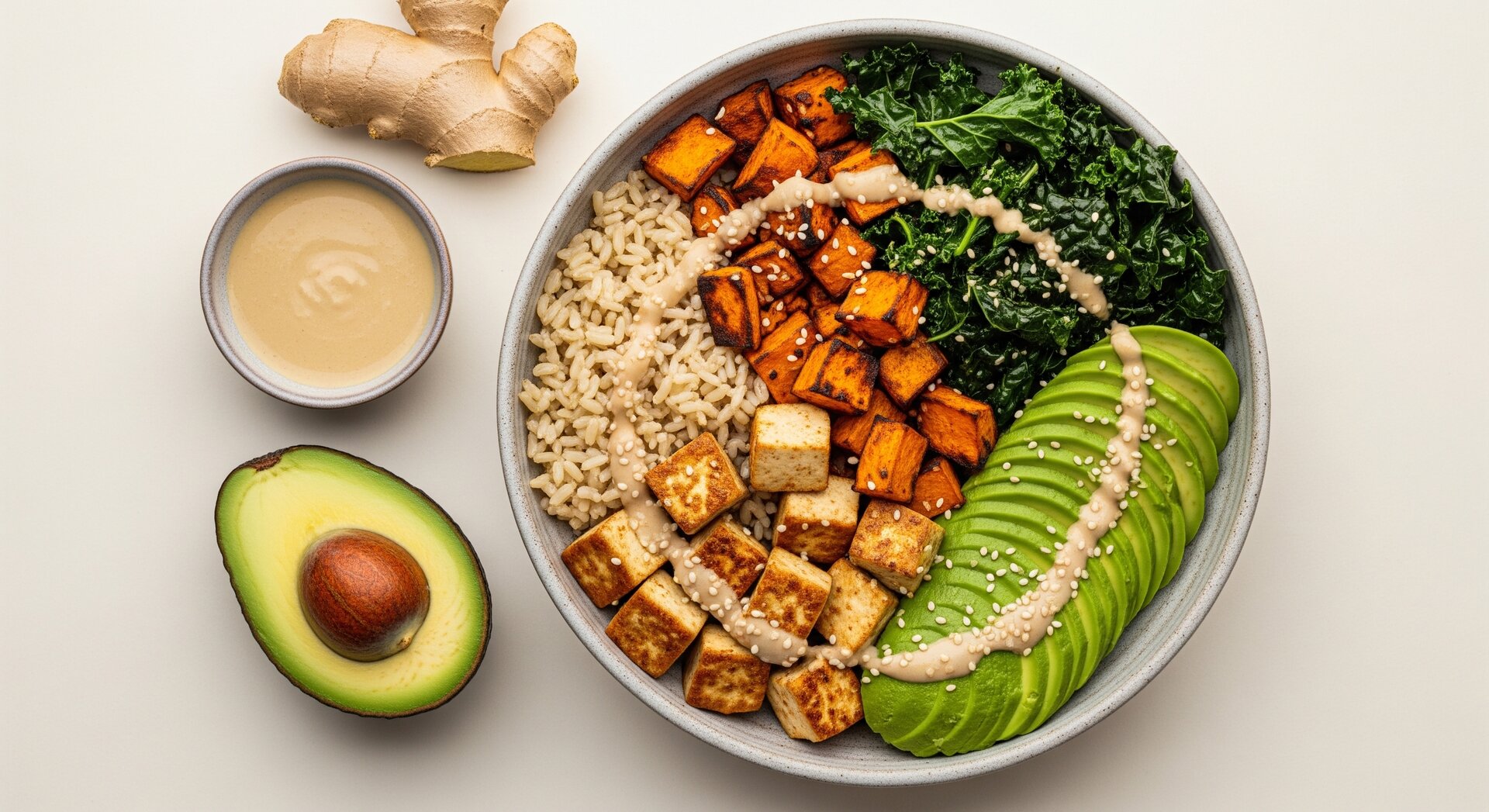 Buddha Bowl with Tofu, Sweet Potato and Kale 50 min Warm bowl with roasted vegetables
  790 kcal
  30g protein 3 synergies
 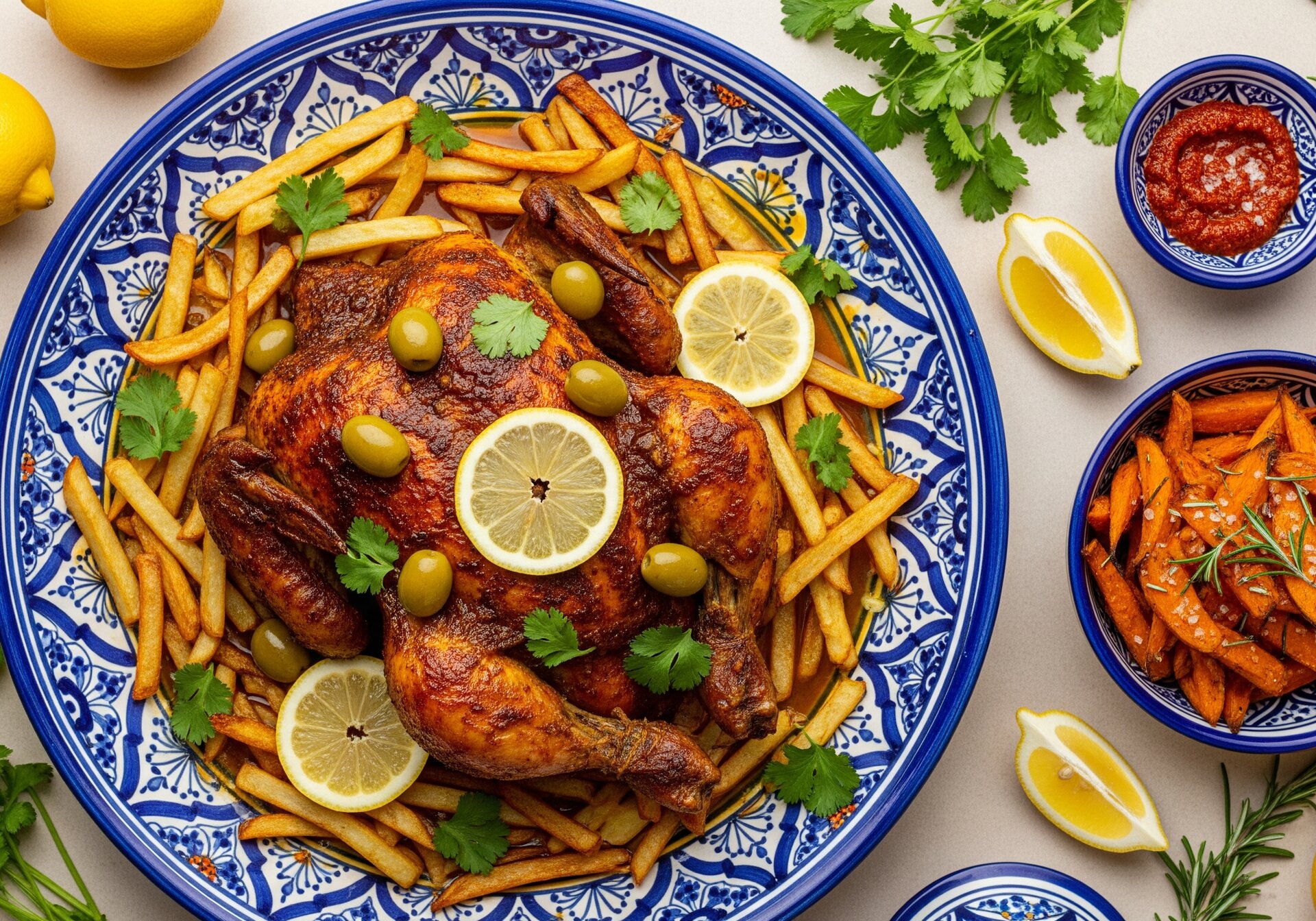 Djaaj Mhammer - Whole Rotisserie Chicken 130 min Golden roasted with green olives and preserved lemon 520 kcal 38g protein 2 synergies
 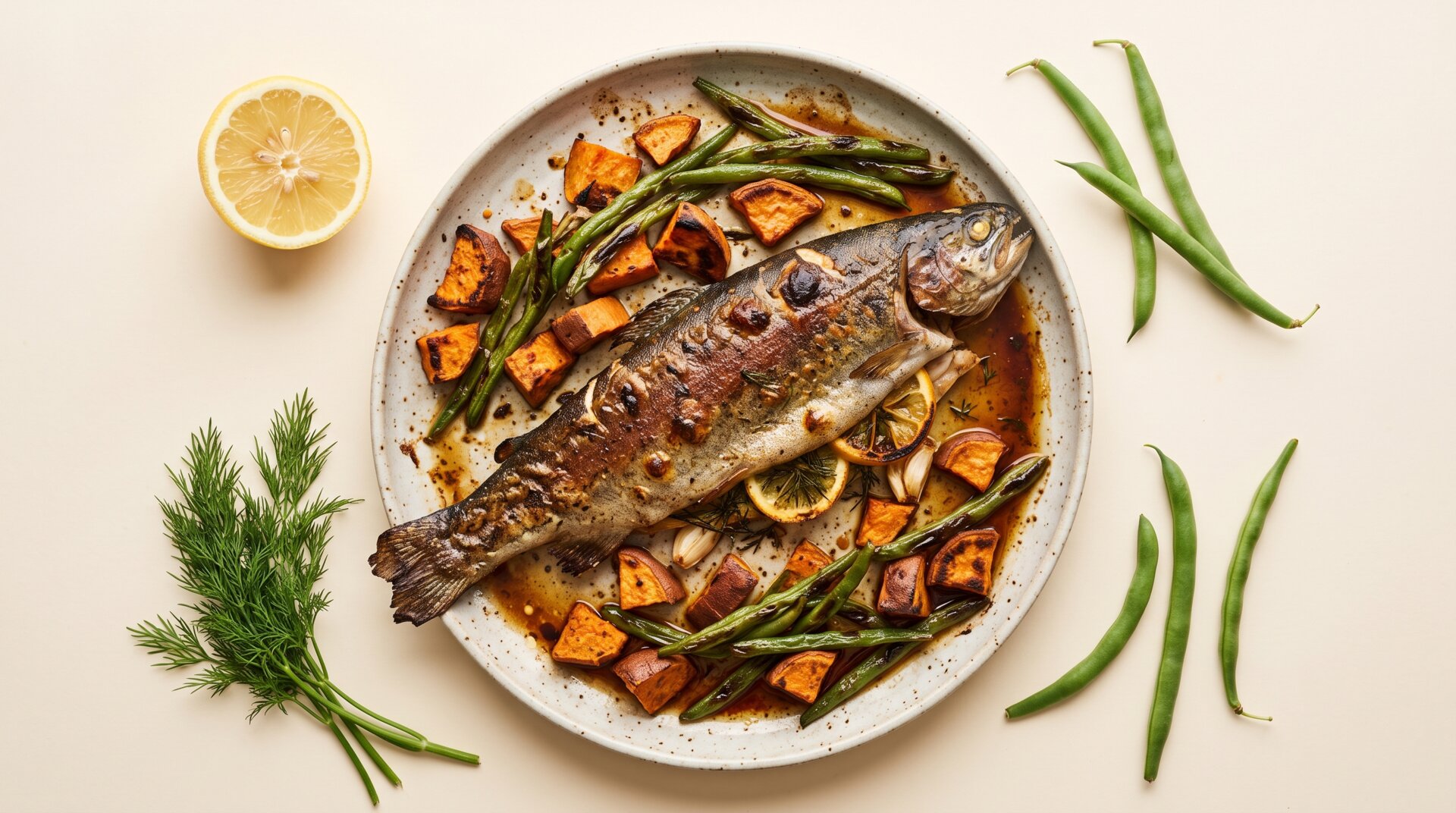 Oven-Baked Trout with Lemon, Herbs and Vegetables 35 min Whole trout with dill and sweet potato from a single roasting pan 600 kcal 40g protein 2 synergies
 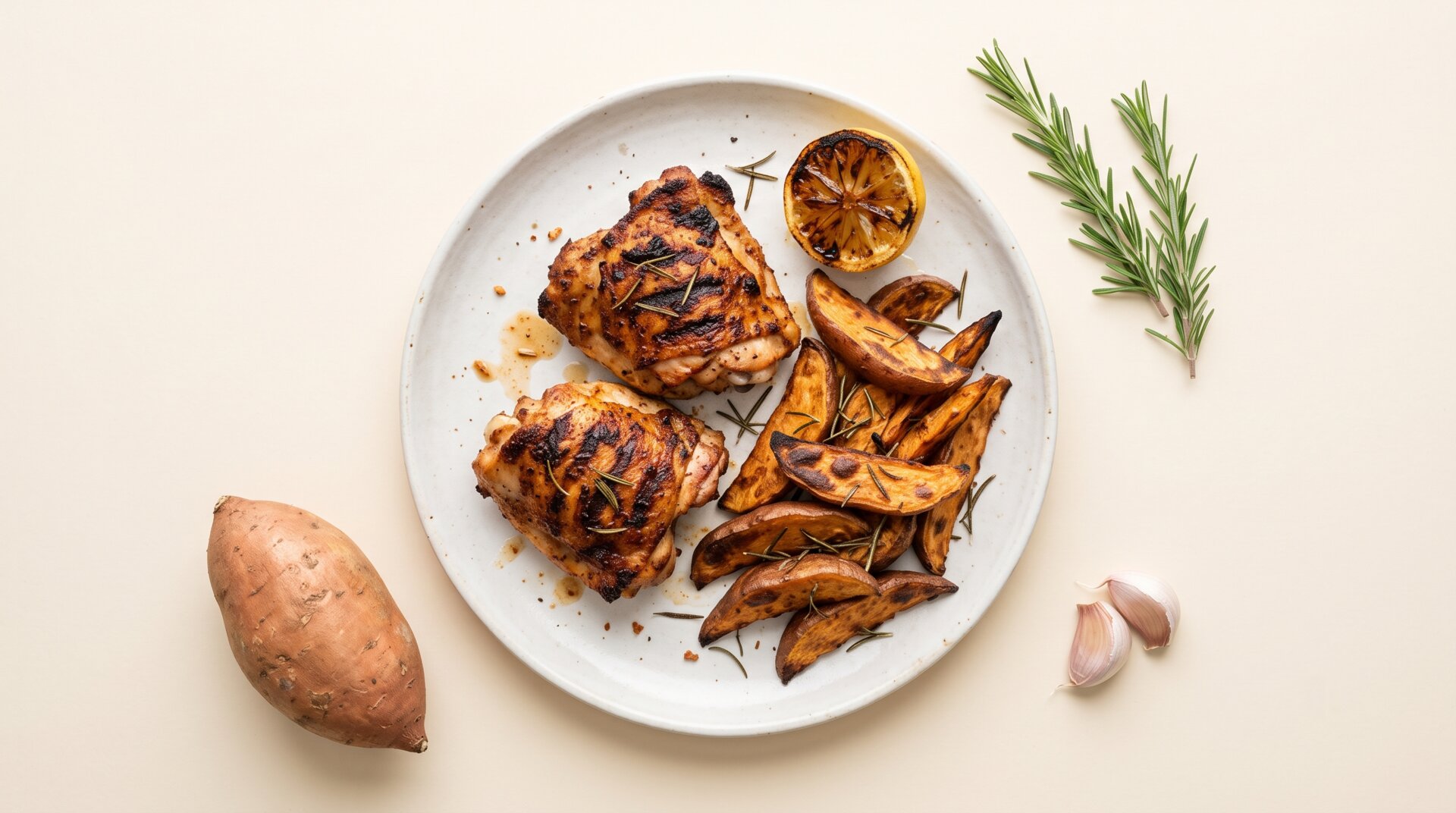 Grilled Chicken with Sweet Potato and Rosemary (Paleo) 40 min Grilled chicken thighs with crispy sweet potato and fresh rosemary 700 kcal 44g protein 2 synergies
 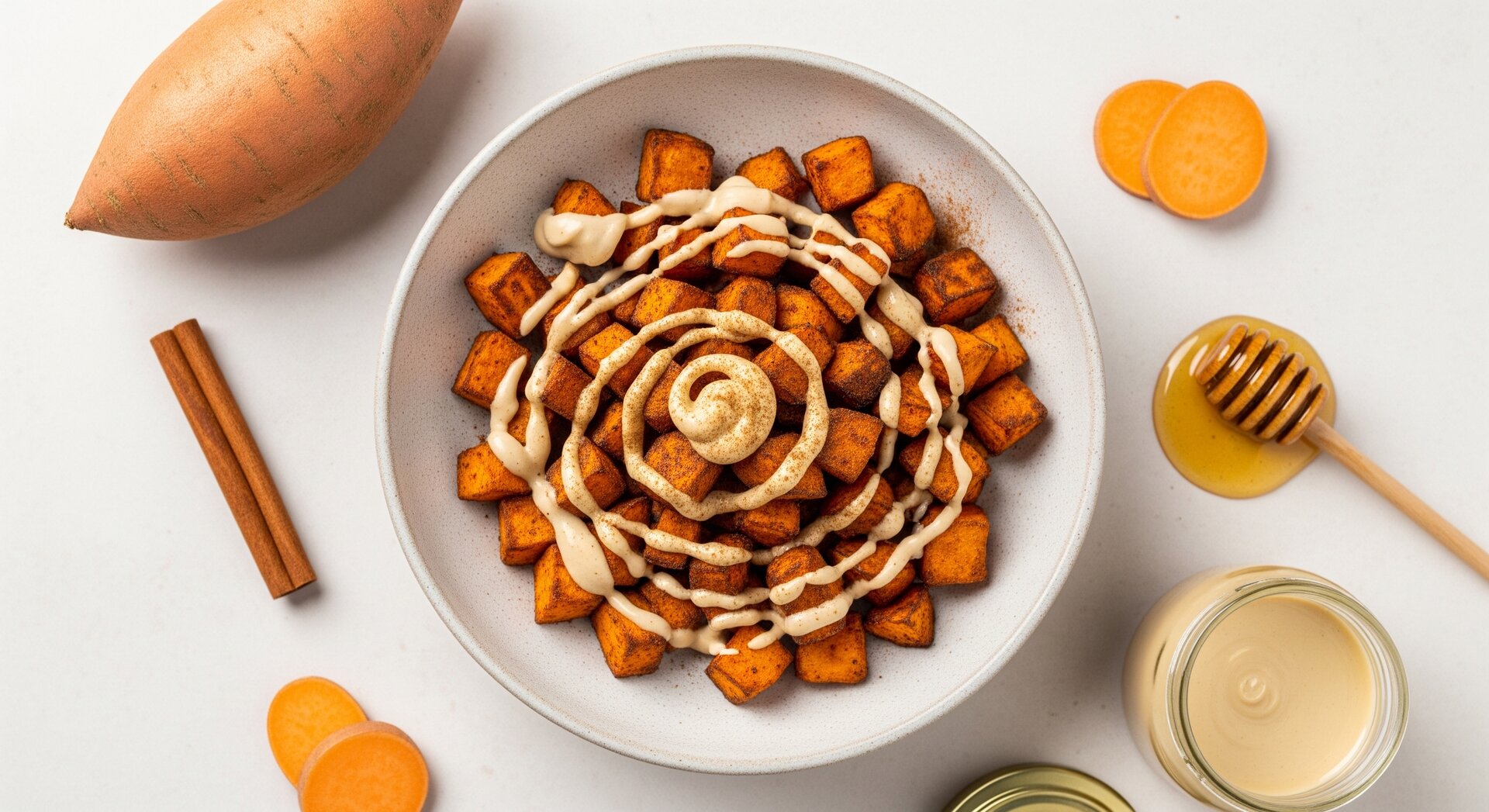 Roasted Sweet Potato with Cinnamon and Tahini 40 min Soft oven cubes with warm cinnamon and a creamy tahini-honey dressing 290 kcal 6g protein 1 synergies
 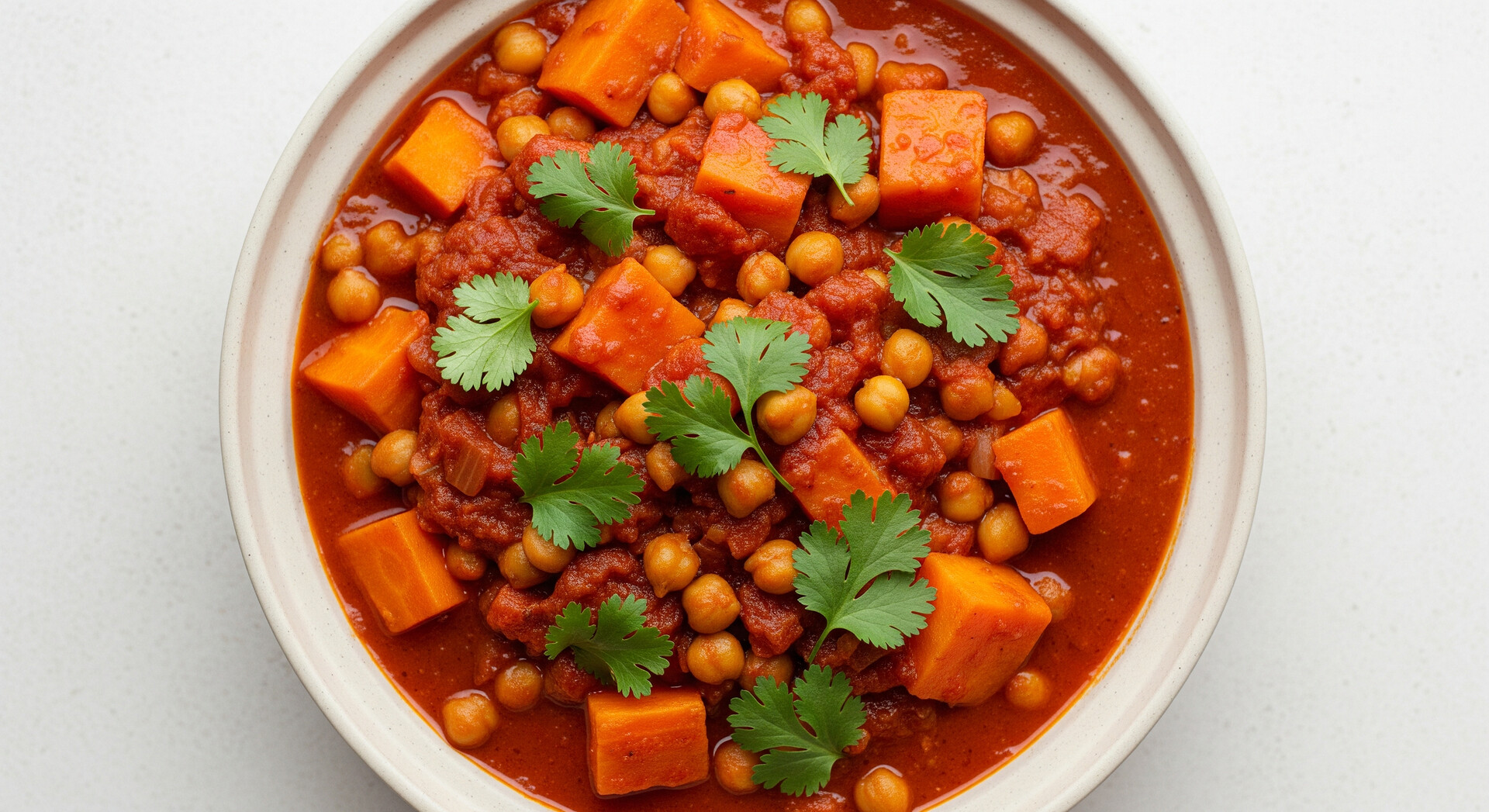 Vegetable Tajine with Chickpeas and Sweet Potato 65 min Moroccan stew with cinnamon-honey glaze and warm spices 385 kcal 12g protein 4 synergies
  In the Kitchen
Storage
Location:Pantry
Shelf life:2-3 weken (koel, donker), niet in koelkast
Store cool and dark (12-15°C). NOT in the fridge - this makes them hard and bitter.
Preparation
Boiling keeps GI low, baking/roasting caramelizes sugars. Always serve with fat for beta-carotene absorption.
Conversions
Substitutes
Smart preparation
1Pierce sweet potatoes before baking in the oven to prevent bursting.
2Bake sweet potatoes at 200 degrees until soft and caramelized.
Why?
High temperature activates enzymes that convert starch to sugar.
3Cut sweet potatoes just before use; they discolor quickly.
Caution / Warnings
Sweet Potato is very safe, but there are scientific considerations:
Cooking Method (GI impact) Mild
Boiling (in water) keeps the Glycemic Index low. Baking/roasting in the oven caramelizes the sugars
Advice:
For stable blood sugar: boil the sweet potato instead of baking in the oven
Traditional use
Indigenous
Polynesian and American staple food
Sweet potatoes were cultivated in South America over 5000 years ago and mysteriously spread to Polynesia, where they became a sacred staple food.
Traditional Chinese Medicine
Chinese spleen-strengthening food
In Chinese medicine, sweet potato is considered a qi-strengthening, spleen-tonifying food that warms digestion and provides energy.
Summary
The sweet potato is a vitamin A bomb that supports your eyes, skin and immune system. The key is: always eat it with a bit of fat (olive oil, butter, avocado), otherwise your body won't absorb the key nutrients. Boiling results in a lower glycemic index than baking.