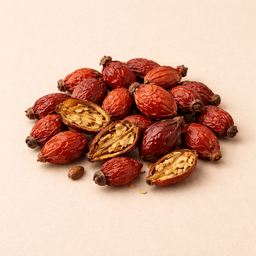
Rosehip
Fruity source of vitamin C and fibre
What is this ingredient?
Rosehip (Rosa canina) is the pseudo-fruit left after the wild rose has flowered. In Northern and Eastern Europe it has long been gathered for tea, syrup, jam, and winter stores, especially for its bright tartness and notable vitamin C content. Dried rosehip also contains fibre, carotenoids such as lycopene and beta-carotene, polyphenols, and galactolipids such as GOPO. These compounds are frequently examined in nutrition and clinical research, especially around joint comfort and overall nutritional quality. During World War II, rosehip syrup was widely used in the United Kingdom as a fruity vitamin C source for children.
How does it taste?
Fruity-tart with a floral, mildly sweet flavor reminiscent of hibiscus and red berries.
Pairs well with:
Pairs well with hibiscushoneyapplegingercinnamonand vanilla.
Did you know...?
- Rosehips can contain a notable amount of vitamin C, but the exact level varies widely by variety, harvest, drying, and storage.
- During World War II, British children collected rosehips for syrup because citrus fruit was scarce.
Nutritional Value & Energy
Per 100g
Rosehip provides energy thanks to natural nutrients , buffered by fiber.
Per 100g
Minerals
Vitamins
Omega-3 fatty acids
More nutrients
Trace Minerals
What's in a serving?
Rosehip naturally contains vitamin c (426 mg per 100 g dried powder). With typical tea or powder use (3–9 g), the contribution depends on portion size and preparation.
Rosehip naturally contains vitamin c (426 mg per 100 g dried powder). With typical tea or powder use (3–9 g), the contribution depends on portion size and preparation.
Rosehip naturally contains vitamin e (5.8 mg per 100 g dried powder). With typical tea or powder use (3–9 g), the contribution depends on portion size and preparation.
Rosehip naturally contains vitamin k (25.9 mcg per 100 g dried powder). With typical tea or powder use (3–9 g), the contribution depends on portion size and preparation.
% of daily reference intake (DRI)
EU-approved nutrition claims
This ingredient contains nutrients for which EFSA-authorized health claims exist at nutrient level, not as an ingredient-specific claim for rosehip.
Approved health claims (EU)
Vitamin_c EU 432/2012
Vitamin C contributes to the normal function of the immune system
Contains 426mg/100g (threshold: ≥12mg/100g)
Vitamin_c EU 432/2012
Vitamin C contributes to the reduction of tiredness and fatigue
Contains 426mg/100g (threshold: ≥12mg/100g)
Vitamin_c EU 432/2012
Vitamin C contributes to normal collagen formation for the normal function of skin
Contains 426mg/100g (threshold: ≥12mg/100g)
Vitamin_c EU 432/2012
Vitamin C contributes to normal collagen formation for the normal function of blood vessels
Contains 426mg/100g (threshold: ≥12mg/100g)
Vitamin_c EU 432/2012
Vitamin C contributes to normal collagen formation for the normal function of bones
Contains 426mg/100g (threshold: ≥12mg/100g)
Vitamin_c EU 432/2012
Vitamin C contributes to normal collagen formation for the normal function of cartilage
Contains 426mg/100g (threshold: ≥12mg/100g)
Vitamin_c EU 432/2012
Vitamin C contributes to normal collagen formation for the normal function of gums
Contains 426mg/100g (threshold: ≥12mg/100g)
Vitamin_c EU 432/2012
Vitamin C contributes to normal collagen formation for the normal function of teeth
Contains 426mg/100g (threshold: ≥12mg/100g)
Vitamin_c EU 432/2012
Vitamin C contributes to normal energy-yielding metabolism
Contains 426mg/100g (threshold: ≥12mg/100g)
Vitamin_c EU 432/2012
Vitamin C contributes to normal functioning of the nervous system
Contains 426mg/100g (threshold: ≥12mg/100g)
Vitamin_c EU 432/2012
Vitamin C contributes to normal psychological function
Contains 426mg/100g (threshold: ≥12mg/100g)
Vitamin_c EU 432/2012
Vitamin C contributes to the protection of cells from oxidative stress
Contains 426mg/100g (threshold: ≥12mg/100g)
Vitamin_c EU 432/2012
Vitamin C contributes to the regeneration of the reduced form of vitamin E
Contains 426mg/100g (threshold: ≥12mg/100g)
Vitamin_c EU 432/2012
Vitamin C increases iron absorption
Contains 426mg/100g (threshold: ≥12mg/100g)
Vitamin_c EU 432/2012
Vitamin C contributes to maintain the normal function of the immune system during and after intense physical exercise
Contains 426mg/100g (threshold: ≥12mg/100g)
Comparison
vssinaasappel
Rosehip contains about 8× more vitamin C per 100 g than orange, but you usually use much less rosehip per serving.
What's being researched?
Rosehip and joint comfort
Rosehip extract and powder are examined in clinical studies around joint comfort and everyday mobility. The results are mainly discussed in the context of nutrition research and botanical preparations.
Supported by: [1] Winther (2005) , [4] Christensen R (2008) , [2] Chrubasik (2008)
Vitamin C and polyphenols in rosehip
Rosehip is a concentrated botanical source of vitamin C, carotenoids, and polyphenols. Research looks at how variety, drying, and preparation influence the composition of tea, syrup, and powder.
Supported by: [2] Chrubasik (2008)
Good Combinations (Synergy)
Combine rosehip smartly to enhance the effect:
Rosehip 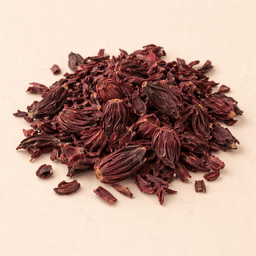 Hibiscus
 Complementary vascular support via ACE modulation and antioxidants
Hibiscus anthocyanins reduce systolic blood pressure by 7.5mmHg (PMID: 34927694)
Technical: Anthocyanins from hibiscus modulate the ACE enzyme, supporting blood pressure. Rose hip contains 426mg vitamin C per 100g plus flavonoids that support collagen and provide vascular polyphenols. Together they offer complementary vascular support.
What does this mean for you? Hibiscus-rose hip tea is a fresh, tart tea full of antioxidants. The two ingredients support your blood vessels via two independent pathways.
Rosehip  Turmeric
 Complementary joint protection via GOPO and curcumin
GOPO galactolipids inhibit MMP expression and protect cartilage against degradation
Technical: Galactolipids (GOPO) from rose hip inhibit matrix metalloproteinases (MMP) that break down cartilage. Curcumin modulates NF-κB signal transduction. Both support joints via complementary mechanisms: GOPO supports cartilage structurally, curcumin modulates bioactive signaling.
What does this mean for you? Rose hip tea with turmeric is a powerful combination for joint health. Both work together for comprehensive joint support.
Rosehip 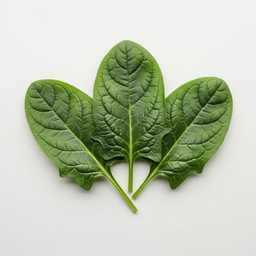 Spinach
 Extreme vitamin C increases iron absorption from spinach 2-6x
Ascorbic acid increases non-heme iron absorption 2-6x via Fe³⁺→Fe²⁺ reduction (PMID: 2507689)
Technical: Rose hip contains 426mg vitamin C per 100g, one of the highest natural sources. Vitamin C reduces Fe³⁺ to Fe²⁺, improving non-heme iron absorption from spinach (2.7mg/100g) up to 6x via DMT-1 transporters in the gut.
What does this mean for you? Drink rose hip tea with spinach meals to multiply iron absorption. Particularly valuable for vegetarians and people with iron deficiency.
Recipes with Rosehip
Discover delicious recipes featuring rosehip:
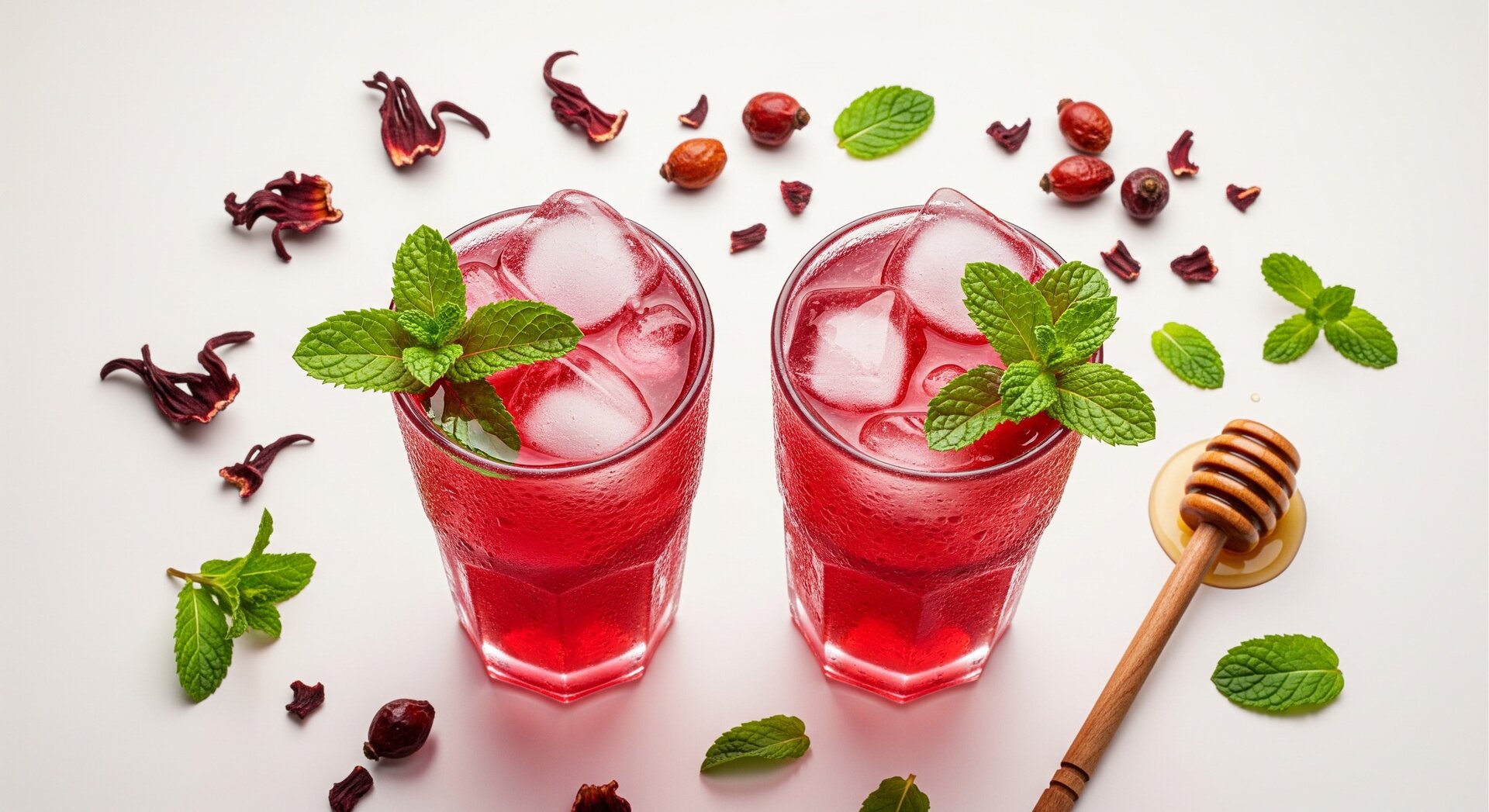 Hibiscus Rosehip Iced Tea 15 min Cold floral tea with hibiscus and rosehip
  50 kcal
  0g protein 1 synergies
  In the Kitchen
Storage
Location:Pantry
Shelf life:1-2 jaar droog en donker bewaard
Store dried rosehips airtight, cool, dry, and dark. Light, heat, and oxygen make aroma and vitamin C decline faster.
Preparation
Use 1-2 tablespoons dried rosehips per cup. Pour over boiling water and steep for 10-15 minutes, longer than most herbal teas. Strain well, especially with coarse pieces, and also use the powder in smoothies, yogurt, or fruity sauces.
Conversions
Substitutes
Smart preparation
1When using fresh rosehips, remove the seeds and fine hairs inside before preparing them.
2Cook rosehips until soft and strain them carefully for jam, syrup, or sauce.
Why?
This removes hard particles and fine hairs from the final product and gives a smooth texture.
3Dry rosehips at low temperature and store them in the dark for tea or powder.
Caution / Warnings
Rosehip is very safe, but there are scientific considerations:
Kidney stones Moderate
Rosehip contains a lot of vitamin C; in large amounts this can be relevant for people with a history of oxalate kidney stones.
Advice:
With a history of kidney stones: use rosehip in moderation and discuss large amounts or supplements with a doctor.
Blood thinners (warfarin) Mild
Large and variable amounts of vitamin C or rosehip preparations can be relevant when using warfarin.
Advice:
If you use blood thinners, keep your intake consistent and consult your doctor before adding high doses or supplements.
Traditional use
Mediterranean
European culinary and preserving tradition
Rosehips were collected in Europe as early as the Middle Ages and prepared as syrups, jams, teas, and winter stores. During World War II, they were gathered on a large scale in Britain as a local fruit source when citrus fruit was scarce.
Summary
Rosehip is fruity-tart, rich in vitamin C, and loved in tea, syrup, jam, and powder. Use 1-2 tablespoons per cup and steep long enough for a full flavor. Pair with hibiscus for a bright red infusion or with honey and cinnamon for a softer winter drink. With a history of kidney stones or blood thinner use, moderate and consistent intake is sensible.