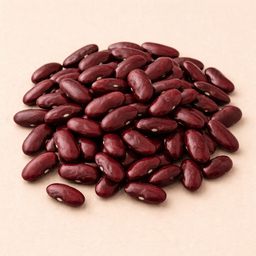
Kidney beans
Firm red bean for chili and stews
What is this ingredient?
Kidney beans (Phaseolus vulgaris) are large red legumes with a firm texture, named after their distinctive kidney shape and deep red colour.
## Nutrition and meal response
Kidney beans have a low glycaemic index (GI around 29) and contain fibre, resistant starch and α-amylase-inhibiting proteins. This is why research often examines them in relation to carbohydrate digestion and the glucose response after a meal.
## Fibre and heart-friendly meals
Cooked kidney beans provide soluble fibre and fit well in meals with plenty of vegetables, whole grains and herbs. Clinical studies with beans examine changes in blood lipids within an overall eating pattern; those results should be interpreted at meal and dietary-pattern level.
## Red skin
The red skin contains polyphenols, including anthocyanins such as pelargonidin and delphinidin. These compounds are mainly studied through laboratory markers for oxidation and pigment composition.
## Important: cooking requirement
Raw kidney beans are toxic due to the lectin phytohaemagglutinin (PHA). Soak dried beans for 8-12 hours, discard the soaking water and then boil vigorously until fully cooked. Canned beans are already cooked and can be used directly after rinsing.
How does it taste?
Mildly nutty and slightly sweet with a firm, starchy texture.
Pairs well with:
Pairs well with chilicuminpaprikatomato and cilantro.
Did you know...?
- Kidney beans get their name from their shape, which resembles a human kidney.
- Raw kidney beans contain the toxic lectin phytohaemagglutinin and must always be cooked thoroughly.
Nutritional Value & Energy
Per 100g
Kidney beans provides energy thanks to natural nutrients , buffered by fiber.
Per 100g
Minerals
Vitamins
Omega-3 fatty acids
More nutrients
B-Vitamins
Trace Minerals
Low GI means blood sugar doesn't spike quickly.
What's in a serving?
1 serving (dry)
Kidney beans naturally contain iron (2.9 mg per 100 g).
Kidney beans naturally contain potassium (405 mg per 100 g).
Kidney beans naturally contain phosphorus (142 mg per 100 g).
Kidney beans naturally contain folate (130 mcg per 100 g).
% of daily reference intake (DRI)
EU-approved nutrition claims
This ingredient contains nutrients for which EFSA-authorized health claims exist (at nutrient level, not ingredient-specific).
Approved health claims (EU)
Iron EU 432/2012
Iron contributes to normal energy-yielding metabolism
Contains 2.9mg/100g (threshold: ≥2.1mg/100g)
Iron EU 432/2012
Iron contributes to the reduction of tiredness and fatigue
Contains 2.9mg/100g (threshold: ≥2.1mg/100g)
Potassium EU 432/2012
Potassium contributes to the maintenance of normal blood pressure
Contains 405mg/100g (threshold: ≥300mg/100g)
Folate EU 432/2012
Folate contributes to normal blood formation
Contains 130mcg/100g (threshold: ≥30mcg/100g)
Folate EU 432/2012
Folate contributes to normal amino acid synthesis
Contains 130mcg/100g (threshold: ≥30mcg/100g)
Folate EU 432/2012
Folate contributes to normal homocysteine metabolism
Contains 130mcg/100g (threshold: ≥30mcg/100g)
Folate EU 432/2012
Folate contributes to normal psychological function
Contains 130mcg/100g (threshold: ≥30mcg/100g)
Folate EU 432/2012
Folate contributes to the normal function of the immune system
Contains 130mcg/100g (threshold: ≥30mcg/100g)
Folate EU 432/2012
Folate has a role in the process of cell division
Contains 130mcg/100g (threshold: ≥30mcg/100g)
Folate EU 432/2012
Folate contributes to maternal tissue growth during pregnancy
Contains 130mcg/100g (threshold: ≥30mcg/100g)
Phosphorus EU 432/2012
Phosphorus contributes to normal energy-yielding metabolism
Contains 142mg/100g (threshold: ≥105mg/100g)
Phosphorus EU 432/2012
Phosphorus contributes to the normal function of cell membranes
Contains 142mg/100g (threshold: ≥105mg/100g)
Phosphorus EU 432/2012
Phosphorus contributes to the maintenance of normal bones
Contains 142mg/100g (threshold: ≥105mg/100g)
Phosphorus EU 432/2012
Phosphorus contributes to the maintenance of normal teeth
Contains 142mg/100g (threshold: ≥105mg/100g)
Iron EU 432/2012
Iron contributes to normal cognitive function
Contains 2.9mg/100g (threshold: ≥2.1mg/100g)
Iron EU 432/2012
Iron contributes to normal formation of red blood cells and haemoglobin
Contains 2.9mg/100g (threshold: ≥2.1mg/100g)
Iron EU 432/2012
Iron contributes to normal oxygen transport in the body
Contains 2.9mg/100g (threshold: ≥2.1mg/100g)
Iron EU 432/2012
Iron contributes to the normal function of the immune system
Contains 2.9mg/100g (threshold: ≥2.1mg/100g)
Iron EU 432/2012
Iron has a role in the process of cell division
Contains 2.9mg/100g (threshold: ≥2.1mg/100g)
Potassium EU 432/2012
Potassium contributes to normal functioning of the nervous system
Contains 405mg/100g (threshold: ≥300mg/100g)
Potassium EU 432/2012
Potassium contributes to normal muscle function
Contains 405mg/100g (threshold: ≥300mg/100g)
What's being researched?
Kidney beans and glycaemic response
The effects of kidney beans on the glycaemic response after a meal are being studied, especially because of their resistant starch and fibre content. Clinical studies examine these effects within controlled meal settings.
Supported by: [1] Rebello CJ (2012)
Red kidney beans and polyphenols
The polyphenol content of red kidney beans, including anthocyanins and proanthocyanidins, is studied through composition analyses and laboratory markers. This research mainly describes pigments and chemical activity in test models.
Supported by: [4] Bąchor R (2016)
Good Combinations (Synergy)
Combine kidney beans smartly to enhance the effect:
Kidney beans 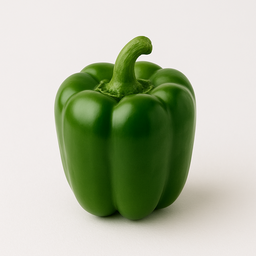 Bell Pepper
 Vitamin C increases iron absorption from kidney beans up to 6x
Technical: Kidney beans contain 2.9mg non-heme iron per 100g (cooked). Non-heme iron in Fe³⁺ form is poorly absorbed (5-12%). Bell pepper contains up to 128mg vitamin C per 100g (red pepper) that reduces Fe³⁺ to Fe²⁺, the bioavailable form. Additionally, vitamin C neutralizes phytates in beans that inhibit iron absorption. This can increase iron uptake by 400-600%.
What does this mean for you? Always add bell pepper to your chili or bean salad. Good to know: vitamin C increases iron absorption (EFSA-approved).
Kidney beans 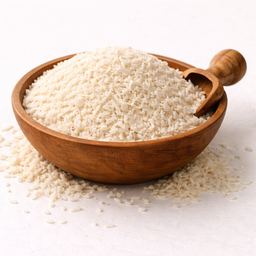 Rice
Rice Complete protein combination — red beans + rice
Technical: Kidney beans contain 8.7g protein per 100g (cooked) with high lysine but low methionine. Rice provides methionine and cysteine but lacks lysine. Together they reach a PDCAAS close to 1.0. This is the biochemical basis of "red beans and rice" — a dish independently developed in Caribbean, Latin American and African cuisines. The 6.4g fiber from kidney beans slows starch digestion from rice.
What does this mean for you? Red beans with rice is one of the most efficient plant-based protein combinations in the world. No coincidence that so many cultures independently discovered this — it's biochemically optimal.
Kidney beans 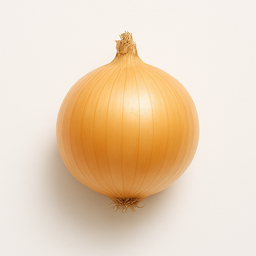 Onion
Onion Quercetin from onion inhibits phytate binding and increases iron absorption from beans
Quercetin chelates non-heme iron and improves absorption despite phytate (PMID: 15743017)
Technical: Kidney beans contain 6.7mg non-heme iron per 100g, but phytate binds 60-70% of it. Quercetin from onion (13mg/100g) chelates iron and makes it available for DMT-1 transporters, even in the presence of phytate. Sulfur compounds from onion (allyl propyl disulfide) also reduce Fe³⁺ to the better-absorbable Fe²⁺.
What does this mean for you? Kidney beans with sautéed onion (chili, rajma) is an iron-smart combination. The onion breaks through the phytate blockade so you absorb more iron from the beans.
Recipes with Kidney beans
Discover delicious recipes featuring kidney beans:
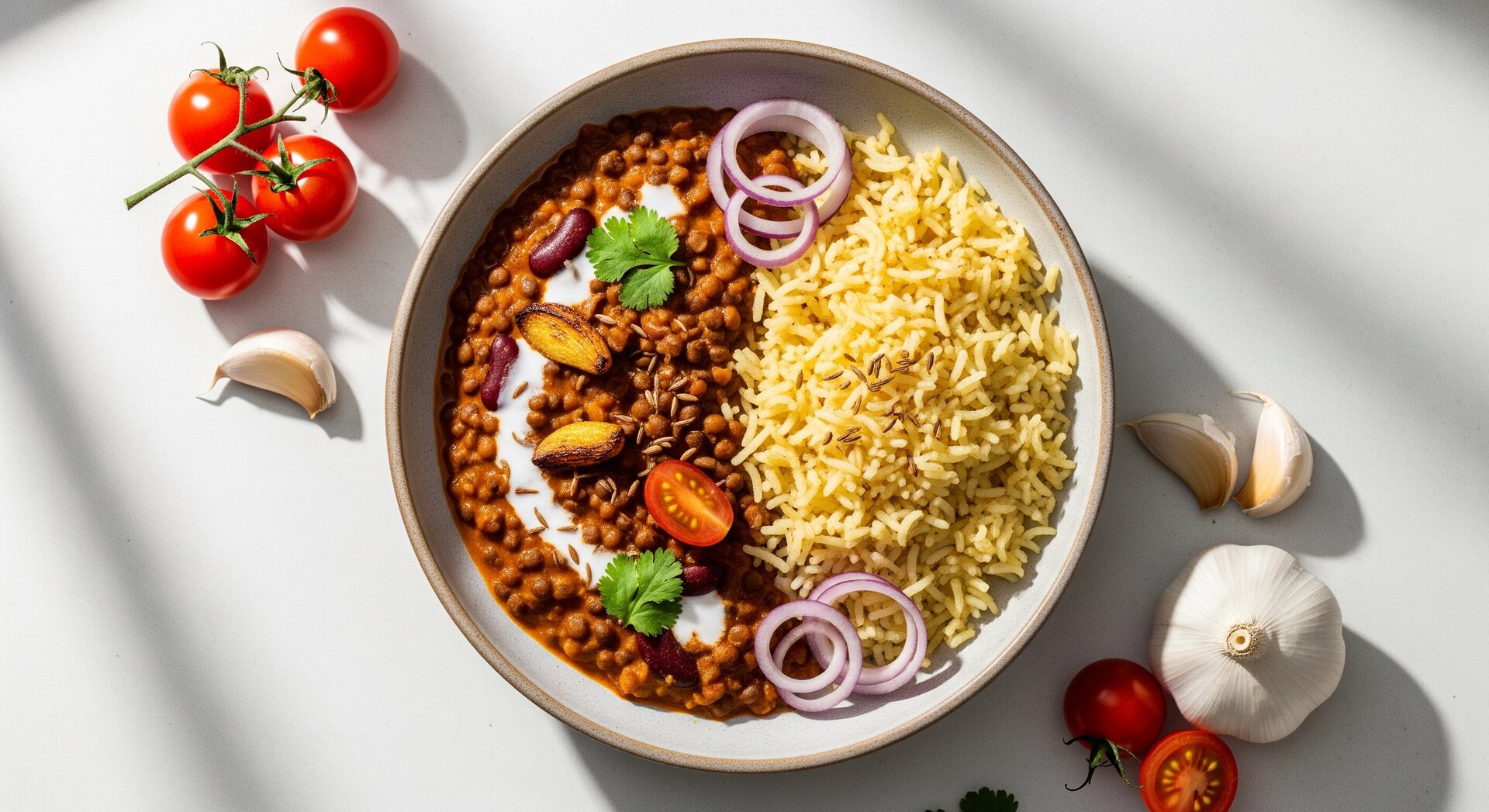 Indian Dal Makhani with Ghee Rice 75 min Creamy black lentil stew with kidney beans and ghee rice
  756 kcal
  28g protein 2 synergies
 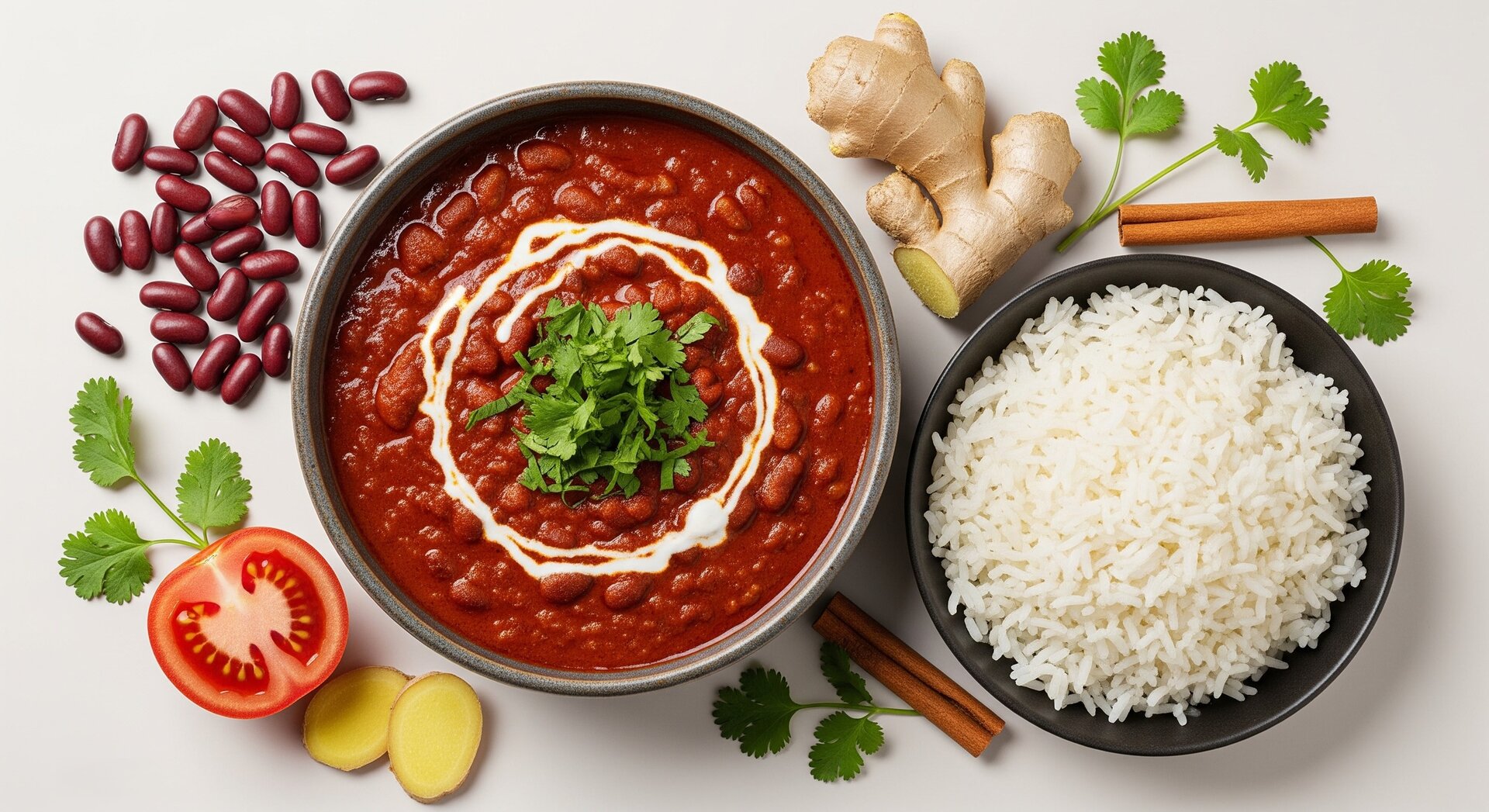 Indian Rajma Masala with Basmati Rice 50 min North Indian red kidney bean curry with garam masala and tomato 688 kcal 25g protein 2 synergies
  In the Kitchen
Storage
Location:Pantry
Shelf life:2-3 jaar droog, 3-4 dagen gekookt in koelkast
Store dry beans airtight and dark. Cool cooked beans within 2 hours and keep them for 3-4 days in the fridge or up to 6 months in the freezer.
Preparation
Soak for 8-12 hours in plenty of water and discard the soaking water. Then boil vigorously for 60-90 minutes until the beans are tender. Canned beans: rinse well under cold water.
Conversions
Substitutes
Smart preparation
1Soak dried kidney beans for at least 8 hours in plenty of water.
2Boil kidney beans on high heat for at least 10 minutes, then continue until fully tender.
Why?
This deactivates the toxic lectin phytohaemagglutinin.
3Discard the soaking water and cook in fresh water.
Why?
This removes part of the leached, hard-to-digest sugars.
Caution / Warnings
Kidney beans is very safe, but there are scientific considerations:
Raw kidney bean toxicity Severe
Raw or undercooked kidney beans contain the lectin phytohaemagglutinin (PHA). A small amount can cause nausea, vomiting and diarrhoea within a few hours.
Advice:
Soak dried beans for at least 5 hours, preferably 8-12 hours, discard the soaking water and then boil vigorously until fully cooked. Do not use a low-temperature slow cooker for raw kidney beans. Canned beans are already cooked.
Gas formation (FODMAP) Mild
Kidney beans contain oligosaccharides such as raffinose and stachyose. These can ferment in the colon and cause gas in sensitive people.
Advice:
Start with small portions and build up gradually. Soak dried beans well, discard the soaking water, cook thoroughly and optionally combine with cumin or fennel.
G6PD deficiency (favism) Moderate
With G6PD deficiency, some people are sensitive to certain legumes. This is less established for kidney beans than for fava beans, but caution may be appropriate.
Advice:
With known G6PD deficiency: start with a small portion of well-cooked beans and watch for symptoms such as unusual fatigue, dark urine or jaundice. Consult a doctor if in doubt.
Traditional use
Indigenous
Indigenous American legume use
Kidney beans were cultivated for thousands of years by Indigenous peoples in the Americas as part of the farming system with maize, beans and squash, often known as the 'Three Sisters'.
Summary
Kidney beans are firm red legumes with plenty of protein and fibre, a low GI and a familiar role in chili, stews and salads. Use dried beans only after soaking and thorough cooking; canned beans are already cooked and convenient after rinsing.