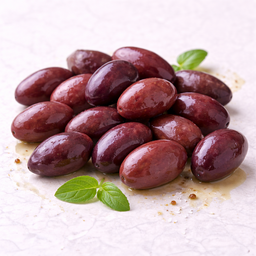
Kalamata Olives
Oleuropein-rich Mediterranean Olive
What is this ingredient?
Kalamata olives come from the eponymous region in Greece and are one of the most antioxidant-rich olive varieties.
## The Mediterranean Diet Effect
Estruch et al. (2013) in New England Journal of Medicine showed that the Mediterranean diet (with olives as a core component) was associated with reduced cardiovascular events. Oleuropein from olives plays an important role in this.
## Oleuropein: The Star Compound
Oleuropein is a polyphenol widely studied in research (Omar, 2010, Nutrition Reviews).
## Watch the Sodium
Olives are preserved in brine and often high in salt. Choose low-sodium varieties or rinse before use on a salt-restricted diet.
How does it taste?
Intensely fruity, slightly bitter and briny with a meaty, rich flavor.
Pairs well with:
Pairs well with fetatomatooreganocapers and lemon.
Did you know...?
- Kalamata olives are named after the city of Kalamata in southern Greece.
- Olive trees can live for thousands of years; some in Greece are over 3,000 years old.
Nutritional Value & Energy
Per 100g
Kalamata Olives provides energy thanks to natural nutrients , buffered by fiber.
Per 100g
Minerals
Vitamins
More nutrients
B-Vitamins
Trace Minerals
What's in a serving?
1 serving
Kalamata Olives naturally contains vitamin e (3.8 mg per 100 g).
% of daily reference intake (DRI)
EU-approved nutrition claims
This ingredient contains nutrients for which EFSA-authorized health claims exist (at nutrient level, not ingredient-specific).
Approved health claims (EU)
Vitamin_e EU 432/2012
Vitamin E contributes to the protection of cells from oxidative stress
Contains 3.8mg/100g (threshold: ≥1.8mg/100g)
What's being researched?
Oleic acid and cardiovascular research
The high monounsaturated fat content in kalamata olives is being studied in relation to cardiovascular parameters. Epidemiological studies within the Mediterranean diet show consistent associations.
Supported by: [1] Estruch R (2018)
Hydroxytyrosol and oxidative protection
Hydroxytyrosol in olives is being studied for potent antioxidant activity. EFSA has approved a health claim for olive polyphenols in protecting LDL cholesterol from oxidation.
Supported by: [2] Omar SH (2010)
Good Combinations (Synergy)
Combine kalamata olives smartly to enhance the effect:
Kalamata Olives 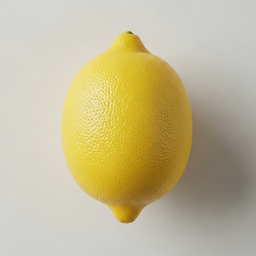 Lemon
Lemon Vitamin C protects olive polyphenols from oxidation
Technical: Hydroxytyrosol and oleuropein in Kalamata olives are susceptible to oxidative degradation. Vitamin C (ascorbic acid, 53mg/100g in lemon) acts as primary reductant keeping these polyphenols in their reduced, active form. Citric acid also chelates pro-oxidative metal ions (Fe²⁺, Cu²⁺).
What does this mean for you? Sprinkle Kalamata olives with lemon juice in salads or marinades. Vitamin C keeps polyphenols intact and adds a fresh taste balancing the olive's saltiness.
Kalamata Olives 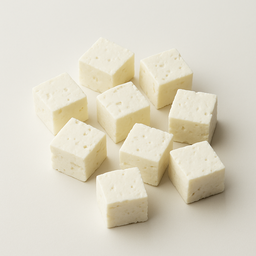 Feta Cheese
 Polyphenols + calcium and protein in Greek combination
Technical: Kalamata olives contain hydroxytyrosol (3.5mg/100g) and oleuropein — polyphenols from the olive fruit. Feta provides 493mg calcium per 100g and 14g protein. Fats in feta (21g/100g) also increase bioavailability of fat-soluble polyphenols from olives.
What does this mean for you? Olives with feta is the foundation of Greek cuisine — and nutritionally a smart combination. Cheese fat makes olive polyphenols more absorbable. Add to salads or serve as mezze.
Kalamata Olives 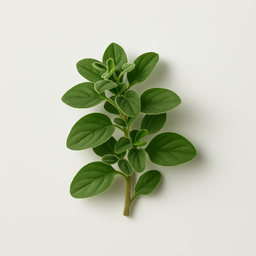 Oregano
 Three polyphenol pathways in one Greek salad
Technical: Kalamata olives contain hydroxytyrosol (3.5mg/100g) and oleuropein — polyphenols from the phenol class. Tomato provides lycopene (2573μg/100g), a carotenoid. Oregano contains carvacrol and thymol, terpene compounds. This trio forms a polyphenol-carotenoid-terpene complex working through three different biochemical pathways.
What does this mean for you? Greek salad (tomato, olives, oregano) is a culinary classic combining three entirely different categories of bioactive compounds. Each ingredient delivers a different type of polyphenol — broader together than apart.
Kalamata Olives 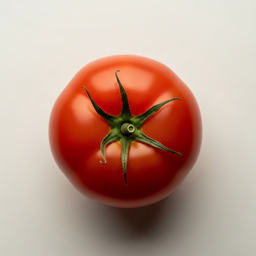 Tomato
 Three polyphenol pathways in one Greek salad
Technical: Kalamata olives contain hydroxytyrosol (3.5mg/100g) and oleuropein — polyphenols from the phenol class. Tomato provides lycopene (2573μg/100g), a carotenoid. Oregano contains carvacrol and thymol, terpene compounds. This trio forms a polyphenol-carotenoid-terpene complex working through three different biochemical pathways.
What does this mean for you? Greek salad (tomato, olives, oregano) is a culinary classic combining three entirely different categories of bioactive compounds. Each ingredient delivers a different type of polyphenol — broader together than apart.
Recipes with Kalamata Olives
Discover delicious recipes featuring kalamata olives:
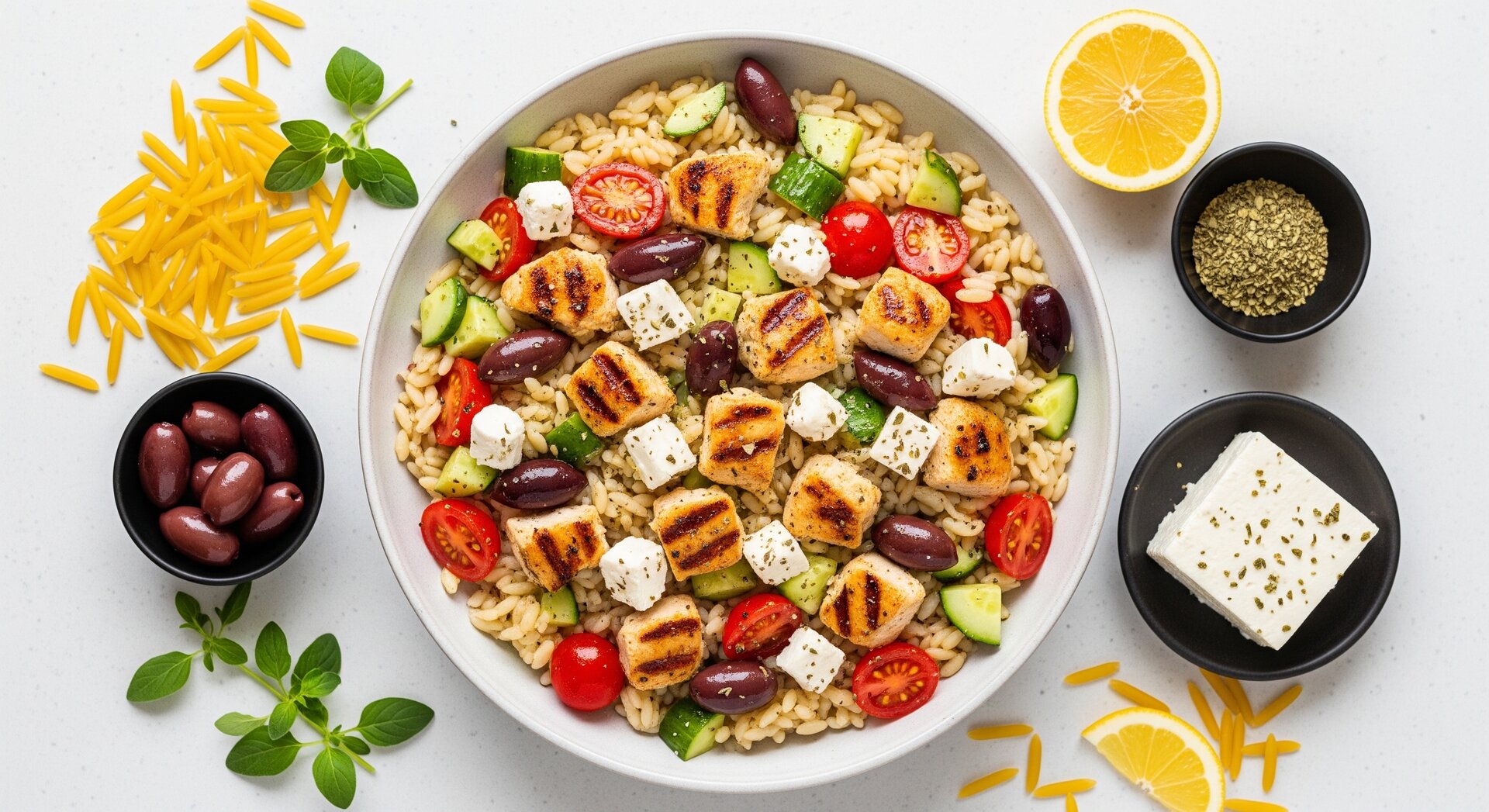 Greek Orzo Salad with Chicken Breast 35 min Mediterranean salad with feta and oregano
  887 kcal
  60g protein 1 synergies
 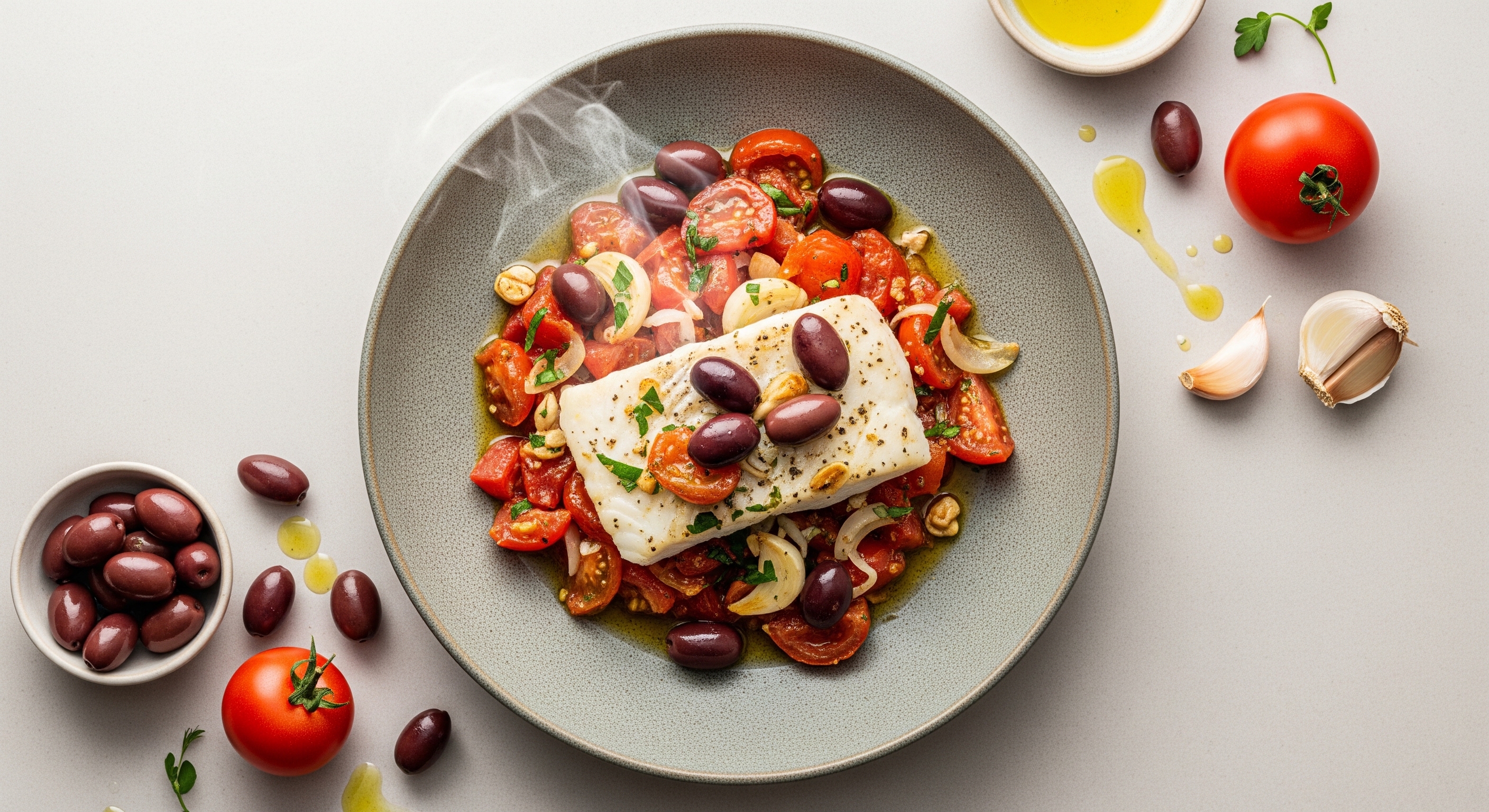 Greek Fish Plaki with Tomato and Olives 60 min Greek oven-baked fish in spiced tomato sauce with potato and olives 620 kcal 38g protein 2 synergies
 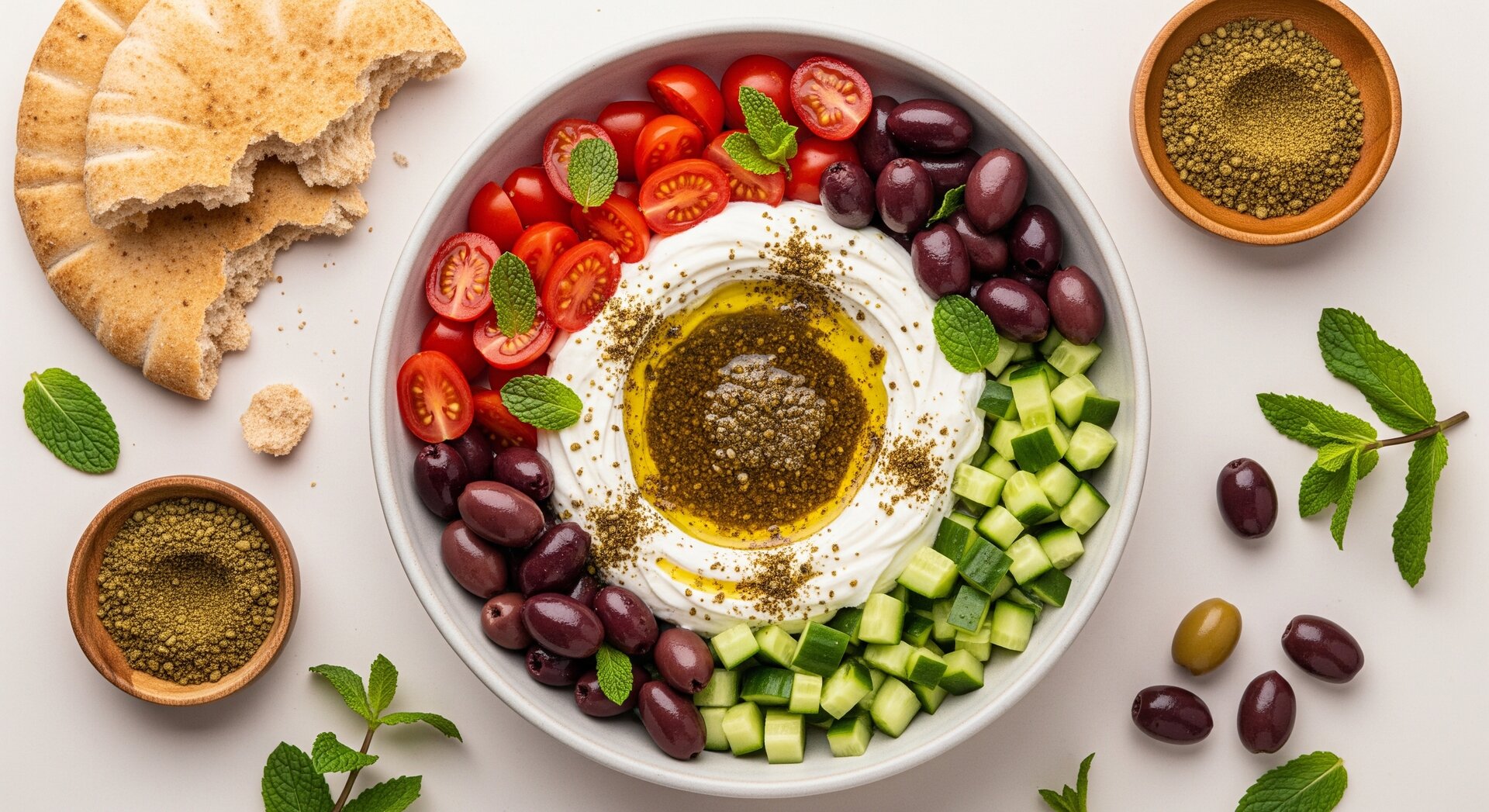 Labneh Bowl with Za'atar, Olives and Vegetables 5 min Creamy Levantine yogurt cheese with Middle Eastern herbs 374 kcal 15g protein 1 synergies
 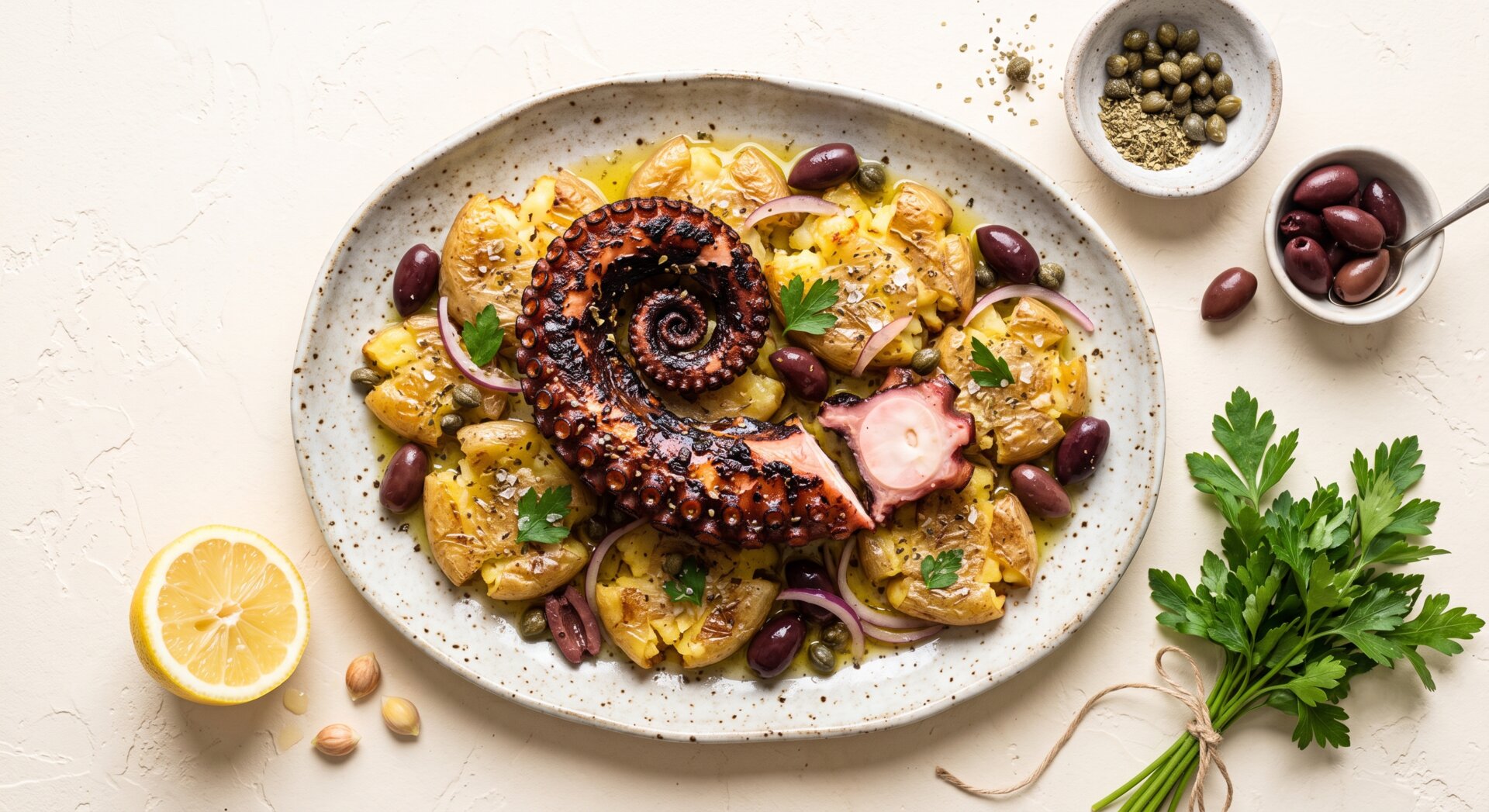 Mediterranean Octopus with Crispy Potatoes 90 min Tender octopus with golden potatoes, olives, capers and lemon-parsley dressing 420 kcal 31g protein 2 synergies
 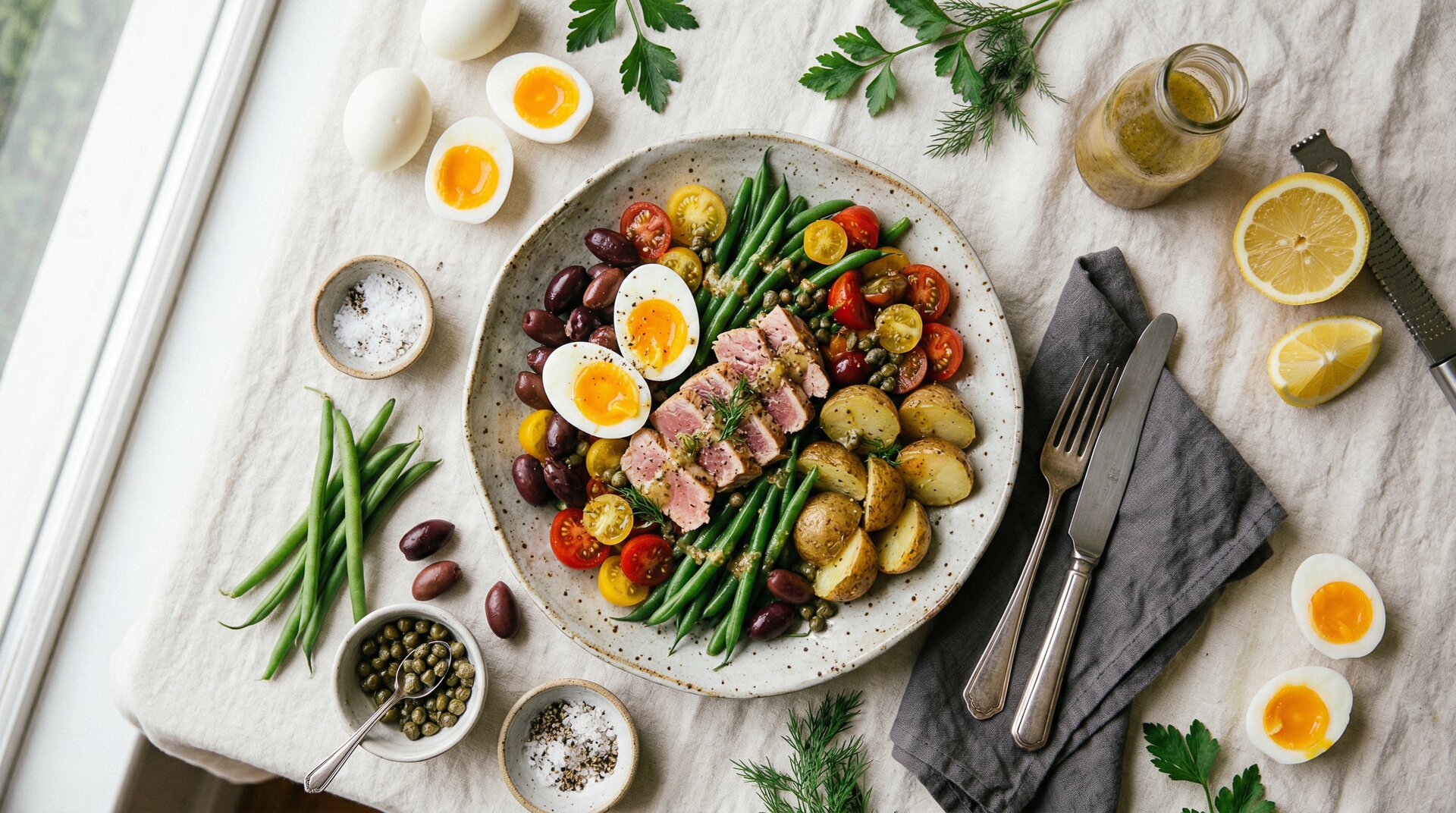 Tuna Niçoise Salad with Capers 35 min Classic French salad with tuna, egg and olives 560 kcal 40g protein 2 synergies
  In the Kitchen
Storage
Location:Pantry
Shelf life:Maanden in pekel, 2 weken na openen in koelkast
Preparation
Raw in salads or cooked in stews.
Conversions
Substitutes
Smart preparation
1Press olives flat with the side of a knife to remove the pit.
2Add kalamata olives only at the end to hot dishes.
Why?
Long cooking makes them bitter and affects the texture.
3Bring olives to room temperature before serving for more flavor.
Caution / Warnings
Kalamata Olives is very safe, but there are scientific considerations:
Sodium-Restricted Diet Moderate
Brined olives contain high sodium (735mg/100g)
Advice:
Choose low-sodium variety or rinse before use
Summary
Kalamata olives are a core component of the Mediterranean diet. Oleuropein and oleocanthal are being studied for cardiovascular and bioactive properties in preclinical research. Watch the sodium content.