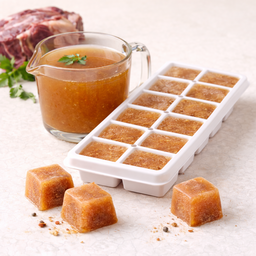
Beef Stock
Beef bone stock with collagen and glycine
What is this ingredient?
Beef stock is a classic slow-simmered broth made with beef bones, marrow bones and aromatic vegetables. During the long cooking time, gelatin, collagen fragments, amino acids and trace minerals move into the liquid, giving the stock its full mouthfeel, deep color and savory umami flavor.
## Collagen and gelatin
Beef bones, cartilage and joint bones mainly contribute gelatin and collagen-like components. Type II collagen is studied separately in scientific literature, but the amount and form present in homemade stock depend strongly on the bones used, simmering time and concentration.
## Glycine in research
Glycine is an amino acid commonly found in collagen-rich preparations. Studies with isolated glycine generally use standardized doses; stock is primarily a culinary source with a warm, savory taste and a smooth texture.
## Slow simmering
For a full beef stock, bones are often roasted first and then gently simmered for 12–24 hours with water, vegetables and optionally a small splash of vinegar. When the cooled stock gels firmly, that is a practical kitchen sign that enough gelatin has been extracted.
How does it taste?
Deep umami with a rich, meaty warmth and gelatinous body.
Pairs well with:
Pairs well with onioncarrotthymered wine and potato.
Did you know...?
- The basis of French haute cuisine, fonds brun, is a concentrated beef broth.
- A good beef broth gains extra depth when the bones are roasted first.
Nutritional Value & Energy
Per 100ml
Beef Stock is low in calories thanks to natural nutrients .
Per 100g
Minerals
Vitamins
Omega-3 fatty acids
More nutrients
B-Vitamins
Trace Minerals
EU-approved nutrition claims
There are currently no EFSA-authorized health claims specific to beef stock.
What's being researched?
Bone broth and collagen
Slow-cooked beef bone broth is studied as a culinary source of gelatin, collagen fragments and minerals. Its exact composition depends strongly on bone type, cooking time and concentration.
Supported by: [1] Bakilan F (2016)
Good Combinations (Synergy)
Combine beef stock smartly to enhance the effect:
Beef Stock 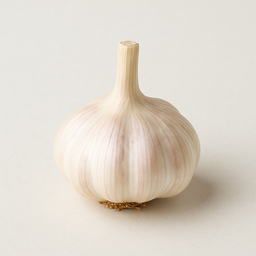 Garlic
 Collagen + allicin for joints and immunity
Technical: Beef broth is rich in type I and III collagen for skin, bones and joints. Garlic's allicin offers bioactive action.
What does this mean for you? Add garlic to your beef broth for a rich, savoury flavour alongside the collagen.
Beef Stock 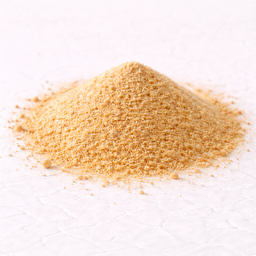 Garlic Powder
 Collagen + allicin for joints and immunity
Technical: Beef broth is rich in type I and III collagen for skin, bones and joints. Garlic's allicin offers bioactive action.
What does this mean for you? Add garlic to your beef broth for a rich, savoury flavour alongside the collagen.
Beef Stock  Turmeric
 Collagen + curcumin for joint support
Technical: Beef broth is rich in type II collagen supporting joint cartilage, plus glycine and proline for connective tissue. Curcumin from turmeric modulates NF-kB and COX-2 — two signaling pathways involved in joint processes. The fat in broth increases curcumin absorption. Together: cartilage building blocks + bioactive support.
What does this mean for you? Add turmeric to your beef broth for joint support. The broth provides building material for your joints, the curcumin provides bioactive support — and the fat helps absorption.
Beef Stock  Parsley
 Collagen + vitamin C for optimal collagen synthesis
Technical: Beef broth provides collagen amino acids (glycine, proline, hydroxyproline). Parsley contains 133mg vitamin C per 100g, essential for hydroxylation of proline to hydroxyproline (crucial step in collagen synthesis).
What does this mean for you? Always garnish beef broth with fresh parsley. This maximizes collagen building blocks for skin, joints and bones.
Recipes with Beef Stock
Discover delicious recipes featuring beef stock:
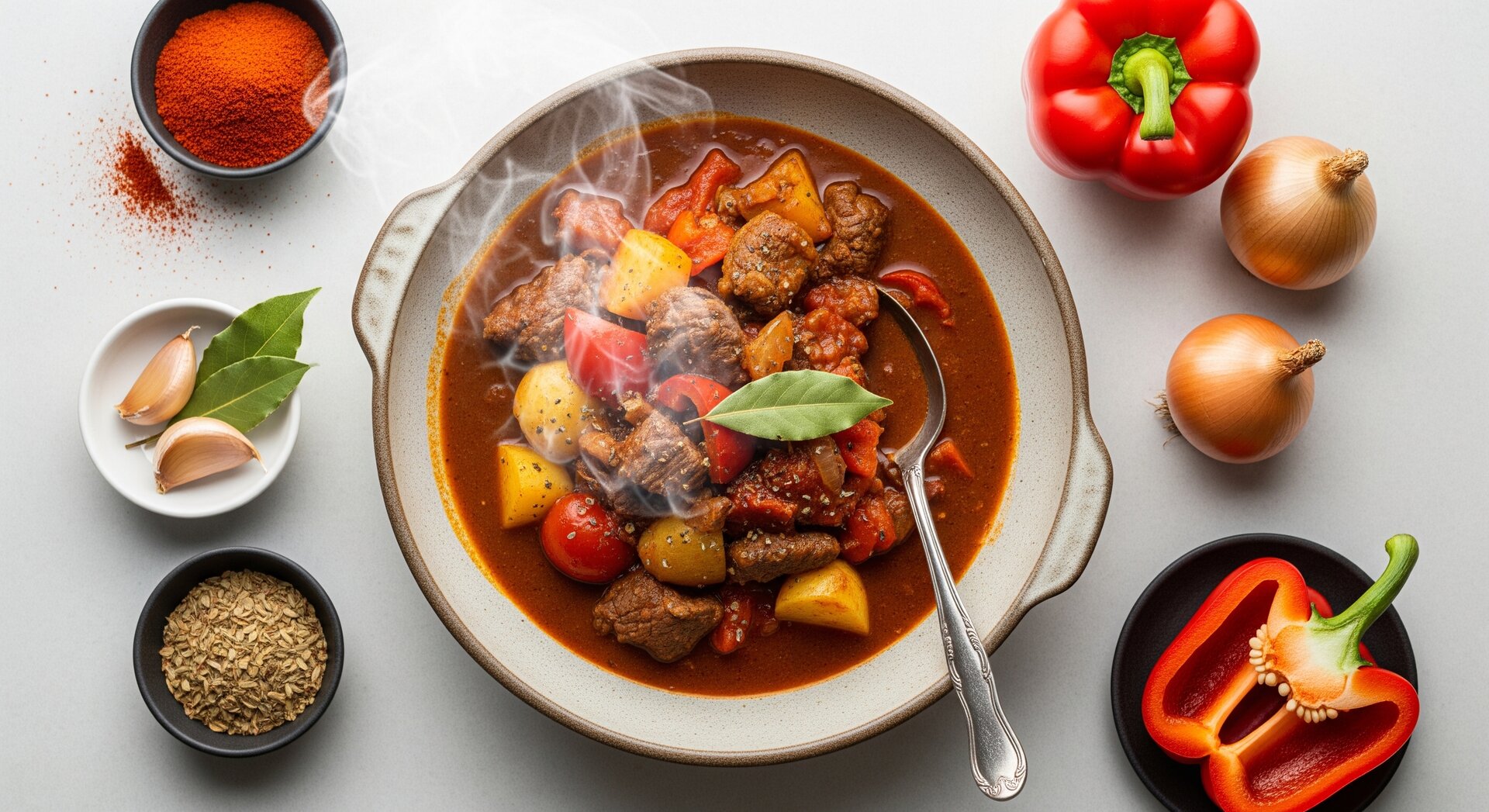 Hungarian Goulash with Beef and Paprika 55 min Hearty Hungarian stew with paprika sauce and slow-cooked beef
  680 kcal
  44g protein 2 synergies
 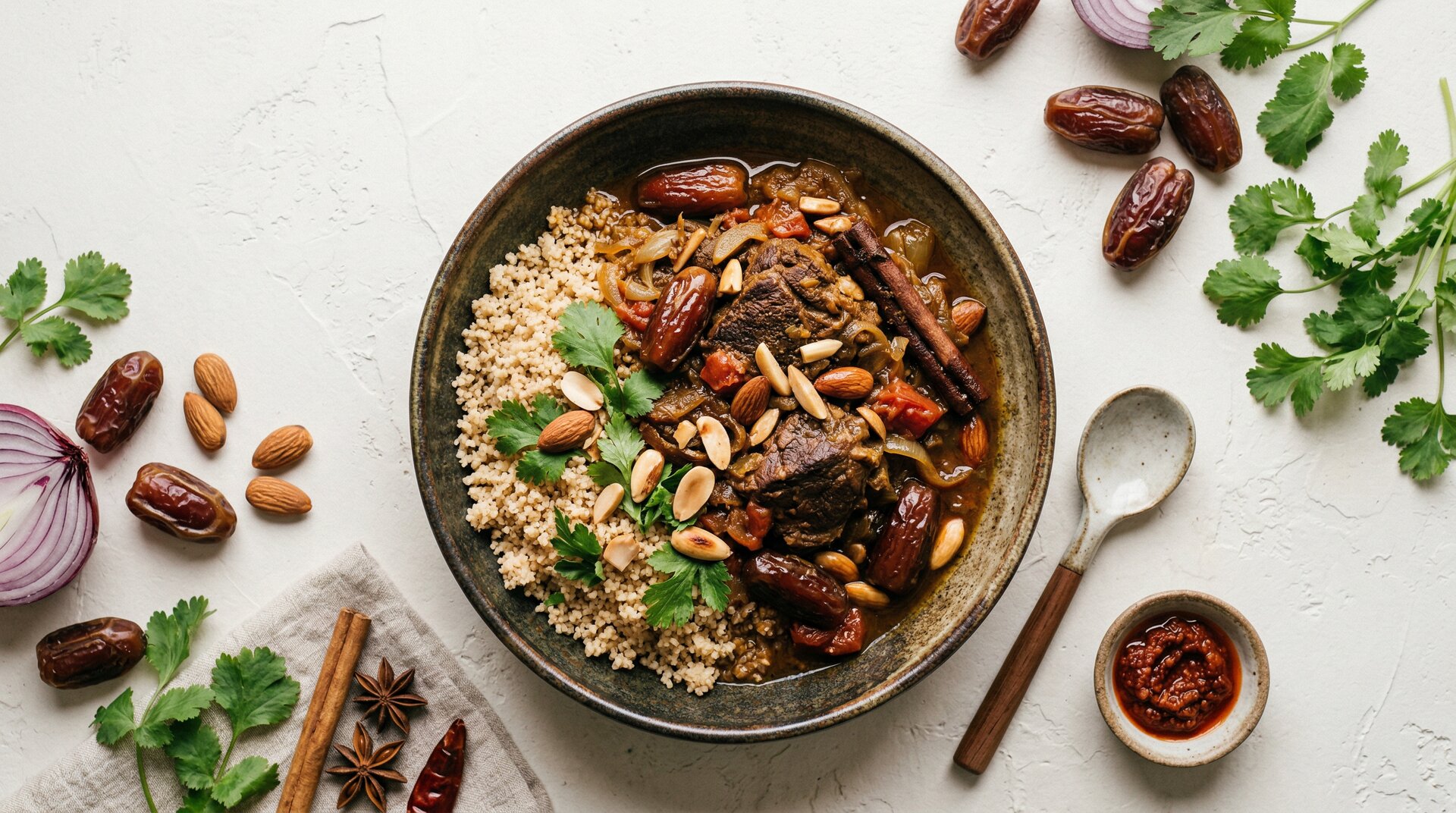 Moroccan Lamb Tagine with Dates, Almonds and Couscous 110 min Festive Moroccan stew with tender lamb, sweet dates and toasted almonds 890 kcal 40g protein 3 synergies
  Beef Bone Broth Ramen 210 min Japanese-inspired ramen with braised beef, ajitama egg and bok choy 520 kcal 42g protein 3 synergies
 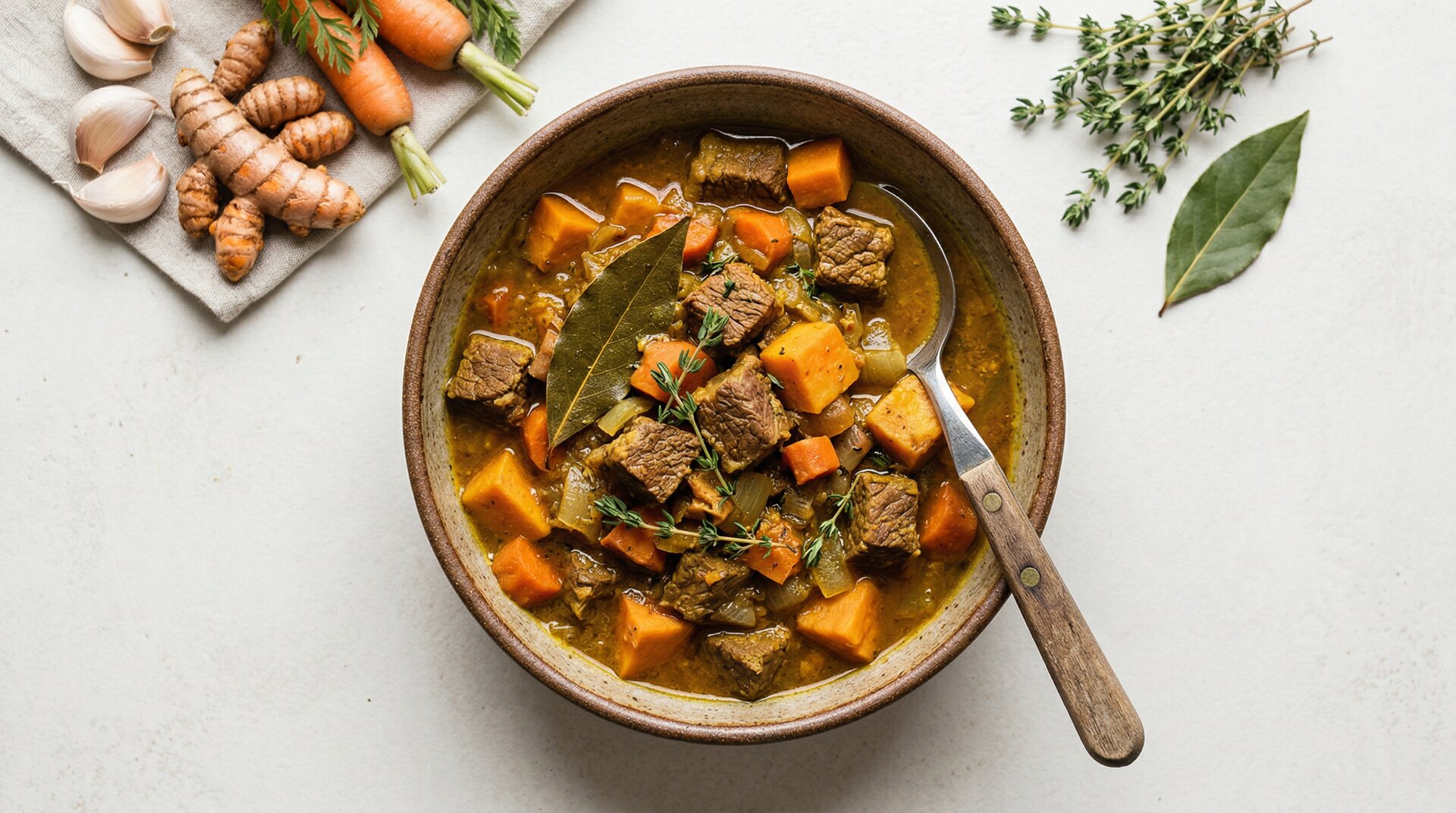 Beef and Vegetable Stew with Turmeric 115 min Slow-simmered beef with carrot, sweet potato and warm spices 675 kcal 52g protein 1 synergies
 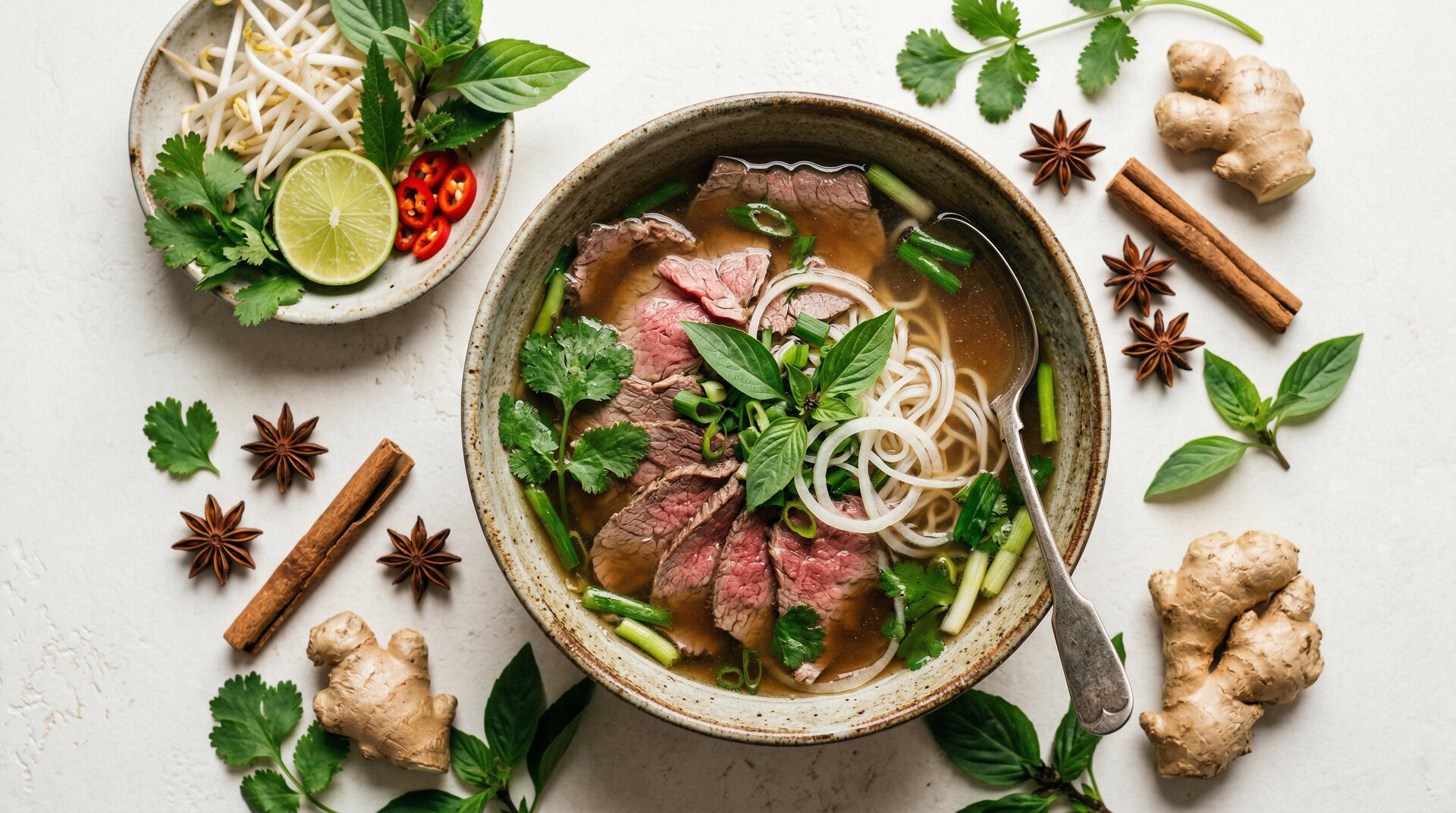 Vietnamese Pho with Beef and Herbs 45 min Clear noodle soup with spiced beef broth, lime and fresh herbs 550 kcal 36g protein 2 synergies
  In the Kitchen
Storage
Location:Refrigerator
Shelf life:4-5 dagen vers, 6 maanden ingevroren
Preparation
Roast the bones for extra depth, then simmer gently for at least 12 hours. Use as a base for soups, sauces, stews and ramen.
Conversions
Substitutes
Smart preparation
1Roast bones in the oven at 200 degrees before simmering for more flavor.
Why?
Roasting browns proteins through the Maillard reaction and gives deeper flavors.
2Skim off the foam that rises in the first half hour.
3Let beef broth simmer long and gently instead of boiling hard.
Caution / Warnings
Beef Stock is very safe, but there are scientific considerations:
High blood pressure Moderate
Can contain a lot of sodium, especially in concentrated or ready-made stock.
Advice:
Choose a low-sodium version, dilute with extra water and add salt at the table only if needed.
Kidney disease Moderate
Stock can provide sodium and phosphorus; the amount varies by recipe and concentration.
Advice:
Consult a doctor or dietitian about suitable portions. Homemade stock gives more control over salt and concentration.
Summary
Beef stock is a deep, slow-simmered bone broth with collagen, gelatin and glycine. Roast the bones for extra flavor and simmer the stock gently for a long time; if it gels when cooled, it has a full body.