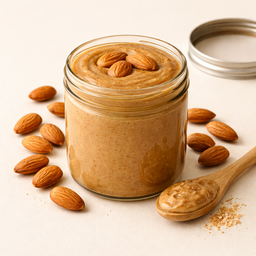
Almond Butter
Creamy nut butter rich in minerals
What is this ingredient?
Almond butter is a rich, creamy spread made from 100% roasted or raw almonds (Prunus dulcis), ground into a smooth or lightly chunky paste. Per 100 g, it contains about 26 mg vitamin E (173% RI), 270 mg magnesium, 347 mg calcium, 12.2 g fiber and 21 g plant-based protein. Vitamin E contributes to the protection of cells from oxidative stress; magnesium contributes to normal energy-yielding metabolism and normal muscle function; calcium is needed for the maintenance of normal bones.
Its fat profile is mainly rich in monounsaturated fats, with oleic acid (C18:1) as an important fatty acid — similar to the profile of olive oil. Almond butter also contains natural almond fiber, including fractions discussed in nutrition research in relation to fermentation by gut bacteria. Because of its concentrated texture, a small 1-tablespoon portion is enough to add body and nutty depth to oatmeal, smoothies, toast, dressings or sauces.
Choose a version without added sugar or hydrogenated fats where possible. In natural almond butter, oil may rise to the top; this is normal and can simply be stirred back into the paste. Unroasted versions generally retain more of the original vitamin E, while roasted versions have a deeper, warmer flavor.
How does it taste?
Creamy, nutty and lightly sweet with a smooth, rich texture.
Pairs well with:
Pairs well with bananaapplehoneydatescocoaoats and yogurt.
Did you know...?
- Almond paste was already a luxury ingredient at European courts in the Middle Ages.
- A 250-gram jar of almond butter requires approximately 225 almonds.
Nutritional Value & Energy
Per 100g
Almond Butter provides energy thanks to natural nutrients , buffered by fiber.
Per 100g
Minerals
Vitamins
Omega-3 fatty acids
More nutrients
B-Vitamins
Trace Minerals
What's in a serving?
1 tablespoon or small portion
Almond butter naturally contains calcium (347 mg per 100 g).
Almond butter naturally contains folate (50 mcg per 100 g).
Almond butter naturally contains iron (3.7 mg per 100 g).
Almond butter naturally contains magnesium (270 mg per 100 g).
Almond butter naturally contains potassium (748 mg per 100 g).
Almond butter naturally contains vitamin E (26 mg per 100 g).
Almond butter naturally contains zinc (3.3 mg per 100 g).
% of daily reference intake (DRI)
EU-approved nutrition claims
This ingredient contains nutrients for which EFSA-authorized health claims exist, at nutrient level and not specifically for almond butter.
Approved health claims (EU)
Magnesium EU 432/2012
Magnesium contributes to normal muscle function
Contains 270mg/100g (threshold: ≥56.25mg/100g)
Magnesium EU 432/2012
Magnesium contributes to the reduction of tiredness and fatigue
Contains 270mg/100g (threshold: ≥56.25mg/100g)
Magnesium EU 432/2012
Magnesium contributes to normal functioning of the nervous system
Contains 270mg/100g (threshold: ≥56.25mg/100g)
Zinc EU 432/2012
Zinc contributes to the normal function of the immune system
Contains 3.3mg/100g (threshold: ≥1.5mg/100g)
Zinc EU 432/2012
Zinc contributes to the maintenance of normal skin
Contains 3.3mg/100g (threshold: ≥1.5mg/100g)
Iron EU 432/2012
Iron contributes to normal energy-yielding metabolism
Contains 3.7mg/100g (threshold: ≥2.1mg/100g)
Iron EU 432/2012
Iron contributes to the reduction of tiredness and fatigue
Contains 3.7mg/100g (threshold: ≥2.1mg/100g)
Calcium EU 432/2012
Calcium is needed for the maintenance of normal bones
Contains 347mg/100g (threshold: ≥120mg/100g)
Potassium EU 432/2012
Potassium contributes to the maintenance of normal blood pressure
Contains 748mg/100g (threshold: ≥300mg/100g)
Folate EU 432/2012
Folate contributes to normal blood formation
Contains 50mcg/100g (threshold: ≥30mcg/100g)
Folate EU 432/2012
Folate contributes to normal amino acid synthesis
Contains 50mcg/100g (threshold: ≥30mcg/100g)
Folate EU 432/2012
Folate contributes to normal homocysteine metabolism
Contains 50mcg/100g (threshold: ≥30mcg/100g)
Folate EU 432/2012
Folate contributes to normal psychological function
Contains 50mcg/100g (threshold: ≥30mcg/100g)
Folate EU 432/2012
Folate contributes to the normal function of the immune system
Contains 50mcg/100g (threshold: ≥30mcg/100g)
Folate EU 432/2012
Folate has a role in the process of cell division
Contains 50mcg/100g (threshold: ≥30mcg/100g)
Folate EU 432/2012
Folate contributes to maternal tissue growth during pregnancy
Contains 50mcg/100g (threshold: ≥30mcg/100g)
Vitamin_e EU 432/2012
Vitamin E contributes to the protection of cells from oxidative stress
Contains 26mg/100g (threshold: ≥1.8mg/100g)
Calcium EU 432/2012
Calcium is needed for the maintenance of normal teeth
Contains 347mg/100g (threshold: ≥120mg/100g)
Calcium EU 432/2012
Calcium contributes to normal blood clotting
Contains 347mg/100g (threshold: ≥120mg/100g)
Calcium EU 432/2012
Calcium contributes to normal energy-yielding metabolism
Contains 347mg/100g (threshold: ≥120mg/100g)
Calcium EU 432/2012
Calcium contributes to normal muscle function
Contains 347mg/100g (threshold: ≥120mg/100g)
Calcium EU 432/2012
Calcium contributes to normal neurotransmission
Contains 347mg/100g (threshold: ≥120mg/100g)
Calcium EU 432/2012
Calcium contributes to the normal function of digestive enzymes
Contains 347mg/100g (threshold: ≥120mg/100g)
Calcium EU 432/2012
Calcium has a role in the process of cell division and specialisation
Contains 347mg/100g (threshold: ≥120mg/100g)
Magnesium EU 432/2012
Magnesium contributes to normal energy-yielding metabolism
Contains 270mg/100g (threshold: ≥56.25mg/100g)
Magnesium EU 432/2012
Magnesium contributes to electrolyte balance
Contains 270mg/100g (threshold: ≥56.25mg/100g)
Magnesium EU 432/2012
Magnesium contributes to normal protein synthesis
Contains 270mg/100g (threshold: ≥56.25mg/100g)
Magnesium EU 432/2012
Magnesium contributes to normal psychological function
Contains 270mg/100g (threshold: ≥56.25mg/100g)
Magnesium EU 432/2012
Magnesium contributes to the maintenance of normal bones
Contains 270mg/100g (threshold: ≥56.25mg/100g)
Magnesium EU 432/2012
Magnesium contributes to the maintenance of normal teeth
Contains 270mg/100g (threshold: ≥56.25mg/100g)
Magnesium EU 432/2012
Magnesium has a role in the process of cell division
Contains 270mg/100g (threshold: ≥56.25mg/100g)
Iron EU 432/2012
Iron contributes to normal cognitive function
Contains 3.7mg/100g (threshold: ≥2.1mg/100g)
Iron EU 432/2012
Iron contributes to normal formation of red blood cells and haemoglobin
Contains 3.7mg/100g (threshold: ≥2.1mg/100g)
Iron EU 432/2012
Iron contributes to normal oxygen transport in the body
Contains 3.7mg/100g (threshold: ≥2.1mg/100g)
Iron EU 432/2012
Iron contributes to the normal function of the immune system
Contains 3.7mg/100g (threshold: ≥2.1mg/100g)
Iron EU 432/2012
Iron has a role in the process of cell division
Contains 3.7mg/100g (threshold: ≥2.1mg/100g)
Zinc EU 432/2012
Zinc contributes to normal acid-base metabolism
Contains 3.3mg/100g (threshold: ≥1.5mg/100g)
Zinc EU 432/2012
Zinc contributes to normal carbohydrate metabolism
Contains 3.3mg/100g (threshold: ≥1.5mg/100g)
Zinc EU 432/2012
Zinc contributes to normal cognitive function
Contains 3.3mg/100g (threshold: ≥1.5mg/100g)
Zinc EU 432/2012
Zinc contributes to normal DNA synthesis
Contains 3.3mg/100g (threshold: ≥1.5mg/100g)
Zinc EU 432/2012
Zinc contributes to normal fertility and reproduction
Contains 3.3mg/100g (threshold: ≥1.5mg/100g)
Zinc EU 432/2012
Zinc contributes to normal macronutrient metabolism
Contains 3.3mg/100g (threshold: ≥1.5mg/100g)
Zinc EU 432/2012
Zinc contributes to normal metabolism of fatty acids
Contains 3.3mg/100g (threshold: ≥1.5mg/100g)
Zinc EU 432/2012
Zinc contributes to normal metabolism of vitamin A
Contains 3.3mg/100g (threshold: ≥1.5mg/100g)
Zinc EU 432/2012
Zinc contributes to normal protein synthesis
Contains 3.3mg/100g (threshold: ≥1.5mg/100g)
Zinc EU 432/2012
Zinc contributes to the maintenance of normal bones
Contains 3.3mg/100g (threshold: ≥1.5mg/100g)
Zinc EU 432/2012
Zinc contributes to the maintenance of normal hair
Contains 3.3mg/100g (threshold: ≥1.5mg/100g)
Zinc EU 432/2012
Zinc contributes to the maintenance of normal nails
Contains 3.3mg/100g (threshold: ≥1.5mg/100g)
Zinc EU 432/2012
Zinc contributes to the maintenance of normal testosterone levels in the blood
Contains 3.3mg/100g (threshold: ≥1.5mg/100g)
Zinc EU 432/2012
Zinc contributes to the maintenance of normal vision
Contains 3.3mg/100g (threshold: ≥1.5mg/100g)
Zinc EU 432/2012
Zinc contributes to the protection of cells from oxidative stress
Contains 3.3mg/100g (threshold: ≥1.5mg/100g)
Zinc EU 432/2012
Zinc has a role in the process of cell division
Contains 3.3mg/100g (threshold: ≥1.5mg/100g)
Potassium EU 432/2012
Potassium contributes to normal functioning of the nervous system
Contains 748mg/100g (threshold: ≥300mg/100g)
Potassium EU 432/2012
Potassium contributes to normal muscle function
Contains 748mg/100g (threshold: ≥300mg/100g)
Comparison
vsmelk
Almond butter contains about 3× as much calcium per 100 g as milk.
vsbanaan
Almond butter contains about 2× as much potassium per 100 g as banana.
What's being researched?
Almond butter and blood lipid profile
Almond butter is usually studied as part of broader nut research. Its combination of monounsaturated fats, fiber, vitamin E and minerals is examined in relation to blood lipid profiles and dietary patterns.
Supported by: [1] Kalita S (2018) , [4] Jialal I (1995)
Good Combinations (Synergy)
Combine almond butter smartly to enhance the effect:
Almond Butter  Apple
Apple Protein and fat slow sugar absorption from apple
Technical: Almond butter's proteins, fats and fiber slow gastric emptying, causing apple's fructose and glucose to be absorbed more gradually. This reduces the glycemic response by ~30%. Almond vitamin E protects apple's polyphenols from oxidation.
What does this mean for you? Apple with almond butter is the perfect snack — it prevents a sugar spike and keeps you satisfied longer.
Almond Butter  Banana
 Magnesium + tryptophan for better sleep and muscle relaxation
Technical: Almond butter contains 270mg magnesium per 100g (68% RDA). Banana provides tryptophan, an amino acid converted via serotonin to melatonin (sleep hormone). Magnesium activates GABA receptors — the brake on your nervous system — and regulates melatonin receptors. This dual approach shortens sleep onset and improves sleep quality.
What does this mean for you? Eat a banana with almond butter 1-2 hours before bed. The magnesium calms your muscles and nerves, while the banana signals your body to produce melatonin.
Almond Butter 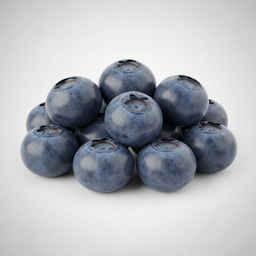 Blueberries
 Vitamin E + anthocyanins for cognitive protection
Technical: Almond butter provides 26mg vitamin E per 100g (173% RDA) — a fat-soluble antioxidant protecting cell membranes. Blueberries contain anthocyanins, water-soluble antioxidants that cross the blood-brain barrier protecting DNA and mitochondria. Together they cover both cell compartments.
What does this mean for you? Add blueberries to your oatmeal or smoothie with almond butter. The two antioxidants protect your brain through different routes — ideal as a brain snack.
Almond Butter 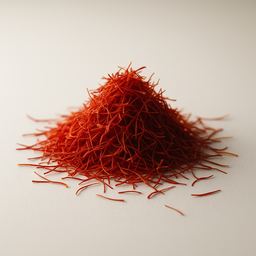 Saffron
 Fats increase absorption of saffron's carotenoids up to 5x
Technical: Crocin and other carotenoids in saffron are fat-soluble. Almonds contain 50g healthy fats per 100g that stimulate micelle formation in the gut. This increases bioavailability of crocin by 3-5x. Traditional in Persian and Indian desserts.
What does this mean for you? Combine saffron with almonds in rice pudding, halwa or golden almond milk. The nuts not only increase nutrient absorption but also complement the delicate flavor.
Recipes with Almond Butter
Discover delicious recipes featuring almond butter:
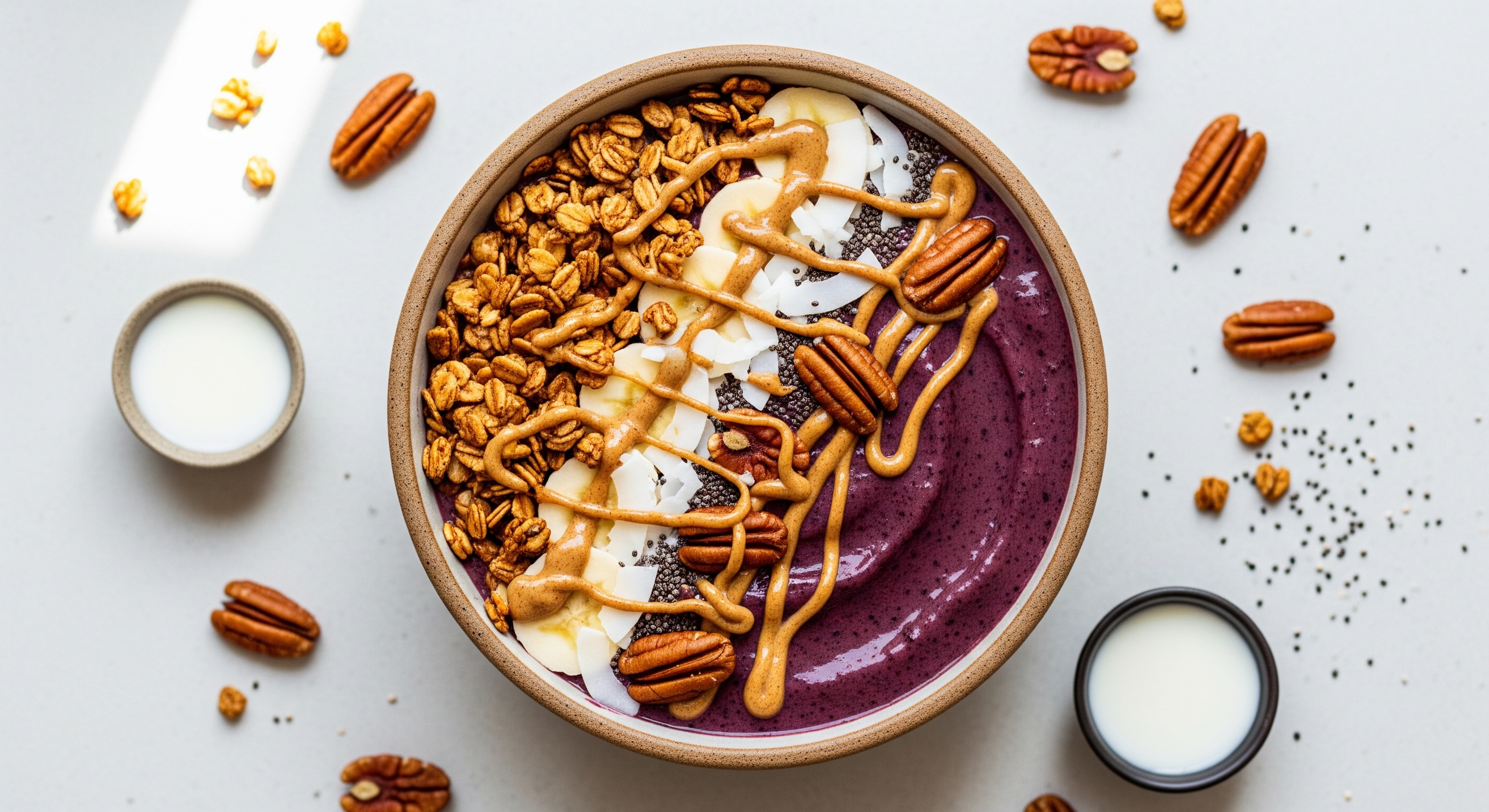 Açaí Bowl with Nuts, Granola & Coconut Base 10 min Colorful bowl with açaí, nuts and seeds on a creamy coconut-banana base
  745 kcal
  16g protein 2 synergies
 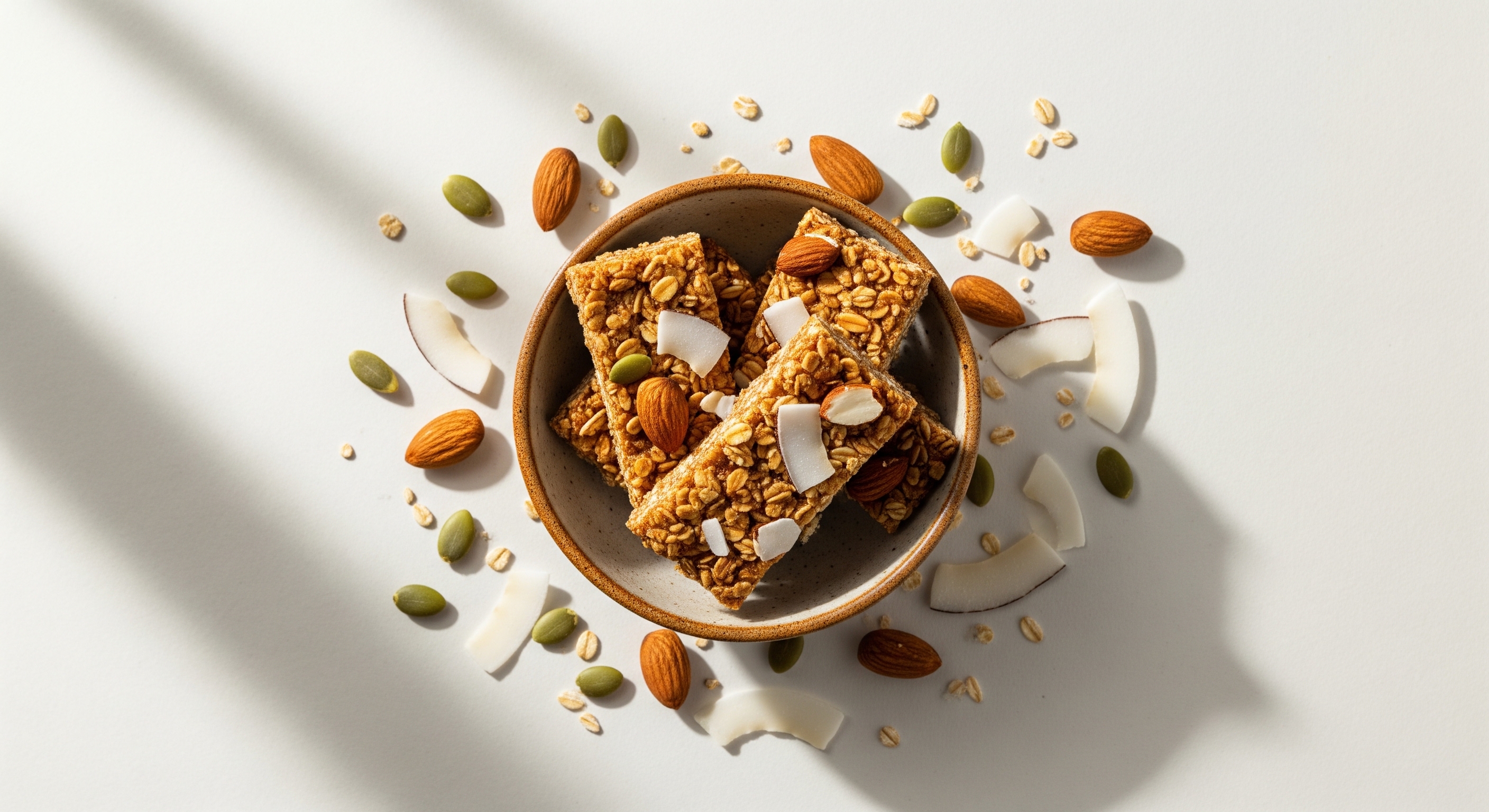 Almond-Coconut Granola Bars 40 min Crunchy, nutty and sweet from honey and apricots 412 kcal 10g protein 2 synergies
 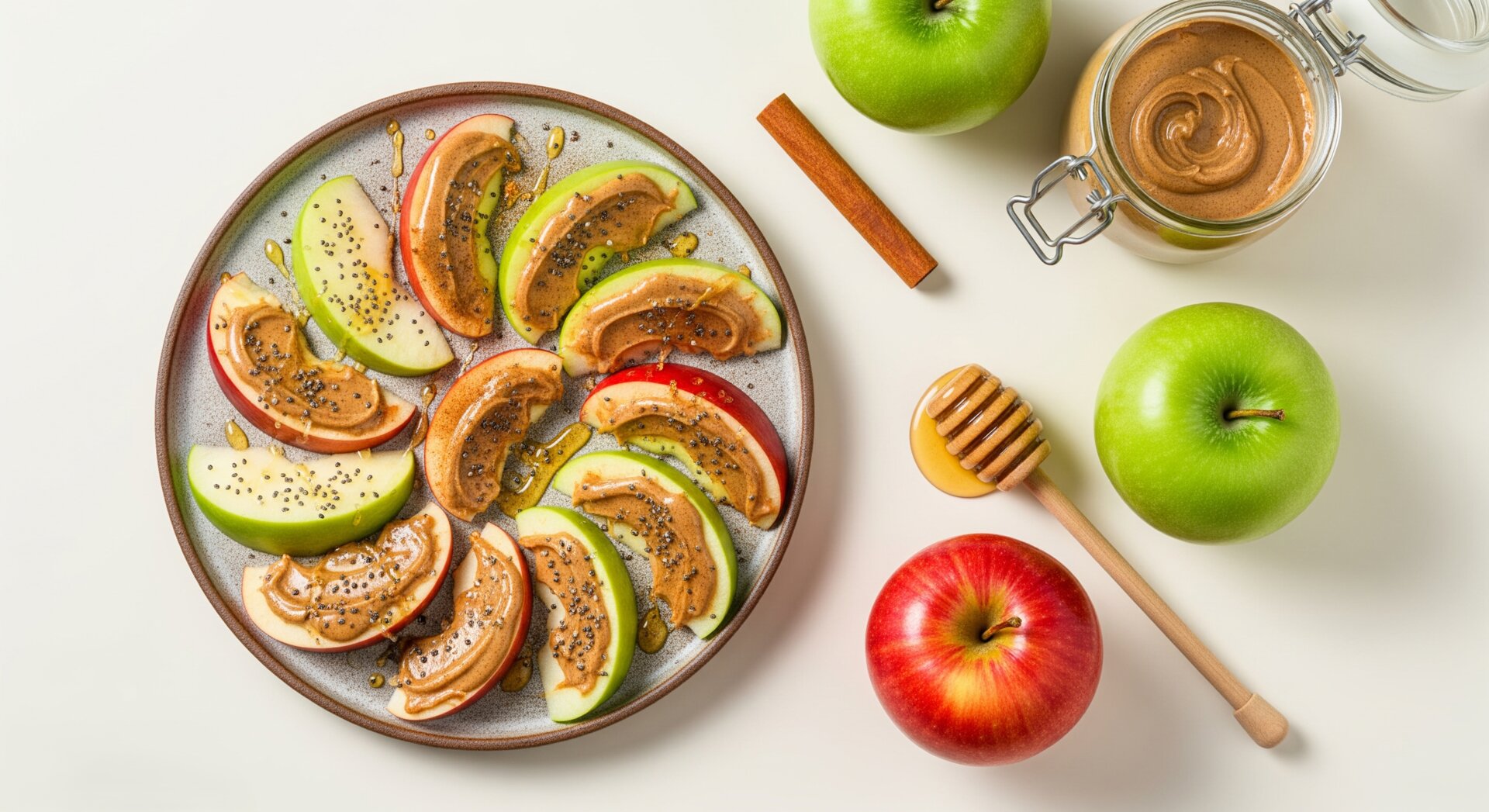 Apple Wedges with Almond Butter 5 min Crunchy, creamy and sprinkled with chia seeds 260 kcal 7g protein 1 synergies
 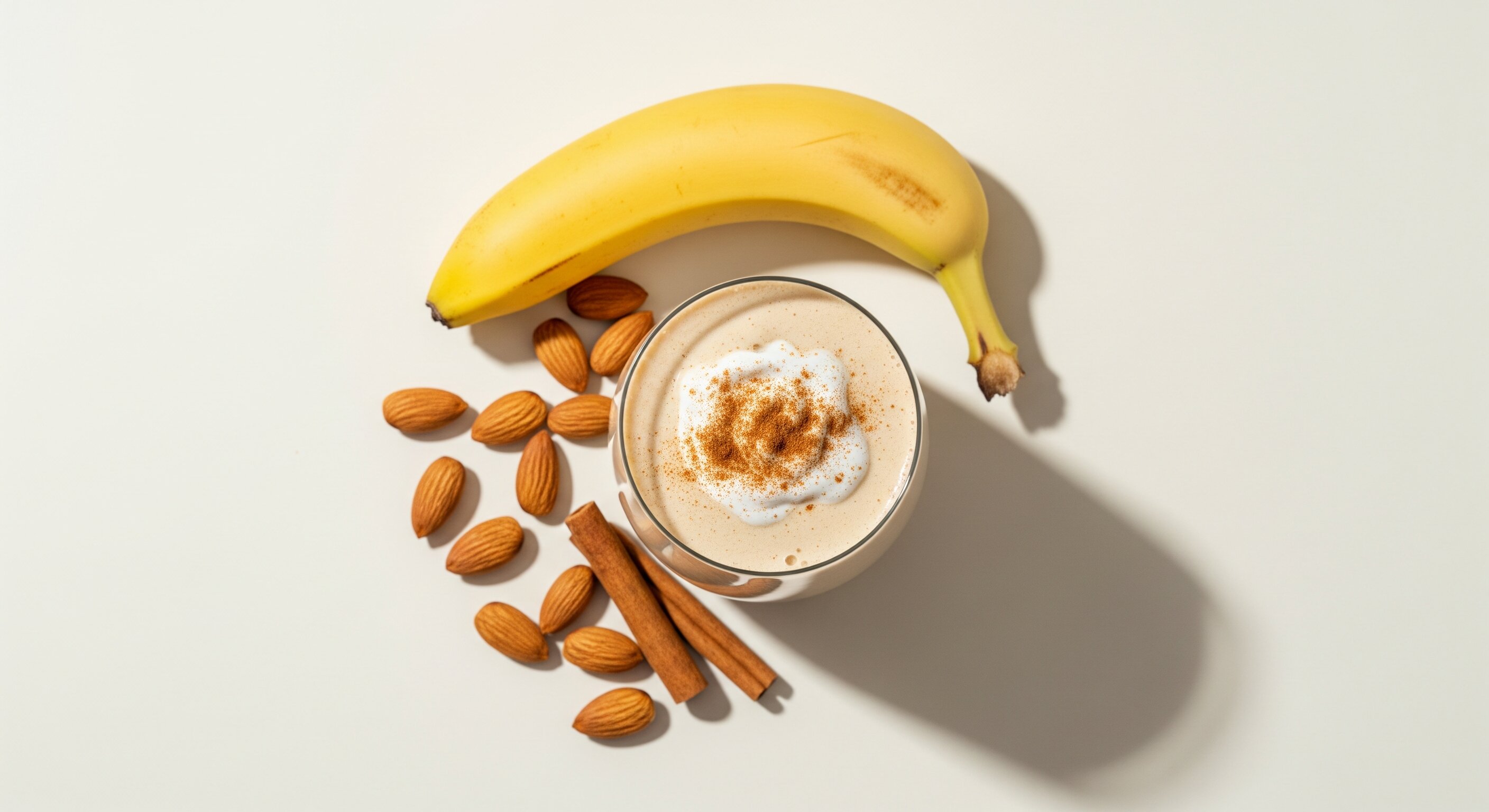 Banana-Almond Evening Shake 5 min Creamy shake with almond butter, yogurt and warm cinnamon 420 kcal 16g protein 2 synergies
 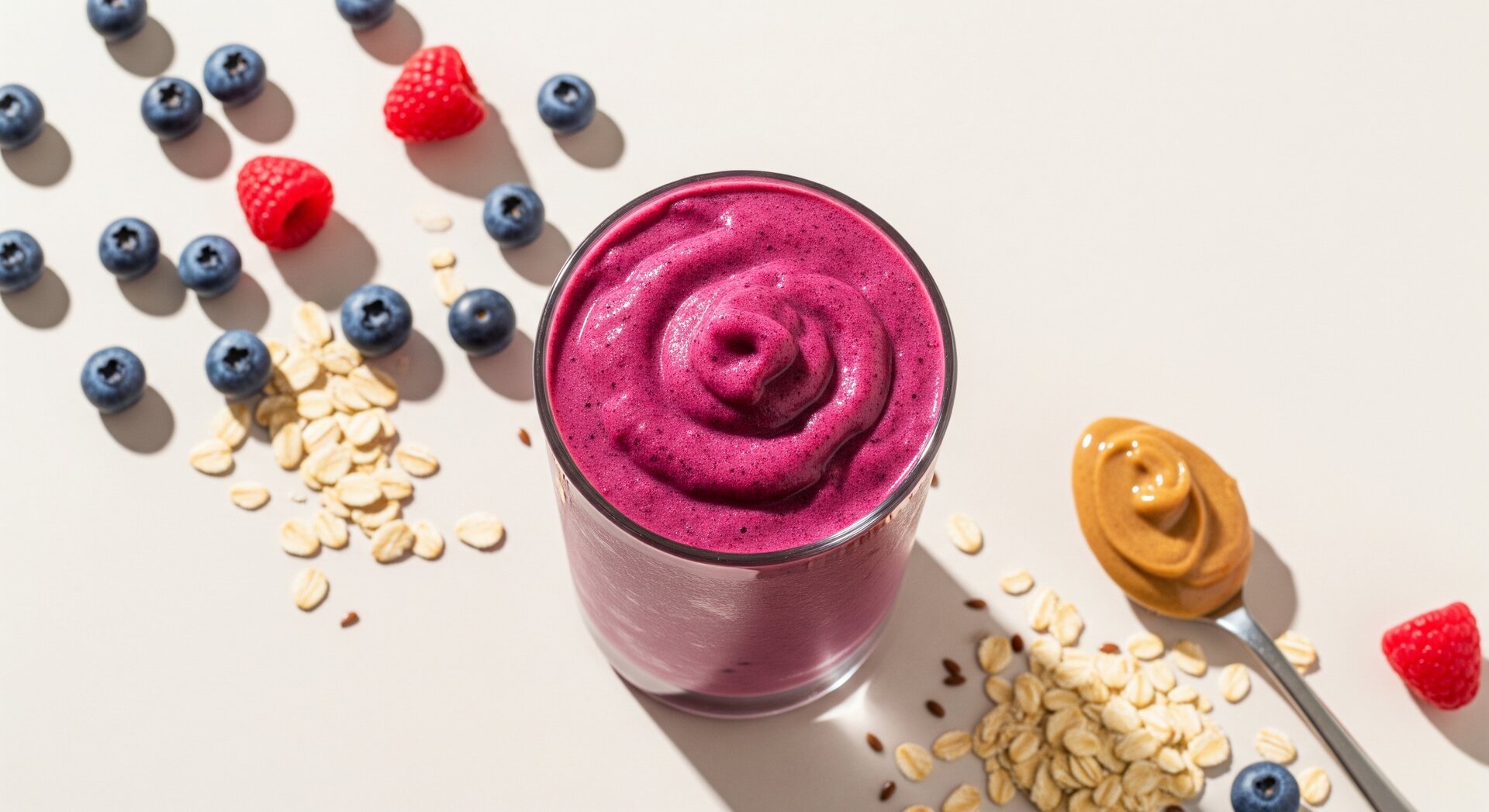 Berry-Oat Shake 5 min Hearty shake with blueberries, raspberries and flaxseed 953 kcal 45g protein 2 synergies
 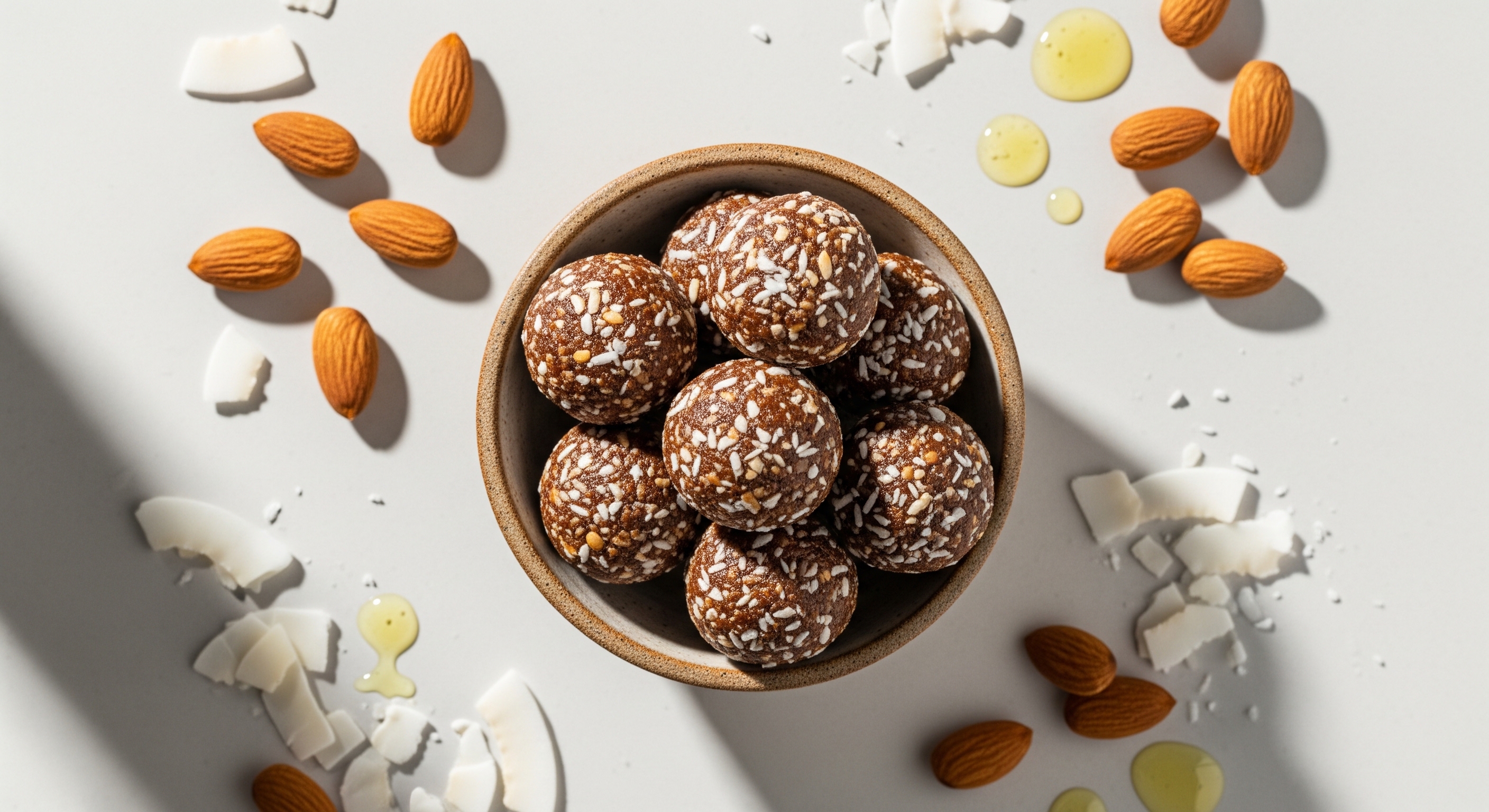 Cacao Coconut Bliss Balls (Keto) 15 min Nutty, chocolatey and low in carbs 230 kcal 6g protein 1 synergies
  In the Kitchen
Storage
Location:Pantry
Unopened: store cool, dark and dry. After opening, the texture keeps best in the refrigerator, especially for natural versions without stabilizers. Use a clean spoon and stir the oil layer back into the paste. A bitter taste or rancid smell is a sign to discard it.
Substitutes
Smart preparation
1Stir almond butter well before using it.
2Store opened almond butter upside down in the fridge.
Why?
The oil then redistributes through the paste more easily.
3Warm almond butter briefly and gently before adding it to sauces.
Why?
Warm almond butter mixes more easily with liquid and gives a smoother sauce.
Caution / Warnings
Almond Butter is very safe, but there are scientific considerations:
Almond allergy (tree nut allergy) Severe
Almond butter contains concentrated almond proteins. With a known almond or tree nut allergy, even a small amount can trigger an allergic reaction.
Advice:
Avoid almond butter completely with a known allergy and check labels for possible traces of nuts.
Oxalate sensitivity or kidney stone advice Moderate
Almonds contain oxalates. For most people, a normal portion fits within a varied diet, but restriction may be needed when personally advised.
Advice:
Use small portions and follow your doctor’s or dietitian’s advice if you need to limit oxalate-rich foods.
High energy density and omega-6 intake Mild
Almond butter is concentrated and calorie-dense. It also contains omega-6 fatty acids, so portion size matters within the overall diet.
Advice:
Use it mostly by the tablespoon and combine with fruit, whole grains or yogurt for a balanced portion.
Traditional use
Ayurveda
Almond paste in Ayurvedic food culture
In Ayurvedic cooking traditions, ground almond paste is used in warm drinks, desserts and creamy preparations, often together with spices such as cardamom or saffron.
Summary
Almond butter is a creamy nut butter with plenty of vitamin E (26 mg per 100 g), magnesium (270 mg), calcium (347 mg), fiber and plant-based protein. Vitamin E contributes to the protection of cells from oxidative stress; magnesium contributes to normal muscle function; calcium is needed for the maintenance of normal bones. Use 1 tablespoon in oatmeal, smoothies, toast or sauces. Take care with almond allergy or personal advice to limit oxalate-rich foods.