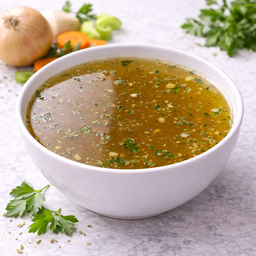
Vegetable Broth
The liquid foundation for soups, sauces and risotto
What is this ingredient?
Vegetable broth is a practical way to build depth of flavor and umami without meat. Onion, carrot, celery, leek, herbs and vegetable scraps release aroma, color and a gentle savory base while simmering. Most solids are strained out, but water-soluble compounds, minerals such as potassium and aromatic plant compounds can remain in the liquid.
The biggest difference is usually quality and salt level. Homemade broth is usually mild, clean and easy to control: you decide which vegetables, herbs and amount of salt go in. Bouillon cubes and ready-made versions are convenient, but they often contain a lot of sodium and sometimes flavor enhancers. Treat vegetable broth primarily as a culinary foundation: ideal for giving rice, grains, soup, stews and sauces more roundness without immediately adding extra fat.
How does it taste?
Mild umami with a warm, herbal vegetable flavor and light sweetness.
Pairs well with:
Pairs well with risottosoupstewsgrains and sauces.
Did you know...?
- Bouillon cubes were invented in 1908 by the Swiss company Maggi.
- The word 'bouillon' comes from the French 'bouillir', meaning 'to boil'.
Nutritional Value & Energy
Per 100ml
Vegetable Broth is low in calories thanks to natural nutrients .
Per 100g
Minerals
Vitamins
More nutrients
B-Vitamins
Trace Minerals
EU-approved nutrition claims
There are currently no EFSA-authorized health claims specific to vegetable broth.
What's being researched?
Sodium content in broth
The sodium content of vegetable broth is studied within strategies to reduce salt in prepared foods. Research also looks at ways to preserve flavor in reduced-sodium versions.
Supported by: [1] Gould (2011)
Good Combinations (Synergy)
Combine vegetable broth smartly to enhance the effect:
Vegetable Broth  Ginger
 Warm broth + gingerols for digestion and hydration
Technical: Vegetable broth provides electrolytes (sodium 350-500mg/L, potassium 200-400mg/L) for hydration and osmotic balance. Ginger's gingerols promote gastric motility and bile production. Warm fluids accelerate gastric transit.
What does this mean for you? Vegetable broth with fresh ginger is an ideal warm drink during recovery. The electrolytes hydrate, the gingerols support digestion.
Vegetable Broth  Turmeric
 Mineral-rich broth + curcumin for immune and recovery
Technical: Vegetable broth contains leached minerals (potassium, magnesium, sodium) and glutamate (umami flavor). Turmeric's curcumin (3-5%) modulates NF-kB and COX-2 signaling pathways. The warm broth increases curcumin bioavailability by improving solubility (heat + aqueous matrix). Glutamate in broth also activates T-cell receptors.
What does this mean for you? Add turmeric (plus black pepper) to vegetable broth for a powerful recovery soup. Ideal when you're feeling unwell or recovering from exertion.
Vegetable Broth 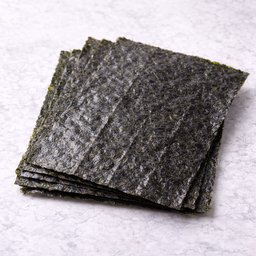 Nori
Nori Mineral-rich base for Asian soups
Technical: Vegetable broth contains land minerals (potassium, magnesium, phosphorus) from vegetables. Nori and wakame add sea minerals: iodine (essential for thyroid), extra magnesium and trace elements (vanadium, chromium) scarce on land. Together they cover a broader mineral spectrum than land or sea sources alone.
What does this mean for you? Add a piece of nori or wakame to your vegetable broth or miso soup. You supplement minerals often lacking in land-based food — especially iodine for your thyroid.
Vegetable Broth 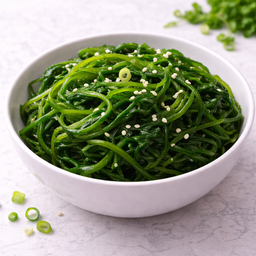 Wakame
 Mineral-rich base for Asian soups
Technical: Vegetable broth contains land minerals (potassium, magnesium, phosphorus) from vegetables. Nori and wakame add sea minerals: iodine (essential for thyroid), extra magnesium and trace elements (vanadium, chromium) scarce on land. Together they cover a broader mineral spectrum than land or sea sources alone.
What does this mean for you? Add a piece of nori or wakame to your vegetable broth or miso soup. You supplement minerals often lacking in land-based food — especially iodine for your thyroid.
Recipes with Vegetable Broth
Discover delicious recipes featuring vegetable broth:
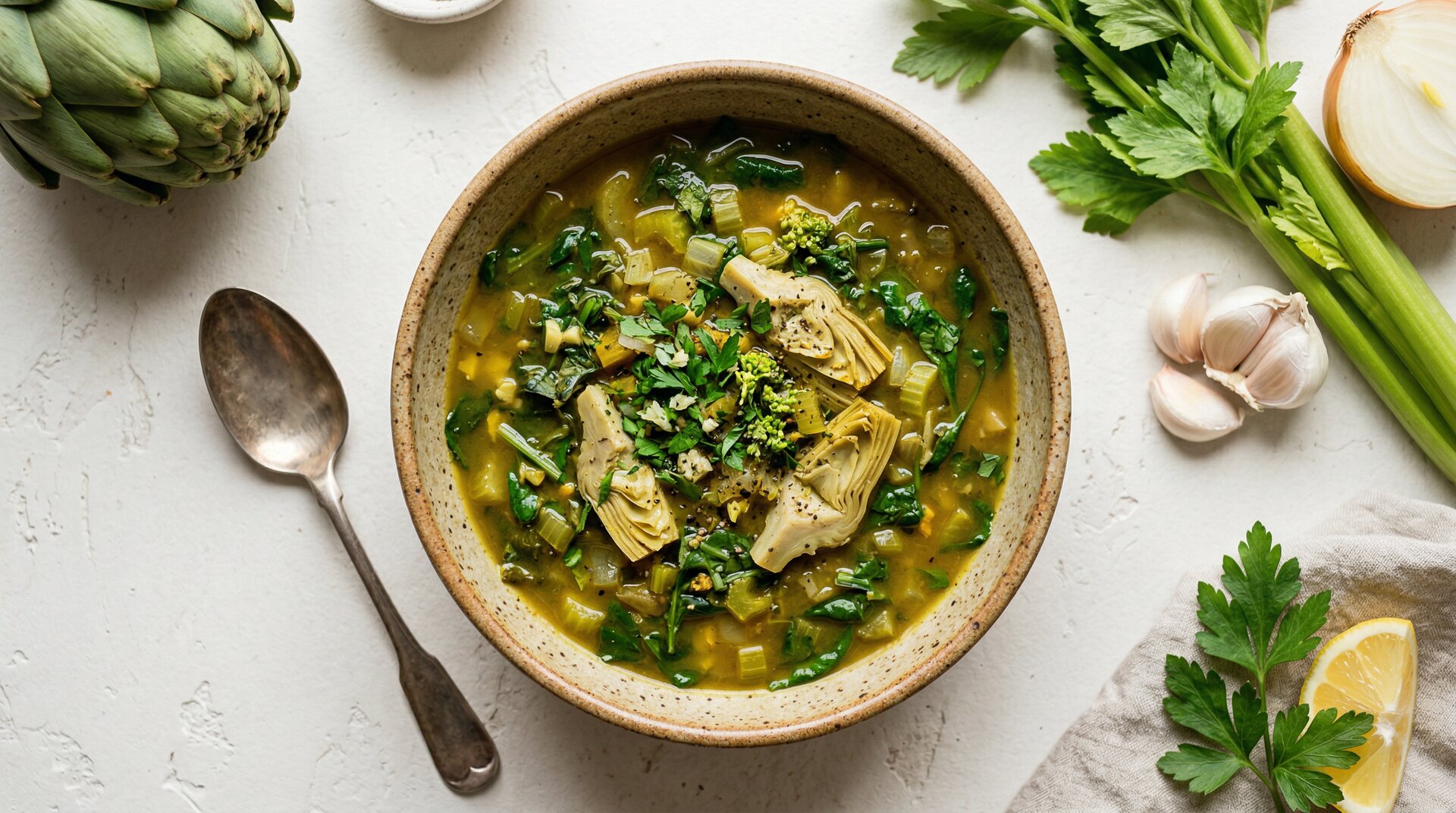 Artichoke Soup with Celery, Spinach and Lemon 36 min Velvety, fresh and gently spiced
  121 kcal
  3g protein 2 synergies
 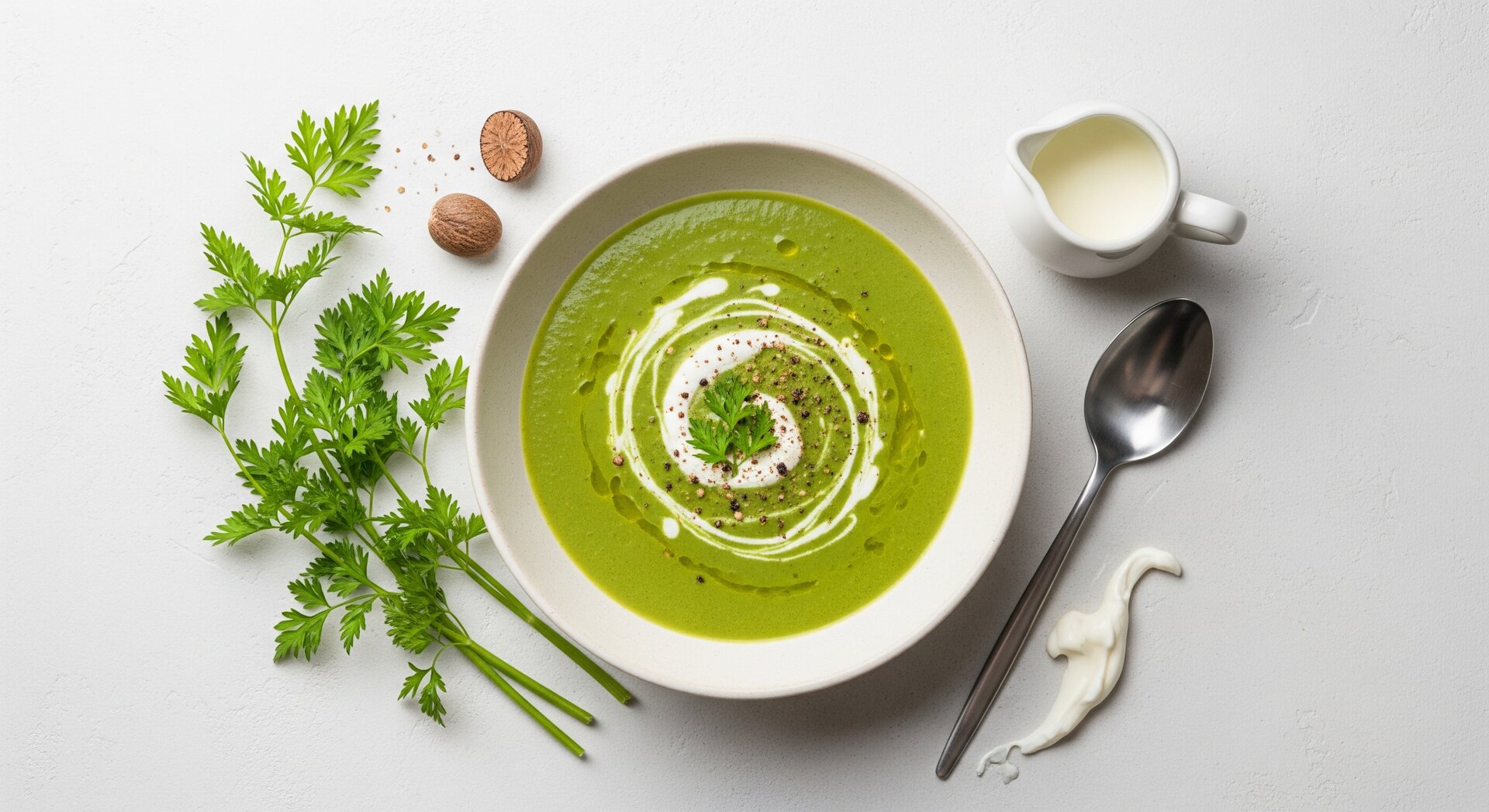 Belgian Chervil Soup with Cream 40 min Classic spring soup with fresh chervil, potato and a hint of nutmeg 265 kcal 5g protein 2 synergies
  Broccoli Cheddar Soup 40 min Creamy soup with broccoli, aged cheddar and a hint of nutmeg 430 kcal 20g protein 2 synergies
  Ethiopian Misir Wot 65 min Spicy red lentil stew with berbere and niter kibbeh 380 kcal 18g protein 3 synergies
  Ethiopian Misir Wot with Teff Pancakes 60 min Spicy red lentil stew with berbere on teff pancakes 1025 kcal 48g protein 2 synergies
 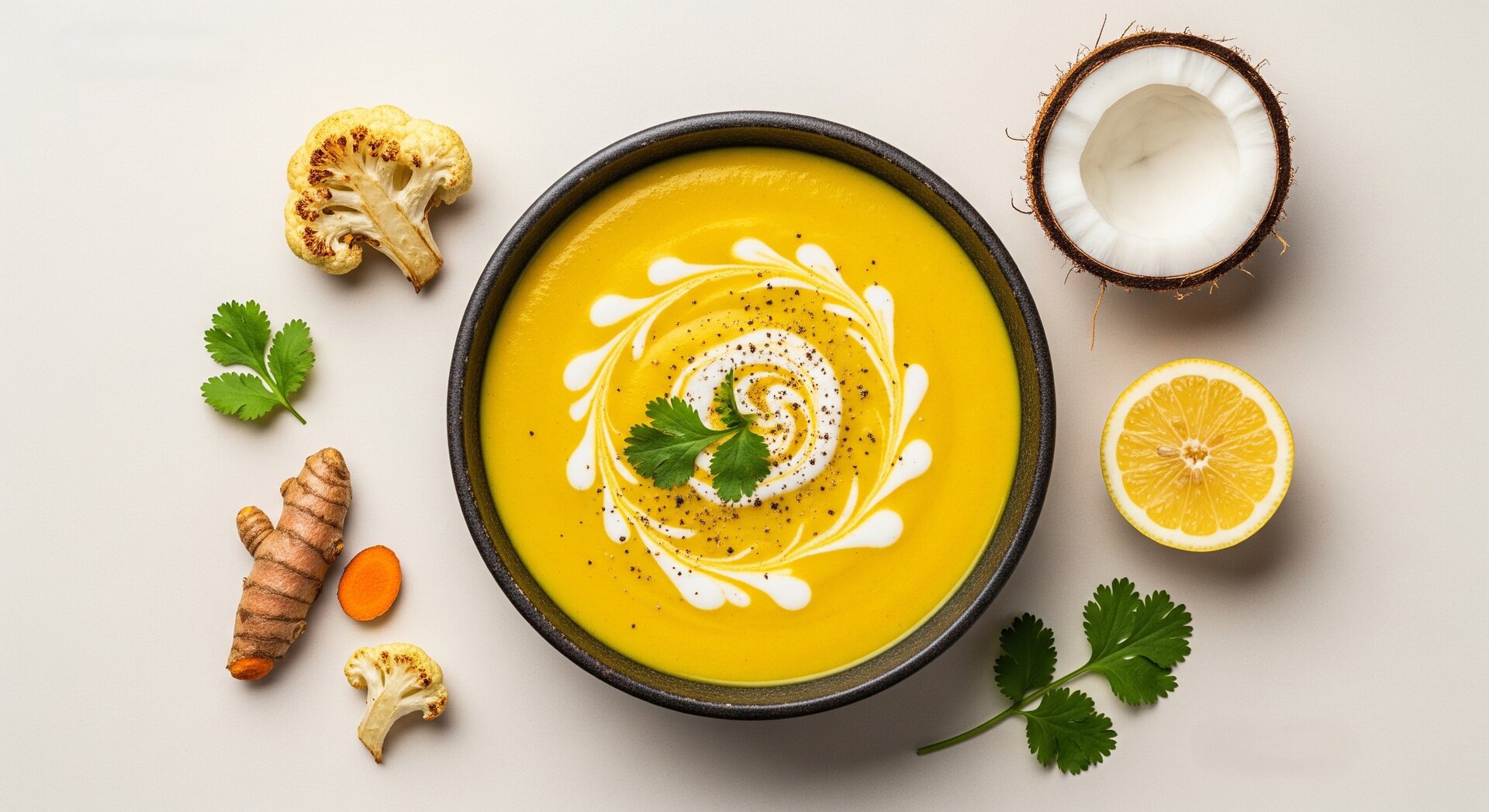 Roasted Cauliflower Turmeric Soup 60 min Creamy soup with roasted cauliflower, coconut milk, turmeric and black pepper 269 kcal 8g protein 2 synergies
  In the Kitchen
Storage
Location:Pantry
Shelf life:1 jaar (blokje)
Fresh broth keeps for about 3 days in the fridge or 3 months in the freezer. Cool it quickly and store in clean, tightly sealed containers.
Preparation
Cube: dissolve in boiling water according to the package. Homemade: gently simmer vegetable scraps for 45–90 minutes without a hard boil, then strain. Add salt only at the end so you can control the flavor better.
Substitutes
Smart preparation
1Let vegetable broth gently simmer for at least 45 minutes for a deeper flavor.
2Roast vegetables first in the oven for a richer broth.
Why?
Roasting caramelizes the natural sugars and adds more depth of flavor.
3Freeze broth in ice cube trays for convenient portions.
Caution / Warnings
Vegetable Broth is very safe, but there are scientific considerations:
Salt-restricted diet Severe
Many ready-made broths and cubes contain a lot of salt. The amount varies widely by brand and preparation.
Advice:
Choose a low-salt version, dilute it more, or make your own broth without added salt.
Summary
Vegetable broth quickly adds depth to soups, risotto, sauces and grains. Homemade is inexpensive, mild and easy to control. Using a cube or carton broth? Pay close attention to the salt level.