Seaweed
The Mineral Warehouse
What is this ingredient?
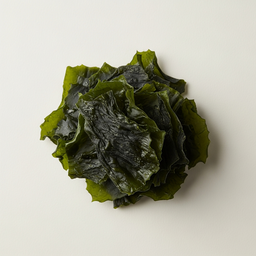
Seaweed is the collective name for macro-algae that grow in the sea. Because they are constantly surrounded by salt water, they absorb all minerals from the ocean. This is the category most often missing in the Western diet.
Well-known types are:
- Nori: The thin, dark sheets around sushi
- Wakame: The soft seaweed strips in miso soup
- Kelp (Kombu): Large brown leaves, extremely iodine-rich
Land vegetables contain hardly any iodine; seaweed is full of it. Iodine is essential for the thyroid and thus your entire metabolism.
How does it taste?
Salty and mineral-rich with a broad-spectrum umami and iodine-like note.
Pairs well with:
Pairs well with fishsesamesoy sauceginger and rice.
Varieties
Nori
Thin, dark sheets around sushi. Relatively mild in iodine, good for beginners
Wakame
Soft seaweed strips in miso soup. Rich in fucoidan
Kelp (Kombu)
Large brown leaves, extremely iodine-rich. Use sparingly!
Did you know...?
- Seaweed is estimated to produce 50% of all oxygen on Earth through photosynthesis.
- There are more than 10,000 species of seaweed, divided into green, brown, and red algae.
Nutritional Value & Energy
Per 100g
Seaweed is low in calories thanks to natural nutrients .
Per 100g
Minerals
Vitamins
Omega-3 fatty acids
More nutrients
B-Vitamins
Trace Minerals
What's in a serving?
1 serving
Seaweed naturally contains iron (2.85 mg per 100 g).
Seaweed naturally contains calcium (168 mg per 100 g).
Seaweed naturally contains magnesium (121 mg per 100 g).
Seaweed naturally contains iodine (2320 mcg per 100 g).
Seaweed naturally contains vitamin k (66 mcg per 100 g).
Seaweed naturally contains folate (180 mcg per 100 g).
% of daily reference intake (DRI)
EU-approved nutrition claims
This ingredient contains nutrients for which EFSA-authorized health claims exist (at nutrient level, not ingredient-specific).
Approved health claims (EU)
Magnesium EU 432/2012
Magnesium contributes to normal muscle function
Contains 121mg/100g (threshold: ≥56.25mg/100g)
Magnesium EU 432/2012
Magnesium contributes to the reduction of tiredness and fatigue
Contains 121mg/100g (threshold: ≥56.25mg/100g)
Magnesium EU 432/2012
Magnesium contributes to normal functioning of the nervous system
Contains 121mg/100g (threshold: ≥56.25mg/100g)
Iron EU 432/2012
Iron contributes to normal energy-yielding metabolism
Contains 2.85mg/100g (threshold: ≥2.1mg/100g)
Iron EU 432/2012
Iron contributes to the reduction of tiredness and fatigue
Contains 2.85mg/100g (threshold: ≥2.1mg/100g)
Calcium EU 432/2012
Calcium is needed for the maintenance of normal bones
Contains 168mg/100g (threshold: ≥120mg/100g)
Folate EU 432/2012
Folate contributes to normal blood formation
Contains 180mcg/100g (threshold: ≥30mcg/100g)
Folate EU 432/2012
Folate contributes to normal amino acid synthesis
Contains 180mcg/100g (threshold: ≥30mcg/100g)
Folate EU 432/2012
Folate contributes to normal homocysteine metabolism
Contains 180mcg/100g (threshold: ≥30mcg/100g)
Folate EU 432/2012
Folate contributes to normal psychological function
Contains 180mcg/100g (threshold: ≥30mcg/100g)
Folate EU 432/2012
Folate contributes to the normal function of the immune system
Contains 180mcg/100g (threshold: ≥30mcg/100g)
Folate EU 432/2012
Folate has a role in the process of cell division
Contains 180mcg/100g (threshold: ≥30mcg/100g)
Folate EU 432/2012
Folate contributes to maternal tissue growth during pregnancy
Contains 180mcg/100g (threshold: ≥30mcg/100g)
Vitamin_k EU 432/2012
Vitamin K contributes to normal blood clotting
Contains 66mcg/100g (threshold: ≥11.25mcg/100g)
Vitamin_k EU 432/2012
Vitamin K contributes to the maintenance of normal bones
Contains 66mcg/100g (threshold: ≥11.25mcg/100g)
Calcium EU 432/2012
Calcium is needed for the maintenance of normal teeth
Contains 168mg/100g (threshold: ≥120mg/100g)
Calcium EU 432/2012
Calcium contributes to normal blood clotting
Contains 168mg/100g (threshold: ≥120mg/100g)
Calcium EU 432/2012
Calcium contributes to normal energy-yielding metabolism
Contains 168mg/100g (threshold: ≥120mg/100g)
Calcium EU 432/2012
Calcium contributes to normal muscle function
Contains 168mg/100g (threshold: ≥120mg/100g)
Calcium EU 432/2012
Calcium contributes to normal neurotransmission
Contains 168mg/100g (threshold: ≥120mg/100g)
Calcium EU 432/2012
Calcium contributes to the normal function of digestive enzymes
Contains 168mg/100g (threshold: ≥120mg/100g)
Calcium EU 432/2012
Calcium has a role in the process of cell division and specialisation
Contains 168mg/100g (threshold: ≥120mg/100g)
Magnesium EU 432/2012
Magnesium contributes to normal energy-yielding metabolism
Contains 121mg/100g (threshold: ≥56.25mg/100g)
Magnesium EU 432/2012
Magnesium contributes to electrolyte balance
Contains 121mg/100g (threshold: ≥56.25mg/100g)
Magnesium EU 432/2012
Magnesium contributes to normal protein synthesis
Contains 121mg/100g (threshold: ≥56.25mg/100g)
Magnesium EU 432/2012
Magnesium contributes to normal psychological function
Contains 121mg/100g (threshold: ≥56.25mg/100g)
Magnesium EU 432/2012
Magnesium contributes to the maintenance of normal bones
Contains 121mg/100g (threshold: ≥56.25mg/100g)
Magnesium EU 432/2012
Magnesium contributes to the maintenance of normal teeth
Contains 121mg/100g (threshold: ≥56.25mg/100g)
Magnesium EU 432/2012
Magnesium has a role in the process of cell division
Contains 121mg/100g (threshold: ≥56.25mg/100g)
Iron EU 432/2012
Iron contributes to normal cognitive function
Contains 2.85mg/100g (threshold: ≥2.1mg/100g)
Iron EU 432/2012
Iron contributes to normal formation of red blood cells and haemoglobin
Contains 2.85mg/100g (threshold: ≥2.1mg/100g)
Iron EU 432/2012
Iron contributes to normal oxygen transport in the body
Contains 2.85mg/100g (threshold: ≥2.1mg/100g)
Iron EU 432/2012
Iron contributes to the normal function of the immune system
Contains 2.85mg/100g (threshold: ≥2.1mg/100g)
Iron EU 432/2012
Iron has a role in the process of cell division
Contains 2.85mg/100g (threshold: ≥2.1mg/100g)
Iodine EU 432/2012
Iodine contributes to normal cognitive function
Contains 2320mcg/100g (threshold: ≥22.5mcg/100g)
Iodine EU 432/2012
Iodine contributes to normal energy-yielding metabolism
Contains 2320mcg/100g (threshold: ≥22.5mcg/100g)
Iodine EU 432/2012
Iodine contributes to normal functioning of the nervous system
Contains 2320mcg/100g (threshold: ≥22.5mcg/100g)
Iodine EU 432/2012
Iodine contributes to the maintenance of normal skin
Contains 2320mcg/100g (threshold: ≥22.5mcg/100g)
Iodine EU 432/2012
Iodine contributes to the normal production of thyroid hormones and normal thyroid function
Contains 2320mcg/100g (threshold: ≥22.5mcg/100g)
Iodine EU 432/2012
Iodine contributes to the normal growth of children
Contains 2320mcg/100g (threshold: ≥22.5mcg/100g)
What's being researched?
Seaweed and thyroid function
Seaweed is a natural source of iodine, essential for the thyroid. Research focuses on optimal intake and risks of excessive use.
Supported by: [1] Zimmermann MB (2015) , [2] Fitton (2011)
Polysaccharides in seaweed
Fucoidan and other polysaccharides in seaweed are studied for antioxidant and immunomodulatory properties. Research is growing.
Supported by: [2] Fitton (2011) , [1] Zimmermann MB (2015)
Good Combinations (Synergy)
Combine seaweed smartly to enhance the effect:
Seaweed 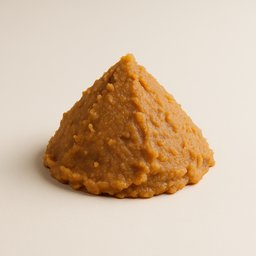 Miso
Miso Classic Japanese combination: enzymes + minerals
Technical: Miso contains Aspergillus oryzae enzymes (amylase, protease, lipase) that help break down complex polysaccharides in seaweed (alginate, fucoidan) for better absorption. Seaweed provides iodine, calcium and unique antioxidants. Miso enzymes are killed at >60°C, so miso must be added after cooking. Good to know: iodine contributes to the normal production of thyroid hormones and normal thyroid function (EFSA-approved).
What does this mean for you? Make miso soup with wakame: cook the wakame first, let it cool to ~60°C, then stir in the miso. This preserves the live enzymes that make seaweed nutrients more absorbable.
Seaweed  Brazil Nuts
 The Thyroid Tandem: Iodine + Selenium
Technical: Seaweed is the richest natural source of iodine — essential for producing thyroid hormones T3 and T4. Brazil nuts provide selenium that activates the enzyme deiodinase, responsible for converting inactive T4 to active T3. Without iodine no hormone production, without selenium no hormone activation. Together they form the complete thyroid fuel.
What does this mean for you? Combine a small sheet of nori with 2 Brazil nuts as a snack. The seaweed provides the building blocks, the Brazil nuts the activation enzyme — together they keep your metabolism running.
Seaweed  Eggs
Eggs Iodine + Tyrosine = building blocks for thyroid hormones
Technical: Thyroid hormones (T3 and T4) are synthesized from two building blocks: iodine and the amino acid tyrosine. Seaweed is the richest natural source of iodine (nori: 16-43μg per sheet, kelp: up to 2500μg/g). Eggs provide 0.4g tyrosine per egg, plus selenium (15.4μg) essential for the enzymes that convert T4 to the more active T3. Good to know: iodine contributes to the normal production of thyroid hormones and normal thyroid function (EFSA-approved).
What does this mean for you? An egg breakfast with a sheet of nori gives your thyroid exactly the two building blocks it needs — iodine from the seaweed, tyrosine from the egg.
Seaweed  Salmon
 Ocean synergy: minerals + omega-3
Technical: Seaweed provides iodine, calcium, magnesium and unique polysaccharides (fucoidan, alginate) with prebiotic properties. Salmon delivers EPA/DHA omega-3 fatty acids (2.2g/100g). Minerals from seaweed — notably zinc and selenium — are cofactors for the enzymes that convert omega-3 into resolvins and protectins.
What does this mean for you? Eat salmon with seaweed like the Japanese do — for example as sashimi with nori, or salmon poké bowl with wakame. Both come from the ocean and are culinarily made to work together.
Recipes with Seaweed
Discover delicious recipes featuring seaweed:
 Miso Noodle Soup with Tofu and Wakame 25 min Light Japanese noodle soup with miso, silken tofu and sesame
  320 kcal
  14g protein 2 synergies
 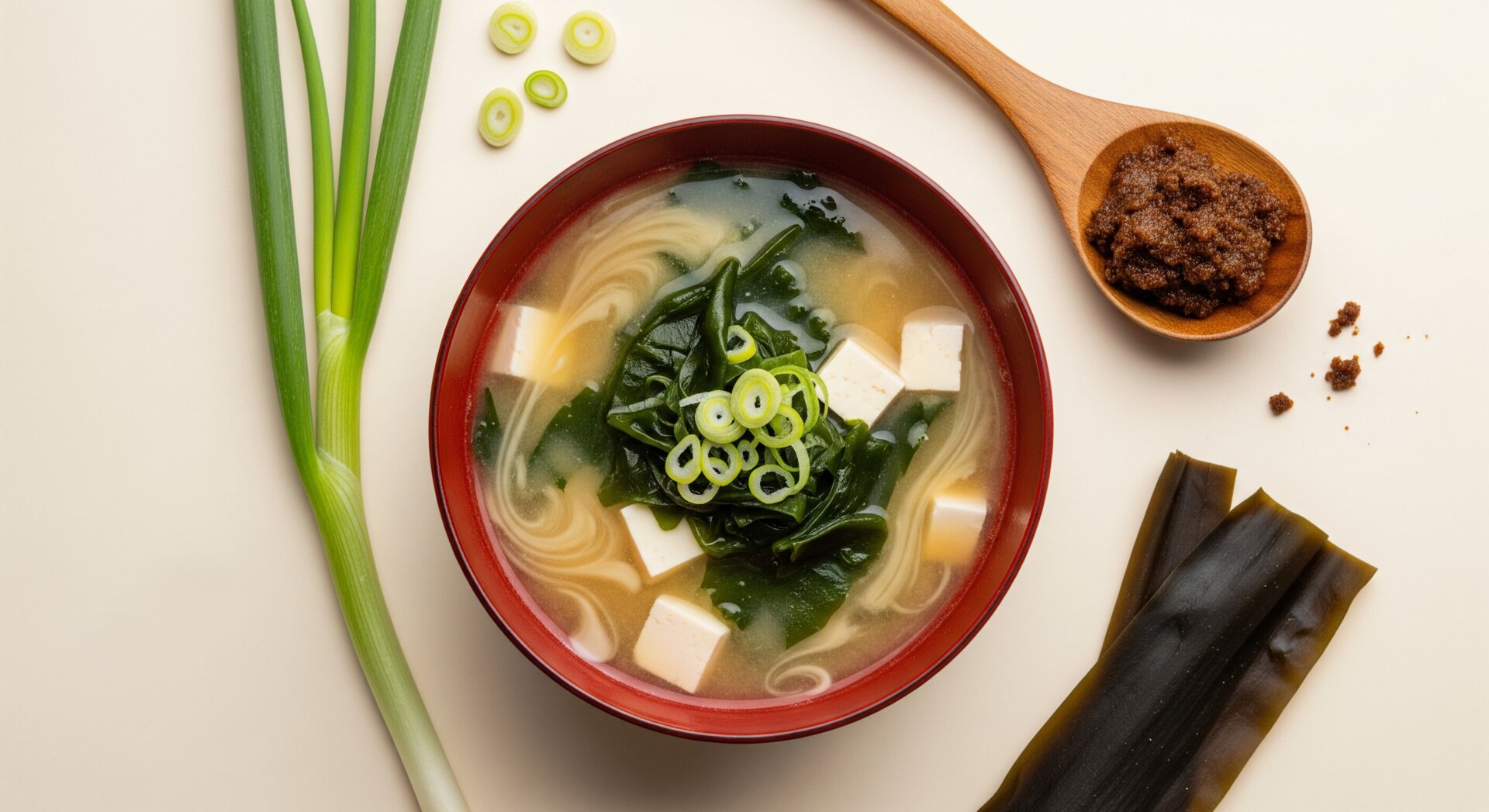 Miso Tofu Soup with Wakame and Spring Onion 20 min Light Japanese soup with silken tofu, wakame and ginger 95 kcal 8g protein 2 synergies
  Tofu Pumpkin Bowl with Miso, Ginger and Seaweed 40 min Roasted pumpkin and crispy tofu with miso dressing 580 kcal 28g protein 2 synergies
  In the Kitchen
Storage
Location:Pantry
Shelf life:1-2 jaar (gedroogd), 1 week (vers, koelkast)
Store dried seaweed in airtight container, away from moisture. Buy from reliable source (certified) to avoid heavy metals.
Preparation
Nori: eat directly. Wakame: soak 5 min, in soup. Kelp: use sparingly (extremely high iodine). Eat max 1-2x per week.
Conversions
Substitutes
Smart preparation
1Soak dried seaweed according to the package instructions.
Why?
Soaking times vary greatly per type of seaweed.
2Rinse seaweed well after soaking to remove excess salt.
3Use seaweed as a flavor enhancer in broths and sauces.
Caution / Warnings
Seaweed is very safe, but there are scientific considerations:
Too Much Iodine (Thyroid Storm) Severe
More is not always better. Too much iodine can cause thyroid overdrive (hyperthyroidism)
Advice:
Eat seaweed in moderation (1-2 times per week). Kelp (Kombu) contains extremely high iodine; don't soak too long or use sparingly
Contamination (Quality) Moderate
Seaweed absorbs everything from the water, including heavy metals
Advice:
Buy seaweed from a reliable source (certified organic or from clean waters) to avoid heavy metals
Thyroid Conditions Moderate
With existing thyroid conditions (Hashimoto's, Graves), extra iodine can worsen the situation
Advice:
Consult your doctor before eating seaweed regularly
Traditional use
Traditional Chinese Medicine
Seaweed in Chinese Tradition
Seaweed (hai zao) has been valued in Chinese food culture for over 2,000 years and remains a staple of the regional cuisine.
Other
Seaweed in Celtic and Scandinavian Traditions
Seaweed has been gathered by Celtic and Scandinavian coastal peoples for centuries as food and fertilizer, such as dulse in Ireland and Scotland.
Summary
Seaweed is the missing link in the Western diet. It's the only reliable food source of iodine, crucial for your thyroid and metabolism. Start with nori (mild) and wakame (soup), and be careful with kelp (extremely iodine-rich). Eat it 1-2 times per week and always buy from reliable sources.