Rye bread
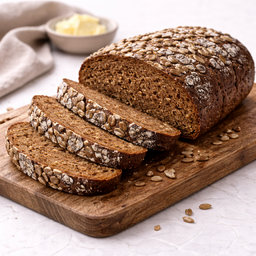
Dense whole grain rye bread with a deep, mildly sour flavor
What is this ingredient?
Rye bread is a traditional Northern and Eastern European bread made from rye flour (Secale cereale). With its compact crumb, dark color, and mildly sour flavor, it feels very different from airy wheat bread. It is often eaten in thin slices with savory toppings such as cucumber, cream cheese, smoked fish, mustard, or dill.
## Glycemic index and grain structure
Whole grain rye bread is often compared with wheat bread in nutrition research because rye has different fibers and a denser bread structure. Some studies report a lower glycemic index for whole grain rye bread than for white wheat bread. This makes it an interesting robust, fiber-containing bread choice within a varied diet.
## Fibers and fermentation
Rye contains arabinoxylans and fructans, fiber types that are processed differently during digestion than rapidly digestible starch. Nutrition research examines how these rye fibers are fermented and how short-chain fatty acids such as butyrate can be formed. For people sensitive to FODMAPs, fructans can also cause discomfort, so portion size and personal tolerance remain important.
## Filling and culinarily versatile
Thanks to its dense structure, firm bite, and full flavor, rye bread offers a very different eating experience from soft bread. It works well for open sandwiches, Scandinavian-style toppings, lunch boards, and simple breakfast or lunch dishes with egg, cheese, fish, avocado, or crisp vegetables.
How does it taste?
Deeply earthy and mildly sour with a dense, compact crumb and malty notes.
Pairs well with:
Pairs well with cream cheesesmoked fishcucumberdilland mustard.
Did you know...?
- In the Middle Ages, rye was an important bread grain in many cold regions because it tolerates poorer soils and harsh weather better than wheat.
- Traditional German pumpernickel is slowly baked or steamed at low temperature, which gives it its dark color and sweet malty notes.
Nutritional Value & Energy
Per 100g
Rye bread provides energy thanks to natural nutrients , buffered by fiber.
Per 100g
Minerals
Vitamins
Omega-3 fatty acids
More nutrients
B-Vitamins
Trace Minerals
What's in a serving?
1 serving (60 g)
Rye bread naturally contains iron (2.8 mg per 100 g).
Rye bread naturally contains phosphorus (125 mg per 100 g).
Rye bread naturally contains selenium (30.9 mcg per 100 g).
Rye bread naturally contains folate (51 mcg per 100 g).
% of daily reference intake (DRI)
EU-approved nutrition claims
This ingredient contains nutrients for which EFSA-authorized health claims exist at nutrient level, not as an ingredient-specific claim.
Approved health claims (EU)
Iron EU 432/2012
Iron contributes to normal energy-yielding metabolism
Contains 2.8mg/100g (threshold: ≥2.1mg/100g)
Iron EU 432/2012
Iron contributes to the reduction of tiredness and fatigue
Contains 2.8mg/100g (threshold: ≥2.1mg/100g)
Folate EU 432/2012
Folate contributes to normal blood formation
Contains 51mcg/100g (threshold: ≥30mcg/100g)
Folate EU 432/2012
Folate contributes to normal amino acid synthesis
Contains 51mcg/100g (threshold: ≥30mcg/100g)
Folate EU 432/2012
Folate contributes to normal homocysteine metabolism
Contains 51mcg/100g (threshold: ≥30mcg/100g)
Folate EU 432/2012
Folate contributes to normal psychological function
Contains 51mcg/100g (threshold: ≥30mcg/100g)
Folate EU 432/2012
Folate contributes to the normal function of the immune system
Contains 51mcg/100g (threshold: ≥30mcg/100g)
Folate EU 432/2012
Folate has a role in the process of cell division
Contains 51mcg/100g (threshold: ≥30mcg/100g)
Folate EU 432/2012
Folate contributes to maternal tissue growth during pregnancy
Contains 51mcg/100g (threshold: ≥30mcg/100g)
Phosphorus EU 432/2012
Phosphorus contributes to normal energy-yielding metabolism
Contains 125mg/100g (threshold: ≥105mg/100g)
Phosphorus EU 432/2012
Phosphorus contributes to the normal function of cell membranes
Contains 125mg/100g (threshold: ≥105mg/100g)
Phosphorus EU 432/2012
Phosphorus contributes to the maintenance of normal bones
Contains 125mg/100g (threshold: ≥105mg/100g)
Phosphorus EU 432/2012
Phosphorus contributes to the maintenance of normal teeth
Contains 125mg/100g (threshold: ≥105mg/100g)
Iron EU 432/2012
Iron contributes to normal cognitive function
Contains 2.8mg/100g (threshold: ≥2.1mg/100g)
Iron EU 432/2012
Iron contributes to normal formation of red blood cells and haemoglobin
Contains 2.8mg/100g (threshold: ≥2.1mg/100g)
Iron EU 432/2012
Iron contributes to normal oxygen transport in the body
Contains 2.8mg/100g (threshold: ≥2.1mg/100g)
Iron EU 432/2012
Iron contributes to the normal function of the immune system
Contains 2.8mg/100g (threshold: ≥2.1mg/100g)
Iron EU 432/2012
Iron has a role in the process of cell division
Contains 2.8mg/100g (threshold: ≥2.1mg/100g)
Selenium EU 432/2012
Selenium contributes to the maintenance of normal hair
Contains 30.9mcg/100g (threshold: ≥8.25mcg/100g)
Selenium EU 432/2012
Selenium contributes to the maintenance of normal nails
Contains 30.9mcg/100g (threshold: ≥8.25mcg/100g)
Selenium EU 432/2012
Selenium contributes to the normal function of the immune system
Contains 30.9mcg/100g (threshold: ≥8.25mcg/100g)
Selenium EU 432/2012
Selenium contributes to normal thyroid function
Contains 30.9mcg/100g (threshold: ≥8.25mcg/100g)
Selenium EU 432/2012
Selenium contributes to normal spermatogenesis
Contains 30.9mcg/100g (threshold: ≥8.25mcg/100g)
Selenium EU 432/2012
Selenium contributes to the protection of cells from oxidative stress
Contains 30.9mcg/100g (threshold: ≥8.25mcg/100g)
What's being researched?
Rye bread and postprandial response
Rye bread is compared with wheat bread in nutrition research for after-meal measurements such as glucose and insulin curves. Results depend on recipe, fermentation, milling, portion size, and the extent to which whole kernels or whole grain flour are used.
Supported by: [3] Rosén LA (2011) , [1] Liljeberg HG (1996)
Rye fibers and fermentation
Rye fibers such as arabinoxylans and fructans are examined in studies on fermentation and the formation of short-chain fatty acids. This research helps explain why rye is processed differently from many refined grain products, while personal tolerance remains important for FODMAP sensitivity.
Supported by: [2] Lappi J (2014) , [1] Liljeberg HG (1996)
Good Combinations (Synergy)
Combine rye bread smartly to enhance the effect:
Rye bread 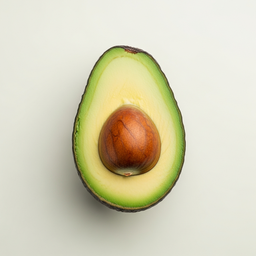 Avocado
 Scandinavian classic: fiber + healthy fats for lasting satiety
Technical: Rye bread contains arabinoxylan fibers that slow gastric emptying. Avocado contains 15g monounsaturated fats that stimulate satiety hormones (CCK, PYY). Together they provide lasting satiety via fiber delay + hormonal signaling.
What does this mean for you? Rye bread with avocado is a Scandinavian-modern combination that keeps you satiated for hours. The arabinoxylan fibers from the rye + the healthy fats from the avocado work together.
Rye bread  Cucumber
 Hydration + fiber for digestion
Technical: Rye bread's insoluble fiber needs water for effective function. Cucumber (96% water) provides hydration plus silica for the gut lining.
What does this mean for you? Rye bread with cucumber (traditional Scandinavian) is a combination where the cucumber provides the water that the rye fibers need. Simple, crunchy and effective.
Rye bread  Salmon
 Scandinavian breakfast with omega-3 and fiber for lipid profile support
Technical: Rye bread's arabinoxylan fibers bind bile acids in the gut. Salmon provides EPA/DHA omega-3 (2.5g/100g) that influence eicosanoid metabolism. Together complementary lipid profile support via two pathways.
What does this mean for you? Rye bread with smoked salmon is the ideal Scandinavian breakfast. Arabinoxylan fibers + EPA/DHA omega-3 — two complementary pathways for lipid profile support.
Recipes with Rye bread
Discover delicious recipes featuring rye bread:
 Scandinavian Herring with Rye Bread 25 min Open rye sandwich with herring, egg, dill and mustard cream
  610 kcal
  36g protein 2 synergies
 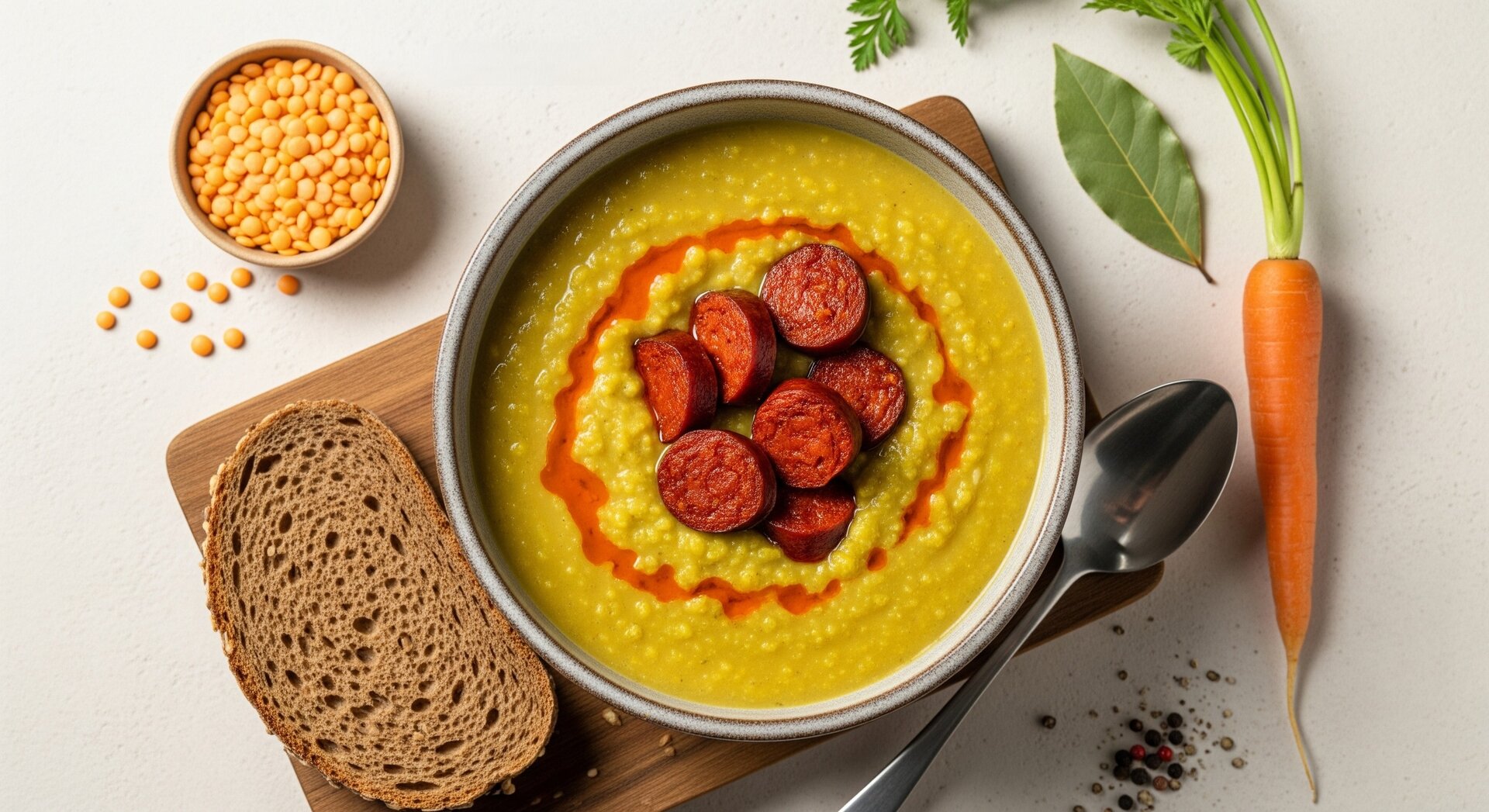 Snert-Style Yellow Lentil Soup with Merguez and Rye Bread 80 min Thick winter soup with spicy sausage, vegetables and dark rye bread 735 kcal 36g protein 1 synergies
  In the Kitchen
Storage
Location:Pantry
Shelf life:1 week, langer in koelkast/vriezer
Store rye bread in a cool, dry place in a bread bag; freeze portions if you want to keep it longer.
Conversions
Substitutes
Smart preparation
1Cut rye bread with a serrated knife into thin slices.
Why?
Rye bread is dense and can crumble more easily with a smooth knife.
2Toast rye bread briefly for a crunchier base.
3Store rye bread in a cotton bread bag, not tightly sealed in plastic.
Why?
Plastic traps moisture and can soften the crust more quickly.
Caution / Warnings
Rye bread is very safe, but there are scientific considerations:
Gluten intolerance or celiac disease Severe
Rye contains gluten, especially the rye protein secalin.
FODMAP sensitivity Moderate
Rye bread can be high in fructans, which may cause bloating or abdominal discomfort in some people.
Traditional use
Other
Northern European staple bread
Rye has been an important bread grain for centuries in Scandinavia, the Baltic region, Germany, Poland, and Russia. In cold climates and on poorer soils, rye was often more reliable than wheat, giving sourdough rye bread a steady place in everyday meals.
Summary
Rye bread is a compact, dark rye-based bread with a full, mildly sour taste. It naturally contains fiber and pairs well with savory toppings such as cream cheese, cucumber, smoked fish, dill, or mustard. Note: rye contains gluten and may be less suitable for FODMAP sensitivity because of fructans.