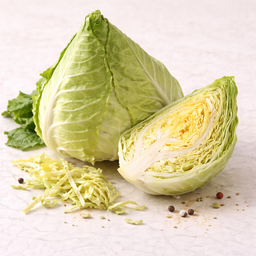
Pointed Cabbage
Mild Cruciferous with Glucosinolates
What is this ingredient?
Pointed cabbage is the mildest and most digestible cabbage variety, with a softer taste than white cabbage. As a member of the Brassica family, it contains the same cancer-protective glucosinolates as broccoli and cauliflower.
## Glucosinolates & Cancer Prevention
Cruciferous vegetables contain glucosinolates that are converted to isothiocyanates during chewing. Higdon et al. (2007) in Pharmacological Research documented that these compounds activate phase II cleansing enzymes and regulate cell growth.
## Sulforaphane Production
When cutting pointed cabbage, the enzyme myrosinase becomes active, converting glucoraphanin into sulforaphane. Fahey et al. (1997) showed that sulforaphane is one of the most potent inducers of cleansing enzymes.
## Vitamin C & Immune System
Pointed cabbage contains about 30mg vitamin C per 100g. Carr & Maggini (2017) confirmed that vitamin C is essential for immune cell function and acts as an antioxidant.
How does it taste?
Mild, sweet and delicate with a tender, soft texture. More refined than white cabbage.
Pairs well with:
Pairs well with buttercarawaybaconcream and parsley.
Did you know...?
- Pointed cabbage is a milder, softer variant of white cabbage with a cone-shaped head.
- Pointed cabbage has thinner leaves than regular cabbage and therefore needs less cooking time.
Nutritional Value & Energy
Per 100g
Pointed Cabbage is low in calories thanks to natural nutrients , buffered by fiber.
Per 100g
Minerals
Vitamins
More nutrients
B-Vitamins
Trace Minerals
What's in a serving?
1 serving
Pointed Cabbage naturally contains vitamin c (30 mg per 100 g).
Pointed Cabbage naturally contains vitamin k (76 mcg per 100 g).
Pointed Cabbage naturally contains folate (43 mcg per 100 g).
% of daily reference intake (DRI)
EU-approved nutrition claims
This ingredient contains nutrients for which EFSA-authorized health claims exist (at nutrient level, not ingredient-specific).
Approved health claims (EU)
Vitamin_c EU 432/2012
Vitamin C contributes to the normal function of the immune system
Contains 30mg/100g (threshold: ≥12mg/100g)
Vitamin_c EU 432/2012
Vitamin C contributes to the reduction of tiredness and fatigue
Contains 30mg/100g (threshold: ≥12mg/100g)
Vitamin_c EU 432/2012
Vitamin C contributes to normal collagen formation for the normal function of skin
Contains 30mg/100g (threshold: ≥12mg/100g)
Folate EU 432/2012
Folate contributes to normal blood formation
Contains 43mcg/100g (threshold: ≥30mcg/100g)
Folate EU 432/2012
Folate contributes to normal amino acid synthesis
Contains 43mcg/100g (threshold: ≥30mcg/100g)
Folate EU 432/2012
Folate contributes to normal homocysteine metabolism
Contains 43mcg/100g (threshold: ≥30mcg/100g)
Folate EU 432/2012
Folate contributes to normal psychological function
Contains 43mcg/100g (threshold: ≥30mcg/100g)
Folate EU 432/2012
Folate contributes to the normal function of the immune system
Contains 43mcg/100g (threshold: ≥30mcg/100g)
Folate EU 432/2012
Folate has a role in the process of cell division
Contains 43mcg/100g (threshold: ≥30mcg/100g)
Folate EU 432/2012
Folate contributes to maternal tissue growth during pregnancy
Contains 43mcg/100g (threshold: ≥30mcg/100g)
Vitamin_c EU 432/2012
Vitamin C contributes to normal collagen formation for the normal function of blood vessels
Contains 30mg/100g (threshold: ≥12mg/100g)
Vitamin_c EU 432/2012
Vitamin C contributes to normal collagen formation for the normal function of bones
Contains 30mg/100g (threshold: ≥12mg/100g)
Vitamin_c EU 432/2012
Vitamin C contributes to normal collagen formation for the normal function of cartilage
Contains 30mg/100g (threshold: ≥12mg/100g)
Vitamin_c EU 432/2012
Vitamin C contributes to normal collagen formation for the normal function of gums
Contains 30mg/100g (threshold: ≥12mg/100g)
Vitamin_c EU 432/2012
Vitamin C contributes to normal collagen formation for the normal function of teeth
Contains 30mg/100g (threshold: ≥12mg/100g)
Vitamin_c EU 432/2012
Vitamin C contributes to normal energy-yielding metabolism
Contains 30mg/100g (threshold: ≥12mg/100g)
Vitamin_c EU 432/2012
Vitamin C contributes to normal functioning of the nervous system
Contains 30mg/100g (threshold: ≥12mg/100g)
Vitamin_c EU 432/2012
Vitamin C contributes to normal psychological function
Contains 30mg/100g (threshold: ≥12mg/100g)
Vitamin_c EU 432/2012
Vitamin C contributes to the protection of cells from oxidative stress
Contains 30mg/100g (threshold: ≥12mg/100g)
Vitamin_c EU 432/2012
Vitamin C contributes to the regeneration of the reduced form of vitamin E
Contains 30mg/100g (threshold: ≥12mg/100g)
Vitamin_c EU 432/2012
Vitamin C increases iron absorption
Contains 30mg/100g (threshold: ≥12mg/100g)
Vitamin_c EU 432/2012
Vitamin C contributes to maintain the normal function of the immune system during and after intense physical exercise
Contains 30mg/100g (threshold: ≥12mg/100g)
Vitamin_k EU 432/2012
Vitamin K contributes to normal blood clotting
Contains 76mcg/100g (threshold: ≥11.25mcg/100g)
Vitamin_k EU 432/2012
Vitamin K contributes to the maintenance of normal bones
Contains 76mcg/100g (threshold: ≥11.25mcg/100g)
What's being researched?
Fiber and gentle digestibility
Pointed cabbage is being studied as a milder cruciferous vegetable for digestion compared to white cabbage. Digestibility and effects on gut flora are being investigated.
Supported by: [5] Kapusta-Duch (2012)
Glucosinolates and cellular studies
Glucosinolates in pointed cabbage share characteristics of other cruciferous vegetables being studied for cellular protection. Specific research on pointed cabbage is limited, but glucosinolate profiles are promising.
Supported by: [4] Verhoeven DT (1996) , [1] Higdon JV (2007) , [2] Fahey JW (1997)
Good Combinations (Synergy)
Combine pointed cabbage smartly to enhance the effect:
Pointed Cabbage 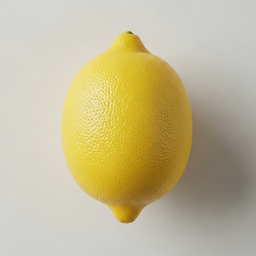 Lemon
Lemon Vitamin C enhances glucosinolate activation and iron absorption
Technical: Pointed cabbage contains glucobrassicin and sinigrin (glucosinolates) plus 31mg vitamin C per 100g. Extra vitamin C from lemon (53mg/100g) increases stability of isothiocyanates (active products) in the GI tract. Vitamin C also contributes to the increase of iron absorption (EFSA-approved) via ferroreduction of non-heme iron (0.5mg/100g in pointed cabbage).
What does this mean for you? Pointed cabbage salad with lemon dressing maximizes both glucosinolate activation and iron absorption. Lemon keeps active compounds working longer and vitamin C increases iron absorption.
Pointed Cabbage 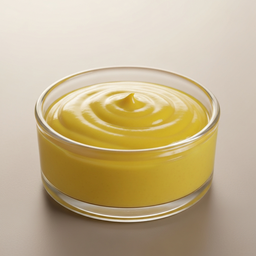 Mustard
 Myrosinase from mustard activates glucosinolates
Technical: Pointed cabbage contains glucosinolates (glucobrassicin, sinigrin) converted by myrosinase to indole-3-carbinol and sulforaphane — bioactive compounds intensively studied in scientific research. Cooking deactivates myrosinase. Mustard provides external myrosinase; piperine from black pepper inhibits sulfotransferase keeping sulforaphane active longer.
What does this mean for you? Add mustard or black pepper to cooked pointed cabbage. Cooking destroys an important enzyme, but mustard restores it and pepper extends the effect. A simple trick with big impact.
Pointed Cabbage 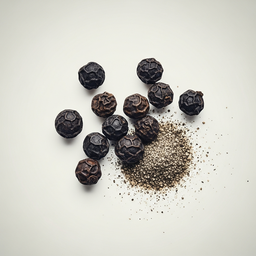 Black Pepper
 Myrosinase from mustard activates glucosinolates
Technical: Pointed cabbage contains glucosinolates (glucobrassicin, sinigrin) converted by myrosinase to indole-3-carbinol and sulforaphane — bioactive compounds intensively studied in scientific research. Cooking deactivates myrosinase. Mustard provides external myrosinase; piperine from black pepper inhibits sulfotransferase keeping sulforaphane active longer.
What does this mean for you? Add mustard or black pepper to cooked pointed cabbage. Cooking destroys an important enzyme, but mustard restores it and pepper extends the effect. A simple trick with big impact.
Pointed Cabbage  Olive Oil
 Fat improves absorption of fat-soluble vitamin K and carotenoids
Technical: Pointed cabbage contains 76μg vitamin K per 100g (63% RDI) and beta-carotene. Both are fat-soluble. Without fat, vitamin K absorption is only 10%. Olive oil's oleic acid forms mixed micelles increasing absorption up to 3x. Light cooking in olive oil also breaks cell walls for better nutrient release.
What does this mean for you? Stir-fry or braise pointed cabbage with a splash of olive oil. Oil is needed to absorb vitamin K. Vitamin K contributes to normal blood clotting and the maintenance of normal bones (EFSA-approved).
Recipes with Pointed Cabbage
Discover delicious recipes featuring pointed cabbage:
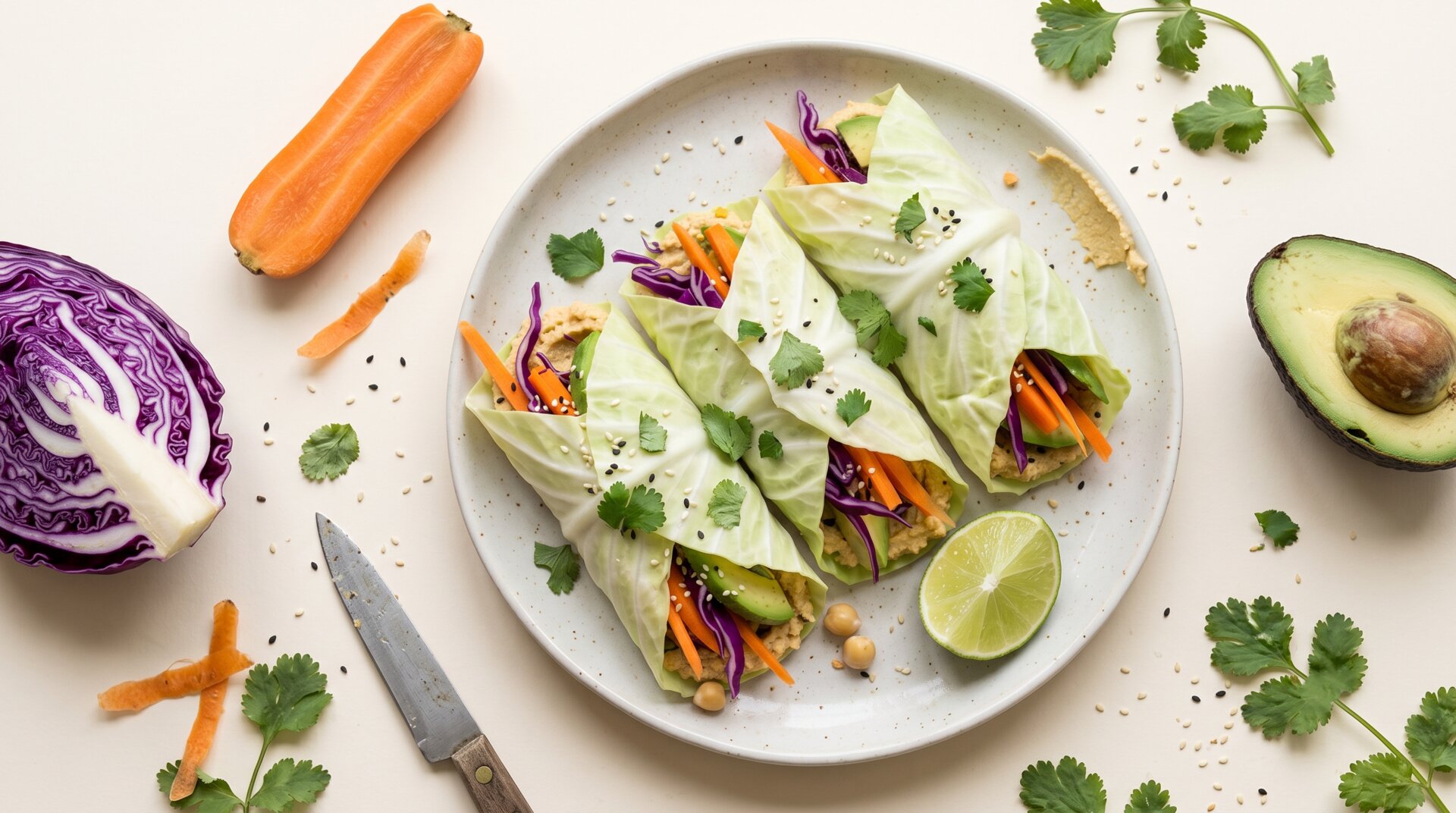 Cabbage Wrap with Hummus and Avocado 17 min Crispy pointed cabbage filled with colorful vegetables
  295 kcal
  8g protein 2 synergies
  In the Kitchen
Storage
Location:Refrigerator
Shelf life:1-2 weken in de groentelade
Preparation
Raw in salads, quick stir-fry, or steaming. Don't overcook to preserve nutrients.
Substitutes
Smart preparation
1Cut pointed cabbage into thin strips for quick stir-fry dishes.
2Pointed cabbage is more tender than white cabbage and needs less cooking.
3Use whole leaves as wraps for minced meat fillings.
Caution / Warnings
Pointed Cabbage is very safe, but there are scientific considerations:
Thyroid Conditions Mild
Goitrogens in crucifers may affect thyroid function at very high intake; cooking reduces this effect
Blood Thinners (Warfarin) Moderate
Vitamin K may affect blood thinner effectiveness
Summary
Pointed cabbage is the mildest cabbage variety with powerful glucosinolates that activate phase II cleansing enzymes. Sulforaphane supports cell health.