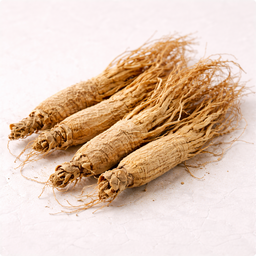
Ginseng
Earthy Asian root for tea and soup
What is this ingredient?
Panax ginseng, also known as Korean or Asian ginseng, is an aromatic root from East Asia. The name Panax belongs to the botanical genus; in the kitchen, ginseng is known for its earthy, bittersweet and woody taste.
## Ginsenosides: characteristic plant compounds
Ginsenosides are saponins that are characteristic of Panax species. In research, different ginsenoside profiles are used to describe ginseng root, extracts and preparations more precisely.
## Tea, soup and extracts
Ginseng is often steeped in hot water, simmered in broth or made into powder or extract. Its taste is distinctly earthy and bitter, so honey, jujube, ginger, goji and green tea are common pairings.
## Research context
Ginseng appears in studies on mental tasks, fatigue questionnaires and exercise-related outcomes. Results depend strongly on species, origin, preparation, standardization and study design.
How does it taste?
Earthy-bitter with a mildly sweet, woody aftertaste.
Pairs well with:
Pairs well with honeygingerjujubegoji and green tea.
Did you know...?
- The word ginseng comes from the Chinese 'renshen', meaning 'man root'.
- Wild ginseng is rare and is often strongly protected or regulated.
Nutritional Value & Energy
Per 100g
Ginseng is low in calories thanks to natural nutrients .
Per 100g
Minerals
Vitamins
EU-approved nutrition claims
There are currently no EFSA-authorized health claims specific to ginseng. Various applications for herbs and spices have been submitted but not yet assessed (botanical 'on hold' list).
What's being researched?
Ginseng and cognitive test tasks
Ginsenosides are studied in research using memory tasks, attention tasks and questionnaires. Outcomes vary by extract, dose, participant group and study design.
Supported by: [1] Reay JL (2005)
Ginseng and immune-related markers
Research on ginseng examines cell markers and cytokine profiles, among other outcomes. These results belong to research context and do not replace personal medical advice.
Supported by: [3] Lee JS (2012)
Good Combinations (Synergy)
Combine ginseng smartly to enhance the effect:
Ginseng 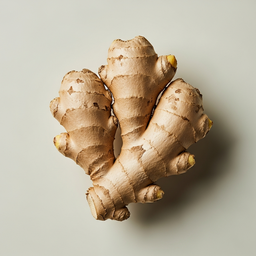 Ginger
 Circulation + energy for warmth and vitality
Technical: Ginseng increases nitric oxide production (vasodilation). Ginger contains gingerols that promote peripheral circulation. Together they enhance circulation and heat production.
What does this mean for you? Make ginseng-ginger tea for cold hands/feet or low energy. Traditional combination in Asian medicine.
Ginseng 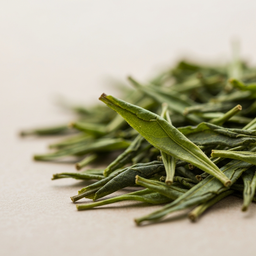 Green Tea
 Ginsenosides + L-theanine for mental sharpness without jitters
Technical: Ginseng contains ginsenosides (Rb1, Rg1) that are studied in relation to cognitive performance. Green tea contains L-theanine that increases GABA and calms. Together they provide focus without the jitters of caffeine.
What does this mean for you? Add ginseng extract to your green tea or drink traditional Korean insam-cha. Perfect for studying or working.
Ginseng 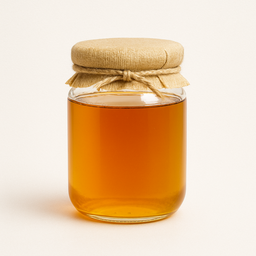 Honey
Honey Adaptogen + quick energy for endurance
Technical: Ginseng modulates neuroendocrine signaling and increases ATP production. Honey provides glucose and fructose for immediate energy. Together they enhance physical and mental performance.
What does this mean for you? Mix ginseng powder with honey as pre-workout or take before long workdays. Traditional Korean energy booster.
Ginseng 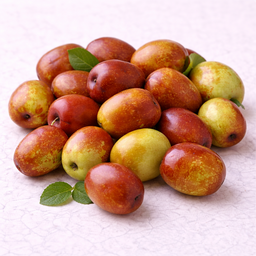 Jujubes
 Classic Korean combination for daytime energy and nighttime sleep
Technical: Ginseng contains ginsenosides (Rb1, Rg1), studied in research in relation to energy metabolism. Jujubes (Chinese dates) contain saponins and flavonoids. Both provide bioactive plant compounds.
What does this mean for you? Ginseng-jujube tea is a classic Korean drink. The ginseng supports your energy during the day, the jujubes your relaxation in the evening — two pathways that don't conflict.
Recipes with Ginseng
Discover delicious recipes featuring ginseng:
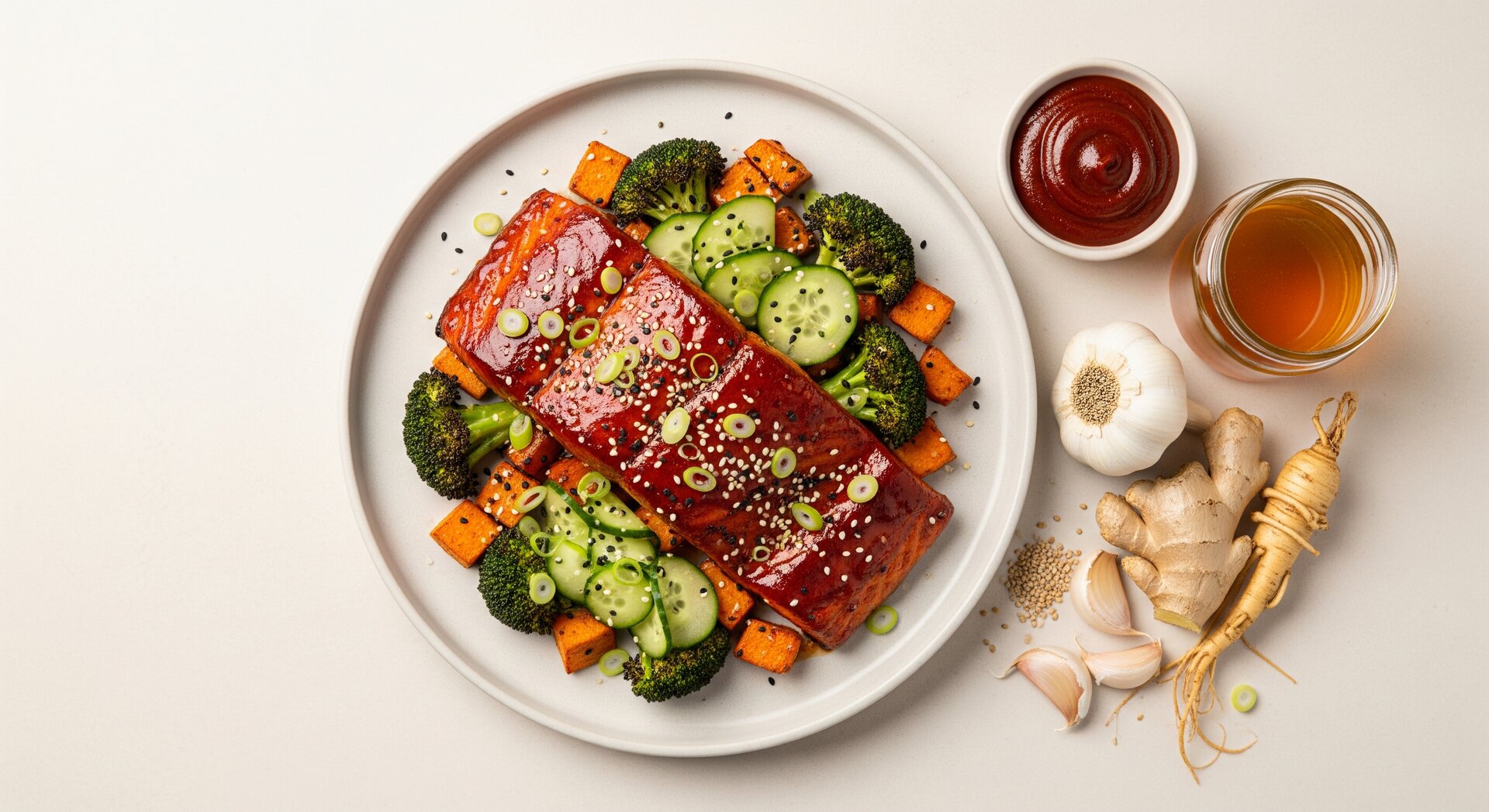 Korean Gochujang Salmon with Roasted Vegetables 55 min Sweet-spicy salmon with sesame, ginger and fresh cucumber
  480 kcal
  36g protein 2 synergies
  In the Kitchen
Storage
Location:Pantry
Shelf life:Jaren gedroogd, 1 maand vers in koelkast
Store dried ginseng airtight in a cool, dark and dry place. Fresh root keeps best in the refrigerator, well wrapped to prevent drying out.
Preparation
Traditionally used in tea, broth or soup. Slice the root thinly and steep or simmer gently; pair with honey, jujube or ginger to round out the bitterness.
Substitutes
Smart preparation
1Cut dried ginseng into thin slices for tea or soup.
2Steep ginseng for at least 10 minutes in hot water for tea.
Why?
This gives the root time to release its earthy, bittersweet taste.
3Combine ginseng with honey to soften the bitter taste.
Caution / Warnings
Ginseng is very safe, but there are scientific considerations:
Blood thinners Moderate
Ginseng may affect clotting, especially with supplements or high intakes.
Advice:
Consult a doctor or pharmacist if you use anticoagulant medication.
High blood pressure Moderate
In some people, ginseng may affect heart rate or blood pressure, especially at high intakes.
Advice:
Use cautiously with hypertension and follow personalized advice from your doctor.
Diabetes medication Moderate
Ginseng may be associated with changes in glucose values, especially when used as a supplement.
Advice:
Do not combine with diabetes medication without medical advice.
Pregnancy Severe
Ginseng supplements are generally not recommended during pregnancy because safety data are limited.
Advice:
Avoid supplements during pregnancy unless your doctor advises otherwise.
Traditional use
Traditional Chinese Medicine
Ren shen in Chinese herbal traditions
Ginseng (ren shen) has appeared in Chinese herbal traditions for more than 2,000 years. The root is used in tea, soup and classical formulas, and older texts often connect it with concepts such as qi and vitality.
Summary
Ginseng is a distinctive Asian root with an earthy, bittersweet taste. It is mostly used in tea, soup, broth and extracts. Its characteristic ginsenosides make ginseng interesting in research, but in the kitchen it is mainly valued for its deep, woody flavor and its pairing with honey, jujube, ginger, goji or green tea.