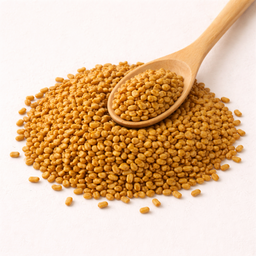
Fenugreek
Aromatic seed with maple-like notes
What is this ingredient?
Fenugreek is a versatile plant whose leaves (methi) and seeds are both used in cooking. The seeds are extremely hard and are usually roasted, soaked or ground first to soften their pronounced bitterness and release aromas of burnt sugar, nuts and maple syrup. In Indian, North African and Middle Eastern dishes, even a small amount adds a lot of depth.
Nutritionally, fenugreek is interesting for its high fibre content, plant protein and minerals such as iron and magnesium per 100 g. In normal kitchen amounts, the contribution remains modest because you usually use only a teaspoon or tablespoon. The seeds also contain galactomannan fibres and 4-hydroxyisoleucine, compounds examined in nutrition research in relation to glucose measurements, satiety and carbohydrate digestion.
Use fenugreek carefully: roasting it too long or adding too much can quickly make a dish bitter. Brief toasting, soaking or pairing it with tomato, onion, garlic, turmeric and cumin brings out its warmer, slightly sweet side.
How does it taste?
Bittersweet with notes of maple syrup, toasted nuts and a warm, earthy undertone.
Pairs well with:
Pairs well with turmericcumingarliclentilsspinachtomato and onion.
Did you know...?
- Fenugreek literally means ‘Greek hay’ in Latin, because the plant was also used as cattle feed in the past.
- Fenugreek seeds contain sotolon, an aromatic compound that can also evoke the scent of maple syrup.
Nutritional Value & Energy
Per 100g
Fenugreek provides energy thanks to natural nutrients , buffered by fiber.
Per 100g
Minerals
Vitamins
More nutrients
Trace Minerals
What's in a serving?
Fenugreek naturally contains iron (33.5 mg per 100 g dried powder). At typical spice usage (3–9 g), the contribution is limited.
Fenugreek naturally contains copper (1.1 mg per 100 g dried powder). At typical spice usage (3–9 g), the contribution is limited.
Fenugreek naturally contains iron (33.5 mg per 100 g dried powder). At typical spice usage (3–9 g), the contribution is limited.
Fenugreek naturally contains manganese (1.2 mg per 100 g dried powder). At typical spice usage (3–9 g), the contribution is limited.
Fenugreek naturally contains magnesium (191 mg per 100 g dried powder). At typical spice usage (3–9 g), the contribution is limited.
Fenugreek naturally contains copper (1.1 mg per 100 g dried powder). At typical spice usage (3–9 g), the contribution is limited.
Fenugreek naturally contains vitamin b6 (0.6 mg per 100 g dried powder). At typical spice usage (3–9 g), the contribution is limited.
Fenugreek naturally contains phosphorus (296 mg per 100 g dried powder). At typical spice usage (3–9 g), the contribution is limited.
Fenugreek naturally contains potassium (770 mg per 100 g dried powder). At typical spice usage (3–9 g), the contribution is limited.
Fenugreek naturally contains folate (57 mcg per 100 g dried powder). At typical spice usage (3–9 g), the contribution is limited.
% of daily reference intake (DRI)
EU-approved nutrition claims
This ingredient contains nutrients for which EFSA-authorized health claims exist (at nutrient level, not ingredient-specific).
Approved health claims (EU)
Iron EU 432/2012
Iron contributes to normal energy-yielding metabolism
Contains 33.5mg/100g (threshold: ≥2.1mg/100g)
Iron EU 432/2012
Iron contributes to the reduction of tiredness and fatigue
Contains 33.5mg/100g (threshold: ≥2.1mg/100g)
Iron EU 432/2012
Iron contributes to normal cognitive function
Contains 33.5mg/100g (threshold: ≥2.1mg/100g)
Iron EU 432/2012
Iron contributes to normal formation of red blood cells and haemoglobin
Contains 33.5mg/100g (threshold: ≥2.1mg/100g)
Iron EU 432/2012
Iron contributes to normal oxygen transport in the body
Contains 33.5mg/100g (threshold: ≥2.1mg/100g)
Iron EU 432/2012
Iron contributes to the normal function of the immune system
Contains 33.5mg/100g (threshold: ≥2.1mg/100g)
Iron EU 432/2012
Iron has a role in the process of cell division
Contains 33.5mg/100g (threshold: ≥2.1mg/100g)
Comparison
vsspinazie
Fenugreek contains about 12× more iron per 100 g than spinach — but you use much less fenugreek per serving.
vsbanaan
Fenugreek contains about 2× more potassium per 100 g than banana — but you use much less fenugreek per serving.
What's being researched?
Fenugreek, fibre and glucose measurements
Galactomannan fibres and 4-hydroxyisoleucine from fenugreek are examined in nutrition studies looking at glucose measurements, satiety and carbohydrate digestion. The results are interesting, but Tayb presents this as research context rather than an ingredient-specific health claim.
Supported by: [1] Sharma (1990)
Fenugreek and breastfeeding context
Fenugreek is traditionally used around breastfeeding in several cultures and is also the subject of clinical studies. Findings are not conclusive; during pregnancy, breastfeeding or supplement use, personal advice from a healthcare professional is important.
Supported by: [4] Khan (2018)
Good Combinations (Synergy)
Combine fenugreek smartly to enhance the effect:
Fenugreek 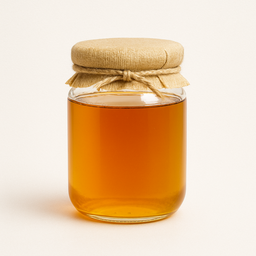 Honey
Honey Galactomannan + honey enzymes: Ayurvedic combination
Technical: Fenugreek contains galactomannan fibers (50% of seed) that slow gastric emptying and meaningfully reduce glucose absorption. 4-Hydroxy-isoleucine stimulates insulin release from the pancreas. Honey provides quickly available energy (fructose GI 19) that compensates for the blood sugar dip from fenugreek's delayed absorption. Fenugreek also stimulates prolactin for breastfeeding.
What does this mean for you? Fenugreek in warm honey-milk is an Ayurvedic combination, studied in research in relation to glucose metabolism. Fenugreek is traditionally used by breastfeeding mothers.
Fenugreek 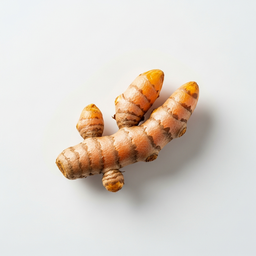 Turmeric
 Ayurvedic combination for glycemic and bioactive support
Technical: Fenugreek contains diosgenin (steroidal saponin) that activates GLUT4 transporters and supports glucose uptake. Turmeric's curcumin modulates NF-kB signaling pathways and supports glucose metabolism. Together they provide dual glycemic support + bioactive action — the basis of many Ayurvedic preparations.
What does this mean for you? Fenugreek + turmeric is a classic Ayurvedic combination. The fenugreek supports glucose uptake, the turmeric the signaling pathways — together a golden duo.
Fenugreek 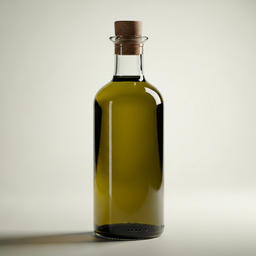 Olive Oil
 Fat increases absorption of fat-soluble diosgenin from fenugreek
Technical: Fenugreek contains diosgenin (a steroidal saponin, 0.5-1.5%) that is fat-soluble and serves as a building block for steroid hormones. Olive oil's fats form micelles that transport diosgenin through the intestinal wall, increasing bioavailability by 2-4x. Diosgenin modulates estrogen receptors and may help with menopause symptoms. The combination of fenugreek + olive oil optimizes hormonal support.
What does this mean for you? Briefly fry fenugreek seeds in olive oil as a base for curry or dal. This is the traditional Indian technique that releases the active compounds. The oil is essential for absorption of fenugreek's fat-soluble compounds.
Recipes with Fenugreek
Discover delicious recipes featuring fenugreek:
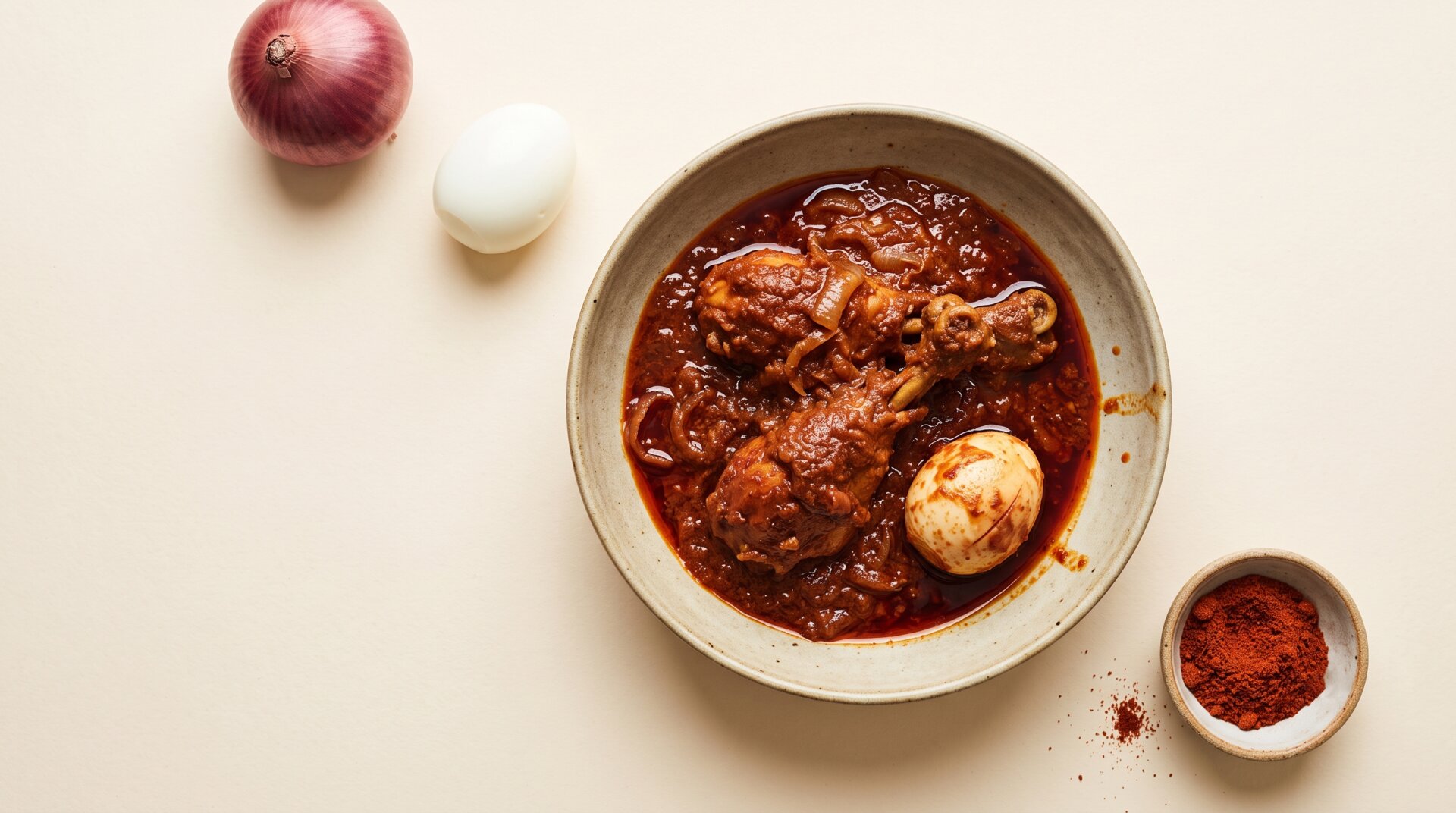 Ethiopian Doro Wat 105 min Spicy chicken stew with berbere spices and hard-boiled eggs
  480 kcal
  42g protein 2 synergies
 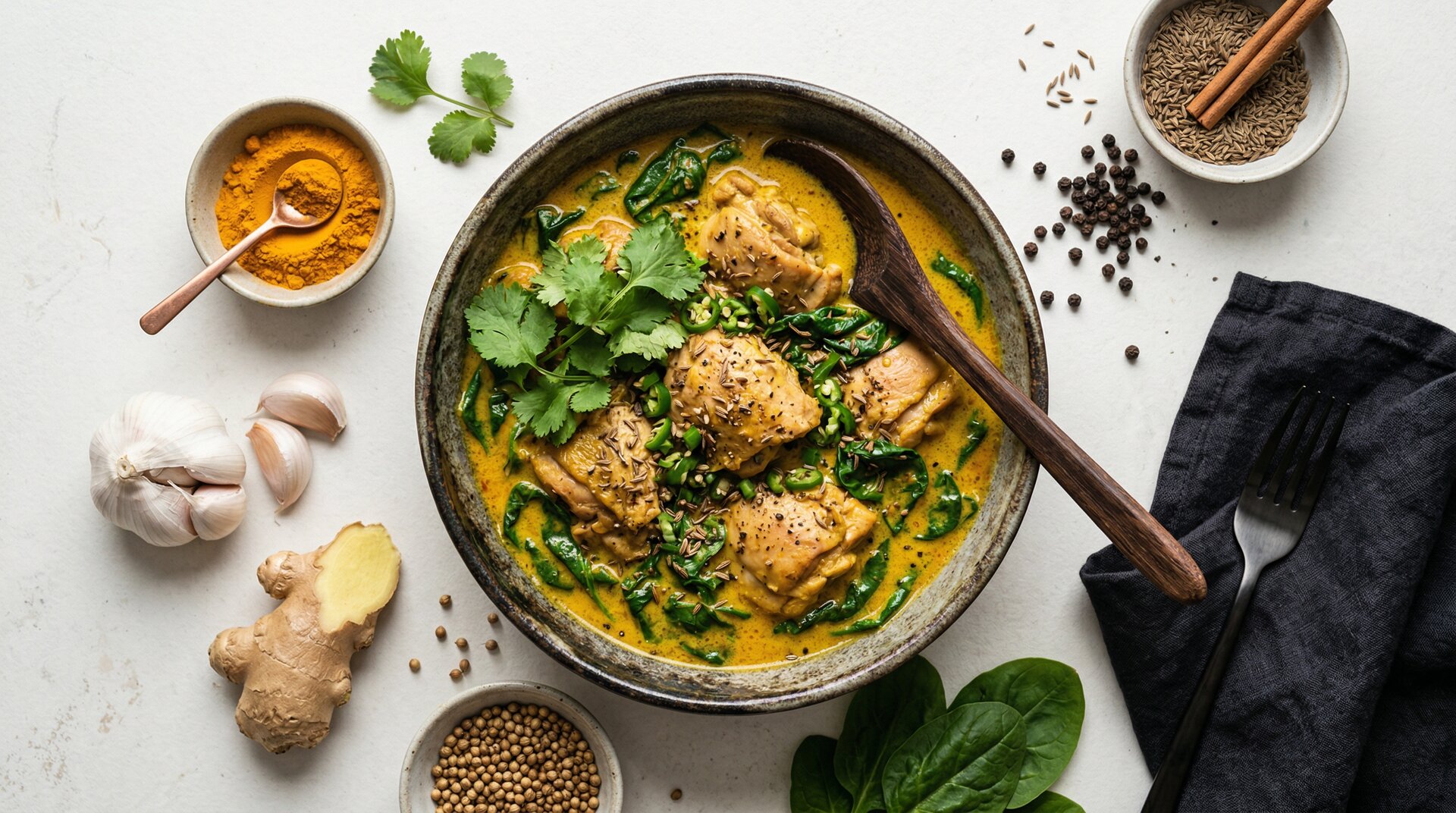 Chicken Spinach Coconut Curry (Keto) 40 min Creamy keto curry with spinach, ginger and warm spices 465 kcal 32g protein 4 synergies
  In the Kitchen
Storage
Location:Pantry
Shelf life:2 jaar (hele zaden)
Powder loses aroma quickly; preferably buy whole seeds and grind them just before use.
Preparation
Dry-roast the seeds in a pan until fragrant; do not let them burn, because they become extremely bitter. Then grind them finely or soak them before use.
Substitutes
Smart preparation
1Soak fenugreek seeds overnight before use to soften their bitterness.
Why?
Soaking softens the seeds and helps them cook more evenly in curries and stews.
2Briefly toast fenugreek seeds in a dry pan until fragrant.
3Use fenugreek sparingly: too much quickly gives a bitter aftertaste.
Caution / Warnings
Fenugreek is very safe, but there are scientific considerations:
Pregnancy Severe
High supplemental doses are discouraged during pregnancy because studies and traditional sources associate them with uterine contractions.
Advice:
Normal kitchen amounts as a seasoning differ from supplements; always discuss supplement use during pregnancy with a healthcare professional.
Traditional use
Ayurveda
Methi in South Asian cuisines
Fenugreek, known as methi, has been used for centuries in South Asian dishes. The leaves add a herbal, green bitterness to curries and breads, while the seeds bring depth to spice blends, lentils and vegetable dishes.
Islamic tradition
Culinary and historical Middle Eastern traditions
In Middle Eastern food cultures, fenugreek was historically used as a food addition in warm preparations, breads, drinks and spice blends. Its seed-like bitterness and maple-like aroma made it recognizable in both everyday cooking and festive dishes.
Summary
Fenugreek is the seed with that recognizable maple syrup and curry aroma. It gives curries, lentil dishes and stews a bittersweet, nutty depth. Because of its fibre, plant protein and minerals, it is interesting in a varied eating pattern, although it is usually used in small amounts.