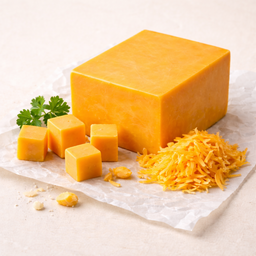
Cheddar
Sharp English hard cheese
What is this ingredient?
Cheddar is a hard cheese from Cheddar, England, made through the cheddaring process: curd is stacked in layers and turned (about 1.5 hours), allowing whey to drain and the texture to become more compact. Aging ranges from mild (3 months) to extra mature or vintage (18-24+ months); longer aging gives a sharper, more savory flavor through proteolysis, where protein breaks down into peptides and amino acids. Cheddar contains plenty of calcium (about 720 mg/100 g), phosphorus (512 mg/100 g) and protein (25 g/100 g). Vitamin K2 can also develop during aging (about 5-10 µg/100 g), while grass-fed cheddar generally contains more CLA, omega-3 and yellow carotenoids. After 6+ months of aging, lactose is usually very low (<0.1 g/100 g). Watch the sodium content (600-700 mg/100 g) and tyramine, especially if you are personally sensitive to strongly aged cheeses. Use cheddar mainly for its full flavor, melting quality and nutritional value in small portions.
How does it taste?
Sharp and full-flavored with a slightly nutty, earthy bite.
Pairs well with:
Pairs well with applemustardonionbeer and walnuts.
Did you know...?
- Cheddar is named after the village of Cheddar in Somerset, England, where it has been made since the 12th century.
- The orange color of cheddar usually does not come from the milk but from added annatto coloring.
Nutritional Value & Energy
Per 100g
Cheddar provides energy thanks to natural nutrients .
Per 100g
Minerals
Vitamins
Omega-3 fatty acids
More nutrients
B-Vitamins
Trace Minerals
What's in a serving?
1 serving
Cheddar naturally contains calcium (721 mg per 100 g).
Cheddar naturally contains selenium (13.9 mcg per 100 g).
Cheddar naturally contains vitamin A (1002 mcg per 100 g).
Cheddar naturally contains vitamin B12 (0.83 mcg per 100 g).
Cheddar naturally contains zinc (3.11 mg per 100 g).
Cheddar naturally contains iodine (50 mcg per 100 g).
% of daily reference intake (DRI)
EU-approved nutrition claims
This ingredient contains nutrients for which EFSA-authorized health claims exist (at nutrient level, not ingredient-specific).
Approved health claims (EU)
Vitamin_b12 EU 432/2012
Vitamin B12 contributes to the normal function of the immune system
Contains 0.83mcg/100g (threshold: ≥0.375mcg/100g)
Vitamin_b12 EU 432/2012
Vitamin B12 contributes to the reduction of tiredness and fatigue
Contains 0.83mcg/100g (threshold: ≥0.375mcg/100g)
Vitamin_b12 EU 432/2012
Vitamin B12 contributes to the normal functioning of the nervous system
Contains 0.83mcg/100g (threshold: ≥0.375mcg/100g)
Zinc EU 432/2012
Zinc contributes to the normal function of the immune system
Contains 3.11mg/100g (threshold: ≥1.5mg/100g)
Zinc EU 432/2012
Zinc contributes to the maintenance of normal skin
Contains 3.11mg/100g (threshold: ≥1.5mg/100g)
Calcium EU 432/2012
Calcium is needed for the maintenance of normal bones
Contains 721mg/100g (threshold: ≥120mg/100g)
Vitamin_a EU 432/2012
Vitamin A contributes to the normal function of the immune system
Contains 1002mcg/100g (threshold: ≥120mcg/100g)
Vitamin_a EU 432/2012
Vitamin A contributes to the maintenance of normal skin
Contains 1002mcg/100g (threshold: ≥120mcg/100g)
Vitamin_a EU 432/2012
Vitamin A contributes to the maintenance of normal mucous membranes
Contains 1002mcg/100g (threshold: ≥120mcg/100g)
Vitamin_a EU 432/2012
Vitamin A contributes to the maintenance of normal vision
Contains 1002mcg/100g (threshold: ≥120mcg/100g)
Vitamin_a EU 432/2012
Vitamin A contributes to normal iron metabolism
Contains 1002mcg/100g (threshold: ≥120mcg/100g)
Vitamin_a EU 432/2012
Vitamin A has a role in the process of cell specialisation
Contains 1002mcg/100g (threshold: ≥120mcg/100g)
Vitamin_b12 EU 432/2012
Vitamin B12 contributes to normal energy-yielding metabolism
Contains 0.83mcg/100g (threshold: ≥0.375mcg/100g)
Vitamin_b12 EU 432/2012
Vitamin B12 contributes to normal homocysteine metabolism
Contains 0.83mcg/100g (threshold: ≥0.375mcg/100g)
Vitamin_b12 EU 432/2012
Vitamin B12 contributes to normal psychological function
Contains 0.83mcg/100g (threshold: ≥0.375mcg/100g)
Vitamin_b12 EU 432/2012
Vitamin B12 contributes to normal red blood cell formation
Contains 0.83mcg/100g (threshold: ≥0.375mcg/100g)
Vitamin_b12 EU 432/2012
Vitamin B12 has a role in the process of cell division
Contains 0.83mcg/100g (threshold: ≥0.375mcg/100g)
Calcium EU 432/2012
Calcium is needed for the maintenance of normal teeth
Contains 721mg/100g (threshold: ≥120mg/100g)
Calcium EU 432/2012
Calcium contributes to normal blood clotting
Contains 721mg/100g (threshold: ≥120mg/100g)
Calcium EU 432/2012
Calcium contributes to normal energy-yielding metabolism
Contains 721mg/100g (threshold: ≥120mg/100g)
Calcium EU 432/2012
Calcium contributes to normal muscle function
Contains 721mg/100g (threshold: ≥120mg/100g)
Calcium EU 432/2012
Calcium contributes to normal neurotransmission
Contains 721mg/100g (threshold: ≥120mg/100g)
Calcium EU 432/2012
Calcium contributes to the normal function of digestive enzymes
Contains 721mg/100g (threshold: ≥120mg/100g)
Calcium EU 432/2012
Calcium has a role in the process of cell division and specialisation
Contains 721mg/100g (threshold: ≥120mg/100g)
Zinc EU 432/2012
Zinc contributes to normal acid-base metabolism
Contains 3.11mg/100g (threshold: ≥1.5mg/100g)
Zinc EU 432/2012
Zinc contributes to normal carbohydrate metabolism
Contains 3.11mg/100g (threshold: ≥1.5mg/100g)
Zinc EU 432/2012
Zinc contributes to normal cognitive function
Contains 3.11mg/100g (threshold: ≥1.5mg/100g)
Zinc EU 432/2012
Zinc contributes to normal DNA synthesis
Contains 3.11mg/100g (threshold: ≥1.5mg/100g)
Zinc EU 432/2012
Zinc contributes to normal fertility and reproduction
Contains 3.11mg/100g (threshold: ≥1.5mg/100g)
Zinc EU 432/2012
Zinc contributes to normal macronutrient metabolism
Contains 3.11mg/100g (threshold: ≥1.5mg/100g)
Zinc EU 432/2012
Zinc contributes to normal metabolism of fatty acids
Contains 3.11mg/100g (threshold: ≥1.5mg/100g)
Zinc EU 432/2012
Zinc contributes to normal metabolism of vitamin A
Contains 3.11mg/100g (threshold: ≥1.5mg/100g)
Zinc EU 432/2012
Zinc contributes to normal protein synthesis
Contains 3.11mg/100g (threshold: ≥1.5mg/100g)
Zinc EU 432/2012
Zinc contributes to the maintenance of normal bones
Contains 3.11mg/100g (threshold: ≥1.5mg/100g)
Zinc EU 432/2012
Zinc contributes to the maintenance of normal hair
Contains 3.11mg/100g (threshold: ≥1.5mg/100g)
Zinc EU 432/2012
Zinc contributes to the maintenance of normal nails
Contains 3.11mg/100g (threshold: ≥1.5mg/100g)
Zinc EU 432/2012
Zinc contributes to the maintenance of normal testosterone levels in the blood
Contains 3.11mg/100g (threshold: ≥1.5mg/100g)
Zinc EU 432/2012
Zinc contributes to the maintenance of normal vision
Contains 3.11mg/100g (threshold: ≥1.5mg/100g)
Zinc EU 432/2012
Zinc contributes to the protection of cells from oxidative stress
Contains 3.11mg/100g (threshold: ≥1.5mg/100g)
Zinc EU 432/2012
Zinc has a role in the process of cell division
Contains 3.11mg/100g (threshold: ≥1.5mg/100g)
Selenium EU 432/2012
Selenium contributes to the maintenance of normal hair
Contains 13.9mcg/100g (threshold: ≥8.25mcg/100g)
Selenium EU 432/2012
Selenium contributes to the maintenance of normal nails
Contains 13.9mcg/100g (threshold: ≥8.25mcg/100g)
Selenium EU 432/2012
Selenium contributes to the normal function of the immune system
Contains 13.9mcg/100g (threshold: ≥8.25mcg/100g)
Selenium EU 432/2012
Selenium contributes to normal thyroid function
Contains 13.9mcg/100g (threshold: ≥8.25mcg/100g)
Selenium EU 432/2012
Selenium contributes to normal spermatogenesis
Contains 13.9mcg/100g (threshold: ≥8.25mcg/100g)
Selenium EU 432/2012
Selenium contributes to the protection of cells from oxidative stress
Contains 13.9mcg/100g (threshold: ≥8.25mcg/100g)
Iodine EU 432/2012
Iodine contributes to normal cognitive function
Contains 50mcg/100g (threshold: ≥22.5mcg/100g)
Iodine EU 432/2012
Iodine contributes to normal energy-yielding metabolism
Contains 50mcg/100g (threshold: ≥22.5mcg/100g)
Iodine EU 432/2012
Iodine contributes to normal functioning of the nervous system
Contains 50mcg/100g (threshold: ≥22.5mcg/100g)
Iodine EU 432/2012
Iodine contributes to the maintenance of normal skin
Contains 50mcg/100g (threshold: ≥22.5mcg/100g)
Iodine EU 432/2012
Iodine contributes to the normal production of thyroid hormones and normal thyroid function
Contains 50mcg/100g (threshold: ≥22.5mcg/100g)
Iodine EU 432/2012
Iodine contributes to the normal growth of children
Contains 50mcg/100g (threshold: ≥22.5mcg/100g)
Comparison
vsmelk
Cheddar contains about 6× more calcium per 100 g than milk.
What's being researched?
Cheddar and calcium bioavailability
The calcium bioavailability of hard cheeses like cheddar is studied in nutrition research on dairy and mineral intake. Studies describe that calcium from cheese can be well absorbed and is comparable in that respect to calcium from milk.
Supported by: [1] Radavelli-Bagatini S (2014) , [2] Maresz K (2015)
Good Combinations (Synergy)
Combine cheddar smartly to enhance the effect:
Cheddar  Apple
Apple Calcium from cheddar + quercetin from apple for heart and bones
Technical: Cheddar contains 720mg calcium per 100g and vitamin K2 (menaquinone) from the aging process. K2 directs calcium to bones and away from blood vessels. Apple provides quercetin (4-13mg), a flavonoid that relaxes blood vessels via nitric oxide (NO) production. Two independent biochemical pathways.
What does this mean for you? Snack on cheddar with apple slices — a classic combo that's also scientifically sound. Calcium contributes to the maintenance of normal bones (EFSA), and quercetin is a bioactive polyphenol.
Cheddar 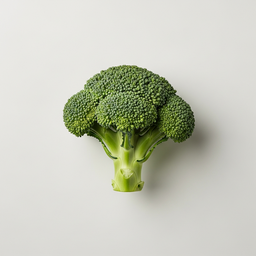 Broccoli
 Cheddar calcium + broccoli vitamin K for bone metabolism
Technical: Cheddar is an excellent source of calcium (720mg/100g) and contains vitamin K2 (menaquinone). Broccoli provides vitamin K1 (phylloquinone) and vitamin C. Vitamin K1 activates osteocalcin that directs calcium to bones, while K2 prevents calcium from depositing in blood vessels.
What does this mean for you? Broccoli-cheddar soup is a smart combination — calcium contributes to the maintenance of normal bones (EFSA), and vitamin K from broccoli helps with calcium metabolism.
Cheddar 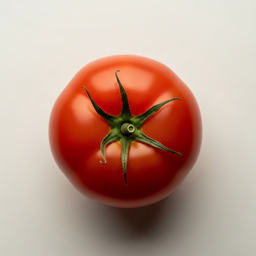 Tomato
 Cheddar fat increases lycopene absorption from tomato by 4x
Technical: Cheddar contains 33g fat per 100g (highest of all hard cheeses) that dissolves lycopene from tomato (3-7mg/100g). Lycopene is a carotenoid with the strongest singlet oxygen quenching capacity (2x stronger than beta-carotene). Without fat only 10-15% is absorbed; with fat this rises to 40-60% (4x improvement). Cooking tomatoes breaks down cell walls for better lycopene release. Cheddar's calcium (720mg/100g) does NOT interfere with lycopene.
What does this mean for you? Cheddar tomato soup, grilled cheese with tomato or cheddar on pizza — all classics are scientifically smart. The cheddar fat ensures you absorb 4x more lycopene.
Recipes with Cheddar
Discover delicious recipes featuring cheddar:
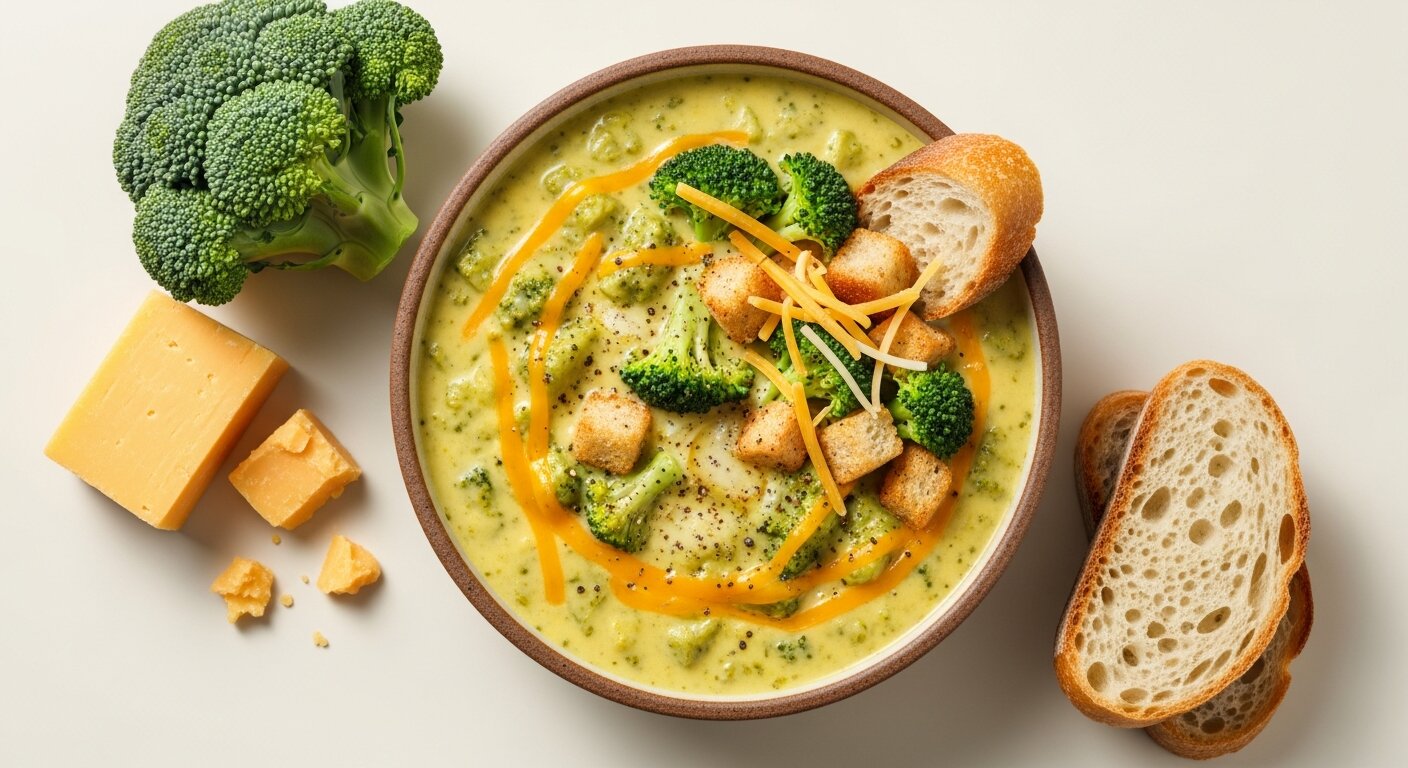 Broccoli Cheddar Soup 40 min Creamy soup with broccoli, aged cheddar and a hint of nutmeg
  430 kcal
  20g protein 2 synergies
 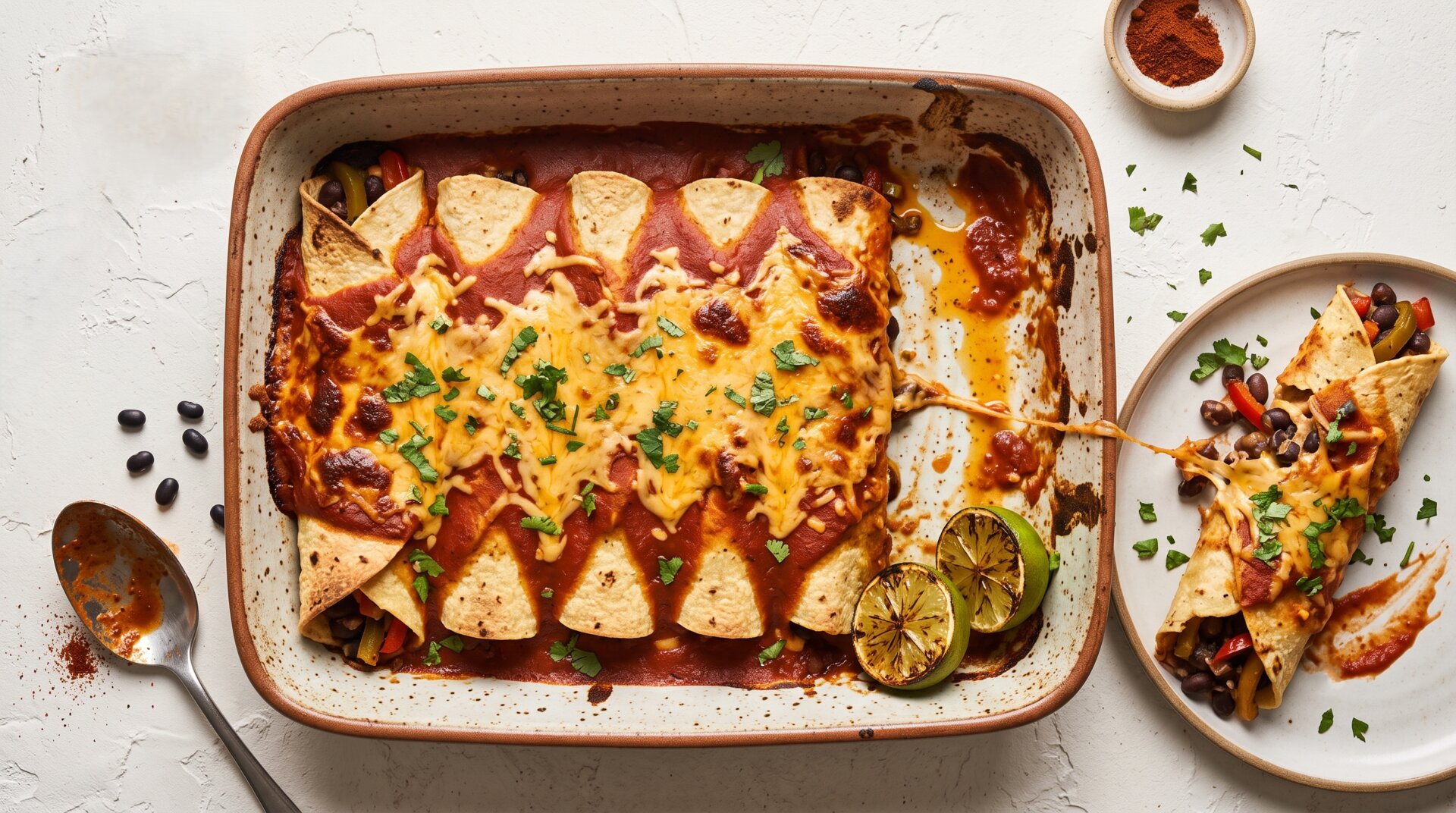 Mexican Enchiladas with Black Beans 60 min Filled corn tortillas with black beans, bell pepper, spiced tomato sauce and cheddar 465 kcal 21g protein 3 synergies
  In the Kitchen
Storage
Location:Refrigerator
Substitutes
Smart preparation
1Grate cheddar cold; at room temperature it sticks to the grater more easily.
2Melt cheddar over low heat to get a smooth sauce.
Why?
High heat makes cheddar clump and turn greasy more quickly.
3Bring cheddar to room temperature for a cheese board.
Why?
At room temperature, the flavor comes out best.
Caution / Warnings
Cheddar is very safe, but there are scientific considerations:
High sodium content Moderate
Cheddar contains 621 mg sodium per 100 g. A 30 g portion provides about 186 mg sodium.
Advice:
On a sodium-restricted diet or with personal medical guidance around heart, kidney or fluid balance: keep the portion small (20-30 g) or choose a lower-sodium version (<300 mg/100 g). Pair with potassium-rich, unsalted ingredients such as vegetables or potato, and follow personal advice from your doctor or dietitian if unsure.
Tyramine & personal sensitivity Moderate
Long-aged cheddar can contain tyramine (about 50-200 mg/kg), a compound formed through bacterial conversion of tyrosine during aging. The amount usually increases as cheese ages longer.
Advice:
Use extra caution if you know strongly aged cheeses can trigger headache symptoms for you or if you use MAO inhibitors. In that case, discuss aged cheese with your doctor or pharmacist. If appropriate, start with a small amount (10-20 g); mild cheddar (<6 months) generally contains less tyramine than extra mature or vintage cheddar.
High calorie content Mild
Cheddar contains 403 kcal per 100 g, with about 33 g fat and 21 g saturated fat. A 30 g portion provides about 121 kcal.
Advice:
If you watch your energy intake, use cheddar mainly as a flavor enhancer (20-30 g) rather than as the main ingredient. Grating it yourself often helps with portion control because a small amount gives a lot of flavor. Pair with fiber-rich ingredients such as whole grain crackers, vegetables or apple.
Summary
Cheddar is a hard, aged English cheese with plenty of calcium (721 mg/100 g), protein (about 25 g/100 g) and a small amount of vitamin K2 that can develop during aging. Calcium is needed for the maintenance of normal bones and teeth; zinc, selenium, iodine, vitamin A and vitamin B12 contribute to several normal body functions according to EU-authorized nutrient claims. Choose a longer-aged version (12+ months) for a sharper flavor and usually very low lactose (<0.1 g/100 g). Grass-fed cheddar generally contains more CLA, omega-3 and beta-carotene, which contributes to its yellow to orange color. Note: cheddar is energy-dense and relatively high in sodium (621 mg/100 g) and tyramine, which can matter with personal sensitivity or certain medication. Use 20-30 g as a flavor enhancer or 30-50 g as a small snack with apple, nuts or whole grain crackers.