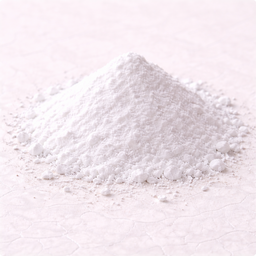
Baking Powder
The Leavening Agent
What is this ingredient?
Baking powder consists of sodium bicarbonate (baking soda), an acid (usually cream of tartar or sodium aluminum sulfate) and a drying agent (starch). Upon contact with moisture and heat, CO2 gas is formed causing the dough to rise. Baking powder is self-activating, unlike baking soda which needs an acidic ingredient in the recipe.
How does it taste?
Slightly mineral and salty; flavor dissipates when heated.
Pairs well with:
Pairs well with flourbuttereggsmilk and sugar in baked goods.
Did you know...?
- Baking powder was invented in 1856 by British chemist Alfred Bird.
- Baking powder contains both a base (baking soda) and an acid, making it self-rising.
Nutritional Value & Energy
Per 100g
Baking Powder provides energy thanks to natural nutrients .
Per 100g
Minerals
Vitamins
Omega-3 fatty acids
More nutrients
Trace Minerals
What's in a serving?
1 serving
Baking Powder naturally contains calcium (5876 mg per 100 g).
% of daily reference intake (DRI)
EU-approved nutrition claims
This ingredient contains nutrients for which EFSA-authorized health claims exist (at nutrient level, not ingredient-specific).
Approved health claims (EU)
Calcium EU 432/2012
Calcium is needed for the maintenance of normal bones
Contains 5876mg/100g (threshold: ≥120mg/100g)
Calcium EU 432/2012
Calcium is needed for the maintenance of normal teeth
Contains 5876mg/100g (threshold: ≥120mg/100g)
Calcium EU 432/2012
Calcium contributes to normal blood clotting
Contains 5876mg/100g (threshold: ≥120mg/100g)
Calcium EU 432/2012
Calcium contributes to normal energy-yielding metabolism
Contains 5876mg/100g (threshold: ≥120mg/100g)
Calcium EU 432/2012
Calcium contributes to normal muscle function
Contains 5876mg/100g (threshold: ≥120mg/100g)
Calcium EU 432/2012
Calcium contributes to normal neurotransmission
Contains 5876mg/100g (threshold: ≥120mg/100g)
Calcium EU 432/2012
Calcium contributes to the normal function of digestive enzymes
Contains 5876mg/100g (threshold: ≥120mg/100g)
Calcium EU 432/2012
Calcium has a role in the process of cell division and specialisation
Contains 5876mg/100g (threshold: ≥120mg/100g)
Comparison
vsmelk
Baking Powder contains about 47× more calcium per 100g than milk.
What's being researched?
Sodium content in baking powder
Sodium content of baking powder is studied in the context of sodium reduction in foods. Sodium-free alternatives are being developed.
Supported by: [1] Jachimowicz-Rogowska K (2023)
Good Combinations (Synergy)
Combine baking powder smartly to enhance the effect:
Baking Powder  Lemon
Lemon Acid-gas reaction for airy pastry without excessive sodium
Technical: Baking powder contains sodium bicarbonate (NaHCO₃) that produces CO₂ gas upon contact with acid for leavening. Citric acid from lemon reacts more efficiently than internal acids in baking powder, requiring less baking powder (less sodium load). 1g citric acid + 1.5g baking powder creates the same rise as 3g baking powder alone. Less sodium = better for blood pressure.
What does this mean for you? Add lemon juice to batter with baking powder for fluffier pancakes or muffins with less baking powder. You reduce sodium intake without sacrificing fluffiness.
Baking Powder  Yogurt
 Lactic acid-bicarbonate reaction for probiotic-friendly baking
Technical: Yogurt contains lactic acid (pH 4.0-4.5) that reacts with sodium bicarbonate in baking powder to produce CO₂ + sodium lactate. This reaction is more gradual than with stronger acids, giving a finer crumb structure. Yogurt also adds protein (10g/100g) and moisture to batter. The lactic acid strengthens gluten networks for better texture. Sodium lactate (reaction product) is a natural preservative.
What does this mean for you? Replace (part of) milk with yogurt in your baking recipe with baking powder. The batter rises better, the texture becomes softer and you get extra protein. This is the secret behind soft scones and muffins.
Recipes with Baking Powder
Discover delicious recipes featuring baking powder:
 Almond Cinnamon Cookies (Keto) 22 min Crispy cookies with almond flour and warm cinnamon, ready in 20 minutes
  120 kcal
  4g protein 1 synergies
  Almond Cinnamon Cookies with Coconut 22 min Crisp at the edges, soft inside 165 kcal 5g protein 2 synergies
 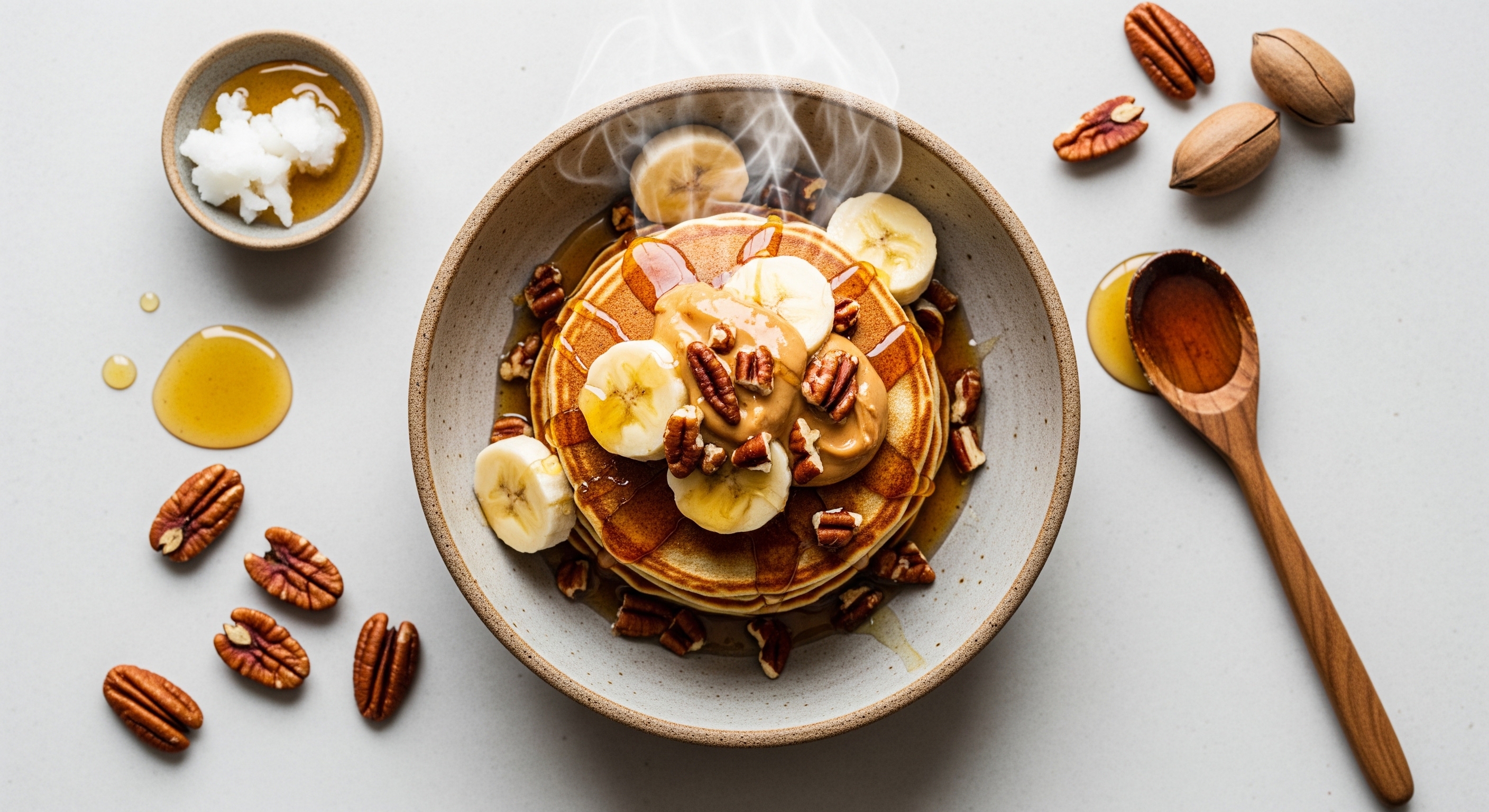 Banana Pancakes with Nuts & Honey 25 min Fluffy oat pancakes with crunchy pecan nuts and golden honey 738 kcal 25g protein 2 synergies
 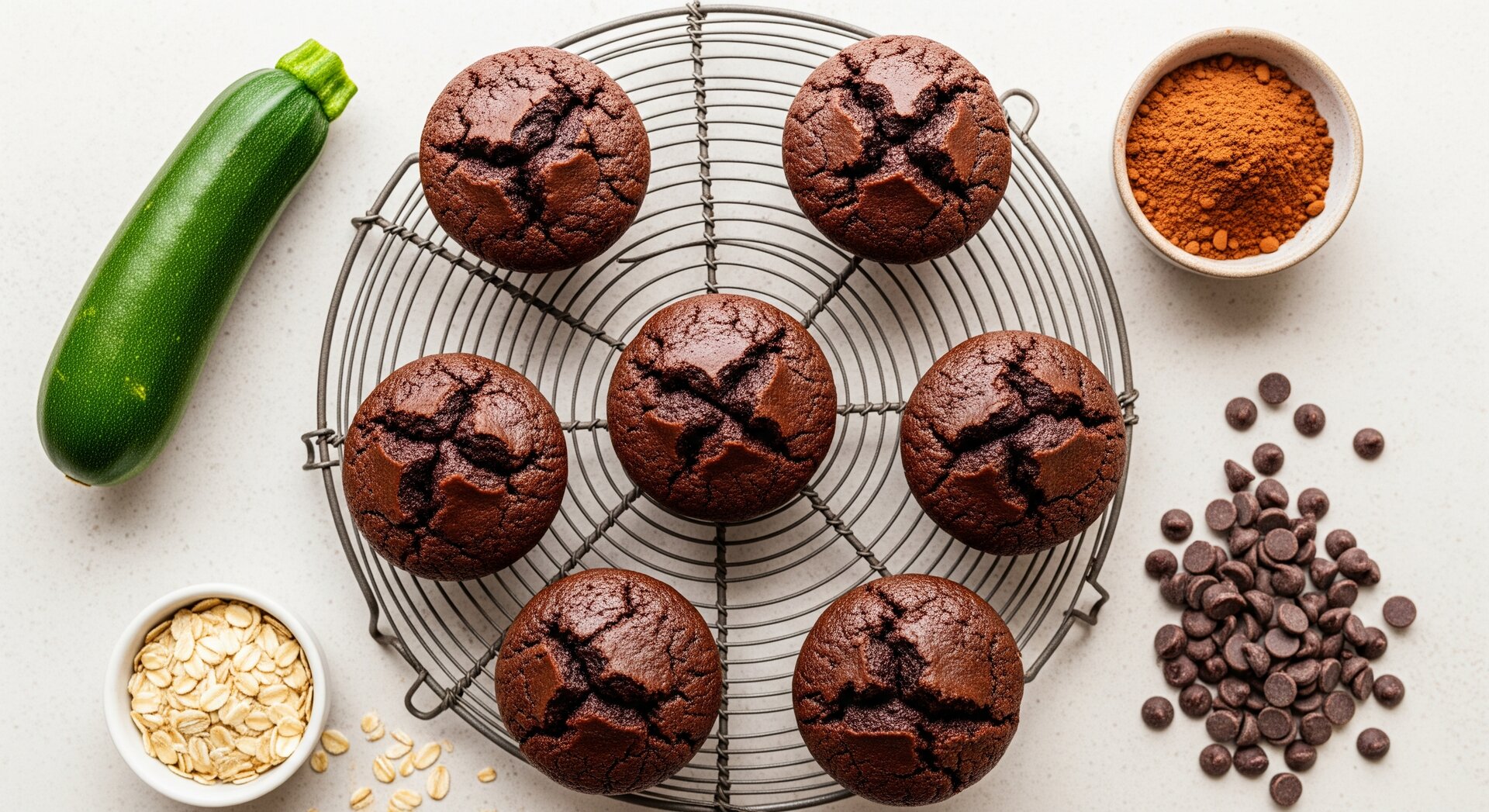 Zucchini Chocolate Muffins 45 min Ultra-moist muffins with hidden vegetable 135 kcal 4g protein 2 synergies
  Egg-Free Keto Waffles with Coconut and Flaxseed 20 min Crispy on the outside, soft on the inside, warm with cinnamon 330 kcal 9g protein 2 synergies
  Baked Apple Donuts 33 min Fluffy oven-baked donuts with grated apple, oats and cinnamon 155 kcal 5g protein 2 synergies
  In the Kitchen
Storage
Location:Pantry
Shelf life:6-12 maanden na openen
Store dry and sealed. Test activity by adding 1 tsp to warm water - should fizz.
Preparation
Use 1-2 teaspoons per 250g flour. Don't overuse - causes bitter taste.
Conversions
Substitutes
Smart preparation
1Sift baking powder with the flour to prevent lumps.
2Test if baking powder is still active: a teaspoon in warm water should bubble.
Why?
Old baking powder loses its leavening power and produces flat baked goods.
3Mix baking powder quickly through the batter and bake immediately.
Why?
The chemical reaction starts on contact with moisture; waiting reduces leavening.
Caution / Warnings
Baking Powder is very safe, but there are scientific considerations:
Sodium-Restricted Diet Mild
Baking powder contains sodium, but amounts in recipes are minimal
Advice:
In normal baking amounts (1-2 tsp per recipe) this is negligible
Summary
Baking powder is a neutral functional ingredient: it gives doughs and batters leavening power and is normally used in small amounts. It is mainly a technical aid for lighter baked goods, not an ingredient chosen to add nutritional value.