- Easy
- 30 min
- 4 serv.
- 4 synergies
- Now at its best: Napa Cabbage
Chinese cabbage salted, rinsed and mixed with a garlic-honey paste, carrot and spring onion. Packed into a glass jar and fermented 3-5 days at room temperature.
Making kimchi is waiting. Not for an oven, not for a timer, but for bacteria doing their work. Active prep time is half an hour: cut cabbage, salt, let stand two hours, rinse, pat dry. Then you make the paste — garlic, honey, optionally red pepper flakes — and massage everything through the limp cabbage leaves, along with carrot strips and spring onion. Press firmly into a glass jar, lid on but not airtight, and wait. Three to five days on the counter. Open daily to release pressure. It bubbles, it scents, and slowly raw cabbage transforms into something complex: sour, spicy, umami, with a depth you cannot force. Store in the fridge after — it keeps for weeks and only gets more interesting.
- 30
- min prep
- 0
- min cook
- 30
- min total
Nutritional Synergies
This recipe combines ingredients that enhance each other:
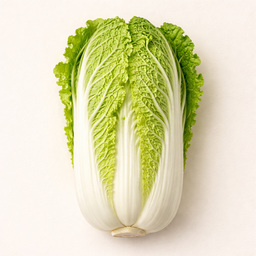 Chinese cabbage
 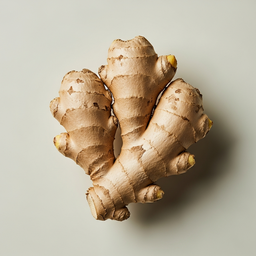 fresh ginger
 Glucosinolates + gingerols: complementary digestive support
Technical: Chinese cabbage contains glucosinolates (sulfur compounds) and 105mg vitamin C per 100g. Ginger's gingerols accelerate gastric emptying by 25% and act as 5-HT3 receptor antagonists. The combination provides both enzymatic support (glucosinolates) and motility promotion (gingerols).
What does this mean for you? Chinese cabbage with ginger (classic in kimchi and Asian soups) is a centuries-old digestive combination. Ginger promotes gastric motility, while Chinese cabbage provides vitamin C.
DigestionAnti-inflammatory
fresh ginger 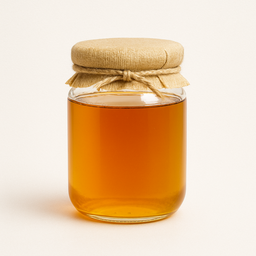 honey
honey Classic combination: warming herbal drink with honey
Technical: Ginger's gingerol modulates COX-2 and has antiemetic action (suppresses nausea via 5-HT3 receptor blockade). Honey's glucose oxidase produces hydrogen peroxide with bioactive action, while honey physically coats and soothes the throat. Together: bioactive modulation + throat protection.
What does this mean for you? Ginger tea with honey is a classic, warming combination. The ginger provides gingerol, the honey a smooth, sweet layer.
Immune System
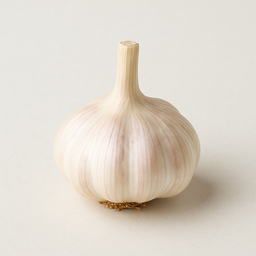 garlic fresh ginger
 Allicin + gingerols: complementary bioactive action
Technical: Garlic's allicin works via thiol enzyme inhibition — effective against gram-positive bacteria (Staphylococcus, Streptococcus). Ginger's gingerols and shogaols influence viral replication and stimulate interferon production. Together they cover both bacterial and viral pathways.
What does this mean for you? Garlic-ginger tea is a classic combination. Garlic works via thiol enzymes, ginger via interferon pathways. Cut both fresh for maximum active compounds — allicin only forms after 10 minutes of air exposure.
Immune System
garlic honey Fermented: allicin + bee defensin in traditional condiment
Technical: Raw garlic contains alliin converted by alliinase to allicin — an organosulfur compound with bioactive properties — when cut. Raw honey contains hydrogen peroxide, bee defensin-1 and methylglyoxal. Fermenting garlic in honey increases bioavailability of S-allylcysteine (SAC), a more stable bioactive metabolite.
What does this mean for you? Submerge raw garlic cloves in raw honey and ferment for 2-4 weeks. You get a traditional condiment with concentrated bioactive compounds — an ancient fermentation technique that increases bioavailability.
Immune System
Ingredients (8)
+6 more ingredientsInstructions
- 1 Cut Chinese cabbage into large pieces. Massage with 60 g salt, let stand 2 hours.
Nutrition per serving
Indicative values per serving.
Timing & Suitability
Shelf life: 2 days in fridge