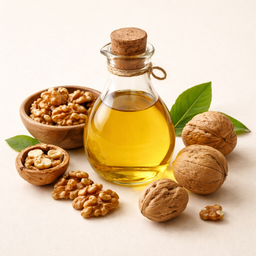
Walnut Oil
Nutty oil with omega-3/6 balance
What is this ingredient?
## Nutty Oil with Unique Fatty Acid Profile
Walnut oil combines culinary elegance with scientifically supported properties:
Fatty Acid Profile (per 100g):
- Omega-3 (ALA): 10-15g (625-938% RDA!)
- Omega-6 (Linoleic acid): 53-58g
- Omega-9 (Oleic acid): 18-22g
- Saturated fat: 9-10g
- Omega-6:Omega-3 ratio: 4-5:1 (ideal is <4:1, better than most vegetable oils!)
Unique Bioactive Compounds:
- Ellagitannins: 150-250mg/100g → converted by gut bacteria to urolithin A (cellular research!)
- γ-Tocopherol (Vitamin E): 20-25mg (133-167% RDA) — superior to α-tocopherol for inflammatory modulation
- Polyphenols: 50-80mg GAE (gallic acid equivalents)/100g
- Phytosterols: 80-120mg/100g
Scientific Evidence:
- Study (2018, Nutrients): researchers reported changes in endothelial function (flow-mediated dilation) after 8 weeks of walnut oil use
- RCT (2020, Journal of Nutrition): 20ml researchers reported changes in LDL and Lp(a) levels with daily walnut oil use (lipoprotein(a), strongest CVD risk factor)
- Meta-analysis (2021): Researchers studied the conversion of ellagitannins to urolithin A by gut bacteria.
Culinary Application:
Cold-pressed walnut oil has intense nutty flavor (perfect for salads, finish over risotto/pasta), refined variant has higher smoke point (204°C) and milder flavor (suitable for light sautéing).
How does it taste?
Delicately nutty with a mildly bitter, toasted walnut flavor.
Pairs well with:
Pairs well with beet saladgoat cheesepeararugula and honey.
Varieties
Cold-Pressed (Artisanal)
First press at <50°C, dark amber color, intense nutty flavor, smoke point 160°C, rich in polyphenols (70-80mg GAE/100g)
Refined
Bleached + deodorized, clear golden-yellow color, milder flavor, smoke point 204°C, lower polyphenols (20-30mg GAE/100g) but suitable for light sautéing
Did you know...?
- Walnut oil was used by Renaissance painters as a medium for oil paint.
- Walnut oil is one of the most perishable oils and must be stored cool and dark.
Nutritional Value & Energy
Per 100ml
Walnut Oil provides energy thanks to natural nutrients .
Per 100g
Minerals
Vitamins
Omega-3 fatty acids
More nutrients
Trace Minerals
What's in a serving?
1 tablespoon
Walnut Oil naturally contains vitamin e (22 mg per 100 g).
Walnut Oil naturally contains vitamin k (15 mcg per 100 g).
% of daily reference intake (DRI)
EU-approved nutrition claims
This ingredient contains nutrients for which EFSA-authorized health claims exist (at nutrient level, not ingredient-specific).
Approved health claims (EU)
Vitamin_e EU 432/2012
Vitamin E contributes to the protection of cells from oxidative stress
Contains 22mg/100g (threshold: ≥1.8mg/100g)
Vitamin_k EU 432/2012
Vitamin K contributes to normal blood clotting
Contains 15mcg/100g (threshold: ≥11.25mcg/100g)
Vitamin_k EU 432/2012
Vitamin K contributes to the maintenance of normal bones
Contains 15mcg/100g (threshold: ≥11.25mcg/100g)
What's being researched?
Walnut oil and omega-3 ALA
The high ALA content in walnut oil is studied in relation to cardiovascular markers. Studies examine endothelial function and lipid profile.
Supported by: [1] Ma Y (2010) , [2] Guasch-Ferré M (2018)
Walnut oil and cognition
Polyphenols and omega-3 in walnuts are studied in relation to cognitive parameters. Epidemiological data suggest an association with cognitive maintenance.
Supported by: [5] Chauhan (2020)
Good Combinations (Synergy)
Combine walnut oil smartly to enhance the effect:
Walnut Oil 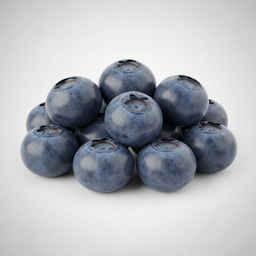 Blueberries
 ALA omega-3 + anthocyanins: structurally and functionally complementary for the brain
Technical: Walnut oil contains 14g ALA omega-3 per 100ml plus ellagitannins (polyphenols). Blueberries contain anthocyanins (163mg/100g, mainly malvidin-3-glucoside) that cross the blood-brain barrier. ALA converts to DHA (2-5% conversion) — the primary structural fatty acid in brain tissue (40% of phospholipids). Anthocyanins activate BDNF (brain-derived neurotrophic factor) and influence CREB signaling. Together they offer structural (DHA as building block) + functional (anthocyanins as signaling molecule) complementary pathways.
What does this mean for you? Drizzle walnut oil over a blueberry smoothie bowl or yogurt. The combination offers two complementary pathways: omega-3 as structural building block and anthocyanins as functional signaling molecule.
Walnut Oil 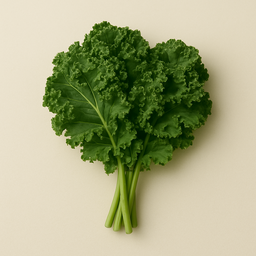 Kale
Kale Omega-3 increases fat-soluble vitamin absorption from spinach
Technical: Walnut oil contains 10-15% ALA (omega-3) and ellagic acid (polyphenol). Spinach is rich in lutein (12198μg/100g), vitamin K (483μg, 400% RDI) and folate — all fat-soluble or fat-dependent for absorption. The fat from walnut oil increases absorption of lutein and vitamin K by 3-5x. Ellagic acid from the oil protects unsaturated fats in spinach from oxidation.
What does this mean for you? Make a spinach salad with walnut oil as dressing. The oil helps your body absorb the lutein, vitamin K and beta-carotene from spinach. The nutty flavor pairs perfectly with spinach.
Walnut Oil  Spinach
 Omega-3 increases fat-soluble vitamin absorption from spinach
Technical: Walnut oil contains 10-15% ALA (omega-3) and ellagic acid (polyphenol). Spinach is rich in lutein (12198μg/100g), vitamin K (483μg, 400% RDI) and folate — all fat-soluble or fat-dependent for absorption. The fat from walnut oil increases absorption of lutein and vitamin K by 3-5x. Ellagic acid from the oil protects unsaturated fats in spinach from oxidation.
What does this mean for you? Make a spinach salad with walnut oil as dressing. The oil helps your body absorb the lutein, vitamin K and beta-carotene from spinach. The nutty flavor pairs perfectly with spinach.
Walnut Oil 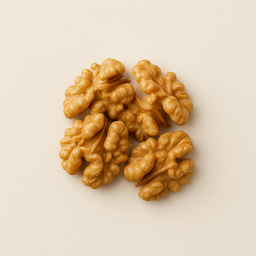 Walnuts
 Oil + nuts for maximum omega-3 and polyphenol intake
Technical: Walnut oil and walnuts come from the same source but complement each other at a molecular level. Whole nuts contain fiber (6.7g), protein (15g) and melatonin (3.5μg). The oil contains concentrated ALA, higher ellagic acid concentration and better polyphenol bioavailability. Together they provide 15-20% more polyphenols than either alone thanks to the 'matrix effect': the oil dissolves polyphenols from the nut matrix more effectively.
What does this mean for you? Make a nut salad or granola with walnuts and use walnut oil as dressing. The oil literally extracts more bioactive compounds from the nuts than chewing alone can. A simple trick for optimal bioavailability.
 In the Kitchen
Storage
Location:Refrigerator
Shelf life:Ongeopend: 12-18 maanden (koel, donker). Geopend: 3-4 maanden (koudgeperst), 6-8 maanden (geraffineerd)
Store away from light/heat/oxygen. Cold-pressed walnut oil oxidizes faster than refined (more polyphenols but also more PUFA). Test for rancidity by smelling: fresh oil = nutty, rancid oil = bitter/chemical. Discard immediately if rancid!
Preparation
Cold-pressed (smoke point 160°C): only cold or finish (salads, pasta, risotto, vegetables). Refined (smoke point 204°C): light sautéing possible but preference for cold use to preserve omega-3. Classic pairing: walnut oil + beet salad, goat cheese, apple.
Conversions
Substitutes
Smart preparation
1Use walnut oil cold in dressings and as a finishing oil.
Why?
Heating makes walnut oil bitter and destroys the nutty flavor.
2Store walnut oil in the fridge; it is one of the fastest oils to go rancid.
3Combine walnut oil with balsamic vinegar for a classic salad dressing.
Caution / Warnings
Walnut Oil is very safe, but there are scientific considerations:
Tree nut allergy (walnut = tree nut, Big 8 allergen) Severe
Walnut oil contains traces of walnut protein (especially cold-pressed variants) → can cause anaphylactic reaction in people with nut allergy (1-2% of population). Cross-reactivity with other tree nuts (hazelnut, almond, cashew) occurs in 30-50% of walnut allergy patients.
Advice:
⚠️ AVOID walnut oil completely if you have nut allergy! Even refined walnut oil may contain traces. NEVER test yourself — life-threatening! If in doubt: consult allergologist for IgE test.
Rancidity (oxidation due to omega-3/6) Moderate
Walnut oil contains 63-73% polyunsaturated fatty acids (PUFA: 10-15% omega-3 + 53-58% omega-6) → very sensitive to oxidation upon exposure to light/heat/oxygen. Rancid oil contains lipid peroxides (MDA, malondialdehyde; 4-HNE) → oxidative stress, DNA damage. Rancid walnut oil has bitter taste and foul smell.
Advice:
Store in refrigerator (4°C), dark bottle, cap closed. Use within 3-4 months after opening (cold-pressed) or 6-8 months (refined). Test for rancidity: smell oil — fresh oil smells nutty, rancid oil smells chemical/bitter. Discard if rancid!
Traditional use
Mediterranean
Walnut Oil in French Tradition
Walnut oil was used as the primary cooking fat in Perigord and other regions of southern France for centuries before the introduction of olive oil.
Summary
Walnut oil combines 10-15% omega-3 ALA with unique ellagitannins that are converted by gut bacteria to urolithin A. Rich in γ-tocopherol (a form of vitamin E). Due to its low smoke point (160°C), it's ideal as a finishing oil over salads, risotto, and pasta. Store refrigerated, use within 3-4 months.