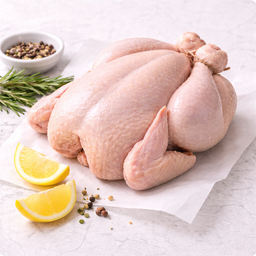
Spring Chicken
Tender whole chicken for broth
What is this ingredient?
Spring chicken (Gallus gallus domesticus) refers to a chicken of about 8-12 weeks old: smaller, more tender and quicker to cook than a mature chicken. The bones, skin and connective tissue release collagen during slow simmering, which turns into gelatin and gives broth body, mouthfeel and a rounded flavor.
## Chicken broth & culinary tradition
Chicken broth is used in many cuisines as a gentle base for soup, rice, sauces and light meals. Rennard et al. (2000) examined chicken soup in vitro and looked at how components from broth relate to neutrophil movement. This makes broth an interesting traditional and culinary topic, not a replacement for medical care.
## Collagen & gelatin
Long cooking of bones and connective tissue makes the broth lightly gelatinous. Gelatin creates a richer texture and contributes to the classic full flavor of homemade broth.
## High-quality protein
Spring chicken meat provides complete protein with essential amino acids, including leucine. That makes it suitable for meals where a tender, light protein source is desired.
How does it taste?
Tender, mild and juicy with a delicate, gentle meat flavor.
Pairs well with:
Pairs well with lemonthymegarlicbutter and tarragon.
Did you know...?
- The chicken is one of the closest living relatives of the Tyrannosaurus rex.
- Chickens were originally domesticated in Southeast Asia and later spread through trade routes.
Nutritional Value & Energy
Per 100g
Spring Chicken provides energy thanks to natural nutrients .
Per 100g
Minerals
Vitamins
Omega-3 fatty acids
More nutrients
B-Vitamins
Trace Minerals
What's in a serving?
1 serving
Spring chicken naturally contains zinc (1.5 mg per 100 g).
Spring chicken naturally contains phosphorus (195 mg per 100 g).
Spring chicken naturally contains selenium (20 mcg per 100 g).
Spring chicken naturally contains vitamin B6 (0.5 mg per 100 g).
Spring chicken naturally contains vitamin B12 (0.5 mcg per 100 g).
% of daily reference intake (DRI)
EU-approved nutrition claims
This ingredient contains nutrients for which EFSA-authorized health claims exist (at nutrient level, not ingredient-specific).
Approved health claims (EU)
Vitamin_b12 EU 432/2012
Vitamin B12 contributes to the normal function of the immune system
Contains 0.5mcg/100g (threshold: ≥0.375mcg/100g)
Vitamin_b12 EU 432/2012
Vitamin B12 contributes to the reduction of tiredness and fatigue
Contains 0.5mcg/100g (threshold: ≥0.375mcg/100g)
Vitamin_b12 EU 432/2012
Vitamin B12 contributes to the normal functioning of the nervous system
Contains 0.5mcg/100g (threshold: ≥0.375mcg/100g)
Zinc EU 432/2012
Zinc contributes to the normal function of the immune system
Contains 1.5mg/100g (threshold: ≥1.5mg/100g)
Zinc EU 432/2012
Zinc contributes to the maintenance of normal skin
Contains 1.5mg/100g (threshold: ≥1.5mg/100g)
Vitamin_b6 EU 432/2012
Vitamin B6 contributes to normal cysteine synthesis
Contains 0.5mg/100g (threshold: ≥0.21mg/100g)
Vitamin_b6 EU 432/2012
Vitamin B6 contributes to normal energy-yielding metabolism
Contains 0.5mg/100g (threshold: ≥0.21mg/100g)
Vitamin_b6 EU 432/2012
Vitamin B6 contributes to normal functioning of the nervous system
Contains 0.5mg/100g (threshold: ≥0.21mg/100g)
Vitamin_b6 EU 432/2012
Vitamin B6 contributes to normal homocysteine metabolism
Contains 0.5mg/100g (threshold: ≥0.21mg/100g)
Vitamin_b6 EU 432/2012
Vitamin B6 contributes to normal protein and glycogen metabolism
Contains 0.5mg/100g (threshold: ≥0.21mg/100g)
Vitamin_b6 EU 432/2012
Vitamin B6 contributes to normal psychological function
Contains 0.5mg/100g (threshold: ≥0.21mg/100g)
Vitamin_b6 EU 432/2012
Vitamin B6 contributes to normal red blood cell formation
Contains 0.5mg/100g (threshold: ≥0.21mg/100g)
Vitamin_b6 EU 432/2012
Vitamin B6 contributes to the normal function of the immune system
Contains 0.5mg/100g (threshold: ≥0.21mg/100g)
Vitamin_b6 EU 432/2012
Vitamin B6 contributes to the regulation of hormonal activity
Contains 0.5mg/100g (threshold: ≥0.21mg/100g)
Vitamin_b6 EU 432/2012
Vitamin B6 contributes to the reduction of tiredness and fatigue
Contains 0.5mg/100g (threshold: ≥0.21mg/100g)
Vitamin_b12 EU 432/2012
Vitamin B12 contributes to normal energy-yielding metabolism
Contains 0.5mcg/100g (threshold: ≥0.375mcg/100g)
Vitamin_b12 EU 432/2012
Vitamin B12 contributes to normal homocysteine metabolism
Contains 0.5mcg/100g (threshold: ≥0.375mcg/100g)
Vitamin_b12 EU 432/2012
Vitamin B12 contributes to normal psychological function
Contains 0.5mcg/100g (threshold: ≥0.375mcg/100g)
Vitamin_b12 EU 432/2012
Vitamin B12 contributes to normal red blood cell formation
Contains 0.5mcg/100g (threshold: ≥0.375mcg/100g)
Vitamin_b12 EU 432/2012
Vitamin B12 has a role in the process of cell division
Contains 0.5mcg/100g (threshold: ≥0.375mcg/100g)
Phosphorus EU 432/2012
Phosphorus contributes to normal energy-yielding metabolism
Contains 195mg/100g (threshold: ≥105mg/100g)
Phosphorus EU 432/2012
Phosphorus contributes to the normal function of cell membranes
Contains 195mg/100g (threshold: ≥105mg/100g)
Phosphorus EU 432/2012
Phosphorus contributes to the maintenance of normal bones
Contains 195mg/100g (threshold: ≥105mg/100g)
Phosphorus EU 432/2012
Phosphorus contributes to the maintenance of normal teeth
Contains 195mg/100g (threshold: ≥105mg/100g)
Zinc EU 432/2012
Zinc contributes to normal acid-base metabolism
Contains 1.5mg/100g (threshold: ≥1.5mg/100g)
Zinc EU 432/2012
Zinc contributes to normal carbohydrate metabolism
Contains 1.5mg/100g (threshold: ≥1.5mg/100g)
Zinc EU 432/2012
Zinc contributes to normal cognitive function
Contains 1.5mg/100g (threshold: ≥1.5mg/100g)
Zinc EU 432/2012
Zinc contributes to normal DNA synthesis
Contains 1.5mg/100g (threshold: ≥1.5mg/100g)
Zinc EU 432/2012
Zinc contributes to normal fertility and reproduction
Contains 1.5mg/100g (threshold: ≥1.5mg/100g)
Zinc EU 432/2012
Zinc contributes to normal macronutrient metabolism
Contains 1.5mg/100g (threshold: ≥1.5mg/100g)
Zinc EU 432/2012
Zinc contributes to normal metabolism of fatty acids
Contains 1.5mg/100g (threshold: ≥1.5mg/100g)
Zinc EU 432/2012
Zinc contributes to normal metabolism of vitamin A
Contains 1.5mg/100g (threshold: ≥1.5mg/100g)
Zinc EU 432/2012
Zinc contributes to normal protein synthesis
Contains 1.5mg/100g (threshold: ≥1.5mg/100g)
Zinc EU 432/2012
Zinc contributes to the maintenance of normal bones
Contains 1.5mg/100g (threshold: ≥1.5mg/100g)
Zinc EU 432/2012
Zinc contributes to the maintenance of normal hair
Contains 1.5mg/100g (threshold: ≥1.5mg/100g)
Zinc EU 432/2012
Zinc contributes to the maintenance of normal nails
Contains 1.5mg/100g (threshold: ≥1.5mg/100g)
Zinc EU 432/2012
Zinc contributes to the maintenance of normal testosterone levels in the blood
Contains 1.5mg/100g (threshold: ≥1.5mg/100g)
Zinc EU 432/2012
Zinc contributes to the maintenance of normal vision
Contains 1.5mg/100g (threshold: ≥1.5mg/100g)
Zinc EU 432/2012
Zinc contributes to the protection of cells from oxidative stress
Contains 1.5mg/100g (threshold: ≥1.5mg/100g)
Zinc EU 432/2012
Zinc has a role in the process of cell division
Contains 1.5mg/100g (threshold: ≥1.5mg/100g)
Selenium EU 432/2012
Selenium contributes to the maintenance of normal hair
Contains 20mcg/100g (threshold: ≥8.25mcg/100g)
Selenium EU 432/2012
Selenium contributes to the maintenance of normal nails
Contains 20mcg/100g (threshold: ≥8.25mcg/100g)
Selenium EU 432/2012
Selenium contributes to the normal function of the immune system
Contains 20mcg/100g (threshold: ≥8.25mcg/100g)
Selenium EU 432/2012
Selenium contributes to normal thyroid function
Contains 20mcg/100g (threshold: ≥8.25mcg/100g)
Selenium EU 432/2012
Selenium contributes to normal spermatogenesis
Contains 20mcg/100g (threshold: ≥8.25mcg/100g)
Selenium EU 432/2012
Selenium contributes to the protection of cells from oxidative stress
Contains 20mcg/100g (threshold: ≥8.25mcg/100g)
What's being researched?
Chicken as a lean protein source
Chicken as a lean protein source is studied in the context of body composition and weight management. Studies often compare dietary patterns with poultry, red meat and other protein sources.
Supported by: [2] Phillips SM (2011)
Good Combinations (Synergy)
Combine spring chicken smartly to enhance the effect:
Spring Chicken 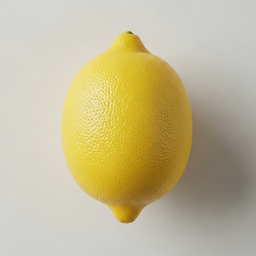 Lemon
Lemon Protein + vitamin C for collagen synthesis and iron absorption
Technical: Young chicken contains 20g protein per 100g with rich amino acid profile (proline, glycine — collagen precursors) and 1.0mg heme iron (6% RDI). Lemon provides 53mg vitamin C per 100g activating prolyl-hydroxylase and lysyl-hydroxylase enzymes — essential for collagen triple-helix stabilization. Vitamin C also increases non-heme iron absorption by 300-400% via Fe³⁺→Fe²⁺ reduction. Citric acid tenderizes meat by denaturing myofibrils.
What does this mean for you? Marinate or drizzle young chicken with lemon juice. The vitamin C activates collagen formation from the chicken amino acids. Vitamin C contributes to normal collagen formation for the normal function of skin (EFSA-approved). The lemon also improves your iron absorption.
Spring Chicken 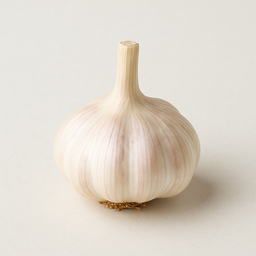 Garlic
 Protein + allicin for complementary bioactive routes
Technical: Young chicken provides 20g high-quality protein per 100g (PDCAAS 0.95) with glutamine (4.7g/100g protein) that nourishes gut epithelium and immune cells. Garlic contains allicin (3-6mg per clove) that increases NK cell activity by 35-50%. Allicin also stimulates glutathione S-transferase for phase-II biotransformation. Protein from chicken provides building blocks for immunoglobulin synthesis, while garlic activates complementary bioactive routes.
What does this mean for you? Cook young chicken with 4-5 garlic cloves — classic garlic chicken soup is a time-tested combination. The glutamine from chicken supports your gut barrier, the allicin activates your natural killer cells.
Spring Chicken 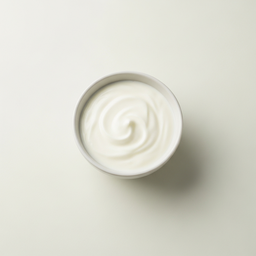 Yogurt
 Acids tenderize meat and improve iron absorption
Technical: Citric acid from lemon and lactic acid from yogurt break down collagen fibers in chicken meat (denaturation) and lower pH, tenderizing the meat. This process also increases surface proteins available for Maillard reactions when heated, creating more flavor. Vitamin C from lemon improves heme iron absorption from chicken.
What does this mean for you? Marinate chicken at least 2 hours in yogurt with lemon juice — this is the basis of tandoori and shawarma. The acids make the meat more tender, flavorful and nutritious. Note: don't marinate longer than 24 hours, or the meat becomes mushy.
Recipes with Spring Chicken
Discover delicious recipes featuring spring chicken:
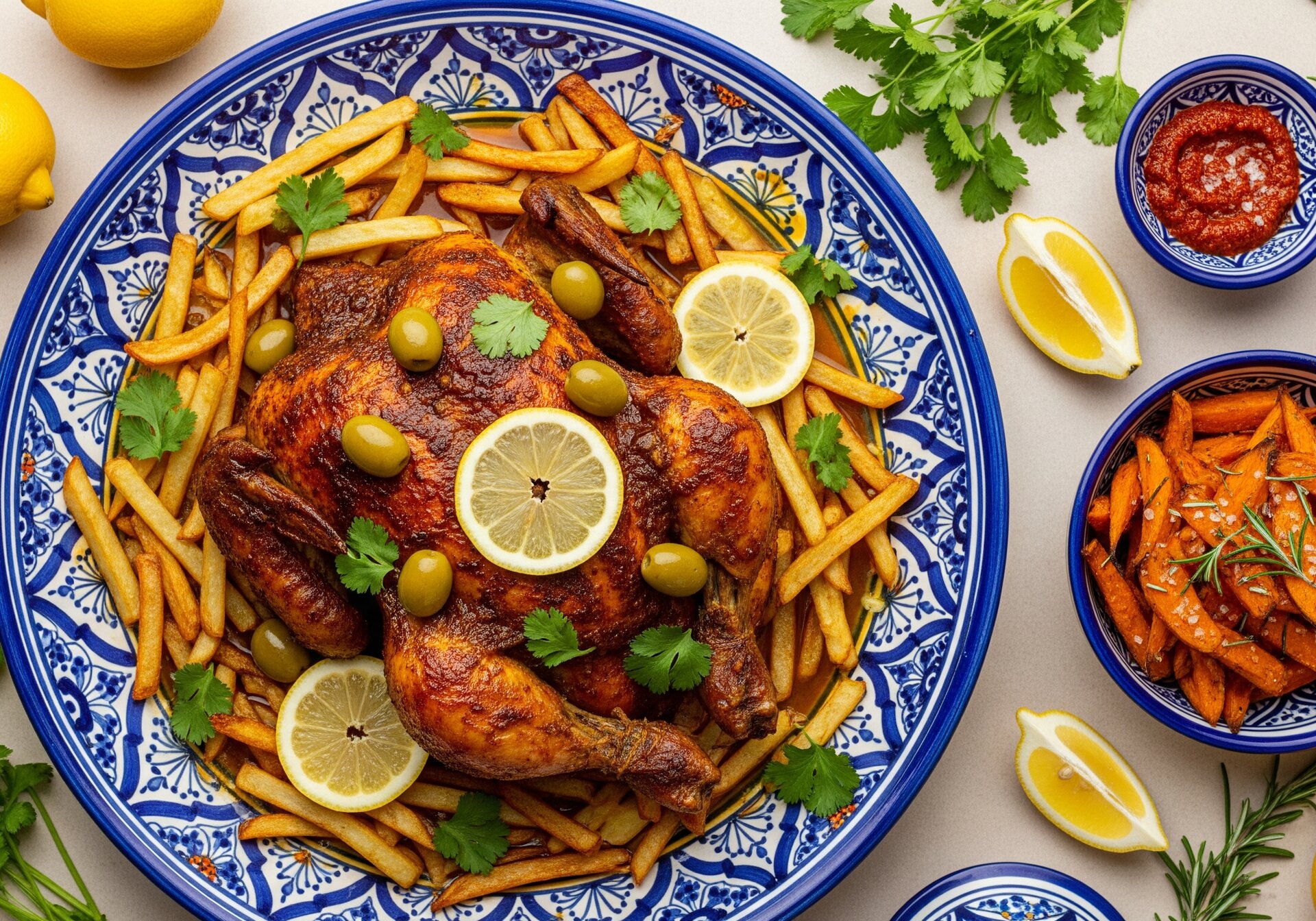 Djaaj Mhammer - Whole Rotisserie Chicken 130 min Golden roasted with green olives and preserved lemon
  520 kcal
  38g protein 2 synergies
 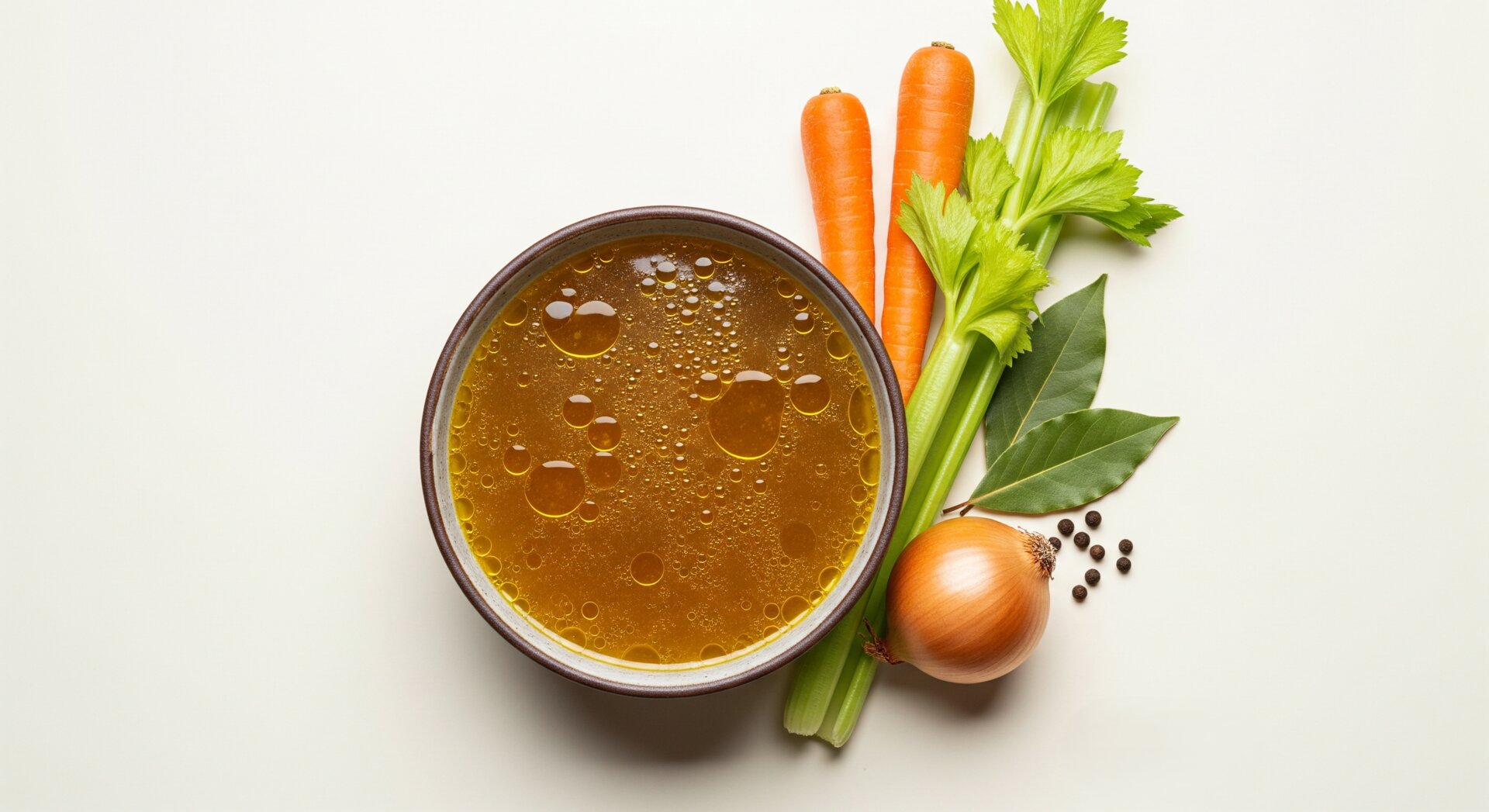 Homemade Chicken Stock 375 min Rich stock from real chicken bones 15 kcal 2.5g protein 1 synergies
  In the Kitchen
Storage
Location:Refrigerator
Shelf life:2-3 dagen vers, 6 maanden ingevroren
Preparation
Roast the whole chicken in the oven or gently simmer it for 2-3 hours for broth. Use the bones, skin and connective tissue for more flavor and a lightly gelatinous texture.
Conversions
Substitutes
Smart preparation
1Pat a whole chicken dry and season generously with salt before roasting.
Why?
A dry surface and salt give a crispier skin.
2Roast a young chicken at 200°C, about 45 minutes per kilogram.
3Let the chicken rest for 15 minutes after roasting before carving.
Why?
Resting lets the juices redistribute for juicier meat.
Caution / Warnings
Spring Chicken is very safe, but there are scientific considerations:
Gout Moderate
Contains purines that may increase uric acid levels.
Advice:
Limit intake with gout or elevated uric acid. Consult a doctor about suitable protein sources.
Cardiovascular disease Mild
Contains cholesterol and saturated fat.
Advice:
Choose lean cuts, remove the skin if desired and limit portion size. Pair with vegetables and fiber-rich sides.
Summary
Spring chicken is ideal for broth, soup and gentle stews. Bones and connective tissue release gelatin during long simmering, giving the broth more body and flavor. The meat provides complete protein and pairs well with lemon, thyme, garlic and root vegetables.