Pumpkin Seeds
Crunchy seeds with zinc, magnesium and iron
What is this ingredient?
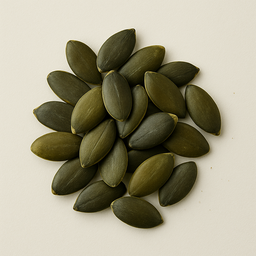
Pumpkin seeds, also known as pepitas, are the edible seeds of pumpkins from the Cucurbita genus. They have a mild, nutty flavour and are often used raw, roasted or pressed into dark green pumpkin seed oil. Per 100 g, they provide plenty of protein, unsaturated fats and minerals such as zinc, magnesium, iron, potassium, selenium and folate. Zinc contributes to the normal function of the immune system and magnesium contributes to normal functioning of the nervous system; these claims apply to the nutrients, not specifically to pumpkin seeds as an ingredient. In the kitchen, they add crunch to salads, soups, granola, bread, pesto and Central American sauces such as pipián.
How does it taste?
Mildly nutty and slightly earthy with a crunchy, green note.
Pairs well with:
Pair with pumpkincinnamonsaladhoneyfetaoatmeal and roasted vegetables.
Did you know...?
- In Mexico, pumpkin seeds have been eaten for over 7,000 years and are called pepitas.
- Styria in Austria is famous for its dark green pumpkin seed oil, a regionally protected product.
Nutritional Value & Energy
Per 100g
Pumpkin Seeds provides energy thanks to natural nutrients , buffered by fiber.
Per 100g
Minerals
Vitamins
Omega-3 fatty acids
More nutrients
B-Vitamins
Trace Minerals
What's in a serving?
1 handful
Pumpkin seeds naturally contain iron (8.82 mg per 100 g).
Pumpkin seeds naturally contain magnesium (151 mg per 100 g).
Pumpkin seeds naturally contain potassium (809 mg per 100 g).
Pumpkin seeds naturally contain vitamin e (10 mg per 100 g).
Pumpkin seeds naturally contain zinc (7.81 mg per 100 g).
Pumpkin seeds naturally contain selenium (9.4 mcg per 100 g).
Pumpkin seeds naturally contain folate (58 mcg per 100 g).
% of daily reference intake (DRI)
EU-approved nutrition claims
This ingredient contains nutrients for which EFSA-authorized health claims exist (at nutrient level, not ingredient-specific).
Approved health claims (EU)
Magnesium EU 432/2012
Magnesium contributes to normal muscle function
Contains 151mg/100g (threshold: ≥56.25mg/100g)
Magnesium EU 432/2012
Magnesium contributes to the reduction of tiredness and fatigue
Contains 151mg/100g (threshold: ≥56.25mg/100g)
Magnesium EU 432/2012
Magnesium contributes to normal functioning of the nervous system
Contains 151mg/100g (threshold: ≥56.25mg/100g)
Zinc EU 432/2012
Zinc contributes to the normal function of the immune system
Contains 7.81mg/100g (threshold: ≥1.5mg/100g)
Zinc EU 432/2012
Zinc contributes to the maintenance of normal skin
Contains 7.81mg/100g (threshold: ≥1.5mg/100g)
Iron EU 432/2012
Iron contributes to normal energy-yielding metabolism
Contains 8.82mg/100g (threshold: ≥2.1mg/100g)
Iron EU 432/2012
Iron contributes to the reduction of tiredness and fatigue
Contains 8.82mg/100g (threshold: ≥2.1mg/100g)
Potassium EU 432/2012
Potassium contributes to the maintenance of normal blood pressure
Contains 809mg/100g (threshold: ≥300mg/100g)
Folate EU 432/2012
Folate contributes to normal blood formation
Contains 58mcg/100g (threshold: ≥30mcg/100g)
Folate EU 432/2012
Folate contributes to normal amino acid synthesis
Contains 58mcg/100g (threshold: ≥30mcg/100g)
Folate EU 432/2012
Folate contributes to normal homocysteine metabolism
Contains 58mcg/100g (threshold: ≥30mcg/100g)
Folate EU 432/2012
Folate contributes to normal psychological function
Contains 58mcg/100g (threshold: ≥30mcg/100g)
Folate EU 432/2012
Folate contributes to the normal function of the immune system
Contains 58mcg/100g (threshold: ≥30mcg/100g)
Folate EU 432/2012
Folate has a role in the process of cell division
Contains 58mcg/100g (threshold: ≥30mcg/100g)
Folate EU 432/2012
Folate contributes to maternal tissue growth during pregnancy
Contains 58mcg/100g (threshold: ≥30mcg/100g)
Vitamin_e EU 432/2012
Vitamin E contributes to the protection of cells from oxidative stress
Contains 10mg/100g (threshold: ≥1.8mg/100g)
Magnesium EU 432/2012
Magnesium contributes to normal energy-yielding metabolism
Contains 151mg/100g (threshold: ≥56.25mg/100g)
Magnesium EU 432/2012
Magnesium contributes to electrolyte balance
Contains 151mg/100g (threshold: ≥56.25mg/100g)
Magnesium EU 432/2012
Magnesium contributes to normal protein synthesis
Contains 151mg/100g (threshold: ≥56.25mg/100g)
Magnesium EU 432/2012
Magnesium contributes to normal psychological function
Contains 151mg/100g (threshold: ≥56.25mg/100g)
Magnesium EU 432/2012
Magnesium contributes to the maintenance of normal bones
Contains 151mg/100g (threshold: ≥56.25mg/100g)
Magnesium EU 432/2012
Magnesium contributes to the maintenance of normal teeth
Contains 151mg/100g (threshold: ≥56.25mg/100g)
Magnesium EU 432/2012
Magnesium has a role in the process of cell division
Contains 151mg/100g (threshold: ≥56.25mg/100g)
Iron EU 432/2012
Iron contributes to normal cognitive function
Contains 8.82mg/100g (threshold: ≥2.1mg/100g)
Iron EU 432/2012
Iron contributes to normal formation of red blood cells and haemoglobin
Contains 8.82mg/100g (threshold: ≥2.1mg/100g)
Iron EU 432/2012
Iron contributes to normal oxygen transport in the body
Contains 8.82mg/100g (threshold: ≥2.1mg/100g)
Iron EU 432/2012
Iron contributes to the normal function of the immune system
Contains 8.82mg/100g (threshold: ≥2.1mg/100g)
Iron EU 432/2012
Iron has a role in the process of cell division
Contains 8.82mg/100g (threshold: ≥2.1mg/100g)
Zinc EU 432/2012
Zinc contributes to normal acid-base metabolism
Contains 7.81mg/100g (threshold: ≥1.5mg/100g)
Zinc EU 432/2012
Zinc contributes to normal carbohydrate metabolism
Contains 7.81mg/100g (threshold: ≥1.5mg/100g)
Zinc EU 432/2012
Zinc contributes to normal cognitive function
Contains 7.81mg/100g (threshold: ≥1.5mg/100g)
Zinc EU 432/2012
Zinc contributes to normal DNA synthesis
Contains 7.81mg/100g (threshold: ≥1.5mg/100g)
Zinc EU 432/2012
Zinc contributes to normal fertility and reproduction
Contains 7.81mg/100g (threshold: ≥1.5mg/100g)
Zinc EU 432/2012
Zinc contributes to normal macronutrient metabolism
Contains 7.81mg/100g (threshold: ≥1.5mg/100g)
Zinc EU 432/2012
Zinc contributes to normal metabolism of fatty acids
Contains 7.81mg/100g (threshold: ≥1.5mg/100g)
Zinc EU 432/2012
Zinc contributes to normal metabolism of vitamin A
Contains 7.81mg/100g (threshold: ≥1.5mg/100g)
Zinc EU 432/2012
Zinc contributes to normal protein synthesis
Contains 7.81mg/100g (threshold: ≥1.5mg/100g)
Zinc EU 432/2012
Zinc contributes to the maintenance of normal bones
Contains 7.81mg/100g (threshold: ≥1.5mg/100g)
Zinc EU 432/2012
Zinc contributes to the maintenance of normal hair
Contains 7.81mg/100g (threshold: ≥1.5mg/100g)
Zinc EU 432/2012
Zinc contributes to the maintenance of normal nails
Contains 7.81mg/100g (threshold: ≥1.5mg/100g)
Zinc EU 432/2012
Zinc contributes to the maintenance of normal testosterone levels in the blood
Contains 7.81mg/100g (threshold: ≥1.5mg/100g)
Zinc EU 432/2012
Zinc contributes to the maintenance of normal vision
Contains 7.81mg/100g (threshold: ≥1.5mg/100g)
Zinc EU 432/2012
Zinc contributes to the protection of cells from oxidative stress
Contains 7.81mg/100g (threshold: ≥1.5mg/100g)
Zinc EU 432/2012
Zinc has a role in the process of cell division
Contains 7.81mg/100g (threshold: ≥1.5mg/100g)
Selenium EU 432/2012
Selenium contributes to the maintenance of normal hair
Contains 9.4mcg/100g (threshold: ≥8.25mcg/100g)
Selenium EU 432/2012
Selenium contributes to the maintenance of normal nails
Contains 9.4mcg/100g (threshold: ≥8.25mcg/100g)
Selenium EU 432/2012
Selenium contributes to the normal function of the immune system
Contains 9.4mcg/100g (threshold: ≥8.25mcg/100g)
Selenium EU 432/2012
Selenium contributes to normal thyroid function
Contains 9.4mcg/100g (threshold: ≥8.25mcg/100g)
Selenium EU 432/2012
Selenium contributes to normal spermatogenesis
Contains 9.4mcg/100g (threshold: ≥8.25mcg/100g)
Selenium EU 432/2012
Selenium contributes to the protection of cells from oxidative stress
Contains 9.4mcg/100g (threshold: ≥8.25mcg/100g)
Potassium EU 432/2012
Potassium contributes to normal functioning of the nervous system
Contains 809mg/100g (threshold: ≥300mg/100g)
Potassium EU 432/2012
Potassium contributes to normal muscle function
Contains 809mg/100g (threshold: ≥300mg/100g)
Comparison
vsspinazie
Pumpkin seeds contain about 3× more iron per 100 g than spinach.
vsbanaan
Pumpkin seeds contain about 2× more potassium per 100 g than banana.
What's being researched?
Pumpkin seeds and phytosterols
Pumpkin seeds contain phytosterols, including beta-sitosterol. This topic is mainly studied through composition analyses, animal studies and in-vitro research; more human research is needed before drawing direct conclusions.
Supported by: [5] Phillips (2005)
Pumpkin seeds, magnesium and zinc
Pumpkin seeds are considered a dietary source of magnesium and zinc. Zinc contributes to the normal function of the immune system, and magnesium contributes to normal energy-yielding metabolism; these claims apply at nutrient level.
Supported by: [3] Prasad (1998) , [4] Abbasi (2012)
Good Combinations (Synergy)
Combine pumpkin seeds smartly to enhance the effect:
Pumpkin Seeds 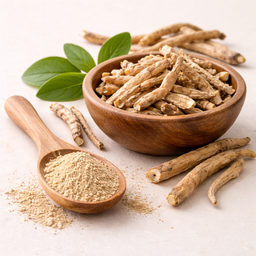 Ashwagandha
 Magnesium from pumpkin seeds + withanolides from ashwagandha
Ashwagandha reduces cortisol (PMID: 23439798), magnesium from pumpkin seeds supports GABA function (PMID: 21199787)
Technical: Ashwagandha contains withanolides that are studied in relation to neuroendocrine signaling pathways. Pumpkin seeds are very rich in magnesium (550mg/100g), which activates GABA receptors and calms the nervous system. Together they work through different pathways for relaxation.
What does this mean for you? Combine ashwagandha with a handful of pumpkin seeds as evening snack. The magnesium supports your night rest, the ashwagandha works complementarily via a different pathway.
Pumpkin Seeds 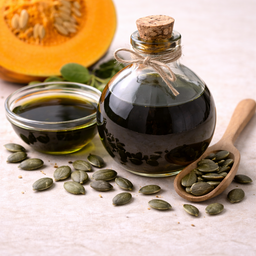 Pumpkin Seed Oil
 Oil + seeds: delta-7-sterols and zinc via complementary matrices
Technical: Pumpkin seed oil and pumpkin seeds come from the same source but have complementary benefits. Seeds contain zinc (7.6mg, 51% RDI), fiber and protein. The oil contains concentrated delta-7-sterols and cucurbitin (amino acid) with higher bioavailability of fat-soluble compounds. Delta-7-sterols influence 5-alpha-reductase (involved in DHT metabolism).
What does this mean for you? Use Styrian pumpkin seed oil (dark green, nutty) as dressing on salads and garnish with pumpkin seeds. This Austrian tradition combines minerals from the seeds with concentrated sterols from the oil.
Pumpkin Seeds 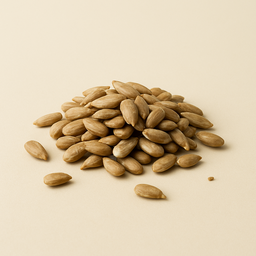 Sunflower Seeds
 Broad mineral spectrum: zinc + magnesium + selenium
Technical: Sunflower seeds provide selenium (53μg/100g, 96% RDA) and vitamin E (35mg). Pumpkin seeds add zinc (7.6mg, 51% RDA). Sesame seeds bring calcium (975mg, 97% RDA). Together these three seed types cover a broad mineral spectrum: selenium for thyroid and immune system, zinc for cell division and hormones, calcium for bones and muscle contraction.
What does this mean for you? Make a seed mix of sunflower seeds, pumpkin seeds and sesame seeds. Sprinkle over salads, yogurt or bread. Three seeds that together fill multiple mineral gaps.
Recipes with Pumpkin Seeds
Discover delicious recipes featuring pumpkin seeds:
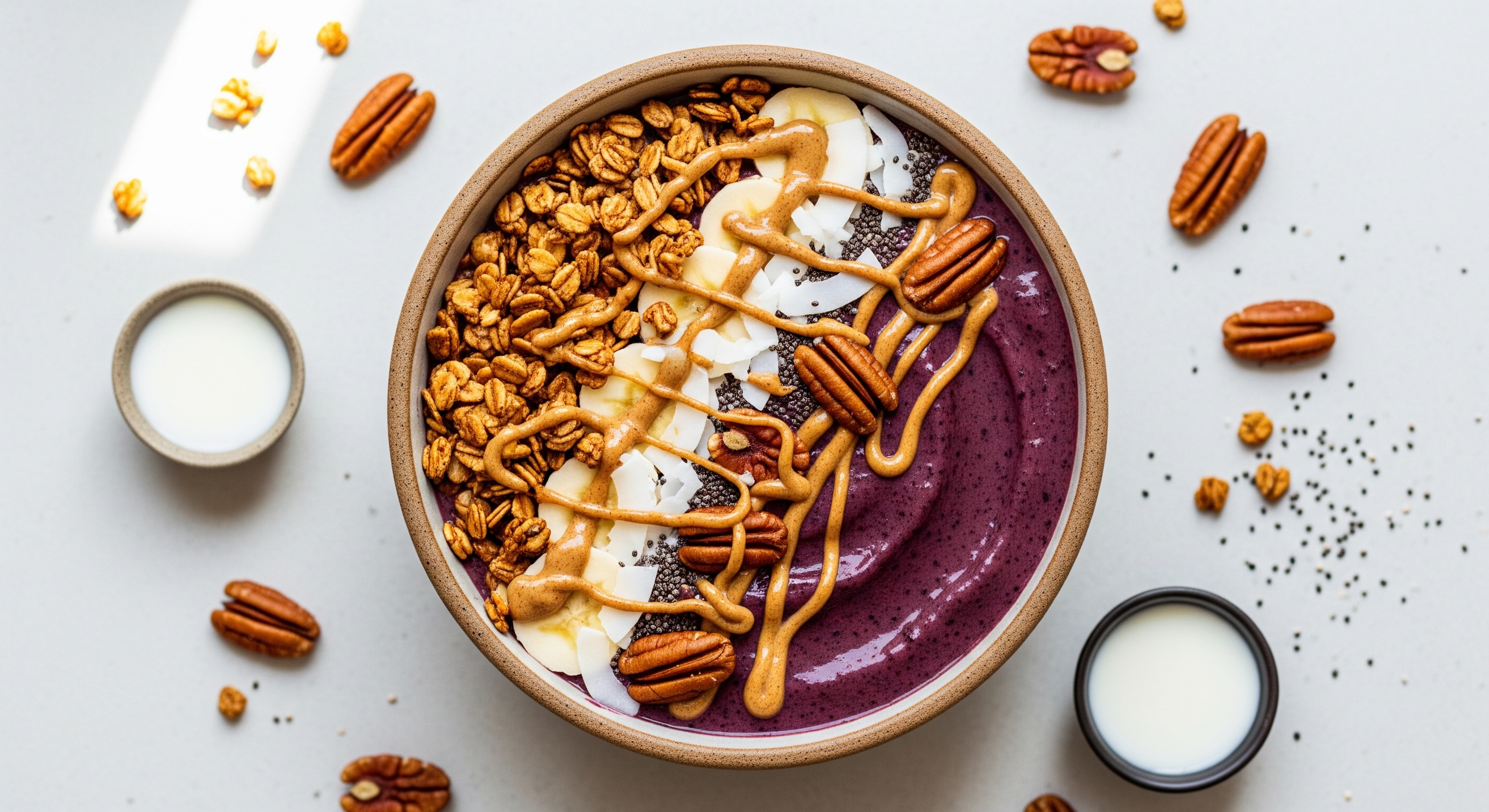 Açaí Bowl with Nuts, Granola & Coconut Base 10 min Colorful bowl with açaí, nuts and seeds on a creamy coconut-banana base
  745 kcal
  16g protein 2 synergies
 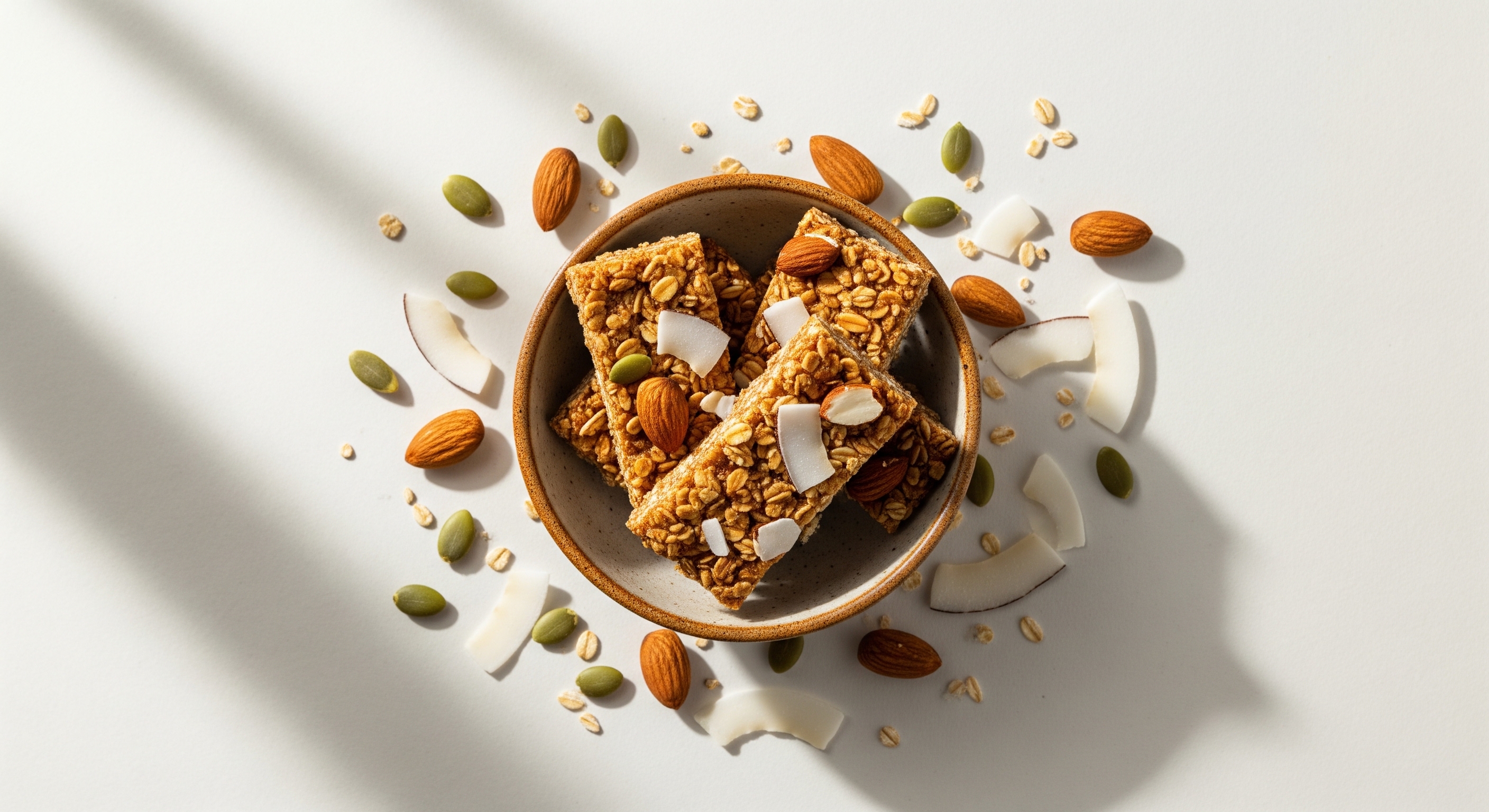 Almond-Coconut Granola Bars 40 min Crunchy, nutty and sweet from honey and apricots 412 kcal 10g protein 2 synergies
 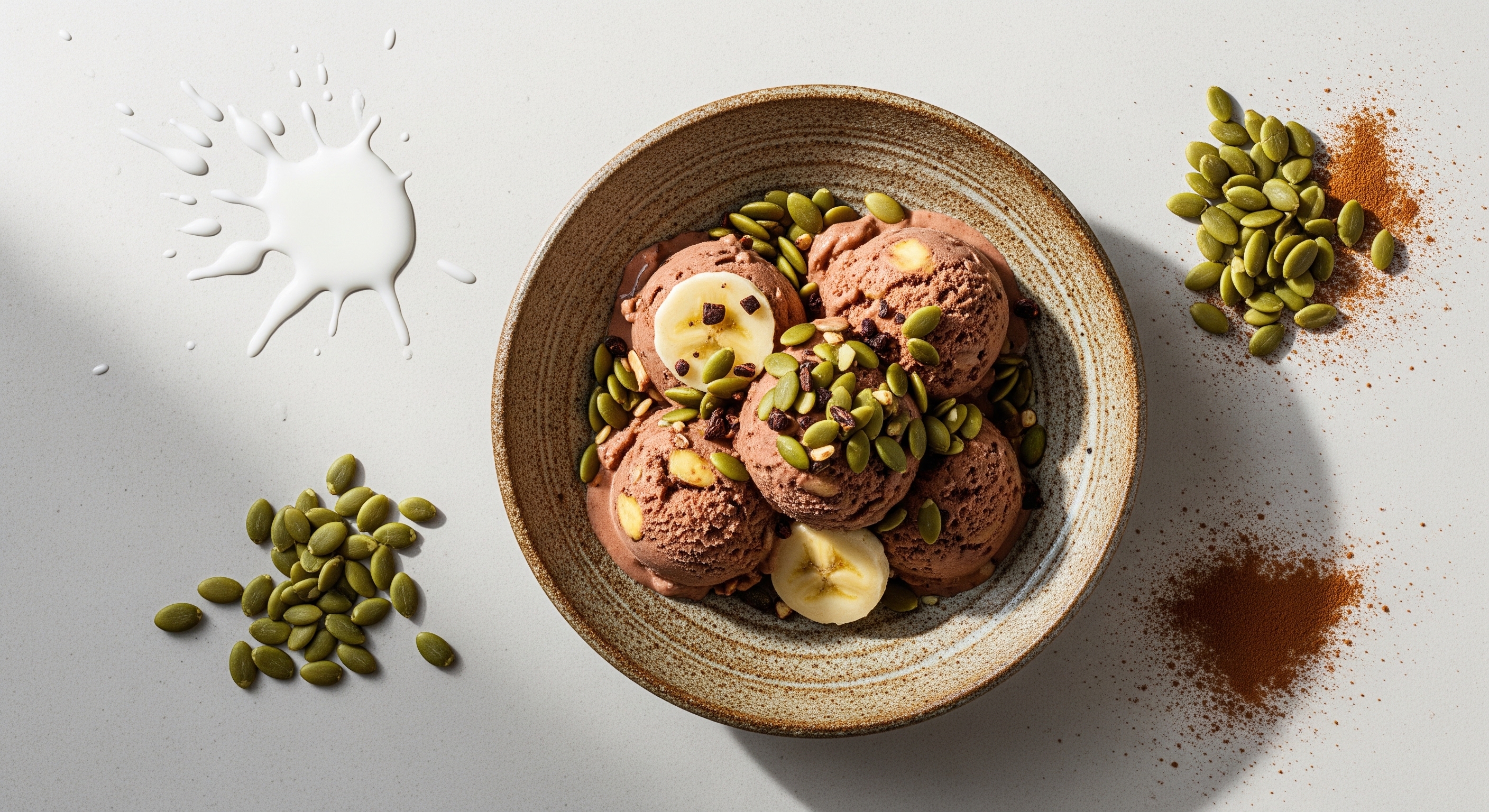 Banana Cacao Ice Cream with Pumpkin Seeds 10 min Creamy paleo ice cream with cacao, coconut milk and roasted pumpkin seeds 195 kcal 5g protein 1 synergies
 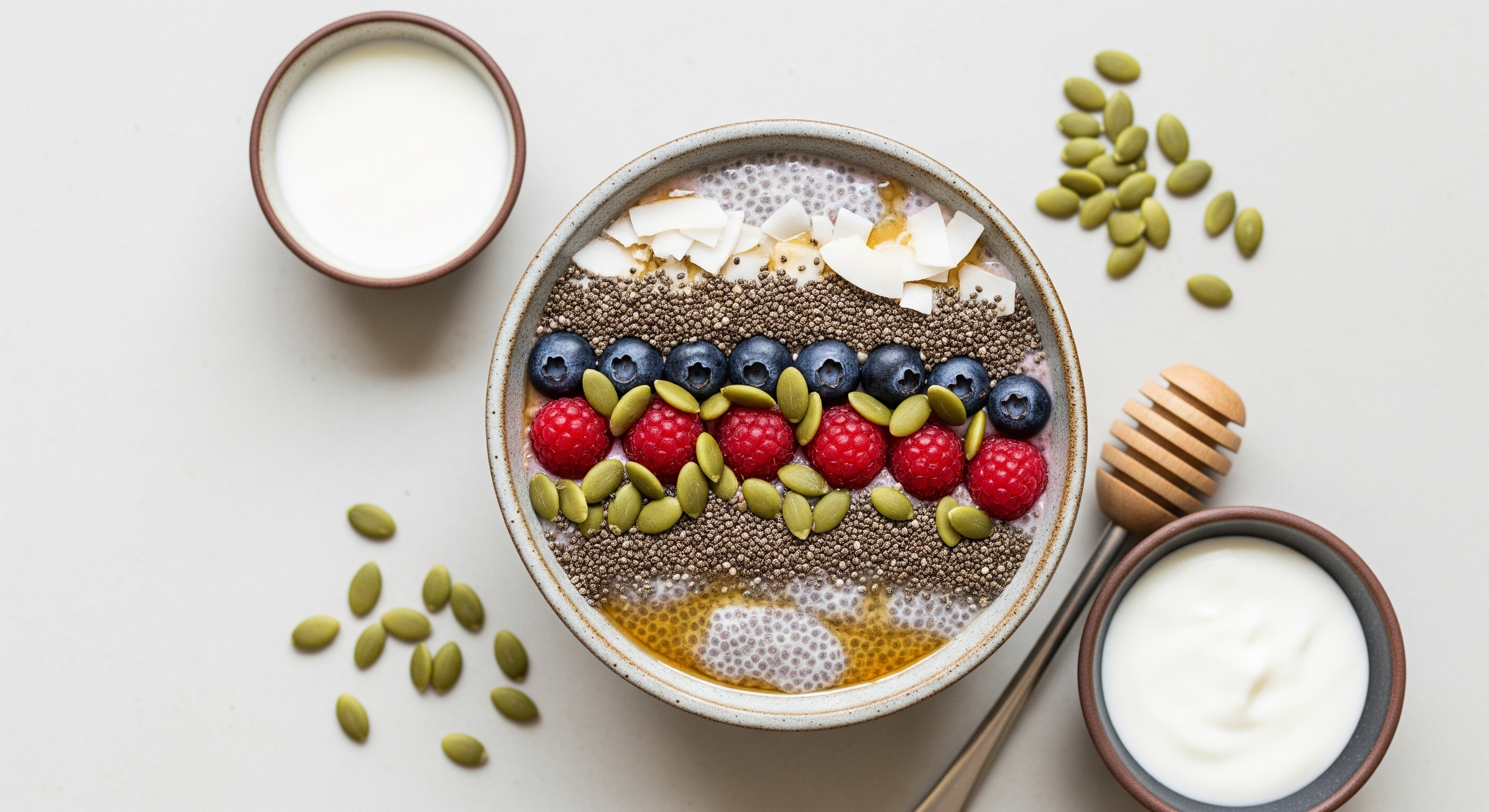 Berry Coconut Chia Parfait (Paleo) 10 min Layered paleo dessert with chia pudding, coconut milk, fresh berries and pumpkin seeds 310 kcal 8g protein 1 synergies
 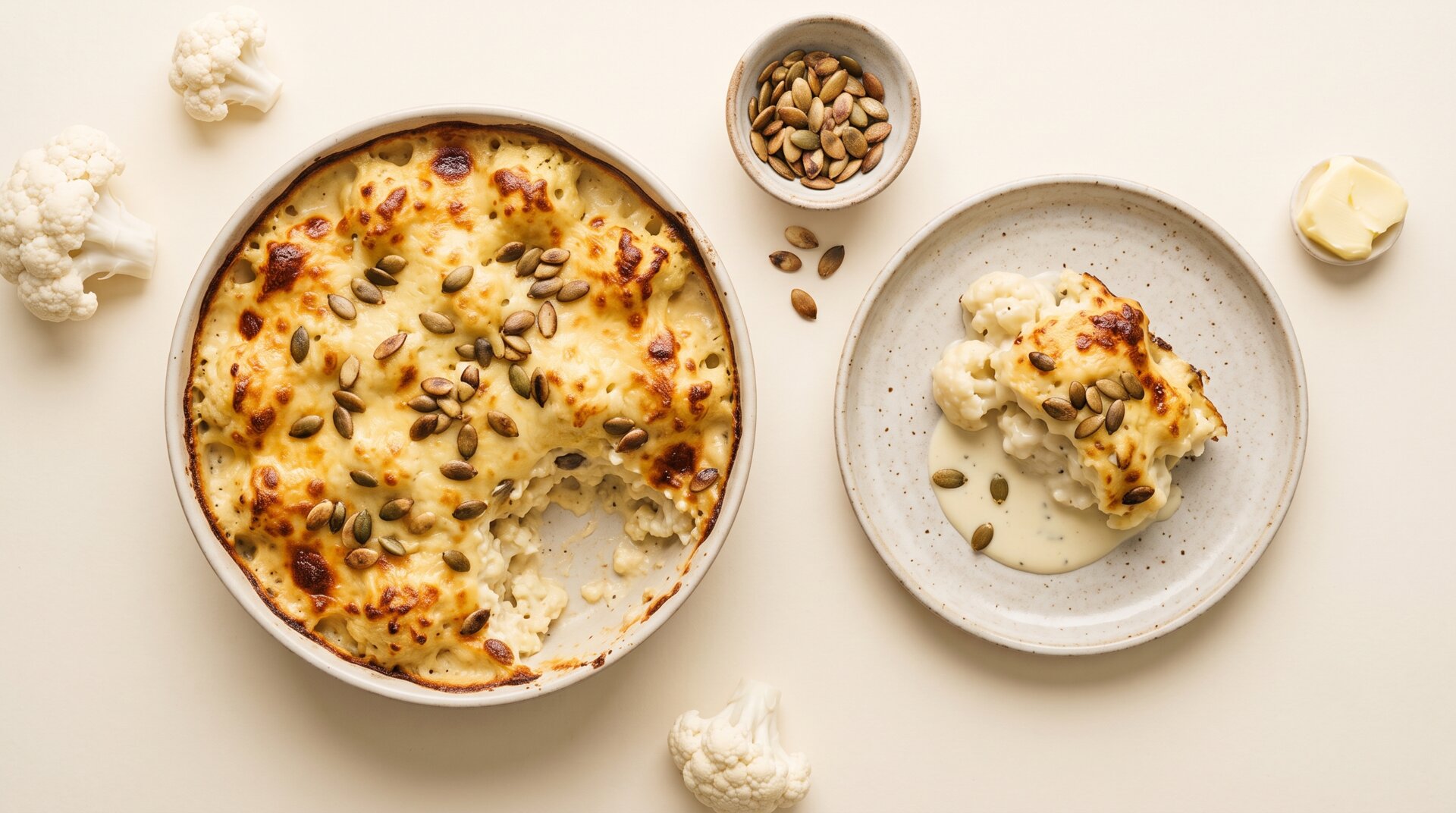 Cauliflower Cheese Gratin with Pumpkin Seeds 45 min Creamy oven bake with a crunchy seed topping 425 kcal 19g protein 2 synergies
 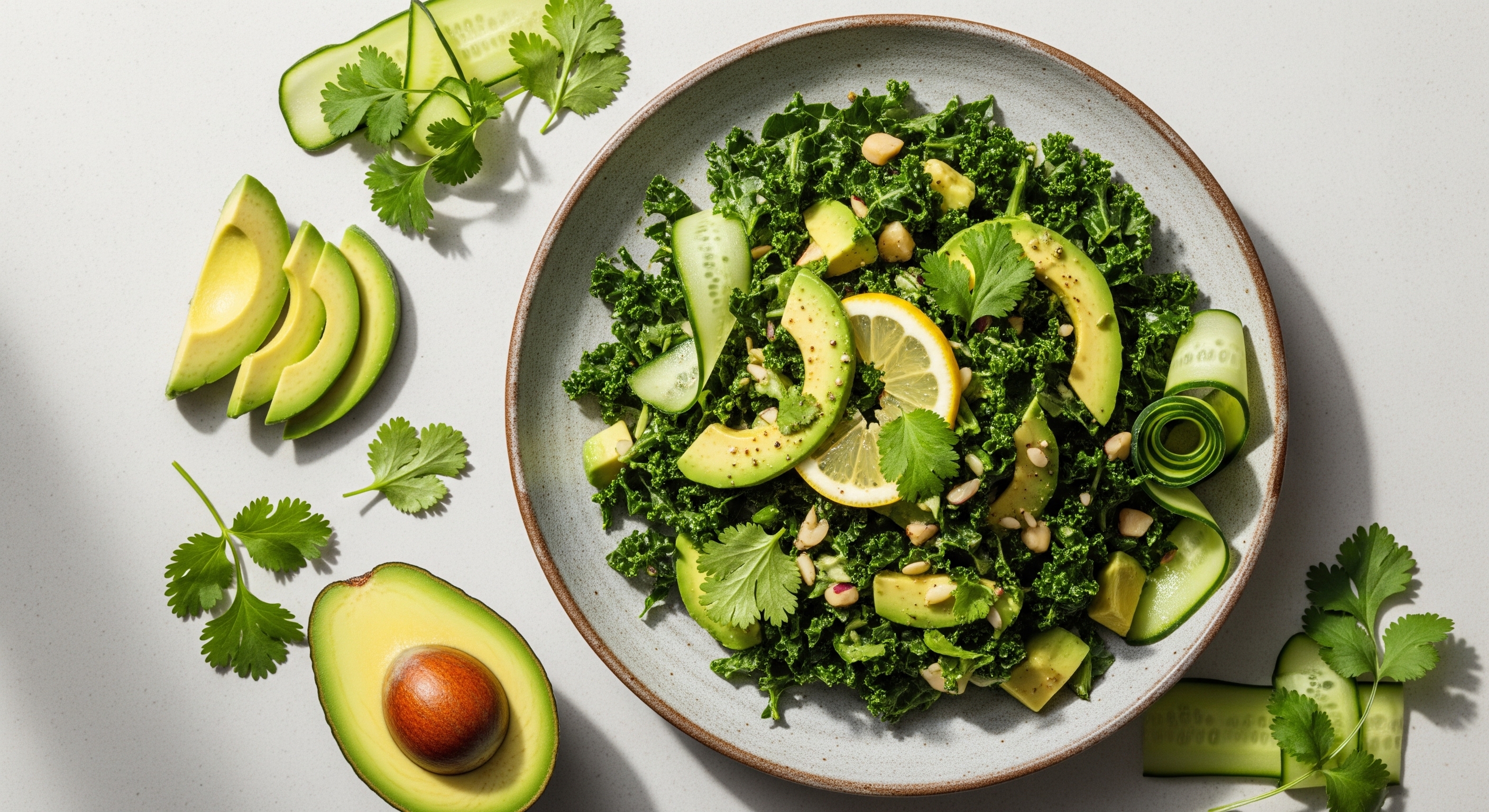 Kale Salad with Avocado, Cucumber and Coriander 15 min Fresh, green and creamy-crisp 344 kcal 8g protein 2 synergies
  In the Kitchen
Storage
Location:Refrigerator
Shelf life:3 maanden kamertemperatuur, 6 maanden koelkast
Store in an airtight jar in a cool, dark place. In the refrigerator, the unsaturated fats stay fresher for longer and rancid flavours develop more slowly.
Preparation
Use them raw for a mild, green crunch, or toast them briefly in a dry pan or for 10 minutes at 150°C for a deeper nutty flavour. Sprinkle over salads, oatmeal, soups, roasted vegetables, bread dough or energy balls.
Substitutes
Smart preparation
1Toast pumpkin seeds in a dry pan until they start to pop.
2Sprinkle with a pinch of salt immediately after toasting.
Why?
Salt adheres better to warm, slightly moist seeds.
3Add pumpkin seeds only at the end to keep their crunch.
Caution / Warnings
Pumpkin Seeds is very safe, but there are scientific considerations:
Allergy to pumpkin or zucchini Moderate
People with an allergy to pumpkin, zucchini, cucumber or other plants from the cucurbit family may react sensitively to pumpkin seeds.
Advice:
With a known cucurbit allergy: do not start with large portions and seek personal advice if you have had severe reactions before.
Traditional use
Indigenous
Pumpkin seeds among Mesoamerican peoples
Pumpkin seeds, or pepitas, have been used for thousands of years by Mesoamerican peoples as a nutritious part of meals, sauces and roasted snacks.
Summary
Pumpkin seeds are crunchy seeds that naturally contain zinc, magnesium, iron, vitamin E and protein. Zinc contributes to the normal function of the immune system, and magnesium contributes to normal muscle function and normal functioning of the nervous system. Use a small handful as a topping on soup, salad, oatmeal or roasted vegetables. Raw seeds taste mild and green-nutty; brief roasting makes them more aromatic and extra crisp.