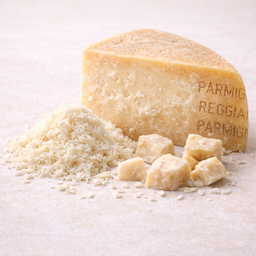
Parmesan (Parmigiano-Reggiano)
Aged Italian umami cheese
What is this ingredient?
Parmigiano-Reggiano is a protected DOP cheese from the Parma and Reggio Emilia regions, aged for at least 12 months and often 24-36 months. It is made from raw cow's milk, rennet and salt, without unnecessary additives. During aging, the lactose level drops sharply (about 0.1 g/100 g) and milk proteins break down into peptides and free amino acids, including glutamate (1200-1680 mg/100 g). This explains its deep umami flavor and granular, crystalline bite.
As moisture is lost during aging, nutrients become highly concentrated: 1184 mg calcium per 100 g, 694 mg phosphorus and 1602 mg sodium. The white crystals in older Parmesan are usually tyrosine clusters; they are valued as a sign of long aging and add extra texture. The cheese is also high in protein (35-38 g/100 g) and provides all essential amino acids.
Use Parmesan mainly as a flavor enhancer: 10-30 g is often enough to add depth to pasta, risotto, salads, soups and vegetable dishes. Because of its high salt content, portioning matters, especially when you also use other salty ingredients. Fresh grating gives a clearer aroma than pre-grated cheese, and the rind can be simmered in broth or sauce for extra savory flavor.
How does it taste?
Intensely umami, nutty and salty with a granular, crystalline texture.
Pairs well with:
Pairs well with pastatrufflebalsamicpear and arugula.
Did you know...?
- Authentic Parmigiano-Reggiano ages for at least 12 months and is tested by an expert who taps the wheel.
- Italian banks accept wheels of Parmigiano-Reggiano as collateral for loans.
- A 38-kilogram wheel of Parmesan requires approximately 550 liters of milk.
Nutritional Value & Energy
Per 100g
Parmesan (Parmigiano-Reggiano) provides energy thanks to natural nutrients .
Per 100g
Minerals
Vitamins
Omega-3 fatty acids
More nutrients
B-Vitamins
Trace Minerals
What's in a serving?
1 serving
Parmesan (Parmigiano-Reggiano) naturally contains calcium (1184 mg per 100 g).
Parmesan (Parmigiano-Reggiano) naturally contains selenium (22.5 mcg per 100 g).
Parmesan (Parmigiano-Reggiano) naturally contains vitamin A (701 mcg per 100 g).
Parmesan (Parmigiano-Reggiano) naturally contains vitamin B12 (1.2 mcg per 100 g).
Parmesan (Parmigiano-Reggiano) naturally contains zinc (3.2 mg per 100 g).
Parmesan (Parmigiano-Reggiano) naturally contains iodine (50 mcg per 100 g).
% of daily reference intake (DRI)
EU-approved nutrition claims
This ingredient contains nutrients for which EFSA-authorized health claims exist at nutrient level, not specifically for the ingredient itself.
Approved health claims (EU)
Vitamin_b12 EU 432/2012
Vitamin B12 contributes to the normal function of the immune system
Contains 1.2mcg/100g (threshold: ≥0.375mcg/100g)
Vitamin_b12 EU 432/2012
Vitamin B12 contributes to the reduction of tiredness and fatigue
Contains 1.2mcg/100g (threshold: ≥0.375mcg/100g)
Vitamin_b12 EU 432/2012
Vitamin B12 contributes to the normal functioning of the nervous system
Contains 1.2mcg/100g (threshold: ≥0.375mcg/100g)
Zinc EU 432/2012
Zinc contributes to the normal function of the immune system
Contains 3.2mg/100g (threshold: ≥1.5mg/100g)
Zinc EU 432/2012
Zinc contributes to the maintenance of normal skin
Contains 3.2mg/100g (threshold: ≥1.5mg/100g)
Calcium EU 432/2012
Calcium is needed for the maintenance of normal bones
Contains 1184mg/100g (threshold: ≥120mg/100g)
Vitamin_a EU 432/2012
Vitamin A contributes to the normal function of the immune system
Contains 701mcg/100g (threshold: ≥120mcg/100g)
Vitamin_a EU 432/2012
Vitamin A contributes to the maintenance of normal skin
Contains 701mcg/100g (threshold: ≥120mcg/100g)
Vitamin_a EU 432/2012
Vitamin A contributes to the maintenance of normal mucous membranes
Contains 701mcg/100g (threshold: ≥120mcg/100g)
Vitamin_a EU 432/2012
Vitamin A contributes to the maintenance of normal vision
Contains 701mcg/100g (threshold: ≥120mcg/100g)
Vitamin_a EU 432/2012
Vitamin A contributes to normal iron metabolism
Contains 701mcg/100g (threshold: ≥120mcg/100g)
Vitamin_a EU 432/2012
Vitamin A has a role in the process of cell specialisation
Contains 701mcg/100g (threshold: ≥120mcg/100g)
Vitamin_b12 EU 432/2012
Vitamin B12 contributes to normal energy-yielding metabolism
Contains 1.2mcg/100g (threshold: ≥0.375mcg/100g)
Vitamin_b12 EU 432/2012
Vitamin B12 contributes to normal homocysteine metabolism
Contains 1.2mcg/100g (threshold: ≥0.375mcg/100g)
Vitamin_b12 EU 432/2012
Vitamin B12 contributes to normal psychological function
Contains 1.2mcg/100g (threshold: ≥0.375mcg/100g)
Vitamin_b12 EU 432/2012
Vitamin B12 contributes to normal red blood cell formation
Contains 1.2mcg/100g (threshold: ≥0.375mcg/100g)
Vitamin_b12 EU 432/2012
Vitamin B12 has a role in the process of cell division
Contains 1.2mcg/100g (threshold: ≥0.375mcg/100g)
Calcium EU 432/2012
Calcium is needed for the maintenance of normal teeth
Contains 1184mg/100g (threshold: ≥120mg/100g)
Calcium EU 432/2012
Calcium contributes to normal blood clotting
Contains 1184mg/100g (threshold: ≥120mg/100g)
Calcium EU 432/2012
Calcium contributes to normal energy-yielding metabolism
Contains 1184mg/100g (threshold: ≥120mg/100g)
Calcium EU 432/2012
Calcium contributes to normal muscle function
Contains 1184mg/100g (threshold: ≥120mg/100g)
Calcium EU 432/2012
Calcium contributes to normal neurotransmission
Contains 1184mg/100g (threshold: ≥120mg/100g)
Calcium EU 432/2012
Calcium contributes to the normal function of digestive enzymes
Contains 1184mg/100g (threshold: ≥120mg/100g)
Calcium EU 432/2012
Calcium has a role in the process of cell division and specialisation
Contains 1184mg/100g (threshold: ≥120mg/100g)
Zinc EU 432/2012
Zinc contributes to normal acid-base metabolism
Contains 3.2mg/100g (threshold: ≥1.5mg/100g)
Zinc EU 432/2012
Zinc contributes to normal carbohydrate metabolism
Contains 3.2mg/100g (threshold: ≥1.5mg/100g)
Zinc EU 432/2012
Zinc contributes to normal cognitive function
Contains 3.2mg/100g (threshold: ≥1.5mg/100g)
Zinc EU 432/2012
Zinc contributes to normal DNA synthesis
Contains 3.2mg/100g (threshold: ≥1.5mg/100g)
Zinc EU 432/2012
Zinc contributes to normal fertility and reproduction
Contains 3.2mg/100g (threshold: ≥1.5mg/100g)
Zinc EU 432/2012
Zinc contributes to normal macronutrient metabolism
Contains 3.2mg/100g (threshold: ≥1.5mg/100g)
Zinc EU 432/2012
Zinc contributes to normal metabolism of fatty acids
Contains 3.2mg/100g (threshold: ≥1.5mg/100g)
Zinc EU 432/2012
Zinc contributes to normal metabolism of vitamin A
Contains 3.2mg/100g (threshold: ≥1.5mg/100g)
Zinc EU 432/2012
Zinc contributes to normal protein synthesis
Contains 3.2mg/100g (threshold: ≥1.5mg/100g)
Zinc EU 432/2012
Zinc contributes to the maintenance of normal bones
Contains 3.2mg/100g (threshold: ≥1.5mg/100g)
Zinc EU 432/2012
Zinc contributes to the maintenance of normal hair
Contains 3.2mg/100g (threshold: ≥1.5mg/100g)
Zinc EU 432/2012
Zinc contributes to the maintenance of normal nails
Contains 3.2mg/100g (threshold: ≥1.5mg/100g)
Zinc EU 432/2012
Zinc contributes to the maintenance of normal testosterone levels in the blood
Contains 3.2mg/100g (threshold: ≥1.5mg/100g)
Zinc EU 432/2012
Zinc contributes to the maintenance of normal vision
Contains 3.2mg/100g (threshold: ≥1.5mg/100g)
Zinc EU 432/2012
Zinc contributes to the protection of cells from oxidative stress
Contains 3.2mg/100g (threshold: ≥1.5mg/100g)
Zinc EU 432/2012
Zinc has a role in the process of cell division
Contains 3.2mg/100g (threshold: ≥1.5mg/100g)
Selenium EU 432/2012
Selenium contributes to the maintenance of normal hair
Contains 22.5mcg/100g (threshold: ≥8.25mcg/100g)
Selenium EU 432/2012
Selenium contributes to the maintenance of normal nails
Contains 22.5mcg/100g (threshold: ≥8.25mcg/100g)
Selenium EU 432/2012
Selenium contributes to the normal function of the immune system
Contains 22.5mcg/100g (threshold: ≥8.25mcg/100g)
Selenium EU 432/2012
Selenium contributes to normal thyroid function
Contains 22.5mcg/100g (threshold: ≥8.25mcg/100g)
Selenium EU 432/2012
Selenium contributes to normal spermatogenesis
Contains 22.5mcg/100g (threshold: ≥8.25mcg/100g)
Selenium EU 432/2012
Selenium contributes to the protection of cells from oxidative stress
Contains 22.5mcg/100g (threshold: ≥8.25mcg/100g)
Iodine EU 432/2012
Iodine contributes to normal cognitive function
Contains 50mcg/100g (threshold: ≥22.5mcg/100g)
Iodine EU 432/2012
Iodine contributes to normal energy-yielding metabolism
Contains 50mcg/100g (threshold: ≥22.5mcg/100g)
Iodine EU 432/2012
Iodine contributes to normal functioning of the nervous system
Contains 50mcg/100g (threshold: ≥22.5mcg/100g)
Iodine EU 432/2012
Iodine contributes to the maintenance of normal skin
Contains 50mcg/100g (threshold: ≥22.5mcg/100g)
Iodine EU 432/2012
Iodine contributes to the normal production of thyroid hormones and normal thyroid function
Contains 50mcg/100g (threshold: ≥22.5mcg/100g)
Iodine EU 432/2012
Iodine contributes to the normal growth of children
Contains 50mcg/100g (threshold: ≥22.5mcg/100g)
Comparison
vsmelk
Parmesan (Parmigiano-Reggiano) contains about 9× more calcium per 100 g than milk.
What's being researched?
Parmesan and peptides from aging
During the long aging of Parmigiano-Reggiano, small protein fragments are formed. Researchers describe these peptides in laboratory and nutrition research; their meaning for normal portions in a meal is still being studied.
Supported by: [4] Tian M (2019) , [5] Cummings DE (2015)
Parmesan as a concentrated calcium source
The high calcium content of parmesan (>1000 mg/100 g) is considered within research on dairy, minerals and dietary patterns. Because the usual portion is smaller than 100 g, portion size remains important when interpreting it.
Supported by: [2] Maresz K (2015) , [1] Shi Y (2020)
Good Combinations (Synergy)
Combine parmesan (parmigiano-reggiano) smartly to enhance the effect:
Parmesan (Parmigiano-Reggiano) 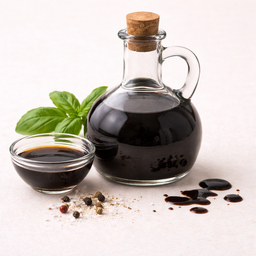 Balsamic Vinegar
 Umami + polyphenols for satiety and glycemic response
Technical: Parmesan contains 1,680mg free glutamate per 100g — the highest concentration of any food. Glutamate activates umami receptors (T1R1/T1R3) that send signals via vagus nerve to hypothalamus → early satiety. Balsamic contains polyphenols from grapes (50-100mg/100ml) that activate AMPK. Acetic acid (6% in balsamic) inhibits α-amylase, lowering glycemic response by 20-30%.
What does this mean for you? Drizzle parmesan with traditional balsamic — not just a taste sensation, but also a satiety trick. The umami + acidity ensure you feel full sooner.
Parmesan (Parmigiano-Reggiano) 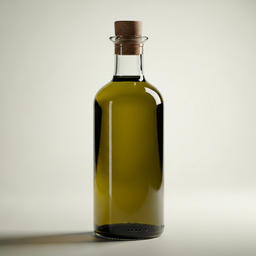 Olive Oil
 Umami from parmesan + healthy fats from olive oil for flavor and satiety
Technical: Parmesan contains 1200-1680mg free glutamate per 100g — the highest concentration of all cheeses. Glutamate activates stomach-vagus nerve signals that increase satiety. Olive oil contains oleic acid (55-83%) stimulating OEA production (satiety signal) plus oleocanthal and oleuropein (bioactive polyphenols). Together: double satiety plus bioactive compounds.
What does this mean for you? Drizzle parmesan with good olive oil on pasta or salads. The umami from the cheese and the healthy fat from the oil together provide faster satiety and a rich flavor profile.
Parmesan (Parmigiano-Reggiano) 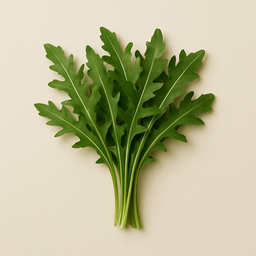 Arugula
 Nitrate + calcium: NO pathway and mineral richness
Technical: Arugula contains 480mg nitrate per 100g (highest of all leafy greens) converted via the nitrate-nitrite-NO pathway to nitric oxide. Parmesan provides 1184mg calcium per 100g — calcium contributes to the maintenance of normal bones (EFSA-approved) — and 33g protein. Parmesan fats (29g/100g) also improve absorption of arugula's fat-soluble vitamins.
What does this mean for you? Arugula with Parmesan (classic Italian) combines the highest plant nitrate source with one of the most calcium-rich cheeses. Fat makes arugula's vitamins absorbable. Add olive oil and lemon for the perfect trio.
Recipes with Parmesan (Parmigiano-Reggiano)
Discover delicious recipes featuring parmesan (parmigiano-reggiano):
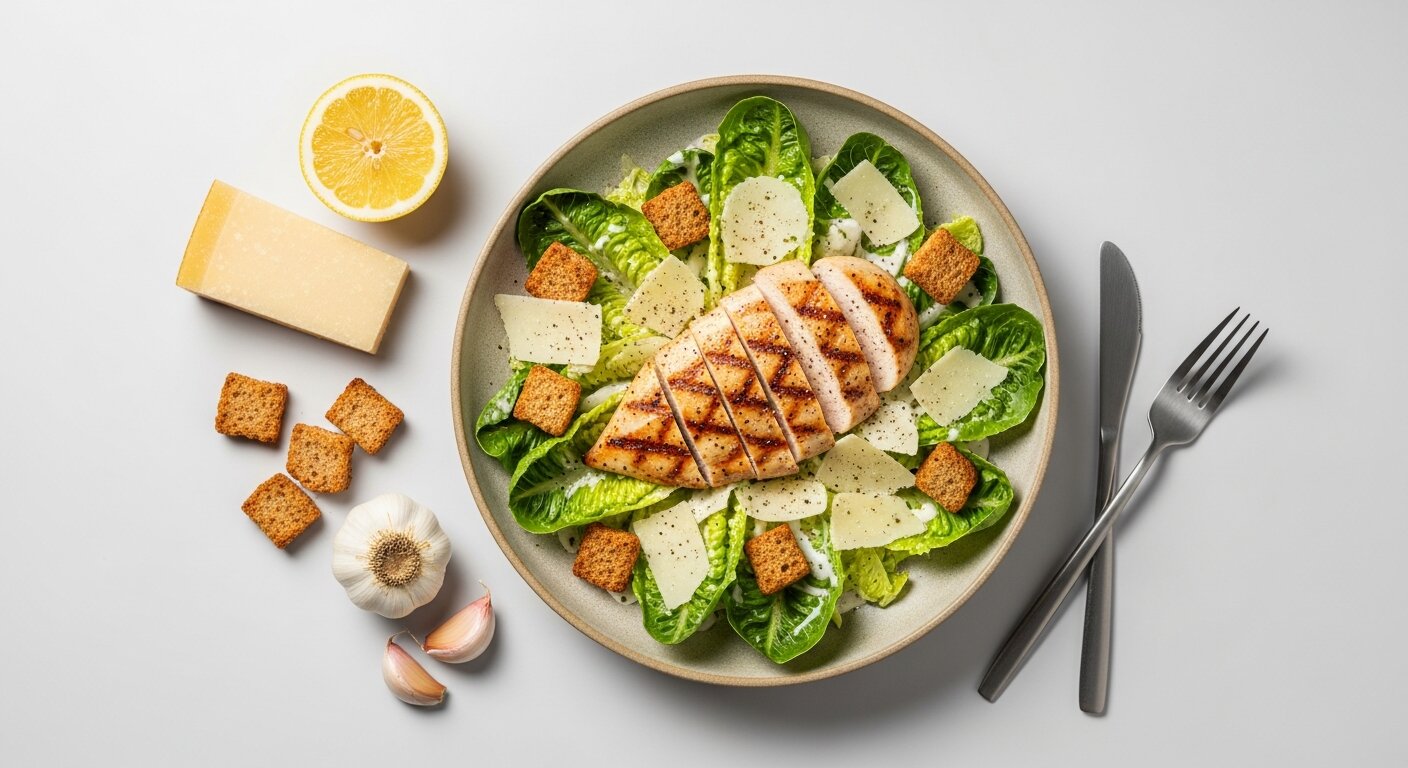 Caesar Salad with Chicken 25 min Classic Roman salad with crispy romaine and parmesan
  340 kcal
  32g protein 1 synergies
 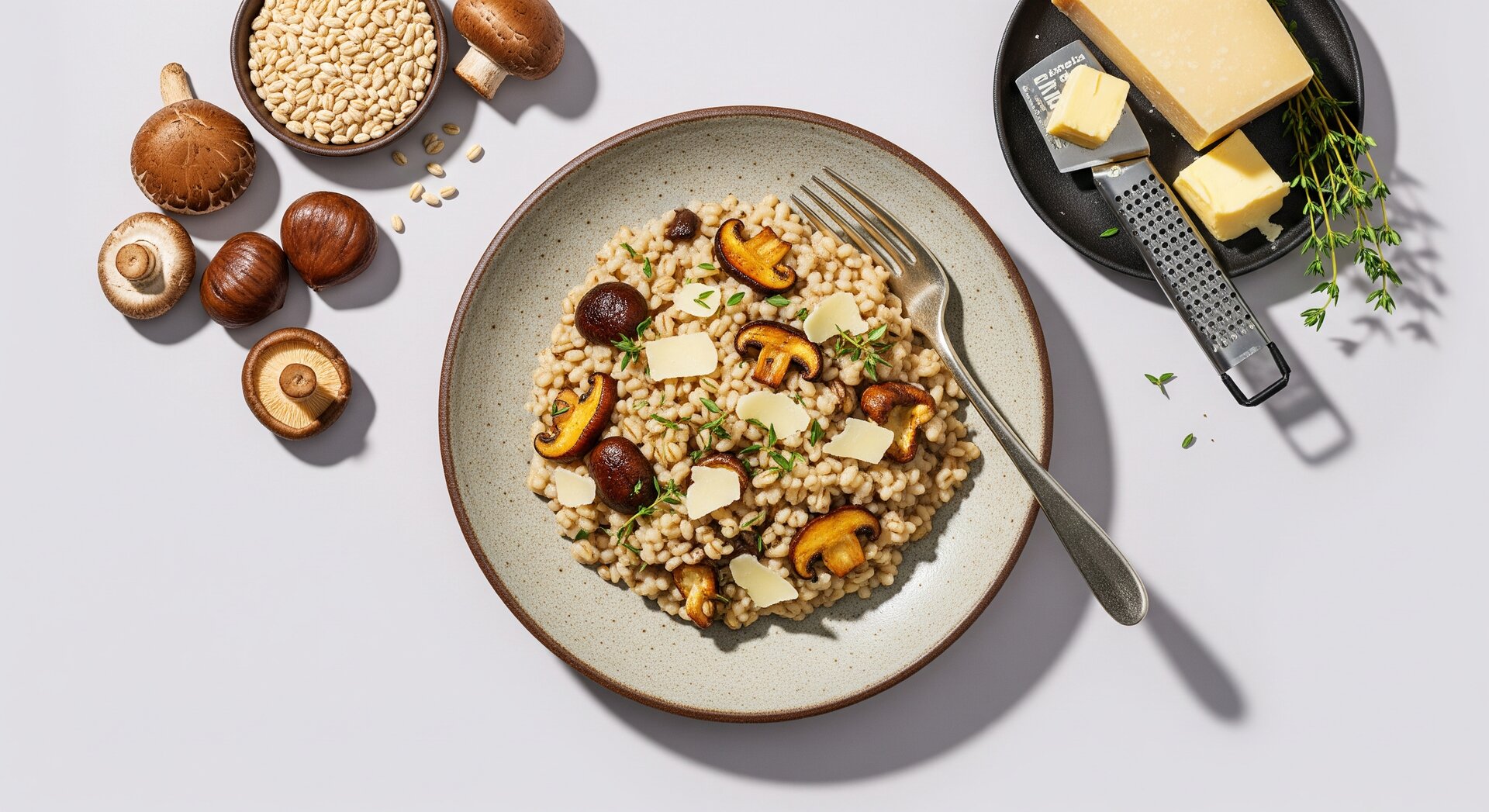 Barley Mushroom Risotto 55 min Creamy Italian classic with pearl barley and mixed mushrooms 420 kcal 14g protein 1 synergies
 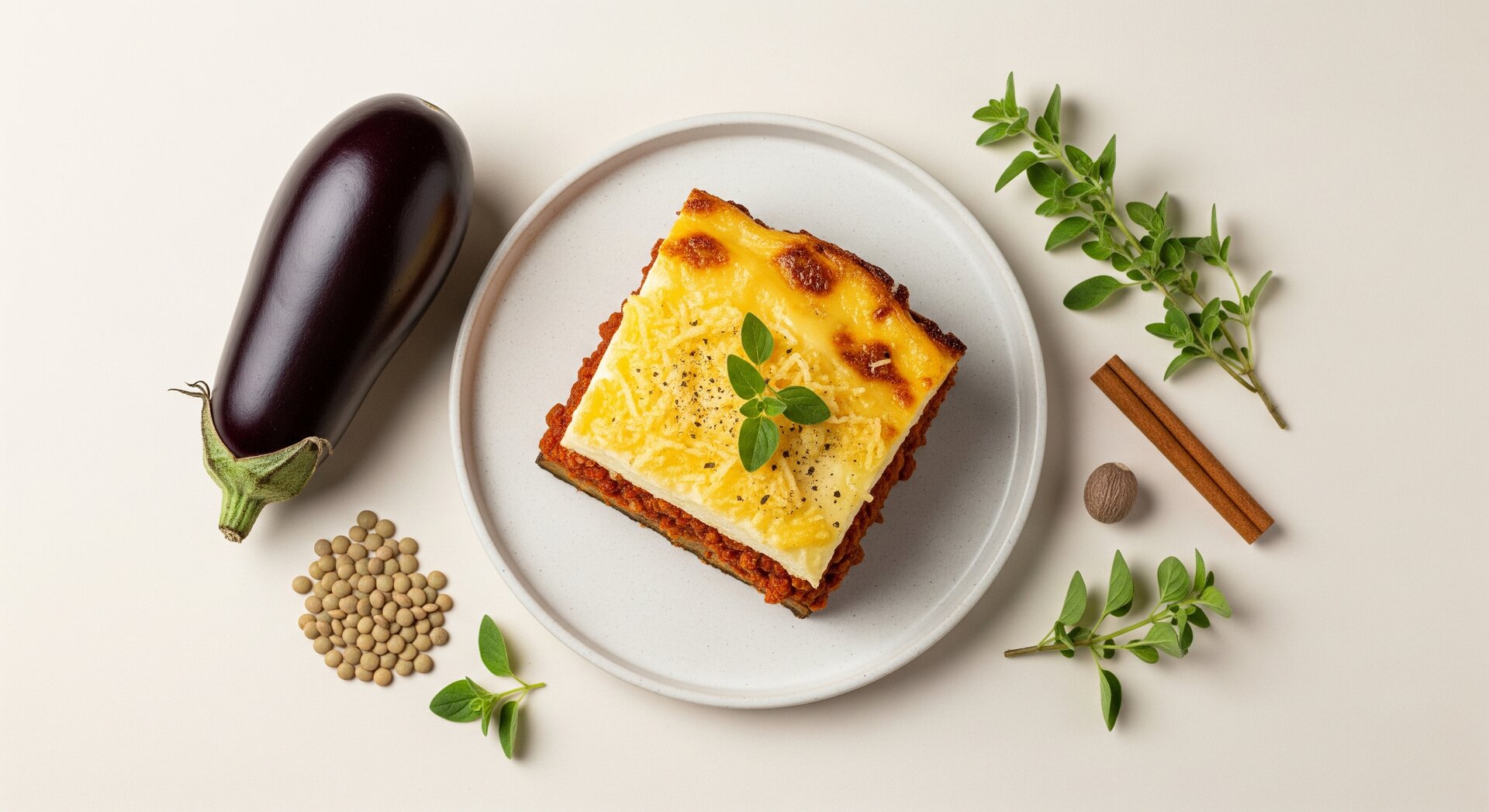 Greek-Cypriot Moussaka with Lentils 110 min Vegetarian moussaka with beluga lentils and cinnamon-tomato sauce 380 kcal 18g protein 2 synergies
 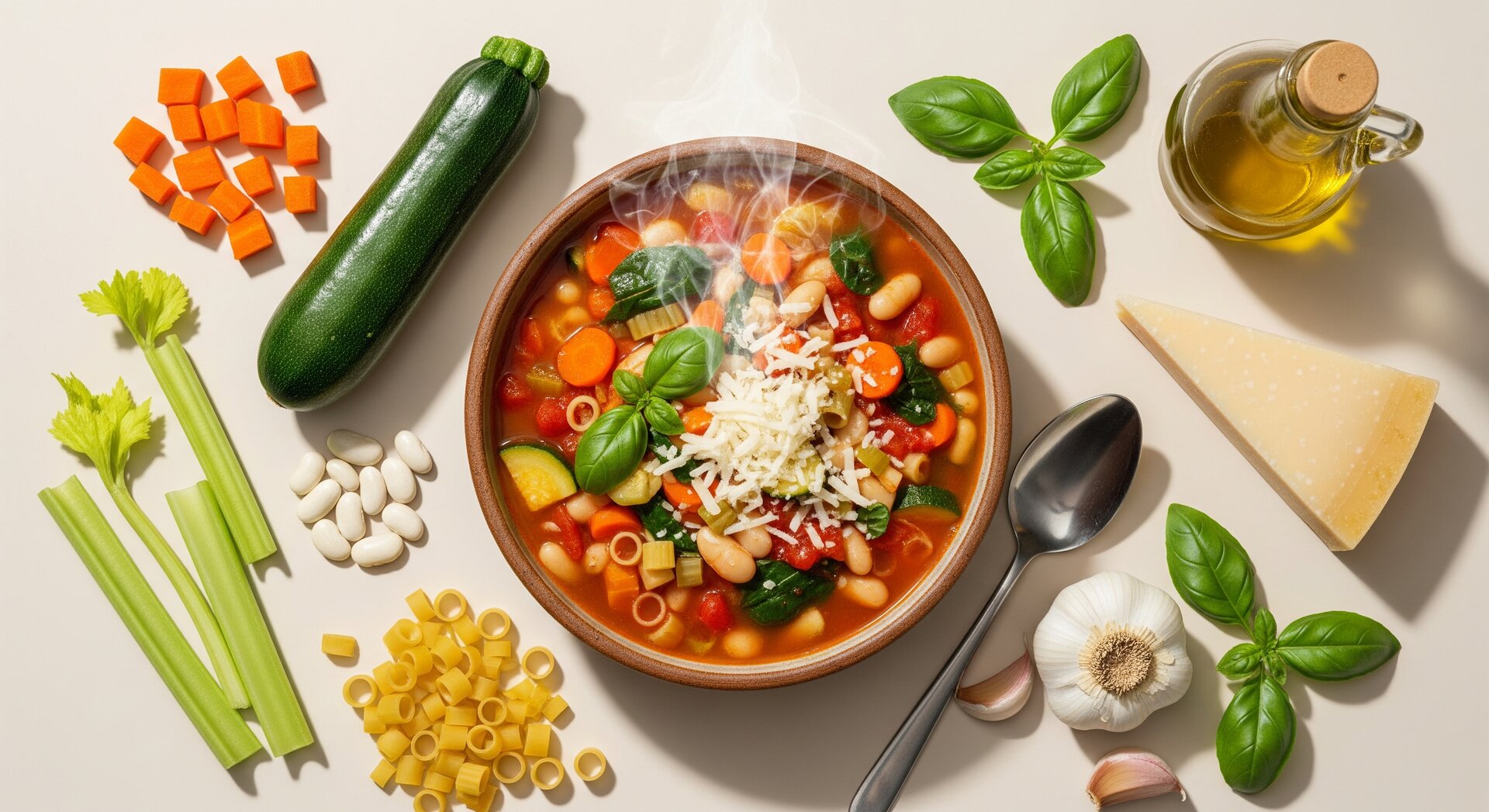 Italian Minestrone 50 min Hearty vegetable soup with white beans, small pasta and basil 260 kcal 12g protein 2 synergies
 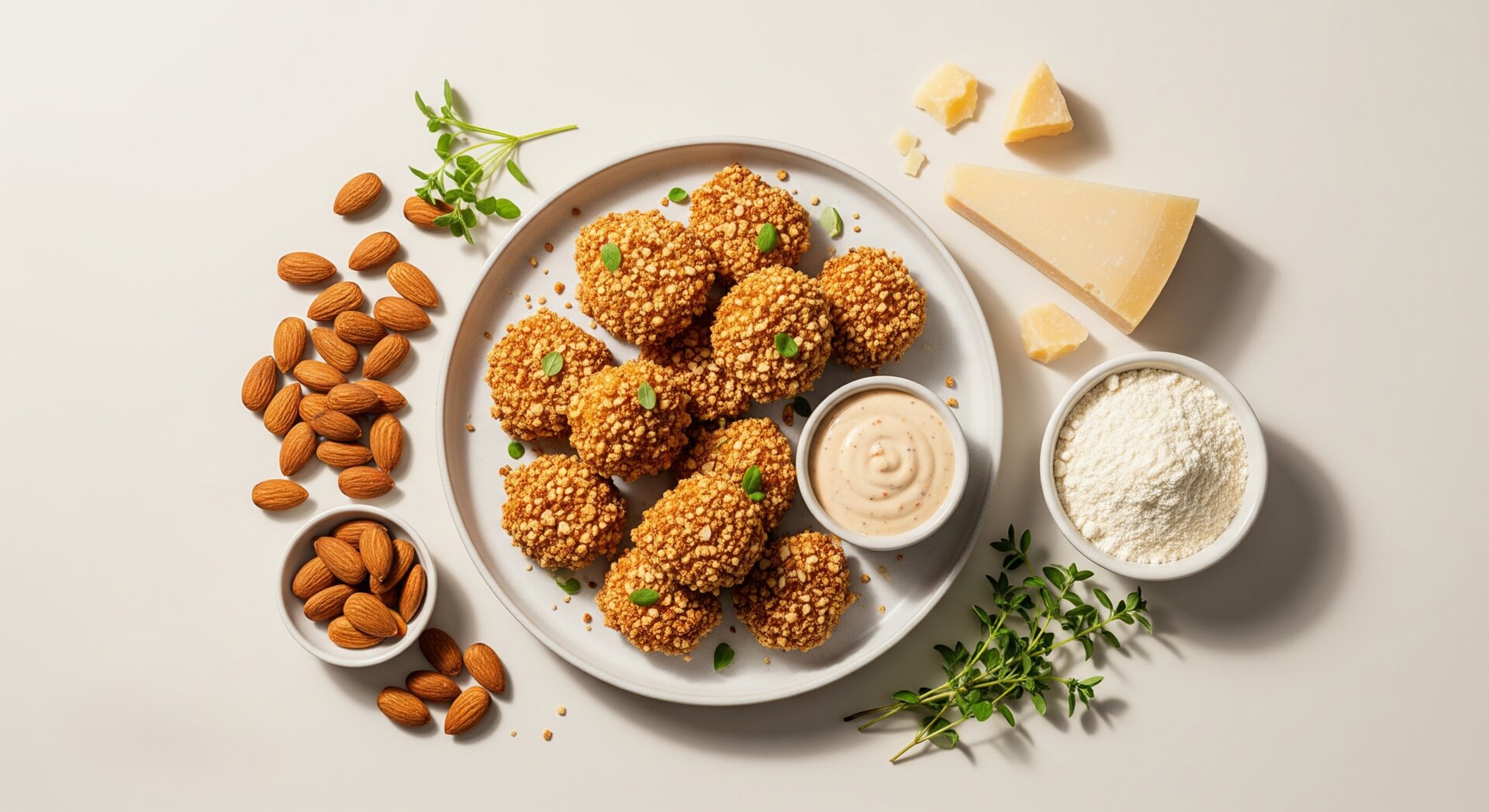 Crispy Chicken Nuggets with Almond Crust 40 min Oven-baked, gluten-free and protein-rich 320 kcal 38g protein 2 synergies
 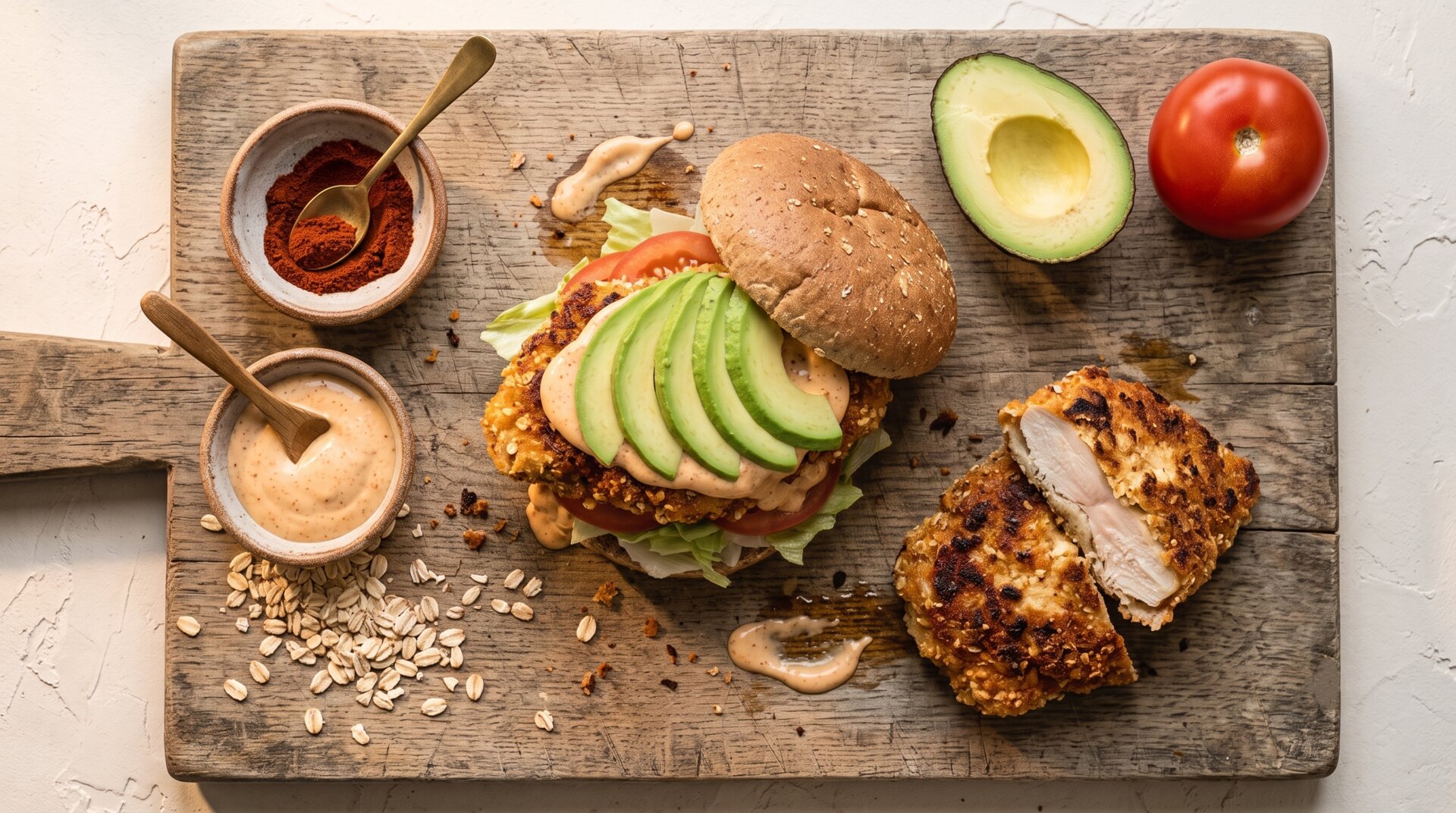 Crispy Chicken Burger 40 min Juicy chicken breast with an oat-parmesan crust and fresh toppings 445 kcal 42g protein 3 synergies
  In the Kitchen
Storage
Location:Refrigerator
Conversions
Substitutes
Smart preparation
1Grate Parmesan just before serving.
Why?
Freshly grated is more aromatic than pre-packaged grated cheese.
2Save Parmesan rinds for soups and sauces.
Why?
The rind releases savory depth during cooking.
3Store Parmesan first in parchment paper and then in aluminium foil.
Why?
This lets the cheese breathe without drying out quickly.
Caution / Warnings
Parmesan (Parmigiano-Reggiano) is very safe, but there are scientific considerations:
Very high sodium content Severe
Parmesan contains 1602 mg sodium per 100 g. A 30 g portion provides about 480 mg sodium, so the cheese is best used mainly as a flavor enhancer.
Advice:
With a sodium-restricted diet, high blood pressure, heart failure or kidney problems: discuss portions with a doctor or dietitian. Use small amounts, for example 10-15 g as a topping, and pair with unsalted ingredients.
Tyramine and migraine sensitivity Moderate
Long-aged cheese can contain tyramine, a compound formed during aging from the amino acid tyrosine. Some people notice headaches or migraine symptoms with aged cheeses.
Advice:
If sensitive, start with a small amount, for example 5-10 g. If you use MAO inhibitors or have clear migraine triggers from aged cheese, consult your doctor about suitable choices.
High calorie content Moderate
Parmesan is calorie-dense: 431 kcal per 100 g, with 28.6 g fat and 18.3 g saturated fat. A 30 g portion provides about 130 kcal.
Advice:
For calorie-conscious meals: use Parmesan as a flavor enhancer rather than as the main component. Grate it yourself and, if needed, weigh 10-15 g; the intense flavor usually makes a small amount enough.
Traditional use
Mediterranean
Parmesan in Italian tradition
Parmigiano-Reggiano has been made in the Italian region of Emilia-Romagna since the 13th century following a strict traditional process.
Summary
Parmesan is a highly concentrated aged Italian cheese with 1184 mg calcium and 38.5 g protein per 100 g. Long aging gives it a powerful umami flavor, visible tyrosine crystals and almost no lactose. Use it mainly in small amounts as a flavor enhancer: 10-30 g already adds a lot of character to pasta, risotto, salad, soup or roasted vegetables. Note the high sodium content (1602 mg/100 g) and portion carefully when cooking low-salt meals. Grate fresh for the best aroma, store a block airtight in the refrigerator and use the rind in broth or sauce for extra savory depth.